

Category: C. s lewis
Chronological Snobs and the Founding Fathers
C.S. Lewis coined the term “Chronological Snobbery” to describe the condition of “uncritical acceptance of the intellectual climate common to…
When human worth becomes conditional, caregiving becomes impossible

Most people can care for an ill or disabled loved one for a week on compassion alone. Some can do it for a month. A few can make it a year or two.
But when care stretches into decades, compassion stops carrying the load. Emotion fades. Circumstances grind. What remains isn’t how someone feels about a life. What remains is whether they believe that life still matters.
When a culture treats reality as optional, action becomes dangerous and courage looks reckless. Without shared moral ground, bravery itself becomes suspect.
Caregiving strips life down to essentials. It forces a question our culture prefers to keep abstract: Why does this life still have value when it costs so much to sustain it?
C.S. Lewis warned that a society cannot survive if it mocks virtue while demanding its fruits. In “The Abolition of Man,” he described “men without chests” — people trained to think and desire but not to stand. Without a formed moral center, courage collapses. Duty feels suspect. Endurance looks irrational.
Caregivers learn this in a harsh classroom.
You cannot sustain decades of care if human worth is negotiable. You cannot rise day after day to guard the vulnerable if life’s value depends on productivity, independence, improvement, or the absence of suffering. Long care requires stewardship — the conviction that a life has been entrusted to us, not evaluated by us.
I once met a man who told me he was dating a woman in a wheelchair. He spoke with genuine enthusiasm about how good it made him feel to do everything for her. He sounded animated, even proud. He talked at length about his experience, his emotions, the satisfaction he drew from being needed.
He said very little about her.
I asked how long they’d been dating.
“Two weeks,” he said, beaming.
I smiled wearily and told him, “Get back to me in two decades.”
Care that depends on how it makes us feel rarely survives once feeling fades. What endures over decades isn’t the satisfaction of being needed. It’s settled clarity about the worth of the person being cared for, independent of what the caregiver receives in return.
RELATED: Christian, what do you believe when faith stops being theoretical?
 ImagineGolf via iStock/Getty Images
In that man’s excitement, everything centered on his emotions. What was missing was any recognition of her value apart from her condition — or apart from what caring for her did for him.
I didn’t hear, “I’m dating a woman,” or “I’ve met someone extraordinary.” I heard, again and again, “I’m dating a woman in a wheelchair.” The chair became the headline, not the person. He might as well have celebrated the better parking.
She had become useful to him. That’s not the same thing as being valued.
This way of thinking doesn’t stay confined to personal relationships. It scales.
The public reckoning surrounding Daniel Penny exposed it. He acted to protect others he believed were in danger — not because it felt good but because action was required. That kind of clarity now unsettles a society more comfortable with sentiment than obligation.
We claim we want people to intervene, to protect others, to act decisively when danger appears. Then someone does, and we hesitate. We second-guess. We prosecute. We distance ourselves.
We want courage but not conviction.
Lewis wouldn’t be surprised. When a culture treats reality as optional, action becomes dangerous and courage looks reckless. Responsibility suddenly feels threatening. Without shared moral ground, bravery itself becomes suspect.
Francis Schaeffer traced the path forward from that confusion. Once a culture detaches human worth from anything objective, it stops honoring life and starts managing it. Value becomes conditional. And conditions always change.
That logic now shows itself in plain view. When Gov. Kathy Hochul (D-N.Y.) pushes to legalize medical aid in dying in New York, the same fracture appears. We punish those who act as though life must be defended, while elevating leaders who treat life as something to administer and conclude.
Those aren’t separate debates. They’re the same belief, applied differently.
If life holds value only when it functions well, caregiving becomes irrational. If worth depends on autonomy, dependence becomes disposable. If suffering disqualifies, endurance becomes foolish.
And yet caregivers endure.
RELATED: Caregiving decisions begin in the bathroom
 MTStock Studio via iStock/Getty Images
That clarity came back to me during a conversation on my radio show. A man described a brief illness his wife had suffered. The house fell apart. Meals became takeout. Work got missed. Romance disappeared. He sounded exhausted just recalling it.
“What carried you through?” I asked.
He paused. “I guess … love.”
“How long did this last?” I said.
“Five days.”
“I guess … love” carried him through five days.
Uncertainty can survive a week. It cannot sustain 14,000 days.
He wasn’t wrong though. Love matters. But love that sustains five days must anchor itself in something deeper to sustain 40 years.
Caregivers may begin with compassion. They endure with conviction.
A life doesn’t become less valuable because it becomes harder to carry.
Caregiving isn’t a special category of moral life. It is a concentrated version of the human condition. What sustains caregivers over time is what sustains courage, faithfulness, and duty anywhere else.
Lewis reminded us that our feelings don’t create value. They respond to it. When we reverse that order, we don’t become more compassionate. We lose our bearings.
Treating human worth as conditional may flatter our emotions. It may even make us feel noble. But it trains us to prize how we feel over the people entrusted to our care.
Over time, that trade leaves us prosecuting men like Daniel Penny while electing leaders like Kathy Hochul.
It might soothe the heart for a moment.
It cannot sustain a society.
What we lose when we rush past pain
“No one ever told me that grief felt so like fear,” wrote C.S. Lewis in “A Grief Observed” after the death of his wife. Grief often strips away our certainties, leaving us to fear if God is who we thought He was, or if our suffering has any meaning at all. In allowing grief to become his teacher, Lewis left a road map for others, showing how to sit with sorrow, process it, and respect both loss and trauma.
That understanding doesn’t come casually; it takes time. In that willingness to observe pain rather than manage it lies a quiet reverence, a recognition that some experiences are not meant to be conquered but understood.
Suffering doesn’t exist to make us louder or more righteous. It exists to make us wiser — to teach maturity, not mobilize outrage.
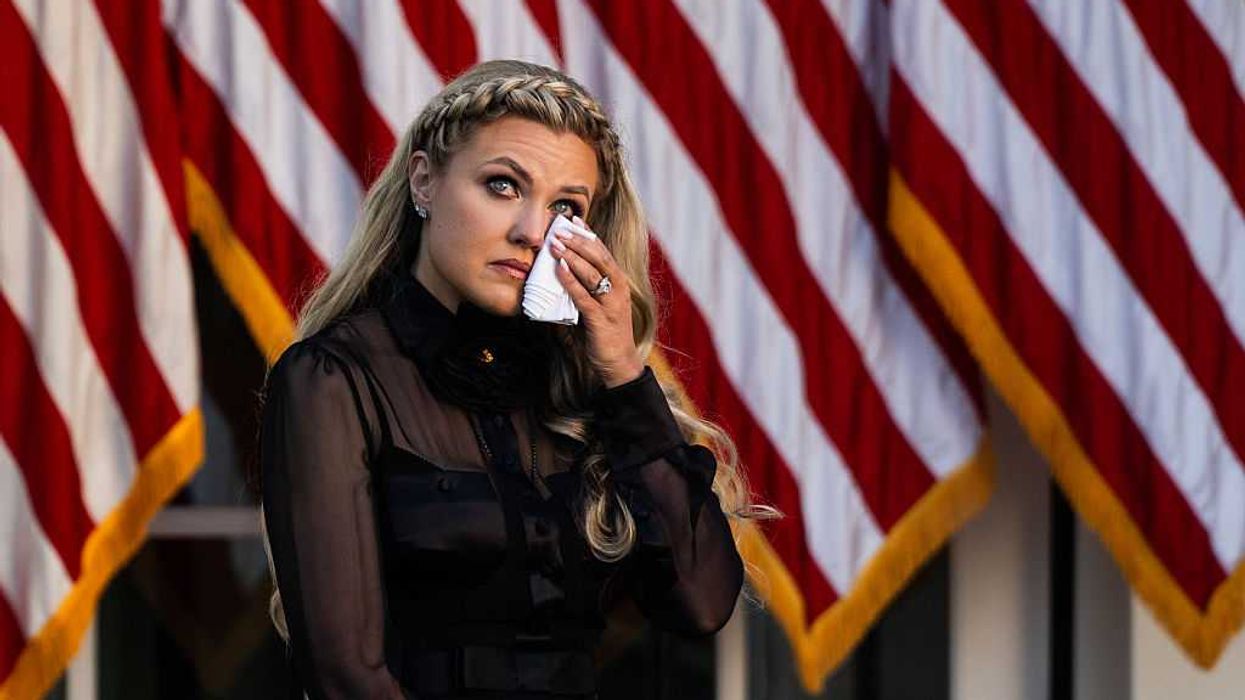
I watched a young widow step into public life just weeks after her husband’s death. The world called her strong — and maybe she is — but what I saw most was sorrow: raw, recent, and surrounded by noise.
We rush to praise courage yet hesitate to sit with grief. Pain now unfolds before an audience eager to watch and quicker still to turn sorrow into argument. The question isn’t whether we’ll look, but how. Will we meet grief with reverence or rhetoric?
Suffering doesn’t exist to make us louder or more righteous. It exists to make us wiser — to teach maturity, not mobilize outrage.
When nations grieve
What’s true for one heart is true for a nation. After 9/11, America was ready to fight — and we did. But what did we learn? How did we grow? What did we lose along the way? Pain can rally a nation, yet fail to mature its people. Did we take enough time to observe our national trauma?
The lives lost, the wounded carried home, and the enormous resources spent all suggest we did not. And what is true of nations is true of hearts: When we rush past pain, we forfeit the wisdom it offers.
The thought that God rules our pain can make us flinch. If God doesn’t rule it, suffering has no purpose — something to endure but not to transform. His sovereignty may not always appear kind, yet as William Cowper reminded us, “Behind a frowning providence, He hides a smiling face.”
In four decades as a caregiver, I’ve learned that trauma has its own language, one that will not be hurried or managed. It needs presence, patience, and space. Dr. Diane Langberg, who has spent her life among the wounded, often reminds us, “We dare not rush what God Himself is willing to sit with.” That is ministry: sitting beside, not speaking over.
The wisdom of mourning
The Jewish people understand this. When someone dies, the bereaved sit shiva — seven days of stillness and shared silence. Friends come not to fix but to accompany. Then comes sheloshim — 30 days to move slowly back toward life. For a parent, mourning extends a full year. Their wisdom tells us what our culture forgets: Mourning isn’t an interruption of life; it’s part of it.
We can learn from that rhythm. When tragedy strikes, our nation lowers its flags to half-staff. For a day or two, we pause, reflect, and pray. Then the flags rise again and life resumes. That is understandable for a country, but not for a soul. For the bereaved, the flag stays lowered long after the headlines fade.
Even the church can hurry the hurting. We mistake composure for recovery and public strength for peace. But grief that is forced to perform eventually breaks in private and sometimes spills into public.
When my wife, Gracie, lost her legs and entered decades of agony, healing did not come through attention or activity. It came through grace, tears, and time, mostly in obscurity. People see her sing or laugh and assume she has gotten over it, that she’s moved past it. What they do not see is that she had to redefine her life; this is her life. Someone once told me, “Process the pain privately, share the process publicly.” That wisdom has steadied us for years.
The quiet saints of suffering
Our culture is too quick to parade its wounded on stages when they would be better served by sitting in stillness, in pajamas or sweats, without having to put on makeup or smile for the cameras.
I’ve seen that truth in lives like Joni Eareckson Tada’s, who has lived with quadriplegia (paralysis affecting all four limbs and the torso) for nearly 60 years after a diving accident. In her, suffering has distilled faith into something deep and steady, strong enough to hold her and extend grace to others who suffer.
Forgiveness, like healing, takes time. To forgive is not to excuse or forget; it is to trust God with justice and mercy, believing He knows what we cannot. Forgiveness is faith expressed with open hands — the slow loosening of the grip around another’s throat.
Philip Yancey once observed that grace, like water, flows to the lowest places. That is where I have found it: in hospital corridors, in the lonely watches of the night, and in the long quiet of waiting rooms. Not in applause or attention, but in the hush where pain meets patience.
RELATED: The poisoned stream of culture is flowing through our churches
 Photo by Anadolu / Contributor via Getty Images
The best model for us
Our culture distracts us from sorrow, rushing past pain as if speed can save us. “Don’t look in the rearview mirror,” people say. “Keep moving forward. Get past it.” But some wounds do not recede with distance. They remain, reshaping who we are and how we see the world. Grief, but only if we resist the urge to flee from it.
Scripture tells us that Jesus Himself was “a man of sorrows, acquainted with grief” (Isaiah 53:3). If He carried sorrow, then sorrow itself is not unclean. His setting apart for redemption doesn’t happen on cue, not in our timeframe. It unfolds in God’s time, often unseen and unhurried. Our pain, when entrusted to Him, becomes something consecrated, set apart not for ruin but for restoration. In His hands, our sorrow becomes sacred ground.
When trauma shatters a life, our calling is not to elevate but to shelter. We are called to stand nearby like those who sit shiva, unhurried and unafraid of silence. We can only observe another’s trauma, but God enters it. The wounds in His hands and side show us that He understands the anguish of loss, rejection, even death. His way is not avoidance but presence, and His model is a good one for us.
Solitude with God is not empty silence, but the stillness where His healing takes root. The psalmist wrote, “Be still, and know that I am God” (Psalm 46:10). In that quiet, we see what countless believers across the ages have discovered: Even what was meant for evil, God weaves for good. He does not waste our sorrow. When we trust His timing, the trauma observed gives way to the grace observed.





