Category: Caregivers
Caregiving decisions begin in the bathroom
The holidays have a way of forcing conversations many families would rather postpone.
Every year, as adult children come home and aging parents gather around the table, familiar signs emerge. Someone struggles with stairs. Someone tires more easily. Someone forgets what was once routine. And with those observations come discussions caregivers know well.
The promise.
“I’ll never put Mom or Dad in a nursing home.”
It is often spoken years earlier, in healthier days, and always with sincerity. At the time, it feels like a declaration of love and loyalty. Assisted living seems distant, unnecessary, and meant for other families, not ours.
The problem is not the promise. The problem is that life keeps changing.
Circumstances change. Strength ebbs. What once worked may no longer work safely or wisely.
Over time, what began as devotion can quietly become more than one person can manage alone. Needs grow. Safety becomes a concern. Medical issues multiply. Caregivers often find themselves trying to do, by themselves, what normally requires trained professionals, proper equipment, and constant oversight.
At that point, the issue is no longer love or loyalty. It’s capacity.
That reality came into focus during a recent conversation with a friend. He had offered a small cottage on his property to help a friend relocate aging parents closer to family. The mother now uses a walker. The father has been her caregiver for years, but serious heart problems have begun to limit what he can safely do.
Still the conversation kept circling back to the same refrain: Neither would ever go into assisted living or a nursing home.
Their adult son is caught in the middle, trying desperately to make everyone happy. That is a fool’s task. In my work with fellow caregivers, I call this the caregiver FOG — fear, obligation, and guilt — because it blurs perspective, narrows options, and makes even familiar paths hard to see. No one wins.
It is like driving into actual fog. Visibility drops. Muscles tense. Judgment narrows. We try to peer miles ahead when we can barely see the hood of the car.
Every highway safety officer gives the same advice: Slow down, turn on the low beams, and stop trying to see five miles down the road.
Caregiving requires the same discipline.
My friend asked what I thought.
I suggested we lower the emotional temperature and start with one concrete issue.
Not the promise. Not the arguments. Not the guilt.
Start with the toilet.
Laugh if you like. It sounds abrupt. But it has a way of clarifying reality quickly.
RELATED: When the soul flatlines, call a ‘Code Grace’
 PeopleImages via iStock/Getty Images
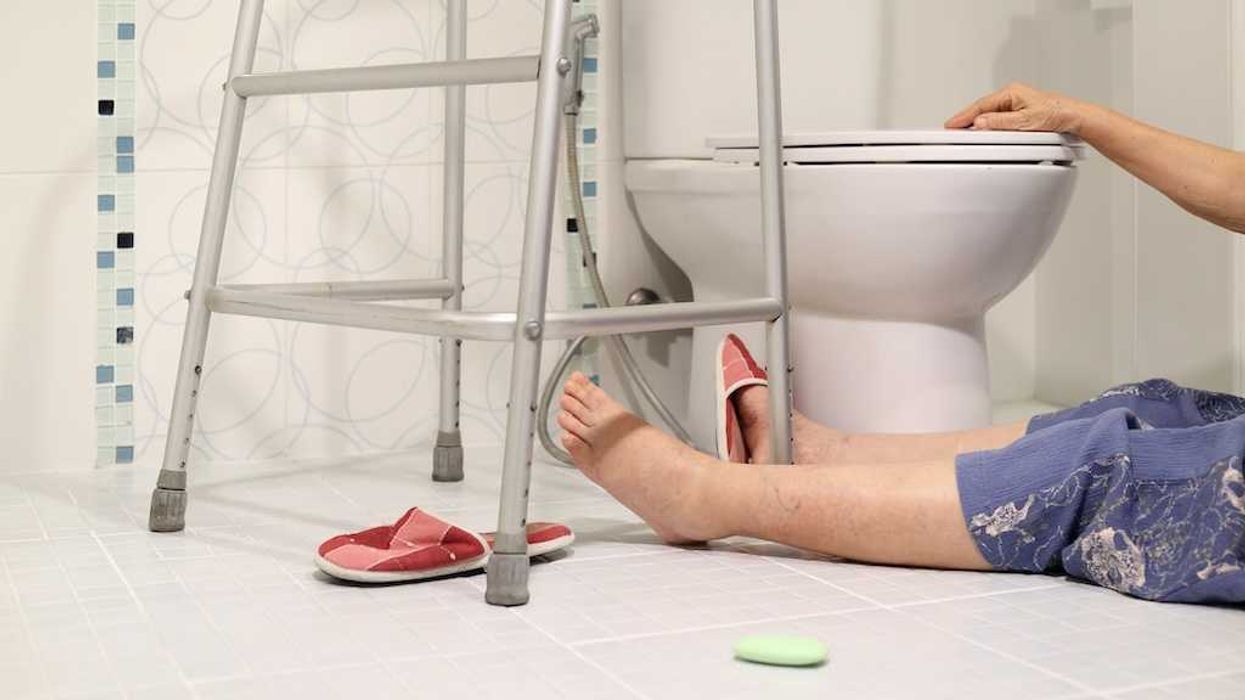
The bathroom is often ground zero for caregiving challenges. If the toilet is not safe and accessible, the demands on the caregiver escalate immediately. Transfers become harder. Fatigue compounds. Falls become more likely.
Once the toilet is addressed, you move outward.
The shower. The bedroom. Doorways, lighting, entrances.
Sometimes modest changes are enough — grab bars, a raised toilet seat, a walk-in shower. None of these are exotic ideas. But determining needs honestly requires facing the limits of strength, balance, and endurance as they exist today, not as we wish they were.
While politicians and toilets often deal with similar subject matter, toilets remain refreshingly honest. They simply reveal what actually works.
When families do this, reality follows. Cost. Time. Budgets weighed against needs. Timelines measured against declining strength. What once felt like a moral standoff becomes a practical evaluation.
Fear, obligation, and guilt begin to loosen their grip. In their place come planning, stewardship, and direction.
This matters because emotional decisions often rush families into choices that create larger — and sometimes far more expensive — problems later. We see this dynamic everywhere, including politics. While politicians and toilets often deal with similar subject matter, toilets remain refreshingly honest. They do not respond to intentions, promises, or speeches. They simply reveal what actually works.
Families do not choose assisted living or nursing homes in the abstract. Toilets always have a seat at the decision table.
RELATED: Christian, what do you believe when faith stops being theoretical?
 fotojog via iStock/Getty Images
Surveys consistently show that most older Americans want to remain in their own homes as they age. That desire is sincere and understandable. But staying home without meaningful accommodations transfers an enormous burden onto the caregiver. The home may remain familiar, but the cost — physical, emotional, and relational — often rises exponentially.
Most promises are made sincerely. They are also made without a full understanding of how disease progresses, how bodies change, or how deeply caregiving reshapes everyone involved. Honoring a promise does not mean freezing it in time. It means continually asking how we can care well, given today’s realities.
Assisted living is not a surrender of care. In many cases, it is an extension of it. It allows families to return to being sons, daughters, and spouses, rather than exhausted amateur medical staff running on guilt and fumes.
We are not obligated to preserve every arrangement exactly as it once was. We are called to steward what has been entrusted to us — finances, time, energy, relationships, and the caregiver as well.
Circumstances change. Strength ebbs. What once worked may no longer work safely or wisely.
Important decisions are best made with clear heads, honest assessments, and wise counsel — not under the duress and resentment that so often accompany them. The days after the holidays are not a verdict. They are an invitation to slow down, think clearly, seek experienced guidance, and choose what is best not just for one individual but for the whole family.
The path forward is rarely determined by emotion, decades-old promises, or guilt.
More often, it is clarified by something far more unassuming — and far more truthful.
The appliance in the nearest bathroom.
Christian, what do you believe when faith stops being theoretical?
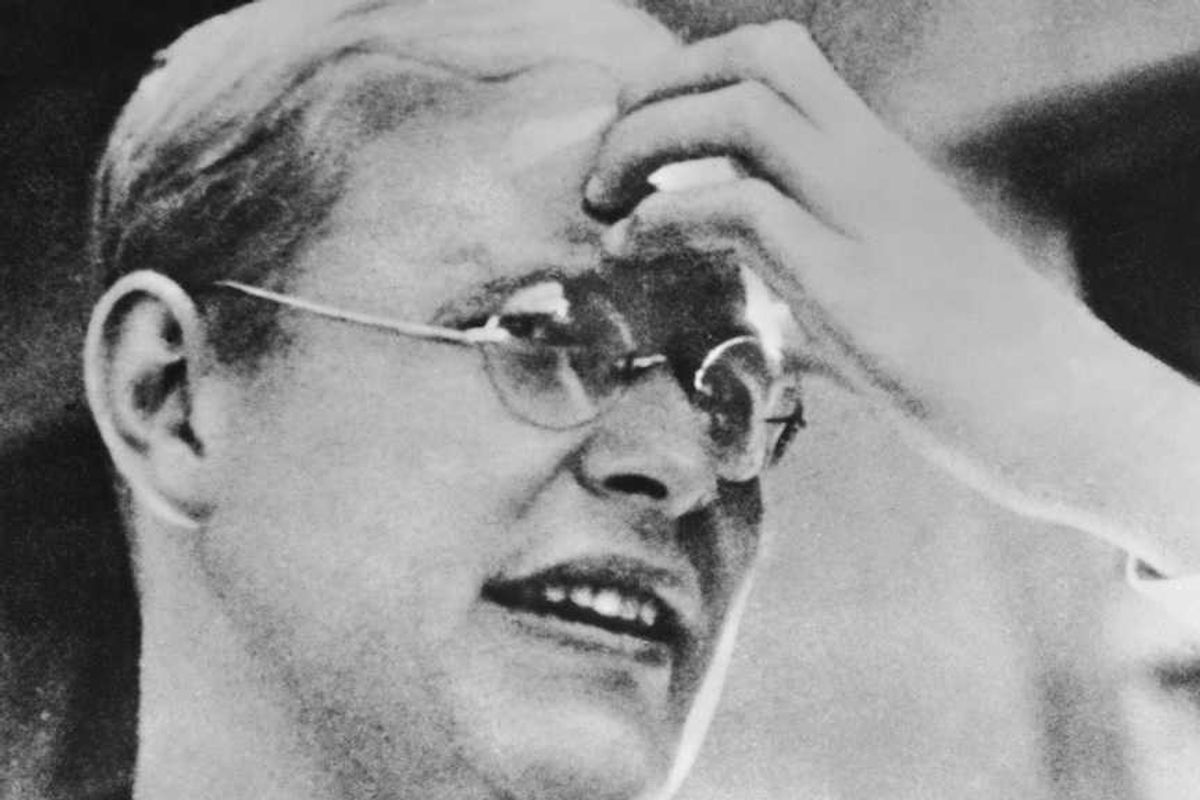
Dietrich Bonhoeffer once wrote from a prison cell, “It is only by living completely in this world that one learns to have faith.” He wrote those words after the world had closed in, when faith could no longer remain theoretical.
I live with someone who understands exactly what he meant.
In those moments, belief stops being a feeling and becomes a claim. Not something you summon, but something you test.
My wife, Gracie, has lived with disabilities for virtually her entire life. Hospital rooms and operating schedules do not interrupt our life — they form its familiar terrain. Over time, suffering has stopped being a concept and become a place we recognize.
I also have a friend who understands what Bonhoeffer was describing.
Her name is Joni Eareckson Tada. A diving accident in her teens left her a quadriplegic. Her life has unfolded under paralysis, chronic pain, and illness. She does not approach suffering from a distance.
Last year, during one of Gracie’s long hospital stays, Joni called.
Most people asked about Gracie. Joni did too. But then she asked about me.
That question deserved more than a stock reply.
I paused.
Moments like that strip away emotional self-examination and force you to examine your claims instead.
As I spoke with Joni, I shared something that has steadied me for decades.
In our church, there came a moment when the pastor would stop, look out over the congregation, and ask a single question: “Christian, what do you believe?”
We did not improvise. We did not search for language that felt expressive or current. We stood and recited the Apostles’ Creed or the Nicene Creed. No personal spin. No tailoring belief to the moment. Just a clear declaration of what had been received.
That question stayed with me.
It returned again and again over the years, especially in places where explanations had lost their usefulness. I learned the limits of “why.” Even good answers rarely hold steady there.
In those moments, belief stops being a feeling and becomes a claim. Not something you summon, but something you test.
If Christ is who I say He is, then what does that require of me here?
I was not trying to manufacture courage or resolve. I was asking whether the faith I professed in calm settings could bear weight when standing itself cost something.
“Christian, what do you believe?”
Over time, many of the questions I once carried narrowed to that one. Not because the pain diminished or the losses stopped coming, but because belief, when real, clarifies responsibility.
The apostle Peter tells believers to be ready to give an answer for the hope within them. That readiness has nothing to do with eloquence. It comes from knowing where you stand.
As a new year begins, many caregivers feel little sense of reset, except for the deductible and the co-pay.
Some stand outside an ICU, looking through glass at someone they love. Others stand in different hallways, facing different kinds of loss. Different rooms. The same ache.
RELATED: Do not pass the plow: The danger of declaring a golden age without repentance
 John J. Kim/Chicago Tribune/Tribune News Service via Getty Images
Bonhoeffer did not write from a place of safety or control. He wrote from confinement, where faith could no longer remain theoretical. Many recognize that narrowing, the sense that life has closed in and the ground beneath you has given way.
Faith is learned there, not discussed.
Exhaustion thins memory. Words scatter. Not everyone can recall creeds when sleep runs short and decisions carry real weight. But belief does not measure itself by recall. It reveals itself by posture.
When the floor gives way, you still need to know where to stand.
If He is Lord at all, then He is Lord of all.
Not only of sanctuaries, but of hospital corridors.
Not only of strength, but of weakness.
Not only of moments we would choose, but of moments we would never script.
That confession does not remove pain. It does not explain every loss. But it does tell us where to stand when the world presses in.
And when glass separates you from the one you love, whatever room that glass happens to be in, the question does not stay abstract.
It turns personal.
Christian, what do you believe?
The people carrying addiction’s weight rarely get seen
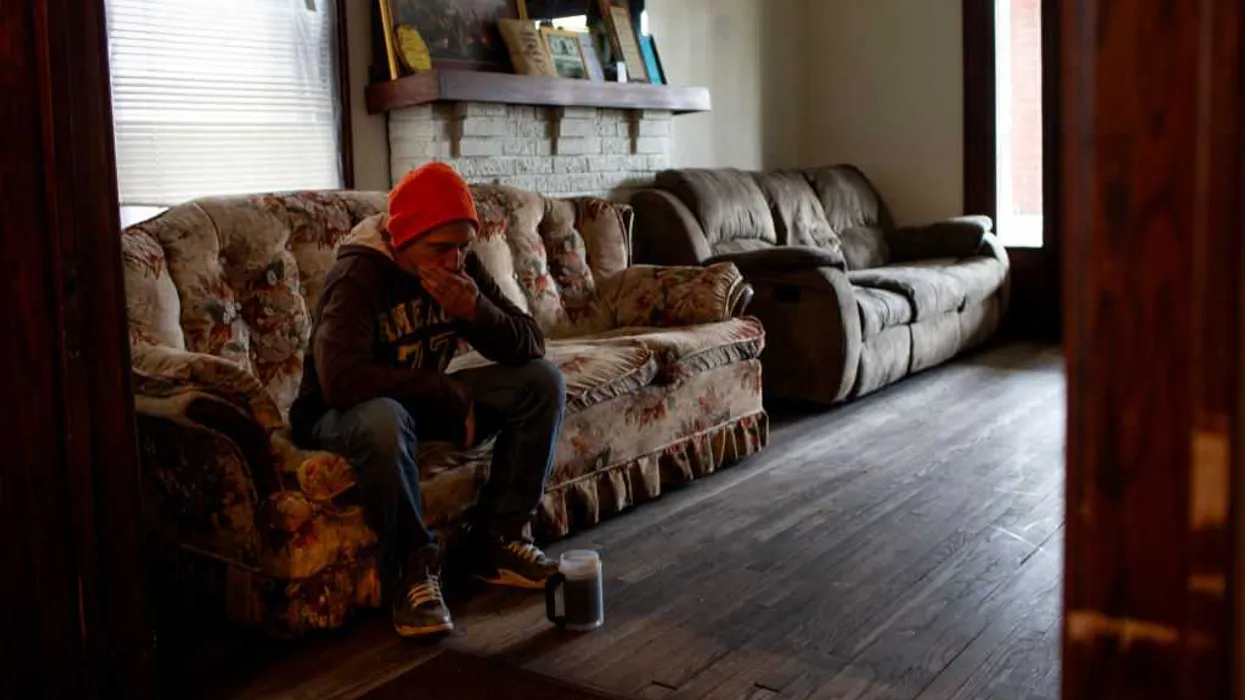
What happened Sunday at the home of Rob and Michele Reiner is a family nightmare. A son battling addiction, likely complicated by mental illness. Parents who loved him. A volatile situation that finally erupted into irreversible tragedy.
I grieve for them.
Shame keeps families quiet. Fear keeps them guarded. Love keeps them hoping longer than wisdom sometimes allows.
I also grieve for the families who read those headlines and felt something tighten in their chest because the story felt painfully familiar.
We often hear the phrase, “If you see something, say something.” The problem is that most people do not know what to say. So they say nothing at all.
What if we started somewhere simpler?
I see you. I see the weight you are carrying. I hurt with you.
Families living with addiction and serious mental illness often find themselves isolated. Not only because of the chaos inside their homes, but because friends, neighbors, and even faith communities hesitate to step closer, unsure of what to say or do. Over time, silence settles in.
Long before police are called, before neighbors hear sirens, before a tragedy becomes a headline, people live inside relentless stress and uncertainty every day.
They are caregivers.
We rarely use that word for parents, spouses, or siblings of addicts, but we should. These families do not simply react to bad choices. They manage instability. They monitor risk. They absorb emotional whiplash. They try to keep everyone safe while holding together a household under extraordinary strain.
In many ways, this disorientation rivals Alzheimer’s. In some cases, it proves even more destabilizing.
Addiction is cruelly unpredictable. It offers moments of clarity that feel like hope. A sober conversation. An apology. A promise that sounds sincere. Those moments can disarm a family member who desperately wants to believe the worst has passed.
Then the pivot comes. Calm turns to chaos. Remorse gives way to rage. Many families learn to live on edge, constantly recalibrating, never certain whether today will be manageable or explosive.
Law enforcement officers understand this reality well. Many domestic calls involve addiction, mental illness, or both. Tension often greets officers at the door, followed by a familiar refrain: “We didn’t know what else to do.”
Calling these family members caregivers matters because it reframes the conversation. It moves us away from judgment and toward reality. From, “Why don’t they just …?” to, “What are they carrying?” It acknowledges that these families manage risk, not just emotions.
The recovery community has long emphasized truths that save lives: You did not cause it. You cannot control it. You cannot cure it. These principles are not cold. They bring clarity. And clarity matters when safety is at stake.
RELATED: The grace our cruel culture can’t understand
 Photo by Gary Hershorn / Getty Images
Another truth too often postponed until tragedy strikes deserves equal emphasis: The caregiver’s safety matters too.
Friends and faith communities often respond with a familiar phrase: “Let me know if there’s anything you need.” It sounds kind, but it places the burden back on someone already exhausted and often afraid.
Caregivers need something different. They need people willing to ask better questions.
Are you safe right now? Is there a plan if things escalate? Who is checking on you? Would it help if I stayed with you or helped you find a safe place tonight?
These questions do not intrude. They protect.
Often, the most meaningful help does not come as a solution, but as a witness. Henri Nouwen once observed that the people who matter most rarely offer advice or cures. They share the pain. They sit at the kitchen table. They walk alongside without looking away.
Caregivers living with someone battling addiction and mental illness often need at least one safe presence who sees clearly, speaks honestly, and stays when things grow uncomfortable.
We have permission to care, but not always the vocabulary.
Shame keeps families quiet. Fear keeps them guarded. Love keeps them hoping longer than wisdom sometimes allows. One of the greatest gifts we can offer is the willingness to penetrate that isolation with clarity, grace, and tangible help.
Grace does not require silence in the face of danger. Love does not demand enduring abuse. Faith does not obligate someone to remain in harm’s way.
Pointing a caregiver toward safety does not abandon the person struggling with addiction. It recognizes that multiple lives stand at risk, and all of them matter.
When tragedies occur, the public asks what could have been done differently. One answer proves both simple and difficult: Stop overlooking the caregivers quietly absorbing the blast.
RELATED: The courage we lost is hiding in the simplest places
 Photo by Wolfgang Kaehler/LightRocket via Getty Images
Welfare checks should not focus solely on the person battling addiction or mental illness. Families living beside that struggle often need support long before a breaking point arrives.
If you know someone whose son, daughter, spouse, or partner struggles, do not look away because you feel unsure what to say. You do not need to solve anything. You do not need to analyze anything.
Start by seeing them. Stay with them.
I see you. I see how heavy this is. You do not have to carry it alone.
Ask better questions. Offer practical help that does not depend on their energy to ask. Check on them again tomorrow.
This season reminds us that Christ did not stand at a safe distance from trauma. He came close to the wounded and brought redemption without demanding tidy explanations.
When we do the same for families living in the shadow of addiction and mental illness, we honor their suffering and the Savior who meets us there.
My crooked house made me rethink what really needs fixing

Our new addition is finally finished — level floors, wide doors, and a space where my wife, Gracie, can move freely despite her severe disabilities. After years of improvising in tight quarters, we’re grateful to have a place that works for us, even if it’s not perfect.
The new part of the house went up during Trump’s second non-consecutive term; the original part went up during the second term of the only other president to do the same, Grover Cleveland. Joining the two is a bit like welding a Tesla to a horse-drawn buggy — functional, charming, and only slightly defiant of gravity.
When most of life leans, you can still make one crooked thing right.
During construction, the fridge in our tiny kitchen got bumped off the carefully placed shims and tilted just enough to drive me crazy. Admittedly, that’s not a long trip.
I ignored it for about a week but finally couldn’t stand it anymore. Leveling a refrigerator in a cabin built during the Cleveland administration isn’t simple. There are pulleys, levers, questions about physics, and — in my case — a call to the engineering department at Montana State. They were not amused. My neighbor Charles, who often “pity helps” me, wasn’t available. I can’t prove it, but I think he hung up and immediately burst into laughter.
So I did it myself.
I knew it would be a project — and once I started, it could not easily be interrupted by caregiving duties. But exasperation collided with need, and I got down on the floor (at a slant) and went to work. It went exactly as expected: mild swearing, a few tears, and then a small victory. When the bubble on the level finally drifted near the center, I declared success, remembering that old rancher’s saying: “Most things can be fixed with baling wire and bad language.”
It’s level — well, Montana level — but I’ll take it.
Much of what I’ve faced as a caregiver over 40 years can’t be fixed. But small victories, like leveling a refrigerator in a house built when bread was 3 cents and buffalo still outnumbered politicians, remind me that even when most of life leans, you can still make one crooked thing right.
Everyone has a version of that tilted refrigerator — something off-kilter you keep meaning to fix but never quite reach. It might be a strained relationship, a stack of bills, or a heart worn down by too much bad news. You can’t straighten the world, but you can steady what’s right in front of you.
When life feels unsettled, taking time to level something — even a small thing — matters more than we think. Sometimes that quiet act of setting one thing right gives us just enough footing to stand through the rest of it.
RELATED: When fathers fall, grace asks more of us
 Osobystist via iStock/Getty Images
Years ago, city officials talked about “broken-window” policing: Neglect one thing, and the whole neighborhood starts to crumble. The opposite is also true. Fix one small thing, and a bit of order comes back. Leveling even one ordinary object pushes back against the chaos.
Most caregiving must be repeated tomorrow, but every so often something stays fixed. A grab bar anchored in the right place. A ramp that finally fits the chair. The day may still be full of mess and pain, but that one thing won’t need doing again. It stands there quietly, reminding you that not everything leans. Some things still hold. And sometimes that’s enough to remind you that you still can too.
When I turn on the news, I see dysfunction I can’t do anything about. But when I fix dinner, my refrigerator no longer leans.
There’s an old Appalachian saying: “Fix what you can. The rest was never yours to mend.”
Level what you can. Let the rest lean.