Category: Christian
Dear Globalists, AI Won’t Defeat Christianity
This year’s meeting of liberal elites in Davos, Switzerland, was supposed to be banal. You can always tell when meetings…
Biden’s faith attacks backfire: Support for religious liberties soars to record high under Trump, new report shows
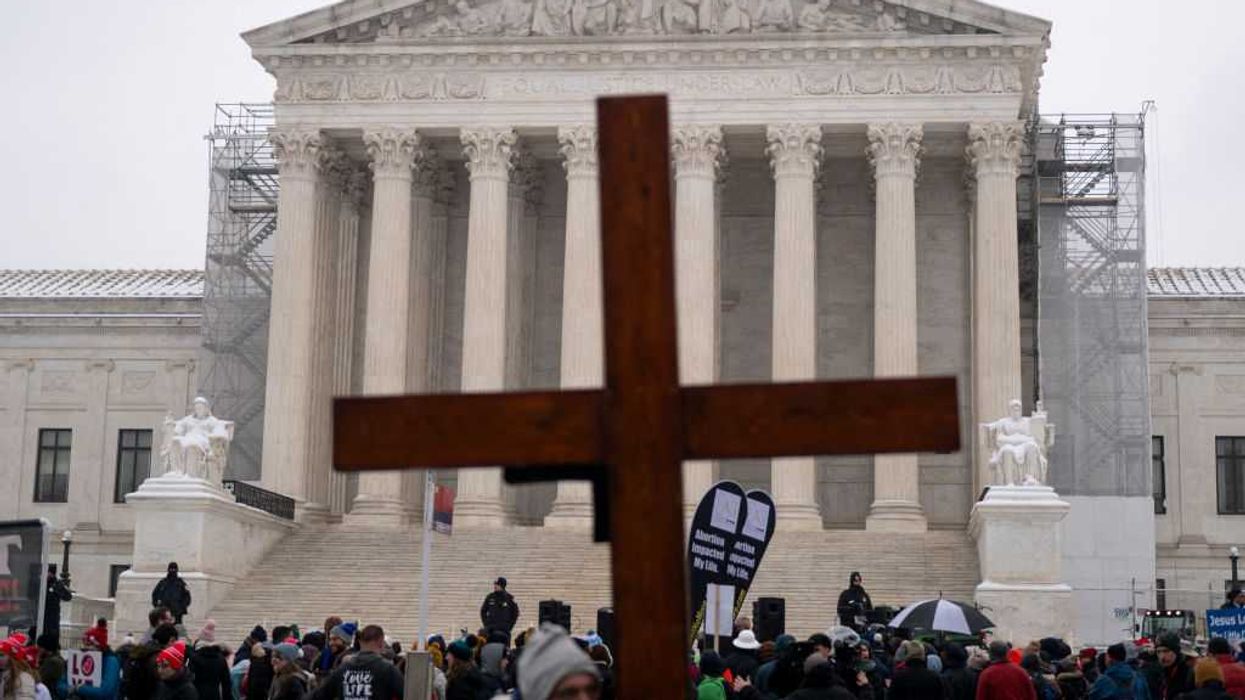
Against a backdrop of mounting attacks on churches, the Biden administration worked ardently to curb religious liberties wherever they came into conflict with the left’s radical agenda.
For example:
- the Biden Equal Employment Opportunity Commission implemented a rule requiring employers — including Christian organizations — to accommodate workers’ efforts to abort their unborn children;
- the EEOC attempted to force Christians to pay for employees’ sex-rejection mutilations;
- the Biden Department of Health and Human Services attempted to bar Christian providers who hold biblical and scientifically grounded views about sex and marriage from the foster-care system; and
- under Biden, a Catholic, the FBI characterized conservative Catholics as potential domestic terrorists and proposed to infiltrate Catholic churches as “threat mitigation.”
It’s clear from the Becket Fund for Religious Liberty’s latest Religious Freedom Index that unlike the administration voted out of power in 2024, the American people overwhelmingly — and increasingly — support religious liberties.
‘Our nation still believes that our first freedom belongs at the heart of our culture; not as a source of conflict, but as a foundation for overcoming it.’
Over the past six years, Becket has tracked public opinion on religious freedom. The legal group’s index for 2025 published on Friday registered the highest cumulative score for public support of religious freedom to-date — 71 on a scale from 0 to 100 where 0 indicates complete opposition to religious liberty and 100 indicates robust support.
This amounts to a dramatic shift, especially when compared to 2020, when the composite score was 66.
Whereas in 2020, 52% of respondents agreed that religious freedom is inherently public and that Americans should be able to share their faith in public spaces, that number jumped to 57% in the latest RFI.
There was an even bigger shift when it came to support for parents’ ability to opt out of public school curricula they believe to be inappropriate — a jump from 63% in 2021 to 73% in 2025.
RELATED: 6 ways I’m using 2026 to deepen my relationship with God
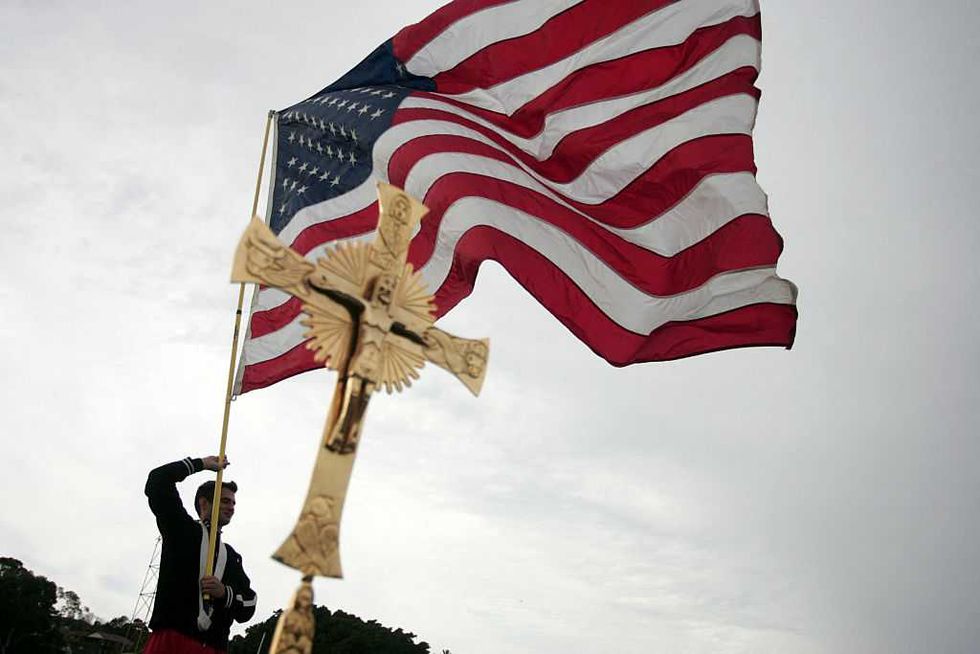 Photo by ANOEK DE GROOT/AFP via Getty Images
When asked specifically about the Supreme Court’s June 2025 ruling in Mahmoud v. Taylor, 62% of respondents signaled support for the high court’s decision to side with the Maryland parents who wanted to protect their children from LGBT propaganda in Montgomery County Public Schools.
On the question of whether public funding for education should be available to all families, including those who choose religious schools, 77% of respondents said they were mostly or completely in favor.
The report noted that “although this year’s Index found that Americans have cooled on the benefits of religion to society and are skeptical of institutions, they unify around the simple principles of religious freedom for all, even in difficult cases that invite scrutiny or controversy.”
A clear majority, 58%, of Americans said they support the right of a Christian baker to decline to make cakes that conflict with her sincere religious views.
Sixty-one percent of respondents said that the First Amendment’s guarantee of the free exercise of religion should protect Catholic priests from having to break the seal of confession as would have been required by Washington state Democrats’ now-enjoined Senate Bill 5375.
There was markedly less support for the Christian counselor in the case Chiles v. Salazar who challenged Colorado’s prohibition on so-called “conversion therapy” for non-straight youth. Only 47% expressed support for her ability to provide talk therapy to children to help them overcome their gender dysphoria.
“Year after year, the Index has made clear that religious liberty remains one of our most cherished values,” Mark Rienzi, president and CEO of Becket, said in a statement obtained by Blaze News.
“Even amid deep divisions, our nation still believes that our first freedom belongs at the heart of our culture; not as a source of conflict, but as a foundation for overcoming it,” continued Rienzi. “The work before us is to see that freedom protected for our children and theirs in the years to come.”
Like Blaze News? Bypass the censors, sign up for our newsletters, and get stories like this direct to your inbox. Sign up here!
Democrats Are Just As Godless As You’d Imagine, Study Shows
‘no more important voting bloc in the country’
‘Argument accepted’: Dying ‘Dilbert’ creator and Trump ally Scott Adams says he’s becoming a Christian

Scott Adams, the creator of the “Dilbert” comic strip and a frequent defender of President Donald Trump, revealed in May 2025 that he had been diagnosed with prostate cancer, it had metastasized to his bones, and he was not long for this world.
“The disease is already intolerable,” said Adams. “So if you’re wondering, ‘Hey Scott, do you have any good days?’ Nope. Nope. Every day is a nightmare, and evening is very worse.”
‘What happens next is between me and Jesus.’
While Adams had run out of good days, good news was on the horizon.
The 68-year-old cartoonist revealed on the Sunday episode of his show, “Real Coffee with Scott Adams,” that he is converting to Christianity.
In November, Adams requested Trump’s help in securing the prostate cancer drug Pluvicto for which his health care provider had apparently approved his application but “dropped the ball in scheduling the brief IV to administer it.”
Trump and members of his administration indicated they were “on it” and apparently intervened on the cartoonist’s behalf. However, Adams’ potentially life-changing treatment was postponed last month on account of his radiation treatment.
Last week, Adams noted on his show that “the odds of me recovering are essentially zero.”
In addition to suffering paralysis below the waist, Adams indicated that he is struggling to breathe on account of ongoing heart failure.
Days after telling his audience that January will probably be “a month of transition one way or the other,” Adams made clear on Sunday that the imminent changes in his life were not all of a medical nature.
RELATED: Christian, what do you believe when faith stops being theoretical?
 Photo by Bob Riha, Jr./Getty Images
“Many of my Christian friends and Christian followers say to me, ‘Scott, you still have time. You should convert to Christianity.’ And I usually just let that sit because that’s not an argument I want to have,” said Adams. “I’ve not been a believer. But I also have respect for any Christian who goes out of their way to try to convert me because how would I believe you and believe your own religion if you’re not trying to convert me?”
‘You’re never too late.’
Evidently the efforts of Adams’ friends were not in vain.
“You’re going to hear for the first time today that it is my plan to convert,” said Adams. “So I still have time. But my understanding is you’re never too late. And on top of that, any skepticism I have about reality would certainly be instantly answered if I wake up in heaven.”
Adams — who has long wrestled with questions about God and has been critical both of religion and atheism in his writing — notified his Christian friends that he does not require any more apologetics and has embraced what appears to be Catholic philosopher Blaise Pascal’s argument for believing in God.
“I am now convinced that the risk-reward is completely smart. If it turns out that there’s nothing there, I’ve lost nothing but I’ve respected your wishes, and I like doing that,” said Adams. “If it turns out there is something there and the Christian model is the closest to it, I win.”
“Argument made, argument accepted,” added Adams.
In the wake of his announcement, Adams wrote on X that while he appreciates the outpouring of support and questions, “What happens next is between me and Jesus.”
Like Blaze News? Bypass the censors, sign up for our newsletters, and get stories like this direct to your inbox. Sign up here!
Why the pro-life movement fails without a Christian worldview


In the United States and other Western nations, pro-life organizations are the primary means through which conservative Christians oppose legalized abortion.
With their cultural engagement and legislative efforts, these pro-life groups and leaders purport to oppose the murder of preborn babies, ultimately desiring the complete end of abortion. But a simple examination of the worldviews held by these groups shows that many are not operating in a distinctly Christian fashion, even when they are led by professing Christians.
We continue to practice child sacrifice today through abortion.
Some pro-life organizations are self-admittedly non-sectarian, seeking to build coalitions of anti-abortion people who may be Christians, other religious conservatives, agnostics and atheists, or feminists.
But even the pro-life groups that are convictionally Christian, or led by convictional Christians, often functionally set aside the Christian worldview.
The church through the ages, bearing the gospel of life, has been the means by which the deathly deeds of child sacrifice have been overturned in countless cultures. The dearth of a Christian worldview in the current anti-abortion movement should, therefore, be gravely concerning to any believer who likewise wants to see modern child sacrifice abolished.
The doctrine of man
Christianity teaches that humans are creatures made in the image of God with rational souls (Ecclesiastes 7:29), but that mankind fell in the Garden of Eden (Genesis 3:1-7) and became dead in sin (Ephesians 2:1-3). We, therefore, have a thoroughly corrupted nature by which we are innately inclined toward evil (Romans 3:10-18).
The act of child sacrifice is one particularly brazen form of evil toward which man has always been predisposed. The murder of children for reasons of prosperity or convenience has occurred on every continent and was practiced by most major civilizations at some point in their history.
We continue to practice child sacrifice today through abortion.
In almost every abortion decision, the motivation is a rejection of inconvenient responsibility, the desire to prioritize college or career, or some other factor that could never even start to approach a justified reason for murdering an innocent human made in the image of God.
Western nations used to presuppose the Christian worldview. But in recent centuries, Enlightenment ideas have corrupted or entirely usurped the Christian worldview, especially concerning the sinful state of human nature.
Rather than saying that mankind is a valuable yet fallen creature, Enlightenment heretics taught that humans are fundamentally blank slates or even morally good and that with education or infusion of knowledge, mankind can experience true moral progression.
Such a worldview can be seen in pro-life groups claiming that “if wombs had windows, babies would be protected from abortions.” Others say that they are working to “make abortion unthinkable,” as if sin could ever be made completely unthinkable to fallen sinners.
Enlightenment presuppositions about human nature also impact pro-life legislative strategy. Many pro-life groups try to pass laws that seek to mandate informed consent or require viewing ultrasounds before a woman willfully decides to murder her preborn baby.
While some pregnant mothers, especially those who are already soliciting the help of a crisis pregnancy center, may choose life after seeing an ultrasound image of their babies, there are still plenty of others who choose to murder their babies even after seeing the images.
In other words, abortion is not caused by mere ignorance, but by the selfish desires of fallen men and women who value their own prosperity or convenience more than the very lives of their children.
We indisputably live in a culture of death that increasingly accepts abortion. But the development of this culture has occurred alongside the most rapid development of ultrasound technology.
In past generations, mothers and fathers did not see advanced ultrasounds of their preborn babies, yet those generations were considerably more anti-abortion than their children and grandchildren are today. In our current culture, everyone has seen ultrasounds of their own children or the children of others, but abortion is more accepted and even normalized, despite this increased knowledge about life in the womb.
The answer to legalized abortion is not merely an infusion of more education or knowledge for those who would willfully murder their preborn babies.
The answer to legalized abortion is to make abortion illegal. But pro-life organizations are often hesitant to embrace such a position.
The doctrine of government
Christianity teaches that God has established civil authorities to govern human society (Genesis 9:6). These civil authorities are servants of God commanded to bear the sword (Romans 13:1-7) against those who practice evil (1 Peter 2:14). The government exists under the dominion of Jesus Christ (Revelation 19:16) to uphold the public good and to deter evil conduct through the threat of swift punishment (Ecclesiastes 8:11). The act of murdering a preborn baby qualifies for such penalties (Exodus 21:22-25).
Most pro-life organizations would agree with God that abortion is murder. Many would agree that because preborn babies are made in the image of God, there is no inherent moral difference between murdering a person who has been born and a person who has not yet been born.
But when legislating against abortion, they almost never extend that moral equivalence into a legal equivalence, and they functionally address abortion as less than murder.
Many pro-life groups have even actively subverted efforts to establish equal protection of the laws for preborn babies.
Rather than simply treating abortion as murder, they self-admittedly seek to be “innovative” with the laws they write, and they almost never create effective anti-abortion deterrents as a result.
The vast majority of pro-life bills regulate the circumstances of abortion. They allow for abortion once certain conditions are met, such as murdering a baby provided that he or she receives a proper burial, or murdering a baby before he or she reaches a certain stage of development.
Some even adopt the false moral framework of abortion activists by regulating abortion like health care. They allow abortion after the woman who desires to murder her preborn baby first obtains permission from a doctor, essentially legitimizing and sanitizing abortion through the health care system.
There are many proposals specifically targeted at providers of abortion pills, ignoring the reality that even if the flow of abortion pills is truly halted, many methods of abortions exist beyond those substances and have become increasingly popular in recent years.
These laws largely shift behavior rather than save lives, ensuring that abortions continue through legally sanctioned channels instead of deterring the act of abortion entirely.
The emphasis of these pro-life regulations is not criminalizing abortion as murder. If the pro-life groups that write such legislation acted consistently with their professed beliefs about abortion as murder, they would seek to criminalize all abortion accordingly.
But instead of pursuing such an objective, many pro-life groups have even actively subverted efforts to establish equal protection of the laws for preborn babies.
Christian organizations have repeatedly proposed bills that would simply extend the existing homicide, assault, and wrongful death laws that protect born people in order to protect preborn people. Rather than supporting those bills, leading pro-life groups have issued a national open letter to all lawmakers in the U.S., urging them to oppose such proposals because they could lead to penalties for women who willfully have abortions.
Over the past decade, state and national pro-life organizations have been instrumental in subverting dozens of equal protection bills, largely in conservative states that should otherwise have the power to abolish abortion.
The task of civil authorities, as the Christian worldview affirms, is the punishment of wicked conduct, which preserves innocent life by deterring future wicked conduct and provides justice on behalf of the victims. God clearly expects abortion, which is an act of murder, to be punished by civil authorities.
When pro-life groups advocate for regulating abortion rather than punishing those who willfully murder their preborn babies, they protect the legally sanctioned practice of abortion and keep the sword of justice in the sheath.
These pro-life groups not only enable the murder of preborn babies made in the image of God, but protect conduct that damages the bodies and souls of the perpetrators.
The doctrine of repentance
Christianity teaches that repentance occurs when a sinner sees his or her sin as contrary to the nature and law of God (1 John 3:9), despises those sins (2 Corinthians 7:10), and turns from them to Jesus Christ (Acts 17:30-31). In order to properly confess sins, one must specifically name and acknowledge them before God (Psalm 32:5).
Many pro-life organizations not only oppose laws that could impose penalties on women who willfully have abortions, but actively write blanket legal immunity for women who have abortions into their laws. They insist that women who have abortions are categorically second victims, meaning that they cannot be held legally accountable for their actions.
Some pro-life groups claim that most women are coerced into abortions. Others insist that our culture of death removes all accountability from women by indoctrinating them into believing that their preborn babies are mere clumps of cells.
Such arguments are then used to support laws exempting all women — including those who can be shown in a court of law to have willfully murdered their preborn babies — from any criminal penalties.
But the assertions about widespread coercion are simply not true, as even surveys sponsored by pro-life research groups indicate that only a very small minority of women are truly forced into abortions they do not want.
In the same way, merely choosing to convince oneself of falsehood does not excuse evil actions that follow from those lies and almost never qualifies for the mistake of fact necessary to excuse someone of legal culpability.
Beyond the poor arguments required to support the claim that all women are categorical victims of abortion, and the ways in which they undermine the cultural and political credibility of pro-life groups, these arguments also deprive women who have had abortions of true repentance and, therefore, true forgiveness.
Those with a Christian worldview would invite a woman who has murdered her own preborn baby to confess her sin before God and receive abundant forgiveness through the gospel. But pro-life groups and leaders who believe that all women are second victims of abortion have little to offer such women beyond hollow “sympathy” and therapeutic reassurance.
If a woman is a mere victim who has not committed sin, then she has no need of repentance because she has no specific fault to confess before God.
But most women are willful participants in their own abortions. When pro-life groups insist to all women that they are indeed victims, they rob the very women they claim to love of any hope for true peace and pardon.
The pro-life groups functionally seeking to oppose abortion outside the Christian worldview will continue in their failure to end abortion. They will continue to lose, not only to the detriment of their cause but to the detriment of countless millions of preborn babies.
Christianity alone has the potency to end child sacrifice in a depraved civilization like the U.S. and the broader Western world. If we want to abolish abortion, Christians must never set aside the truth of God, but instead rely on the light of those truths to dispel the darkness of child sacrifice once and for all.
Exorcisms are exploding across America — but nobody wants to admit why
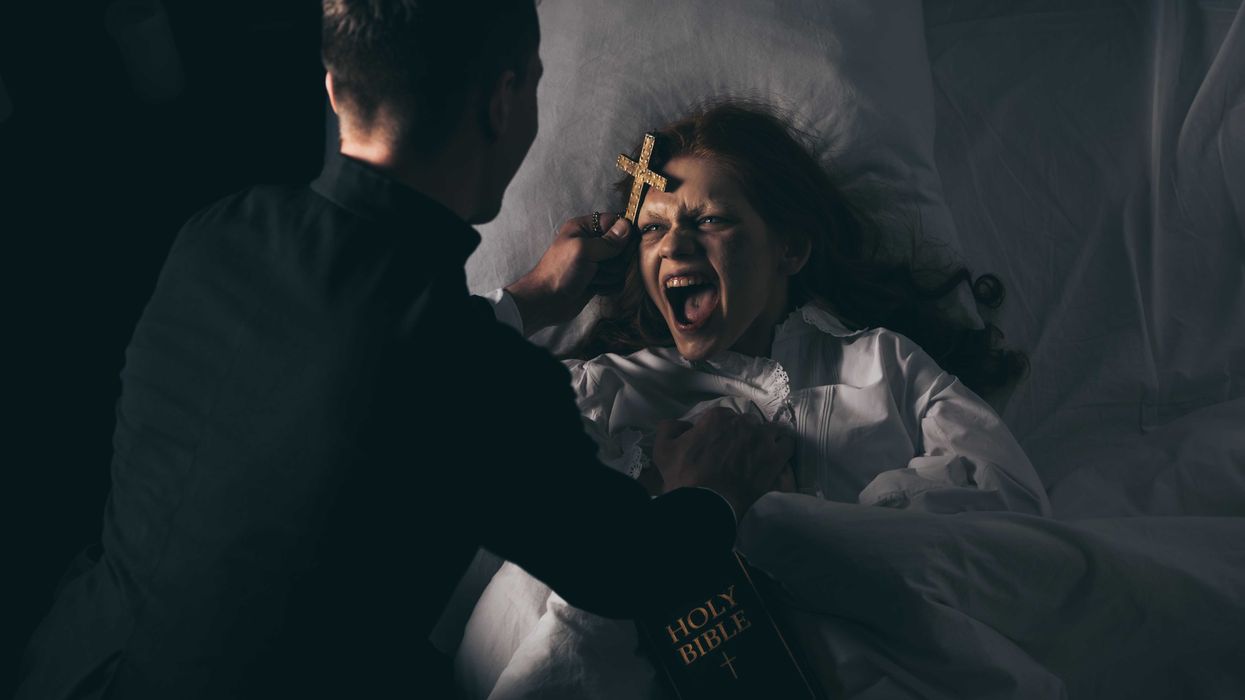
From Michigan to Melbourne, exorcisms are rising — an odd trend in an age when Christianity is supposedly retreating.
Odd, that is, if you accept the official story: that faith has faded, churches have emptied, and modern life has supposedly outgrown such concerns. Yet behind parish doors and rectory walls, priests report the opposite: more calls, cases, and urgency.
Evil persists not because it is misunderstood, but because it is minimized.
The demonic, it seems, didn’t get the secular memo.
I began making inquiries recently, speaking with clergy who have dealt with what most people would rather joke about, pathologize, or turn into content. One name surfaced repeatedly: Fr. Michael Shadbolt, a veteran priest who had performed numerous exorcisms and spoke of them with measured calm. I reached out to him for insight. Instead, I received word that he had recently passed away.
Thankfully, there was another source, carrying decades of experience where spiritual and psychological care meet. Fr. Stephen Rossetti, an American Catholic priest and seasoned exorcist, spoke without qualification.
“Yes, requests for exorcisms are on the rise in the U.S. and in other countries as well,” he told me. “There may be many reasons for this, but one obvious one is the decline of the practice of the faith.”
That observation runs counter to the fashionable narrative. The usual explanation for the rise in exorcisms is framed as a paradox: Christianity declines, so belief in demons increases.
But that framing flatters modern assumptions. It treats belief as an all-or-nothing package. Either accept the creed or discard the lot. But human experience has never worked that way.
One doesn’t need to believe in God to believe in evil — it’s everywhere. A loved one consumed by addiction. The husband who revels in beating his wife. The wife who revels in beating her husband. The son who turns on parents with lethal force.
RELATED: Interview with an exorcist: ‘God always takes the first step’
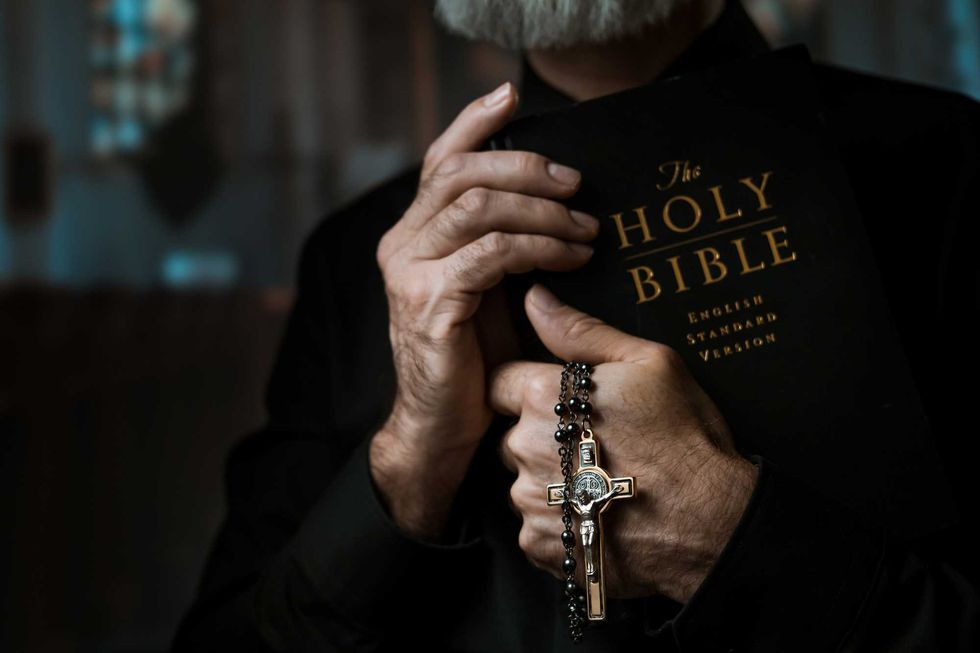 D-Keine/Getty Images
Evil doesn’t depend on belief to function. It advances through repetition, fixation, and the gradual loss of restraint. The language shifts with each generation, but the pattern remains. Every day, roughly 137 women and girls are killed worldwide in acts of femicide. Child sacrifice, usually relegated to ancient Peru or remote civilizations, still occurs in parts of Africa today. In the U.S., one in four girls and one in six boys will be sexually abused before the age of 18.
No vocabulary of Pinkertonian progress dissolves these facts. Calling evil “trauma” or “dysfunction” may describe the damage left behind, but it doesn’t confront the force itself. Such language manages outcomes while leaving causes untouched.
The modern world prefers to believe that evil is a misunderstanding, a system failure, or a lack of education. History suggests otherwise. Evil persists not because it is misunderstood, but because it is minimized. It thrives where it is renamed, rationalized, or treated as an embarrassing superstition.
Fr. Rossetti put it plainly, “Increasingly people are not protected by faith, and many are involved in occult practices, which are a clear opening to the demonic.”
That point is crucial. Militant atheism is seldom the starting point. The entry point is engagement with practices the Church has long warned against.
“We have a number of cases of people who drifted away from the faith and then got into the occult,” Rossetti explained. “After a few years, they found themselves afflicted by evil spirits.”
The remedy is clear. “The first thing we do is have them go to confession, start practicing the faith, and live a virtuous life,” he said. “All sin is an opening to evil in some way, and the worse the sins, the greater the opening.”
It is precisely for this reason, Rossetti continued, “that exorcisms are very effective.” However, he stressed, there’s no wand, no instant result. “Sometimes the process takes time. It is typically not one and done,” Rossetti said. After years of spell-casting, curse-making, and demon worship — often misidentified as “self-discovery” or “ancient wisdom” — it can take far longer to undo the damage.
He was explicit about the timeline. “It typically takes three to five years of exorcisms to liberate the person.” The process, he added, is one of conversion and purification.
“An exorcism is not magic,” he said.
The hierarchy is clear and always has been: Christ reigns, angels serve, demons defy — and ultimately lose.
What we are witnessing, then, is not the complete disappearance of belief but its fragmentation. Christianity retreats institutionally while belief itself goes feral. Old anchors are cut loose. New fixations rush in. The vacuum does not remain empty.
Look around. Astrology, once harmless nonsense, has become a personal operating system. It graduated from brainless fun to life-management software, complete with a $3 billion price tag. Tarot cards are sold as “self-care.” Witchcraft is rebranded as empowerment, paganism as wellness. Social media is saturated with spiritual freelancers promising protection, manifestation, and power — usually bundled with a payment link.
None of this is neutral, and none of it is consequence-free. Doors opened casually tend to stay open.
This is where the supposed paradox dissolves. Christianity isn’t retreating because belief vanished, but because belief lost its footing. Structure recedes, so superstition rises. When doctrine disappears, disorder follows. There is no neutrality — only exposure.
For those skeptical because of Hollywood portrayals, exorcism is not a medieval curiosity revived for effect, but a practical response to persistent realities. The Church isn’t inventing demons to stay relevant. Rather, it is reacting to what it actually sees — a culture defined by isolation, instability, and constant immersion in content that destroys self-control and sanity.
Fr. Rossetti was clear on the final point, one that many increasingly resist.
“It is critical to understand that Jesus is Lord and not Satan,” he said. “The big mistake people make today is thinking that Satan is so very powerful. He is not.”
Compared to Christ, “Satan is dust.” He has no authority unless it is surrendered.
Christian theology has never been ambiguous on this point. Satan is not a rival god, not an equal force locked in cosmic balance. He is a created being who rebelled, fell, and was expelled. His power is parasitic rather than inherent. He doesn’t rule a kingdom by right, but lurks in territory abandoned through disobedience and pride.
The hierarchy is clear and always has been: Christ reigns, angels serve, demons defy — and ultimately lose.
That, it seems, is the warning embedded in the rise of exorcisms. Not that evil has grown stronger, but that we have grown careless. We treated the spiritual realm as a curiosity, then a hobby, then a marketplace — and acted surprised when something followed us home.
Fr. Rossetti put it without hesitation: “Jesus is Lord and has smashed Satan’s kingdom.” The tragedy is that many live as though He hasn’t.
Trump Strikes Anti-Christian Nigerian Terrorists On Christmas
‘There would be hell to pay, and tonight, there was’
How Jesus modeled loving confrontation — and why niceness was never the goal
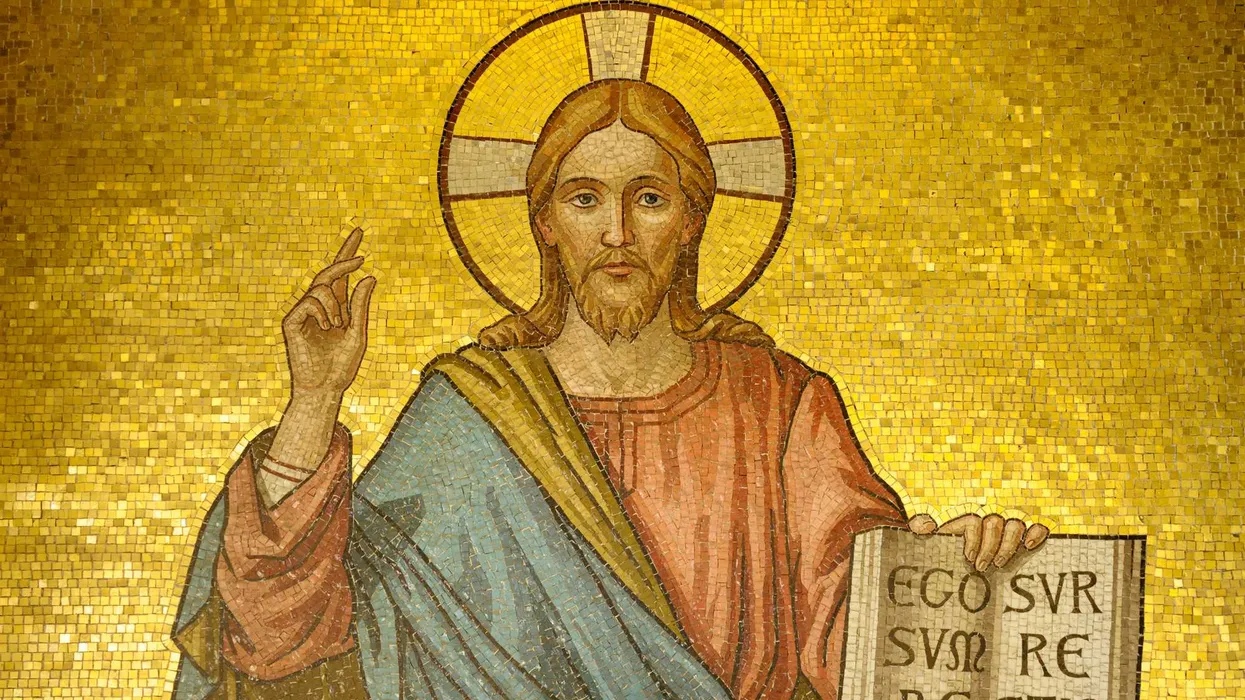
Modern Christianity often treats “niceness” as its highest virtue and “offending” as its worst. The American church is far too often shaped by this creed.
Yet the Gospels paint a far different picture of Jesus. He was loving, compassionate, and merciful, yes — but He was also unapologetically offensive when truth required it. When we avoid speaking hard truths for the sake of being liked or preserving a shallow sense of “peace,” we slip into spiritual complacency, apathy, and lukewarmness — all things Jesus rebuked.
Jesus never softened the truth to keep crowds happy.
The American church has developed an aversion to tackling tough cultural issues that are, at their core, purely biblical. Pastors often retreat in fear of angry emails, pushback from congregants, or worse, the loss of Sunday pew-warmers.
Last year, in my home state of South Dakota, an amendment allowing abortion up to nine months was on the ballot. A pastor of one of the state’s largest churches refused to address it, worried about being labeled the “abortion church.” He chose the path of cowardice instead of defending the innocent unborn.
At its core, this kind of timidity is rooted in the fear of man, disguised as a desire to “attract” people to the gospel. Numbers are prioritized over hearts, popularity over true discipleship.
What most pastors try so hard to avoid today, Jesus hit head on. Jesus offended — and offended often. His offense was never petty but was always purposeful. He never once flinched from boldly proclaiming truth because it might “offend” someone or ruffle feathers. Quite the opposite, in fact.
Jesus set the example: Truth will offend
The Pharisees were Jewish religious leaders of Jesus’ day, esteemed by many and considered high-class elites.
But Jesus didn’t care how lofty and noble these men appeared to be — He saw straight through their transgressing hearts, calling them offensive names like “hypocrites,” “blind fools,” “brood of vipers,” “serpents,” “children of hell,” “whitewashed tombs,” and “greedy and self-indulgent.” Naturally they were offended.
In Matthew 15:1-12 and Matthew 23, the disciples pulled Jesus aside after He offended the Pharisees by exposing their spiritual corruption. Jesus told these perceived religious zealots they honor God with their lips, but their hearts are far from Him.
The disciples questioned, “Do you know that the Pharisees were offended when they heard this saying?” (Matthew 15:12). Jesus’ backbone, as stiff as steel, responded, “Let them alone; they are blind guides” (Matthew 15:14). He didn’t have any time for nonsense.
Jesus didn’t just offend the Pharisees with truth; He offended His disciples too.
RELATED: The era of Christian loserdom is over
 Christ driving money-changers from the Temple (Fine Art Images/Heritage Images via Getty Images)
In John 6, the disciples took offense at Jesus’ teaching on the bread of life. He challenged their religious assumptions and expectations about the Messiah as He proclaimed, “I am the living bread” (John 6:51), and symbolically called them to “eat the flesh of the Son of Man and drink his blood” (John 6:53).
Their offense shows their difficulty understanding the spiritual truths that transcended human understanding.
Jesus offends repeatedly all throughout the Gospel stories. When He claims He existed before Abraham as John 8:56-59 says, the Jewish leaders interpreted His teaching as blasphemy, which led them to try to stone Him. When one of the Pharisees invites Him to dinner in Luke 11:37-54, instead of a surface-level conversation about the weather, Jesus didn’t waste time and immediately unmasked their hypocrisy, legalism, and spiritual emptiness. In response, they began plotting against Jesus — not repenting and humbling themselves.
Jesus never softened the truth to keep crowds happy. He offended religious leaders, political authorities, and even His own followers when they opposed the kingdom of God. His love was inseparable from honesty.
If we claim to follow Him, we cannot avoid offending people. Jesus reminds us in the Gospel of John that if the world hates us to remember it hated Him first. Faithful discipleship means being willing to confront lies, challenge sin, and speak truth, even when it divides, disrupts, or costs us something — or everything.
Courageous truth-telling is a biblical virtue
The modern church often elevates “niceness” above righteousness and holiness. But Jesus wasn’t crucified for being nice — He was crucified because He spoke truth that offended people even though a week before they spread cloaks and branches, shouting “Hosanna” as He entered Jerusalem.
I recently read through the Gospels, noticing the countless times Jesus “offended” but for good reason. He never offended for the sake of it — but always because it was the outcome of teaching truth with conviction.
In Jesus’ hometown, people were both astonished and “offended” when Jesus taught in their synagogue as Matthew 13:54-57 recounts. Their familiarity led to their unbelief, and Jesus exposed the depth of their spiritual blindness. The people of Nazareth then tried to throw Jesus off a cliff. They were first impressed but then violently offended (Luke 4:16-30).
‘Modern religion focuses upon filling churches with people. The true gospel emphasizes filling people with God.’
Imagine congregants trying to throw a modern-day pastor off a cliff because he was too bold? Oh, to have more courageous pastors who righteously offend. Many would cower to the crowds or be taken to the side by their elder board demanding they tone it down, but not Jesus; He continued preaching truth at all costs.
Even up to His crucifixion and death on the cross, Jesus didn’t try to appease or reason with the people. He didn’t apologize. He didn’t use caveats. He was mission-focused on preaching the gospel that saves and leads to repentance. Not once did He try to people-please at the price of watering down sound doctrine.
Niceness avoids conflict, clarity, and offense — but Jesus didn’t. He embodied compassion and mercy, yet He also spoke hard, confrontational truths when necessary.
True Christlikeness means loving people enough to tell them what they need to hear — not what keeps us comfortable or well-liked.
Jesus didn’t offend to be cruel or to win an argument; He offended to reveal truth, to expose bondage, to free hearts, and to reveal God’s kingdom. His offense was holy, rooted in love, and aimed at transforming hearts and minds.
Fear of offending has paralyzed the church
A.W. Tozer wisely said, “Modern religion focuses upon filling churches with people. The true gospel emphasizes filling people with God.”
Many American pastors avoid addressing culturally explosive but biblically clear issues because they don’t want to offend. This silence stems from the fear of man — fear of losing members, donations, reputation, and influence.
The result is lukewarm churches that prioritize optics over obedience. Nothing is “wrong” with the church, but nothing is “right” with it either. People aren’t leaving convicted or repentant. They’re leaving feeling pretty good about themselves as they wallow in complacency.
Why does the American church continue to sit on the truth? True disciples follow Jesus until death.
No boats have been rocked, no hearts have been transformed, and no one has been truly discipled.
But the apostle Paul in Galatians 1:10 makes clear: “If I were still trying to please man, I would not be a servant of Christ.” You can only serve one master: God or the world.
When leaders refuse to speak on matters like abortion, sexuality, or sin because they might upset people, they are choosing self-preservation over faithfulness.
“If there is a decay of conscience, the pulpit is responsible for it. If the church is degenerate and worldly, the pulpit is responsible for it,” declared Charles Finney, a minister and leader during the Second Great Awakening.
Speaking truth in love: The cost of radical discipleship
John the Baptist offended people when he called them to repentance, criticized Herod for committing adultery, and condemned religious hypocrisy. He lost his head as a result. Paul offended people by preaching the Christ crucified and calling out legalism and man-made traditions. He was decapitated because of it. Elijah offended King Ahab and the prophets of Baal by confronting idolatry. Jezebel threatened to kill him. Amos offended the Israelites in the Northern Kingdom when he spoke out against wealth, corruption, and injustice in Israel. He faced rejection and threats.
These were all offenses they were willing to make because they lived for an audience of one.
So why does the American church continue to sit on the truth? True disciples follow Jesus until death.
Christian Nigerians right now are being slaughtered for their faith by the thousands, yet they continue gathering in droves to worship their King. Meanwhile American churches are sitting on the sidelines too worried about offending people to speak truth, rather than taking up our cross and truly following Christ.
As believers, we must be strong and courageous, with a truth-telling edge. We should not be harsh or abrasive but rather love people enough to say what’s hard.
If Jesus’ ministry provoked offense for the sake of truth, perhaps ours should too.
Why the ‘Christian’ Democrat is more dangerous than the loud one

The Democratic Party has been wandering the wilderness for years, somehow discovering new ways to alienate large portions of the country. And it still isn’t finished.
Rock bottom, it turns out, has a basement — and Texas has the keys.
Earlier this month, Rep. Jasmine Crockett (D), a congresswoman who treats every disagreement like a full-contact sport, announced her Senate bid. Waiting for her in March is state Rep. James Talarico (D), a former teacher and pastor-in-training with a very different style.
Neither is good news. But from a Christian perspective, one is far worse.
Crockett is impossible to miss. She’s volume without thought, performance without a functioning pause button. Trump derangement syndrome has long since replaced reason, and nuance never survived the encounter. She seems to measure success by how many people she can irritate before lunch. Her politics are blunt, her tone brittle, her intellectual range roughly comparable to a Roomba. You always know where she stands because she’s standing on the table, yelling.
Talarico, by contrast, operates on an entirely different frequency. He lowers his voice, quotes scripture, and speaks with the gentle cadence of a youth pastor wrapping up a weekend retreat just before the acoustic guitar comes out. He talks about compassion, dignity, and the moral duty to protect the vulnerable. He wants to heal divides, soothe tensions, and “bring people together.”
If Crockett feels like a bar fight, Talarico feels like “Kumbaya” by candlelight with everyone instructed to hold hands.
And that is precisely the problem.
Crockett’s politics are abrasive but obvious. She makes no effort to hide what she believes or where she wants to take the country. There is something almost refreshing about her lack of disguise. You may not like the message, but it’s unmistakable. She offends openly and moves on.
But Talarico offends in a very different manner. He has mastered the art of wrapping progressive politics in pastoral language. What he offers is standard Democratic doctrine: sexual ideology backed by law, borders treated as optional, and a growing state taking over matters once settled by family, church, and conscience.
RELATED: ‘Progressive Christian’ turns Bible into a Planned Parenthood parable — but truth fires back
 Mark Felix/Bloomberg via Getty Images
Talarico insists that faith and today’s Democratic Party can walk hand in hand. Perhaps this was plausible once, back when Democrats still shared a basic moral grammar with the rest of the country. In the 1990s, disagreement existed, but reality was still shared. Marriage meant something fixed. Biological sex wasn’t up for debate. Free speech had limits, but truth still mattered. You could argue policy without arguing over whether biology or basic reality still mattered.
That world is gone.
The modern Democratic project is built on ideas fundamentally at odds with Christian teaching: the self treated as sovereign, identity treated as sacred, desire elevated to authority, and socialism presented as the only workable future.
Sin is renamed “harm.” Redemption is replaced with affirmation. Judgment is reserved only for those who dissent. Christianity, meanwhile, insists on restraint, repentance, and allegiance to something beyond the individual.
Talarico tries to solve this puzzle by watering down Christianity until it feels more like a mood than a creed. He does this because he has no other choice. In today’s Democratic Party, a Christian who speaks plainly about restraint and repentance simply cannot survive. He is summoned, sidelined, and eventually expelled. To remain welcome, faith must be dumbed down and rendered harmless.
So Talarico treats Christianity like a buffet. He keeps the language of love and mercy, the parts that flatter modern sensibilities, and quietly discards the parts that demand obedience, self-denial, or radical honesty.
This is not faith guiding politics but politics reshaping faith.
And that is where the charge sticks. This is not a good-faith disagreement or a sincere wrestling with belief but a distortion carried out for political survival. If Talarico spoke the full truth of Christianity as it has been taught for centuries, he would be politically homeless by morning. Rather than risk that, he trims the gospel until it fits the party line.
This is where the real danger lies. He speaks like a shepherd but votes like an activist, borrowing Christianity’s authority to push policies that weaken what faith seeks to strengthen — specifically the nuclear family and ordered community.
Crockett does her damage loudly, like a bull in a china shop. Talarico, on the other hand, is more woodworm than wrecking ball, smiling as he eats through the beams.
There’s something faintly comic about watching Democrats embrace Talarico. This is a party that spent decades treating Christianity like a vestigial organ, now swooning over a Sunday-school version of Pete Buttigieg.
But there’s nothing funny about what the Texan stands for.
Talarico offers a faith that never says “no,” never draws lines, and never makes anyone uncomfortable except those stubborn enough to insist that limits must be imposed. Love is endlessly elastic. Compassion is permanently undefined. Everything bends; nothing breaks — except, eventually, the foundation.
Crockett, for all her theatrics, doesn’t pretend to share a Christian worldview. Talarico does. He doesn’t attack Christian beliefs outright. Instead he sands them down, slowly, patiently, until they no longer support much of anything.
For Texans, come March, both options are bad. This isn’t a choice so much as a coordinated assault: one, a knee to the groin, the other, a roundhouse to the ribs. Crockett does her damage loudly, like a bull in a china shop. Talarico, on the other hand, is more woodworm than wrecking ball, smiling as he eats through the beams.
Neither deserves trust. But only one dresses his agenda in sacred language.
Texas Democrats may think they are choosing between bedlam and bland reassurance. Christians should recognize the choice for what it is: between open hostility and sneaky subversion, between a politics that attacks faith from the outside and one that reshapes it from within.
Both are bad. But only one pretends to be good. And that, from a Christian point of view, makes all the difference.