

Category: Christian
Why Gavin Newsom’s Bible quotations should alarm Christians — before it’s too late
The Bible isn’t meant to be a selective tool from which we cherry-pick elements we like and leave behind those truths with which we disagree.
But many of our politicians have a penchant for taking this very approach, with some on the hyper-progressive side commonly enacting policies that directly fly in the face of Scripture.
It’s a diabolical form of spiritual manipulation meant to prey on people’s thoughts and emotions.
Amid the mayhem, some of these individuals have simultaneously perfected the art of gaslighting, often times unexpectedly emerging from the abyss to quote the Bible as an appeal to truth when it suddenly seems to serve their policy proclivity.
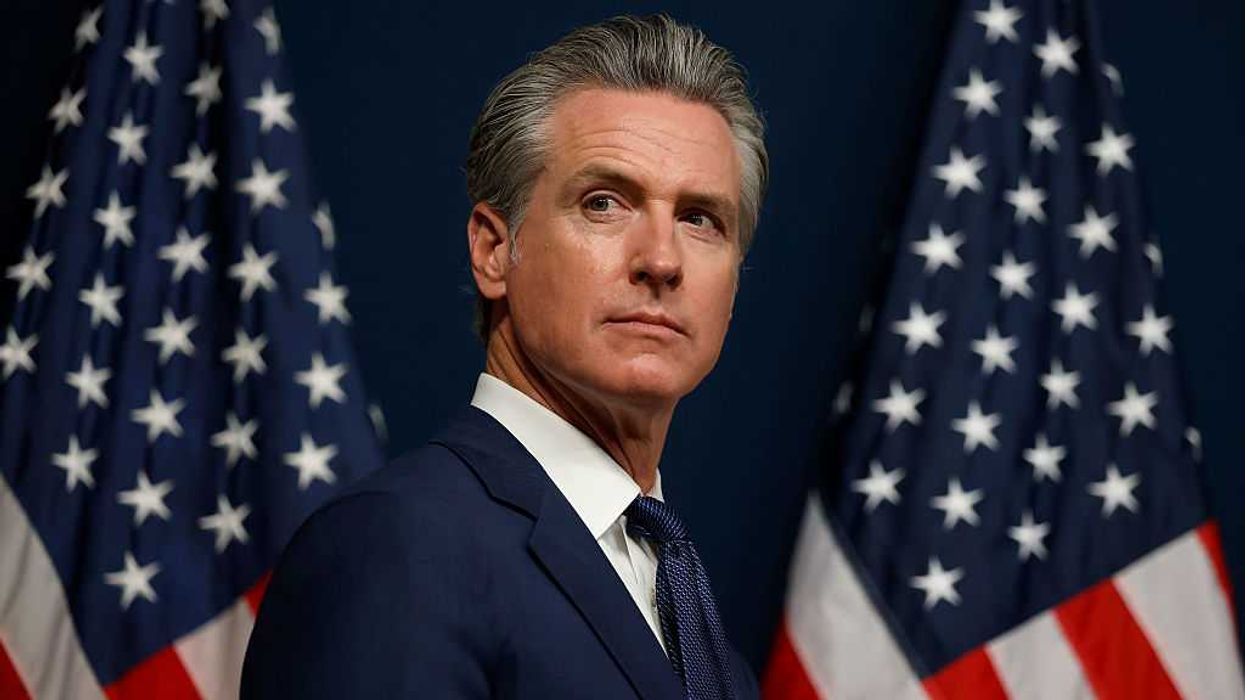
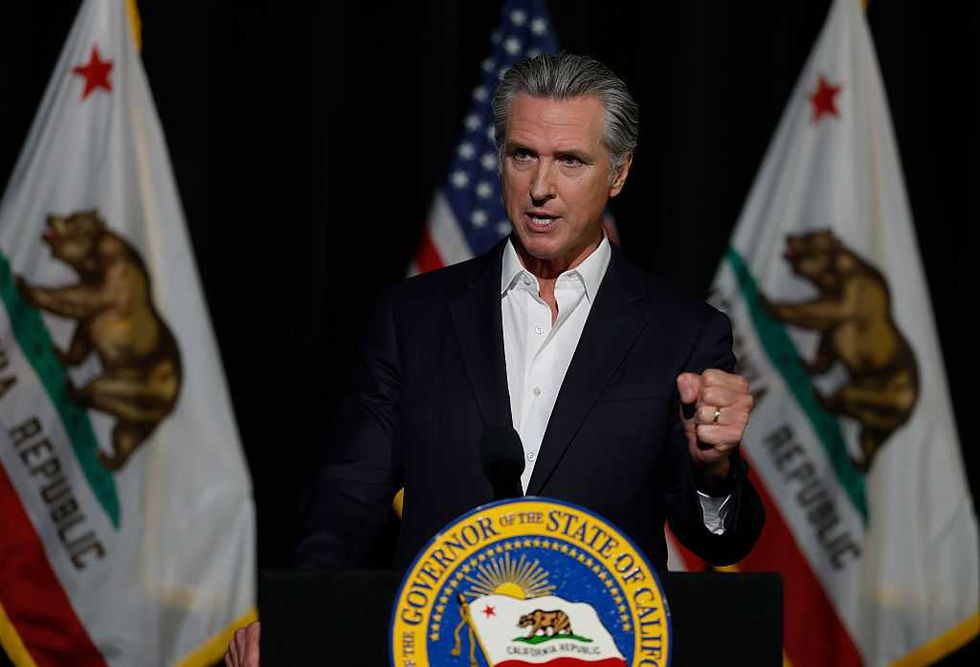
Case in point: California Gov. Gavin Newsom (D) recently waxed poetic on the Old and New Testaments, wielding the Bible to condemn the Trump administration over the impact of the recent government shutdown.
Newsom announced during a press conference that he had filed a lawsuit against the Trump administration over Supplemental Nutrition Assistance Program benefits, a government program that provides food to low-income Americans.
“It’s also interesting to me because I spent a little time at a wonderful Jesuit university,” Newsom said. “If there was anything I remember about my four years with Father Cos is that the New Testament, Old Testament have one thing dominantly in common — Matthew, Isaiah, Luke, Proverbs. I mean, go down the list. It’s around food. It’s about serving those that are hungry. It’s not a suggestion in the Old and New Testament. It’s core and central to what it is to align to God’s will, period, full stop.”
But he wasn’t done there. The liberal governor went on to say that “these guys need to stop the BS in Washington, D.C.,” and took further aim at political foes who often tout the importance of prayer and yet supposedly don’t align with him on these issues.
“They’re sitting there in their prayer breakfasts,” Newsom continued. “Maybe they got an edited version of Donald Trump’s Bible and they edited all of that out. I mean, enough of this. Cruelty is the policy. That’s what this is about. It’s intentional cruelty, intentionally creating anxiety for millions and millions of people, 5.5 million here in our home state.”
The outrageousness of these statements is beyond anything comprehensible. Newsom isn’t wrong that feeding the poor and helping those in need is a core tenet of Jesus’ call for humanity to love God and love others. But the hypocrisy here is limitless.
The Bible also says a lot about religious liberty, protecting life, and putting God above the whims of man, yet we don’t see Newsom offer the same level of energy on those issues.
RELATED: How liberals hijack the Bible to push their agenda on you
 Justin Sullivan/Getty Images
It’s become beyond remarkable to watch some of our politicians behave and legislate in ways that are openly hostile toward the Bible and Christianity, but then start unleashing verses and Christian claims when it’s convenient for their own political agendas.
It’s a diabolical form of spiritual manipulation meant to prey on people’s thoughts and emotions — and it’s particularly rich coming from a political crop of people who have spent the past few years warning about the purported perniciousness of so-called Christian nationalism.
In 2024, Newsom responded to President Donald Trump’s re-election by calling a special session aimed at addressing “reproductive freedoms, immigration, climate policies, and natural disaster response.”
The governor somehow missed the biblical lessons on the value of life, as his statement at the time warned that Trump would likely continue the “assault on reproductive freedom” and limit “access to medical abortion.” Newsom also worried over any “expanding conscience objections for employers and providers.”
The reality is that California is hardly governed as a bastion of Christian and biblical thought. Quite the contrary: In California, basic freedoms are often on the chopping block, with bizarre battles and strange debates taking root.
Newsom was also recently under fire for a post on X seen by many critics as missing the mark on prayer. After the August shooting at Annunciation Catholic Church in Minnesota, Newsom went after White House press secretary Karoline Leavitt.
At the time, Leavitt criticized MSNBC host Jen Psaki’s controversial comments about the shooting after Psaki proclaimed, “Prayer is not freaking enough. Prayers does [sic] not end school shootings. Prayers do not make parents feel safe sending their kids to school. Prayer does not bring these kids back. Enough with the thoughts and prayers.”
When Leavitt called these remarks “insensitive and disrespectful” to those who believe in the power of prayer, Newsom proclaimed, “These children were literally praying as they got shot at.” Newsom’s failure to understand prayer — and his attempt to step into the debate in what felt like an effort to purportedly score political points — wasn’t only unneeded, but it was also grotesque.
Of course, Newsom’s official press office recently did invoke prayer — to lambaste Trump. “Please pray for our President,” a post read. “He is not mentally well.”
Once again, the governor seems to be using faith to push political antics.
These incongruities, when it comes to faith rhetoric, aren’t unique to Newsom. We see it unfold again and again from politicians who seem to rely upon Scripture and faith themes when it’s convenient or expedient, yet other elements of their rhetoric and policy-making ignore elementary biblical truth.
Interestingly, the San Francisco Chronicle noted that Newsom’s invoking of Scripture, in particular, has ramped up in recent weeks.
“In recent months, the California Democrat’s rhetoric has become strikingly biblical,” the outlet noted. “Even his mocking ‘patriot shop’ — which mimics the merchandise sold by President Donald Trump to raise money for his political work — sells a Bible (though, as part of a long-running gag, it is always sold out).”
The Chronicle noted that Newsom has cited his Catholic faith in the past for his choice to end state executions and that he has sometimes referred to his Jesuit education. But, according to the Chronicle, “his overt and repeated references to scripture are new in the past few months.”
Some observers believe Newsom could be gearing up to appeal to middle America and other voters for whom faith is a central part of their identity.
At this point, that’s unclear. But what is evident is that his selective policy-making and proclamations are incongruent — and anyone paying close attention should keep that in mind as they watch Newsom continue to weaponize the Bible for his own political ends.
Why real Christianity terrifies the elites — and they’re right to worry
Much like gas-station sushi, David Brooks is hard to stomach at the best of times.
But his latest New York Times essay is the kind that makes you reach for the sick bag. He opens with the usual routine: an exasperated sigh, a long, self-important pause, and the unmistakable air of a man convinced he has cracked the cosmos — again.
A hidden faith saves no one, a timid faith shapes nothing, and a faith that folds under pressure is closer to cheap furniture than conviction.
He quotes a Czech priest, hints at deep wells of wisdom, and then meanders toward the real purpose of the piece: explaining, with mild exasperation, why Christians are once again disappointing him. This is nothing new. It’s a ritual at this point — a complaint that returns like spam you swore you unsubscribed from.
To be fair, Brooks isn’t stupid. He knows how to spin a story, how to climb onto the moral high ground without looking like he’s climbing, and how to crown himself the lone voice of reason in an age he insists is losing its mind.
But there is no missing the tone that hangs over almost every line he writes about believing Americans: a thin mist of condescension, settling somewhere between pastoral concern and a parent-teacher conference. He talks about everyday Christians the way a pretentious barista talks about someone ordering regular coffee — uncultured, embarrassing, and in need of enlightenment. And the tone, more than any point he makes, gives him away instantly.
Brooks claims to fear “rigid” or “pharisaical” Christianity. Yet the only certainties that radiate from his essay are his own. He divides the world into two armies — Christian nationalists on one side and “exhausted” secular humanists on the other — and then steps forward as the lone oracle who claims to see a path out of the fog.
Christians who vote for borders, who cherish the nation that shaped their churches, or who think culture is worth defending are waved off with his familiar, weary flick of the wrist. They’re told they practice a “debauched” version of the faith.
No evidence needed. Brooks’ opinion is treated as its own proof.
His description of these believers always follows the same script. They are angry, dangerous, and obsessed with power. They clutch their creed like a makeshift weapon, ready to wallop anyone who wanders too close.
In his telling, they never act from devotion, duty, or gratitude. They never look around their communities and see an America they love slipping away. They never mourn the millions taken before they drew a breath, the cracking of our shared foundation, or the slow burial of the sacred.
Instead, Brooks tells us they operate from “threat more than hope,” as if the country’s cultural decay were some far-fetched tale told for effect, rather than something families watch unfold every day in their schools, in their cities, and on their screens.
Brooks then pivots to his preferred theological register: the poetry of longing. He praises yearning, doubts, desires, and pilgrimages — all worthwhile themes.
But he uses them the way an interior decorator uses throw pillows: scattered for mood, never for structure. His spiritual reflections float past in soft, airy phrases that never touch the ground. This isn’t the faith of the Gospels, anchored in sacrifice and truth. It’s faith as fragrance — atomized cosmetic, evaporating faster than one of his metaphors. It asks nothing, risks nothing, and confronts nothing, which may be why Brooks finds it so comforting.
RELATED: Exposing the great lie about ‘MAGA Christianity’ — and the truth elites hate
 jokerpro/iStock/Getty Images Plus
Throughout his essay, Brooks holds up a small circle of “wise people” as models of the faith America needs — Tomas Halík, Rowan Williams, and a handful of theologians who speak in clichés and move through the world like contemplative shadows. Their calm inspires him. Their pluralism delights him. Brooks treats their quietism as the apex of Christian maturity, as if the holiest life is lived at arm’s length, murmuring about mystery while the roof caves in.
What he never admits is what these figures actually represent: a brand of Christianity that thrives in seminar rooms, academic conferences, and anemic interfaith panels — spaces far removed from the daily battles most Christians face. Halík writes beautifully about longing. Rowan Williams writes elegantly about humility. But neither man spent his life in the trenches defending children from ideological capture in schools, or standing up to governments intent on shredding the family, or speaking plainly about sin in a culture that now calls sin a civil right.
Brooks misreads their vocation as the universal Christian posture when it is, at best, one posture among many.
The heart of the essay is its barely disguised contempt for ordinary Christians who believe their faith should shape the societies they inhabit. This is the point he never states outright but gestures toward with every paragraph.
Faith, to Brooks, is primarily personal, private, and utterly toothless. The moment it concerns the fate of a nation or the moral trajectory of a culture, he calls it nationalism. If a Christian speaks of stricter immigration policies, he hears xenophobia. If a parent protects his child from the cultural free-for-all, he calls it regression.
Brooks leans heavily on the aforementioned Czech priest and philosopher, Tomáš Halík, as if Halík were handing him a permission slip for a diluted Christianity. Halík writes movingly about interior struggle and authentic witness, ideas rooted in his years serving an underground church under communist rule.
But Brooks treats Halík’s reflections on the inner life as a blanket command for Christians to withdraw from the outer one. Halík speaks of sincerity; Brooks hears surrender. Halík points to the vast, ungraspable side of faith; Brooks converts it into a polite memo urging believers to stay in their lane.
And so Brooks gets the entire lesson backward. Halík survived a regime that tried to erase Christianity from public life. He never argued for Christians to silence themselves or retreat from cultural battles. Yet Brooks uses him as cover to criticize anyone who won’t float along with the cultural current.
What Brooks never admits is that what he calls “Christian nationalism” is not the fringe menace he imagines. For many believers, it is simply the instinct to guard the faith that built their communities. It isn’t a hunger for domination, but a love for the inheritance passed down to them. It isn’t outright hostility toward outsiders but gratitude for the civilization that formed them.
Brooks conveniently sidesteps all of this and builds a caricature he can berate, warning of a “creeping fascism” that lives entirely in his own mind.
The self-anointed sage wants Christians to trade their armor for aroma, to swap vigilance for vague platitudes, and to follow his favorite tastemakers into a future where faith survives only behind closed doors.
But Christians know better. A hidden faith saves no one, a timid faith shapes nothing, and a faith that folds under pressure is closer to cheap furniture than conviction. Brooks will disagree, naturally. He always does.
As so many times before, the smug sexagenarian takes a swing at American Christians. And once again, he misses the target by a mile.
Take back your health care: A Christian model that puts families first

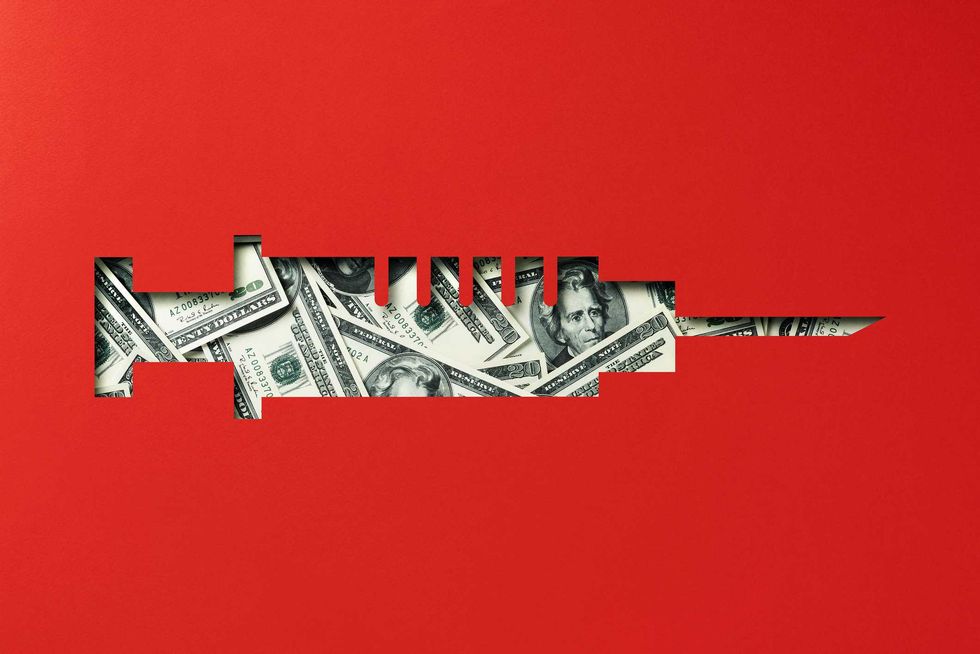
Presidio Healthcare recently made history by launching the nation’s first pro-life, Christian health insurance option in Texas at a time when many families are experiencing both historic rate increases and decreasing subsidies in the Obamacare marketplace.
While the heart of our mission focuses on serving families with an affordable option that protects both their values and their financial security, the vision for how we accomplish that aim rests on a lesser-known Christian principle that I believe provides a road map for reforming our broken health care system.
Health care policy should focus on expanding options for families while empowering them to own their own health insurance.
That principle is called “subsidiarity,” which represents a system of values that puts families first — in contrast to our current system that ignores the individualized needs of Americans.
The Christian principle of subsidiarity states “that matters ought to be handled by the smallest, lowest, or least centralized competent authority rather than by a higher and more distant one, whenever possible.”
The latest debate over Obamacare subsidies serves as a great example of how our current system prioritizes the higher and more distant authority (i.e., Washington, D.C.) over the least centralized authority (i.e., American families).
The Obamacare market was designed to provide subsidies for low-income Americans, which by itself does not inherently violate the principle of subsidiarity. Rather, the problem lies with the insistence that this one federally controlled market should serve as a one-size-fits-all solution for everyone, including middle-income Americans who do not qualify for adequate subsidies.
The centralized answer that Democrats offer requires the Obamacare market to be propped up inefficiently with more subsidies. The subsidiarity answer would propose decentralizing the market by allowing alternative risk pools regulated at the state level to serve the middle-income Americans with products designed for their needs.
To summarize the principle for a broader application: Health care policy should focus on expanding options for families while empowering them to own their own health insurance.
In a decentralized system, Americans would become smarter consumers of health care as they bear the responsibility of owning and paying for their own health care expenses. The impact would reach beyond the economic. The key benefit to subsidiarity is its preservation of each of our relationships to God through our individual decision-making responsibility.
If tomorrow’s health care shoppers were individuals and families (instead of governments and employers), private insurance markets would be forced to serve the Christian and pro-life values of families, as opposed to our current system of serving government agendas and large employer needs. Presidio is building toward that tomorrow and starting now in Texas.
RELATED: Medical ‘experts’ want to jab a needle through your God-given rights
 EKIN KIZILKAYA/iStock/Getty Images Plus
Unfortunately, there is a major roadblock to this future.
Ironically, the employer-sponsored marketplace and the single-payor Medicare program — two markets that conservatives often support — in many ways violate the principle of subsidiarity to a greater degree than the much smaller Obamacare individual market.
We need to be consistent if we want to reform our health care system. Employers control the health insurance decisions for close to 150 million Americans, and all of us are forced to pay into a federally centralized Medicare program that exhibits some of the worst elements of socialism, such as dictating prices that distort our entire system.
The spiritual impact is evident through the contraceptive mandate and employer decisions that force millions of Christians to be insured on products that cover abortion, abortifacients, contraception, and other immoral services. Through Medicare, we have collectively forfeited our health care autonomy to Washington, D.C., when we turn 65, creating problematic scenarios that could prioritize our federal budget over dignified treatment for end-of-life care.
We need to do more than just talk about Obamacare — and we need take action now.
The good news is that health care policymakers need to look no farther than to what the private market is already doing.
Presidio is part of a decades-long movement in the health care industry to launch innovative alternative services that serve families directly. This includes affordable non-Obamacare alternatives, health-sharing ministry plans, and, more recently, “ICHRA” benefit platforms that are moving employers out of the business of purchasing health insurance and into a defined contribution model where employees purchase and own their own insurance.
The road map is there. Government and employers can assist families in purchasing health insurance rather than purchasing it for them. Private market innovations would follow.
At Presidio, we are building toward a future where subsidiarity replaces centrally controlled markets and the pro-life values of Christian Americans drive pro-life health insurance options that help fund life-affirming care. We do not take federal subsidies, and we do not want your employer forcing you to have Presidio coverage.
As in all authentic Christian movements, we rely on individual families to help build Presidio, and we look forward to serving your needs while we expand our vision of a health care system in America founded on the principle of subsidiarity.
What Is an American?
The chaotic confrontation in Dearborn, Michigan, on Tuesday — when a demonstrator attempted to burn a Qur’an and Muslim counter-protesters…
Packed churches, skyrocketing conversions: Is New York undergoing a Catholic renaissance?

The years-long trend of American de-Christianization recently came to an end, with the Christian share of the U.S. population stabilizing at roughly six in ten Americans, according to Pew Research Center data. Of the 62% of adults who now identify as Christians, 40% are Protestants, 19% are Catholics, and 3% belong to other Christian denominations.
There are signs in multiple jurisdictions pointing to something greater than a mere stabilization under way — at least where the Catholic Church is concerned.
The New York Post recently found that multiple New York City Catholic parishes have not only seen a spike in conversions but their churches routinely fill to the brim. That’s likely good news for the Archdiocese of New York, which was found in a recent Catholic World Report analysis to have been among the 10 least fruitful dioceses in 2023 in terms of baptism, conversion, seminarian, and wedding rates.
‘We’ve got a real booming thing happening here.’
Fr. Jonah Teller, the Dominican parochial vicar at Saint Joseph’s in Greenwich Village, told the Post that the number of catechumens enrolled in his parish’s Order of Christian Initiation of Adults for the purposes of conversion has tripled since 2024, with around 130 people signing up.
Over on the Upper East Side, St. Vincent Ferrer has seen its numbers double since last year, jumping to 90 catechumens. The Basilica of St. Patrick’s Old Cathedral has reportedly also seen its numbers double, ballooning to around 100 people. The Diocese of Brooklyn doubled its 2023 numbers last year when it welcomed 538 adults into the faith and expects the numbers to remain high again this year.
Attendance in New York City reportedly skyrocketed in the wake of the assassination of Charlie Kirk, who was apparently attending mass with his Catholic wife, Erika, and their children.
RELATED: Charity, miracles, and high tech — here’s how these monks built a massive Gothic monastery
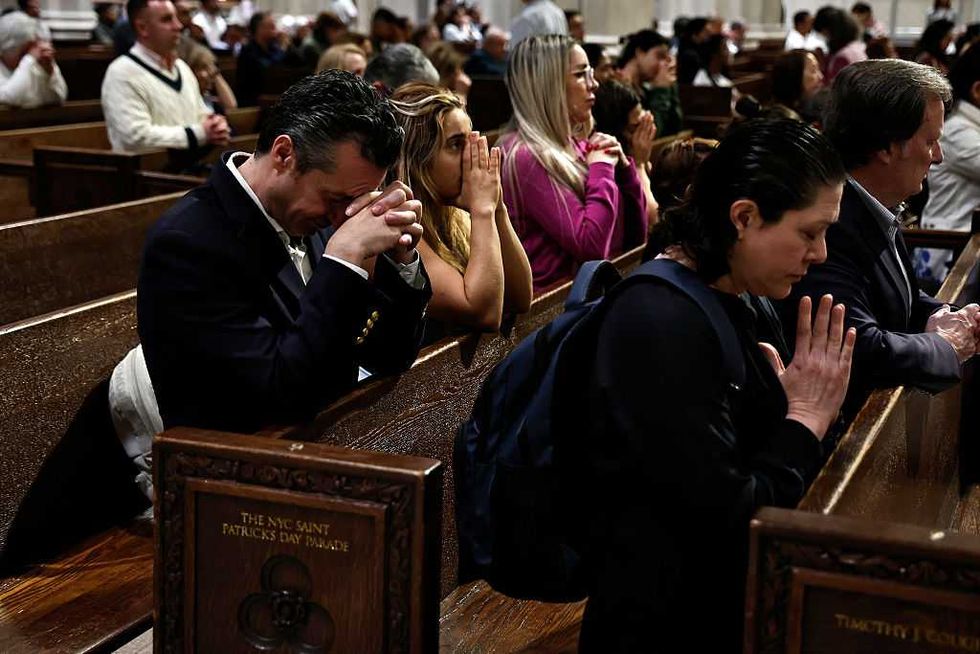 Photo by John Lamparski/Getty Images
“We’re out of space and exploring adding more masses,” Fr. Daniel Ray, a Catholic Legionary priest in Manhattan, told the Post. “We’ve got a real booming thing happening here, and it’s not because of some marketing campaign.”
While a number of catechumens cited Kirk’s assassination as part of what drove them to the Catholic Church, others cited a a desire for a life- and family-strengthening relationship with God; a desire to partake in the joy observed in certain devout Catholics; a desire for community; a desire for “guardrails”; and a desire for anchorage and meaning in a chaotic world where politics has become a substitute for faith.
“My generation is watching things fall apart,” Kiegan Lenihan, a catechumen in the OCIA at St. Joseph’s told the Post. “When things all seem to be going wrong in greater society, maybe organized religion isn’t that bad.”
Lenihan, a 28-year-old software engineer, spent a portion of his youth reading the works of atheist intellectuals such as Christopher Hitchens and Richard Dawkins. After experiencing an anxiety-induced crisis at school, he apparently sought out something of greater substance, devouring the works of Marcus Aurelius. He found that his life still lacked greater meaning despite achieving material success.
‘The Catholic Church is a place of sanity.’
“I realized on paper, I had everything I wanted, but I had no fulfillment in my soul,” said Lenihan, who remedied the problem by turning to Christ.
Liz Flynn, a 35-year-old Brooklyn carpenter who is in OCIA at Old St. Patrick’s, previously sought relief for her anxiety and depression in self-help books and dabbled in “pseudo spiritualism.”
After finding a book about God’s unconditional love for his children in a gift shop during a road-trip stop at Cracker Barrel, she began praying the rosary and developed an appreciation for Catholicism.
“I’m happier and calmer than I’ve ever been,” Flynn told the Post. “Prayer has made an enormous impact on my life.”
New York City is hardly the only diocese enjoying an explosion in conversions.
The National Catholic Register reported in April that numerous dioceses across the country were seeing substantial increases in conversions. For instance:
- the Diocese of Cleveland was on track to have 812 converts at Easter 2025 — 50% more than in 2024 and about 75% more than in 2023;
- the Diocese of San Angelo, Texas, expected 56% more converts in 2025 (607) than in 2024 (388);
- the Diocese of Marquette, Michigan, was expected to see a year-over-year doubling of conversions;
- the Diocese of Springfield, Illinois, was expected to see a 59% year-over-year increase;
- the Diocese of Grand Island, Nebraska, was set for a 45% increase;
- the Diocese of Steubenville, Ohio, was expecting a 39% increase in converts; and
- the Archdiocese of Los Angeles noted a 44% increase in adult converts.
Besides the Holy Spirit, the conversions were attributed to the National Eucharistic Revival, immigration, and evangelization.
Pueblo Bishop Stephen Berg told the Register that people are flocking to the church because it stands as a bulwark against the madness of the age.
“I think the perception of the Catholic Church is changing,” said Bishop Berg. “In a world of insanity, I think that people are noticing that the Catholic Church is a place of sanity.”
“For 2,000 years, you know, through a lot of turbulent times — and the Church has been through turbulent times — we still stand as the consistent teacher of the faith of Christ,” continued Berg. “The people are intrigued by that.”
As of March, 20% of Americans described themselves as Catholics, putting the number of Catholic adults at around 53 million nationwide.
Like Blaze News? Bypass the censors, sign up for our newsletters, and get stories like this direct to your inbox. Sign up here!
The Spectator P.M. Ep. 169: Nicki Minaj Raises Awareness About Persecuted Christians in Nigeria
Nicki Minaj is one of the rare Hollywood celebrities using her massive platform to bring attention to the Christian genocide…
Abrahamic myth: How Islam rebranded the God of the Bible
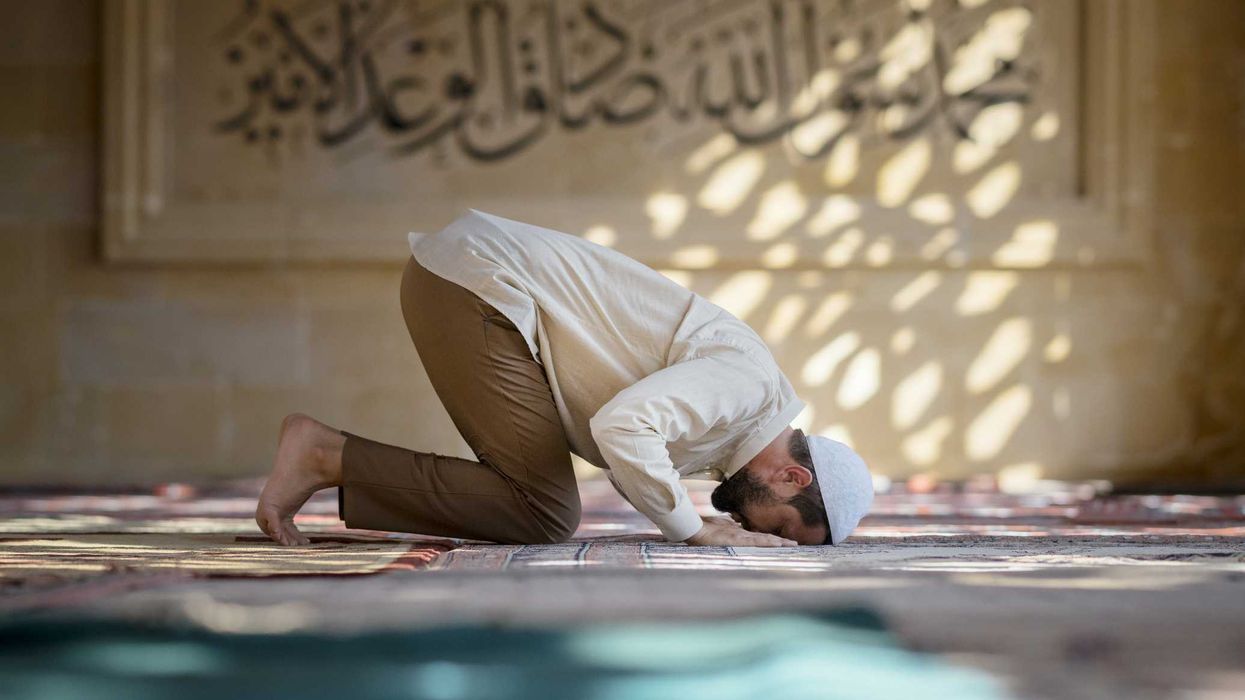
One of the great canards of the post-9/11 world — promoted by theists and nontheists, conservatives and leftists, Democrats and Republicans alike — is that there are three Abrahamic faiths: Judaism, Christianity, and Islam.
But is that really true? If the three faiths worship the same God and preach His word, then there should be clear and compelling evidence of interconnection and aligned essential doctrines.
God’s sacred lineage
Abraham was God’s first patriarch, his descendants were God’s chosen people, and the Lord God guided them — at great cost and peril — to the promised land.
Why is there the need to graft on to this historically and logically robust faith history the tale of Muhammad, which is supported only by legend and perhaps shards of archeological data?
The Jews, meanwhile, were the people through whom God sent His son, Jesus Christ, the messiah. Jesus was a holy, just, virtuous, believing Jew, and what He taught springs directly from the Old Testament. His ministry was ultimately a futile effort to convince His ethnic brothers to follow Him as their redeemer.
Jesus was betrayed by His own people and crucified by the Romans. His death, in substitutive atonement for the sins of humanity, was followed by His resurrection, and the risen Christ tasked His apostles to spread His word beyond the Jews to the gentiles, thus laying the foundation for Christianity, a descriptive moniker that came into common use around the end of the first century A.D.
Biblical genealogy and history are intricate and logical. Like all genealogy and history of the ancient world, they have gaps (which do not diminish their spiritual authority), and a great deal of both spring from oral tradition, which was eventually codified.
The fact that biblical genealogy and history are written in such painstaking detail in both the Old and New Testaments give them each spiritual and chronological heft, as does the fact that scholars have recovered thousands of manuscript copies and fragments totaling hundreds of thousands of pages.
Legend, not lineage
This brings us to the issue of whether Islam is really an Abrahamic faith.
Abraham was father of Ishmael, by his slave Hagar, who was banished from Abraham’s household by Abraham’s wife, Sarah, even though she facilitated their union. God promised Hagar that Ishmael would be a great man and the father of many nations. Ishmael’s life and sons are detailed in Genesis 25 and then again in 1 Chronicles 1. Then he and his sons are never spoken of again.
The book of Genesis, written by Moses, likely dates to around 1200 B.C., even though its final form was not completed until centuries later. This means that the story of Abram, who becomes Abraham, is even older than that because it would have been told to Moses as oral history. So Abraham may have lived as long ago as 2000 B.C.
Yet Muhammad, the prophet of Islam who is supposedly descended from Ishmael, was not born until 570 A.D., which creates a time gap of more than 2,500 years. And for this span of more than two millennia, there are no documents that directly connect Muhammad to Abraham or Ishmael. There is only Islamic oral tradition or legend (known as Hadith), nearly all of which were produced a century or more after Muhammad’s death in 632 A.D.
Conversely, there is no doubt about the connection of the Old and New Testaments. They tell a continuous, coherent, logical, prophetically rich, and frequently archaeologically confirmed story of the journey of the Israelites to the promised land and the life and death of Jesus.
Why, then, is there the need to graft on to this historically and logically robust faith history the tale of Muhammad, which is supported only by legend and perhaps shards of archeological data?
Biblical appropriation
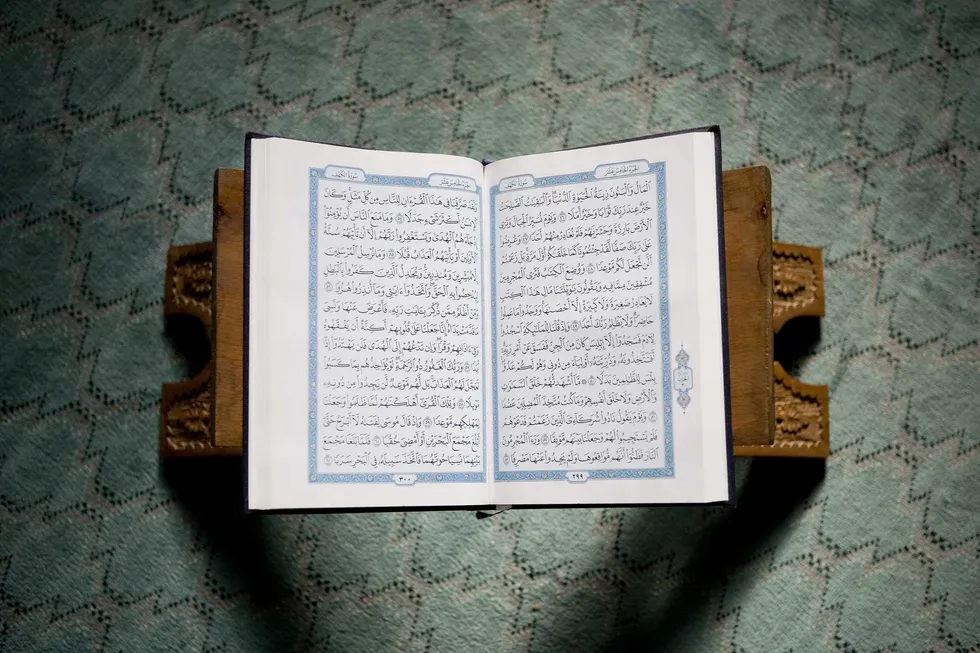
Even though there is no written genealogy from Ishmael to Muhammad, there is significant biblical appropriation in the Quran. In fact, plagiarism might be a better word.
For example, Allah created the heavens and the earth in six days (Surah 7:54; for the Quranic novitiates, the Quran is organized by the length of each Surah [chapter], from the longest, called the Opener to the shortest 114th, Mankind). Abraham’s name first appears in Surah 2. In total, Abraham’s name appears 69 times in the Quran; Jesus appears 25 times, Mary 34 times, and Moses 136 times. In 3:67, the Quran states that “Abraham was not a Jew, nor was he a Christian, but he was a Muslim hanif (montheist), and he was not one of the idolators.”
RELATED: Why progressives want to destroy Christianity — but spare Islam
 ozgurdonmaz/iStock/Getty Images Plus
While Muhammad was quite open to biblical appropriation of names, he was not so keen on Christian doctrine: Muslims deny the Trinity (“do not say Three”; 4:171) and the crucifixion (“they did not kill him nor crucify him”; 4:157). The denial of the crucifixion leads to an implicit denial of the resurrection; if Jesus was not crucified, then He could not have been resurrected, but He was called to heaven by Allah himself (4:158).
The Quran calls Jesus “messiah” and righteous, but simultaneously denies that He is the son of God (“The Messiah, the son of Mary, was no more than a messenger, messengers passed away before him”; 5:75). In fact, in these things, the Muslims have much more in common with Jews than either group has with Christians.
Ironically, this trio of denials of core Christian beliefs puts Muslims in league with Martin Luther King Jr., who denied the virgin birth, which Muslims accept, but they reject Allah’s paternity of Jesus (see 3:45-47, 9:30, 6:100, and 112:3 for examples).
Muhammad writes that man does not have free will (2:6 and 2:7, among many others); Allah decides and animates all things (3:47 and 40:68). Allah will decide what both believers and nonbelievers do (16:93) and what will happen to them (24:40). Even nonbelievers who wish to believe will not be allowed to do so unless permitted by Allah (10:100).
Muslims are commanded to defeat nonbelievers in jihad (8:39 and 9:5); those who fight and die go to paradise, as do those who fight and live (4:74). Nonbelievers are to be treated as second-class citizens and pay tribute unless they convert, or they may be killed (9:29). Jews and Christians are regarded, respectively, as those who have earned Allah’s anger and those who have gone astray (1:6).
In the Bible, acts of sexual immorality are identified as an abomination to the Lord, right from the beginning of the Old Testament. Deuteronomy 22:5 says, “The woman shall not wear that which pertaineth to a man, neither shall a man put on a woman’s garment: for all that do so are an abomination unto the Lord thy God”; and Leviticus 18:6-20 describes the Lord’s abhorrence for the sin of incest. Paul’s epistles showcase his scorn for sexual anarchy.
By contrast, Muslim men may marry Jewish or Christian women after the women convert, but sex with a believing slave girl is preferable in the meantime (2:221). Muslim men are also told that they may marry multiple women (i.e., polygamy), and they have no obligation to treat them equally (4:3). The “houris,” or wide-eyed, voluptuous women of paradise, await all believers (Surahs 44, 55, 56, and 78; the much-ballyhooed 72 virgins are not Quranic, they are from a Hadith of Muhammad).
The overall impression of the God of the Bible is that He is a holy and just God, whose moral boundaries and demands set exceedingly high standards of conduct, and Jews of the Old Testament repeatedly fail to hit their marks. Their failures allowed God to show Himself as merciful and loving because He relents in His anger and forgives His people, effectively giving them the chance to start again.
Different gods
It is true that the Quran also refers to Allah in this manner repeatedly. But that is just part and parcel of the appropriation.
The Old Testament’s story of God’s love for, and strife with, His chosen people over their conduct repeats many times because God’s communication through His prophets ultimately proves ineffective at bringing about the lasting behavioral and devotional change that He demands. The God of the Bible never gives up, however, because He loves His children and seeks their betterment only for their own good, a framing of morality that they simply cannot endure because it requires patience, reverence, and discipline.
In the New Testament, God decides to confront His people face-to-face, live among them as a man, and teach them by looking them in the eye. So He sends His son, Jesus Christ, who is eternal and has borne witness to the entire chronology of creation, to live a perfect and sinless life, teach the lessons of the Old Testament, and entreat His people — the first-century Jews — to follow Him in pursuit of salvation and eternal life.
Despite all the travails, challenges, and even violence of the Bible, it is an uplifting story of love, trust, hope, and faith that ends in glory.
The same cannot be said of the Quran, in which an omnipotent god views his people as automatons commanded to do his will. Some verses abrogate others, and there really is no story told but just an endless series of dos and don’ts that end either in hell or paradise with wide-eyed houris.
Ask the people of Minnesota and Michigan and France and the United Kingdom how that’s working out.
Given the lack of a documentary interconnection, the doctrinal discrepancies between the two faiths as expressed in their central holy books raise this critical question: How is it spiritually conceivable that the two books represent the work of the same God?
Would the God who never gives up on His people and venerates marriage and family be the same God who commands men to marry unbelieving women only after they convert and have relations with slave girls while they wait? Would the God who empowers humans with free will and petitions them to follow Him to heaven by living lives of righteousness and virtue be the same God who commands the deaths of nonbelievers, specifically Christians and Jews (4:89), simply because of their unbelief? Would the God who sacrifices His own son on a Roman cross be the same God who appropriates the names, events, and stories of the Bible and relabels them to make them His own in a new book?
The Quran, like a bad Hollywood production, simply takes the biblical plots and characters and changes the name of God from “I AM” to Allah. Adam, Aaron, David, Elijah, Isaac, Job, Jonah, Joseph, Lot, Noah, Solomon, Zechariah, the Psalms, Gabriel, Michael, Noah’s ark, and even the Ark of the Covenant (2:248) all make cameo appearances.
Most importantly, would the God who wants peace and fights wars only against those who seek to eradicate His chosen people (such as the Amorites, Philistines, Canaanites, Hittites, Jebusites, and Perizzites) so that His people can live freely under His law be the same God who commands jihad and the imposition of sharia law, both of which seek to coerce conversion or kill those who will not convert?
Ask the people of Minnesota and Michigan and France and the United Kingdom how that’s working out.
Fruit reveals truth
To say that the God of the Bible is spiritually and doctrinally the same as Allah of the Quran beggars logic, ignores history, and requires that you willfully disregard the written word in each book.
The canard that Islam is an Abrahamic faith is a way of facilitating a connection between evil and goodness for political purposes in order to provide the evil with the fig leaf of acceptance by affiliation rather than by word and deed.
The God of the Bible, and those who follow His word, produced the freest, safest, cleanest, most generous, and most prosperous nations in human history. Islam, on the other hand, has produced — as the late Samuel P. Huntington wrote in his tour de force “Clash of Civilizations” — a cadre of nations that are never simultaneously at peace with all their neighbors and within their own borders.
That was true when he wrote it in 1996, and it is still true today.
Maybe the holy war now being waged between Islam and what remains of a weak-kneed and addle-brained Christendom is why Jesus says in both Matthew and Revelation that He comes with a sword to separate those who deny from those who follow Him.
When you consider whether it is at all likely that Islam is Abrahamic, remember what the redeemer says in Matthew 7:16-20: “Ye shall know them by their fruits. Do men gather grapes of thorns, or figs of thistles? Even so every good tree bringeth forth good fruit; but a corrupt tree bringeth forth evil fruit. A good tree cannot bring forth evil fruit, neither can a corrupt tree bring forth good fruit. Every tree that bringeth not forth good fruit is hewn down, and cast into the fire. Wherefore by their fruits ye shall know them.”
That is all you need to know to stop saying — and believing — that Islam is an Abrahamic faith.
America’s best and worst states for religious freedom — and what it means for our future
Now is a good time for religion in America.
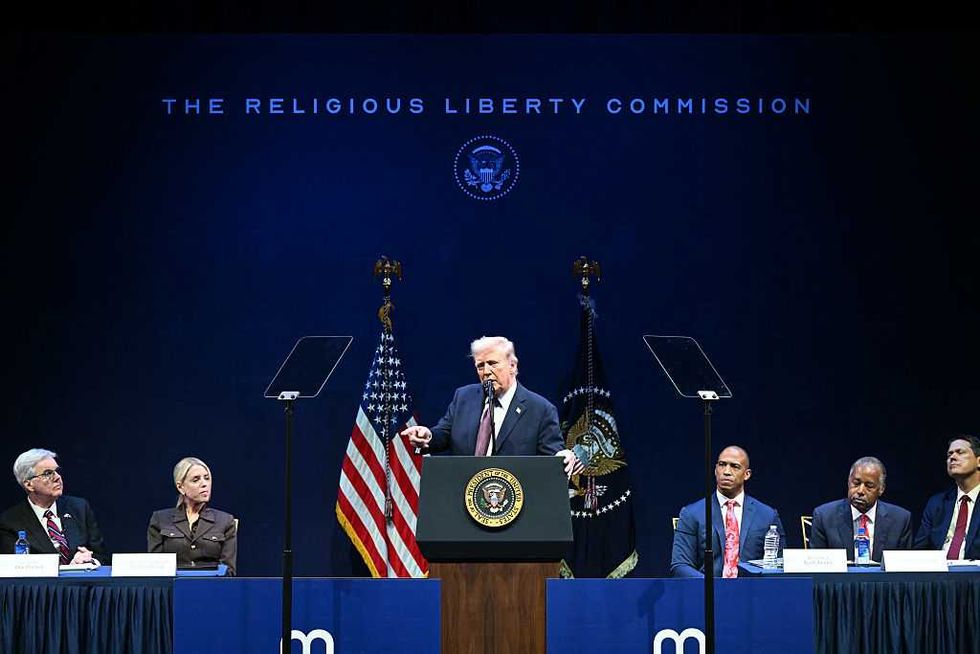
President Trump has established the White House Religious Liberty Commission, led by a diverse group of religious leaders and scholars, including Mary Margaret Bush, Napa Legal’s own former executive director. The commission is identifying some of the nation’s most pressing religious liberty issues and developing plans for action.
Lawmakers should take advantage of the moment to enact durable protections that will outlast any administration.
The U.S. Supreme Court, too, has protected religious liberty in several crucial cases. In Carson v. Makin (2022), the court held that it is unconstitutional to exclude religious schools from generally available government funding programs. In Kennedy v. Bremerton, it found that coach Joseph Kennedy’s postgame prayers did not violate the First Amendment. This year brought additional victories in Mahmoud v. Taylor, where the court upheld parents’ rights to opt their children out of LGBT content in elementary school classes, and Catholic Charities v. Wisconsin, where a unanimous court prevented state officials from favoring some religions over others.
These encouraging developments might tempt Americans to believe that the battle for nationwide religious freedom has already been won.
Yet even with such powerful forces defending religious liberty at the federal level, state laws affecting religious organizations remain critical for ensuring that everyday Americans do not suffer persecution for their firmly held religious beliefs.
Consider what just happened in Washington state.
In 2025, Catholic priests there faced an impossible choice between obeying their faith and complying with state law. A new Washington state statute required clergy to report instances of abuse or neglect they heard during confession, despite the Church’s centuries-old sacramental seal. The law singled out priests while giving others, like lawyers, a pass, and it carried the threat of jail time and fines.
Thankfully, a federal court blocked the law before it could take effect, ruling in Etienne v. Ferguson that the state could not force clergy to violate the sacred seal of confession.
But that case never should have been necessary. Washington’s law reflected the same pattern Napa Legal’s research has uncovered repeatedly: When state laws are weak or hostile to faith-based organizations, those organizations are left vulnerable even when the federal government and Supreme Court appear friendly to religion.
This month, the Napa Legal Institute released the third edition of the Faith and Freedom Index, an analysis of state laws across the country that either help or hinder religious organizations. Whether national politics seem to favor or oppose religious liberty, state laws remain central to its long-term health.
The states with the top overall scores were:
- Alabama
- Kansas
- Indiana
- Texas
- Mississippi
The five lowest scores went to:
- Michigan
- Washington
- Massachusetts
- West Virginia
- Maryland
What distinguishes the states at the top of the list from those at the bottom? Several types of laws come into play. For example, the index’s highest performing states have built frameworks that proactively safeguard religious organizations. Their laws provide broad protections for religious exercise and create environments where ministries can thrive.
By contrast, it’s no coincidence that Washington state ranks near the bottom. The same state that passed one of the most intrusive laws in recent memory also reflects on the Index a legal system that makes it far too easy for governments to intrude on matters of faith.
That is why it is important to strike while the iron is hot. When the federal government is friendly to religious liberty, that is precisely the time to act. Political conditions can change quickly, but good laws endure. Lawmakers should take advantage of the moment to enact durable protections that will outlast any administration.
RELATED: Why Trump’s religious liberty agenda terrifies the left
 SAUL LOEB/AFP via Getty Images
There are many reasons why state laws remain decisive. First, state statutes can still contradict clear federal precedent. After the Supreme Court struck down Wisconsin’s discriminatory law in Catholic Charities v. Wisconsin, a similar law remained in effect in New York. Religious organizations there had to continue the litigation even after the Supreme Court had essentially decided the issue.
It is also not enough for states to rely solely on constitutional protections or a Religious Freedom Restoration Act.
These safeguards are vital but not sufficient. When a religious organization’s hiring or service conflicts with state “nondiscrimination” laws, it should not have to spend years in court to prove its right to operate according to its beliefs. States can and should pass clear exemptions that prevent such conflicts from ever arising.
Finally, state tax and regulatory codes can have a major impact on whether faith-based organizations thrive. Many religious nonprofits are treated like for-profit corporations, subject to tax regimes and administrative filings, fees, and audits that make it hard for them to operate. States should look closely at such laws and remove unnecessary burdens that divert precious time and resources away from ministry and service.
No matter who sits in the White House or on the Supreme Court, state laws remain a foundation of religious liberty. The Faith and Freedom Index remains an important tool to protect and foster the work of religious organizations and religious liberty in general.
Voters should consider how laws in their states burden religion when they cast their votes. Policymakers should pay close attention to laws that may seem tedious but can make or break the needed work of religious organizations. And our government leaders should work to enact laws that foster religious liberty, so that religion can serve its proper role in contributing to the common good.
Stevie Nicks just said the quiet part out loud about abortion — and it’s horrifying
Almost every civilization has, at one point or another, practiced child sacrifice. In our rebellion against God and rejection of Jesus Christ, modern America is no exception.
While we may not burn our children like the Canaanites, cut out their hearts like the Aztecs, or drown them like the Gauls, we most certainly sacrifice our children in acts of worship to benefit ourselves.
We cannot afford to overlook the severity of this sin or its stench before the one true and living God.
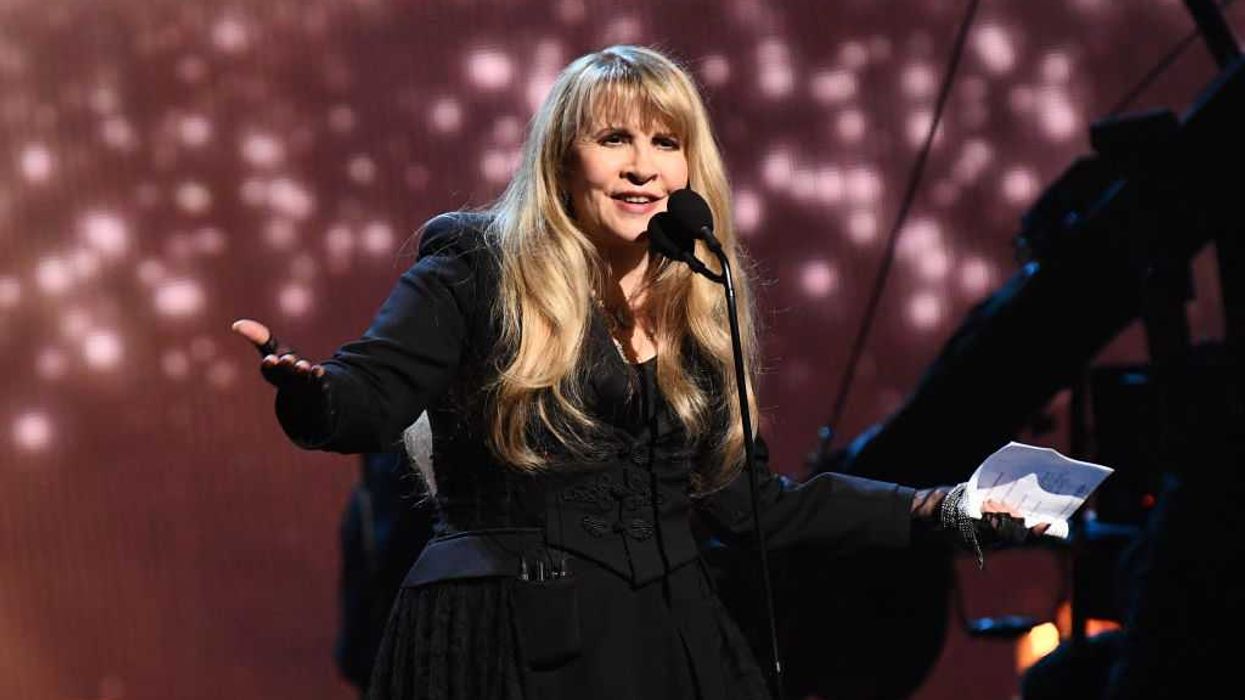
Take the example of Stevie Nicks, the singer-songwriter best known for her years with Fleetwood Mac. Nicks boasted about the benefits of her past abortion in a recent video posted on social media and described as a “must watch” by the Center for Reproductive Rights.
In recalling her past abortion, Nicks was not filled with regret or shame, but with a sober admission that murdering her own pre-born baby was worthwhile for allowing her to continue her music career.
“Fleetwood Mac is three years in, and it’s big, and we’re going into our third album,” Nicks recounted.
“It would have destroyed Fleetwood Mac,” she said of her baby.
“I would have, like, tried my best to get through, you know, being in the studio every single day expecting a child,” Nicks continued.
“It would have been a nightmare scenario for me to live through.”
RELATED: Fleetwood Mac’s real breakup story: Death before motherhood
Rather than making Nicks seem sympathetic in her decision to have an abortion, the video posted by the Center for Reproductive Rights made her look callous. The organization plainly acknowledged that “access to abortion made her life, her art, and her voice possible.”
Nicks admitted to murdering her baby in exchange for career success: She took the life of her own child for the specific reason of pursuing stardom in the music world.
In other words, she committed child sacrifice.
In the same way that past civilizations sacrificed their children to enable abundant harvests, victory over their enemies, or improved rainfalls, Americans sacrifice our children to enable success in our careers, more financial freedom, or fewer inconvenient responsibilities.
But unlike other civilizations, we do not murder our children in the name of any specific false god or demonic entity. Instead we serve ourselves as our own gods — murdering our babies as an act of devotion in the cult of our own autonomy.
We cannot afford to overlook the severity of this sin or its stench before the one true and living God.
Rather than speaking clearly on abortion as child sacrifice, many pro-life organizations over the past few decades have not only downplayed the distinctly spiritual nature of the abortion holocaust, but have insisted that many of its perpetrators are themselves victims.
In speaking about abortion — even writing laws against abortion — many pro-life leaders emphasize the small minority of cases in which women are compelled with threat of life and limb into having abortions.
But in the vast majority of cases, women who have abortions are active participants or even willful initiators, not passive victims compelled into abortions they do not want.
Stevie Nicks is a perfect example. By her own admission, nobody forced her into having an abortion. Nicks willfully chose her music career over the life of her child, and several decades later, she would clearly make the same decision once more.
The notion that all women are categorical second victims of abortion downplays the moral agency women have as image-bearers of God and obscures the justice due to pre-born babies as true victims of abortion.
By defending the legal ability of women to willfully murder their own children, pro-life organizations sorrowfully allow the abortion holocaust to continue, even in conservative states that misleadingly claim to ban abortion.
RELATED: Why defunding Planned Parenthood is a distraction from the real fight
Just like men, women are ultimately responsible for their own actions. Just like men, women will one day stand in judgment before God and provide an account for those actions.
Stevie Nicks may publicly boast about her abortion today, but when she stands before a perfectly holy God, she will no longer boast in her decision. And unless she turns from her sins and trusts in Jesus Christ for salvation, she will bear the penalty of her decision for all of eternity.
When pro-life organizations insist that women can only be victims of abortion — and oppose laws that would criminalize abortion for all parties willfully involved — they fail to deter women from committing sin that destroys both their babies and their very own eternal souls.
That is why we must simply make murdering anyone illegal for everyone.
The exact same laws that protect born people from murder must protect pre-born people as well, or else we are denying the truth that pre-born babies are image-bearers of God worthy of equal protection under our laws.
The existing laws against murder deter the vast majority of murders from happening in the first place. If we extend those same laws to apply from fertilization — without loopholes allowing women to enjoy special murder privileges over their pre-born babies — we will deter the vast majority of abortions as well.
God judges nations that commit child sacrifice. America is well on its way to joining the Canaanites, the Aztecs, and the Gauls in the history of nations that murder their own children and are brought to their knees by the God who cannot endure such rebellion forever.
If we want our nation to continue, we must protect all image-bearers of God from murder, criminalizing the unjustified taking of human life for everyone willfully involved.
Rather than rebelling against God, our nation must turn in repentance and faith toward Jesus Christ — abandoning the works of death and once more bowing the knee to the only one who offers everlasting life.
Bishop raises hell after woke priest allows homosexual ABC broadcaster to receive Eucharist beside his ‘husband’
Bishop Joseph Strickland, the cleric removed from his office in Tyler, Texas, in 2023 by the late Pope Francis, urged his colleagues gathered on Wednesday for the U.S. Conference of Catholic Bishops’ plenary assembly to address the matter of a woke priest’s apparent willingness to run afoul of the church’s custom and to turn a hallowed Catholic ceremony into a non-straight spectacle.
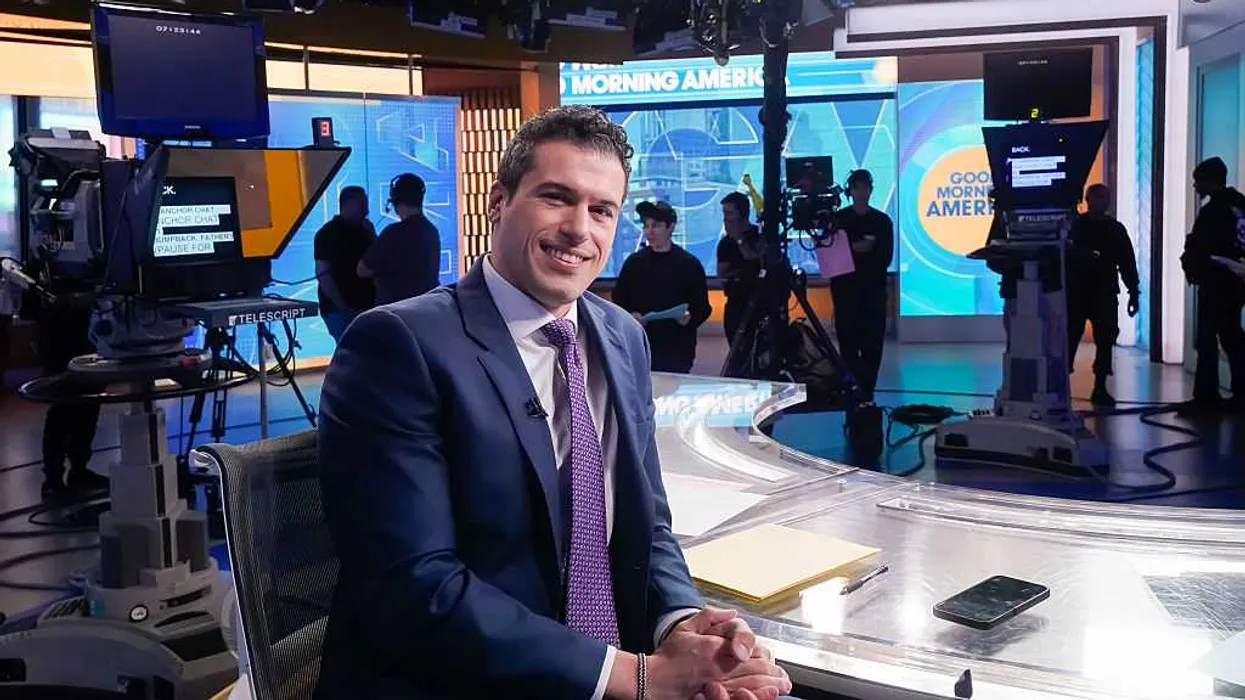
Gio Benitez, a homosexual ABC News correspondent who is “married” to a man, apparently decided after Pope Francis’ passing last year to make his way back to the Catholic Church. Benitez, who was allegedly baptized in secret at the age of 15, was confirmed at St. Paul the Apostle’s Church in New York City on Nov. 8.
‘Here we are talking about doctrine.’
“My Confirmation Mass was a very small gathering of family and friends who have quietly been with me on this journey,” Benitez wrote on Instagram. “I found the Ark of the Covenant in my heart, stored there by the one who created me… exactly as I am.”
The ABC News correspondent also received holy communion from the church’s woke pastor, Rev. Eric Andrews, at the highly publicized mass where LGBT activist Fr. James Martin was a concelebrant and where Benitez’s “husband” served as his sponsor.
Blaze News reached out to Rev. Andrews for comment, but did not receive a response.
While the Catholic Church holds that homosexual acts are “acts of grave depravity,” “intrinsically disordered,” “contrary to the natural law,” and “can under no circumstances” be approved, the Catechism states that homosexual persons must nevertheless “be accepted with respect, compassion, and sensitivity.”
RELATED: New head of US Catholic Bishops said he would deny communion to pro-abortion politicians
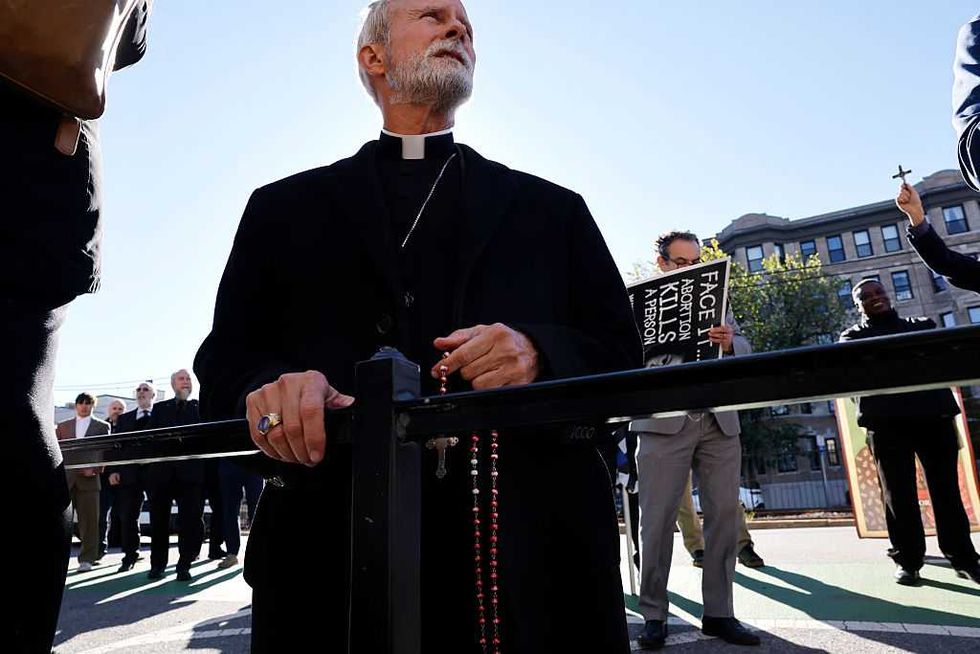 Bishop Joseph Strickland. Photo by Craig F. Walker/Boston Globe via Getty Images
The church has also made clear that Catholics with same-sex attraction who are chaste can “participate fully in the spiritual and sacramental life of the Catholic faith community.”
However, those who regularly engage in sexual activity or are partners in a committed homosexual relationship that includes regular sexual relations are not to receive holy communion or serve in public ministries.
“Receiving the sacrament is the ultimate expression of our Catholic faith, an intensely personal matter between communicant and priest,” wrote the late and posthumously exonerated Cardinal George Pell. “It’s not a question of refusing homosexuals or someone who is homosexually oriented. The rule is basically the same for everyone.”
“If a person is actually engaged in — by public admission, at any given time — a practice contrary to Church teaching in a serious matter, then that person is not entitled to receive Holy Communion,” continued Pell. “This would apply, for example, to a married person openly living in adultery. Similarly, persons who openly declare themselves active homosexuals take a position which makes it impossible for them to receive Holy Communion.”
During a USCCB discussion of doctrine on Wednesday, Bishop Strickland raised the matter of Benitez’s highly publicized reception of holy communion while flanked by his “husband.”
“I don’t know how many of us have seen on the social media priests and others gathered, celebrating the confirmation of a man living with a man openly,” said Strickland. “It just needs to be addressed. Father James Martin once again involved. Great pictures of all of them smiling.”
Bishop Strickland and Martin have traded barbs over the years, largely around Martin’s subversive LGBT activism and apparent efforts to liberalize the Catholic Church’s stance on such matters.
Martin — who shared an article titled “Gio Benitez, Openly Gay ABC Anchor, Joins the Catholic Church” on social media this week with the caption “Happy to be a part of your journey!” — has made no secret of his activism. For instance, he took issue with the Supreme Court’s June 2025 decision to let parents opt their children out of lessons featuring LGBT propaganda and insinuated that homosexual persons aren’t really bound by church teaching.
“Here we are talking about doctrine,” continued Strickland. “I just thought I need to raise that issue. I know it’s not part of any agenda, but this body gathered, we need to address it.”
The panel, focused on updated ethical and religious directives for Catholic health care services, did not take up Strickland’s concern.
The Catholic Herald noted that Strickland’s tenure as bishop of Tyler was “marked by a reputation for directness, a strong emphasis on Eucharistic devotion, and a willingness to challenge trends in the wider Church that he believed risked undermining the clarity of Catholic teaching.”
Like Blaze News? Bypass the censors, sign up for our newsletters, and get stories like this direct to your inbox. Sign up here!





