

Category: Christianity
Chuck Colson: Nixon loyalist who found hope in true obedience

Long before he turned his life over to God, Chuck Colson burned with faith.
While working as an assistant to Massachusetts Senator Leverett Saltonstall (R), he met Richard Nixon — then vice president — and, by his own later admission, instantly became “a Nixon fanatic.” That loyalty, unwavering and severe, would become the defining feature of his life. It was also what made him so effective — and so dangerous.
For the first time in his adult life, Colson was forced to confront who he was without title, access, or leverage.
Hopelessly devoted
Colson’s devotion was not opportunistic. It was total. He believed loyalty was a virtue, even when it demanded cruelty. Years later, he would boast that he would “walk over my own grandmother” to re-elect Nixon. The line was meant to shock, but it also clarified something essential: Colson understood obedience as a moral good, independent of mercy or restraint. Colson was not a cynic pretending to believe. He was a believer who believed too much.
In Washington, that made him useful. He became the administration’s enforcer — a man willing to apply pressure, intimidate enemies, and blur lines. Politics, as Colson practiced it, was not persuasion. It was war. And war required soldiers willing to do what polite men would not.
Hatchet man
When Daniel Ellsberg leaked the Pentagon Papers, the government moved to prosecute him under the Espionage Act of 1917. For Colson, however, the embarrassment Ellsberg caused his mentor merited more than official retribution — it called for something more underhanded.
Colson’s instinct was not rebuttal but destruction: He supported efforts to smear Ellsberg as unstable and dangerous, a campaign that helped create the climate in which Nixon operatives burglarized Ellsberg’s psychiatrist’s office.
When Watergate collapsed the Nixon presidency, Colson collapsed with it. As legal consequences closed in, a friend pressed a copy of “Mere Christianity” into his hands and forced him to confront what power had allowed him to evade.
He pleaded guilty to obstruction of justice and became the first Nixon aide to get jail time. By then, the obedience he had given so freely had nowhere left to land.
Accustomed to command
Colson entered federal prison as a man accustomed to command. Early on, he braced himself for contempt from guards who knew who he was. Instead, one offered something worse: indifference — the unmistakable message that he was not special here and should act accordingly.
It was a small moment, but a decisive one. For the first time in his adult life, Colson was forced to confront who he was without title, access, or leverage. He was not feared or in control. He wasn’t even useful.
And so he began to learn a fundamental lesson of Christianity, one that power obscures: We are not self-sustaining. The first step toward obedience, Colson would later say, is realizing who you are when everything else is stripped away — and how dependent you are on grace you did not earn.
 Scott Adams in 2002. Phil Velasquez/Chicago Tribune/Tribune News Service via Getty Images
Surprised by truth
After his release, Colson avoided the obvious paths. He did not rehabilitate his reputation through commentary. He did not return to politics as a chastened insider. Instead, he committed the remainder of his life to prisoners — men for whom dependence was not temporary.
“Christianity is not about becoming respectable,” Colson later said. “It is about becoming obedient.” Colson’s instinct for loyalty made him a quick study. But his newfound faith didn’t soften his nature as much as it reordered it toward something worthier.
To the end, Colson remained intense, structured, demanding, and — as those who doggedly proclaim the truth tend to be — dangerous.
It’s Time for Young Conservatives to Touch Grass
Politics can be an isolating, draining pursuit. Each day, there are dozens of livestreams to keep up with, articles to…
The Spectator P.M. Ep. 181: Chick-fil-A Is Losing Their Biblical Foundation
A Chick-fil-A location in Utah prompted controversy for publicly posting support of same-sex marriage, contrary to the Biblical principles which…
‘Argument accepted’: Dying ‘Dilbert’ creator and Trump ally Scott Adams says he’s becoming a Christian
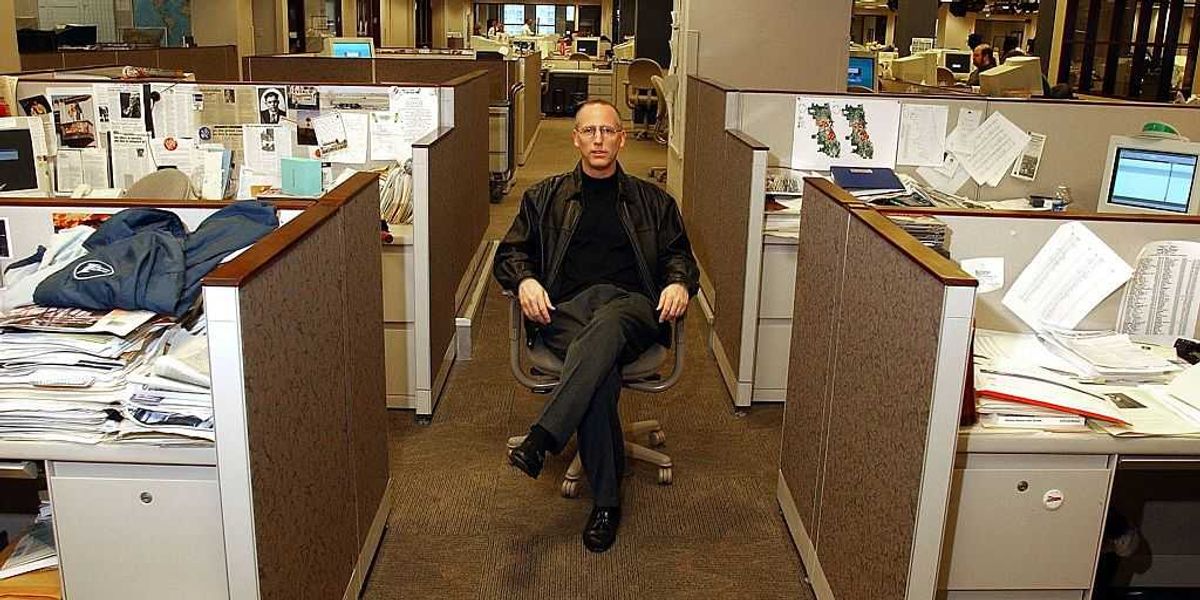
Scott Adams, the creator of the “Dilbert” comic strip and a frequent defender of President Donald Trump, revealed in May 2025 that he had been diagnosed with prostate cancer, it had metastasized to his bones, and he was not long for this world.
“The disease is already intolerable,” said Adams. “So if you’re wondering, ‘Hey Scott, do you have any good days?’ Nope. Nope. Every day is a nightmare, and evening is very worse.”
‘What happens next is between me and Jesus.’
While Adams had run out of good days, good news was on the horizon.
The 68-year-old cartoonist revealed on the Sunday episode of his show, “Real Coffee with Scott Adams,” that he is converting to Christianity.
In November, Adams requested Trump’s help in securing the prostate cancer drug Pluvicto for which his health care provider had apparently approved his application but “dropped the ball in scheduling the brief IV to administer it.”
Trump and members of his administration indicated they were “on it” and apparently intervened on the cartoonist’s behalf. However, Adams’ potentially life-changing treatment was postponed last month on account of his radiation treatment.
Last week, Adams noted on his show that “the odds of me recovering are essentially zero.”
In addition to suffering paralysis below the waist, Adams indicated that he is struggling to breathe on account of ongoing heart failure.
Days after telling his audience that January will probably be “a month of transition one way or the other,” Adams made clear on Sunday that the imminent changes in his life were not all of a medical nature.
RELATED: Christian, what do you believe when faith stops being theoretical?
 Photo by Bob Riha, Jr./Getty Images
“Many of my Christian friends and Christian followers say to me, ‘Scott, you still have time. You should convert to Christianity.’ And I usually just let that sit because that’s not an argument I want to have,” said Adams. “I’ve not been a believer. But I also have respect for any Christian who goes out of their way to try to convert me because how would I believe you and believe your own religion if you’re not trying to convert me?”
‘You’re never too late.’
Evidently the efforts of Adams’ friends were not in vain.
“You’re going to hear for the first time today that it is my plan to convert,” said Adams. “So I still have time. But my understanding is you’re never too late. And on top of that, any skepticism I have about reality would certainly be instantly answered if I wake up in heaven.”
Adams — who has long wrestled with questions about God and has been critical both of religion and atheism in his writing — notified his Christian friends that he does not require any more apologetics and has embraced what appears to be Catholic philosopher Blaise Pascal’s argument for believing in God.
“I am now convinced that the risk-reward is completely smart. If it turns out that there’s nothing there, I’ve lost nothing but I’ve respected your wishes, and I like doing that,” said Adams. “If it turns out there is something there and the Christian model is the closest to it, I win.”
“Argument made, argument accepted,” added Adams.
In the wake of his announcement, Adams wrote on X that while he appreciates the outpouring of support and questions, “What happens next is between me and Jesus.”
Like Blaze News? Bypass the censors, sign up for our newsletters, and get stories like this direct to your inbox. Sign up here!
Trump, Constantine, and the Politics of Providence
In 2016 Donald J. Trump rocked the political world. The first female President wasn’t yet meant to be. His jaded…
Is Hostility Against Christians Going to Increase in 2026?
The new year is off to a grim start already for Catholics around the world as anti-Christian hostility proliferates across…
Christian, what do you believe when faith stops being theoretical?
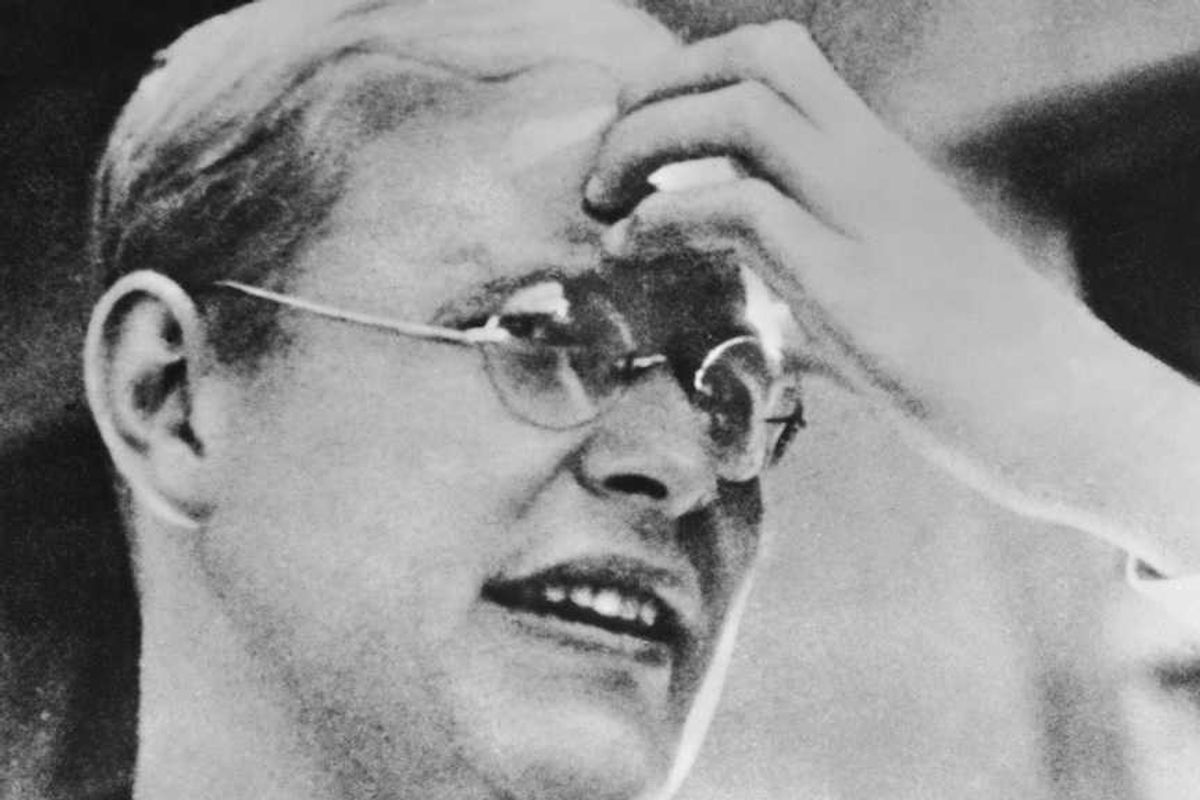
Dietrich Bonhoeffer once wrote from a prison cell, “It is only by living completely in this world that one learns to have faith.” He wrote those words after the world had closed in, when faith could no longer remain theoretical.
I live with someone who understands exactly what he meant.
In those moments, belief stops being a feeling and becomes a claim. Not something you summon, but something you test.
My wife, Gracie, has lived with disabilities for virtually her entire life. Hospital rooms and operating schedules do not interrupt our life — they form its familiar terrain. Over time, suffering has stopped being a concept and become a place we recognize.
I also have a friend who understands what Bonhoeffer was describing.
Her name is Joni Eareckson Tada. A diving accident in her teens left her a quadriplegic. Her life has unfolded under paralysis, chronic pain, and illness. She does not approach suffering from a distance.
Last year, during one of Gracie’s long hospital stays, Joni called.
Most people asked about Gracie. Joni did too. But then she asked about me.
That question deserved more than a stock reply.
I paused.
Moments like that strip away emotional self-examination and force you to examine your claims instead.
As I spoke with Joni, I shared something that has steadied me for decades.
In our church, there came a moment when the pastor would stop, look out over the congregation, and ask a single question: “Christian, what do you believe?”
We did not improvise. We did not search for language that felt expressive or current. We stood and recited the Apostles’ Creed or the Nicene Creed. No personal spin. No tailoring belief to the moment. Just a clear declaration of what had been received.
That question stayed with me.
It returned again and again over the years, especially in places where explanations had lost their usefulness. I learned the limits of “why.” Even good answers rarely hold steady there.
In those moments, belief stops being a feeling and becomes a claim. Not something you summon, but something you test.
If Christ is who I say He is, then what does that require of me here?
I was not trying to manufacture courage or resolve. I was asking whether the faith I professed in calm settings could bear weight when standing itself cost something.
“Christian, what do you believe?”
Over time, many of the questions I once carried narrowed to that one. Not because the pain diminished or the losses stopped coming, but because belief, when real, clarifies responsibility.
The apostle Peter tells believers to be ready to give an answer for the hope within them. That readiness has nothing to do with eloquence. It comes from knowing where you stand.
As a new year begins, many caregivers feel little sense of reset, except for the deductible and the co-pay.
Some stand outside an ICU, looking through glass at someone they love. Others stand in different hallways, facing different kinds of loss. Different rooms. The same ache.
RELATED: Do not pass the plow: The danger of declaring a golden age without repentance
 John J. Kim/Chicago Tribune/Tribune News Service via Getty Images
Bonhoeffer did not write from a place of safety or control. He wrote from confinement, where faith could no longer remain theoretical. Many recognize that narrowing, the sense that life has closed in and the ground beneath you has given way.
Faith is learned there, not discussed.
Exhaustion thins memory. Words scatter. Not everyone can recall creeds when sleep runs short and decisions carry real weight. But belief does not measure itself by recall. It reveals itself by posture.
When the floor gives way, you still need to know where to stand.
If He is Lord at all, then He is Lord of all.
Not only of sanctuaries, but of hospital corridors.
Not only of strength, but of weakness.
Not only of moments we would choose, but of moments we would never script.
That confession does not remove pain. It does not explain every loss. But it does tell us where to stand when the world presses in.
And when glass separates you from the one you love, whatever room that glass happens to be in, the question does not stay abstract.
It turns personal.
Christian, what do you believe?
Why the pro-life movement fails without a Christian worldview

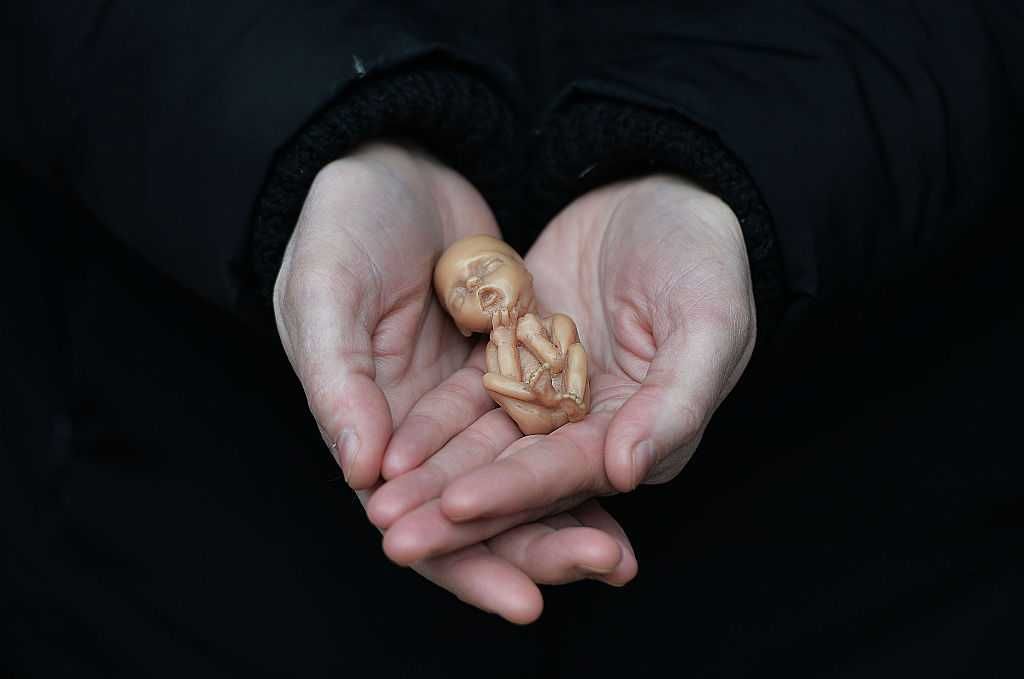
In the United States and other Western nations, pro-life organizations are the primary means through which conservative Christians oppose legalized abortion.
With their cultural engagement and legislative efforts, these pro-life groups and leaders purport to oppose the murder of preborn babies, ultimately desiring the complete end of abortion. But a simple examination of the worldviews held by these groups shows that many are not operating in a distinctly Christian fashion, even when they are led by professing Christians.
We continue to practice child sacrifice today through abortion.
Some pro-life organizations are self-admittedly non-sectarian, seeking to build coalitions of anti-abortion people who may be Christians, other religious conservatives, agnostics and atheists, or feminists.
But even the pro-life groups that are convictionally Christian, or led by convictional Christians, often functionally set aside the Christian worldview.
The church through the ages, bearing the gospel of life, has been the means by which the deathly deeds of child sacrifice have been overturned in countless cultures. The dearth of a Christian worldview in the current anti-abortion movement should, therefore, be gravely concerning to any believer who likewise wants to see modern child sacrifice abolished.
The doctrine of man
Christianity teaches that humans are creatures made in the image of God with rational souls (Ecclesiastes 7:29), but that mankind fell in the Garden of Eden (Genesis 3:1-7) and became dead in sin (Ephesians 2:1-3). We, therefore, have a thoroughly corrupted nature by which we are innately inclined toward evil (Romans 3:10-18).
The act of child sacrifice is one particularly brazen form of evil toward which man has always been predisposed. The murder of children for reasons of prosperity or convenience has occurred on every continent and was practiced by most major civilizations at some point in their history.
We continue to practice child sacrifice today through abortion.
In almost every abortion decision, the motivation is a rejection of inconvenient responsibility, the desire to prioritize college or career, or some other factor that could never even start to approach a justified reason for murdering an innocent human made in the image of God.
Western nations used to presuppose the Christian worldview. But in recent centuries, Enlightenment ideas have corrupted or entirely usurped the Christian worldview, especially concerning the sinful state of human nature.
Rather than saying that mankind is a valuable yet fallen creature, Enlightenment heretics taught that humans are fundamentally blank slates or even morally good and that with education or infusion of knowledge, mankind can experience true moral progression.
Such a worldview can be seen in pro-life groups claiming that “if wombs had windows, babies would be protected from abortions.” Others say that they are working to “make abortion unthinkable,” as if sin could ever be made completely unthinkable to fallen sinners.
Enlightenment presuppositions about human nature also impact pro-life legislative strategy. Many pro-life groups try to pass laws that seek to mandate informed consent or require viewing ultrasounds before a woman willfully decides to murder her preborn baby.
While some pregnant mothers, especially those who are already soliciting the help of a crisis pregnancy center, may choose life after seeing an ultrasound image of their babies, there are still plenty of others who choose to murder their babies even after seeing the images.
In other words, abortion is not caused by mere ignorance, but by the selfish desires of fallen men and women who value their own prosperity or convenience more than the very lives of their children.
We indisputably live in a culture of death that increasingly accepts abortion. But the development of this culture has occurred alongside the most rapid development of ultrasound technology.
In past generations, mothers and fathers did not see advanced ultrasounds of their preborn babies, yet those generations were considerably more anti-abortion than their children and grandchildren are today. In our current culture, everyone has seen ultrasounds of their own children or the children of others, but abortion is more accepted and even normalized, despite this increased knowledge about life in the womb.
The answer to legalized abortion is not merely an infusion of more education or knowledge for those who would willfully murder their preborn babies.
The answer to legalized abortion is to make abortion illegal. But pro-life organizations are often hesitant to embrace such a position.
The doctrine of government
Christianity teaches that God has established civil authorities to govern human society (Genesis 9:6). These civil authorities are servants of God commanded to bear the sword (Romans 13:1-7) against those who practice evil (1 Peter 2:14). The government exists under the dominion of Jesus Christ (Revelation 19:16) to uphold the public good and to deter evil conduct through the threat of swift punishment (Ecclesiastes 8:11). The act of murdering a preborn baby qualifies for such penalties (Exodus 21:22-25).
Most pro-life organizations would agree with God that abortion is murder. Many would agree that because preborn babies are made in the image of God, there is no inherent moral difference between murdering a person who has been born and a person who has not yet been born.
But when legislating against abortion, they almost never extend that moral equivalence into a legal equivalence, and they functionally address abortion as less than murder.
Many pro-life groups have even actively subverted efforts to establish equal protection of the laws for preborn babies.
Rather than simply treating abortion as murder, they self-admittedly seek to be “innovative” with the laws they write, and they almost never create effective anti-abortion deterrents as a result.
The vast majority of pro-life bills regulate the circumstances of abortion. They allow for abortion once certain conditions are met, such as murdering a baby provided that he or she receives a proper burial, or murdering a baby before he or she reaches a certain stage of development.
Some even adopt the false moral framework of abortion activists by regulating abortion like health care. They allow abortion after the woman who desires to murder her preborn baby first obtains permission from a doctor, essentially legitimizing and sanitizing abortion through the health care system.
There are many proposals specifically targeted at providers of abortion pills, ignoring the reality that even if the flow of abortion pills is truly halted, many methods of abortions exist beyond those substances and have become increasingly popular in recent years.
These laws largely shift behavior rather than save lives, ensuring that abortions continue through legally sanctioned channels instead of deterring the act of abortion entirely.
The emphasis of these pro-life regulations is not criminalizing abortion as murder. If the pro-life groups that write such legislation acted consistently with their professed beliefs about abortion as murder, they would seek to criminalize all abortion accordingly.
But instead of pursuing such an objective, many pro-life groups have even actively subverted efforts to establish equal protection of the laws for preborn babies.
Christian organizations have repeatedly proposed bills that would simply extend the existing homicide, assault, and wrongful death laws that protect born people in order to protect preborn people. Rather than supporting those bills, leading pro-life groups have issued a national open letter to all lawmakers in the U.S., urging them to oppose such proposals because they could lead to penalties for women who willfully have abortions.
Over the past decade, state and national pro-life organizations have been instrumental in subverting dozens of equal protection bills, largely in conservative states that should otherwise have the power to abolish abortion.
The task of civil authorities, as the Christian worldview affirms, is the punishment of wicked conduct, which preserves innocent life by deterring future wicked conduct and provides justice on behalf of the victims. God clearly expects abortion, which is an act of murder, to be punished by civil authorities.
When pro-life groups advocate for regulating abortion rather than punishing those who willfully murder their preborn babies, they protect the legally sanctioned practice of abortion and keep the sword of justice in the sheath.
These pro-life groups not only enable the murder of preborn babies made in the image of God, but protect conduct that damages the bodies and souls of the perpetrators.
The doctrine of repentance
Christianity teaches that repentance occurs when a sinner sees his or her sin as contrary to the nature and law of God (1 John 3:9), despises those sins (2 Corinthians 7:10), and turns from them to Jesus Christ (Acts 17:30-31). In order to properly confess sins, one must specifically name and acknowledge them before God (Psalm 32:5).
Many pro-life organizations not only oppose laws that could impose penalties on women who willfully have abortions, but actively write blanket legal immunity for women who have abortions into their laws. They insist that women who have abortions are categorically second victims, meaning that they cannot be held legally accountable for their actions.
Some pro-life groups claim that most women are coerced into abortions. Others insist that our culture of death removes all accountability from women by indoctrinating them into believing that their preborn babies are mere clumps of cells.
Such arguments are then used to support laws exempting all women — including those who can be shown in a court of law to have willfully murdered their preborn babies — from any criminal penalties.
But the assertions about widespread coercion are simply not true, as even surveys sponsored by pro-life research groups indicate that only a very small minority of women are truly forced into abortions they do not want.
In the same way, merely choosing to convince oneself of falsehood does not excuse evil actions that follow from those lies and almost never qualifies for the mistake of fact necessary to excuse someone of legal culpability.
Beyond the poor arguments required to support the claim that all women are categorical victims of abortion, and the ways in which they undermine the cultural and political credibility of pro-life groups, these arguments also deprive women who have had abortions of true repentance and, therefore, true forgiveness.
Those with a Christian worldview would invite a woman who has murdered her own preborn baby to confess her sin before God and receive abundant forgiveness through the gospel. But pro-life groups and leaders who believe that all women are second victims of abortion have little to offer such women beyond hollow “sympathy” and therapeutic reassurance.
If a woman is a mere victim who has not committed sin, then she has no need of repentance because she has no specific fault to confess before God.
But most women are willful participants in their own abortions. When pro-life groups insist to all women that they are indeed victims, they rob the very women they claim to love of any hope for true peace and pardon.
The pro-life groups functionally seeking to oppose abortion outside the Christian worldview will continue in their failure to end abortion. They will continue to lose, not only to the detriment of their cause but to the detriment of countless millions of preborn babies.
Christianity alone has the potency to end child sacrifice in a depraved civilization like the U.S. and the broader Western world. If we want to abolish abortion, Christians must never set aside the truth of God, but instead rely on the light of those truths to dispel the darkness of child sacrifice once and for all.
Are Christians watering down hell to make God more palatable?
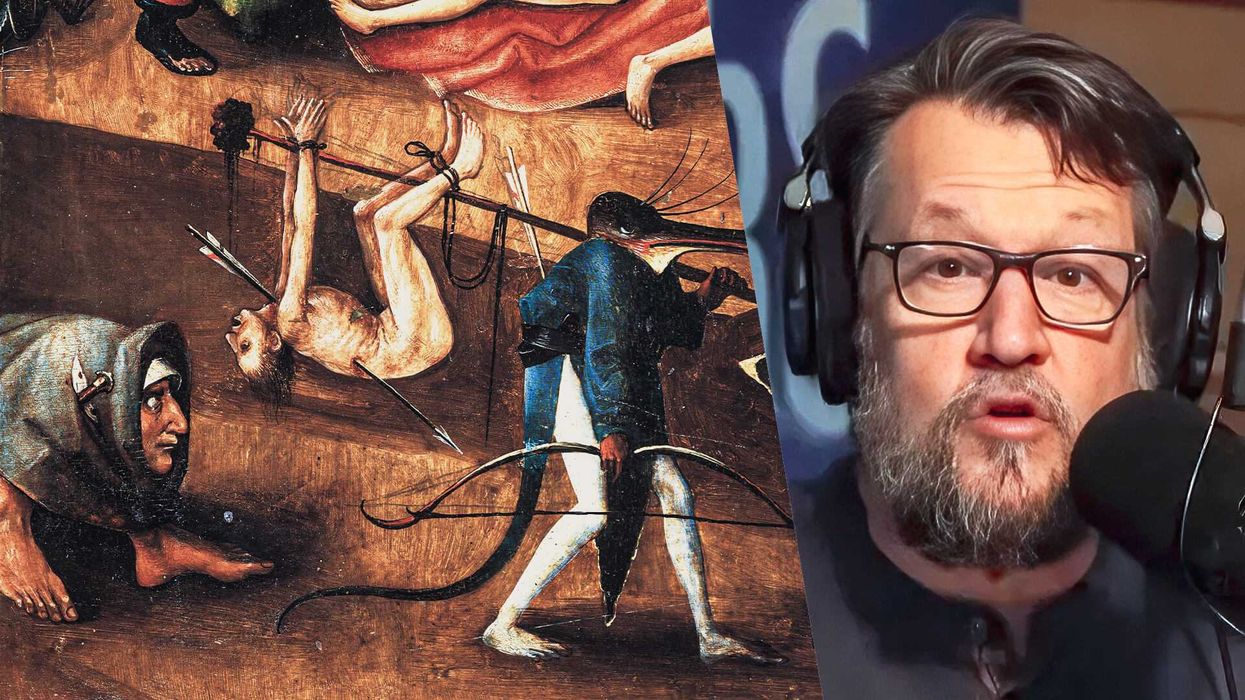
In our age of “love is love,” “live your truth,” and “don’t judge,” many people, Christians included, are hesitant to speak the truth. We don’t want to upset people, make situations uncomfortable, or scare anyone, so we either dodge opportunities to speak the truth about God, or we soften biblical concepts in hopes that they will be more palatable.
There’s never been a subject Christians tend to temper more than hell. “It’s becoming a little more trendy now to try to dumb down the severity of God’s wrath on those who reject Him,” says Rick Burgess, BlazeTV host of the biblical spiritual warfare podcast “Strange Encounters.”
On this episode, Rick lays bare the truth about hell and what it means to reject God.
Sometimes “even people within the faith [think] that maybe somehow what scripture says about God’s judgment on the unredeemed — maybe we have it wrong. Maybe he’s even going to be gracious and merciful to the unredeemed, even though they’ve rejected the only way to to receive God’s grace and mercy,” says Rick.
Others think that “maybe somehow hell isn’t as bad as it sounds in the Bible. Sure, they’re going to be punished, but it’s not going to be an eternal punishment.”
One prominent Christian figure who Rick says is “easing into this camp” is American actor, evangelist, and author Kirk Cameron.
Recently, on his podcast, Cameron rejected the traditional doctrine of eternal conscious torment — the belief that hell is a place or state where those who die without salvation in Jesus Christ experience ongoing, conscious suffering and punishment forever, without end or annihilation. Kirk said that while he once accepted this doctrine as true, today he leans more toward annihilationism – the belief that the unredeemed face judgment, possibly limited suffering, and then total destruction.
“It fits the character of God in my understanding more than the conscious eternal torment position, because it brings in the mercy of God together with the justice of God. It doesn’t leave judgment out. It is just, but it also fits with the Old Testament picture of the fate of the wicked, which is to be destroyed. It is to die, and it is to perish, not live forever in an eternal barbecue,” Cameron said.
“If conscious eternal torment is not a thing, that’s actually a great relief, and I would have joy in correcting somebody who says that the reason that they’re not a Christian is because of this merciless God who tortures people forever, and I could say that’s not what the Bible teaches. Good news. Still not good. You don’t want to go [to hell], but there is mercy even in His judgment,” he added, noting that this is what he believes “the scriptures teach.”
While Rick says he has “great respect” for Cameron and believes without a doubt he’ll “spend eternity” with him in heaven, he believes Cameron has some confusion about the character of God.
“It’s like he prefers God to be a certain way. And I really, really think that’s very shaky ground. … He doesn’t want that to be true because what? That makes him think less of God?” asks Rick.
When people try to soften scripture, they’re essentially believing that “God needs a PR agent” to say, “Hey, God, I really think people will get upset with you with this eternal conscious torment thing. You probably want to go with the annihilation of the soul and just kill these people because that’ll make you look more merciful,” he says. “I got a real problem with that because I think that God has gone on record about his mercy and grace because of the cross.”
“He’s been so gracious and so merciful, He has allowed you to become fully righteous, and the sacrifice and the wrath that should have been poured out on us was now poured out on his son,” Rick says.
But “if you choose to reject God’s grace and mercy, then all you’re going to get is his wrath and judgment, and that judgment from Him, because He’s perfect, will be correct.”
To hear Rick’s full breakdown, watch the episode above.
Want more from Rick Burgess?
To enjoy more bold talk and big laughs, subscribe to BlazeTV — the largest multi-platform network of voices who love America, defend the Constitution, and live the American dream.
Exorcisms are exploding across America — but nobody wants to admit why
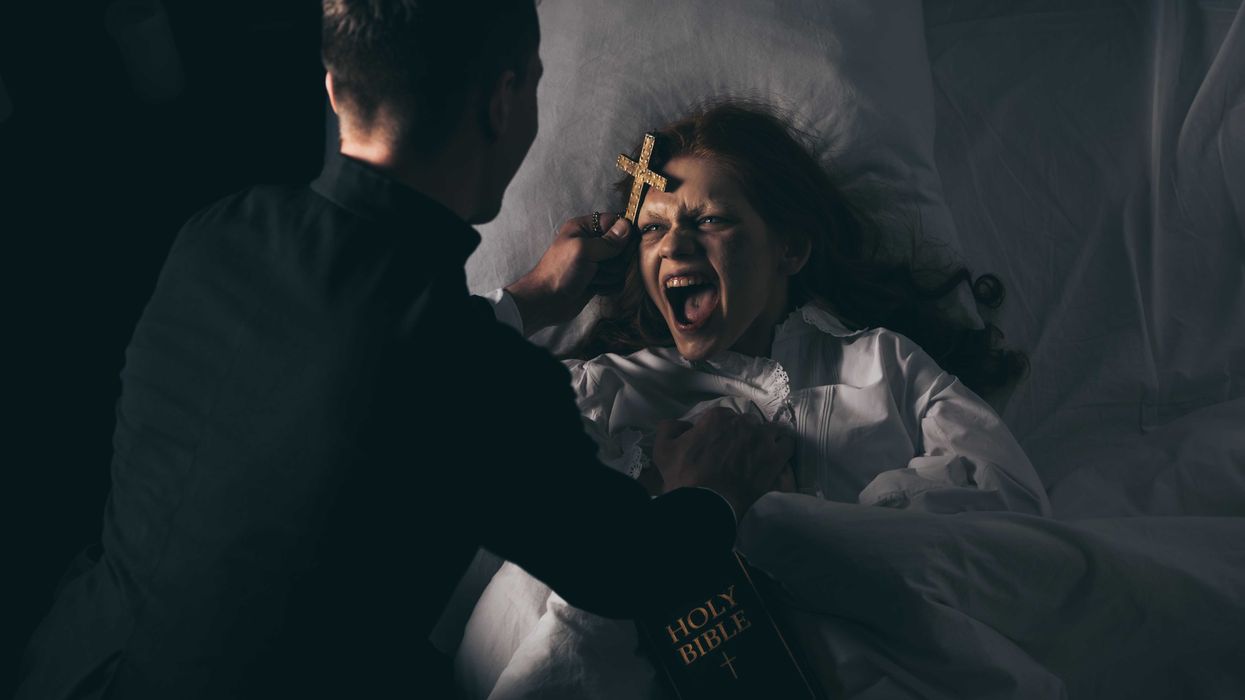
From Michigan to Melbourne, exorcisms are rising — an odd trend in an age when Christianity is supposedly retreating.
Odd, that is, if you accept the official story: that faith has faded, churches have emptied, and modern life has supposedly outgrown such concerns. Yet behind parish doors and rectory walls, priests report the opposite: more calls, cases, and urgency.
Evil persists not because it is misunderstood, but because it is minimized.
The demonic, it seems, didn’t get the secular memo.
I began making inquiries recently, speaking with clergy who have dealt with what most people would rather joke about, pathologize, or turn into content. One name surfaced repeatedly: Fr. Michael Shadbolt, a veteran priest who had performed numerous exorcisms and spoke of them with measured calm. I reached out to him for insight. Instead, I received word that he had recently passed away.
Thankfully, there was another source, carrying decades of experience where spiritual and psychological care meet. Fr. Stephen Rossetti, an American Catholic priest and seasoned exorcist, spoke without qualification.
“Yes, requests for exorcisms are on the rise in the U.S. and in other countries as well,” he told me. “There may be many reasons for this, but one obvious one is the decline of the practice of the faith.”
That observation runs counter to the fashionable narrative. The usual explanation for the rise in exorcisms is framed as a paradox: Christianity declines, so belief in demons increases.
But that framing flatters modern assumptions. It treats belief as an all-or-nothing package. Either accept the creed or discard the lot. But human experience has never worked that way.
One doesn’t need to believe in God to believe in evil — it’s everywhere. A loved one consumed by addiction. The husband who revels in beating his wife. The wife who revels in beating her husband. The son who turns on parents with lethal force.
RELATED: Interview with an exorcist: ‘God always takes the first step’
 D-Keine/Getty Images
Evil doesn’t depend on belief to function. It advances through repetition, fixation, and the gradual loss of restraint. The language shifts with each generation, but the pattern remains. Every day, roughly 137 women and girls are killed worldwide in acts of femicide. Child sacrifice, usually relegated to ancient Peru or remote civilizations, still occurs in parts of Africa today. In the U.S., one in four girls and one in six boys will be sexually abused before the age of 18.
No vocabulary of Pinkertonian progress dissolves these facts. Calling evil “trauma” or “dysfunction” may describe the damage left behind, but it doesn’t confront the force itself. Such language manages outcomes while leaving causes untouched.
The modern world prefers to believe that evil is a misunderstanding, a system failure, or a lack of education. History suggests otherwise. Evil persists not because it is misunderstood, but because it is minimized. It thrives where it is renamed, rationalized, or treated as an embarrassing superstition.
Fr. Rossetti put it plainly, “Increasingly people are not protected by faith, and many are involved in occult practices, which are a clear opening to the demonic.”
That point is crucial. Militant atheism is seldom the starting point. The entry point is engagement with practices the Church has long warned against.
“We have a number of cases of people who drifted away from the faith and then got into the occult,” Rossetti explained. “After a few years, they found themselves afflicted by evil spirits.”
The remedy is clear. “The first thing we do is have them go to confession, start practicing the faith, and live a virtuous life,” he said. “All sin is an opening to evil in some way, and the worse the sins, the greater the opening.”
It is precisely for this reason, Rossetti continued, “that exorcisms are very effective.” However, he stressed, there’s no wand, no instant result. “Sometimes the process takes time. It is typically not one and done,” Rossetti said. After years of spell-casting, curse-making, and demon worship — often misidentified as “self-discovery” or “ancient wisdom” — it can take far longer to undo the damage.
He was explicit about the timeline. “It typically takes three to five years of exorcisms to liberate the person.” The process, he added, is one of conversion and purification.
“An exorcism is not magic,” he said.
The hierarchy is clear and always has been: Christ reigns, angels serve, demons defy — and ultimately lose.
What we are witnessing, then, is not the complete disappearance of belief but its fragmentation. Christianity retreats institutionally while belief itself goes feral. Old anchors are cut loose. New fixations rush in. The vacuum does not remain empty.
Look around. Astrology, once harmless nonsense, has become a personal operating system. It graduated from brainless fun to life-management software, complete with a $3 billion price tag. Tarot cards are sold as “self-care.” Witchcraft is rebranded as empowerment, paganism as wellness. Social media is saturated with spiritual freelancers promising protection, manifestation, and power — usually bundled with a payment link.
None of this is neutral, and none of it is consequence-free. Doors opened casually tend to stay open.
This is where the supposed paradox dissolves. Christianity isn’t retreating because belief vanished, but because belief lost its footing. Structure recedes, so superstition rises. When doctrine disappears, disorder follows. There is no neutrality — only exposure.
For those skeptical because of Hollywood portrayals, exorcism is not a medieval curiosity revived for effect, but a practical response to persistent realities. The Church isn’t inventing demons to stay relevant. Rather, it is reacting to what it actually sees — a culture defined by isolation, instability, and constant immersion in content that destroys self-control and sanity.
Fr. Rossetti was clear on the final point, one that many increasingly resist.
“It is critical to understand that Jesus is Lord and not Satan,” he said. “The big mistake people make today is thinking that Satan is so very powerful. He is not.”
Compared to Christ, “Satan is dust.” He has no authority unless it is surrendered.
Christian theology has never been ambiguous on this point. Satan is not a rival god, not an equal force locked in cosmic balance. He is a created being who rebelled, fell, and was expelled. His power is parasitic rather than inherent. He doesn’t rule a kingdom by right, but lurks in territory abandoned through disobedience and pride.
The hierarchy is clear and always has been: Christ reigns, angels serve, demons defy — and ultimately lose.
That, it seems, is the warning embedded in the rise of exorcisms. Not that evil has grown stronger, but that we have grown careless. We treated the spiritual realm as a curiosity, then a hobby, then a marketplace — and acted surprised when something followed us home.
Fr. Rossetti put it without hesitation: “Jesus is Lord and has smashed Satan’s kingdom.” The tragedy is that many live as though He hasn’t.





