

Category: Christianity
Christian children’s movie ‘David’ beats out ‘Spongebob’ and Sydney Sweeney in box-office shock

A faith-based children’s movie is making waves just before Christmas.
“David,” an animated Christian musical about the story of David versus Goliath performed valiantly up against some monstrous titles over the weekend.
‘David’ is now the second-biggest blockbuster for Angel Studios, the studio that brought ‘Sound of Freedom’ to theaters.
In a field dominated by animated pictures, “David” managed to outperform both “The SpongeBob Movie: Search for SquarePants” and “Zootopia 2.”
Spice rack
While “Zootopia 2” took in just $14 million, that figure comes with a huge asterisk, as it has already been in theaters for a month with more than $1 billion taken in worldwide. However, “David” can relish the fact that it outperformed the beloved SpongeBob character as well as Sydney Sweeney’s new movie “The Housemaid” on their opening weekends.
SpongeBob made $16 million, according BoxOffice Pro, while “The Housemaid” garnered a respectable $18.95 million. At the same time, “David” shocked the media with just over $22 million in its opening, according to Box Office Mojo.
RELATED: ‘Kevin Costner Presents: The First Christmas’ brings scriptural authenticity to Nativity story
While SpongeBob has an established (but aging) fan base, controversy around the film came just ahead of the release when one of its voice actors, rapper Ice Spice — real name Isis Naija Gaston — attended the premiere in a revealing outfit.
The mostly transparent lingerie the rapper wore on the red carpet may have been a factor in parents’ choice of which film was most suitable for their children.
Blue Christmas
“David” is now the second-biggest blockbuster for Angel Studios, the studio that brought “Sound of Freedom” to theaters. The movie about child trafficking went viral online in terms of publicity and took in more than $250 million worldwide. No other film on the studio’s roster has made more than $21 million before “David.”
None of these movies could touch the No.1 film of the weekend, though: James Cameron’s “Avatar: Fire and Ash,” the third in the franchise. It took home a whopping $88 million, more than second through fourth place in the box office combined.
Two more “Avatar” films are set for release, in 2029 and 2031.
RELATED: ‘Matrix’ co-creator: ‘Trans rage’ drives my work
 Photo by Jason Mendez/Getty Images for Paramount Pictures
Wrung out
Also to be considered is the SpongeBob franchise’s flailing numbers.
The first movie in 2004 had a promising opening weekend of $32 million, later drawing $142 million worldwide against a budget of $30 million, per the Numbers.
In 2015, the next film in the franchise took a $74 million budget and, despite making just $55 million in its opening weekend, ended up making over $300 million.
In 2020, though, “The SpongeBob Movie: Sponge on the Run,” with a $60 million budget, drew just $865,824, likely due to COVID-19 restrictions, and made just over $4.8 million at the end of the day.
Now, with an alleged $64 million budget, according to Variety, Paramount may have cause for worry, with double the budget producing half what original film did in 2004. Then again, the studio may have streaming numbers in mind, instead.
Make Mass Great Again
This Thursday is sure to see packed pews where they may otherwise sit empty. Catholics who regularly attend Mass might find themselves seated next to a CEO—not a “Chief Executive Officer,” but a “Christmas and Easter Only” Catholic. Protestant and Catholic churches alike advertise their times of worship for Christmas, expecting crowds too large to accommodate in one service. But this is not how it should be, according to Robert Cardinal Sarah. Instead, these churches should be full every weekend with reverential, traditional worshippers.
The post Make Mass Great Again appeared first on .
How Jesus modeled loving confrontation — and why niceness was never the goal
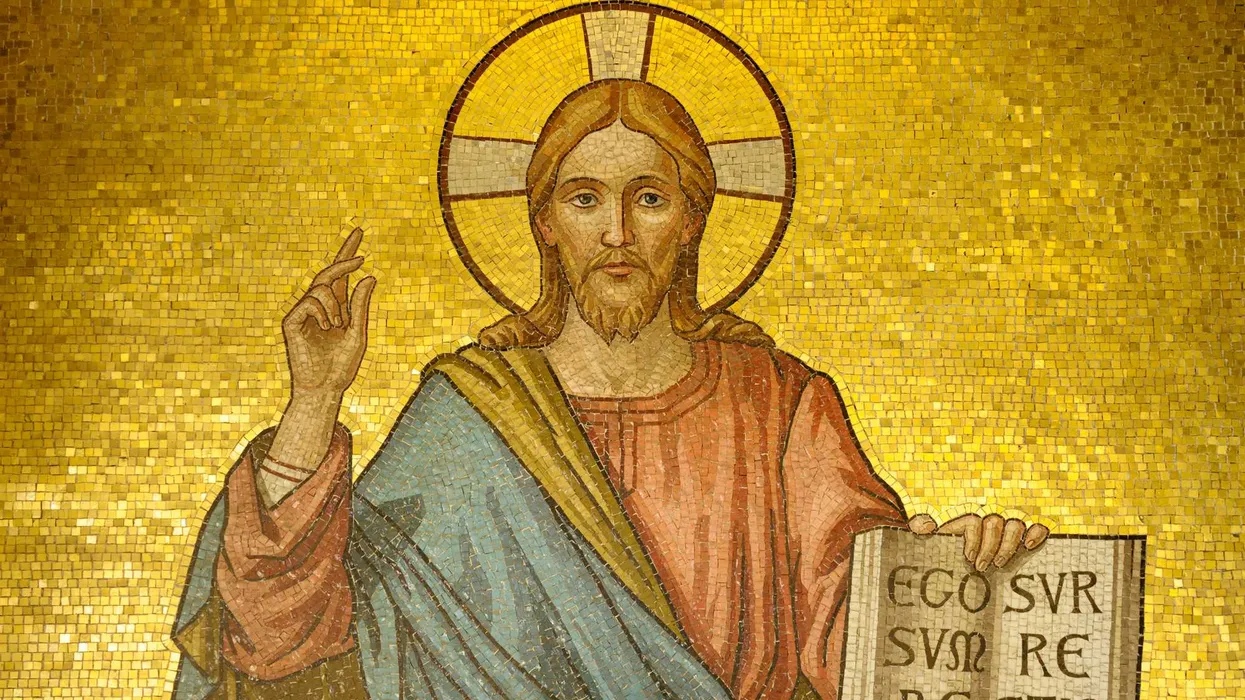
Modern Christianity often treats “niceness” as its highest virtue and “offending” as its worst. The American church is far too often shaped by this creed.
Yet the Gospels paint a far different picture of Jesus. He was loving, compassionate, and merciful, yes — but He was also unapologetically offensive when truth required it. When we avoid speaking hard truths for the sake of being liked or preserving a shallow sense of “peace,” we slip into spiritual complacency, apathy, and lukewarmness — all things Jesus rebuked.
Jesus never softened the truth to keep crowds happy.
The American church has developed an aversion to tackling tough cultural issues that are, at their core, purely biblical. Pastors often retreat in fear of angry emails, pushback from congregants, or worse, the loss of Sunday pew-warmers.
Last year, in my home state of South Dakota, an amendment allowing abortion up to nine months was on the ballot. A pastor of one of the state’s largest churches refused to address it, worried about being labeled the “abortion church.” He chose the path of cowardice instead of defending the innocent unborn.
At its core, this kind of timidity is rooted in the fear of man, disguised as a desire to “attract” people to the gospel. Numbers are prioritized over hearts, popularity over true discipleship.
What most pastors try so hard to avoid today, Jesus hit head on. Jesus offended — and offended often. His offense was never petty but was always purposeful. He never once flinched from boldly proclaiming truth because it might “offend” someone or ruffle feathers. Quite the opposite, in fact.
Jesus set the example: Truth will offend
The Pharisees were Jewish religious leaders of Jesus’ day, esteemed by many and considered high-class elites.
But Jesus didn’t care how lofty and noble these men appeared to be — He saw straight through their transgressing hearts, calling them offensive names like “hypocrites,” “blind fools,” “brood of vipers,” “serpents,” “children of hell,” “whitewashed tombs,” and “greedy and self-indulgent.” Naturally they were offended.
In Matthew 15:1-12 and Matthew 23, the disciples pulled Jesus aside after He offended the Pharisees by exposing their spiritual corruption. Jesus told these perceived religious zealots they honor God with their lips, but their hearts are far from Him.
The disciples questioned, “Do you know that the Pharisees were offended when they heard this saying?” (Matthew 15:12). Jesus’ backbone, as stiff as steel, responded, “Let them alone; they are blind guides” (Matthew 15:14). He didn’t have any time for nonsense.
Jesus didn’t just offend the Pharisees with truth; He offended His disciples too.
RELATED: The era of Christian loserdom is over
 Christ driving money-changers from the Temple (Fine Art Images/Heritage Images via Getty Images)
In John 6, the disciples took offense at Jesus’ teaching on the bread of life. He challenged their religious assumptions and expectations about the Messiah as He proclaimed, “I am the living bread” (John 6:51), and symbolically called them to “eat the flesh of the Son of Man and drink his blood” (John 6:53).
Their offense shows their difficulty understanding the spiritual truths that transcended human understanding.
Jesus offends repeatedly all throughout the Gospel stories. When He claims He existed before Abraham as John 8:56-59 says, the Jewish leaders interpreted His teaching as blasphemy, which led them to try to stone Him. When one of the Pharisees invites Him to dinner in Luke 11:37-54, instead of a surface-level conversation about the weather, Jesus didn’t waste time and immediately unmasked their hypocrisy, legalism, and spiritual emptiness. In response, they began plotting against Jesus — not repenting and humbling themselves.
Jesus never softened the truth to keep crowds happy. He offended religious leaders, political authorities, and even His own followers when they opposed the kingdom of God. His love was inseparable from honesty.
If we claim to follow Him, we cannot avoid offending people. Jesus reminds us in the Gospel of John that if the world hates us to remember it hated Him first. Faithful discipleship means being willing to confront lies, challenge sin, and speak truth, even when it divides, disrupts, or costs us something — or everything.
Courageous truth-telling is a biblical virtue
The modern church often elevates “niceness” above righteousness and holiness. But Jesus wasn’t crucified for being nice — He was crucified because He spoke truth that offended people even though a week before they spread cloaks and branches, shouting “Hosanna” as He entered Jerusalem.
I recently read through the Gospels, noticing the countless times Jesus “offended” but for good reason. He never offended for the sake of it — but always because it was the outcome of teaching truth with conviction.
In Jesus’ hometown, people were both astonished and “offended” when Jesus taught in their synagogue as Matthew 13:54-57 recounts. Their familiarity led to their unbelief, and Jesus exposed the depth of their spiritual blindness. The people of Nazareth then tried to throw Jesus off a cliff. They were first impressed but then violently offended (Luke 4:16-30).
‘Modern religion focuses upon filling churches with people. The true gospel emphasizes filling people with God.’
Imagine congregants trying to throw a modern-day pastor off a cliff because he was too bold? Oh, to have more courageous pastors who righteously offend. Many would cower to the crowds or be taken to the side by their elder board demanding they tone it down, but not Jesus; He continued preaching truth at all costs.
Even up to His crucifixion and death on the cross, Jesus didn’t try to appease or reason with the people. He didn’t apologize. He didn’t use caveats. He was mission-focused on preaching the gospel that saves and leads to repentance. Not once did He try to people-please at the price of watering down sound doctrine.
Niceness avoids conflict, clarity, and offense — but Jesus didn’t. He embodied compassion and mercy, yet He also spoke hard, confrontational truths when necessary.
True Christlikeness means loving people enough to tell them what they need to hear — not what keeps us comfortable or well-liked.
Jesus didn’t offend to be cruel or to win an argument; He offended to reveal truth, to expose bondage, to free hearts, and to reveal God’s kingdom. His offense was holy, rooted in love, and aimed at transforming hearts and minds.
Fear of offending has paralyzed the church
A.W. Tozer wisely said, “Modern religion focuses upon filling churches with people. The true gospel emphasizes filling people with God.”
Many American pastors avoid addressing culturally explosive but biblically clear issues because they don’t want to offend. This silence stems from the fear of man — fear of losing members, donations, reputation, and influence.
The result is lukewarm churches that prioritize optics over obedience. Nothing is “wrong” with the church, but nothing is “right” with it either. People aren’t leaving convicted or repentant. They’re leaving feeling pretty good about themselves as they wallow in complacency.
Why does the American church continue to sit on the truth? True disciples follow Jesus until death.
No boats have been rocked, no hearts have been transformed, and no one has been truly discipled.
But the apostle Paul in Galatians 1:10 makes clear: “If I were still trying to please man, I would not be a servant of Christ.” You can only serve one master: God or the world.
When leaders refuse to speak on matters like abortion, sexuality, or sin because they might upset people, they are choosing self-preservation over faithfulness.
“If there is a decay of conscience, the pulpit is responsible for it. If the church is degenerate and worldly, the pulpit is responsible for it,” declared Charles Finney, a minister and leader during the Second Great Awakening.
Speaking truth in love: The cost of radical discipleship
John the Baptist offended people when he called them to repentance, criticized Herod for committing adultery, and condemned religious hypocrisy. He lost his head as a result. Paul offended people by preaching the Christ crucified and calling out legalism and man-made traditions. He was decapitated because of it. Elijah offended King Ahab and the prophets of Baal by confronting idolatry. Jezebel threatened to kill him. Amos offended the Israelites in the Northern Kingdom when he spoke out against wealth, corruption, and injustice in Israel. He faced rejection and threats.
These were all offenses they were willing to make because they lived for an audience of one.
So why does the American church continue to sit on the truth? True disciples follow Jesus until death.
Christian Nigerians right now are being slaughtered for their faith by the thousands, yet they continue gathering in droves to worship their King. Meanwhile American churches are sitting on the sidelines too worried about offending people to speak truth, rather than taking up our cross and truly following Christ.
As believers, we must be strong and courageous, with a truth-telling edge. We should not be harsh or abrasive but rather love people enough to say what’s hard.
If Jesus’ ministry provoked offense for the sake of truth, perhaps ours should too.
Why the ‘Christian’ Democrat is more dangerous than the loud one

The Democratic Party has been wandering the wilderness for years, somehow discovering new ways to alienate large portions of the country. And it still isn’t finished.
Rock bottom, it turns out, has a basement — and Texas has the keys.
Earlier this month, Rep. Jasmine Crockett (D), a congresswoman who treats every disagreement like a full-contact sport, announced her Senate bid. Waiting for her in March is state Rep. James Talarico (D), a former teacher and pastor-in-training with a very different style.
Neither is good news. But from a Christian perspective, one is far worse.
Crockett is impossible to miss. She’s volume without thought, performance without a functioning pause button. Trump derangement syndrome has long since replaced reason, and nuance never survived the encounter. She seems to measure success by how many people she can irritate before lunch. Her politics are blunt, her tone brittle, her intellectual range roughly comparable to a Roomba. You always know where she stands because she’s standing on the table, yelling.
Talarico, by contrast, operates on an entirely different frequency. He lowers his voice, quotes scripture, and speaks with the gentle cadence of a youth pastor wrapping up a weekend retreat just before the acoustic guitar comes out. He talks about compassion, dignity, and the moral duty to protect the vulnerable. He wants to heal divides, soothe tensions, and “bring people together.”
If Crockett feels like a bar fight, Talarico feels like “Kumbaya” by candlelight with everyone instructed to hold hands.
And that is precisely the problem.
Crockett’s politics are abrasive but obvious. She makes no effort to hide what she believes or where she wants to take the country. There is something almost refreshing about her lack of disguise. You may not like the message, but it’s unmistakable. She offends openly and moves on.
But Talarico offends in a very different manner. He has mastered the art of wrapping progressive politics in pastoral language. What he offers is standard Democratic doctrine: sexual ideology backed by law, borders treated as optional, and a growing state taking over matters once settled by family, church, and conscience.
RELATED: ‘Progressive Christian’ turns Bible into a Planned Parenthood parable — but truth fires back
 Mark Felix/Bloomberg via Getty Images
Talarico insists that faith and today’s Democratic Party can walk hand in hand. Perhaps this was plausible once, back when Democrats still shared a basic moral grammar with the rest of the country. In the 1990s, disagreement existed, but reality was still shared. Marriage meant something fixed. Biological sex wasn’t up for debate. Free speech had limits, but truth still mattered. You could argue policy without arguing over whether biology or basic reality still mattered.
That world is gone.
The modern Democratic project is built on ideas fundamentally at odds with Christian teaching: the self treated as sovereign, identity treated as sacred, desire elevated to authority, and socialism presented as the only workable future.
Sin is renamed “harm.” Redemption is replaced with affirmation. Judgment is reserved only for those who dissent. Christianity, meanwhile, insists on restraint, repentance, and allegiance to something beyond the individual.
Talarico tries to solve this puzzle by watering down Christianity until it feels more like a mood than a creed. He does this because he has no other choice. In today’s Democratic Party, a Christian who speaks plainly about restraint and repentance simply cannot survive. He is summoned, sidelined, and eventually expelled. To remain welcome, faith must be dumbed down and rendered harmless.
So Talarico treats Christianity like a buffet. He keeps the language of love and mercy, the parts that flatter modern sensibilities, and quietly discards the parts that demand obedience, self-denial, or radical honesty.
This is not faith guiding politics but politics reshaping faith.
And that is where the charge sticks. This is not a good-faith disagreement or a sincere wrestling with belief but a distortion carried out for political survival. If Talarico spoke the full truth of Christianity as it has been taught for centuries, he would be politically homeless by morning. Rather than risk that, he trims the gospel until it fits the party line.
This is where the real danger lies. He speaks like a shepherd but votes like an activist, borrowing Christianity’s authority to push policies that weaken what faith seeks to strengthen — specifically the nuclear family and ordered community.
Crockett does her damage loudly, like a bull in a china shop. Talarico, on the other hand, is more woodworm than wrecking ball, smiling as he eats through the beams.
There’s something faintly comic about watching Democrats embrace Talarico. This is a party that spent decades treating Christianity like a vestigial organ, now swooning over a Sunday-school version of Pete Buttigieg.
But there’s nothing funny about what the Texan stands for.
Talarico offers a faith that never says “no,” never draws lines, and never makes anyone uncomfortable except those stubborn enough to insist that limits must be imposed. Love is endlessly elastic. Compassion is permanently undefined. Everything bends; nothing breaks — except, eventually, the foundation.
Crockett, for all her theatrics, doesn’t pretend to share a Christian worldview. Talarico does. He doesn’t attack Christian beliefs outright. Instead he sands them down, slowly, patiently, until they no longer support much of anything.
For Texans, come March, both options are bad. This isn’t a choice so much as a coordinated assault: one, a knee to the groin, the other, a roundhouse to the ribs. Crockett does her damage loudly, like a bull in a china shop. Talarico, on the other hand, is more woodworm than wrecking ball, smiling as he eats through the beams.
Neither deserves trust. But only one dresses his agenda in sacred language.
Texas Democrats may think they are choosing between bedlam and bland reassurance. Christians should recognize the choice for what it is: between open hostility and sneaky subversion, between a politics that attacks faith from the outside and one that reshapes it from within.
Both are bad. But only one pretends to be good. And that, from a Christian point of view, makes all the difference.
Growing up in the Hebrew Roots movement — and why I eventually had to leave

Several years before my husband and I met, one of his friends told him, “Modern youth are hungry for truth, and they are looking to the oldest forms of traditional orthodoxy to find it. This leaves them with two main choices: Catholicism or Hebrew Roots.”
My husband hadn’t heard of Messianics before this, or he had heard just enough to scoff at the idea of marrying someone who “pretended to be a Jew.” Nevertheless, his friend’s statement stuck with him. Who were these Protestants LARPing as Jews that they could draw intelligent youth in search of truth away from Catholicism?
We were all encouraged to study our Bibles for ourselves and to test one another. When the family home-churched together, it was always lively.
Relishing the chaos
Some would call us Judaizers.
We are certainly not ordinary Protestants. In fact, my family and most Messianics I grew up with believed that the Catholic Church is the whore of Babylon and the Protestant churches are her daughters. Most Christians were “too Catholic” in our opinion because they went to church on Sunday and celebrated Christmas, two practices instituted by Catholicism.
Despite how odd Messianics might be, they are too disorganized to be classified as a cult. There are somewhere around 200,000-300,000 Hebrew Roots people with no central figure, and there are countless groups within the movement. Some of them are self-identifying Torah followers who may lead isolated lives or fellowship at home with a few like-minded people. Others are members of organized Messianic denominations.
The movement has very few real Jews in it, and for the most part Messianic believers reject modern-day Jewish practices. Instead we endeavor to interpret the Old Testament as literally as possible. This, of course, is nearly an impossible feat and the main cause for disunity in the Hebrew Roots movement.
Perhaps what makes this expression of group interesting is the fact that it is a movement that can’t really be defined as a whole, and yet all the members of it believe that the truth they have is absolute, even though all their like-minded compatriots disagree with them on how to execute this truth. To those raised in the movement, the disorder and chaos are natural and even relished. To those watching from the outside, I can only imagine how bizarre we appear.
Family tradition
My mom chose my name because it was old-fashioned. Most of the rest of the family didn’t like it and tried to give me various nicknames. But my parents named me perfectly.
Keturah — meaning a sacrificial aroma/incense — may be strange-sounding, but it also uniquely fits in all the worlds I’m most interested in. It is both a Jewish and an Amish name and, oddly, has a deep Catholic meaning. It has served me well in the secular world, too, with its unique sound. My name has made it possible for me to blend in among both Christian hippies and woke misfits.
I never considered how odd it was that my great-grandfather basically invented the religion I grew up with (with heavy modifications made by my grandfather). What should have been a red flag — why did nobody figure this out before my great-grandfather? — was instead championed as proof of our righteousness.
My great-grandfather had been a Pentecostal pastor. But he started reading his Bible one day. This led him to preaching on things that his congregation was not ready for, because “the ways of the world were too comfortable.” He left his church, took another wife (his first wife left him with their three children because his beliefs were getting strange), and began a road ministry that my grandfather eventually took over.
I was often told the story of the Rechabites, a family who were saved from being utterly wiped out because they obeyed the words of their great-grandfather. My great-grandfather, too, had left us an inheritance, and if we cherished it, we would be saved from the horrors of the world. I believed this.
RELATED: Deliverance requires memory — and America is forgetting
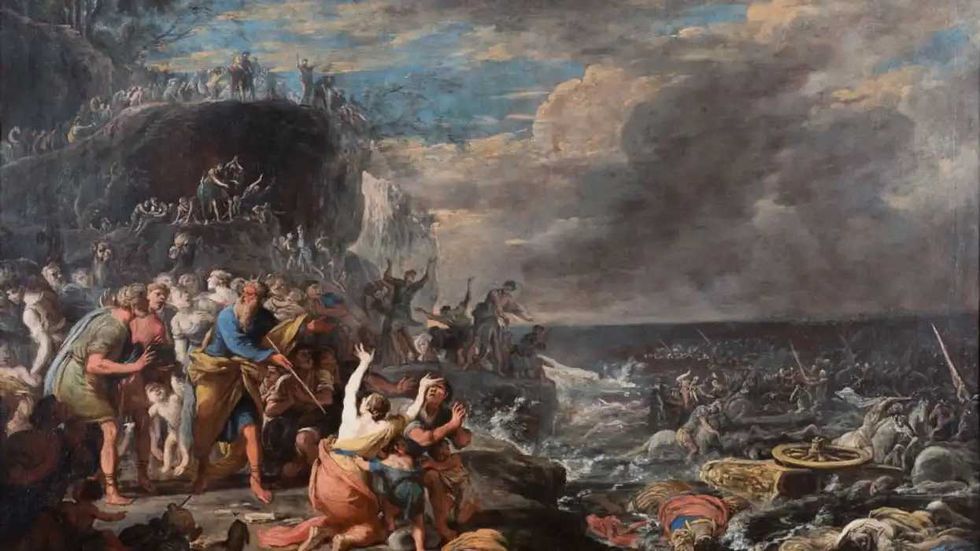 Photo by Heritage Images/Getty Images
Lively debate
I was neither brainwashed nor raised in a cult. There is nothing more American than leaving the beaten path to make your own way, especially when it comes to religion.
The women in my family are too mouthy and bratty, myself included, for the family to ever have fallen into true patriarchal suppression. We were all encouraged to study our Bibles for ourselves and to test one another. When the family home-churched together, it was always lively.
Even I, at the ages of 10 through 14, would get pulled into the heated dialogue with religious opinions of my own, carefully researched and passionately presented. I was obsessed with writing theological essays during those years.
We were not cosplaying as Jews any more than Amish are LARPing as peasants. We were more interested in what the Bible had to say than the traditions of modern-day Jews. In fact, anything that was “traditional” must be too much like Catholicism. We didn’t want to follow customs, but the law of Yahweh.
Although my great-grandfather and grandfather invented our faith, there was room for fluidity. It has changed much over the years. My great-grandfather kept the Saturday Sabbath and refused welfare for his family although they were poor and had 13 children. They did not eat pork, but ate according to Leviticus 11. We call this eating kosher, but it’s more accurately referred to as eating “clean.”
My grandfather started using the “Sacred Names” to refer to God when my father was young and warned against “calling upon the name of Jesus” because Jesus, he argued, was another form of Zeus. We argued over whether to spell the Messiah’s name Yahshua or Yeshua. We never referred to God as “God” or “the Lord” because those, too, were pagan names. It was always “Father” or “Yahweh.”
Which Sabbath?
When I was 9 years old, my grandfather realized that Saturday was not the true Sabbath. He had discovered an idea called the Lunar Sabbath.
The Sabbath is determined by the phases of the moon. At the end of the month when the moon goes dark, the Sabbath is two or three days long until the new moon appears and resets the Sabbath. And so Sabbath might be on a Tuesday one month and then Wednesday or Thursday the next month. If it were cloudy, it might be difficult to see the moon, and sometimes we would be keeping Sabbath wrong for a week or so until we were able to clearly see what the sky said. It was also difficult for making plans and having social relationships.
When I was 14, I sat down and did a long study on the Sabbath using encyclopedias, various Bibles, and concordances. After three months I presented my research to my family. I explained the pros and cons for the Lunar Sabbath, Saturday Sabbath, and Sunday Sabbath. I had become convinced that Sunday was still not the true Sabbath and that we should stop doing the Lunar Sabbath and revert to Saturday. My parents and siblings could not argue with my evidence. We voted. After five years of living by the moon, we unanimously agreed to revert back to Saturday Sabbath.
This situation taught me several things: We were not a cult, but most of my family was intellectually incapable of interpreting scripture for themselves. It was cool that my family changed after my research. But also why hadn’t they studied this properly at the start? I was 14 years old, and yet I had convinced my parents to make a major theological change. This both inflated my ego and left me feeling insecure and unstable because I was truly alone and could not go to my parents for answers about God.
This is part one of a two-part essay. Part 2 will appear next week. It was adapted and edited for length from an essay that first appeared on the Substack Polite Company.
The Federalist’s Notable Books Of 2025

 Seasons greetings! It’s time for another exciting and sprawling books recommendation column.
Why the world hates strong men — but it’s exactly what God wants

Something has gone wrong.
After years of being told they are toxic and problematic, many men have simply cowed in deference to the spirit of our age. They imbibed the poisonous slogans and succumbed to what the world says about them.
Those who live day after day in a state of passivity give themselves over to a lie.
Some men attempt to punch back either by embracing their “toxicity” or ideologies that are slapped onto them.
The temptation in such an age is for men to become passive. This passivity is not a new temptation for men. It is the same temptation that Adam failed to defeat in the garden. Passivity is that peculiar behavior that gives into evil, often standing back and doing nothing. It is the soul bowed in deference.
The passive man does not resist the evil doer, he gives in, and doesn’t stand firm in the faith.
Even in reacting against the spirit of the age, men can become passive and allow the enemy to set the terms of the engagement. The more common expression of passivity is the man who becomes “nice” in order to placate like a dog who cowers and tucks its tail hoping to stave off any harm. The passive man is an agreeable man. He wants to keep his head down. He would rather be dead than ever appear intimidating to anyone or anything.
The man who rejects passivity, on the other hand, is often perceived to be arrogant. He is something who can be accused of “thinking too highly” of himself.
But the opposite of passivity is not arrogance but agency.
We need men of agency. Men who act, initiate, and change what is within their power to change. Agency is taking responsibility and pushing forward in the face of opposition and obstacles. It is faith in motion. As James 2:17 says, “Faith without works is dead.”
There are two main contentions that keep Christian men particularly from taking agency.
First, they are told that control is a dangerous idol. Christians, men included, are often taught that if they try to exercise control, then they are not trusting God. This is reflected in surveys of pastors who claim that control is a top idol among their churches. Pastor Eric Geiger, for example, identifies “control” as a “root idol.” For Geiger, control is “a longing to have everything go according to my plan.” Heaven forbid that people want things to go according to plan.
Second, they are told that power is inherently bad. Therefore any accumulation of or dispensing of power is considered dangerous and harmful to others. Geiger also frames power itself as a number one root idol that he defines as “a longing for influence or recognition.” He encourages Christians to repent of their longing for power and control.
Both of these spurious notions are not rooted in scripture but in the upside-down world of the enemy who desires that Christians control nothing and have no power.
RELATED: Dear Christian: God didn’t call you to be a ‘beautiful loser’
 RomoloTavani/iStock/Getty Images Plus
Can a Christian idolize power? Sure. Can a Christian idolize control? Yep. But there is very little nuance when these pastors and Christian leaders speak. They simply wish to denounce power and control, both key ingredients in exercising agency.
People who excel at agency — let’s call it “high agency” — know what is within their power and control and how to maximize it for good. People with passivity or low agency instead fall back and behave as if nothing is within their control and that they cannot change anything.
Sadly it seems that low agency is what is required in some churches today. It is often reframed as a virtue where one is fully trusting God when, in reality, they have relinquished control.
Much of the depression, anxiety, and despondency we witness in our world is better understood as passivity and low agency. It is the posture of the soul that just gives itself over to obstacles. Rather than exhibiting resiliency and exertion when in duress, the passive person simply gives up. Consumerism only enables this type of low-exertion lifestyle where people become habituated to quick fixes and easy solutions.
Those who live day after day in a state of passivity give themselves over to a lie: They cannot change, nothing will change, they are helpless.
When believed en masse, this kind of population is easy to control because they have forsaken control themselves. They are always looking for a strong person, ideology, or drink to fix their problems.
This is particularly problematic in Christianity. We believe in providence and human responsibility. We are to love the Lord Jesus Christ by obedience, walking in righteousness and putting to death the deeds of the flesh. Our faith in God should always move us to act in courage as we do not doubt the goodness of God.
Agency works along the path of God’s providence and faith. It is the car on the road — and we are called to accelerate.
God may give you more than you can handle. He is generous in this way. In our feelings of being overwhelmed or swamped, God invites us to take action and trust in Him. If things do not go as planned, we trust the God who is in total control.
We need men today who gain power and control. They must first master themselves to worship the master, Jesus Christ. By the Spirit, we are able to exercise discipline and control over our bodies and put them to good use for God’s glory.
One of the quickest ways to slip into passivity is to wait to act until everything is easy. This day is probably not coming for you. Let’s say you want to get married. The man of agency will take the first step he can in finding a bride instead of just waiting around until she appears.
Passivity often leads to thinking like a victim. It invites jealousy and contempt for others because others seem to be in control and have power. It creates anxiety because it is always worried about failing or things not working out. Instead the agentic man trusts God’s providence, looks at what he has been given, and works out the problem.
In our age of anxiety, agency is the answer.
Agency works along the path of God’s providence and faith. It is the car on the road — and we are called to accelerate (and brake when necessary).
Men who exude agency will be misperceived today. They will be called prideful, toxic, power-hungry, and controlling. But none of these descriptions are necessarily true. They are simply the reaction strong men receive in an age of passivity.
The strong men that are needed in our hard times are ones who take the initiative, assume responsibility, and never give into evil. They are men of high agency.
The hidden hope of Christmas the world needs right now

Amid a dark and weary world, on an evening no one expected, the innocent cries of a baby broke through Bethlehem’s silent night. Hope had arrived and was ringing out for all to hear.
The first Christmas reminds us that God often begins His greatest work not with flash or attention, but with a flicker — a gentle whisper. Light enters quietly, almost hidden, yet strong enough to push back any darkness.
Jesus’ arrival in Bethlehem was God’s declaration that no one is beyond His reach.
That’s the pattern woven throughout scripture. Long before Jesus’ birth, the prophets spoke of a coming Messiah during a time when life felt unstable and discouraging. Their world was marked by division, oppression, and spiritual exhaustion. Many wondered if God still remembered them. Yet the prophets held on to a small, steady flame: a promise that hope was on the way.
Today, many feel that same dimming of hope. Some carry grief that resurfaces sharply during the Christmas season. Others feel worn down by the constant noise, conflict, and division around us. Even in a season filled with lights and celebration, joy can feel hidden.
But God’s story reminds us of this essential truth: Hope is rarely loud or obvious. It doesn’t always arrive in a dramatic or spectacular package. More often, it’s found in quiet faithfulness and small acts of love, moments so ordinary we might miss their significance.
The world expected a powerful king; God sent a child. The world expected a grand entrance; God chose a manger. The world expected an immediate victory; God chose a slow and steady redemption.
If God brought His light into the world through unnoticed moments, why would we expect Him to work differently today?
This is where the mission of Boost Others comes in. We exist to help make that hidden hope visible again. Because hope doesn’t just appear out of nowhere, it grows when people lift one another up. When we encourage someone, when we extend generosity, or when we offer our presence without conditions, we’re doing far more than meeting a practical need. We are participating in the very heart of the Christmas story: shining light into someone’s darkness.
These actions rarely make headlines, but they reflect the character of the Messiah who came not to be served, but to serve; not to condemn, but to lift; not to overwhelm, but to invite.
RELATED: Uncovering the surprising truth behind a beloved Christmas hymn
 lovelypeace/iStock/Getty Images Plus
Jesus’ arrival in Bethlehem was God’s declaration that no one is beyond His reach. When we extend hope to someone else, we are echoing that same message.
When Christ was born, the angels didn’t announce it to the masses but to a few shepherds who happened to be awake. That reminds us that God’s work often unfolds in hidden spaces. The world may overlook smallness, but God uses it.
Hope isn’t always obvious, and it isn’t always immediate. But it is always present, often waiting in the places we least expect. And sometimes, God calls us to be the instruments of comfort and renewal of another person’s life.
This season, more than anything, our world needs people willing to live this way: people who carry the joy of Christ into conversations, relationships, and everyday interactions, people who look for the quiet places where others feel overlooked or discouraged and choose to bring light.
What if the most meaningful gift we could give this Christmas isn’t wrapped at all? What if it’s the way we speak, the way we listen, the way we show up? What if the greatest impact isn’t found in big gestures but in consistent, faithful ones that remind someone that God sees them — and so do we.
Small lights matter. No act is too small. One candle doesn’t eliminate the darkness, but it pushes it back. And when more candles are lit, when more people step forward to encourage, uplift, and bless, the darkness doesn’t stand a chance.
So as Christmas draws near, I invite you to be attentive to the hidden places where hope is needed. Slow down enough to notice who might need a lift. Don’t wait for others to shine, take the first step and inspire others to shine alongside you. God delights to work through ordinary people doing ordinary things with extraordinary love.
When hope feels hidden, it isn’t gone — it’s simply waiting to be revealed. And you may be the one God uses to bring that light into someone’s life, turning a dim flicker into a steady burning flame.





