Category: Christianity
Jehovah’s Witnesses: Worshipping with the most hated denomination
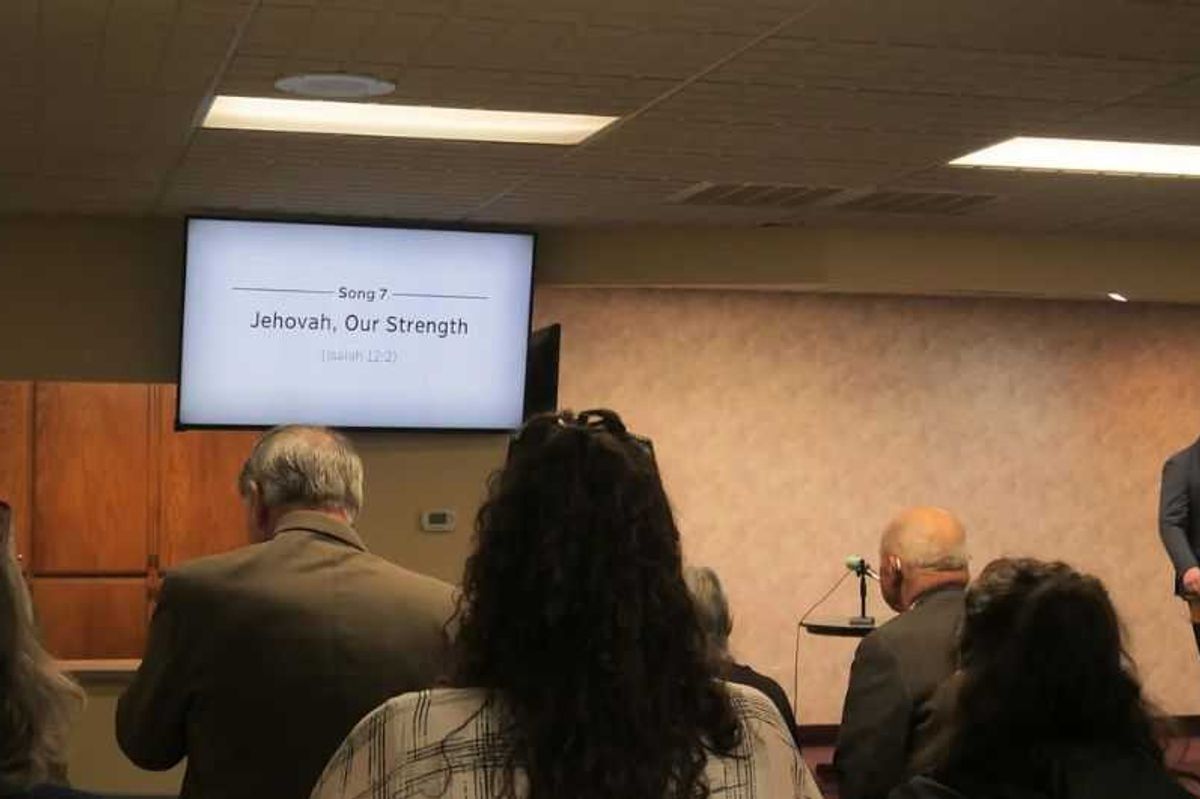
After attending a somewhat run-of-the-mill novus ordo Mass with only a few redeeming qualities, my husband and I decided to visit another church in Nevada that is possibly one of the most hated and misunderstood Christian denominations — even with the Latter-day Saints and Seventh-day Adventists.
It was both his and my first time attending a Jehovah’s Witness church.
‘I personally don’t want to go to heaven, but want to remain on Earth when we’re resurrected. I want to live among the animals and trees and plants and not rule over others.’
We walked 40-some minutes to the Kingdom Hall of Jehovah’s Witnesses and were greeted warmly, even though we were two minutes late and the congregation had already begun singing the first hymn. The setting might have been bland, but I felt I had achieved a bucket-list goal.
For years I’d tried to visit a Kingdom Hall. The Jehovah’s Witnesses were one of the last churches to reopen nationwide after COVID, offering online meetings for nearly two and a half years, until summer of 2022. Even after that, many remained closed for another year, and a large portion still host hybrid Zoom/in-person gatherings for the immune-compromised.
Kingdom Hall
To many, the inside of the meeting hall would appear no different from a conservative Protestant church. Most women wore skirts or business suits; the men were in full suits. The carpet was gray, the walls plain, decorated with a few pictures of flowers. There were no windows.
Rows of theater chairs faced a pulpit. Though the Jehovah’s Witnesses do not have ordained ministers, any baptized man may teach from Scripture. On the day we visited, a guest speaker from Idaho — tailored suit, bright red tie — delivered a sermon much like any Protestant pastor’s, citing extensive Bible verses to support his points. There was no American flag, unsurprising given JW pacifism. Jehovah’s Witnesses do not vote, and while they don’t forbid self-defense, they register as conscientious objectors during drafts. They believe that those who live by the sword will die by the sword (Matthew 26:52).
RELATED: Church-hopping: Confessions of an itinerant worshipper
 Keturah Hickman
The sermon
The message, titled “Is There in Fact a True Religion from God’s Standpoint?” began with statistics: 85% of the world identifies as religious, 31% Christian, across 45,000 denominations — with a new one forming every 2.2 days. “But how does Jehovah want to be worshipped?” he asked.
He read from Mark 7:6-7 and James 1:26, then cited Solomon: True religion is to fear God and keep His commandments (Ecclesiastes 12:13). More verses followed — Isaiah 48:17-18, Micah 6:8, Matthew 7:16 — arguing that true belief and conduct must fit like a well-tailored suit, not mismatched pieces.
He condemned most Christian denominations for justifying slavery so that men might Christianize pagan souls for the kingdom of God. He pointed out that the Jehovah’s Witnesses never supported such horrid beliefs. (He failed to mention that slavery was already abolished by the time they came along.) He warned against fatalism, ancestor worship, and faith in human institutions. “If a religion permits or promotes practices the Bible condemns, it is not true,” he said, citing Colossians 3:10, John 8:32, James 3:17-18, and others.
“Truth is found in the word of God,” he concluded. “When we love the word, we are peaceable.”
The sermon ended with the JW hymn “My Father, My God and Friend (Hebrews 6:10).”
All along the Watchtower
After the hymn, an elder read from “The Watchtower,” the denomination’s monthly study magazine. Before the group was called Jehovah’s Witnesses, it was the Watch Tower Society, founded by Charles Taze Russell in 1881.
The article that day was “Jehovah Heals the Brokenhearted” (Psalm 147:3). The elder read each paragraph aloud, then passed the microphone for congregants — men and women, in person or on Zoom — to share reflections.
Here are some highlights.
- Satan wants us to wallow in our feelings. Jehovah wants us to defy Satan and serve Him. When we do that, He sees us and is moved to help us.
- Jehovah doesn’t keep track of our sins, but only of the good we do.
- Jehovah does not put a time limit on our prayers as if it were a therapy session. We can pray to Him for as long as we like, and He’ll keep listening.
- The Son’s sacrifice forgives our past sins so we can move ahead into the future.
- We can comfort each other by being gentle and genuine.
- We are not to blame for how others hurt us.
It was repetitive but sincere — an hour-long group meditation on comfort and resilience.
The service ended with another hymn. There was no tithe, and communion is held only once a year for those who believe they are among the 144,000 destined for heaven.
The congregants
Afterward, several congregants welcomed us. One woman, Linda, about 70, explained that she had converted from Protestantism before marrying.
“There aren’t many differences between us and other churches,” she said, “except that we don’t teach what other places teach.”
“Such as?”
“We teach that Jehovah is Almighty God and that Jesus is His son and our Messiah. And we don’t believe in hellfire,” she said. “You can’t really find that idea in the Bible.”
I asked her if that meant that she believes everyone goes to heaven or if they just die.
She said, “The Bible says 144,000 go to heaven to be kings and priests to be the government of the kingdom of heaven that will come to Earth. I personally don’t want to go to heaven, but want to remain on Earth when we’re resurrected. I want to live among the animals and trees and plants and not rule over others.”
Linda gave me a small Bible — I gladly accepted it because it was lightweight and would fit perfectly into my backpack, and until now I had only been able to carry a New Testament. She explained to me that the Jehovah’s Witnesses didn’t approve of many of Scofield’s notes in the KJV and that their version had more accurate cross-references. I love having various versions of the Bible to read through, so there was no complaint from me!
She invited us to join her husband and friends at a cafe for a late lunch. And so we went with about 20 other congregants. I sat by a woman just a little older than I. Ozzy had been raised in the Jehovah’s Witnesses and had spent much of her youth as a traveling nanny. She told me that nearly six years ago she had married a Grace Baptist Church man and had a daughter with him. They eventually divorced. “I’m just grateful my daughter is learning about God in both homes she’s raised in,” she said.
Although Ozzy did not speak ill of her ex-husband, it was clear that she thought her expression of faith was more valid than his. So I asked her what was different between the two theologies, in her opinion.
“That’s a good question,” Ozzy said. “Not much.”
Then she added:
Except how we define the Trinity — you know, you can’t find that word in the Bible. I’ve searched every translation of the Bible, so I know. We both believe in the concept, though JW is more literal and bases their definition on how the Bible describes it. We believe that the Father, the Son, and the Holy Spirit are three separate entities united by a common will. Grace Bible Church is more Catholic when they talk about the Trinity.
After a day with them, I found them sincere and Bible-focused, hardly cult-like. They loved God, quoted Scripture freely, and treated us with warmth — even when I somewhat aggressively asked about one of their more infamous beliefs.
“I have heard that your church does not allow people to get blood transfusions and that this has caused many people to die.”
“Yes, we believe blood is sacred and not to be spilled in war nor ingested for any reason,” Linda responded. “But blood can be divided into four components, and it is okay to receive any of those minor fractions.
“Most people don’t even need blood transfusions as much as they used to,” she added, noting that “scientists have discovered that there are healthier ways to fill a low blood count with supplements and iron.”
Are the Witnesses a cult?
I’m not sure what makes a group a cult any more. Some say it’s when people follow a man rather than the Bible — but the Jehovah’s Witnesses have no central figure. They encourage personal Bible study.
Interestingly, 65% of members are converts — adults who join by conviction, not birth. While many leave, those who stay do so deliberately. Angry ex-members exist in every religion, and that alone doesn’t define a cult.
Much of JW doctrine is nothing your average Protestant would quarrel with: anti-abortion but pro-birth-control, personal responsibility for family size, and no institutional oversight (beyond guidance from JW Broadcasting in New York). There’s also no enforcement mechanism for rules on blood transfusions or holidays.
There are 8.6 million Jehovah’s Witnesses worldwide, compared to 15.7 million Jews, 17 million Mormons, and 22 million Seventh-day Adventists. Many Protestants single out the denomination’s rejection of transfusions, but the Jehovah’s Witnesses are neither faith healers nor anti-medicine. They are pacifists but politically moderate and scientifically literate.
Charles Taze Russell
Jehovah’s Witnesses founder Charles Taze Russell was raised Presbyterian. At age 13 he left his church to embark upon a kind of quest for the truth, for a time backsliding into unbelief.
Known for writing Bible verse on fences as a way to evangelize, he founded a group called the Bible Student Movement in 1879. Much like Mormons, the Two by Twos, and the Jim Roberts Group, his group grew by sending out pairs of men to preach the word of God directly from the Bible.
Despite Russell’s zeal, his life was riddled with scandal. He divorced his wife after she demanded a larger editorial influence on “The Watch Tower.” He sued for libel often, occasionally winning — one time the jury mockingly ruled in his favor but gave him only one dollar, and so he filed an appeal and received $15,000.
After wrongly predicting the end of the world numerous times, Russell died in 1931. The group split apart. Approximately a quarter of the members remained faithful to Russell’s successors and began calling themselves Jehovah’s Witnesses.
Their use of the name “Jehovah” also irritates critics, though it appears in the King James Bible (Exodus 6:3; Psalm 83:18; Isaiah 12:2; 26:4).
Their rejection of the Nicene Trinity remains the sharpest point of division — a doctrine codified by the Catholic Church and later adopted by nearly all of Protestantism. It’s an irony of history: Protestants who define themselves against Rome still use Rome’s creed as the boundary of belief. Disagreement with that doctrine, however, does not make a faith a cult.
The trend to schism
One striking point from the sermon stayed with me: Every 2.2 days a new denomination is created.
Until the 16th century, Christianity had only a handful of branches. Now there are 45,000. The JW speaker said it is because everyone seeks truth; I think it’s because we’ve forgotten love.
As Paul wrote in 1 Corinthians 13: “If I have all faith so as to move mountains but do not have love, I am nothing.”
What merit is truth without love? God does not honor self-righteous division. This, perhaps, was Martin Luther’s and Henry VIII’s greatest sin — their pride tore Christ’s body into pieces.
Protestants readily maintain friendly regard for Judaism, which does not accept Christ’s divinity, while showing far less tolerance for groups such as Jehovah’s Witnesses, Mormons, or Adventists — who profess Jesus as Lord and Redeemer.
For this reason, I urge believers: Visit all churches. Seek unity where possible. Not to follow fads, but to love the whole body of Christ — even the Jehovah’s Witnesses.
Putting Atheism on the Defensive
Academic pariah he may be, but on the big questions Charles Murray is a man of his time. Science, he believed for most of his life, had demolished the traditional notion of God. Consciousness is produced by the brain, nothing more. The Gospels are less history than folklore.
The post Putting Atheism on the Defensive appeared first on .
Leftist heresy: This Bible pitch sounds holy — until you spot the socialist trick
“Nothing is free.” I can still hear my dad saying this whenever I excitedly told him I got something for “free.” I would argue, “But it was free for me,” and he would reply, “Yes — because someone else paid for it.”
That is exactly how many of the 40 million Americans hooked on food stamps and government assistance think. It feels “free,” but it is paid for by hardworking taxpayers — like yours truly. And a government that can feed you can also starve you.
On paper, socialism looks compassionate — until you remember history and human nature.
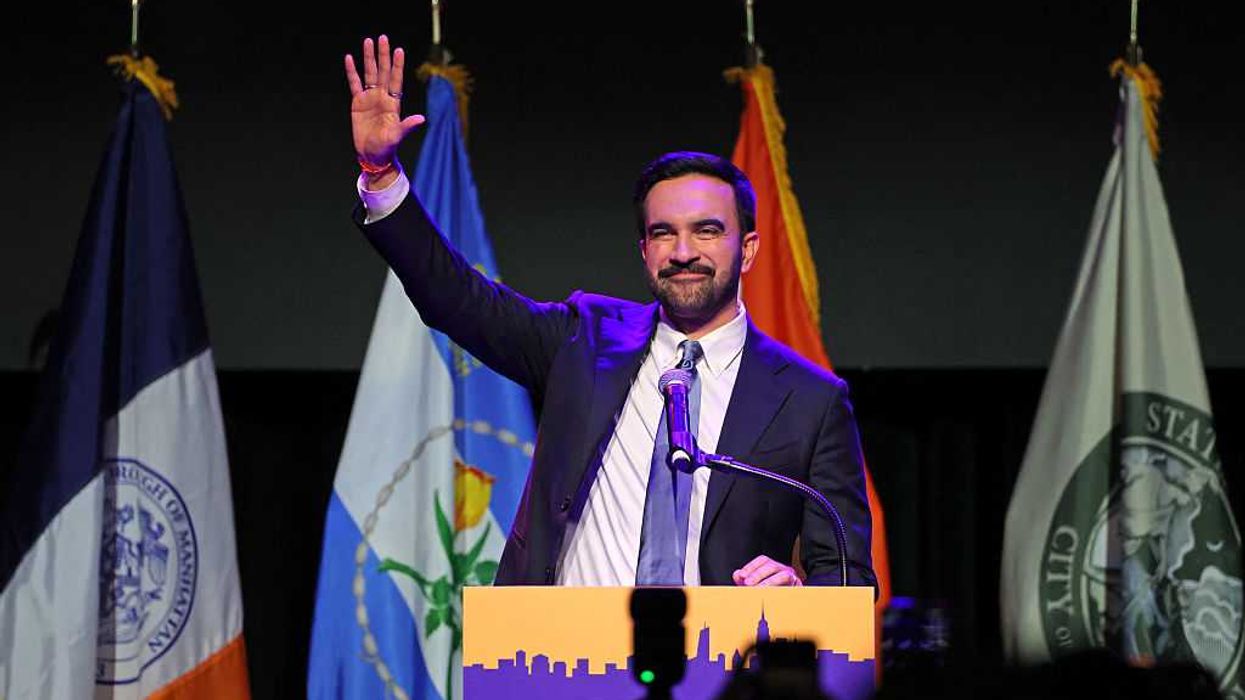
In the wake of the New York mayoral election, socialism is trending again. Zohran Mamdani is just the latest pawn to make it look flashy and appealing.
Even worse, progressive Christians have jumped on the bandwagon, insisting that socialism is biblical and pointing to Acts 2 as their proof text. They say, “We need to feed the hungry,” “We need to provide for the homeless,” “We need to sell what we have so others have more.” These are admirable sentiments. But they are often advocated by people who rarely offer up their own property or pocketbooks, though they are eager to demand yours.
But who is the “we” in Acts 2?
The answer is simple: the church — not the government.
Acts 2 took place during Pentecost, when Jerusalem was crowded with Jewish pilgrims from across the empire. After thousands came to faith, many stayed longer than expected, creating urgent, unusual needs. In response, believers shared what they had. Acts 2:44-45 says Christians “had everything in common” and “were selling their possessions” and distributing the proceeds “as any had need.”
A few important clarifications:
- These were Christians, not government officials.
- Their giving was voluntary, not legislated.
- Their generosity was rooted in personal sacrifice, not state coercion.
- This was a temporary response to a specific moment, not an economic model for nations.
The early church practiced radical generosity because the situation demanded it — not because God or scripture command state-run redistribution. It was compassion from the heart, not a political system.
Socialism starts and ends with a deadly sin
Socialism is inherently immoral because it is built on envy — one of the seven deadly sins. Envy is a resentful desire for what someone else has. Scripture warns against it repeatedly because it is rooted in covetousness: “Do not covet.” Proverbs says envy “rots the bones.” Galatians tells us not to provoke or envy one another. It is part of the “acts of the flesh,” something to root out of our lives entirely — not something to build public policy around.
Socialism claims it reduces inequality by redistributing resources “fairly.” In practice, that means taking from those who earn and giving to those who don’t, with the government deciding how every penny is spent. The poor become dependent, the productive get punished, and the state grows stronger.
On the NYC campaign trail, Mamdani promised a buffet of freebies — free child care, free bus rides, rent control, city-run grocery stores. Margaret Thatcher famously and pointedly said, “The problem with socialism is that eventually you run out of other people’s money.”
Economist Thomas Sowell put it even more bluntly: “What do you call it when someone steals money secretly? Theft. What do you call it when someone takes money by force? Robbery. What do you call it when politicians take someone else’s money and give it to people likely to vote for them? Social justice.”
That is how Mamdani won and why the fantasy of socialism keeps selling. There’s a reason the mousetrap always has “free” cheese.
Interestingly enough, Mamdani also claims to be in favor of feminism and woke policies at the same time — but these contradict with his Muslim faith entirely. His ideas end up at stark odds with Christian values and the dominant moral language of modern progressives alike.
As believers, we must reject his ideas altogether and fight for what is true and good for human flourishing.
Socialism sounds compassionate — but it’s not
On paper, socialism looks compassionate. Everyone gets something “free,” and everyone is supposedly happier. It can even sound like something Jesus would endorse — until you remember history and human nature.
The Bible promotes voluntary generosity, not government-run redistribution. From “You shall not steal” (Exodus 20:15) to Paul’s reminder that giving should never be “under compulsion” (2 Corinthians 9:7), scripture keeps ownership and charity in the realm of personal moral choice. With socialism, religious liberty — living out your faith convictions — goes out the window completely.
Every nation that has embraced socialism — from the Soviet Union to Venezuela — has collapsed into shortages, inflation, and hunger. Power consolidates at the top, innovation dies, dependence grows, and people lose freedom, dignity, and hope.
RELATED: How one ancient sin empowers wokeness, socialism, and cancel culture
 bauhaus1000/iStock/Getty Images
Human nature hasn’t changed, and it will not change any time soon. No one wants to build a business through blood, sweat, and tears only to watch the government seize most of the earnings and waste them. The more you make, the more the state takes.
Arthur Brooks’ research in his book “Who Really Cares” shows conservatives give about 30% more to charity than liberals — even though liberals earn slightly more. Conservatives volunteer more, give blood more often, and donate more time.
Why? Because voluntary, faith-driven generosity is far more effective than state-mandated redistribution.
Socialism is born from envy, mandated by force, and finished by famine. It has never worked, and it will not magically work now. Socialism in practice is like being a zoo animal: fed and controlled, but never free. Liberty lets you roam, build, create, and live with dignity.
I will choose freedom over control every single time.
The Bible doesn’t endorse socialism — and neither should we
Scripture calls believers to voluntary generosity and selflessness. It never once advocates for government coercion or its reckless policies. And America’s heritage of Christian-informed self-governance affirms personal responsibility and limited government.
That’s why the Bible doesn’t endorse socialism, and that’s why Mamdani’s state-centered vision should concern anyone who values Christian freedom and America’s founding principles.
Government has a role, and the church has a role. They are not the same. And because politics deals with morality, Christians must be engaged — especially when socialism resurfaces dressed up as compassion.
My dad was right: Nothing is free. Not then, not now, not ever. Someone always pays for it.
Why Gavin Newsom’s Bible quotations should alarm Christians — before it’s too late
The Bible isn’t meant to be a selective tool from which we cherry-pick elements we like and leave behind those truths with which we disagree.
But many of our politicians have a penchant for taking this very approach, with some on the hyper-progressive side commonly enacting policies that directly fly in the face of Scripture.
It’s a diabolical form of spiritual manipulation meant to prey on people’s thoughts and emotions.
Amid the mayhem, some of these individuals have simultaneously perfected the art of gaslighting, often times unexpectedly emerging from the abyss to quote the Bible as an appeal to truth when it suddenly seems to serve their policy proclivity.
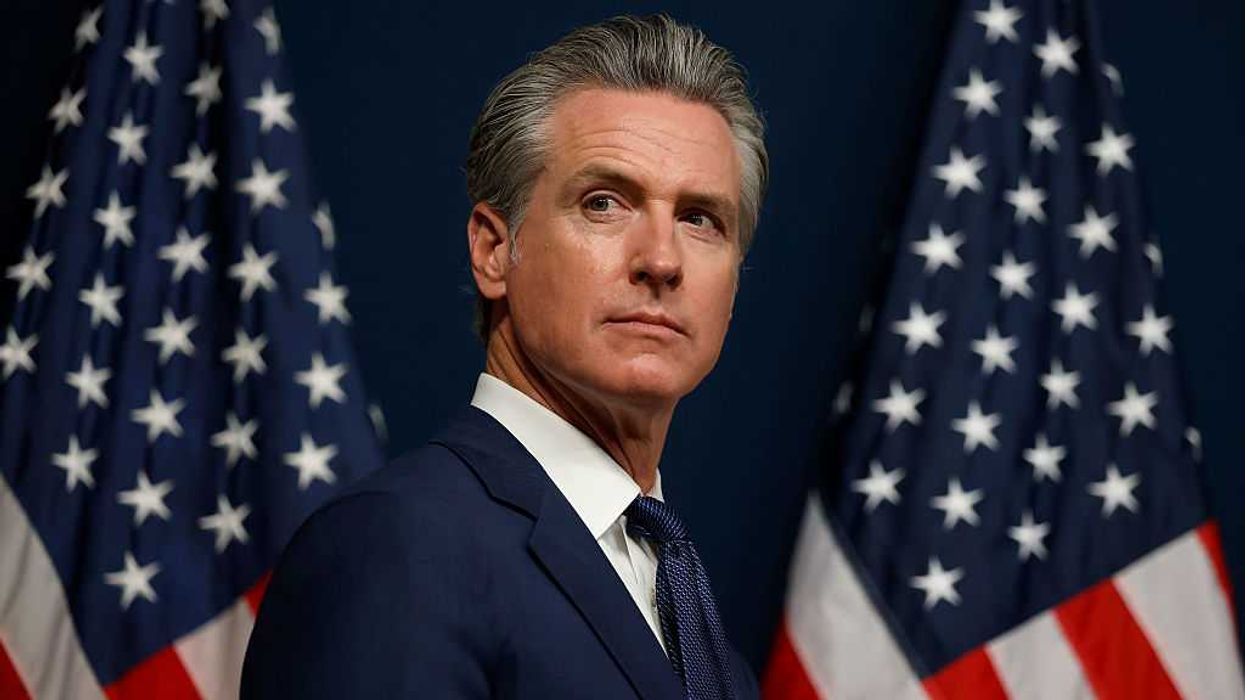
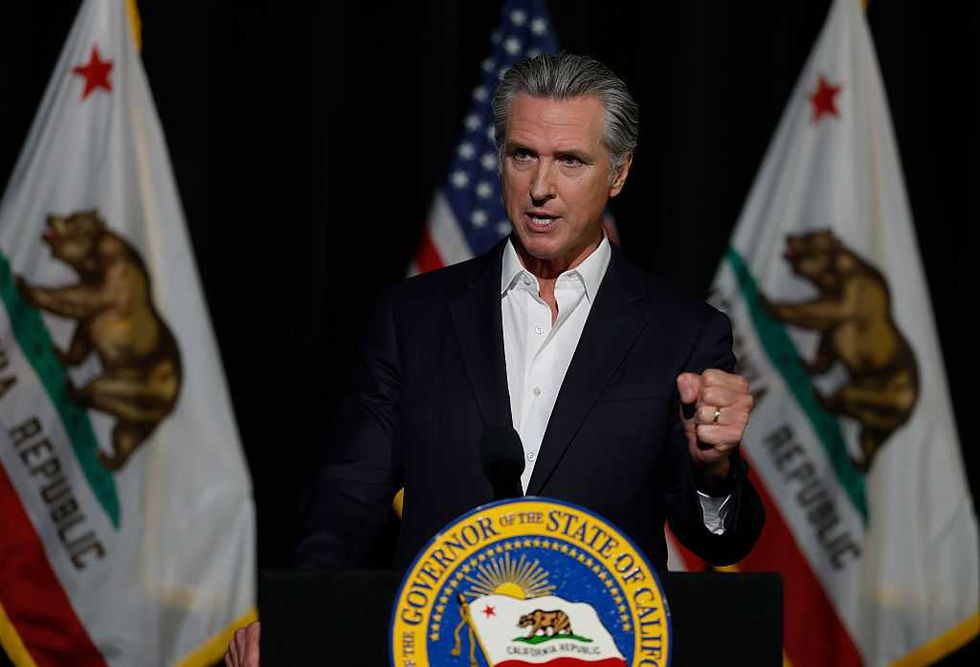
Case in point: California Gov. Gavin Newsom (D) recently waxed poetic on the Old and New Testaments, wielding the Bible to condemn the Trump administration over the impact of the recent government shutdown.
Newsom announced during a press conference that he had filed a lawsuit against the Trump administration over Supplemental Nutrition Assistance Program benefits, a government program that provides food to low-income Americans.
“It’s also interesting to me because I spent a little time at a wonderful Jesuit university,” Newsom said. “If there was anything I remember about my four years with Father Cos is that the New Testament, Old Testament have one thing dominantly in common — Matthew, Isaiah, Luke, Proverbs. I mean, go down the list. It’s around food. It’s about serving those that are hungry. It’s not a suggestion in the Old and New Testament. It’s core and central to what it is to align to God’s will, period, full stop.”
But he wasn’t done there. The liberal governor went on to say that “these guys need to stop the BS in Washington, D.C.,” and took further aim at political foes who often tout the importance of prayer and yet supposedly don’t align with him on these issues.
“They’re sitting there in their prayer breakfasts,” Newsom continued. “Maybe they got an edited version of Donald Trump’s Bible and they edited all of that out. I mean, enough of this. Cruelty is the policy. That’s what this is about. It’s intentional cruelty, intentionally creating anxiety for millions and millions of people, 5.5 million here in our home state.”
The outrageousness of these statements is beyond anything comprehensible. Newsom isn’t wrong that feeding the poor and helping those in need is a core tenet of Jesus’ call for humanity to love God and love others. But the hypocrisy here is limitless.
The Bible also says a lot about religious liberty, protecting life, and putting God above the whims of man, yet we don’t see Newsom offer the same level of energy on those issues.
RELATED: How liberals hijack the Bible to push their agenda on you
 Justin Sullivan/Getty Images
It’s become beyond remarkable to watch some of our politicians behave and legislate in ways that are openly hostile toward the Bible and Christianity, but then start unleashing verses and Christian claims when it’s convenient for their own political agendas.
It’s a diabolical form of spiritual manipulation meant to prey on people’s thoughts and emotions — and it’s particularly rich coming from a political crop of people who have spent the past few years warning about the purported perniciousness of so-called Christian nationalism.
In 2024, Newsom responded to President Donald Trump’s re-election by calling a special session aimed at addressing “reproductive freedoms, immigration, climate policies, and natural disaster response.”
The governor somehow missed the biblical lessons on the value of life, as his statement at the time warned that Trump would likely continue the “assault on reproductive freedom” and limit “access to medical abortion.” Newsom also worried over any “expanding conscience objections for employers and providers.”
The reality is that California is hardly governed as a bastion of Christian and biblical thought. Quite the contrary: In California, basic freedoms are often on the chopping block, with bizarre battles and strange debates taking root.
Newsom was also recently under fire for a post on X seen by many critics as missing the mark on prayer. After the August shooting at Annunciation Catholic Church in Minnesota, Newsom went after White House press secretary Karoline Leavitt.
At the time, Leavitt criticized MSNBC host Jen Psaki’s controversial comments about the shooting after Psaki proclaimed, “Prayer is not freaking enough. Prayers does [sic] not end school shootings. Prayers do not make parents feel safe sending their kids to school. Prayer does not bring these kids back. Enough with the thoughts and prayers.”
When Leavitt called these remarks “insensitive and disrespectful” to those who believe in the power of prayer, Newsom proclaimed, “These children were literally praying as they got shot at.” Newsom’s failure to understand prayer — and his attempt to step into the debate in what felt like an effort to purportedly score political points — wasn’t only unneeded, but it was also grotesque.
Of course, Newsom’s official press office recently did invoke prayer — to lambaste Trump. “Please pray for our President,” a post read. “He is not mentally well.”
Once again, the governor seems to be using faith to push political antics.
These incongruities, when it comes to faith rhetoric, aren’t unique to Newsom. We see it unfold again and again from politicians who seem to rely upon Scripture and faith themes when it’s convenient or expedient, yet other elements of their rhetoric and policy-making ignore elementary biblical truth.
Interestingly, the San Francisco Chronicle noted that Newsom’s invoking of Scripture, in particular, has ramped up in recent weeks.
“In recent months, the California Democrat’s rhetoric has become strikingly biblical,” the outlet noted. “Even his mocking ‘patriot shop’ — which mimics the merchandise sold by President Donald Trump to raise money for his political work — sells a Bible (though, as part of a long-running gag, it is always sold out).”
The Chronicle noted that Newsom has cited his Catholic faith in the past for his choice to end state executions and that he has sometimes referred to his Jesuit education. But, according to the Chronicle, “his overt and repeated references to scripture are new in the past few months.”
Some observers believe Newsom could be gearing up to appeal to middle America and other voters for whom faith is a central part of their identity.
At this point, that’s unclear. But what is evident is that his selective policy-making and proclamations are incongruent — and anyone paying close attention should keep that in mind as they watch Newsom continue to weaponize the Bible for his own political ends.
Why real Christianity terrifies the elites — and they’re right to worry
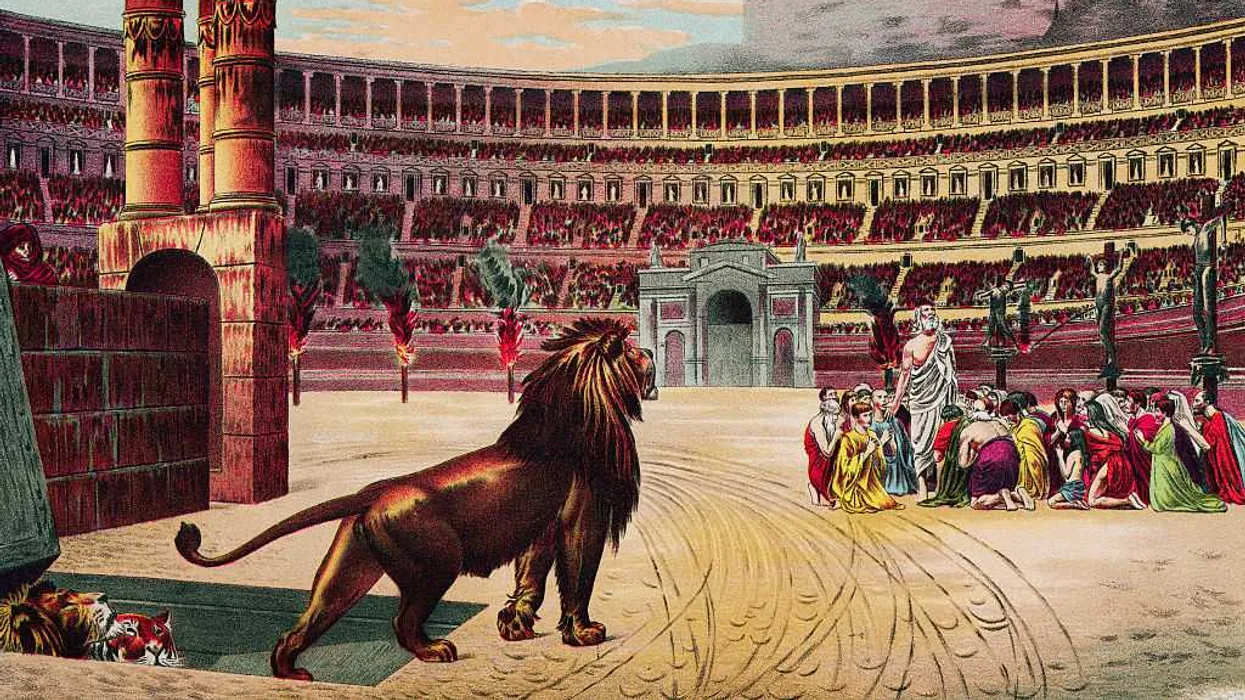
Much like gas-station sushi, David Brooks is hard to stomach at the best of times.
But his latest New York Times essay is the kind that makes you reach for the sick bag. He opens with the usual routine: an exasperated sigh, a long, self-important pause, and the unmistakable air of a man convinced he has cracked the cosmos — again.
A hidden faith saves no one, a timid faith shapes nothing, and a faith that folds under pressure is closer to cheap furniture than conviction.
He quotes a Czech priest, hints at deep wells of wisdom, and then meanders toward the real purpose of the piece: explaining, with mild exasperation, why Christians are once again disappointing him. This is nothing new. It’s a ritual at this point — a complaint that returns like spam you swore you unsubscribed from.
To be fair, Brooks isn’t stupid. He knows how to spin a story, how to climb onto the moral high ground without looking like he’s climbing, and how to crown himself the lone voice of reason in an age he insists is losing its mind.
But there is no missing the tone that hangs over almost every line he writes about believing Americans: a thin mist of condescension, settling somewhere between pastoral concern and a parent-teacher conference. He talks about everyday Christians the way a pretentious barista talks about someone ordering regular coffee — uncultured, embarrassing, and in need of enlightenment. And the tone, more than any point he makes, gives him away instantly.
Brooks claims to fear “rigid” or “pharisaical” Christianity. Yet the only certainties that radiate from his essay are his own. He divides the world into two armies — Christian nationalists on one side and “exhausted” secular humanists on the other — and then steps forward as the lone oracle who claims to see a path out of the fog.
Christians who vote for borders, who cherish the nation that shaped their churches, or who think culture is worth defending are waved off with his familiar, weary flick of the wrist. They’re told they practice a “debauched” version of the faith.
No evidence needed. Brooks’ opinion is treated as its own proof.
His description of these believers always follows the same script. They are angry, dangerous, and obsessed with power. They clutch their creed like a makeshift weapon, ready to wallop anyone who wanders too close.
In his telling, they never act from devotion, duty, or gratitude. They never look around their communities and see an America they love slipping away. They never mourn the millions taken before they drew a breath, the cracking of our shared foundation, or the slow burial of the sacred.
Instead, Brooks tells us they operate from “threat more than hope,” as if the country’s cultural decay were some far-fetched tale told for effect, rather than something families watch unfold every day in their schools, in their cities, and on their screens.
Brooks then pivots to his preferred theological register: the poetry of longing. He praises yearning, doubts, desires, and pilgrimages — all worthwhile themes.
But he uses them the way an interior decorator uses throw pillows: scattered for mood, never for structure. His spiritual reflections float past in soft, airy phrases that never touch the ground. This isn’t the faith of the Gospels, anchored in sacrifice and truth. It’s faith as fragrance — atomized cosmetic, evaporating faster than one of his metaphors. It asks nothing, risks nothing, and confronts nothing, which may be why Brooks finds it so comforting.
RELATED: Exposing the great lie about ‘MAGA Christianity’ — and the truth elites hate
 jokerpro/iStock/Getty Images Plus
Throughout his essay, Brooks holds up a small circle of “wise people” as models of the faith America needs — Tomas Halík, Rowan Williams, and a handful of theologians who speak in clichés and move through the world like contemplative shadows. Their calm inspires him. Their pluralism delights him. Brooks treats their quietism as the apex of Christian maturity, as if the holiest life is lived at arm’s length, murmuring about mystery while the roof caves in.
What he never admits is what these figures actually represent: a brand of Christianity that thrives in seminar rooms, academic conferences, and anemic interfaith panels — spaces far removed from the daily battles most Christians face. Halík writes beautifully about longing. Rowan Williams writes elegantly about humility. But neither man spent his life in the trenches defending children from ideological capture in schools, or standing up to governments intent on shredding the family, or speaking plainly about sin in a culture that now calls sin a civil right.
Brooks misreads their vocation as the universal Christian posture when it is, at best, one posture among many.
The heart of the essay is its barely disguised contempt for ordinary Christians who believe their faith should shape the societies they inhabit. This is the point he never states outright but gestures toward with every paragraph.
Faith, to Brooks, is primarily personal, private, and utterly toothless. The moment it concerns the fate of a nation or the moral trajectory of a culture, he calls it nationalism. If a Christian speaks of stricter immigration policies, he hears xenophobia. If a parent protects his child from the cultural free-for-all, he calls it regression.
Brooks leans heavily on the aforementioned Czech priest and philosopher, Tomáš Halík, as if Halík were handing him a permission slip for a diluted Christianity. Halík writes movingly about interior struggle and authentic witness, ideas rooted in his years serving an underground church under communist rule.
But Brooks treats Halík’s reflections on the inner life as a blanket command for Christians to withdraw from the outer one. Halík speaks of sincerity; Brooks hears surrender. Halík points to the vast, ungraspable side of faith; Brooks converts it into a polite memo urging believers to stay in their lane.
And so Brooks gets the entire lesson backward. Halík survived a regime that tried to erase Christianity from public life. He never argued for Christians to silence themselves or retreat from cultural battles. Yet Brooks uses him as cover to criticize anyone who won’t float along with the cultural current.
What Brooks never admits is that what he calls “Christian nationalism” is not the fringe menace he imagines. For many believers, it is simply the instinct to guard the faith that built their communities. It isn’t a hunger for domination, but a love for the inheritance passed down to them. It isn’t outright hostility toward outsiders but gratitude for the civilization that formed them.
Brooks conveniently sidesteps all of this and builds a caricature he can berate, warning of a “creeping fascism” that lives entirely in his own mind.
The self-anointed sage wants Christians to trade their armor for aroma, to swap vigilance for vague platitudes, and to follow his favorite tastemakers into a future where faith survives only behind closed doors.
But Christians know better. A hidden faith saves no one, a timid faith shapes nothing, and a faith that folds under pressure is closer to cheap furniture than conviction. Brooks will disagree, naturally. He always does.
As so many times before, the smug sexagenarian takes a swing at American Christians. And once again, he misses the target by a mile.
Take back your health care: A Christian model that puts families first

Presidio Healthcare recently made history by launching the nation’s first pro-life, Christian health insurance option in Texas at a time when many families are experiencing both historic rate increases and decreasing subsidies in the Obamacare marketplace.
While the heart of our mission focuses on serving families with an affordable option that protects both their values and their financial security, the vision for how we accomplish that aim rests on a lesser-known Christian principle that I believe provides a road map for reforming our broken health care system.
Health care policy should focus on expanding options for families while empowering them to own their own health insurance.
That principle is called “subsidiarity,” which represents a system of values that puts families first — in contrast to our current system that ignores the individualized needs of Americans.
The Christian principle of subsidiarity states “that matters ought to be handled by the smallest, lowest, or least centralized competent authority rather than by a higher and more distant one, whenever possible.”
The latest debate over Obamacare subsidies serves as a great example of how our current system prioritizes the higher and more distant authority (i.e., Washington, D.C.) over the least centralized authority (i.e., American families).
The Obamacare market was designed to provide subsidies for low-income Americans, which by itself does not inherently violate the principle of subsidiarity. Rather, the problem lies with the insistence that this one federally controlled market should serve as a one-size-fits-all solution for everyone, including middle-income Americans who do not qualify for adequate subsidies.
The centralized answer that Democrats offer requires the Obamacare market to be propped up inefficiently with more subsidies. The subsidiarity answer would propose decentralizing the market by allowing alternative risk pools regulated at the state level to serve the middle-income Americans with products designed for their needs.
To summarize the principle for a broader application: Health care policy should focus on expanding options for families while empowering them to own their own health insurance.
In a decentralized system, Americans would become smarter consumers of health care as they bear the responsibility of owning and paying for their own health care expenses. The impact would reach beyond the economic. The key benefit to subsidiarity is its preservation of each of our relationships to God through our individual decision-making responsibility.
If tomorrow’s health care shoppers were individuals and families (instead of governments and employers), private insurance markets would be forced to serve the Christian and pro-life values of families, as opposed to our current system of serving government agendas and large employer needs. Presidio is building toward that tomorrow and starting now in Texas.
RELATED: Medical ‘experts’ want to jab a needle through your God-given rights
 EKIN KIZILKAYA/iStock/Getty Images Plus
Unfortunately, there is a major roadblock to this future.
Ironically, the employer-sponsored marketplace and the single-payor Medicare program — two markets that conservatives often support — in many ways violate the principle of subsidiarity to a greater degree than the much smaller Obamacare individual market.
We need to be consistent if we want to reform our health care system. Employers control the health insurance decisions for close to 150 million Americans, and all of us are forced to pay into a federally centralized Medicare program that exhibits some of the worst elements of socialism, such as dictating prices that distort our entire system.
The spiritual impact is evident through the contraceptive mandate and employer decisions that force millions of Christians to be insured on products that cover abortion, abortifacients, contraception, and other immoral services. Through Medicare, we have collectively forfeited our health care autonomy to Washington, D.C., when we turn 65, creating problematic scenarios that could prioritize our federal budget over dignified treatment for end-of-life care.
We need to do more than just talk about Obamacare — and we need take action now.
The good news is that health care policymakers need to look no farther than to what the private market is already doing.
Presidio is part of a decades-long movement in the health care industry to launch innovative alternative services that serve families directly. This includes affordable non-Obamacare alternatives, health-sharing ministry plans, and, more recently, “ICHRA” benefit platforms that are moving employers out of the business of purchasing health insurance and into a defined contribution model where employees purchase and own their own insurance.
The road map is there. Government and employers can assist families in purchasing health insurance rather than purchasing it for them. Private market innovations would follow.
At Presidio, we are building toward a future where subsidiarity replaces centrally controlled markets and the pro-life values of Christian Americans drive pro-life health insurance options that help fund life-affirming care. We do not take federal subsidies, and we do not want your employer forcing you to have Presidio coverage.
As in all authentic Christian movements, we rely on individual families to help build Presidio, and we look forward to serving your needs while we expand our vision of a health care system in America founded on the principle of subsidiarity.
Where evil tried to win: How a Utah revival turned atrocity into interfaith miracle
Intense feuds over theological differences between traditional Christians (Protestants, Catholics, and Orthodox) and members of the Church of Jesus Christ of Latter-day Saints date back to 1830, immediately after Latter-day Saints founder Joseph Smith launched his church.
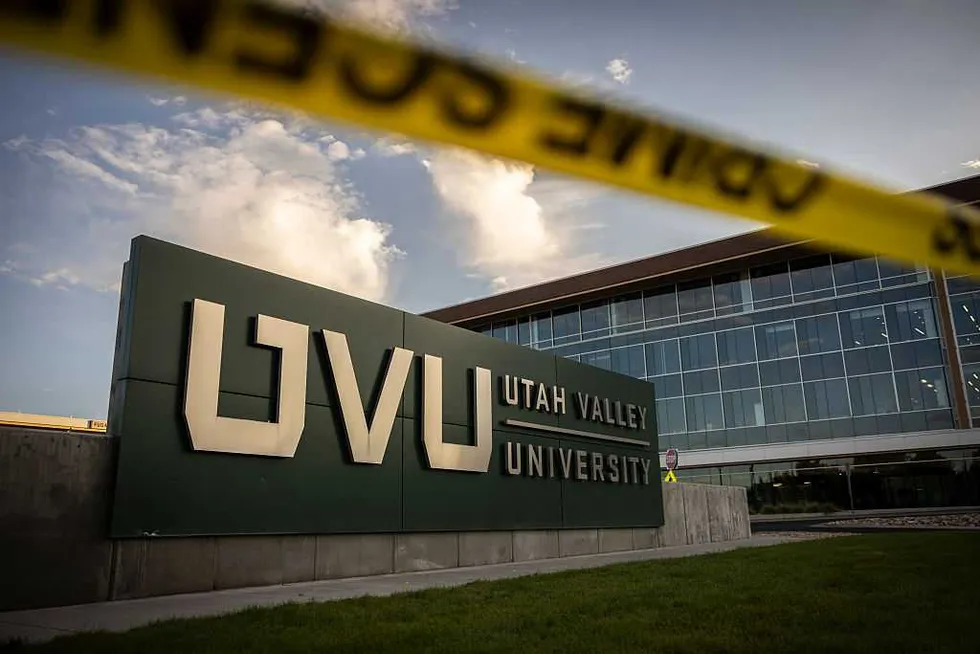
After nearly 200 years of strife, that fierce debate transformed into an unprecedented, inspiring moment of interfaith healing on Sunday night at Utah Valley University — a predominantly Latter-day Saints campus and the largest university in the state — where prominent evangelical Protestant Pastor Greg Laurie hosted a revival event called “Hope for America.”
‘We’re going to go to that place of darkness, and we’re going to turn on the radiant light of Jesus Christ and proclaim the gospel that Charlie believed.’
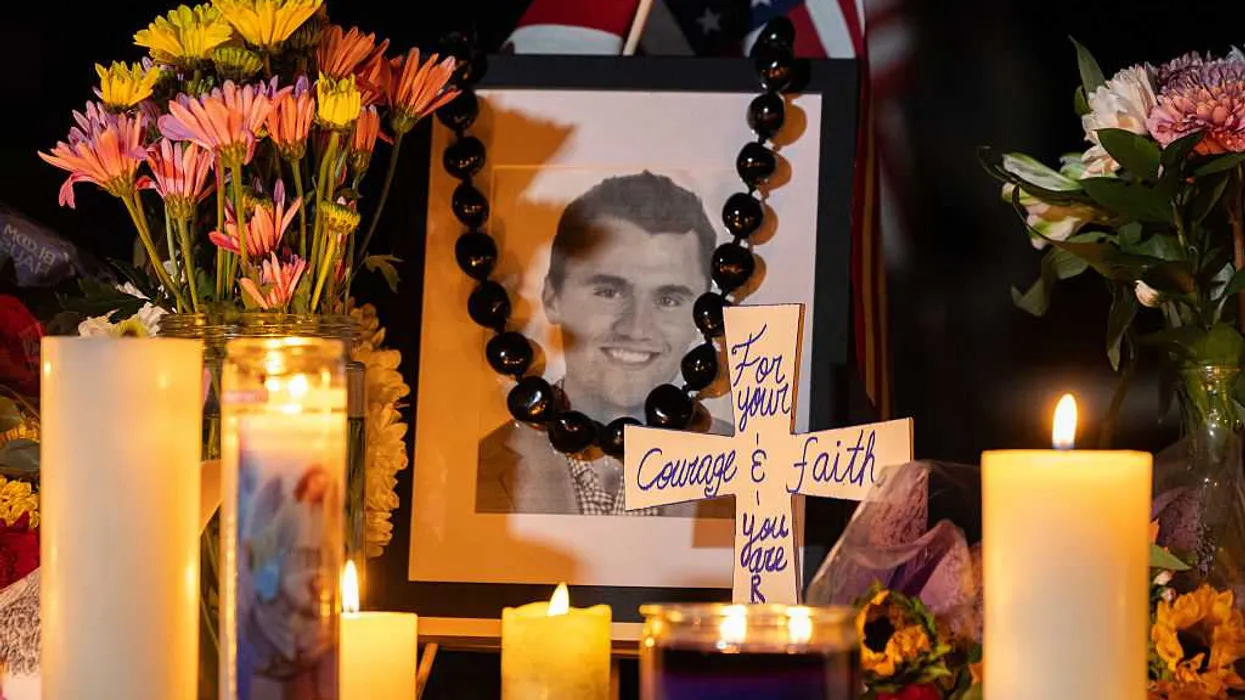
Organizers created the event to rebuild spirits at the site of Charlie Kirk’s assassination in September. Students and faculty felt distraught after the trauma of Kirk’s murder, which happened in broad daylight, shortly after students returned to campus from summer break.
Kirk — a prominent conservative activist, confidant of President Trump, and founder of Turning Point USA — was brutally gunned down, allegedly by a deranged gunman from southern Utah, while Kirk spoke outdoors near the UVU student services building.
For many Americans, the first time they had heard of UVU was for this infamous, gut-wrenching reason.
“We’re going to go to that place of darkness, and we’re going to turn on the radiant light of Jesus Christ and proclaim the gospel that Charlie believed,” Laurie said in a press statement announcing the exciting gathering, organized with just six weeks’ prep time for an event that typically takes six months.
RELATED: Why the Bible is suddenly flying off shelves across America
 Chet Strange/Getty Images
Laurie, 72, is the founder of Harvest churches in California and Hawaii and of Harvest Crusades. A prolific evangelist who fills up stadiums around the world in massive Billy Graham-style revival events, Laurie is a best-selling author and movie producer. His 2023 film “Jesus Revolution” tells the story of his conversion away from the drug-infused culture of 1970s California.
Laurie planned to come to Utah in 2027, but Kirk’s assassination sped up the timeline to offer a timely balm to the community. He was also co-hosted by pastors from more than 100 local Protestant churches who helped promote the gathering. Tickets were free, all quickly snapped up by attendees for the 8,500-seat UCCU Center, the basketball arena on campus. Laurie said there were an additional 67 overflow sites in the area to watch. The revival featured music from renowned Protestant Christian artists Chris Thomlin and Phil Wickham.
UVU president Astrid Tuminez said 70% of UVU’s students identify as Latter-day Saints, according to Courtney Tanner at the Salt Lake Tribune. Utah Valley has the highest concentration of practicing Latter-day Saints in the world.
I grew up in the Latter-day Saints tradition, and my ancestors worked with Smith and other early pioneer leaders like Brigham Young. As a child, I attended an elementary school down the road from UVU. Back then, it was the much smaller Utah Valley Community College.
As I share in my memoir, “Motorhome Prophecies,” released last year, at that school we had only one non-LDS student in my class (a Catholic). I felt suspicious of her and afraid to attend her birthday slumber party.
But such is the suspicion of many who grow up in the majority of any dominant culture against the minority.
I stopped practicing the Latter-day Saints faith after my Brigham Young University graduation in 2005 at age 22. I later formally resigned from the Latter-day Saints organization in 2010 and got baptized as a Protestant, eight years ago this Dec. 3.
‘You meant it for evil; God meant it for good.’
So I am thrilled to see these bridges being built in real time. This type of unity ripened years prior under the leadership of the late Latter-day Saints leader Russell Nelson, who passed away in late September.
Laurie asked me to help him workshop his remarks prior to delivery. I was honored to provide whatever insight I could in hopes of serving Laurie’s profound desire to share the message of Christ’s redemption for all mankind.
“Why did Charlie Kirk die in such a tragic way, only a short distance from where we are right now?” Laurie wrote in his remarks. “I do not know the answer to that question, but I know Charlie is in heaven. But this event tonight would not be happening if not for that horrific event.”
Indeed, life’s most wrenching crucibles can propel us to our greatest moments of growth and freedom. In his remarks, Laurie also quoted from the book of Genesis: “But Joseph said to them, ‘ … you meant evil against me, but God meant it for good.'”
“This your moment. Don’t wait for a tragedy. Don’t scroll past this one more time. Come to the Father, tonight!” Laurie said.
It’s miraculous to see how evangelicals and Latter-day Saints — groups with such a long history of heated disagreements — came together to unite in service of healing in God’s name.
My prayer is that Hope for America is just the first in a long series of interfaith reconciliation gatherings among Latter-day Saints, Protestants, and Catholics that will cultivate shared bonds among people of faith — all children of our heavenly Father.
David Brooks Can’t Hide His Contempt for Ordinary Americans
David Brooks has always fancied himself a kind of moral chiropractor for middle-class souls: Half preacher, half therapist, all smug…..
Abrahamic myth: How Islam rebranded the God of the Bible
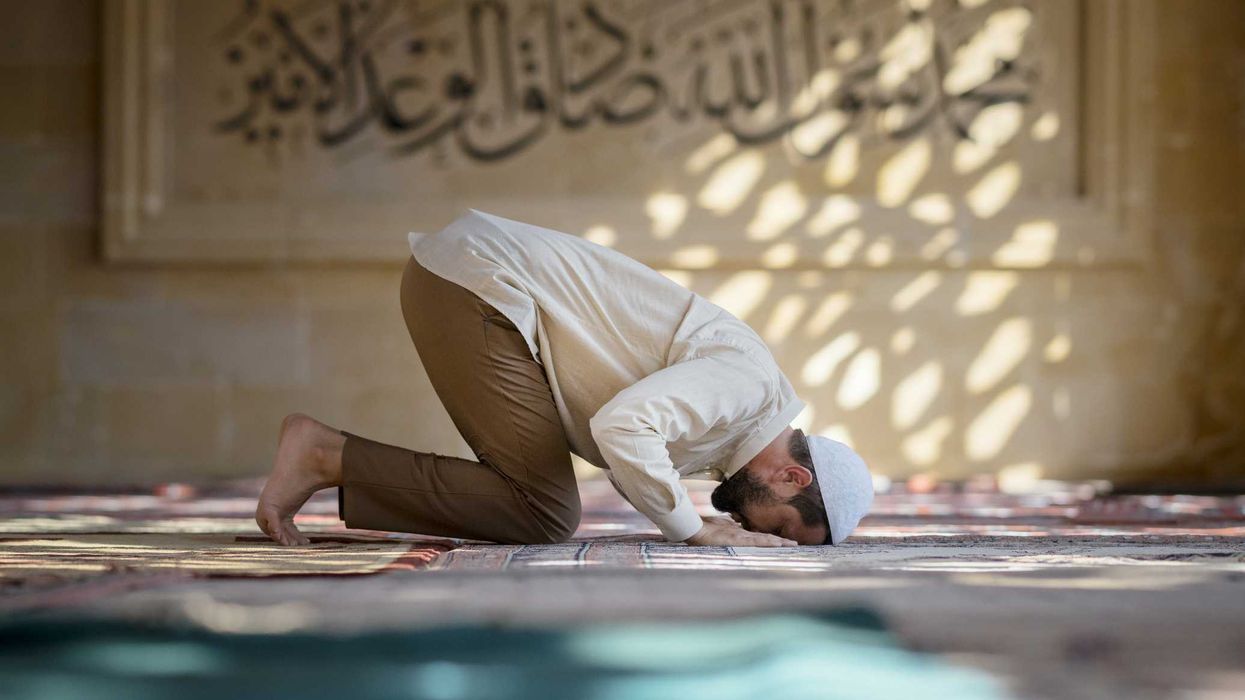
One of the great canards of the post-9/11 world — promoted by theists and nontheists, conservatives and leftists, Democrats and Republicans alike — is that there are three Abrahamic faiths: Judaism, Christianity, and Islam.
But is that really true? If the three faiths worship the same God and preach His word, then there should be clear and compelling evidence of interconnection and aligned essential doctrines.
God’s sacred lineage
Abraham was God’s first patriarch, his descendants were God’s chosen people, and the Lord God guided them — at great cost and peril — to the promised land.
Why is there the need to graft on to this historically and logically robust faith history the tale of Muhammad, which is supported only by legend and perhaps shards of archeological data?
The Jews, meanwhile, were the people through whom God sent His son, Jesus Christ, the messiah. Jesus was a holy, just, virtuous, believing Jew, and what He taught springs directly from the Old Testament. His ministry was ultimately a futile effort to convince His ethnic brothers to follow Him as their redeemer.
Jesus was betrayed by His own people and crucified by the Romans. His death, in substitutive atonement for the sins of humanity, was followed by His resurrection, and the risen Christ tasked His apostles to spread His word beyond the Jews to the gentiles, thus laying the foundation for Christianity, a descriptive moniker that came into common use around the end of the first century A.D.
Biblical genealogy and history are intricate and logical. Like all genealogy and history of the ancient world, they have gaps (which do not diminish their spiritual authority), and a great deal of both spring from oral tradition, which was eventually codified.
The fact that biblical genealogy and history are written in such painstaking detail in both the Old and New Testaments give them each spiritual and chronological heft, as does the fact that scholars have recovered thousands of manuscript copies and fragments totaling hundreds of thousands of pages.
Legend, not lineage
This brings us to the issue of whether Islam is really an Abrahamic faith.
Abraham was father of Ishmael, by his slave Hagar, who was banished from Abraham’s household by Abraham’s wife, Sarah, even though she facilitated their union. God promised Hagar that Ishmael would be a great man and the father of many nations. Ishmael’s life and sons are detailed in Genesis 25 and then again in 1 Chronicles 1. Then he and his sons are never spoken of again.
The book of Genesis, written by Moses, likely dates to around 1200 B.C., even though its final form was not completed until centuries later. This means that the story of Abram, who becomes Abraham, is even older than that because it would have been told to Moses as oral history. So Abraham may have lived as long ago as 2000 B.C.
Yet Muhammad, the prophet of Islam who is supposedly descended from Ishmael, was not born until 570 A.D., which creates a time gap of more than 2,500 years. And for this span of more than two millennia, there are no documents that directly connect Muhammad to Abraham or Ishmael. There is only Islamic oral tradition or legend (known as Hadith), nearly all of which were produced a century or more after Muhammad’s death in 632 A.D.
Conversely, there is no doubt about the connection of the Old and New Testaments. They tell a continuous, coherent, logical, prophetically rich, and frequently archaeologically confirmed story of the journey of the Israelites to the promised land and the life and death of Jesus.
Why, then, is there the need to graft on to this historically and logically robust faith history the tale of Muhammad, which is supported only by legend and perhaps shards of archeological data?
Biblical appropriation
Even though there is no written genealogy from Ishmael to Muhammad, there is significant biblical appropriation in the Quran. In fact, plagiarism might be a better word.
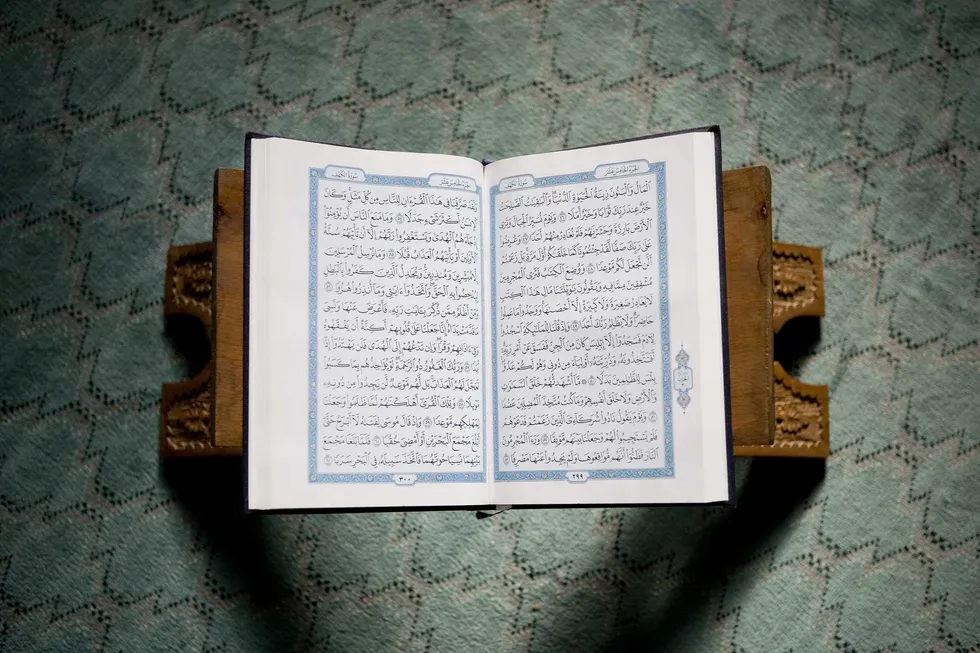
For example, Allah created the heavens and the earth in six days (Surah 7:54; for the Quranic novitiates, the Quran is organized by the length of each Surah [chapter], from the longest, called the Opener to the shortest 114th, Mankind). Abraham’s name first appears in Surah 2. In total, Abraham’s name appears 69 times in the Quran; Jesus appears 25 times, Mary 34 times, and Moses 136 times. In 3:67, the Quran states that “Abraham was not a Jew, nor was he a Christian, but he was a Muslim hanif (montheist), and he was not one of the idolators.”
RELATED: Why progressives want to destroy Christianity — but spare Islam
 ozgurdonmaz/iStock/Getty Images Plus
While Muhammad was quite open to biblical appropriation of names, he was not so keen on Christian doctrine: Muslims deny the Trinity (“do not say Three”; 4:171) and the crucifixion (“they did not kill him nor crucify him”; 4:157). The denial of the crucifixion leads to an implicit denial of the resurrection; if Jesus was not crucified, then He could not have been resurrected, but He was called to heaven by Allah himself (4:158).
The Quran calls Jesus “messiah” and righteous, but simultaneously denies that He is the son of God (“The Messiah, the son of Mary, was no more than a messenger, messengers passed away before him”; 5:75). In fact, in these things, the Muslims have much more in common with Jews than either group has with Christians.
Ironically, this trio of denials of core Christian beliefs puts Muslims in league with Martin Luther King Jr., who denied the virgin birth, which Muslims accept, but they reject Allah’s paternity of Jesus (see 3:45-47, 9:30, 6:100, and 112:3 for examples).
Muhammad writes that man does not have free will (2:6 and 2:7, among many others); Allah decides and animates all things (3:47 and 40:68). Allah will decide what both believers and nonbelievers do (16:93) and what will happen to them (24:40). Even nonbelievers who wish to believe will not be allowed to do so unless permitted by Allah (10:100).
Muslims are commanded to defeat nonbelievers in jihad (8:39 and 9:5); those who fight and die go to paradise, as do those who fight and live (4:74). Nonbelievers are to be treated as second-class citizens and pay tribute unless they convert, or they may be killed (9:29). Jews and Christians are regarded, respectively, as those who have earned Allah’s anger and those who have gone astray (1:6).
In the Bible, acts of sexual immorality are identified as an abomination to the Lord, right from the beginning of the Old Testament. Deuteronomy 22:5 says, “The woman shall not wear that which pertaineth to a man, neither shall a man put on a woman’s garment: for all that do so are an abomination unto the Lord thy God”; and Leviticus 18:6-20 describes the Lord’s abhorrence for the sin of incest. Paul’s epistles showcase his scorn for sexual anarchy.
By contrast, Muslim men may marry Jewish or Christian women after the women convert, but sex with a believing slave girl is preferable in the meantime (2:221). Muslim men are also told that they may marry multiple women (i.e., polygamy), and they have no obligation to treat them equally (4:3). The “houris,” or wide-eyed, voluptuous women of paradise, await all believers (Surahs 44, 55, 56, and 78; the much-ballyhooed 72 virgins are not Quranic, they are from a Hadith of Muhammad).
The overall impression of the God of the Bible is that He is a holy and just God, whose moral boundaries and demands set exceedingly high standards of conduct, and Jews of the Old Testament repeatedly fail to hit their marks. Their failures allowed God to show Himself as merciful and loving because He relents in His anger and forgives His people, effectively giving them the chance to start again.
Different gods
It is true that the Quran also refers to Allah in this manner repeatedly. But that is just part and parcel of the appropriation.
The Old Testament’s story of God’s love for, and strife with, His chosen people over their conduct repeats many times because God’s communication through His prophets ultimately proves ineffective at bringing about the lasting behavioral and devotional change that He demands. The God of the Bible never gives up, however, because He loves His children and seeks their betterment only for their own good, a framing of morality that they simply cannot endure because it requires patience, reverence, and discipline.
In the New Testament, God decides to confront His people face-to-face, live among them as a man, and teach them by looking them in the eye. So He sends His son, Jesus Christ, who is eternal and has borne witness to the entire chronology of creation, to live a perfect and sinless life, teach the lessons of the Old Testament, and entreat His people — the first-century Jews — to follow Him in pursuit of salvation and eternal life.
Despite all the travails, challenges, and even violence of the Bible, it is an uplifting story of love, trust, hope, and faith that ends in glory.
The same cannot be said of the Quran, in which an omnipotent god views his people as automatons commanded to do his will. Some verses abrogate others, and there really is no story told but just an endless series of dos and don’ts that end either in hell or paradise with wide-eyed houris.
Ask the people of Minnesota and Michigan and France and the United Kingdom how that’s working out.
Given the lack of a documentary interconnection, the doctrinal discrepancies between the two faiths as expressed in their central holy books raise this critical question: How is it spiritually conceivable that the two books represent the work of the same God?
Would the God who never gives up on His people and venerates marriage and family be the same God who commands men to marry unbelieving women only after they convert and have relations with slave girls while they wait? Would the God who empowers humans with free will and petitions them to follow Him to heaven by living lives of righteousness and virtue be the same God who commands the deaths of nonbelievers, specifically Christians and Jews (4:89), simply because of their unbelief? Would the God who sacrifices His own son on a Roman cross be the same God who appropriates the names, events, and stories of the Bible and relabels them to make them His own in a new book?
The Quran, like a bad Hollywood production, simply takes the biblical plots and characters and changes the name of God from “I AM” to Allah. Adam, Aaron, David, Elijah, Isaac, Job, Jonah, Joseph, Lot, Noah, Solomon, Zechariah, the Psalms, Gabriel, Michael, Noah’s ark, and even the Ark of the Covenant (2:248) all make cameo appearances.
Most importantly, would the God who wants peace and fights wars only against those who seek to eradicate His chosen people (such as the Amorites, Philistines, Canaanites, Hittites, Jebusites, and Perizzites) so that His people can live freely under His law be the same God who commands jihad and the imposition of sharia law, both of which seek to coerce conversion or kill those who will not convert?
Ask the people of Minnesota and Michigan and France and the United Kingdom how that’s working out.
Fruit reveals truth
To say that the God of the Bible is spiritually and doctrinally the same as Allah of the Quran beggars logic, ignores history, and requires that you willfully disregard the written word in each book.
The canard that Islam is an Abrahamic faith is a way of facilitating a connection between evil and goodness for political purposes in order to provide the evil with the fig leaf of acceptance by affiliation rather than by word and deed.
The God of the Bible, and those who follow His word, produced the freest, safest, cleanest, most generous, and most prosperous nations in human history. Islam, on the other hand, has produced — as the late Samuel P. Huntington wrote in his tour de force “Clash of Civilizations” — a cadre of nations that are never simultaneously at peace with all their neighbors and within their own borders.
That was true when he wrote it in 1996, and it is still true today.
Maybe the holy war now being waged between Islam and what remains of a weak-kneed and addle-brained Christendom is why Jesus says in both Matthew and Revelation that He comes with a sword to separate those who deny from those who follow Him.
When you consider whether it is at all likely that Islam is Abrahamic, remember what the redeemer says in Matthew 7:16-20: “Ye shall know them by their fruits. Do men gather grapes of thorns, or figs of thistles? Even so every good tree bringeth forth good fruit; but a corrupt tree bringeth forth evil fruit. A good tree cannot bring forth evil fruit, neither can a corrupt tree bring forth good fruit. Every tree that bringeth not forth good fruit is hewn down, and cast into the fire. Wherefore by their fruits ye shall know them.”
That is all you need to know to stop saying — and believing — that Islam is an Abrahamic faith.
What’s happening in India demands every Christian’s attention — and Trump’s action
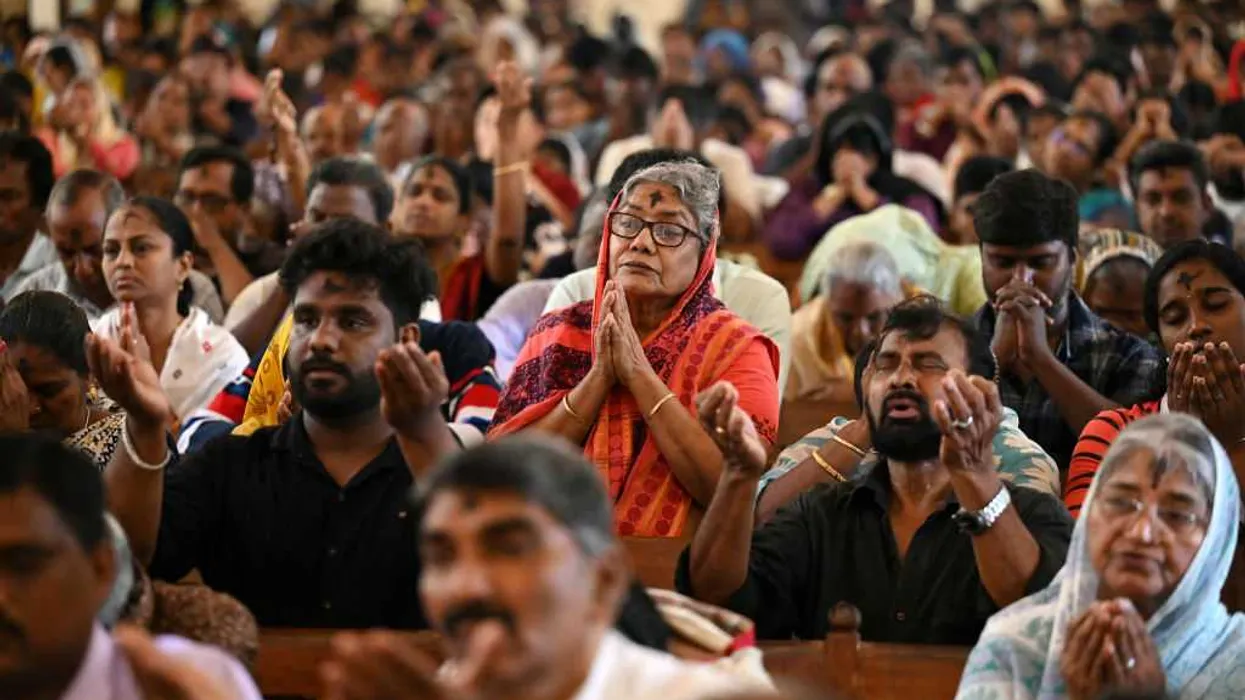
President Trump’s recent warning to Nigeria over the mass killing of Christians was both overdue and necessary.
At long last, Washington acknowledged what much of the West preferred to ignore — that believers are being butchered for their faith while bureaucrats issue statements and move on to the next photo op. Trump’s threat to strike Nigeria if the slaughter continues signaled a rare thing in modern politics: moral clarity.
Every church burned in India is a warning: Faith without freedom becomes folklore.
Now it’s time for that same clarity to be turned toward another nation, one that calls itself the world’s largest democracy and one that America counts among its closest allies — India.
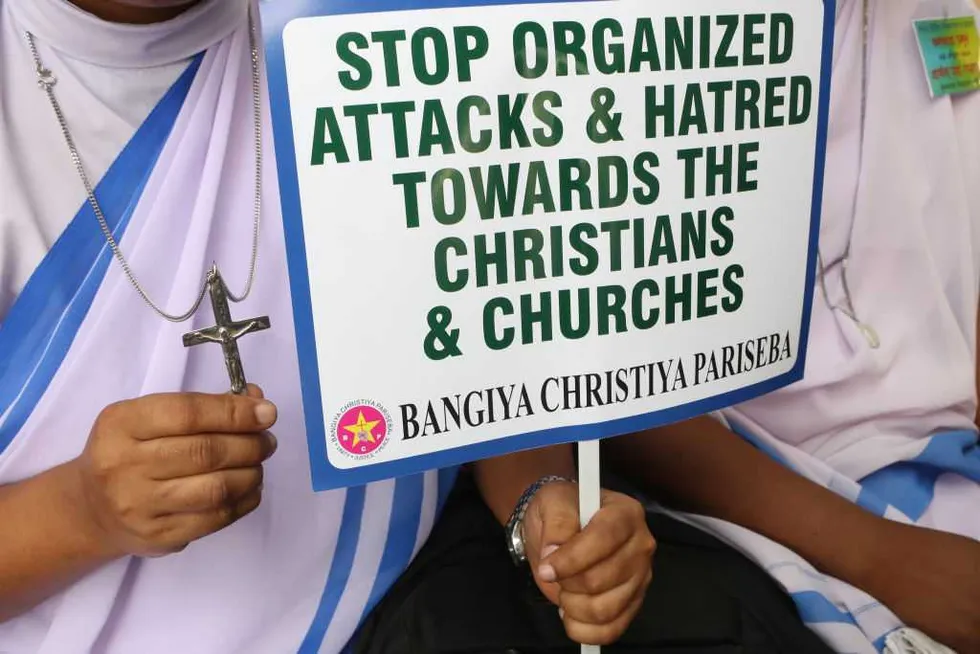
New data from the United Christian Forum reveals a troubling trend. Attacks on Christians in India have surged by more than 500% since Prime Minister Narendra Modi’s Bharatiya Janata Party came to power in 2014. Over the course of a single decade, reported incidents climbed from 139 to 834. Nearly 5,000 individuals, families, and churches have been caught in the crossfire.
Yet these grim numbers tell only part of the story.
Behind the statistics are pastors dragged from pulpits and beaten, churches reduced to ash, and people hunted like animals simply for choosing the Lord Almighty over the golden idols of their tormentors. What was once unthinkable — open persecution of Christians in the land of Mother Teresa — has now become routine.
Twelve of India’s 28 states now enforce so-called “anti-conversion” laws that criminalize anyone accused of bringing others to Christ.
In practice, these laws are less about conversion than coercion. They empower mobs and police alike to harass Christian minorities on suspicion alone. A man caught carrying a Bible can be accused of proselytizing. A prayer meeting can be framed as a plot.
The cruelty is not confined to law but seeps into everyday life.
In the heartland states of Uttar Pradesh and Chhattisgarh, Christian villagers have been driven out of their homes, denied burial rights, and told to renounce their faith or face starvation. Dalit and tribal Christians — the poorest of India’s poor — endure the worst of it. They are excluded from government welfare programs, denied housing, and forced into reconversion ceremonies designed to humiliate.
The Hindu nationalists behind these acts are not the flag-waving patriots America knows. They are absolute savages who have more in common with Islamist extremists than with any conservative movement in the West. No evil is too depraved for these fanatics in saffron robes. These are men capable of gang-raping elderly nuns in the name of purity. Their mouths recite prayers even as their hands commit sin.
Yet through all this, Washington has remained curiously quiet. India, after all, is an ally — a key counterweight to China, a trading partner, a member of the Quad alliance. And allies, we’re told, must not be offended. India receives tens of millions in U.S. foreign assistance each year, yet continues to slide deeper into majoritarian extremism.
RELATED: Bill Maher’s shocking defense of Christians — and what it reveals
 Debajyoti Chakraborty/NurPhoto via Getty Images
The relationship has become a study in contradiction: America exports democracy while subsidizing the suppression of it.
Trump’s stance toward Nigeria was bold because it rejected the idea that diplomacy must always defer to decorum. He recognized that moral authority is not something declared but something earned and easily lost. The same logic applies to India. If America’s partnership with New Delhi is to mean anything, it must rest on shared principles — not selective blindness.
There is a tragic irony in watching the world’s oldest democracy bankroll the world’s largest, while both ignore their founding creeds. Trump is uniquely positioned to change that. The president has shown a willingness to name the unnameable and confront regimes that others tiptoe around. His threat to Nigeria rattled the corridors of Abuja and forced the international community to pay attention.
A similar message to New Delhi — that America’s friendship cannot be a blank check for intolerance — would carry enormous weight.
To speak out would not be an act of hostility but of honesty. True allies do not flatter; they challenge. India’s leaders must be reminded that religious freedom is not a Western import but a universal right, and any nation that denies it will pay the heaviest of prices. If India wishes to stand shoulder to shoulder with the free world, it must first show it belongs there.
For too long, the West has treated persecution as someone else’s problem. But every church burned in India is a warning: Faith without freedom becomes folklore. The indifference of powerful nations emboldens tyrants and teaches them that human rights are negotiable.
The question now is whether America still believes in the principles it preaches — and whether Trump will demand that its allies do the same.
Because faith, like freedom, dies in stages — first ignored, then excused, and then erased. The erasure has already begun in India. What’s needed now is not another summit or statement, but a voice loud enough to pierce the silence. President Trump has that voice, the rare kind that can still move mountains. I, for one, hope he uses it.