

Category: Christmas
Christmas in the Sub-Tropics
TAMPA – Christmas time again, and I like the season. But it’s a very different business here in peninsula Florida…
The hidden hope of Christmas the world needs right now
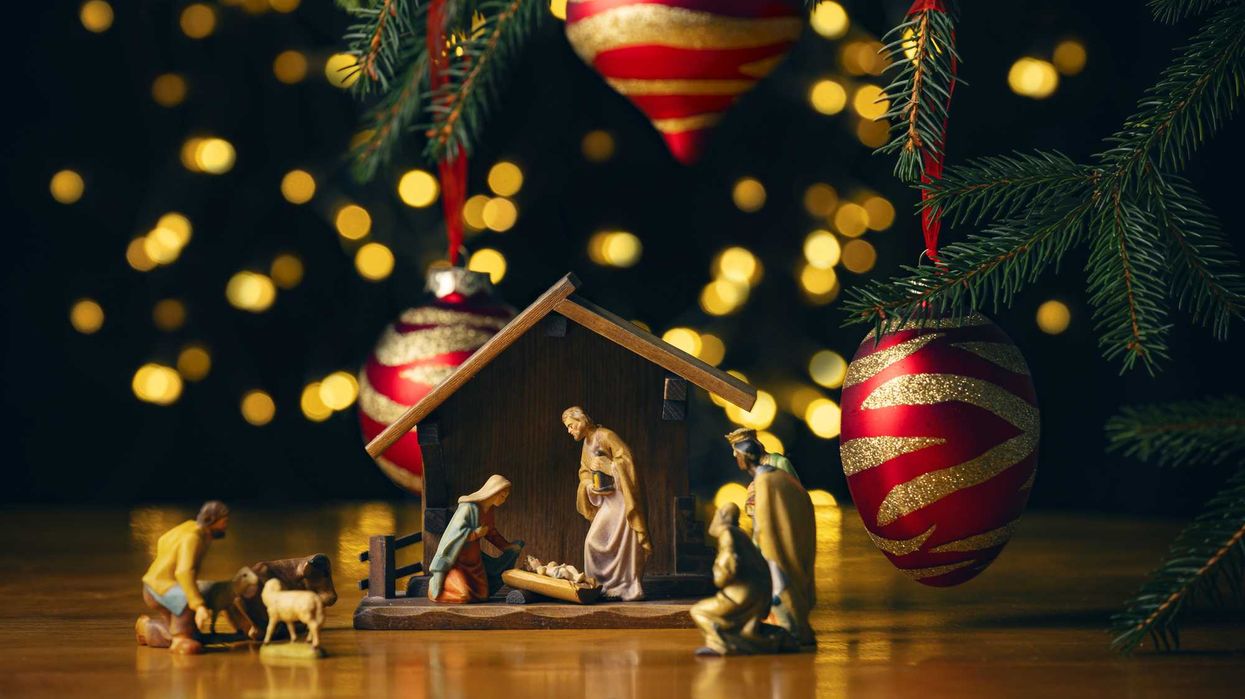
Amid a dark and weary world, on an evening no one expected, the innocent cries of a baby broke through Bethlehem’s silent night. Hope had arrived and was ringing out for all to hear.
The first Christmas reminds us that God often begins His greatest work not with flash or attention, but with a flicker — a gentle whisper. Light enters quietly, almost hidden, yet strong enough to push back any darkness.
Jesus’ arrival in Bethlehem was God’s declaration that no one is beyond His reach.
That’s the pattern woven throughout scripture. Long before Jesus’ birth, the prophets spoke of a coming Messiah during a time when life felt unstable and discouraging. Their world was marked by division, oppression, and spiritual exhaustion. Many wondered if God still remembered them. Yet the prophets held on to a small, steady flame: a promise that hope was on the way.
Today, many feel that same dimming of hope. Some carry grief that resurfaces sharply during the Christmas season. Others feel worn down by the constant noise, conflict, and division around us. Even in a season filled with lights and celebration, joy can feel hidden.
But God’s story reminds us of this essential truth: Hope is rarely loud or obvious. It doesn’t always arrive in a dramatic or spectacular package. More often, it’s found in quiet faithfulness and small acts of love, moments so ordinary we might miss their significance.
The world expected a powerful king; God sent a child. The world expected a grand entrance; God chose a manger. The world expected an immediate victory; God chose a slow and steady redemption.
If God brought His light into the world through unnoticed moments, why would we expect Him to work differently today?
This is where the mission of Boost Others comes in. We exist to help make that hidden hope visible again. Because hope doesn’t just appear out of nowhere, it grows when people lift one another up. When we encourage someone, when we extend generosity, or when we offer our presence without conditions, we’re doing far more than meeting a practical need. We are participating in the very heart of the Christmas story: shining light into someone’s darkness.
These actions rarely make headlines, but they reflect the character of the Messiah who came not to be served, but to serve; not to condemn, but to lift; not to overwhelm, but to invite.
RELATED: Uncovering the surprising truth behind a beloved Christmas hymn
 lovelypeace/iStock/Getty Images Plus
Jesus’ arrival in Bethlehem was God’s declaration that no one is beyond His reach. When we extend hope to someone else, we are echoing that same message.
When Christ was born, the angels didn’t announce it to the masses but to a few shepherds who happened to be awake. That reminds us that God’s work often unfolds in hidden spaces. The world may overlook smallness, but God uses it.
Hope isn’t always obvious, and it isn’t always immediate. But it is always present, often waiting in the places we least expect. And sometimes, God calls us to be the instruments of comfort and renewal of another person’s life.
This season, more than anything, our world needs people willing to live this way: people who carry the joy of Christ into conversations, relationships, and everyday interactions, people who look for the quiet places where others feel overlooked or discouraged and choose to bring light.
What if the most meaningful gift we could give this Christmas isn’t wrapped at all? What if it’s the way we speak, the way we listen, the way we show up? What if the greatest impact isn’t found in big gestures but in consistent, faithful ones that remind someone that God sees them — and so do we.
Small lights matter. No act is too small. One candle doesn’t eliminate the darkness, but it pushes it back. And when more candles are lit, when more people step forward to encourage, uplift, and bless, the darkness doesn’t stand a chance.
So as Christmas draws near, I invite you to be attentive to the hidden places where hope is needed. Slow down enough to notice who might need a lift. Don’t wait for others to shine, take the first step and inspire others to shine alongside you. God delights to work through ordinary people doing ordinary things with extraordinary love.
When hope feels hidden, it isn’t gone — it’s simply waiting to be revealed. And you may be the one God uses to bring that light into someone’s life, turning a dim flicker into a steady burning flame.
Hallmark of Culture Rot
Comfortingly predictable plots, trite yet charming storylines, guaranteed happy endings, and unrealistically glamorous decorations, wardrobes, homes, villages, and actors made…
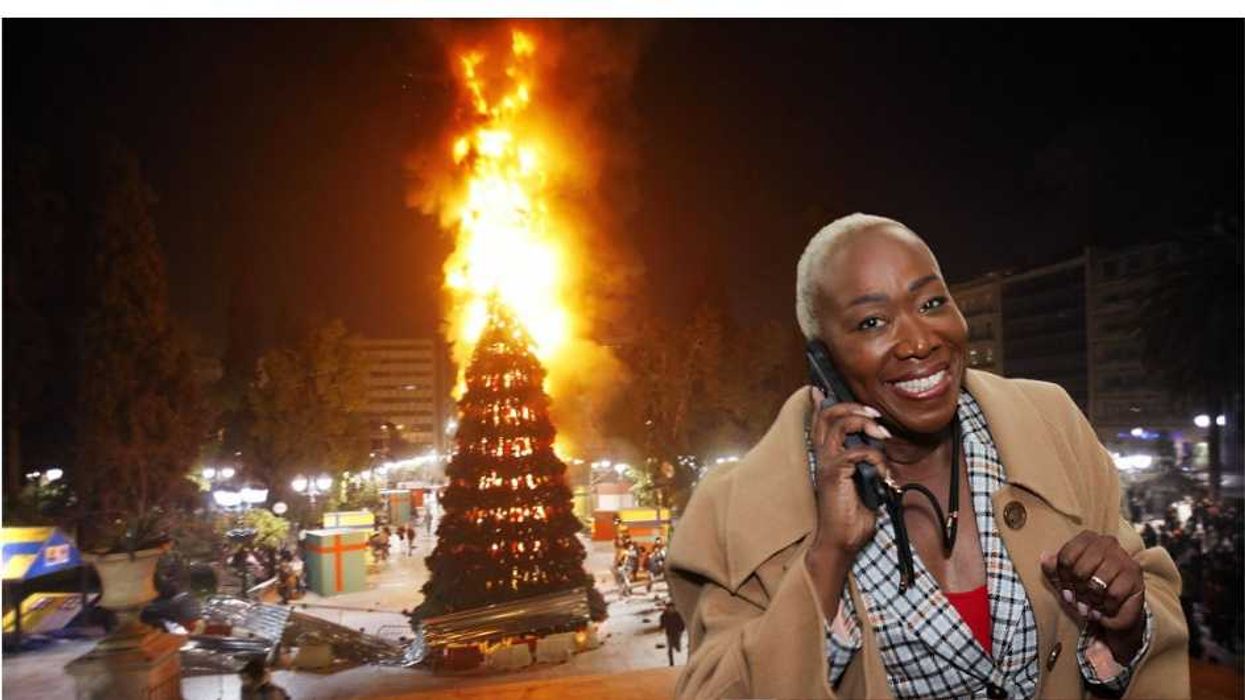
‘Bell’-buster: Joy Reid tries to cancel classic Christmas ‘Jingle’
“Truth. Justice. Whatever.”
Hollywood’s disdain for America is official with the poster tagline for this summer’s “Supergirl.”
‘I don’t care for Owen Wilson, and I don’t care for Matthew Lillard.’
How the industry embraced the problematic “girl” part of the name is a debate for another day. Just know that Hollywood hasn’t been cozy with the classic Superman slogan, “Truth, justice, and the American way,” for some time. The 2006 Brandon Routh reboot infamously ditched that last part, as did this year’s James Gunn version.
Now to show us that this Supergirl can’t even, the phrase is purposely imploded. And to be fair, the results come off better here, if only because the newest Supergirl is a rebel without a cause (or home planet).
Those offended by ditching “the American way” may be more outraged by the accompanying trailer. It looks as gloopy as this past summer’s “Superman” reboot, but with half the gravitas and action.
Prediction: Superhero fatigue goes nuclear in 2026 …
Jay Zzzzzz
Slackers never grow up. They just stay in their parents’ basements indefinitely.
That isn’t true for Jay and Silent Bob. The slacker heroes from Kevin Smith’s imagination refuse to call it a career. They’ve appeared in two features as the key attractions and several Smith movies like the “Clerks” franchise and “Mallrats.”
Now Smith is warning us there’s a third Jay and Silent Bob film in the works. “Jay and Silent Bob: Store Wars” will start production next year. But will anybody show up?
“Jay and Silent Bob Reboot” made under $5 million in 2019. Smith’s last film, “The 4:30 Movie,” didn’t earn enough for BoxOfficeMojo to include its figures.
Smith may have come of age during the ‘90s via “Clerks” and “Chasing Amy,” but his devoted flock has done nothing but shrink since then. Bigly.
Smith, 55, and co-star Jason Mewes, 51, may seem too old to keep cracking pot jokes, but Smith deserves credit for finding enough cash in his sofa to keep his franchise afloat …
Pulp Friction
Quentin Tarantino can’t get criticism out of his system.
The former video store clerk was set to make “The Movie Critic” his 10th and final film, but he got cold feet and went back to the proverbial drawing board. Since then, he’s been criticizing … everything, including specific movie stars.
That’s an unofficial no-no in celebrity circles, but Tarantino is out of you-know-whats apparently.
The director recently slammed actor Paul Dano (“The Batman,” “Love and Mercy”), dubbing the actor “weak sauce” and worse, as part of that now-infamous “Bret Easton Ellis Podcast” interview.
Hollywood stars rallied around Dano, saying he was far better than what the mercurial director dubbed him. Tarantino also shredded two more stars as part of that conversation.
“I don’t care for Owen Wilson, and I don’t care for Matthew Lillard.”
Wilson has yet to publicly respond, but Lillard did just that at a recent Comic-Con-style event, the GalaxyCon in Columbus, Ohio.
“Eh, whatever. Who gives a s**t,” Lillard said before revealing that he actually does give a bleep.
“It hurts your feelings. It f**king sucks,” he said. “And you wouldn’t say that to Tom Cruise. You wouldn’t say that to somebody who’s a top-line actor in Hollywood.”
So far, Lillard’s former co-star Scooby Doo has no comment …
RELATED: These are the definitive recordings of 35 favorite Christmas carols: Don’t argue, just listen
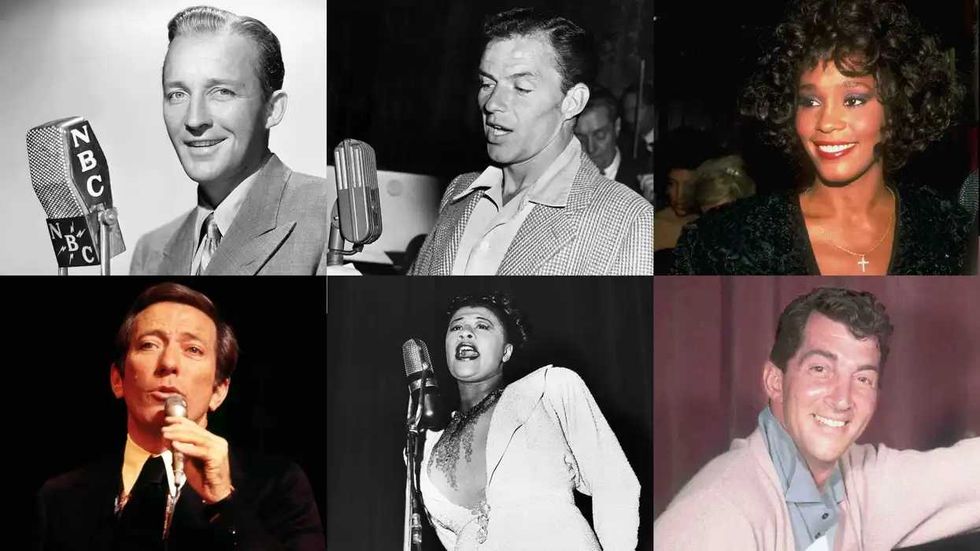 Photo credits, clockwise from top left: NBCU Photo Bank/NBCUniversal via Getty Images via Getty Images; Hulton-Deutsch Collection/CORBIS/Corbis via Getty Images; Robin Platzer/The LIFE Images Collection via Getty Images/Getty Images; Silver Screen Collection/Getty Images; George Rinhart/Corbis via Getty Images; David Redfern/Redferns
‘Jingle’ jerk
The war on “Baby, It’s Cold Outside” is over, and the good guys won. The song continues to play every Christmas season despite a woke attempt to cancel it. The less problematic “remake” by John Legend and Kelly Clarkson was quickly forgotten.
Now former MSNBC host Joy Reid is declaring war on … “Jingle Bells.” And you’ll never guess why. Just kidding.
The song’s writer, James Lord Pierpont, allegedly penned the ditty for racially charged reasons, according to Reid. To her credit, if anyone knows about racially charged topics, it’s a former TV personality who sees racism around every corner.
To her, Elvis Presley’s nickname, “The King,” is racist.
She used a Massachusetts plaque as her “proof” of the song’s racial components, along with Pierpont’s days fighting for the Confederacy. The song’s lyrics appear as benign then as they do now.
Maybe she could record her own version of the song, a la Legend and Clarkson, and watch it follow eight-track tapes, pagers, and MSNBC into the dustbin of history.
Upgrade your liquor cabinet this Christmas with our top picks

Christmas is fast approaching, and what better way to get into the spirit of the season than with some fine American spirits? From single malts to bourbons, American distilleries have a surprisingly vast selection to choose from. And as you will see, their products are something to be proud of!
Take a look at some of our favorite pours from across the country during this Christmas season.
Single malts
We start our Tour de American Single Malt with a pour that could fool even the most trained tasters into thinking they were on the banks of the River Spey. The Courage and Conviction line from Virginia Distillery Co. is one of the most Scotch-like American single malts I have ever tasted. And for any fan of sherry-forward Scotch, Courage and Conviction Sherry Aged is a must-try. On the nose is a fragrant, buttery, red fruity sweetness that Macallan lovers will recognize, with plenty of vanilla and just a hint of green apple peel. The taste mirrors the nose, especially that butteriness, with a bit more emphasis on spice and toasted hazelnuts. The finish elongates those sherry notes even more, toward the direction of Oloroso: dried red fruits, toffee, and caramel.
All in all, Virginians should be more than proud of what’s coming out of their state! But I’m a little biased toward our next stop: Texas.
Perhaps no state in the craft whiskey scene is more controversial. The hot Texas climate scorches whiskey as it ages, and you either love it or hate it. I, for one, love it. The oak overdose can be quite a hassle in the world of new barrel-aged bourbon, but American single malt has the option to play outside those rules.
Enter one of the original Texas distilleries and the biggest player in Texas single malt: Balcones. Its Lineage expression embraces both new and previously used barrels, resulting in a fruit bomb that’s still blooming with Texas character. Fig jam, vanilla custard, and grapefruit pith greet you on the nose. Honey, raw fig, peach, and more of that grapefruit dance on the tongue. The finish lingers with classic Texas charred oak, burnt sugar, and a fruitiness that awakens when you breathe it all in. Lineage was the whisky (there’s that missing “e” again) that first made me fall in love with Balcones. And at only about $35 a bottle, it’s hard to beat!
Traveling south in the same state, we arrive in the Texas Hill Country, a wild land of limestone cliffs, cedar groves, and rolling bluebonnet pastures. To me, it’s home — rattlesnake-riddled, sun-scorched home. It’s serene, with an attitude, and so is its single malt. About an hour north of San Antonio, we find Andalusia Whiskey Company and its Irish-peated expression, Revenant Oak. The serenity: German chocolate cake, rich vanilla, and savory butterscotch. The attitude: smoked brisket with just enough sweet, peppery barbecue sauce to remind us that we’re in Texas. Put simply, it’s cake at a barbecue joint: an unexpected, yet oddly satisfying pairing that’s about as mouthwatering as it gets.
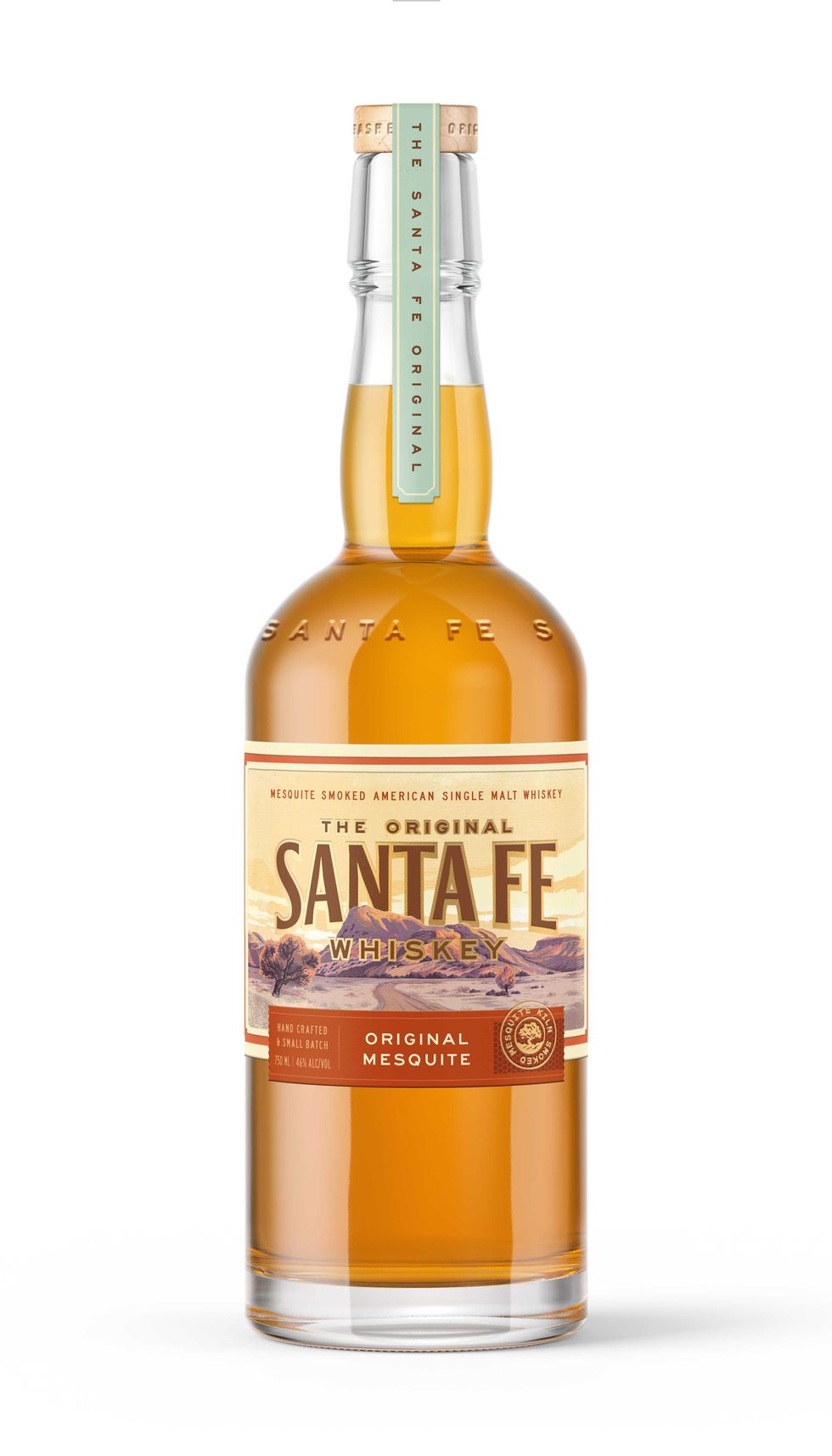
But unlike Scotch, American single malt doesn’t always use peat to add smoke. Peat bogs are everywhere in Scotland — it was the fuel the Scots had on hand to dry their barley. Here in America, if you want to start a fire, you use wood. At Santa Fe Spirits in New Mexico, they chose locally abundant mesquite. Aged in the high desert at 7,000 feet above sea level, the company’s Original Mesquite expression of Original Santa Fe Whiskey is a prime example of forging your own traditions. This whiskey smells nothing of peat, but more like tangy barbecue sauce dripping into a mesquite campfire. This carries over to the taste, which also dances with caramel, bright spice, and zingy green apple (it did start out as an apple orchard, after all).
 Santa Fe Spirits
Next, we leave Texas, heading back north and up into the Rockies to visit a pioneer in American single malt that has been making possibly the most quintessential pour of the category since 2004: Stranahan’s Colorado Whiskey. Soft on the nose, Stranahan’s Original has chocolate, butterscotch, and a floral graininess, like the crisp warmth of an early mountain spring. The taste brings the ripe fruits of summer, which is short, albeit sweet, up in the mountains. So fall sets in quick: honey, fresh grain, and that chocolate again. Stranahan’s Original finishes just shy of winter, since Coloradans, I can imagine, get enough of that already. Why not enjoy the other seasons?
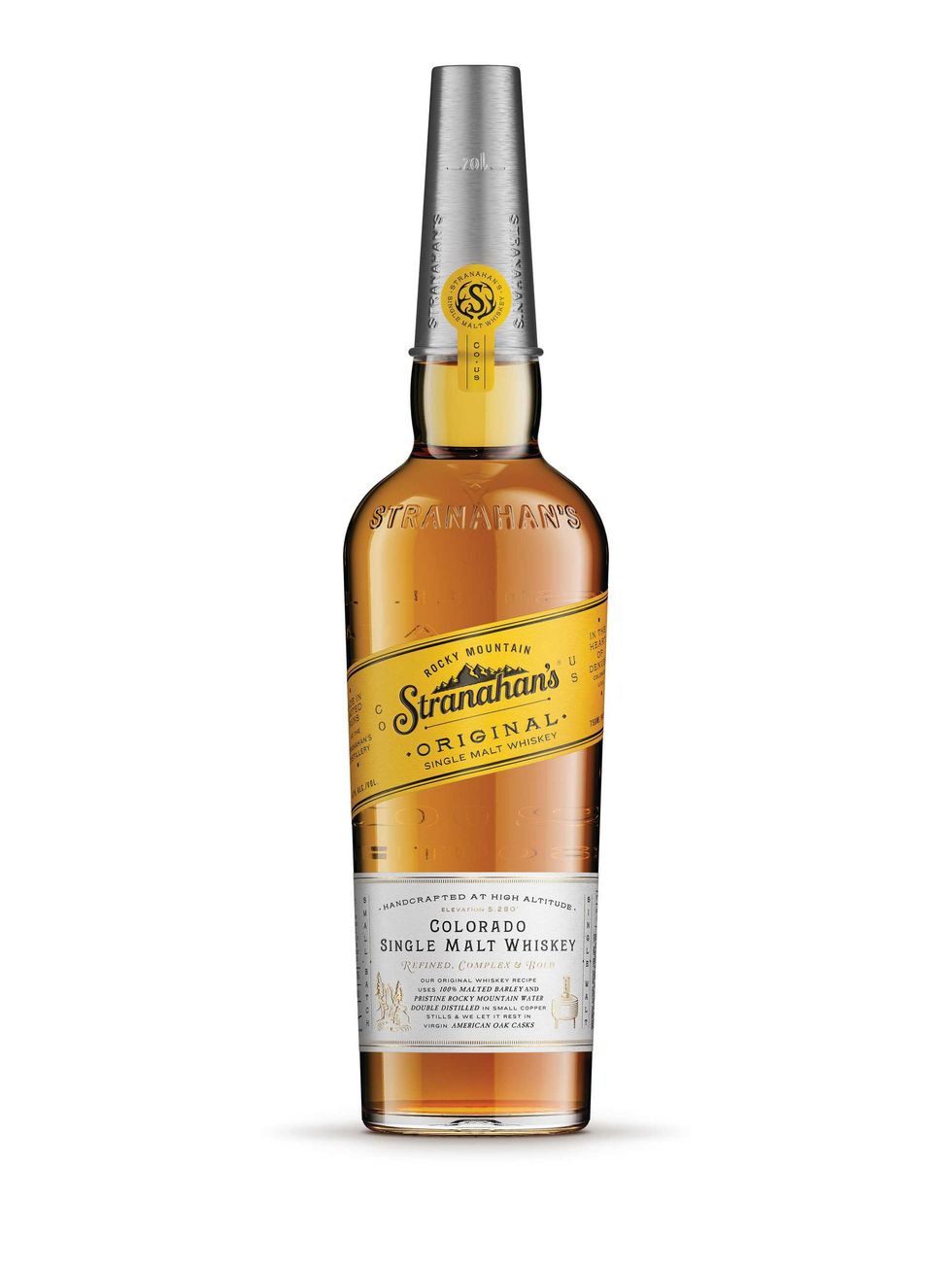 Stranahan’s
Or even other regions entirely. Lately, Stranahan’s has been experimenting with finishing American single malt in barrels from across the world: Irish whiskey, tequila, and, most recently, rum. These unique whiskies are released as the company’s Diamond Peak series, one experiment at a time. The third annual release was finished in Caribbean rum casks and provides a familiar yet surprising take on Stranahan’s single malt. Sweet notes of vanilla are amplified in the aroma, turning into banana Runts candy. Sweet toffee and tropical fruits arrive with a sip, along with a silky mouthfeel that evolves into coconut candy, earthy malt, and the classic Stranahan’s chocolate on the finish. At around $80 a bottle, it’s a pour to savor, and it delivers!
On the final stop of this tour, we head to the Pacific Northwest, which has become a hotbed for American single malt, in large part thanks to Seattle’s Westland Distillery. Westland’s base offering is a prime example of its unique flavor profile, which takes the chocolate note of many American single malts and boosts it up, adding a roasted nuttiness to the finish. It’s a good place to start. But if you fall in love with Westland, might I recommend something special?
Westland Garryana is a night among the pines in the northern forests. At once desserty and dark, but sparkling, like a warm cup of hot chocolate under a starry sky. “Garryana” refers to the native species of oak that the whiskey is partially aged in. As for the rest of the aging process, it varies by batch. I’ve been enjoying Edition 6, which mixes Garryana barrels with first- and second-fill sherry and brandy barrels — both of which come across in spades. The sherry sweetness is prominent at the beginning of the sip, while a cognac-like effervescence appears midway. It clocks in at 50% ABV with a premium price tag of around $150. So savor it respectfully, preferably with friends around a late fall campfire.
Royal Lochnagar’s 12-year-old Highland Single Malt Scotch Whiskey is the liquid version of an old private members’ club with tobacco-stained ceilings, high-backed green leather chairs, and a curious collection of artifacts left over from past members, all alluding to greatness while forever remaining in the backdrop. For better or worse, this dry and rounded house affords no member an opportunity to disturb or overpower the others — except sometimes an uppity vanilla. Instead, it seamlessly balances citrus on the nose, lightly spiced toffee on the tongue, and old wood on further reflection. Best served amid a spirited backroom debate over that which appears to most matter — or, alternatively, in silent solitude, awestruck by the conclusion.
Bourbon
Angel’s Envy is the Wilf Carter of bourbons. Carter, known south of the 49th parallel as Montana Slim, was a minister’s kid — one of nine — who rode the rails west, trampled mountain trails, and cow-punched until it came time to sing pioneer tunes to settled folk, on at least one occasion doing so while dangling from a telephone pole. Carter is disarming at first, with his smooth, cherry-sweet voice and inoffensive themes, and can sometimes come across as nutty. There is, however, darkness beneath the surface (oak, raisins) and a mild burn that lingers long after the yodeling cowboy appears to be finished. The Louisville Distilling Co.’s Kentucky bourbon, which does a six-month stint in port barrels before bottling, fetches roughly $40 and is best served when “it’s twilight over Texas.”
Heaven Hill Distillery’s Rittenhouse is a campfire, one full tank away from civilization and on the starry side of nowhere. This fire will heat your body without burning it, throwing off whiffs of cinnamon, nicely turned s’mores, and nuts previously shelled over the coals. A campfire is always a finale — bringing the night, week, or hunting season to a crackling close. At 50% ABV, you’re best off kicking back with this 100 proof straight rye until the last ember loses its glow and sleep takes you. Heaven Hill’s $55 standout is best served with your phone, boots, and holster off.
Should you want just a little more sizzle in your rye, Heaven Hill has one more trick up its sleeve. Clocking in at a lusty 55% ABV, Pikesville is one of the smoothest 110-proof drams you’ll encounter — without sacrificing any fire, of course. Born in Maryland, a pre-Prohibition hot spot, Pikesville eventually put down roots in Kentucky, where Heaven Hill maintains the brand’s venerable 1890s approach to distilling and aging. Yes, each bottle of Pikesville is at least six years old, part of the secret to its success on the tasting competition circuit. It’s as advertised on the palate — a country bakery melange of vanilla, honey, spice, and smoke. Not to be missed.
Bulleit Bourbon Frontier Whiskey is the truck that never lets you down. There may have been others you fancied in your youth — perhaps even a foreign make — but in a world full of pretenders, it’s hard to go wrong with a tried and proven, no-pretense American classic. Bulleit is strong but handles smoothly, feels good, and gets you to where you need to go. You might smell gas on first open, but cooked mash will quickly take over as you settle into your old groove. Smoke — not the kind you’ll need to see a mechanic about — lightly accents mild malt, maple, and dried fruit tastes, while never overcomplicating things. The Bulleit Distiller’s titular star is an amber staple too good to let collect dust, which usually goes for around $25. Best served at a poker table in a sunbaked saloon where everything appears to be melting but your composure.
Heaven Hill’s Elijah Craig Small Batch straight bourbon is a chestnut fiddle and a well-rosined bow: not for every occasion, but more than welcome at a strathspey, a wedding feast, or a wake. There’s a touch of cherried chocolate, caramel, and vanilla sweetness that ensure no single note is flat and an oaky finish to round out any renegade sharps. Too much fiddle will have you hating catgut and horsehair, even if fine-tuned by Heaven Hill. However, for $30, this non-age-stated bourbon will play you a pleasant jig whenever the time is right.
Rabbit Hole’s Cavehill Four Grain Triple Malt bourbon is a paperback thriller. There’s plenty of interest going on, and it’s great on vacation. The “but” looms only for those seasoned bourbon drinkers keen on finding a life-changing book — or, perhaps, getting around to finally finishing “The Brothers Karamazov.” Cavehill starts off with a lovely bouquet: apples and berries. Authors such as the late Tom Clancy who do thrillers well engage readers as soon as possible. Cavehill certainly does so, providing intrigue in the first pages with tastes of pepper, toasted grain, and spiced oak, all dripping with honey. One of the antagonists — raw alcohol — also rears his head early in the book. While ostensibly dispatched within short order, this antagonist makes a short-lived appearance toward the very end. With his defeat, however, there is a nice custard finish. This $60, 95-proof whiskey is best served between great reads.
Sometimes, a pour transports you before you even realize it. With this whiskey, I was back on Christmas Eve, huddled around the campfire of a family I had just met, relaxing with mutual friends who taught me that the only thing better than a s’more is a s’more with a Reese’s cup in the middle. Fox & Oden Double Oaked bourbon doesn’t exactly smell like a s’more or a campfire, but that’s the magic of good whiskey: It always takes you back to the community. There are definite notes of deep chocolate, smooth cinnamon, and a slightly toasted marshmallow on the nose. But also, caramel apple, molasses, and an effervescence reminiscent of a well-aged cognac. And on the taste, flavors of melted chocolate, that smooth cinnamon again, and oak meld in unison with a sensation: the warmth of a fire, itself like a warm, familiar embrace on a cold Christmas Eve. It’s 99 proof and sells for around $99.
Bourbon is the nation’s signature spirit, and like any industrious American on the rise, you want a selection that will impress clients and friends alike. You’ve moved beyond Fireball and rum with Coke and are ready to enjoy a more refined experience. The good news is that after decades of chasing fads in foreign spirits like vodka and gin, Americans have returned home to their native drink, sparking a bourbon boom. As a result, bourbon enthusiasts now have more distillers and unique expressions than ever before, but prices and scarcity have also soared along with demand.
So here are some options to help you build a respectable bar without draining your wallet.
The Heaven Hill Distillery recently released its Old Fitzgerald seven-year bottled-in-bond bourbon, and it has been making quite a splash. This elegant bottle comes in at around $60 and looks great on a shelf, but more importantly, the whiskey inside is excellent. The 100 proof is enough to bring a concentrated flavor and smooth texture without scaring off beginners. The wheated mash bill also helps create a soft finish, making it perfect for those trying whiskey neat for the first time. With notes of vanilla, honey, and butterscotch paired with a subtle oak, Old Fitzgerald is a crowd favorite, ideal for starting the night and opening up your palate.
When most people think of bourbon, they usually aren’t considering Indiana, but the Midwest has produced some excellent distilleries, and one of the standouts is Hard Truth. The entire lineup is superb and generally runs between $50 and $60. You can’t go wrong with any of Hard Truth’s options, but the standout for me is the four-grain bourbon. This 100-proof offering is a butterscotch bomb with plenty of sweetness and a pleasant medium finish. It’s another great choice to warm up the taste buds or to pass across the bar to someone used to beer or cocktails.
Old Forester is a classic brand with a wide range of great options, including its 1910 double-barreled bourbon. Don’t let the 93 proof fool you; this bottle is packed with flavor and highly approachable for under $60. The whiskey is aged like a typical bourbon but finished in a second, heavily charred barrel, which adds subtle hints of chocolate, marshmallow, coffee, and dark oak. The 1910 is also a fantastic choice for elevating coffee-based cocktails like the Revolver.
Our first higher-proof whiskey on the list is the 1910’s bigger brother from Old Forester, the 1920 Prohibition. At 115 proof, this is a slightly more challenging release that will reward you with rich notes of cherry, molasses, and bananas Foster. At around $55, the 1920 is consistently ranked as one of the best values in bourbon for good reasons and can serve as a gateway to more complex whiskeys.
Wild Turkey might be the quintessential Kentucky bourbon, but it offers much more than the basic 101 you’re probably familiar with from college. The company’s lineup includes many excellent options, but Rare Breed strikes the perfect balance between value and complexity. Often available for under $50, this 116.8-proof bourbon features a blend of 6-, 8-, and 12-year-old whiskeys that deliver bold flavors. Notes of cinnamon, baking spices, orange peel, and a touch of nuttiness lead to a long finish, and it holds up well to a block of ice for those who prefer a chilled drink.
Something strange happens when you age whiskey in the intense heat of Texas, imparting a particular flavor that is sometimes called the “Texas funk.” The intense temperature creates a rapid aging process, which allows Still Austin to put out 2-year-old whiskey that tastes far more complex than it has any right to. The company’s $60 cask strength expression comes in at 116 proof and reveals notes of deep brown sugar, cherries, and pastry crust, finishing with a bold rye-spice kick. Texas whiskey isn’t for everyone, but if it suits your taste, Still Austin will keep you coming back.
Jack Daniel’s has expanded its range over the past few years, including its excellent line of single-barrel, barrel-proof expressions. Old Number Seven is a fine entry-level bottle, but something special happens to Jack Daniel’s as it reaches higher proofs. Single barrels can vary in flavor and strength, but with proofs in the 120s and 130s, this whiskey isn’t for the faint of heart. Dark, rich note of molasses and banana blend with a flavor reminiscent of drinking a cola, but no one will judge you for cooling this monster down with a block of ice. Many local retailers partner with Jack Daniel’s to select exceptional barrels for their stores. If you can find a store pick, I highly recommend it. For those interested in exploring America’s other native whiskey, the rye, Jack also offers an excellent single-barrel, barrel-proof expression that contains enough corn to taste more like bourbon — a great way to start without jumping straight into the deep end.
James E. Pepper Barrel Proof is yet another relatively new release gaining wider distribution. Its decanter bottle features a stunning retro design that stands out in any collection and instantly adds a touch of class. The 106.6 proof can be deceiving, as this whiskey offers a bold and spicy black pepper flavor that dances across the palate. Notes of almond, oak, and dark fruit give way to vanilla and baking spices, with the pepper remaining prominent through the finish. This is a wonderfully complex bourbon that has steadily gained a dedicated following, thanks to its exceptional value at a $65 price point. Few bottles under $100 combine this aesthetic appeal and rich flavor, so if this whiskey has reached your local market, I highly recommend picking it up.
You may have noticed that one of America’s most popular distilleries has been absent from this list: Buffalo Trace. The Buffalo Trace lineup includes some of the most sought-after bourbons in the country at reasonable prices; however, they are often difficult to find. If you’re in an area where you can regularly walk into a store and find Blanton’s, Eagle Rare, E.H. Taylor, and Weller on the shelf, consider yourself lucky. These whiskeys are highly desired, for good reason, and typically retail for $40 to $60, but patience is key — avoid paying marked-up prices.
Remember, exploring bourbon is a journey, and there are many great, affordable options available. Happy hunting.

A Tim Walz Christmas
“A Tim Walz Christmas,” editorial cartoon by Tom Stiglich for The American Spectator on Dec. 10, 2025.
Holiday stress? Here’s one way to handle it.
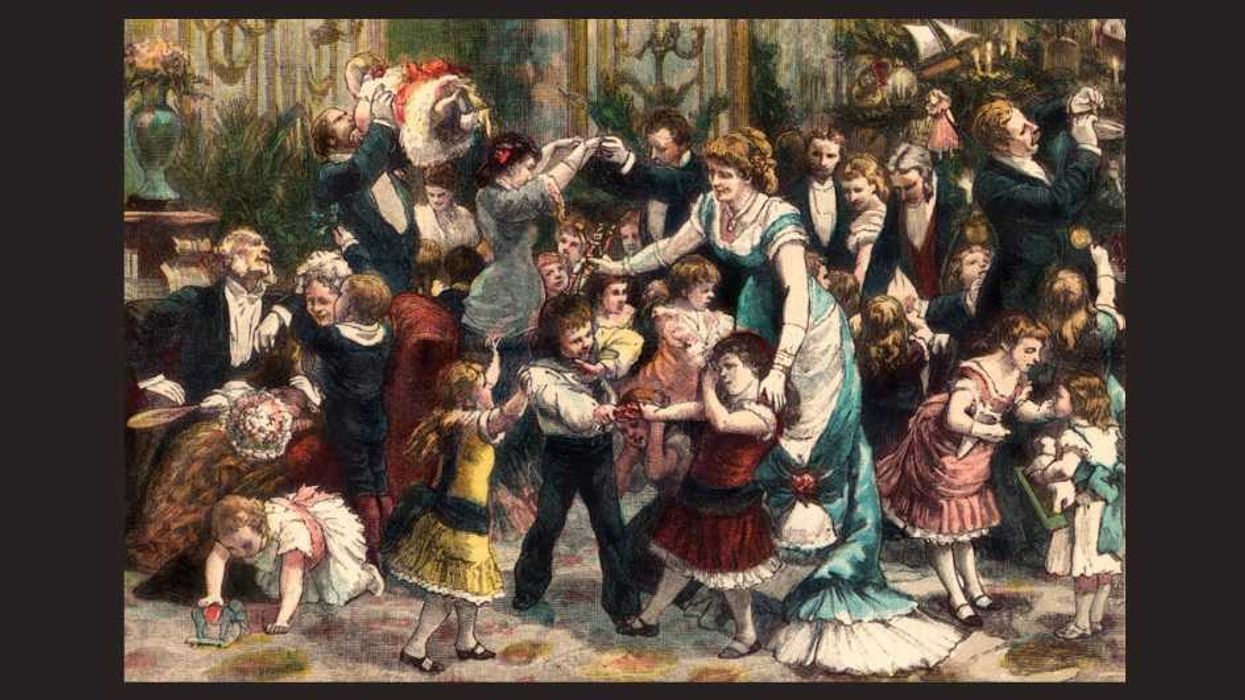
Holidays are tough. It’s not fun to say it, and it feels like failing to admit it, but they are.
But why? Why are they tough? Why are the days that are supposed to be full of joy instead oddly stressful — and too often fraught with bickering, arguing, and disappointment?
We want things to go perfectly on the day that is supposed to go perfectly — and when they don’t, our disappointment lands harder than it would on a random Tuesday in March.
It seems inevitable, almost as if it’s another tradition. Someone snaps about something small, then someone takes offense to something else, and then there’s an argument or a fight or just a weird feeling in the air that wasn’t there before.
Too many cooks
It could be in the kitchen, especially when dinner is nearing. Mom, Grandma, and maybe a daughter or two are in there helping. A bystander pokes his or her head in and offers a “helpful” comment. One of the chefs responds with an eye-roll. A certain stifling quiet — not a good quiet — descends.
Or it could be at the dinner table: Someone lobs a political point knowing that it will rub another guest the wrong way, but he “needs to say something.” Then someone else feels compelled to answer, and another after that, until the whole thing cascades and suddenly the arguments are spilling over into dessert.
Moms are disappointed in their sons and daughters because they just want everybody to get along for one day when everyone is home. “Can you just not talk about that?” Dads are tired of having the same argument, so they zone out. Sons and daughters are mad because no one takes them seriously. They are in college and know more than they used to, but think they know more than they really do.
Family feud
These things happen in families. Not all, of course. Some excel at sweeping every irritation under the rug and maintaining a serene, passive surface at all times. A few are even perfect — or as close as anyone gets — and enjoy holidays filled with nothing but gladness. But most families, in one way or another, run into moments like the ones above or something close to them.
These points of conflict and stress are only a few of the familiar moments that surface when families gather for the holidays. There are countless other paths to confrontation, disappointment, or quiet unease. Sometimes the friction is subtle — simmering unnoticed for months — and it’s only during the holidays that anything finally bubbles up and over.
At bottom, our stress and disappointment come down to expectations, especially the impossible kind.
A holiday is supposed to matter more than an ordinary day. It’s supposed to be more enjoyable, more memorable, more special. That’s a crude way of putting it, but it’s the truth we all feel somewhere deep down, even if we would never say it out loud.
Moms want the meal to be flawless and everyone to get along. Dads want to relax. Kids home from wherever they have been want to share what they have learned and maybe earn a little more respect.
Perfect storm
We want things to go perfectly on the day that is supposed to go perfectly — and when they don’t, our disappointment lands harder than it would on a random Tuesday in March. Greater disappointment feels like a greater failure, and that casts a shadow over the day or at least over our memory of it.
Our expectations rise so high that disappointment becomes almost guaranteed.
That’s why the holidays are tough. It’s not that being around the people you love is hard or that it’s impossible to stay on your best behavior and avoid a spat with your sister or cousin. The holidays are tough because we want things to be the way they ought to be — the way we imagine they could be, the way we wish we could be. Admitting that the holidays are tough stings a little, because to acknowledge it feels like confessing a kind of failure.
I don’t know how to eliminate holiday disappointment entirely, but I do know the first step toward easing it: accepting that our holidays will never be perfect. Hopes run high, tensions run high, and something will inevitably go awry. We’re human. And that’s okay. Maybe our bar shouldn’t be so high. Maybe we ought to grade the day on a curve. Maybe a B- really is an A. Maybe we can forgive ourselves for not living inside a Hallmark movie.
Holidays aren’t perfect. Neither are we. And that’s okay.
Holiday sales predicted to shatter $1 TRILLION — yet Glenn Beck warns of history’s first-ever synchronized global collapse

For all of human history, the four-stage debt cycle has remained the same: Discipline leads to economic prosperity; prosperity creates complacency; complacency tees up excessive spending; excessive spending turns into debt, which reaches a breaking point, necessitating discipline and restarting the cycle.
This has been true for every great empire the world has ever seen.
While the rise and fall of nations is nothing new, what is happening right now in global economics, says Glenn Beck, is indeed new — and it should terrify everyone.
“For the very first time in world history … the entire globe is riding the same wheel at the same time,” he warns.
“Right now, America, Europe, China, Japan, and every other major power … have all hit stage four at the same time.”
“The bond markets are shaking. The currencies are all volatile. Politicians are praying that no one notices the numbers. … Stage four is not coming. We are now living inside the opening act,” Glenn warns.
And yet a recent report from the National Retail Federation’s annual holiday forecast estimates that U.S. holiday retail sales will surpass $1 trillion for the first time ever.
Glenn, who says he is floored by the prices of food and goods and often wonders how the average person can afford to live right now, fears that the American people are making the same mistake as these governments on the brink of financial collapse.
“We’re spending, spending, spending, and I don’t understand it. … We’re just spending because we think we can get out of it,” he laments.
But our government and its constituents would be wise to remember what happens when stage four of the debt cycle is complete.
“It’s called the reset,” says Glenn, and it culminates in either crushing inflation, outright default and political chaos, or war.
For this to happen in any one country is terrible, but imagine the unmitigated catastrophe that would unfold if several global superpowers collapsed simultaneously.
“Rome collapsed by itself. France collapsed alone. Weimar collapsed by itself. Britain declined while America rose. It was always one country coming down and another country coming up,” says Glenn, but “this time all countries on both sides — the free world and the not-so-free world — there’s no one rising.”
“So what does that mean?” he asks.
While the history books can’t inform us, as this widespread teetering is unprecedented, we can only assume it means that rampant inflation, political upheaval, and war won’t be regional but “global” and “systemic.”
The silver lining is that collapse also “[creates] the conditions for renewal.” But until then, we are faced with a choice: Will we continue to spend ourselves into oblivion, or will we exercise the discipline it takes to create prosperity?
“The next chapter is not written. What happens to us is not written,” says Glenn, “and whether we rise or fall from what’s coming depends not on Washington, not on Wall Street, but on us in our homes and our families and our churches and our communities.”
To hear more of Glenn’s commentary, watch the video above.
Want more from Glenn Beck?
To enjoy more of Glenn’s masterful storytelling, thought-provoking analysis, and uncanny ability to make sense of the chaos, subscribe to BlazeTV — the largest multi-platform network of voices who love America, defend the Constitution, and live the American dream.
Macaulay Culkin just revealed his secret plot for another ‘Home Alone’ movie

Beloved former child star Macaulay Culkin revealed he has an “elevator pitch” idea about another possible “Home Alone” movie.
Culkin is currently making the rounds on his “A Nostalgic Night with Macaulay Culkin” tour and revealed during a recent stop that — unlike “Home Alone” director Chris Columbus — he is not opposed to doing a sequel to the Christmas movie.
‘I’m not completely allergic to it, the right thing.’
Culkin admitted he “wouldn’t be completely allergic” to reprising his role as Kevin McCallister, Variety reported, but said any form of a sequel would “have to be just right.”
At that point, the 45-year-old divulged he “kind of had this idea” on how a new movie could play out.
Like father, like son?
“I’m either a widower or a divorcee. I’m raising a kid and all that stuff. I’m working really hard, and I’m not really paying enough attention, and the kid is kind of getting miffed at me, and then I get locked out. [Kevin’s son] won’t let me in … and he’s the one setting traps for me,” the actor explained.
RELATED: ‘Wet Bandit’ Marv Records Plea for Help to Old Partner Harry After Seeing Kevin McCallister Video
 (Photo by Jacek Boczarski/Anadolu Agency via Getty Images)
The star said that the iconic “Home Alone” house would be “some sort of metaphor for” the relationship between him and his son, with his character trying to “get let back into son’s heart.”
He added, “That’s the closest elevator pitch that I have. I’m not completely allergic to it, the right thing.”
Keep the change
The comments are the latest sign that the once publicity-shy Culkin has embraced his child-star past.
In 2018, Culkin became Kevin for a Google Assistant ad, using the app to make purchases and manage the thermostat in his house.
Culkin also appeared in a series of videos for YouTube channel Cinemassacre around that same time, playing and reviewing the video games that featured his on-screen characters.
RELATED: Male, 58, points gun at 12-year-old girls singing Christmas carols door-to-door, police say
‘That thing I did’
In 2025, Culkin said that he has been showing his own children his old movies recently and that he was no longer bothered by the idea that his films are still popular.
“I think for a while, you know, when you’re a teenager and [in] your 20s and stuff like that, it’s like, ‘Ah, just they keep on talking about that thing I did.’ Now, it’s like, ‘Oh! They’re still talking about that thing I did.’ … I enjoy my legacy,” he told Yahoo Entertainment.
For Christmas season 2025, Culkin also paid homage to his “Home Alone” role in a commercial for an in-home care service.
1990’s “Home Alone” and 1992’s “Home Alone 2: Lost in New York” have grossed more than $450 million over their lifespan.
“Home Alone 3,” which did not feature Culkin, grossed just $30 million.





