

Category: Churches
When worship is interrupted, neutrality is no longer an option
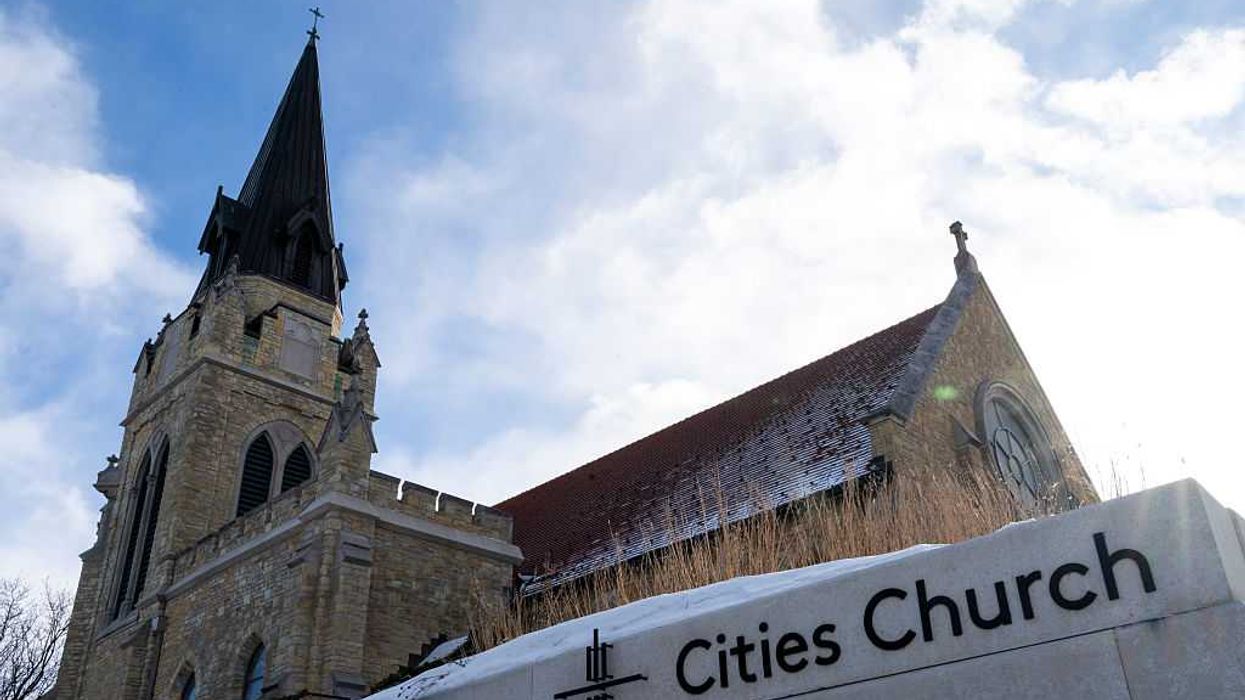
Something important shifted in this country when a Sunday worship service in Minneapolis was interrupted by protesters. It was a deliberate, premeditated intrusion into a space set apart for worship.
This was not spontaneous. There was planning, agreement, and coordinated action. This sort of strategy requires a different posture.
Churches across the country are already alert. Security teams exist for a reason.
For generations, houses of worship were understood to be off-limits.When that boundary is crossed, we are no longer debating policy. We are testing whether restraint still exists and whether consequences still matter.
The line has been drawn. This is not an issue that can be treated casually or observed with indifference. Anyone who refuses to condemn the coordinated disruption of worship — or, worse, excuses it — has already chosen a side.
Moments like this tempt Christians toward outrage or bravado. But Scripture does not train the church for theatrics. It trains the church for endurance, clarity, and readiness.
This incident likely would not have unfolded the same way where I live in Montana. People here are not especially theatrical about conflict. Responsibility is assumed, and consequences are not abstract. Most folks are armed, and in many churches, that includes the pastors.
The reality beneath that observation is sobering. Churches across the country are already alert. Security teams exist for a reason. In a culture shaped by real church shootings, sudden disruption inside a sanctuary is no longer interpreted as mere protest. Provocation introduced into an environment already conditioned for worst-case scenarios increases the risk of irreversible outcomes.
Every police officer will attest that domestic calls are often the most unpredictable and volatile. Not because violence is inevitable, but because instability compresses time and judgment. When emotions are high and trust is thin, even small disruptions can escalate quickly.
Families who live with addiction or severe mental illness understand this intuitively. They remain vigilant not because they want conflict, but because unpredictability makes it necessary. Boundaries are not set because change is guaranteed, but because safety is required.
A space shaped for reverence, restraint, and peace cannot be treated as if it can absorb chaos without consequence.
In such situations, vigilance and preparedness are not aggression. They are necessary parts of responsible stewardship.
Intimidation rarely seeks hardened targets. Visibility, restraint, and hesitation make certain spaces attractive to disruption. Where ambiguity is denied, intimidation fails.
It is difficult to imagine these kinds of coordinated disruptions taking place in historically black churches. Not because those congregations are hostile, but because intimidation has never been indulged there. Those churches were forged when intrusion and disruption were never theatrical.
This is not a call to intimidation in return. It is a call to clarity.
When tensions rise, someone must lower the temperature. If one side refuses, the other is obligated to establish boundaries for safety.
Anyone who has dealt with addiction understands this principle. Change cannot be forced, but boundaries must still be set. Recovery, incarceration, or death often follow prolonged chaos. These are realities repeatedly observed when destructive behavior is indulged.
RELATED: Don Lemon ARRESTED over apparent involvement in church invasion; Jim Acosta whines
 Photo by Arturo Holmes/Getty Images
The people setting boundaries are not the cause of the crisis. They are responding to it.
Scripture never promises that moments like this will not come. Jesus warned His followers that hostility would arrive. Paul urged believers not to avenge themselves, but to overcome evil with good.
Scripture states that what can be shaken will be shaken, so that what cannot be shaken may remain (Hebrews 12:27).
That truth is carried not only in Scripture, but in the church’s hymns.
The soul that on Jesus hath leaned for repose,
I will not, I will not desert to his foes.
That soul, though all hell should endeavor to shake,
I’ll never, no never, no never forsake.
There is no clenched fist in that stanza. It shows a relief from strain because vigilance has been transferred to someone stronger. Calm is possible, not because the threat is small but because God is not.
So when worship is interrupted and the lines are clearly drawn, the church does not respond with hysteria or silence. It responds with moral clarity, firm boundaries, and settled confidence grounded in an unshakable kingdom. The path for believers is steadiness shaped by truth, restraint, and trust in God rather than reaction to provocation.
The church has never endured because it intimidated back. It has endured because God does not abandon His people.





