Category: Climate change
Massachusetts on track to set mileage limits for drivers

A bill advancing through the Massachusetts Senate would make reducing how much people drive an explicit goal of state transportation policy. It is called the Freedom to Move Act.
The bill, SB 2246, does not impose mileage caps on individual drivers. There is no odometer check, no per-driver limit, and no new fines or taxes written into the legislation. Instead it directs the state to set targets for reducing total vehicle miles traveled statewide — targets that would be incorporated into transportation planning, infrastructure investment, and long-term emissions policy.
When reducing driving becomes a formal state objective, personal mobility inevitably becomes something to be managed.
Transportation is the largest source of greenhouse gas emissions in Massachusetts, as it is in many states. From that perspective, lawmakers argue the bill simply aligns transportation policy with existing climate mandates. The state already has legally binding emissions reduction goals, and supporters say those goals cannot be met without addressing how much people drive. SB 2246, they argue, is about planning — not punishment — and about expanding alternatives rather than restricting choices.
Planning … or punishment?
The bill also establishes advisory councils and requires state agencies, including the Massachusetts Department of Transportation, to factor VMT reduction into project development and funding decisions. In theory, this means greater emphasis on public transit, transit-oriented development, walking and biking infrastructure, and land-use policies designed to shorten commutes. Supporters emphasize that the legislation does not ban cars, restrict ownership, or mandate lifestyle changes. It simply provides a framework for offering residents more options.
The practical implications, however, deserve closer scrutiny — especially outside the state’s urban core. In greater Boston, where transit access is relatively dense, reducing car trips may be feasible for some commuters. In suburban and rural areas, the reality is very different. Many residents drive long distances to work because there are no viable alternatives. Families juggle school, child care, medical appointments, sports, and jobs across multiple towns. Small businesses rely on vehicles for deliveries, service calls, and daily operations. For these drivers, “driving less” is not a preference — it’s a constraint imposed by geography.
Future restrictions
Critics also worry that while SB 2246 does not cap individual mileage today, it lays the groundwork for future restrictions. Once statewide VMT reduction targets are established, pressure will mount to meet them. That pressure could influence everything from road funding and parking availability to congestion pricing, zoning decisions, and the collection of driving data. Even without explicit mandates, policy signals matter. When reducing driving becomes a formal state objective, personal mobility inevitably becomes something to be managed.
There is also the issue of trust and execution. Massachusetts has struggled for years to maintain and modernize its public transportation system. The MBTA’s well-documented reliability problems have eroded confidence among riders and taxpayers alike. Promising expanded transit options while existing systems remain fragile leaves many residents skeptical that alternatives to driving will arrive quickly — or equitably.
RELATED: EPA to California: Don’t mess with America’s trucks
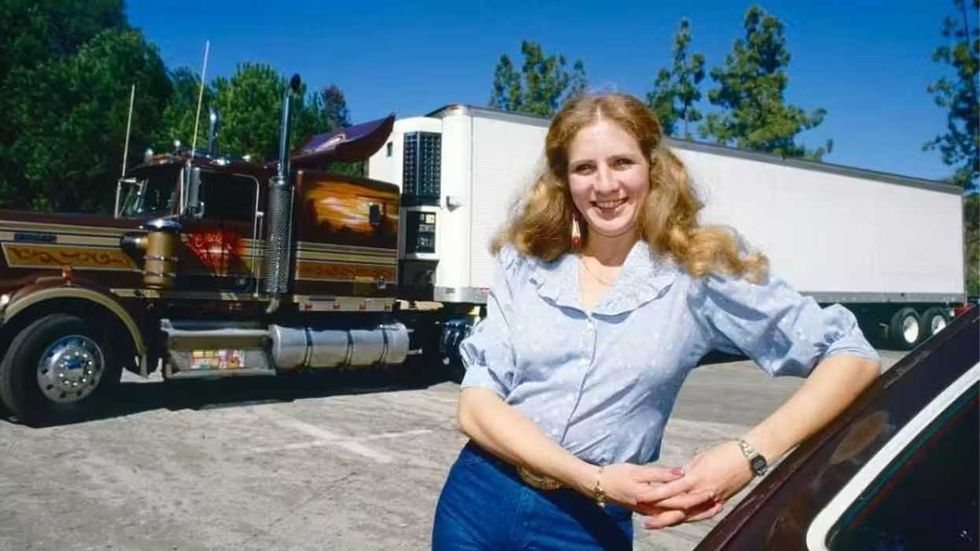 Bob Riha, Jr./Getty Images
National trend
From a broader policy standpoint, SB 2246 reflects a national trend. States and cities across the country are experimenting with VMT reduction as a climate strategy, encouraged by federal guidance and funding priorities. The premise is that cleaner vehicles alone are not enough and that total driving must decline to meet emissions targets. Whether that assumption holds as vehicle technology evolves — including hybrids, plug-in hybrids, and increasingly efficient internal combustion engines — remains an open question.
Supporters argue that thoughtful planning now can prevent more disruptive measures later. By gradually reshaping transportation and development patterns, they believe emissions can be reduced without dramatic lifestyle changes. Opponents counter that history suggests incremental planning often leads to more intrusive policies — especially when initial targets prove difficult to meet.
What makes SB 2246 significant is not what it does immediately, but what it signals about the future of transportation policy. It reframes driving not simply as a personal choice or economic necessity, but as a behavior the state has an interest in reducing.
As the bill moves to the Senate Ways and Means Committee, lawmakers will have to weigh climate goals against economic realities, regional disparities, and personal freedom.
Massachusetts residents should pay close attention. SB 2246 may not tell you how many miles you can drive today — but it helps define who gets to decide how transportation works tomorrow.

Was 2024 the Hottest Year on Record?
We are often reminded that 2024 was the hottest year on record and that 2023 was the second hottest. The…

Massive Snowstorm Coming

“Massive Snowstorm Coming,” editorial cartoon by Tom Stiglich for The American Spectator on Jan. 22, 2026.
Kamala Harris buys $8.15M seaside mansion after fearmongering about rising sea levels

Former Vice President Kamala Harris spent years fearmongering about so-called climate change. Her recent seaside acquisition suggests she may not have been as serious about the supposed threat as she previously let on.
During her first failed presidential campaign where she proposed the U.S. blow $10 trillion on tackling the professed problem, Harris wrote, “Our oceans are warming. Sea levels are rising. Pollution is threatening our air and water. Droughts are hurting our crops. Fires are burning our forests. Extreme weather is destroying our communities. We are poisoning the planet.”
‘To live in a coastal community is to live on the front lines of the climate crisis.’
Harris previously pushed legislation that would annually award $50 million in grants to various entities for the purposes of “carrying out climate-resilient living shoreline projects” and, in her words, “mitigat[ing] against sea level rise.”
When announcing in 2023 that the Biden-Harris administration was recommending $562 million in funding to make communities and the economy more resilient to the alleged climate change, Harris told a crowd at the University of Miami, “To live in a coastal community is to live on the front lines of the climate crisis.”
The Washington Free Beacon highlighted that the Biden-Harris administration also pushed a study the same year that claimed that “24%-75% of California’s beaches may become completely eroded” due to sea-level rises.
Despite Harris’ participation in the rising-sea hysteria that proved fellow Democrat Al Gore a poor prognosticator, she has reportedly purchased an $8.15 million oceanside mansion in Malibu, California.
RELATED: Al Gore wrong again: Study delivers good news for Arctic ice trends, bad news for climate hucksters
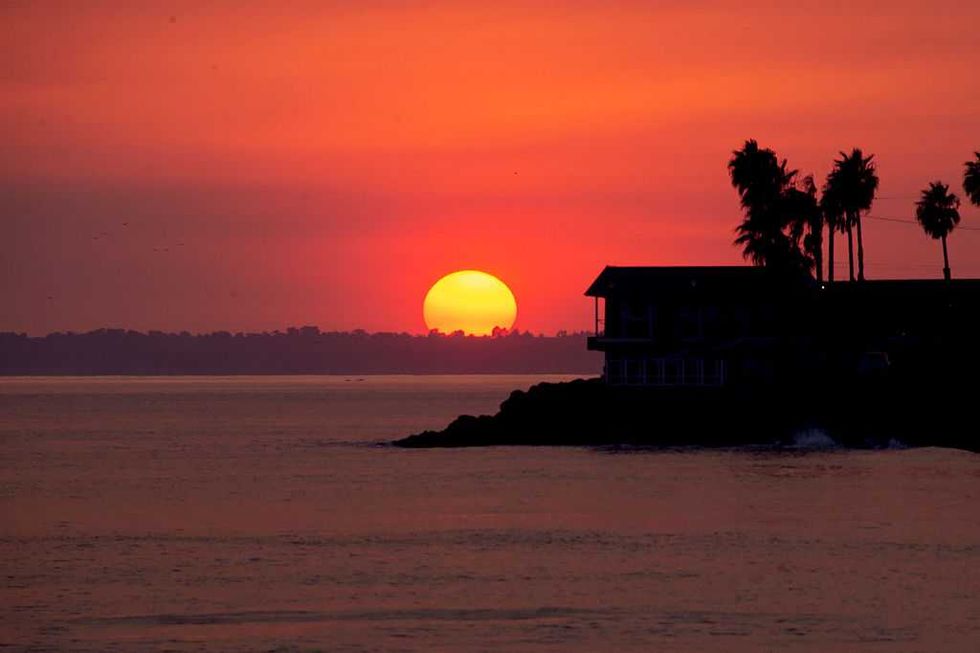 Photo by Roxanne McCann/Getty Images.
A Zillow listing for the 4,000 square foot, four-bedroom home indicates that the property has a pool, a hot tub, a sauna, a cold plunge, a professional gym, a landscaped water feature, a “private putting and chipping green with a bunker,” a guest house, and “breathtaking ocean, island, and city views.”
The property, which sold on Dec. 2, is located in Point Dume, an affluent neighborhood with private, gated beaches. According to the New York Post, the community is populated by Hollywood and Silicon Valley elites.
Harris, who is reportedly contemplating a third White House bid, did not respond to Blaze News’ request for comment.
Fortunately for Harris and contrary to her past claims about rising sea levels, a study published last year in the Journal of Marine Science and Engineering indicated that the average sea level rise in 2020 was roughly 0.059 inches a year, which works out to about 6 inches per century.
One of the paper’s co-authors told the Post in September, “This is significantly lower than the 3 to 4 mm/year often reported by climate scientists in scientific literature and the media.”
Such a rate might explain why Al Gore’s 2006 prediction of a 20-foot rise in the global sea level “in the near future” has yet to manifest.
Like Blaze News? Bypass the censors, sign up for our newsletters, and get stories like this direct to your inbox. Sign up here!
Kamala Harris buys $8.15M seaside mansion after fearmongering about rising sea levels
Former Vice President Kamala Harris spent years fearmongering about so-called climate change. Her recent seaside acquisition suggests she may not have been as serious about the supposed threat as she previously let on.
During her first failed presidential campaign where she proposed the U.S. blow $10 trillion on tackling the professed problem, Harris wrote, “Our oceans are warming. Sea levels are rising. Pollution is threatening our air and water. Droughts are hurting our crops. Fires are burning our forests. Extreme weather is destroying our communities. We are poisoning the planet.”
‘To live in a coastal community is to live on the front lines of the climate crisis.’
Harris previously pushed legislation that would annually award $50 million in grants to various entities for the purposes of “carrying out climate-resilient living shoreline projects” and, in her words, “mitigat[ing] against sea level rise.”
When announcing in 2023 that the Biden-Harris administration was recommending $562 million in funding to make communities and the economy more resilient to the alleged climate change, Harris told a crowd at the University of Miami, “To live in a coastal community is to live on the front lines of the climate crisis.”
The Washington Free Beacon highlighted that the Biden-Harris administration also pushed a study the same year that claimed that “24%-75% of California’s beaches may become completely eroded” due to sea-level rises.
Despite Harris’ participation in the rising-sea hysteria that proved fellow Democrat Al Gore a poor prognosticator, she has reportedly purchased an $8.15 million oceanside mansion in Malibu, California.
RELATED: Al Gore wrong again: Study delivers good news for Arctic ice trends, bad news for climate hucksters
Photo by Roxanne McCann/Getty Images.
A Zillow listing for the 4,000 square foot, four-bedroom home indicates that the property has a pool, a hot tub, a sauna, a cold plunge, a professional gym, a landscaped water feature, a “private putting and chipping green with a bunker,” a guest house, and “breathtaking ocean, island, and city views.”
The property, which sold on Dec. 2, is located in Point Dume, an affluent neighborhood with private, gated beaches. According to the New York Post, the community is populated by Hollywood and Silicon Valley elites.
Harris, who is reportedly contemplating a third White House bid, did not respond to Blaze News’ request for comment.
Fortunately for Harris and contrary to her past claims about rising sea levels, a study published last year in the Journal of Marine Science and Engineering indicated that the average sea level rise in 2020 was roughly 0.059 inches a year, which works out to about 6 inches per century.
One of the paper’s co-authors told the Post in September, “This is significantly lower than the 3 to 4 mm/year often reported by climate scientists in scientific literature and the media.”
Such a rate might explain why Al Gore’s 2006 prediction of a 20-foot rise in the global sea level “in the near future” has yet to manifest.
Like Blaze News? Bypass the censors, sign up for our newsletters, and get stories like this direct to your inbox. Sign up here!
Hollywood Stars Put Big Money Behind Climate Activists Who Stormed Congressional Baseball Game, Tax Filings Show

A fund backed by Hollywood stars including Jeremy Strong and Chelsea Handler provided nearly all of the funding for Climate Defiance, the far-left group that carries out illegal demonstrations like storming the field at the Congressional Baseball Game to “defeat” what it calls “fossil fuel fascism,” tax filings reviewed by the Washington Free Beacon show.
The post Hollywood Stars Put Big Money Behind Climate Activists Who Stormed Congressional Baseball Game, Tax Filings Show appeared first on .
Gridlocked by Ideology
Over the holiday season a federal judge canceled California’s parental exclusion policies. That gift to parents was not the only story…
Sovereignty First
President Trump’s first year in office has seen an almost unprecedented whirlwind of presidential executive actions. Not since the administration…
Trump Admin Withdrawing From ‘Anti-American’ Global Climate Change Regimes
‘Wasteful international organizations’
Global warming powered an empire that dwarfed the Vikings

Popular culture loves its image of Norsemen shivering in fur pelts, raiding British monasteries, and braving the icy North Atlantic. Yet while Vikings struggled to survive on the thawing margins of Greenland, a far richer and more formidable maritime power flourished thousands of miles away in the tropical warmth of southern India.
That power was the Chola Empire.
A modern golden age remains within reach — provided we do not cripple ourselves with fear of the very conditions that have so often underwritten human prosperity.
At its height between 985 and 1044 A.D., the Cholas projected force on a scale that made Viking longships look like backyard skirmishers. Their ships were technological marvels — floating fortresses capable of transporting cavalry, infantry, and weeks of provisions across vast distances.
The Cholas mounted a major naval expedition against the Srivijaya Empire, a dominant maritime power based in what is now Indonesia and the Malay Peninsula. This was an amphibious assault conducted thousands of miles from home ports, a logistical achievement comparable to modern naval operations. The Cholas toppled rulers, secured the vital Malacca Strait, and guaranteed safe passage for merchant guilds trading from the Middle East to China.
On land, they maintained a standing army that included thousands of war elephants.
Their wealth also found expression in stone. The Great Living Chola Temples — now recognized as UNESCO World Heritage sites — stretch across southern India and neighboring islands. Built without modern machinery, these monumental structures relied on elephants to haul massive stones from distances of up to 60 miles.
Chola society possessed abundant labor, food, and wealth. The question is why.
What enabled a civilization to generate the immense caloric and economic surplus required to build stone monuments and launch armadas across the Indian Ocean? A large part of the answer lies in climate — specifically, global warming.
The rise of the Chola Empire coincided with the Medieval Warm Period, which lasted roughly from 900 to 1300 A.D. This relationship between warmth and human flourishing is inconvenient for the modern climate-industrial narrative, which treats rising temperatures as an unqualified catastrophe.
Warmth strengthens tropical monsoons, the lifeblood of agrarian economies like the Cholas’. Recent scientific research confirms that fluctuations in the Indian summer monsoon shaped agricultural output and the rise and fall of major dynasties. Indian civilization flourished during the Roman Warm Period, fractured during the Dark Ages Cold Period, and reached new heights under the Cholas during the Medieval Warm Period.
The Chola Empire was sustained by the very kind of warming modern activists describe as an “existential threat.”
RELATED: ‘Green Antoinettes’ live large, preach small
 ajijchan via iStock/Getty Images
In the Cauvery Delta — the empire’s heartland — this favorable climate transformed the region into the “Rice Bowl of the South.” Three harvests a year became common. Granaries overflowed. Revenues surged.
That surplus freed labor from subsistence farming and redirected it toward imperial ambition. Chola trade guilds thrived, exporting textiles, spices, and grain to the Chinese Song Dynasty — another civilization that prospered during this warm epoch.
Today, we find ourselves in another warming phase, emerging from the depths of the Little Ice Age that ended in the mid-19th century. Global crop yields have repeatedly reached record highs. India has re-emerged as a major grain exporter. The planet is experiencing a measurable “greening” effect as higher atmospheric carbon dioxide levels fertilize plants and warmer temperatures expand cultivable land.
Yet, we are told to feel guilty.
Coal, oil, and natural gas — fuels that protect humanity from the elements and power modern economies — are vilified. Environmental extremists implicitly argue for a colder world, despite the historical record showing that colder periods brought famine, disease, and social collapse.
The Chola Empire stands as a reminder of what human ingenuity can achieve when the climate cooperates. Its ships sailed on prosperity sustained by warmth. Its temples rose from a society rich in calories and confidence. Its civilization commanded respect across continents.
We face a similar opportunity today. A modern golden age remains within reach — provided we do not cripple ourselves with fear of the very conditions that have so often underwritten human prosperity.