

Category: Conservatism
The Weekend Spectator Ep. 54: Remembering Michael Reagan
Michael Reagan, a friend of Paul Kengor and a giant of the conservative movement, leaves an incredible legacy. (READ MORE:…
Mike Reagan, Twice Adopted, Rest in Peace
I was quite saddened late last evening to learn of the death of my friend Michael Reagan, the oldest son…
Which way after Trump? ‘Strong Gods’ may offer the solution
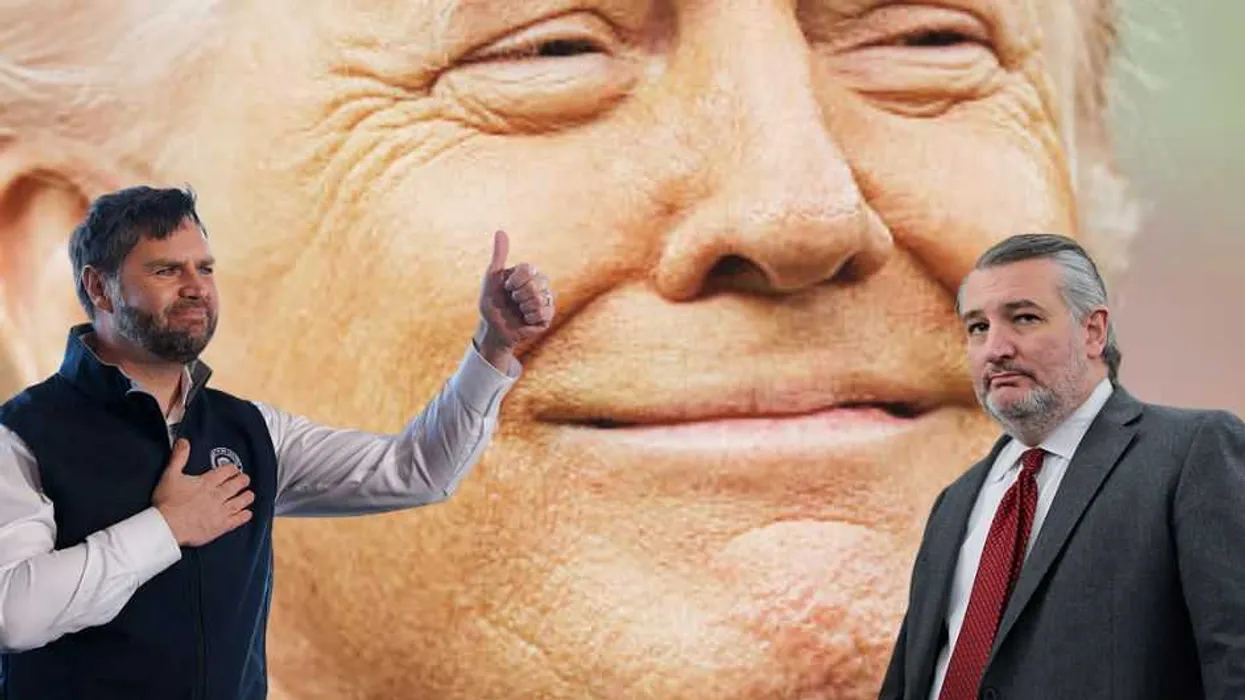
Where do we go after Donald Trump?
The question has divided the right. When it comes to charting the correct course, a book published during the president’s first administration is timelier than ever: R.R. Reno’s “The Return of the Strong Gods.”
‘The perverse gods of blood, soil, and identity cannot be overcome with the open-society therapies of weakening,’ writes Reno.
MAGA 2.0?
One faction of the right appears keen to continue delivering on the promise of Trump’s “Golden Age” by leaning further into a muscular and nationalistic conservatism.
Liberal interlopers and other ideological refugees with forward operating bases situated right-of-center have been working ardently to politically neutralize this camp ahead of the 2028 election, smearing, for instance, some of those in Vice President JD Vance’s orbit as “woke right.”
Such liberal saboteurs are right to be fearful of this camp, as its dominance — affirmed by a Vance win — would signal the MAGA movement wasn’t a sprint but a marathon.
Libertarian libs
The second camp, whose potential champion in the 2028 primary field appears to be Sen. Ted Cruz (R-Texas), is keen both to act as though the populist upheaval of the 2010s hadn’t irreversibly changed the game and to slink back onto the rhetorically conservative, libertarian-minded side of the liberal coin.
This is the politics that has purchased cultural and economic deregulation, a ruinous series of foreign entanglements, a demographic crisis, and a low-trust society marked by an anemic sense of “we.”
The old guard in both parties — those who’ve long railed against and/or sought to undermine the MAGA agenda — would doubtless regard the success and empowerment of this camp as a godsend.
Early polling data provide strong indications, however, that there is little appetite among likely Republican primary voters for a return to a George W. Bush-era style of Republican leadership. The reason is perhaps best explained in a book first published six years ago.
Weak loves vs. strong gods
In “Return of the Strong Gods: Nationalism, Populism, and the Future of the West,” R.R. Reno, a political philosopher and editor of First Things magazine, discusses both what was behind and what is ahead of the recent nationalist and populist uprisings in the West.
The book, which Reno has touted as an “essay in the politics of imagination,” is an engrossing elaboration on an article he penned years earlier detailing the full-spectrum campaign spearheaded by classical and progressive liberals after the Second World War to “disenchant and desacralize public life” and to produce an “open society” wherein the “strong gods” — the “objects of men’s love and devotion, the sources of the passions and loyalties that unite societies” — could inevitably be neutralized and/or replaced by “weak loves” such as relativism, diversity, and tolerance.
Reno suggests that the reasoning behind this project of societal opening and weakening was that earlier in the 20th century, strong gods had supposedly rendered the masses easily manipulable by demagogues and set the stage for those totalitarian regimes that warred against humanity.
The general theory of society underpinning the postwar consensus became, according to Reno, “characterized by a fundamental judgment: whatever is strong — strong loves and strong truths — leads to oppression, while liberty and prosperity require the reign of weak loves and weak truths.”
RELATED: Conservatives face a choice in ’26: realignment or extinction
 MediaProduction via iStock/Getty Images
Making monsters
This, Reno insists, was a catastrophic overreaction.
In their campaign to water down dark loves, the war-traumatized liberal elites of yesteryear also watered down the powerful loves and intense loyalties that hold Western civilization together and supply a sense of belonging, purpose, and solidarity — such as family, nation, religion, and transcendent truth.
Reno notes that this campaign not only produced a dysfunctional society but incubated some of the very dark loves it was meant to destroy.
“The perverse gods of blood, soil, and identity cannot be overcome with the open-society therapies of weakening,” writes Reno. “On the contrary, they are encouraged by multiculturalism and the reductive techniques of critique. In its present decadent form, the postwar consensus makes white nationalism an entirely cogent position.”
“We cannot forestall the return of the debasing gods by reapplying the open-society imperatives. False loves can be remedied only be true ones,” adds Reno.
‘A language of love’
While the postwar liberal regime enjoyed great success in producing monsters and in disenchanting, disorienting, deracinating, and rendering homeless those guns-or-religion deplorables for whom America’s detached elites still brazenly express contempt, its success karmically set the stage for a popular yearning for anchorage, belonging, and a sense of “we,” which in turn prompted a rejection of the postwar consensus.
That rejection has manifested in various ways but most clearly in the rejection of the open society and its possessing forces of weakening that occurred on Nov. 8, 2016.
During his first term and again over the past several months, Trump has pursued reconsolidation and protection as opposed to deregulation and openness and delivered significant results along the way.
Those who’d seek to steer the right back toward the open society and sell voters on a rebrand of the postwar consensus stand a better chance of sweeping waves back into the sea.
While well-positioned to lead, those in the first camp may nevertheless want to heed Reno’s caution about the open society: “This project cannot be opposed solely on political grounds, as if nationalism alone can overcome the ‘destiny of weakening.’ We need strengthening motifs across the board.”
“Our task, therefore, is to restore public life in the West by developing a language of love and a vision of the ‘we’ that befits our dignity and appeals to our reason as well as our hearts,” wrote Reno.
“We must attend to the strong gods who come from above and animate the best of our traditions. Only that kind of leadership will forestall the return of the dark gods who rise up from below.”

The Discipline Dividend: How Conservatives Defend What Liberals Dismantle
There was a time, not long ago, when Republicans and Democrats breathed the same civic air. They fought like brothers…
The right must choose: Fight the real war, or cosplay revolution online

Is principled conservatism dead? And would that even be good?
Robert P. George’s resignation from the board of the Heritage Foundation last week suggests a deeper shift inside the conservative world. George is one of the most respected conservative intellectuals alive — a Princeton professor who built the James Madison Program and shaped a generation of natural-law scholarship. His departure, prompted by how Heritage President Kevin Roberts handled Tucker Carlson’s interview with Nick Fuentes, exposes a widening fracture on the right about what conservatism is and what it should defend.
The first lesson conservatives should recover: Reason and faith are not optional in the public square.
I have watched this tension escalate since what some have called Charlie Kirk’s “martyrdom.” Voices from what garden-variety conservatives call “the far right,” what liberals lump together as “the right,” and what Antifa brands “fascist” are pushing for influence inside the movement. Some insist these agitators are leftist plants sent to fracture the right. Others believe God allows the intentions of every heart to be revealed.
Whatever the explanation, the attacks now directed at George follow a predictable pattern: an “OK, Boomer” dismissal of a man who has spent his life defending the unborn, natural marriage, and the created order.
Full disclosure: When I was a graduate student studying natural law at Arizona State University, George took time to meet with me and guide my work. Later as a tenured professor, I became a fellow in the very program he founded. One of my own undergraduate professors — the great ethicist Jeffrie Murphy — said George’s work compelled him to rethink everything.
So-called far-right critics now claim George will debate and even co-author books with Cornel West, with his ties to Louis Farrakhan, but refuses to work with people “to his right.” The charge — absurd on its face — is that he is some kind of “controlled dissenter,” a token conservative tolerated by the Ivy League so long as he stays within its boundaries. From there, the speculation drifts into unfounded theories about motives and self-preservation.
George does not need me to defend him. His life’s work refutes these claims. He has never backed away from his convictions. He has never trimmed the truth to curry favor with elite institutions. He debates West because he believes reason still matters, because he believes truth can be argued in public, and because he believes even fierce disagreement does not require abandoning basic human dignity. He refuses to compromise an inch while treating his interlocutors as human beings.
That shouldn’t be so difficult to understand.
In fact, that’s the first lesson conservatives should recover: Reason and faith are not optional in the public square. They are the foundation for honest argument, and honest argument is the only way a free people can persuade and be persuaded. If we descend into conspiracy theorizing, rage, or tribal loyalty as our primary modes of engagement, we abandon the very tools that made conservatism coherent.
Here is George’s warning: Don’t become postmodernists. Don’t imitate the left’s racial essentialism or identity politics. Don’t throw out reason because some Enlightenment thinkers misused it. If you want to rethink every narrative you’ve heard, fine — do it with reason, not with the power-dialectic that dominates progressive thought.
But principles alone are not enough. Being principled does not mean being naïve. Conservatives once understood strategy and tactics — long-term goals paired with immediate steps that move us toward them. I believe the United States should acknowledge the kingship of Jesus Christ. Presidents from both parties once referred to America as a Christian nation. If that is true, then we must engage publicly, argue publicly, and fight publicly for that idea of ordered liberty.
That means getting into the trenches. It means refuting Marxism and atheism clearly and without apology. It means being innocent as doves and wise as serpents, fighting to win without surrendering either virtue.
RELATED: Tucker Carlson, Nick Fuentes, and the war for the conservative soul
 Photo by Zach D Roberts/NurPhoto via Getty Images
What we cannot become is principled losers. The enemy welcomes our gentlemanly retreats. The progressive movement wants more than policy wins; it wants to redefine the human person, the family, and the moral order itself. A party that endorses abortion at any point, supports the mutilation of healthy children, and treats scripture as hate speech leaves no moral ambiguity about which side a Christian or natural-law conservative should support.
Read George’s arguments against liberalism. Read his defense of natural law. If you disagree with him, he will debate you — he always has. But you can learn from him that a revival of natural law and natural theology is essential right now. That requires teaching the truths in Romans 1 and learning from Acts how to speak across cultures and ideologies.
We are in a spiritual war. The weapons are spiritual, but the fight is real. The stakes are real. The consequences are real.
It is far better to be fighting through the mud of Mordor than fat, complacent, and conquered in the Shire.
Buckley at 100: Catholicism, Communism, and Conservatism
Editor’s Note: This speech was originally delivered by the author at “The Catholic Bill Buckley Conference,” hosted by the Portsmith…
NR Turns 70: A Different Perspective
Thanks to all of you for supporting our sometimes lonely cause. Thanks to my editors for inviting me to write…
Glenn Beck’s blueprint for true conservatism in 2026 and beyond

Too many right-wingers today equate conservatism with opposing the left, voting for Republicans, or trying to get back to the “good ol’ days.”
But being a true conservative is none of those things, says Glenn Beck. Conservatism isn’t about reacting to the left, obsessing over policies, or worshipping the past. “It’s really about principles,” he says. “And that’s why we’ve lost our way because we’ve lost our principles.”
So what are the principles that undergird conservatism?
In this episode of “The Glenn Beck Program,” Glenn delivers an unflinching monologue that reminds us not only what being a conservative is really about, but why recovering true conservatism is critical for the nation’s survival.
1. Stewardship
“Being a conservative has to mean stewardship — the stewardship of a nation, of a civilization, of a moral inheritance that is too precious to abandon,” says Glenn.
This begins with understanding that the word “conserve” means to “stand guard” — in this case to “defend what the founders designed: the separation of powers, the rule of law, [and] the belief that our rights come not from kings or from Congress but from the creator Himself.”
Right now, our founders’ brilliant blueprint for our government is treated like “a museum piece” instead of “a living covenant between the dead, the living, and the unborn,” says Glenn.
2. Confronting reality
“This chapter of conservatism must confront reality: economic reality, global reality, and moral reality,” says Glenn.
Just being against things, like high taxes and runaway inflation, isn’t going to cut it, he warns. We have to be for something — things like “economic sovereignty,” the “right to produce and to innovate,” “fiscal prudence,” and national independence.
“Being a conservative today means you have to rebuild an economy that serves liberty, not one that survives by debt,” says Glenn.
3. Recovering America’s soul
In our current “age of dislocation,” family, faith, and objective truth have all taken a massive hit. The results have been catastrophic. Depression and suicide are rampant. People feel like their lives are meaningless. Millions fill the emptiness with technology and other mind-numbing activities.
“If you want to be a conservative, then you have to become the moral compass that reminds a lost people that liberty cannot survive without virtue, that freedom untethered from moral order is nothing but chaos, and that no app, no algorithm, no ideology is ever going to fill the void where meaning used to live,” says Glenn.
In order to do this, we have to “rebuild competence,” “champion innovation,” “reclaim education, not as propaganda, but as the formation of the mind and the soul,” “harness technology in defense of human dignity,” and above all “restore local strength” through families, schools, churches, and charities.
Drawing these threads together, Glenn paints a vivid portrait of the conservative’s role in the years ahead: “A conservative in 2025-26 is somebody who protects the enduring principles of American liberty and self-government while actively stewarding the institutions, the culture, the economy of this nation for those who are alive and yet to be born.”
“We have to be a group of people that are not anchored in the past or in rage, but in reason and morality, realism, and hope for the future. We’re the stewards. We’re the ones that have to relight the torch,” he pleads.
To hear more, watch the video above.
Want more from Glenn Beck?
To enjoy more of Glenn’s masterful storytelling, thought-provoking analysis, and uncanny ability to make sense of the chaos, subscribe to BlazeTV — the largest multi-platform network of voices who love America, defend the Constitution, and live the American dream.
US Priests Remain Conservative but Diverge From Trump
Catholic priests in the U.S. are increasingly identifying as conservative, both politically and theologically, but are valuing adherence to Catholic…





