

Category: Courage
Charlie Kirk’s assassination demands your courage, not your sympathy
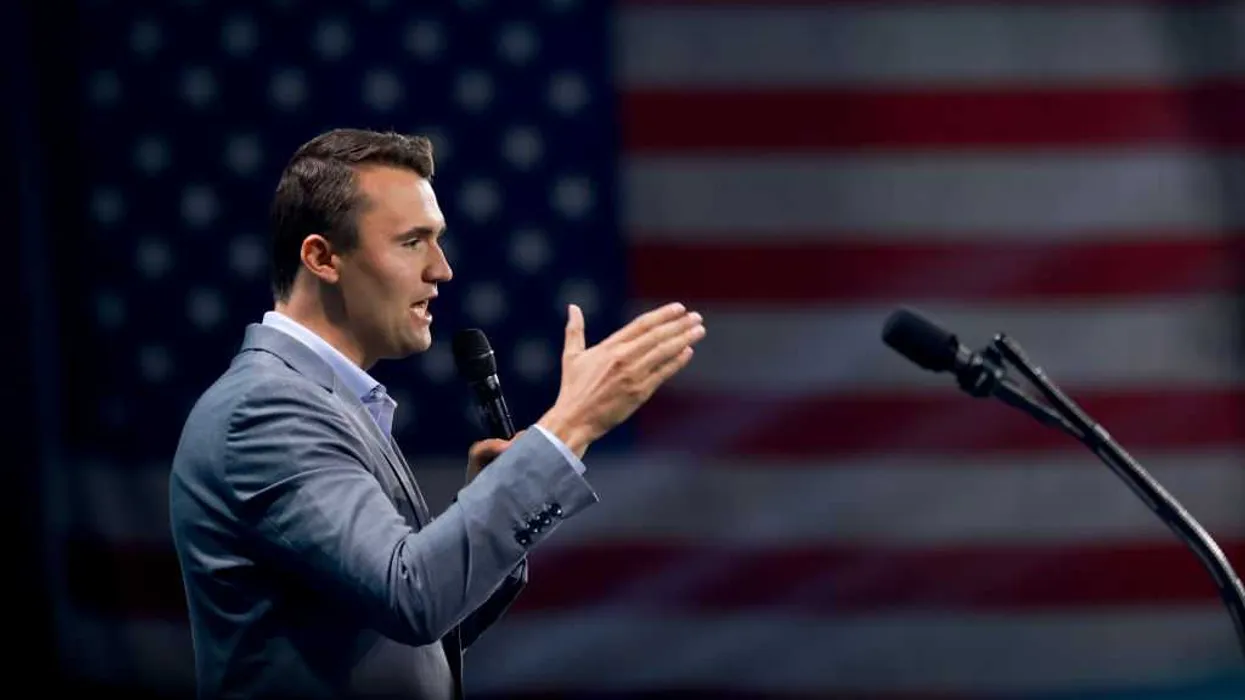
I have lost grandparents, childhood friends, and college friends. As you age, death becomes familiar. Each loss shakes you briefly, reminds you that life is fragile, and then fades. You drift back into the illusion that tomorrow is guaranteed. That you will have time later to become a better Christian, husband, and father.
That illusion shattered on September 10, the day Charlie Kirk was assassinated by a leftist.
Charlie Kirk showed us how a Christian lives and how a Christian dies. His race is finished. Ours must now begin.
I did not know Charlie personally. I worked as his publicist last summer for what became his second-to-last book, “Right Wing Revolution,” but we never spoke directly. Still his death devastated me in a way no other loss had.
I had to understand why. Answering that question became the genesis of this book, “For Christ and Country: The Martyrdom of Charlie Kirk.”
On the day Charlie was killed, I joined my wife to pick up our 2-and-a-half-year-old daughter from preschool. The day before, she had asked again and again, “Dada in car? Dada here?” This time, I wanted to be there when she came running out.
As we pulled into the parking lot, my phone lit up. Charlie Kirk had been shot. My stomach dropped.
I had felt that dread once before. On July 13, 2024, I was rocking my daughter to sleep when an alert flashed that President Trump had been shot in Butler, Pennsylvania. Minutes later, dread gave way to relief. Trump survived.
This time, the dread did not lift.
While my wife walked toward the school entrance, I sat frozen in the car, refreshing news feeds. Then I saw the video. The moment the bullet struck Charlie.
One look told me no one could survive that wound.
Then my daughter appeared.
Her face lit up when she saw me. Pure joy. The same joy Charlie’s daughter would never experience again.
As my little girl ran toward the car shouting, “Dada!” another child had just lost her father forever. His daughter. His son. His wife. They would never again live a moment like the one unfolding before me.
Nothing had changed for my daughter. Everything had changed for me.
That night, I slept on the floor beside my oldest daughter’s crib. I lay awake for hours, listening to her breathing and thinking of Charlie’s children and of Erika, facing the impossible task of explaining why their father would never walk through the door again.
In the days that followed, I cried more than I ever had. I am not a man who cries. But something in me died with Charlie, and something else was born.
I began studying Charlie’s words, speeches, debates, and sermons. Not as content but as testimony. What I saw changed me. Charlie possessed a maturity beyond his years, a steadiness most men twice his age never reach. He knew who he was and whom he served. He knew his mission and the cost of it. He accepted that cost.
In Charlie, I saw the man I wanted to be. Strong yet gentle. Courageous yet humble. Unmoved by hatred because he feared God more than man. That recognition exposed an uncomfortable truth. I shared many of Charlie’s convictions but not his courage.
I had spoken boldly only when it was safe. I avoided conflict when it was convenient. The wounds of losing lifelong friends in 2020 because I voted for Trump still stung, and I carried a residual fear of losing more.
Charlie did not hesitate. He lived Matthew 5 and Mark 8 not as verses but as marching orders. He carried his cross onto hostile campuses and into debates before crowds that despised him, knowing exactly what it cost.
When that hatred finally culminated in a sniper’s bullet, it ended his life but not the mission that made him a target.
His death exposed my compromises. It forced me to confront the gap between the man I was and the man God was calling me to be. It demanded that I stop postponing courage and start living the truth now. Costly truth. Dangerous truth. Biblical truth.
Charlie’s life and death were not political events. They were spiritual ones.
He defended the family because God commanded it. He rejected identity politics because every person bears God’s image. He championed fathers because fatherlessness destroys nations. He defended black Americans by insisting on their dignity as individuals created by God, not as pawns of a political movement. He confronted transgender ideology because lies about human nature are lies about God Himself.
For that, he was vilified, dehumanized, and finally murdered.
The ideology that killed Charlie did not emerge overnight. It grew in the silence of those who knew better but feared the cost of speaking. Evil advances when good men retreat, and too many of us did.
RELATED: America’s new lost generation is looking for home — and finding the wrong ones
 Photo by Matt Cardy/Getty Images
Charlie did not retreat. Now none of us can afford hesitation.
The man I was — cautious and hesitant — died with Charlie. In his place stands a man who understands that truth requires sacrifice, that silence is surrender, and that the only approval that matters comes from God.
My daughter deserves a country where political murder is condemned, not excused. Where truth is spoken even when it is dangerous. Where courage is not outsourced to a handful of men like Charlie Kirk but lived by millions.
That is why I wrote “For Christ and Country: The Martyrdom of Charlie Kirk.” Not simply to remember Charlie but because his death demanded my transformation and now demands yours.
Charlie Kirk showed us how a Christian lives and how a Christian dies.
His race is finished. Ours must now begin.
The torch is ours to carry — for Christ, for country, and for Charlie.
Editor’s note: This article is adapted from the author’s new book, “For Christ and Country: The Martyrdom of Charlie Kirk” (Bombardier Books, Post Hill Press).
The courage we lost is hiding in the simplest places

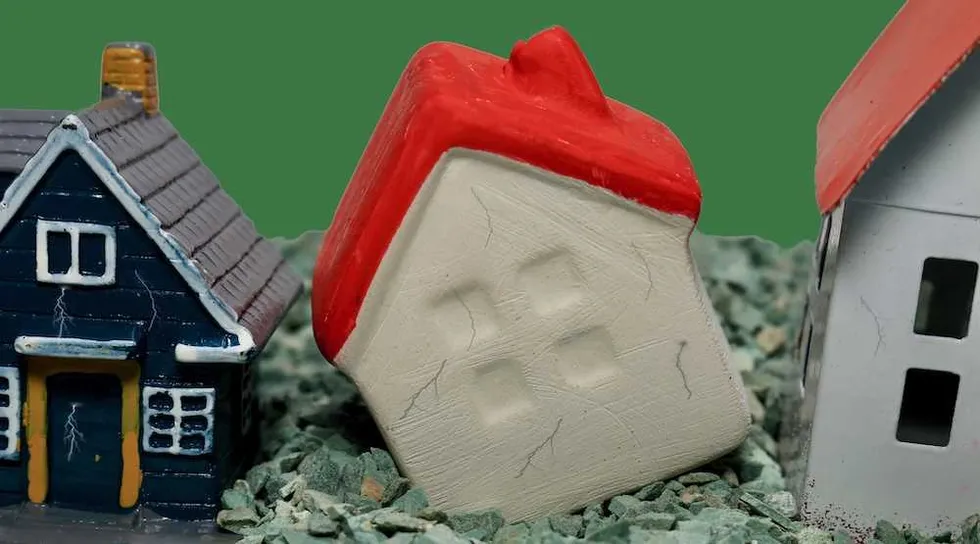
If you’ll indulge one more cabin story, it’s only because remodeling an unlevel structure may be the clearest metaphor for the challenges caregivers face — and, I suspect, for the condition of America itself.
Out here in rural Montana, you learn quickly that when a project needs doing, you can pay a lot for it, wait a long time, use duct tape, or learn to do it yourself. Usually it’s some combination of the four. And while I’ve adapted to that reality, certain home-improvement tasks still give me the willies — mainly anything with a blade spinning fast enough to launch lumber toward Yellowstone National Park.
There is something life-giving about facing the hard thing in front of us instead of avoiding it.
Who knew you needed a helmet to cut boards?
I’ve been a pianist longer than I’ve been a caregiver, and since my hands pay the bills, I prefer to keep all my fingers intact. Let’s just say that when it comes to carpentry, I can really play the piano.
Recently we removed an old door in our cabin and needed to rebuild the wall. Help was delayed, so I decided to tackle it myself. The wall wasn’t the problem. The miter saw was. When I noticed the blade catching the afternoon light, it looked downright smug.
It knew.
Still I’ve met many builders in our county, and only one is missing a finger. Thankfully none answer to “Lefty.” If they can keep their body parts, maybe I can too. My rule is simple: Measure 17 times, cut once — and do it slowly.
So I got to work. In an old cabin nothing is plumb, so my level and I argued for quite a while. Even so, the studs went in, something close to square took shape, and despite a few caregiving interruptions, the wall was framed by sundown.
I was proud of myself. I took pictures. I bragged a little. Some builders may roll their eyes, but I’d do the same if they bragged about playing “Chopsticks.”
But it wasn’t really the blade. It was the fear behind it — the fear of getting something wrong, of creating a problem I couldn’t undo. And that fear isn’t limited to carpentry. When we let fear or anxiety keep us from picking up the tool and learning, whole parts of our lives remain unfinished.
We live in half-built cabins — studs exposed, projects stalled, confidence untested because we never moved toward the thing that intimidates us.
America was built by people who weren’t afraid to try hard things. They carved farms out of wilderness. Built railroads with crude tools. Raised barns without safety manuals. When something broke, they fixed it; when they didn’t know how, they learned anyway. Imperfectly, but persistently.
That spirit carried us for generations. Today we struggle to find it.
We’ve created a culture that treats effort as optional and discomfort as a crisis. We warn people not to push themselves. We offer labels and excuses instead of encouragement. We outsource everything, including our resilience. Hard things are treated as unsafe instead of character-building.
Many believe our greatest dangers are political, economic, or global. Maybe. But something quieter may be worse: We are losing the courage to try.
I say that as someone who has spent 40 years as a caregiver. Disease, trauma, addiction, aging — none of it yields to effort or skill. Day after day, fighting a battle you cannot win wears down confidence. Caregiving rarely gives you the satisfaction of a finished job or something tangible you can hold in your hands.
RELATED: My crooked house made me rethink what really needs fixing
 kudou via iStock/Getty Images
But tackling something you can finish, even if it makes the hair on your neck stand up, pushes back against that erosion of self-reliance. There is courage in doing the thing we’d rather avoid. When we take on something small but intimidating, we rediscover a steadiness we thought we’d lost — not bravado, not swagger, just the quiet certainty that we can still learn, grow, and accomplish something in a world that feels increasingly out of control.
And sometimes the payoff is simple. It’s something you can point to. That framed doorway in my cabin isn’t perfect, but it stands as proof that I stepped toward something unfamiliar and did it anyway. In a culture that avoids discomfort, even one small visible victory becomes fuel for courage. It tells you that you can do the next thing too.
As Emerson put it, a person who is not every day conquering some fear has not learned the secret of life. There is something life-giving about facing the hard thing in front of us instead of avoiding it.
That is the spirit America needs again — not bluster or political chest-thumping, but ordinary people choosing to try the hard thing right in front of them.
I will probably always be nervous around saws, but that doorway reminds me that courage often appears in the quiet places where we decide to try.
And there is absolutely no shame in wearing a helmet.
The Antifa mob at Berkeley showed us what evil looks like

Something in America’s atmosphere has shifted. A chill has entered public life. The temperature of our moral climate has dropped, and too many pretend not to notice.
Just days ago, outside a Turning Point USA event at the University of California, Berkeley, a mob gathered to protest, riot, shout down students, and mock the death of Charlie Kirk, chanting about his assassination as if it were a punch line.
The world does not need more outrage. It needs more heroes — ordinary people who will stand, speak, and serve even when no one applauds.
It was not a peaceful political protest — it was cruelty on display, a glimpse of how numb parts of our culture have become to basic humanity. You can feel the shift in moments like that — not in policy debates or press releases, but in the tone of the crowd, in the hard edge of its laughter.
A nation in the cold
We all learned Newton’s third law in school: For every action, there is an equal and opposite reaction. It is not just a rule of motion; it speaks truth about reality itself.
Nothing happens in a vacuum. Every act, every choice, demands a response. When Charlie Kirk was killed, the impact of his assassin’s bullet rippled through the soul of a nation. Millions felt it at once, as if something beneath the surface had cracked.
But out of that shock came something extraordinary. Instead of despair, there was revival. People who had not prayed in years began to whisper to God again. Vital questions rose out of grief: What is truth? What is courage? What is my purpose?
The counterforce
What we are seeing now — from Berkeley’s riots to the venom spreading online — is that pushback. It is the equal and opposite force. The lies about Charlie’s death, the hatred masquerading as justice, the growing comfort with cruelty — they are all part of something older, something that has always despised awakening.
The eternal struggle between good and evil has stepped out from behind the curtain and taken center stage. Whether we wanted it or not, we have been written into this story where both light and darkness work through human hands. That means each one of us has a role to play.
What heroism really means
Heroism is not reserved for the famous or the fearless. It is not about applause or recognition. It is the quiet resolve to do what is right when it would be easier to stay silent.
Courage starts small — the parent who refuses to surrender her values, the student who speaks truth in a hostile classroom. These small acts are the foundation of moral civilization.
Courage is a muscle. If you wait for a grand moment to use it, you will find it lacking.
Heroism is giving something of yourself — your time, your voice, your loyalty. It may go unseen, but it is never wasted. The heroes who carry civilization forward are rarely remembered by name. But they are remembered in the lives they touch and in the good they preserve.
RELATED: Why Gen Z is rebelling against leftist lies — and turning to Jesus
 Photo by Ismael Adnan/SOPA Images/LightRocket via Getty Images
Standing when it matters most
We live in an age when fear is constant — fear of loss, fear of exposure, fear of being alone. But fear is not destiny. It is a test. And courage is not the absence of fear; it is acting while afraid. When you tell the truth, when you remain loyal, when you choose what is right over what is safe — that is courage.
The world does not need more outrage. It needs more heroes — ordinary people who will stand, speak, and serve even when no one applauds. This is a dark time, yes. But we should be thankful for it, because in the darkness, we discover who we are meant to be.
You do not need to change the world. You only need to change what stands before you — your home, your community. That is where real heroism lives.
When you feel fear, act anyway. That is courage. That is faith. And that is how light triumphs over darkness.
Want more from Glenn Beck? Get Glenn’s FREE email newsletter with his latest insights, top stories, show prep, and more delivered to your inbox.





