

Category: Diversity equity inclusion
My court fight over DEI at Arizona State isn’t culture-war noise

“Who will rid us of this meddlesome philosopher?”
Arizona State University hopes the Arizona Supreme Court will. I’m confident that my case against required diversity, equity, and inclusion training raises issues far larger than one professor or one ideological program. Fundamental questions about employee rights, public accountability, and the rule of law hang in the balance.
If I succeed in showing that ASU bears legal responsibility — and that employees can hold it accountable — the implications reach far beyond one HR program.
Why would the largest state university in the country defend mandatory DEI training in court? Why would it spend thousands — likely tens of thousands — defending its “inclusive communities” training, a program that teaches employees about the alleged moral and social failures of “whiteness” and “heteronormativity”?
The answer defies common sense. Yet ASU presses forward. In doing so, it has turned what many dismiss as a culture-war skirmish into an employment-rights case with statewide consequences.
Most people hear “DEI” and instantly map the political lines. This case deserves a different reaction. Required ideological training should make any employee — left, right, or indifferent — pay attention.
First, the training relies on racial essentialism. It instructs ASU employees to view themselves and others primarily through skin color, then assigns moral weight and collective guilt on that basis.
Second, it attacks traditional Christian moral teaching, especially marriage as the union of a man and a woman.
Either flaw should have pushed administrators to retire the program long before I raised formal objections.
A third issue should unite every employee, regardless of where they stand on DEI: ASU treated this as an employment matter. The university did not admit error, revise the program, and move on. It hired Perkins Coie to defend racial essentialism. Yes, Perkins Coie — the firm widely associated with the Hillary Clinton-era Steele dossier controversy. ASU employs a full team of in-house attorneys. Why pay a nationally prominent and politically charged firm to defend a training program many already viewed as controversial — and, I argue, unlawful?
ASU’s posture gets stranger. The university has since taken down the required training, yet it continues paying lawyers to defend it in court. When this ends, Arizona lawmakers and taxpayers will want a number: How much did ASU spend on legal fees, and which administrators approved the contracts?
RELATED: Feds probe ASU for racial bias — will other universities be held accountable?
 Just_Super via iStock/Getty Images
ASU’s legal strategy aims at dismissal. The university claims I lack standing. Put plainly, ASU argues that an employee cannot hold his public employer accountable for violating state law. At that point, the dispute stops being about DEI and becomes about every employee in Arizona. If ASU wins at the Arizona Supreme Court, employees across the state lose a crucial tool for legal accountability.
Professors to my political left may sneer at my critique of DEI. They should still worry about the precedent.
Imagine a scenario pulled from their nightmares: A future administration takes over ASU and imposes mandatory ideological training from the opposite end of the political spectrum — required ICE-themed training, or MAGA-themed training. If that training violated Arizona law, those same professors would demand the right to sue. ASU’s argument would bar them. This case concerns enforceable employee rights, not just contemporary politics.
ASU’s first bid to dismiss the case failed. A lower court rejected the university’s argument. ASU appealed, and the appellate court sided with the university. That posture put the case on a path to the Arizona Supreme Court.
RELATED: A gay whistleblower just punked Colorado’s DEI machine
 AndreyPopov via iStock/Getty Images
Two facts matter here. The Arizona Senate and the state representative who authored the law I claim ASU violated have filed an amicus brief supporting my position. Their message is simple: A public employee has standing to hold a public employer accountable for breaking the law. The statute prohibits the kind of racial blame and collective guilt that ASU’s training promoted. The principle should not require explanation: Don’t assign moral fault to entire groups based on skin color.
So why does ASU defend this?
Because ASU does not view this fight as one training module that can be swapped out and forgotten. Race-based blame sits near the center of the contemporary left’s approach to education. If I succeed in showing that ASU bears legal responsibility — and that employees can hold it accountable — the implications reach far beyond one HR program. ASU’s initiatives aimed at combatting “whiteness” would come under scrutiny. Its embedded social justice goals face legal challenge and public examination. Students could follow with suits over race blame in a “decolonized curriculum.”
“Who will rid us of this meddlesome philosopher?” ASU really hopes the Arizona Supreme Court will.
Every employee in Arizona should watch what happens next. The outcome will determine whether public institutions answer to the law — or whether employees must comply silently, no matter what ideology administrators impose from above.
Major telecom giant says it’s ditching DEI — but is the new policy just a woke smoke screen?

One of the big three wireless carriers committed on Monday to ditching its diversity, equity, and inclusion initiatives.
In a letter to Federal Communications Commission Chairman Brendan Carr, AT&T’s Senior Executive Vice President David McAtee II stated that, after reviewing the company’s policies and relationships with external groups, he concluded that the “legal landscape governing diversity, equity, and inclusion (‘DEI’) policies and programs has changed.”
‘We believe in the importance of advocacy and inclusion of our many suppliers in every aspect of AT&T’s ecosystem.’
AT&T, which employs more than 110,000 individuals in the U.S., cited the Trump administration’s recent executive orders, Supreme Court rulings, and guidance from the U.S. Equal Employment Opportunity Commission as reasons it had decided to alter its “employment and business practices to ensure that they comply with all applicable laws and related requirements.”
The company claimed that it has always supported “merit-based” employment opportunities.
“AT&T does not and will not have any roles focused on DEI. … We do not and will not use hiring quotas based on race, sex, sexual orientation, or any other protected characteristics,” the letter reads.
“Further, consistent with the current law, we removed training related to ‘diversity, equity, and inclusion’ as well as any references to it from our internal and external messaging and will ensure that future training is consistent with guidance released by the U.S. Equal Employment Opportunity Commission addressing training that could facilitate discrimination in the workplace,” AT&T added.
A 2021 report in the City Journal claimed that AT&T once offered employee training titled “White America, if you want to know who’s responsible for racism, look in the mirror.” The resource called racism a “uniquely white trait,” adding that white people “are the sole reason [racism] has flourished for centuries.”
The company previously told the New York Post in 2021 that the mentioned resources were offered “on a voluntary basis” in an effort to “build a workplace that is civil, inclusive, and understanding.”
“Whether an employee uses these resources or not is up to them, and does not affect their annual performance rating,” a representative told the Post. “We have a long and proud history of valuing diversity, equality, and inclusion, and will continue to do so.”
RELATED: Verizon shuts down DEI policies for its 105,000 workers
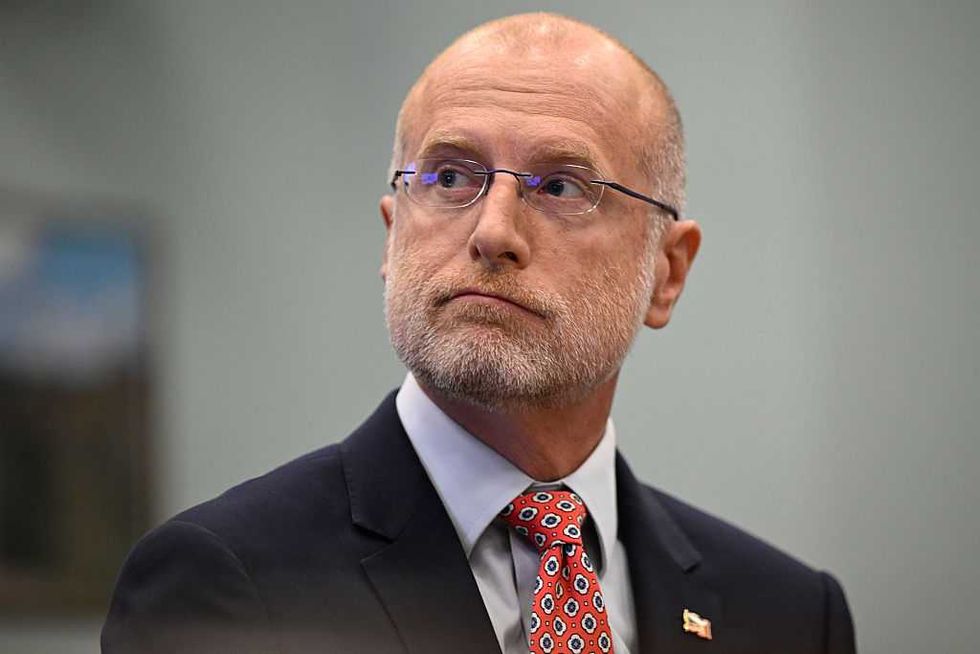 FCC Chairman Brendan Carr. Photo by John McDonnell/Getty Images
While AT&T claims it has ditched DEI for good, it still hosts a “Culture and Inclusion” page on its website that features a quote from the company’s vice president of culture and inclusion, Michelle Jordan.
According to Jordan’s LinkedIn page, she previously worked as AT&T’s “Chief Diversity Officer” but left the role in February 2025, approximately a month after President Donald Trump issued an executive order to end DEI. In that position, which she held for roughly three years, she led the company’s “Diversity, Equity, and Inclusion efforts across the business, expanding equitable opportunities for our employees and the communities we serve, as part of how we generate equality for all.”
In November 2024, Jordan reportedly took on another role within AT&T as the vice president of culture and inclusion. In her current position, Jordan “leads initiatives that cultivate an inclusive workplace culture, ensuring all perspectives are valued and integrated into every aspect of the organization,” she writes.
“By championing programs that promote fairness and belonging, Michelle fosters an environment where innovation thrives, driving both employee engagement and business growth,” her LinkedIn reads.
 Photo by Smith Collection/Gado/Getty Images
AT&T’s website also boasts that it is still committed to fostering an “inclusive culture” through its “Supplier Inclusivity program.”
“AT&T’s Supplier Inclusivity philosophy centers around our culture and values. We believe in the importance of advocacy and inclusion of our many suppliers in every aspect of AT&T’s ecosystem,” reads a quote from the company’s assistant vice president of supplier inclusivity and sustainability, Alexis Dennard.
Dennard’s LinkedIn states that in her role, she focuses on “empower[ing] minority-, women-, disabled, and veteran-owned businesses in the U.S. and worldwide.” Dennard reportedly has over 20 years of experience at AT&T and previously oversaw an employee newsletter that provided updates on “new initiatives in diversity and inclusion.”
AT&T and the FCC did not respond to a request for comment.
Like Blaze News? Bypass the censors, sign up for our newsletters, and get stories like this direct to your inbox. Sign up here!
The campus left’s diversity scam exposed in 30 seconds flat
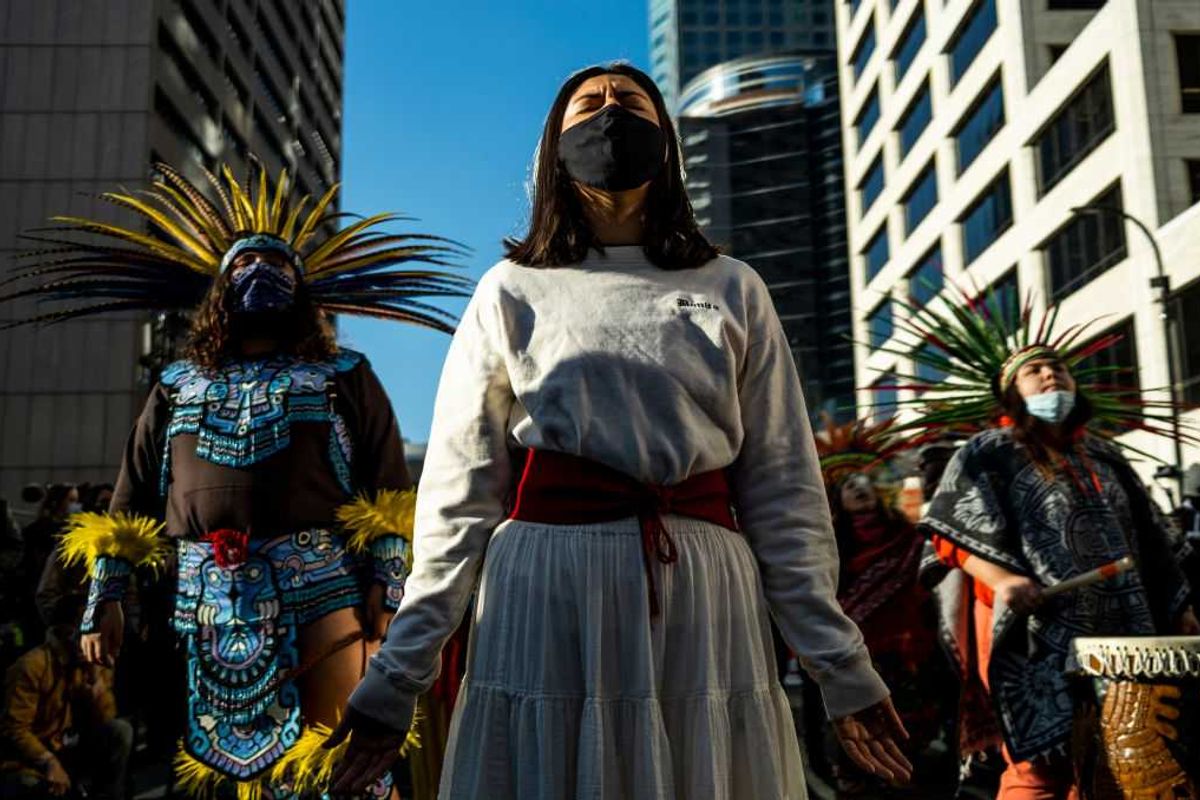
Anyone who attends a university event, browses a college website, or strolls through a city park has likely heard a Native American land acknowledgment. These statements now function as the incense of the modern academy — burned at the start of a ceremony, meant to signal moral clarity, and producing the intellectual equivalent of secondhand smoke.
Arizona State University, where I teach philosophy, posts these statements on the webpages of the Sandra Day O’Connor College of Law and the Hayden Library. The library even affirms that “we are on Akimel O’odham land, and that always needs to be at the forefront of our thinking.”
Pluralism, the real kind, permits disagreement and debate. What we have now resembles stage-managed pluralism: You read the script you are handed, or you stay quiet.
The implication is clear: U.S. sovereignty becomes an open question. That is the point. These acknowledgments aim to “problematize” the legitimacy of the United States, a central goal of the academic decolonization movement.
For six years, ASU’s New College has required faculty to listen to one at the start of every meeting.
A harmless ritual? A gesture of respect? A symbolic nod?
I wondered the same — until I conducted a small experiment.
A revealing reaction
At last week’s New College faculty meeting — a meeting of state employees conducting public business — I asked a straightforward question.
“Given our commitment to diversity, may I also read a land acknowledgment of my own before each meeting?”
My acknowledgment was not provocative. It thanked the generations of settlers, farmers, builders, capitalists, and families who transformed the Salt River Valley into a place capable of supporting a world-class university. It affirmed that we serve all students and help them prosper.
I made a motion.
Discussion required only a second. Not approval. Not endorsement. Only a willingness to debate the proposal.
Not one person seconded it.
I did not ask colleagues to agree with my acknowledgment. I asked only to read it. In fact, I would gladly see everyone read their own. Let every faculty member present a statement, a grievance, or a cause they feel compelled to highlight. Why limit the practice to one perspective?
Yet the official record now shows that not one faculty member at ASU’s New College would second a motion to expand diversity.
Appearance vs. reality
The episode highlights a distinction philosophy once taught clearly — the distinction between appearance and reality. Faculty preach diversity in language that collapses into ideological uniformity. Many cannot describe a competing view without reducing it to a script: oppressed versus oppressor. Anyone who falls outside their categories becomes a threat.
My request challenged the boundaries of that framework. To the decolonization mindset, my acknowledgment represents the wrong category — heritage tied to “settler guilt” or “oppressor identity.” The ideology cannot imagine anything beyond that narrow frame.
Pluralism, the real kind, permits disagreement and debate. What we have now resembles stage-managed pluralism: You read the script you are handed, or you stay quiet.
The academic left rose to influence by praising inclusivity and toleration. Once in power, it exempts itself from those principles because tolerance, in its view, cannot extend to anyone labeled “bigot” and inclusion cannot extend to anyone lumped into the category “fascist.” Only the Marxist dialectic survives the screening.
The ideology behind the script
Some readers may think these acknowledgments amount to harmless gestures. They are not. They originate in decolonization theory, rooted in works like Eve Tuck and K. Wayne Yang’s “Decolonization Is Not a Metaphor,” which defines decolonization as the overturning of settler society. Practitioners describe their own project as Marxist; that is the label they choose.
Land acknowledgments do not describe history; they advance ideology. They treat land as permanently tied to racial or ethnic groups, a “blood and soil” logic the same theorists claim to reject. They question private property, Western legal concepts, and American national legitimacy.
Seen through that lens, the reaction to my request becomes predictable. The ideological system divides the world into oppressed and oppressor. My acknowledgment, in their view, inserts the “oppressor” and threatens the narrative.
Hypocrisy becomes impossible to miss. Faculty who go along to avoid conflict now face an uncomfortable truth: The ideology they tolerate openly rejects the pluralism a university claims to defend.
RELATED: Antifa burns, the media spin, and truth takes the hits
 Photo by: Spencer Jones/GHI/UCG/Universal Images Group via Getty Images
Academic reasoning is out
One hopes university professors — presumably trained to evaluate arguments — could step outside ideological commitments long enough to examine their assumptions. The job once required that. But critical theory, as taught in many departments, closes off that possibility. It demands that every fact, dispute, or policy fit into a predetermined narrative of oppression.
Herbert Marcuse, in “One-Dimensional Man,” argued that intellectuals must not describe reality as it is but reshape society toward liberation from capitalism and Christian tradition. That approach leaves little room for honest debate.
The real remedy
Critical theory teaches that man is a victim of systems and structures. Scripture teaches that man is a sinner in need of redemption. Marxist theorists believe society must be remade. Christians believe the heart must be reborn.
Jesus told Nicodemus, “You must be born again” — a direct claim about the human condition. Our deepest problem is not a defective system but a corrupted heart. No bureaucratic revolution can fix that. Ideologies that promise liberation from greed or power often create something worse when handed authority.
The human dilemma runs deeper than political structures, and the solution rises higher than any academic program. Here is the acknowledgment I would like to hear at our university: “For God so loved the world, that he gave his only Son, that whoever believes in him should not perish but have eternal life.”





