

Category: Drivers
Why the FBI ditched Chevy Suburbans for BMW SUVs
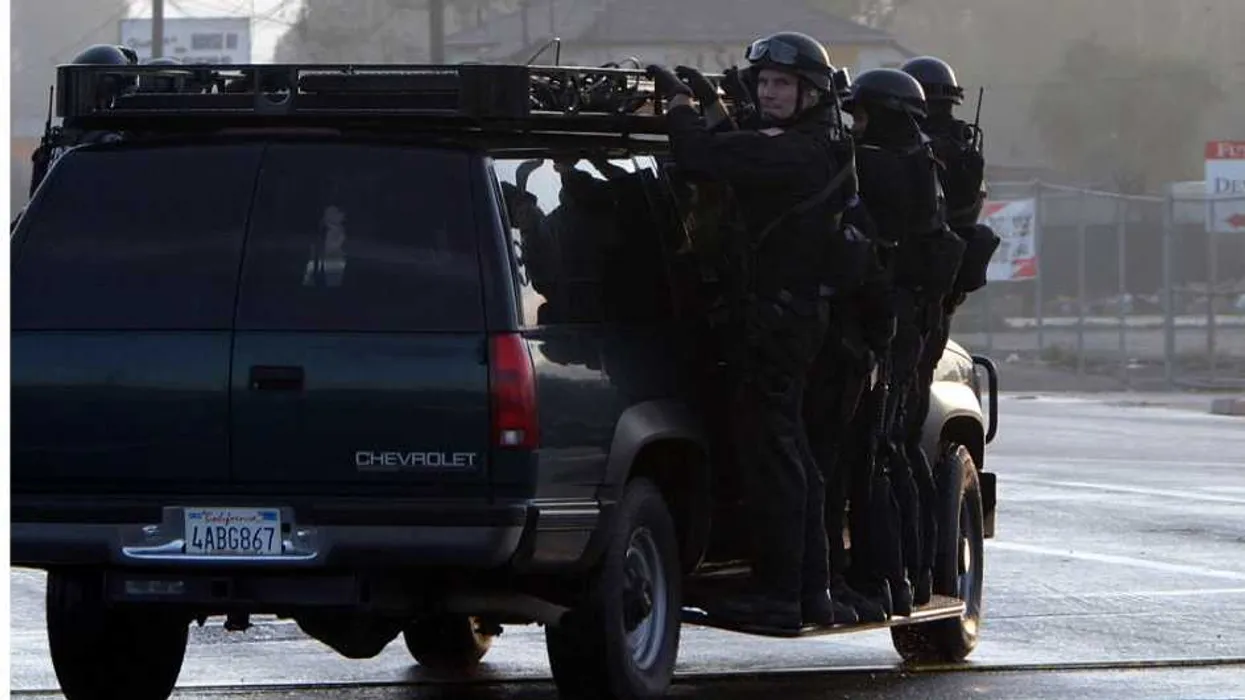
The FBI is abandoning General Motors.
For generations, the black Chevrolet Suburban has been a rolling symbol of federal authority. Its size, shape, and presence are instantly recognizable — whether pulling up to a courthouse, idling outside a hotel, or leading a motorcade through city streets. That familiarity, however, is precisely why the FBI’s recent decision to move away from armored Suburbans in favor of BMW X5 Protection SUVs deserves a closer look. Despite the political noise surrounding the change, the rationale behind it is not ideological. It is practical.
While BMW is a German brand, all BMW X-series SUVs — including the X5 — are manufactured at the company’s Spartanburg, South Carolina, plant.
Under FBI Director Kash Patel, the bureau has reportedly ordered a fleet of armored BMW X5 Protection SUVs to replace the Chevrolet and GMC models traditionally used for executive transport. The reasons cited by the FBI are straightforward: The BMWs cost significantly less, attract less attention, and are built in the United States. Taken together, those factors point to a procurement decision driven by economics and operational efficiency — not symbolism or brand preference.
Frugal fleet
According to FBI spokesperson Ben Williamson, vehicle fleet decisions are routinely reviewed based on security needs, usage patterns, and budget considerations. In this case, the BMW X5 Protection was selected after comparing costs and capabilities with other armored options. Williamson said the move could save taxpayers millions of dollars by choosing a less expensive vehicle while still meeting the bureau’s protection requirements.
The cost differences are hard to ignore. Government-spec Chevrolet Suburban Shield vehicles produced by GM Defense have been reported to cost anywhere from roughly $600,000 to as much as $3.6 million, depending on armor level, drivetrain configuration, and mission-specific equipment. Even conservative estimates put a new armored Suburban at around $480,000 per vehicle. By contrast, the BMW X5 Protection VR6 is generally priced between $200,000 and $300,000 — less than half the cost of many armored Chevrolet and GMC alternatives.
When multiplied across an entire fleet, those numbers add up quickly. Savings of $200,000 or more per vehicle matter for an agency under constant pressure to justify spending. From a taxpayer perspective, the question is simple: If the required level of ballistic protection can be achieved for significantly less money, why wouldn’t the FBI pursue that option?
The BMW X5 Protection VR6 is not a standard luxury SUV fitted with aftermarket armor. It is engineered from the factory with integrated ballistic protection designed to meet VR6 standards, including resistance to high-powered rifle fire and explosive threats. These vehicles are already in service with governments and diplomatic protection units around the world, including the U.S. State Department, which uses armored BMWs to protect American diplomats in high-risk regions. This is a proven platform, not an experiment.
Stealth mode
Cost, however, is only part of the story. The FBI has also indicated that the BMWs are less conspicuous than traditional government vehicles. That claim may seem counterintuitive until one considers how closely the Suburban is associated with federal authority. A line of black Suburbans with dark glass immediately signals government transport. Their presence often draws attention.
The BMW X5, even in armored form, blends more easily into traffic — particularly in urban and suburban areas where luxury SUVs are common. It does not carry the same visual shorthand of authority. From a security standpoint, reducing predictability and visibility can be an advantage. A vehicle that does not immediately announce its purpose may attract less attention and lower risk in certain situations.
Critics argue that the publicity surrounding the purchase undermines any claim of stealth, and that may be true in the short term. Over time, however, the novelty fades. What remains is a vehicle that looks like countless others on the road, rather than one that announces its role at a glance.
RELATED: A federal ‘kill switch’ for your car is coming — and neither Democrats nor Republicans will stop it
 United Archives/Andrew Harnik/Getty Images
American-made
Another point often lost in the debate is where these vehicles are built. While BMW is a German brand, all BMW X-series SUVs — including the X5 — are manufactured at the company’s Spartanburg, South Carolina, plant. It is BMW’s largest production facility worldwide and one of the most significant automotive exporters in the United States by value. The armored X5s used by the FBI are built by American workers on American soil.
That reality complicates claims that the FBI is abandoning American manufacturing. Both the Chevrolet Suburban and the BMW X5 are products of U.S. factories, assembled by U.S. labor, and supported by domestic supply chains. The distinction lies not in where the vehicles are built, but in how much they cost and how effectively they meet the agency’s needs.
Government fleets have always been guided by pragmatism. Federal agencies regularly reassess equipment based on performance, cost, and evolving threats. The FBI’s decision fits squarely within that tradition.
The emotional attachment to the Suburban is understandable. Introduced in 1935 as the Carryall Suburban, it is the longest-running nameplate in American automotive history and has served military, law enforcement, and civilian roles for nearly a century. But symbols come at a price, and in this case that price appears to have climbed sharply.
Time will tell
Imagining a single Suburban costing as much as $3.6 million is enough to give any budget analyst pause. Even at the lower end of reported figures, the cost difference between an armored Suburban and an armored BMW X5 is substantial. In an era of heightened scrutiny over federal spending, paying more than double for a vehicle that may also be more conspicuous is difficult to justify.
That does not mean the BMW choice is without trade-offs. Long-term maintenance costs, parts availability, and service complexity will ultimately determine whether the savings persist over the full life cycle of the vehicles. German engineering can be expensive to maintain, but heavily armored Suburbans are also highly specialized machines with their own costly upkeep requirements. The true comparison will emerge over time.
What is clear now is that the decision is rooted in cost control and operational considerations — not political signaling. The FBI did not choose BMW to make a statement. It chose BMW because the vehicles were cheaper, less visually obvious, and built domestically.
For taxpayers, the takeaway is straightforward. If a federal agency can meet its security needs while spending significantly less money, that is not a controversy. It is what responsible stewardship is supposed to look like. The badge on the grille may spark debate, but the math behind the decision tells a far more practical story.
Massachusetts on track to set mileage limits for drivers
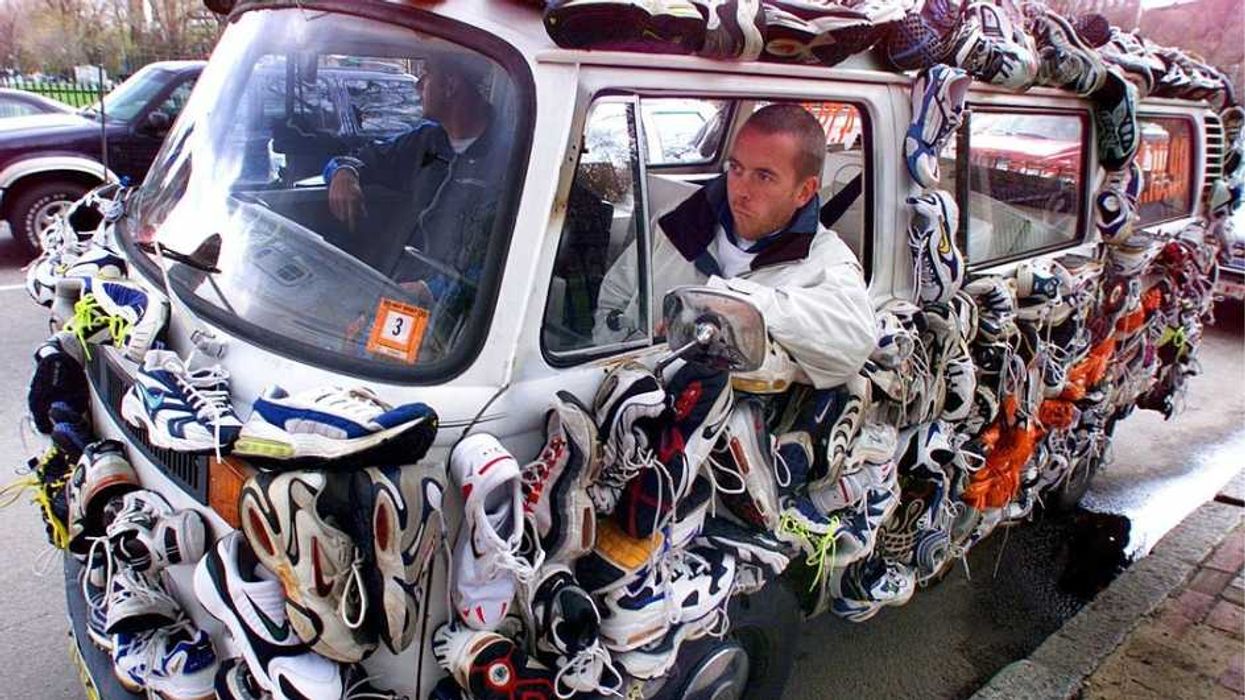
A bill advancing through the Massachusetts Senate would make reducing how much people drive an explicit goal of state transportation policy. It is called the Freedom to Move Act.
The bill, SB 2246, does not impose mileage caps on individual drivers. There is no odometer check, no per-driver limit, and no new fines or taxes written into the legislation. Instead it directs the state to set targets for reducing total vehicle miles traveled statewide — targets that would be incorporated into transportation planning, infrastructure investment, and long-term emissions policy.
When reducing driving becomes a formal state objective, personal mobility inevitably becomes something to be managed.
Transportation is the largest source of greenhouse gas emissions in Massachusetts, as it is in many states. From that perspective, lawmakers argue the bill simply aligns transportation policy with existing climate mandates. The state already has legally binding emissions reduction goals, and supporters say those goals cannot be met without addressing how much people drive. SB 2246, they argue, is about planning — not punishment — and about expanding alternatives rather than restricting choices.
Planning … or punishment?
The bill also establishes advisory councils and requires state agencies, including the Massachusetts Department of Transportation, to factor VMT reduction into project development and funding decisions. In theory, this means greater emphasis on public transit, transit-oriented development, walking and biking infrastructure, and land-use policies designed to shorten commutes. Supporters emphasize that the legislation does not ban cars, restrict ownership, or mandate lifestyle changes. It simply provides a framework for offering residents more options.
The practical implications, however, deserve closer scrutiny — especially outside the state’s urban core. In greater Boston, where transit access is relatively dense, reducing car trips may be feasible for some commuters. In suburban and rural areas, the reality is very different. Many residents drive long distances to work because there are no viable alternatives. Families juggle school, child care, medical appointments, sports, and jobs across multiple towns. Small businesses rely on vehicles for deliveries, service calls, and daily operations. For these drivers, “driving less” is not a preference — it’s a constraint imposed by geography.
Future restrictions
Critics also worry that while SB 2246 does not cap individual mileage today, it lays the groundwork for future restrictions. Once statewide VMT reduction targets are established, pressure will mount to meet them. That pressure could influence everything from road funding and parking availability to congestion pricing, zoning decisions, and the collection of driving data. Even without explicit mandates, policy signals matter. When reducing driving becomes a formal state objective, personal mobility inevitably becomes something to be managed.
There is also the issue of trust and execution. Massachusetts has struggled for years to maintain and modernize its public transportation system. The MBTA’s well-documented reliability problems have eroded confidence among riders and taxpayers alike. Promising expanded transit options while existing systems remain fragile leaves many residents skeptical that alternatives to driving will arrive quickly — or equitably.
RELATED: EPA to California: Don’t mess with America’s trucks
 Bob Riha, Jr./Getty Images
National trend
From a broader policy standpoint, SB 2246 reflects a national trend. States and cities across the country are experimenting with VMT reduction as a climate strategy, encouraged by federal guidance and funding priorities. The premise is that cleaner vehicles alone are not enough and that total driving must decline to meet emissions targets. Whether that assumption holds as vehicle technology evolves — including hybrids, plug-in hybrids, and increasingly efficient internal combustion engines — remains an open question.
Supporters argue that thoughtful planning now can prevent more disruptive measures later. By gradually reshaping transportation and development patterns, they believe emissions can be reduced without dramatic lifestyle changes. Opponents counter that history suggests incremental planning often leads to more intrusive policies — especially when initial targets prove difficult to meet.
What makes SB 2246 significant is not what it does immediately, but what it signals about the future of transportation policy. It reframes driving not simply as a personal choice or economic necessity, but as a behavior the state has an interest in reducing.
As the bill moves to the Senate Ways and Means Committee, lawmakers will have to weigh climate goals against economic realities, regional disparities, and personal freedom.
Massachusetts residents should pay close attention. SB 2246 may not tell you how many miles you can drive today — but it helps define who gets to decide how transportation works tomorrow.





