

Category: Elon musk
Elon Musk’s Terafab is coming, and you’re not ready
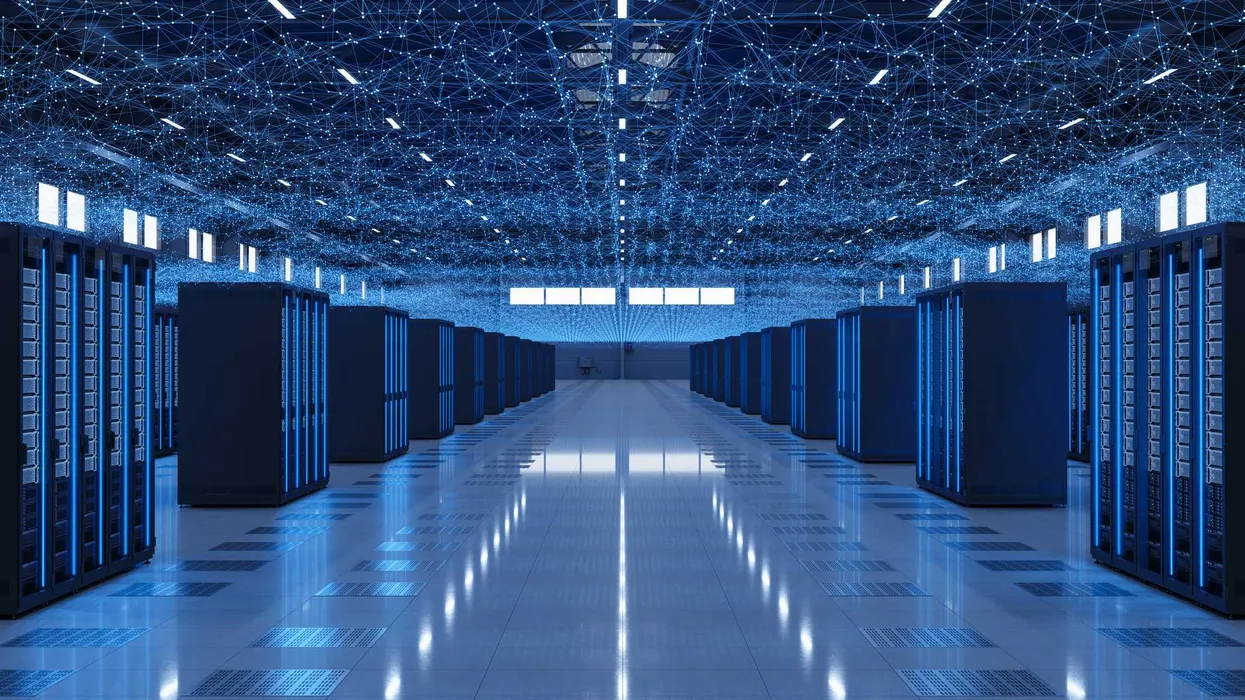
The announcement of Terafab was made at a decommissioned power plant, reflecting Elon Musk’s understanding of stagecraft: The ruined infrastructure of one era makes a convenient altar for the next. On March 21 and 22, 2026, at the Seaholm Power Plant in Austin, Musk presented Terafab. It is either the most ambitious semiconductor manufacturing project in history or a very expensive project that may not come to be.
Terafab is a plan to build vertically integrated chip-manufacturing capacity in Austin, combining under one roof the design, fabrication, packaging, and testing of advanced semiconductors. Tesla, SpaceX, and xAI are the collaborating entities. The announced investment figure is $20 billion. The stated long-run target is one terawatt of compute capacity per year, a number that converts the language of performance into the language of power.
Terafab is a cultural event as much as a technical announcement.
Measuring compute in watts means that the limiting factor is energy throughput. The International Energy Agency has described data centers as a fast-growing fraction of global electricity demand; by 2030, in its base case, that demand could roughly double.
The technical core of Terafab is its most defensible part. The pitch is about iteration speed: If you can design a chip, fabricate it, package it, test it, and revise the mask, all inside one building, without shipping components between specialized facilities in different countries, you can improve faster than anyone who does not. In conventional semiconductor manufacturing, these functions are geographically and organizationally scattered. A mask set travels; a wafer ships; a packaged part crosses an ocean. Each journey is a delay, and delay is the enemy of the feedback loop. Terafab is a wager that learning velocity beats static node leadership.
A factory within a factory
Advanced fabs are among the most expensive and complex structures human beings have ever built, typically $10 billion and several years for a single facility, dependent on supply chains for equipment that cannot be wished into existence by ambition or capital alone. Extreme ultraviolet lithography machines, to name one critical dependency, cost hundreds of millions of dollars apiece and are manufactured by a single Dutch company. The closed loop is a compelling engineering idea. The project will involve equipment lead times, utility provisioning, the yielding of learning curves, and the peculiar physics of building things in the real world.
There is a second Terafab nested inside the first. The announcement includes chips, named D3, designed for space environments, paired with a vision of solar-powered orbital compute satellites, initially around 100 kilowatts and scaling toward the megawatt range. Terrestrial compute is constrained by land, power, cooling, and local political opposition to enormous data centers. Space has sunlight and no neighbors to complain about the noise.
RELATED: Bernie Sanders and AOC propose law to shut down future AI data centers
 Photo (left): Andrew Harnik/Getty Images; Photo (right): Alex Kraus/Bloomberg/Getty Images
Of course, space also has no air. In vacuum, heat cannot leave a system by convection, only by radiation, which requires very large radiator surfaces at high power levels. The International Space Station’s thermal control system requires radiators the size of tennis courts to reject the heat generated by its systems. Radiation poses its own complications: The energetic particles of the space environment induce bit flips and long-term degradation in electronics not specifically hardened against them. The orbital vision is not impossible. It is simply a different problem than the earthbound one, even when presented in the same breath, as though the same momentum carries the project from Austin to low Earth orbit without friction.
The future needs power
Terafab’s “everything under one roof” approach has an ancestor in the great vertical integration projects of industrial capitalism, such as Ford’s River Rouge complex, which turned raw materials into finished automobiles inside a single, vast geography, its own power plant humming at the center.
The global semiconductor supply chain is highly concentrated: Roughly 92% of the world’s most advanced chip manufacturing capacity sits in Taiwan. To build end-to-end domestic capability is simultaneously a resilience project and a power project, a bid to internalize a strategic resource inside one corporate constellation rather than depend on the broader market of specialized suppliers.
Terafab is a cultural event as much as a technical announcement, and its cultural work is to naturalize a particular diagnosis: that intelligence is infrastructure, infrastructure is energy, and energy is the horizon of meaning for civilizational progress. Whether or not the fab gets built on schedule, whether or not the orbital satellites ever achieve megawatt-scale compute, the frame has been installed. The factory is where the future lives, and the future needs power.





