

Category: Emissions
Massachusetts on track to set mileage limits for drivers
A bill advancing through the Massachusetts Senate would make reducing how much people drive an explicit goal of state transportation policy. It is called the Freedom to Move Act.
The bill, SB 2246, does not impose mileage caps on individual drivers. There is no odometer check, no per-driver limit, and no new fines or taxes written into the legislation. Instead it directs the state to set targets for reducing total vehicle miles traveled statewide — targets that would be incorporated into transportation planning, infrastructure investment, and long-term emissions policy.
When reducing driving becomes a formal state objective, personal mobility inevitably becomes something to be managed.
Transportation is the largest source of greenhouse gas emissions in Massachusetts, as it is in many states. From that perspective, lawmakers argue the bill simply aligns transportation policy with existing climate mandates. The state already has legally binding emissions reduction goals, and supporters say those goals cannot be met without addressing how much people drive. SB 2246, they argue, is about planning — not punishment — and about expanding alternatives rather than restricting choices.
Planning … or punishment?
The bill also establishes advisory councils and requires state agencies, including the Massachusetts Department of Transportation, to factor VMT reduction into project development and funding decisions. In theory, this means greater emphasis on public transit, transit-oriented development, walking and biking infrastructure, and land-use policies designed to shorten commutes. Supporters emphasize that the legislation does not ban cars, restrict ownership, or mandate lifestyle changes. It simply provides a framework for offering residents more options.
The practical implications, however, deserve closer scrutiny — especially outside the state’s urban core. In greater Boston, where transit access is relatively dense, reducing car trips may be feasible for some commuters. In suburban and rural areas, the reality is very different. Many residents drive long distances to work because there are no viable alternatives. Families juggle school, child care, medical appointments, sports, and jobs across multiple towns. Small businesses rely on vehicles for deliveries, service calls, and daily operations. For these drivers, “driving less” is not a preference — it’s a constraint imposed by geography.
Future restrictions
Critics also worry that while SB 2246 does not cap individual mileage today, it lays the groundwork for future restrictions. Once statewide VMT reduction targets are established, pressure will mount to meet them. That pressure could influence everything from road funding and parking availability to congestion pricing, zoning decisions, and the collection of driving data. Even without explicit mandates, policy signals matter. When reducing driving becomes a formal state objective, personal mobility inevitably becomes something to be managed.
There is also the issue of trust and execution. Massachusetts has struggled for years to maintain and modernize its public transportation system. The MBTA’s well-documented reliability problems have eroded confidence among riders and taxpayers alike. Promising expanded transit options while existing systems remain fragile leaves many residents skeptical that alternatives to driving will arrive quickly — or equitably.
RELATED: EPA to California: Don’t mess with America’s trucks
 Bob Riha, Jr./Getty Images
National trend
From a broader policy standpoint, SB 2246 reflects a national trend. States and cities across the country are experimenting with VMT reduction as a climate strategy, encouraged by federal guidance and funding priorities. The premise is that cleaner vehicles alone are not enough and that total driving must decline to meet emissions targets. Whether that assumption holds as vehicle technology evolves — including hybrids, plug-in hybrids, and increasingly efficient internal combustion engines — remains an open question.
Supporters argue that thoughtful planning now can prevent more disruptive measures later. By gradually reshaping transportation and development patterns, they believe emissions can be reduced without dramatic lifestyle changes. Opponents counter that history suggests incremental planning often leads to more intrusive policies — especially when initial targets prove difficult to meet.
What makes SB 2246 significant is not what it does immediately, but what it signals about the future of transportation policy. It reframes driving not simply as a personal choice or economic necessity, but as a behavior the state has an interest in reducing.
As the bill moves to the Senate Ways and Means Committee, lawmakers will have to weigh climate goals against economic realities, regional disparities, and personal freedom.
Massachusetts residents should pay close attention. SB 2246 may not tell you how many miles you can drive today — but it helps define who gets to decide how transportation works tomorrow.
Diesel under attack: EPA targets engines that power America
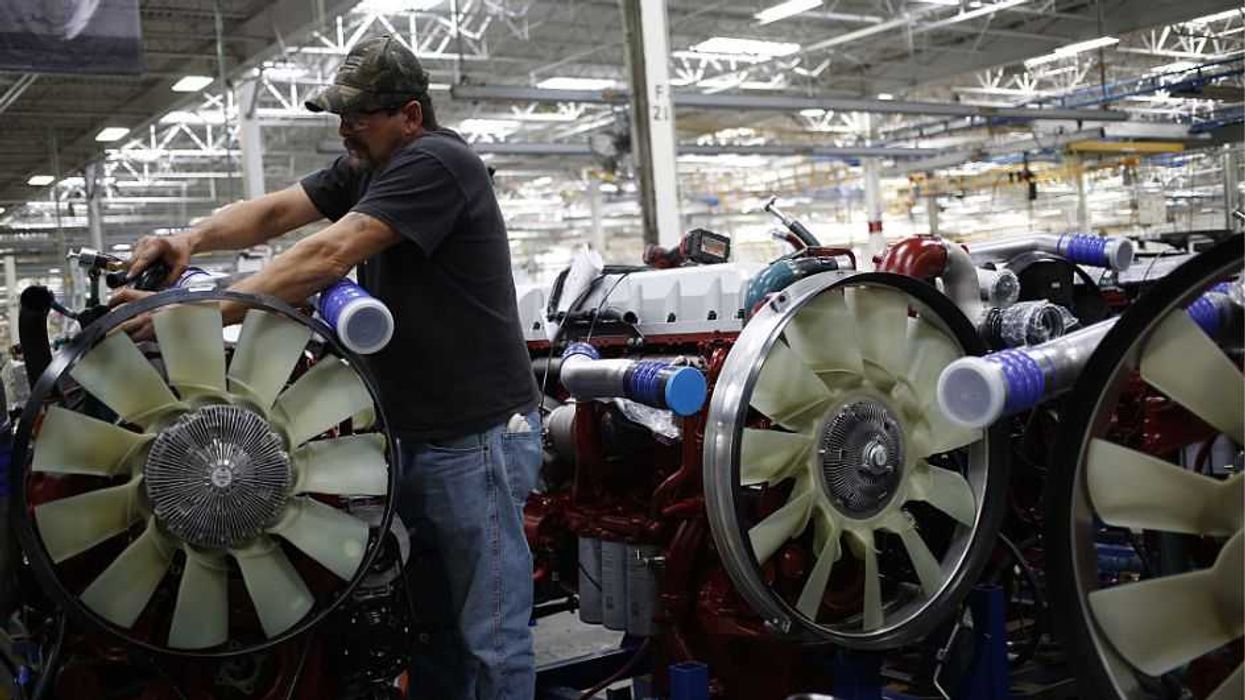
America runs on diesel. From freight haulers and farm equipment to fire trucks and snowplows, diesel engines are the torque behind our economy.
Yet the same engines that built the nation’s backbone are now in Washington’s crosshairs — strangled by layers of federal regulation that threaten the people who keep America moving.
Fire departments, ambulance services, and municipal snowplows all run on diesel. If their vehicles can’t move, lives are at risk.
The Environmental Protection Agency insists it’s cleaning the air. But for those who live and work beyond the Beltway, these mandates aren’t saving the planet — they’re shutting down livelihoods.
Cost of clean
Since 2010, every diesel engine sold in the U.S. has come fitted with diesel particulate filters and selective catalytic reduction systems — components meant to capture soot and neutralize nitrogen oxides. In theory, they’re good for the environment. In practice, they’re crippling the very trucks that keep shelves stocked and first responders rolling.
DPFs clog, SCR units freeze, and when that happens, engines “derate” into limp mode — losing power until the system is fixed. A single failure can leave a truck stranded for days and cost upwards of $5,000 to repair. For independent owner-operators, who haul 70% of the nation’s freight, that can mean the difference between survival and bankruptcy.
Even worse, under the Clean Air Act, simply repairing or modifying those failing systems can make a mechanic a federal felon.
Tamper tantrum
Meet Troy Lake, a 65-year-old diesel expert from Cheyenne, Wyoming. For decades, Lake kept his community’s fleets running — farm trucks, snowplows, ambulances, and school buses. But when emissions systems began failing in subzero temperatures, Lake found himself forced to choose between obeying Washington’s regulations or keeping critical vehicles on the road.
His fix? Remove the faulty components and reprogram the engine to restore performance — a commonsense solution that kept essential services moving. But the EPA saw it differently. Under federal law, “tampering” with emissions controls carries up to five years in prison and $250,000 in fines per vehicle.
In June 2024, Lake pleaded guilty to one count of emissions tampering. By December, a federal judge sentenced him to a year in prison. His shop was fined $52,500 and shut down. Ironically, during his sentence, Lake worked on the prison’s own diesel equipment — the same skills that, outside those walls, had made him a criminal.
Now home but barred from his trade, Lake carries a felony record that cost him his business, his rights, and his reputation — all for keeping his community’s engines running.
Endless repair cycles
No one disputes that diesel exhaust can harm air quality. The EPA’s emission rules dramatically cut pollution over the past decade. But these results have come at an unsustainable cost to the people who depend on diesel most.
According to the American Trucking Associations, emissions-related repairs account for roughly 13% of total maintenance costs for Class 8 trucks. Each incident costs an average of $1,500 and countless hours of downtime. Multiply that across millions of trucks, and the burden on small businesses and rural economies is staggering.
Farmers, truckers, and local governments can’t afford the endless repair cycles. For them, Washington’s mandates translate to fewer working trucks, higher consumer costs, and dangerous response delays in emergencies.
Senator Lummis fights back
Wyoming Senator Cynthia Lummis (R) sees what’s happening. She’s watched the federal government criminalize working Americans while ignoring the real-world consequences of its rules. In October 2025, she introduced the Diesel Truck Liberation Act — legislation designed to restore sanity and balance.
The bill would:
- Remove mandatory federal requirements for DPFs, SCRs, and onboard diagnostics;
- Limit the EPA’s enforcement powers over diesel tuning and emissions deletes;
- Protect mechanics and operators from prosecution for performing practical repairs; and
- Provide retroactive relief — vacating sentences, clearing records, and refunding fines for past convictions.
A call for flexibility
Environmental advocates warn that such legislation could reverse decades of progress under the Clean Air Act.
That’s a legitimate concern. Clean air matters. But it’s also true that today’s engine tuning and filtration technologies are far more advanced than those available when these mandates were written. Recent research shows that advanced, model-based engine controls and “virtual sensors” can significantly cut nitrogen oxide and particulate emissions and help engines stay within strict tailpipe limits while reducing dependence on extra physical sensors and minimizing urea and fuel penalties.
Even current EPA leadership has acknowledged the need for flexibility and modernization. The question isn’t whether we should protect the environment — it’s whether rigid, outdated enforcement is the best way to do it.
And the impact doesn’t stop at the loading dock. Fire departments, ambulance services, and municipal snowplows all run on diesel. If their vehicles can’t move, lives are at risk. A snowstorm doesn’t care about EPA compliance, and neither does a heart attack.
Who makes the rules?
Opponents of the Diesel Truck Liberation Act argue that removing emissions hardware would increase pollution, disproportionately harming urban and low-income communities. Supporters counter that Washington’s policies have already created economic inequality by crushing rural economies and small operators.
The divide isn’t really about clean air — it’s about who gets to make the rules. Should unelected bureaucrats in D.C. dictate how a farmer in Wyoming runs his truck? Or should local communities have the flexibility to balance environmental goals with economic reality?
 Image via @MusicScarf/X (screenshot)/Photographer: Emily Elconin/Bloomberg via Getty Images
Common sense prevails
The Diesel Truck Liberation Act doesn’t aim to destroy the Clean Air Act. It aims to reform it. It recognizes that environmental protection must work hand in hand with reliability, safety, and economic survival.
For people like Troy Lake, it’s about justice — not just for one man, but for thousands of mechanics and operators who’ve been punished for solving real problems in real America.
And there’s already a hopeful sign: President Trump recently issued a full pardon for Lake, acknowledging that enforcing broken regulations against hardworking Americans is not justice — it’s overreach.
The next step is whether Congress will follow through. The bill currently sits in the Senate Environment Committee, with hearings expected later this year. If it passes, it could set a precedent for rethinking how environmental policy is enforced — and how to protect the people who keep America running.
America’s diesel fleet isn’t the enemy. It’s the engine that powers our nation — from coast to coast, farm to factory, and every highway in between. Reasonable environmental goals are achievable, but not through criminalizing those who fix the equipment that keeps this country alive.
The question facing lawmakers is simple: Will they choose common sense — or continue punishing the very people who make modern life possible?





