Category: Ev
The great Chinese EV hype: What the media isn’t telling you
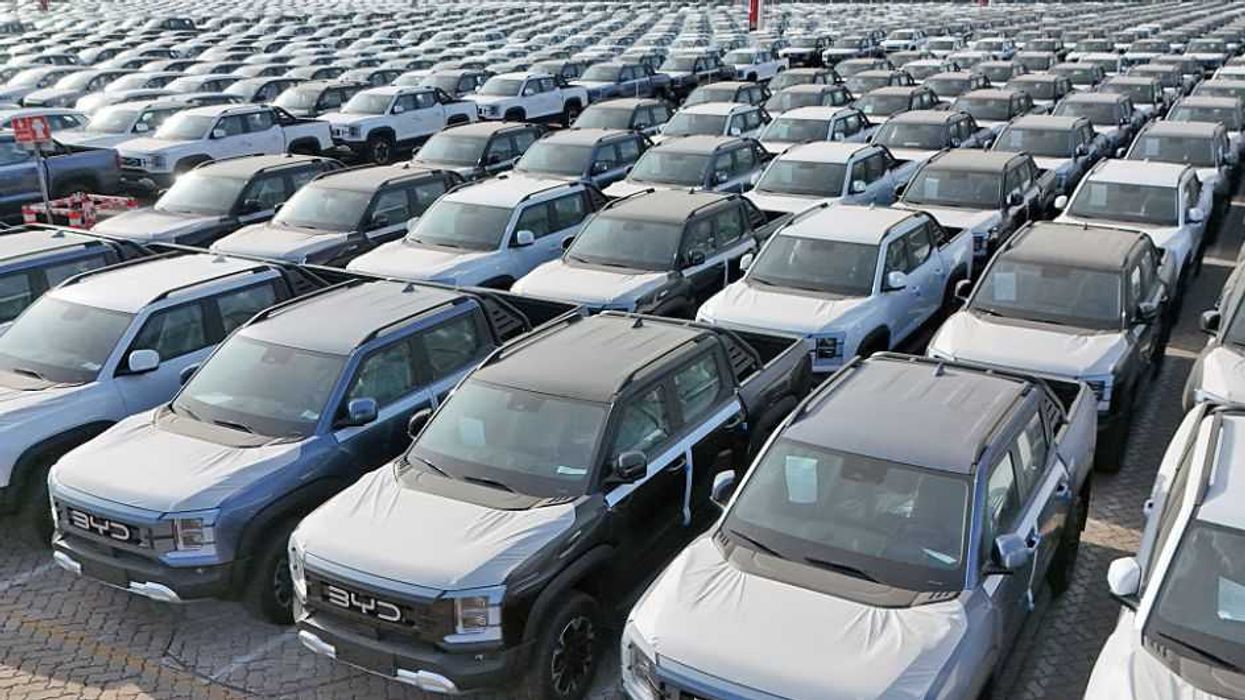
For the past few years, a familiar narrative has taken hold in American automotive media: Chinese electric vehicles are about to reshape the global car market.
Reviewers highlight low prices, sleek interiors, and giant screens. Commentators talk about a coming wave of imports that could challenge American, European, and Japanese automakers. Some even point to BYD surpassing Tesla in global EV sales as proof the shift is already happening.
Some reports suggest a large number of brands could disappear, merge, or restructure in the coming years.
That all sounds compelling — until you ask a simple question: What does this actually mean for a buyer?
Because right now, most of these vehicles aren’t even for sale in the United States.
Tariffs and regulations keep them out. So a lot of this hype is based on overseas test drives and showroom impressions — not real ownership in North America.
And where these vehicles are being used, the story isn’t nearly as clean.
What happens in real-world driving
Cold weather is one of the first reality checks.
Like all EVs, Chinese EVs lose range in low temperatures — sometimes up to 30% to 40% of their range.
That’s not a small difference. That’s the difference between getting home comfortably and watching your battery percentage like a hawk.
Shorter range means more charging. Charging takes longer in the cold. And more energy goes to heating the battery and cabin instead of driving the car.
If you live somewhere with real winters, this isn’t theoretical. It’s your daily routine.
The problem with ‘cool’ features
A lot of the appeal here is design — flush door handles, fully electronic entry, big minimalist interiors.
It looks great in photos; a different story in real life.
Electronic door handles and latches depend on power and sensors. Lose power after a crash, or deal with freezing conditions, and those systems can fail or become harder to use. There have already been reports of handles sticking or not working properly in cold weather.
That’s the trade-off with adding complexity to basic functions.
And when something breaks, it’s not a simple fix. It’s usually more expensive, more specialized, and more time-consuming.
Here’s the bigger issue
The structure of China’s EV industry may matter more than any individual feature.
Over the past decade, government incentives fueled a wave of EV startups. Dozens of companies jumped in. A lot of them are now competing on price, trying to survive.
And not all of them will.
Analysts at firms like Deutsche Bank and JPMorgan Chase expect consolidation. Some reports suggest a large number of brands could disappear, merge, or restructure in the coming years.
That’s not just industry chatter. That’s a real risk for buyers.
Because if the company behind your car disappears, what happens next?
Who provides software updates? Who supplies parts? Who services the vehicle?
That “great deal” doesn’t look so great if you can’t get support — or if resale value drops because buyers don’t trust the brand will still be around.
We’ve seen this before with failed automakers. The difference now is how dependent vehicles are on software.
RELATED: How government and Big Tech can wreck your new car’s resale value
 Denver Post/Getty Images
Price isn’t the whole story
There’s no question Chinese automakers have pushed prices down in some markets.
But price is only part of the equation.
Many of these companies are operating on thin margins while spending heavily to stay competitive. That creates pressure — and in some cases, instability.
Some brands will make it. Companies like BYD and Geely have the scale.
Others won’t.
And you don’t get to choose which one you bought after the shakeout happens.
What American buyers actually care about
Even if these vehicles eventually reach the U.S., they’ll be competing on more than price.
American buyers care about reliability, service access, resale value, and long-term support.
That’s not something you figure out in a quick test drive or a YouTube review.
That’s built over time — through dealer networks, parts availability, and how a company stands behind its product.
And that’s where newer players still have something to prove.
Don’t buy the hype
Chinese EVs are real. Some are competitive. Some are impressive.
But the idea that they’re about to flood the U.S. market and take over leaves out a lot.
They face trade barriers, infrastructure challenges, and a major shakeout at home.
For buyers, the takeaway is simple: Don’t buy the hype — buy what actually works for your life.
Look at how the vehicle performs in real conditions. Look at who’s going to support it. Look at what it’s likely to be worth in a few years.
Because in the end, the question isn’t how a car looks in a headline, but how it holds up when you’re the one paying for it.