

Category: Ev mandate
Why Canada’s Chinese EV bet is a big mistake

Canada’s decision to slash tariffs on Chinese electric vehicles is being sold as a pragmatic trade adjustment. In reality, it looks more like a self-inflicted wound to the country’s auto industry, workforce, and long-term economic sovereignty.
Lower prices today may come at the cost of lost manufacturing tomorrow — along with vehicles that struggle with quality and cold-weather reliability in a country where winter is not a minor inconvenience but a defining reality.
A vehicle that looks competitive on paper may tell a very different story after several Canadian winters.
Under an agreement announced earlier this month, Canada will allow up to 49,000 Chinese EVs into the country each year at a tariff of just 6.1%, down from the 100% rate imposed in 2024.
Officials emphasize that this represents less than 3% of the domestic market. But auto markets are shaped at the margins. Even a relatively small influx of aggressively priced vehicles can disrupt pricing, undercut domestic producers, and discourage future investment.
Under pressure
Canada’s auto sector is deeply integrated with the United States, with parts, vehicles, and labor flowing across the border daily. That system has supported hundreds of thousands of well-paying jobs for decades. Introducing low-cost Chinese imports into that ecosystem does not simply add consumer choice; it destabilizes a supply chain already under pressure from regulatory mandates, rising costs, and declining market share.
That pressure is already visible. The combined market share of General Motors, Ford, and Stellantis in Canada has fallen from nearly 50% to roughly 36%. These companies are not just brands on a dealership lot. They are employers, investors, and anchors for entire communities. When their market position erodes, the consequences ripple outward through plant closures, canceled expansion plans, and lost supplier contracts.
Cold comfort
Supporters argue that Chinese EVs will make electric vehicles more affordable, accelerating adoption and helping Canada meet emissions targets. But affordability without durability is a hollow promise. Many Chinese EVs entering global markets have yet to prove themselves in extreme climates. Cold weather is notoriously hard on batteries, reducing range, slowing charging times, and increasing mechanical stress — conditions Canadian winters deliver in abundance.
Reports from colder regions already using Chinese EVs raise concerns about performance degradation, software issues, and inconsistent build quality. Battery thermal management systems that perform adequately in mild climates can struggle in deep cold. Door handles freeze, sensors fail, and range estimates become unreliable. These are not minor inconveniences when temperatures plunge and drivers depend on their vehicles for safety as much as transportation.
Quality concerns extend beyond climate performance. Chinese automakers have made rapid progress, but speed has often come at the expense of long-term durability testing. Western manufacturers spend years validating vehicles under extreme conditions precisely because failure carries real consequences. A vehicle that looks competitive on paper may tell a very different story after several Canadian winters.
Cheap creep
There is also the question of what happens to Canada’s manufacturing base as these imports gain a foothold. History offers a clear lesson. When markets are flooded with low-cost vehicles produced under different labor standards and supported by state-backed industrial policy, domestic production suffers. Plants close, jobs disappear, and skills erode — losses that are extraordinarily difficult to reverse.
Europe offers a cautionary example. In the rush to meet climate targets, policymakers opened the door to inexpensive Chinese vehicles, only to see domestic automakers squeezed between regulatory costs and subsidized foreign competition. The result has been declining investment, layoffs, and growing concern about long-term competitiveness. Canada risks repeating that mistake but without Europe’s scale or leverage.
 Tom Williams/CQ-Roll Call, Inc via Getty Image
Spy game
The geopolitical implications cannot be ignored. Modern EVs are data-collecting machines, equipped with cameras, sensors, GPS tracking, and constant connectivity. U.S. officials have repeatedly warned that Chinese-built vehicles pose national security risks. Whether or not those fears are fully realized, perception matters. The United States has already signaled that Chinese EVs will not be allowed across its border, even temporarily.
That leaves Canadian consumers in a difficult position. A vehicle purchased legally in Canada could become a barrier to travel, commerce, or even family visits. The idea that a car could determine whether a driver can cross the world’s longest undefended border should give policymakers pause. Instead the Carney government appears willing to accept that risk as collateral damage.
Realism over resentment
Some Canadians, frustrated by U.S. tariffs and rhetoric, may view this pivot toward China as an act of defiance. But trade policy driven by resentment rather than realism rarely ends well. Replacing dependence on the United States with dependence on China does not restore sovereignty; it simply shifts leverage from one superpower to another, often with fewer shared values and less transparency.
President Donald Trump has made his position clear. He is open to Chinese companies building vehicles in North America if they invest in domestic factories and employ domestic workers. What he opposes are imports that bypass production, undermine jobs, and introduce security risks. Canada’s deal does nothing to address those concerns. Instead it places Canadian workers and consumers squarely in the crossfire.
The promise of cheaper EVs may sound appealing in the short term, but the long-term costs are becoming harder to ignore. Lost manufacturing jobs, weakened supply chains, unresolved quality and cold-weather issues, and strained relations with Canada’s largest trading partner are not abstract risks. They are predictable outcomes.
Canada built its auto industry through integration, investment, and a commitment to quality. Undermining that foundation for a limited influx of low-cost imports is not a strategy. It is a gamble — and one Canadian workers, manufacturers, and drivers are likely to lose.
EPA to California: Don’t mess with America’s trucks

For decades, California has used its enormous market power to shape national vehicle policy, often pushing regulations far beyond its borders and into the daily lives of Americans who never voted for them. That long-running dynamic has now reached a critical moment.
The U.S. Environmental Protection Agency is moving to block California’s latest attempt to regulate heavy-duty trucks nationwide — a proposal first announced in 2025 but now entering a decisive phase of federal review.
California’s early emissions standards helped accelerate cleaner engines and better fuel systems. But leadership can turn into compulsion.
With final EPA action expected in 2026, the outcome will determine whether California can continue using its borders as a regulatory choke point for interstate trucking, or whether federal limits will finally be enforced.
Freight fright
At issue is California’s Heavy-Duty Inspection and Maintenance requirement, part of the state’s air-quality plan. The rule would apply not only to trucks registered in California, but to any heavy-duty vehicle operating within the state — including those registered elsewhere in the U.S. or even abroad. In practical terms, a truck hauling goods from Texas, Ohio, or Mexico could be forced to comply with California’s rules simply by crossing its borders.
The EPA has proposed disapproving that requirement, citing serious constitutional and statutory concerns.
This matters far beyond California. Heavy-duty trucks are the backbone of the American economy, moving food, fuel, medicine, building materials, and consumer goods across state lines every day.
Regulations that raise costs or restrict access for those vehicles ripple through supply chains and ultimately show up as higher prices at the checkout counter — including for online purchases. The EPA’s proposed action acknowledges that reality and draws a clear line between environmental policy and unlawful overreach.
Out of line
According to the agency, California’s proposal appears to violate the Commerce Clause of the U.S. Constitution, which prevents individual states from interfering with interstate trade. The Clean Air Act also requires state implementation plans to comply with federal law, and the EPA argues California’s approach fails that test. By attempting to regulate out-of-state and foreign-registered vehicles, California stepped into territory reserved for the federal government.
EPA Administrator Lee Zeldin has been blunt in explaining the agency’s position. California, he has argued, was never elected to govern the entire country, yet its regulatory ambitions — often justified in the name of climate policy — have imposed higher costs on Americans nationwide. Allowing one state to dictate trucking standards for the rest of the country undermines both federal law and economic stability.
Foreigners too
There is also a foreign-commerce issue that rarely gets discussed. California’s rule would apply to vehicles registered outside the United States, even though authority over foreign trade and international relations rests exclusively with the federal government. That alone raised red flags and reinforced the EPA’s conclusion that the state exceeded its legal authority.
This proposed disapproval is part of a broader federal effort to rein in California’s emissions authority. In 2025, the Department of Justice filed complaints against the California Air Resources Board, arguing that the state was effectively enforcing pre-empted federal standards through informal agreements with manufacturers. Together, these actions reflect growing concern in Washington that California has relied on market leverage rather than lawful authority to achieve national policy outcomes.
Waiver goodbye
Waivers are central to this conflict. For years, California received special permission under the Clean Air Act to set its own vehicle emissions standards, with other states allowed to follow its lead. Under the previous administration, the EPA granted waivers for California’s Advanced Clean Cars II, Advanced Clean Trucks, and Heavy-Duty Engine Omnibus NOx rules. Supporters framed them as environmental progress. Critics warned they would raise vehicle prices, limit consumer choice, strain the electric grid, and force changes the market was not ready to absorb — which is exactly what followed.
In June 2025, Congress overturned those waivers using the Congressional Review Act. That move sent a clear message: Vehicle standards should be national in scope, not dictated by a single state, regardless of its size or political influence. The EPA’s current review of California’s truck inspection rule builds directly on that message.
Supporters of California’s approach often point to the state’s historic role in improving air quality and advancing technology. That is true — up to a point. California’s early emissions standards helped accelerate cleaner engines and better fuel systems. But leadership can turn into compulsion, especially when it ignores regional differences, economic realities, and legal limits.
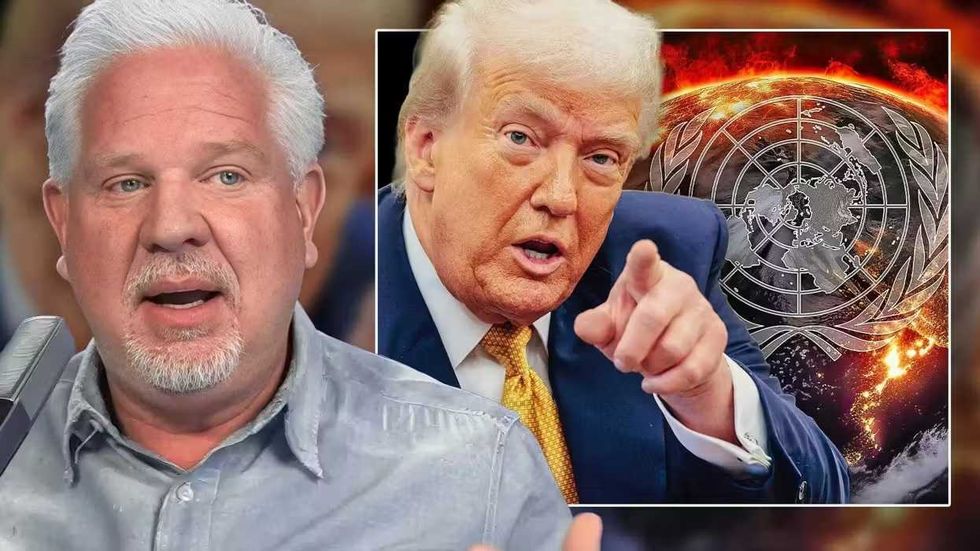
RELATED: Will Trump’s unconventional plan to stop the UN climate elites work?
 Chip Somodevilla/Getty Images
Recalibration
The heavy-duty truck sector makes this clear. Unlike passenger cars, trucks operate on thin margins and long replacement cycles. Fleet decisions are driven by reliability, infrastructure availability, and total cost of ownership. Mandating technologies before they are ready or widely supported does not accelerate progress; it creates higher costs and unintended consequences — especially when those mandates originate in a single state but affect national commerce.
The EPA’s move suggests that era may be nearing its end. By challenging California’s heavy-duty inspection requirement, the agency is asserting that environmental goals do not justify ignoring constitutional structure. Clean air matters — but so do the rule of law, economic practicality, and the free movement of goods across state lines.
The proposed disapproval remains open for public comment, after which the EPA is expected to take final action later this year. Whatever the outcome, the signal is unmistakable: Federal regulators are no longer willing to automatically defer to California when state ambition collides with national authority.
For truck drivers, fleet operators, manufacturers, and everyday consumers, this moment represents a recalibration. It reaffirms that vehicle regulation should be consistent nationwide — and that environmental policy works best when it respects both economic reality and the legal framework that holds the country together.
Trump TORCHES Biden-Buttigieg EPA rules
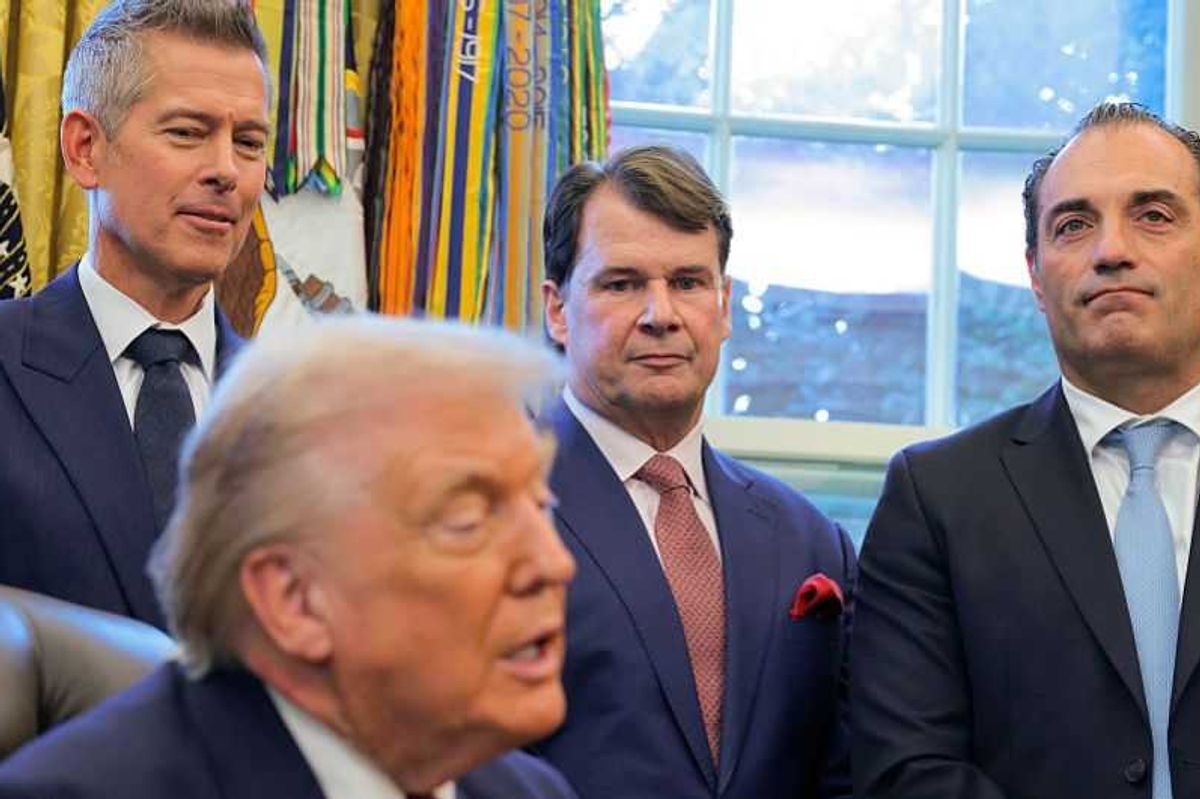
Washington rarely admits when policy has failed. But earlier this month, the White House stepped back from more than a decade of regulations that drove car prices to record highs, limited consumer choice, and tried to force an industry to move faster than technology, infrastructure, or American families could manage.
With the unveiling of the Freedom Means Affordable Cars proposal, President Donald Trump and Transportation Secretary Sean Duffy signaled a dramatic shift in national auto policy — one aimed at making car ownership attainable again for millions priced out of the market.
The Biden-Buttigieg standards were projected to generate $14 billion in compliance fines between 2027 and 2032, costs manufacturers said would be passed directly to buyers.
The timing is critical. New vehicle prices topped $50,000 this fall, while average monthly payments approached $750. Families are keeping cars longer than ever, pushing the average age of the U.S. fleet to record levels. As Washington pushed electric vehicles, consumers pushed back: EV demand stalled, rejection rates soared, and buyers continued to favor affordable gas and hybrid vehicles. That tension has been building for years, and the December 3 announcement marked the most direct challenge yet to the regulatory regime behind it.
Trump’s proposal resets National Highway Traffic Safety Administration fuel-economy rules, reversing Biden-era targets that aimed to push the fleet toward roughly 50 mpg.
Closing the ‘back door’
Under the new plan, Corporate Average Fuel Economy standards return to 34.5 mpg — levels last seen in the late 2000s — with future increases scaled back to what Congress originally envisioned. The administration projects up to $109 billion in savings over five years and roughly $1,000 off the average new car. Whether those figures hold, the philosophical shift is clear: ending what the White House calls a backdoor EV mandate.
For years, automakers warned privately that the prior rules forced them to build vehicles customers didn’t want simply to avoid massive penalties. The Biden-Buttigieg standards were projected to generate $14 billion in compliance fines between 2027 and 2032, costs manufacturers said would be passed directly to buyers. Aligning federal rules with California’s stricter standards further nudged companies toward EVs even as demand weakened. CAFE was never meant to reshape the marketplace — but that is how it was being used.
The consequences were stark. Billions were poured into EV-charging initiatives with little to show for it; $5 trillion was allocated, yet only 11 stations were built nationwide. California faced rolling blackouts with EVs still just 2.3% of vehicles on the road. Experts warned that even 10% EV adoption would strain the grid under current infrastructure. Meanwhile buyers who didn’t want EVs — still the majority — faced fewer choices and higher prices.
Attracting investment
The Trump reset aims to reverse course. Automakers quickly announced new domestic investments. Stellantis committed $13 billion to expand U.S. manufacturing, including Jeep, Dodge, Ram, and Chrysler. Ford pledged $5 billion for American facilities, noting that 80% of its vehicles are already made domestically. General Motors announced $4 billion to bring production back from Mexico while retooling plants for broader consumer demand. Even the United Auto Workers offered support, citing increased U.S. jobs and domestic production.
The plan also includes a tax change backed by the National Auto Dealers Association, allowing buyers to deduct interest on American-built vehicles. At a time when many families are locked out of the new-car market, the measure offers practical relief while encouraging domestic manufacturing.
Less noticed — but equally important — was the Congressional Review Act action that eliminated California’s special emissions waivers. Signed in June 2025, those resolutions dismantled the structure that allowed California to dictate national vehicle policy, ending the EV mandate embedded in federal regulations and clearing the way for this shift.
RELATED: Duffy threatens funding freeze for 3 states flouting English requirements for truck drivers
 Secretary of Transportation Sean Duffy. Photographer: Eric Lee/Bloomberg via Getty Images
Not far enough?
Some analysts argue the rollback doesn’t go far enough. As long as CAFE exists — at any target — it remains vulnerable to political swings. They contend emissions should be regulated directly through the EPA, leaving the market to determine the mix of gas, hybrid, and electric vehicles. This view is gaining traction among critics who say CAFE no longer reflects consumer demand or technological reality.
Even Republican Sen. Bernie Moreno of Ohio weighed in, calling the forced EV pivot “irrational policy” that benefits China. China controls roughly 80% of EV battery minerals and most related mining, while the U.S. holds the world’s largest proven oil reserves. Moreno’s argument is blunt: America weakened its own manufacturing base by adopting policies that played to China’s strengths.
Sales data reinforces the point. EVs made up about 6% of new vehicle sales in November 2025, with rejection rates near 70% due to cost, charging gaps, range limits, insurance, and cold-weather performance. EVs still account for just 2.3% of vehicles on U.S. roads. The demand Washington expected never materialized.
The new policy reflects those realities. It restores balance to an industry pushed into transformation without consumer support or infrastructure readiness. Automakers will still build EVs and hybrids and pursue new technologies — but consumers will decide the pace, not regulators.
For the first time in years, drivers may again see affordability, variety, and genuine choice. Fuel-economy rules will remain contested, but the Freedom Means Affordable Cars plan marks the most significant shift in auto policy in over a decade.
For millions of Americans priced out of the market, that change alone is long overdue.
Trump’s autopen reversal could mean more choice, lower prices for car buyers

A quiet, technical ruling about presidential signatures has suddenly become one of the most consequential automotive turning points in decades.
What looked like an obscure constitutional question has reshaped the nation’s energy strategy, reversed federal transportation policy, and put the electric-vehicle transition on a very different path.
Whether seen as restoring constitutional accountability or disrupting environmental planning, the result is unmistakable: America’s automotive trajectory has been rewritten.
The issue is straightforward: If a president did not personally sign an executive action, can it legally stand? President Donald Trump has answered no — and the effects will be felt in dealerships, factories, and garages nationwide.
Sign-off
In late November 2025, President Trump declared that any executive order, regulation, or directive signed with an autopen after mid-2022 is invalid. Oversight reviews suggest this affects up to 92% of actions taken in the final two and a half years of the Biden administration. Trump argues that executive authority cannot be delegated to a machine; the Constitution vests power in the president himself, not staff operating an autopen while the president is traveling or unavailable.
This interpretation has upended large portions of recent federal policymaking.
Nowhere is the impact more dramatic than in automotive and energy policy. The Biden administration’s EV strategy relied heavily on Executive Order 14037, issued in 2021, which set aggressive emissions and fuel-economy goals. While signed early in Biden’s term, nearly all enforcement actions after 2022 — including the rules that gave the order teeth — bear autopen signatures. Those signatures now sit at the center of a sweeping rollback.
Executive Order 14037 formed the backbone of Biden’s push toward zero-emission vehicles. It directed agencies to impose strict emissions rules, raise fuel-efficiency standards, steer manufacturers toward electric powertrains, and work toward a goal of 50% zero-emission vehicle sales by 2030. Automakers spent tens of billions preparing — building battery plants, restructuring supply chains, and cutting production of profitable internal-combustion models.
According to forensic reviews cited by the Trump administration, many of the directives enforcing those standards after mid-2022 were never personally signed by President Biden. Trump maintains this breaks the constitutional chain of authority.
High energy
On the first day of his second term, Trump issued Executive Order 14154, Unleashing American Energy. It revoked Biden’s EV mandates, halted remaining EV-related funds under the Inflation Reduction Act and infrastructure law, and ordered agencies to withdraw aggressive tailpipe regulations. Fuel-economy targets revert to earlier levels. Federal fleet electrification requirements are gone. The 2030 zero-emission sales target no longer exists. The $7,500 EV tax credit will be phased out by the end of 2026.
The industry impact is immediate. Automakers that bet heavily on federal EV mandates are reassessing long-term strategies. Companies focused on trucks, SUVs, and hybrids are now better positioned. EV-only startups face mounting financial strain. Market uncertainty has hit stock prices, delayed launches, and raised doubts about the future of several pure-electric brands.
RELATED: ‘Won’t be the last’: Felon freed by Biden autopen arrested after Omaha shooting
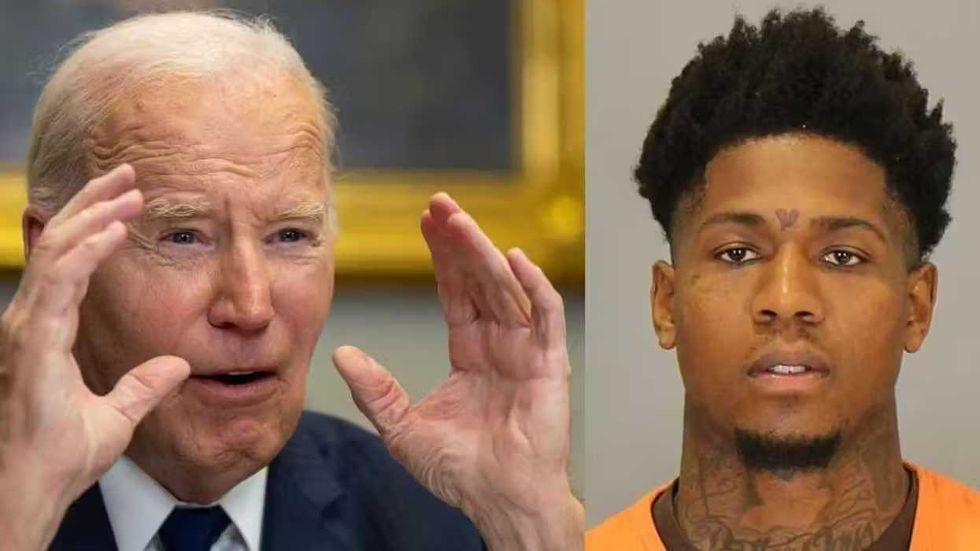 Image composite: Tasos Katopodis/Getty Images, Omaha Police Department
Sweeping consequences
Consumers will notice the shift on showroom floors. Vehicles slated for retirement will remain in production. EVs — still pricier than gas or hybrid counterparts — will face new price pressure as incentives disappear. Charging access and range remain barriers, especially outside urban centers. Without mandates driving adoption, consumer preference — not regulation — will dictate the pace of change.
Legal fights are already underway. Agencies must follow formal rule-making procedures, and environmental groups and states like California are challenging the reversals. California plans to retain its own strict standards, setting up years of litigation over federal pre-emption and Clean Air Act waivers.
Even so, the federal direction is clear. The United States is no longer pursuing a national strategy centered on rapid vehicle electrification. The emphasis has shifted to diversification, consumer choice, and competition among internal-combustion, hybrid, and electric technologies.
The autopen dispute may sound bureaucratic, but its consequences are sweeping. A major climate and transportation agenda is being reconsidered because of how it was signed. Whether seen as restoring constitutional accountability or disrupting environmental planning, the result is unmistakable: America’s automotive trajectory has been rewritten.
The internal-combustion engine, long declared on borrowed time, has a renewed future. Hybrids are likely to gain ground. Electric vehicles will remain — but their growth will depend on price, practicality, and performance, not mandates. The timeline for full electrification has shifted, and the debate over how America powers mobility has entered a new phase.
There’s more to come, and I’ll keep you posted.
Farewell to fake fuel efficiency stats, hello to tough future for EVs
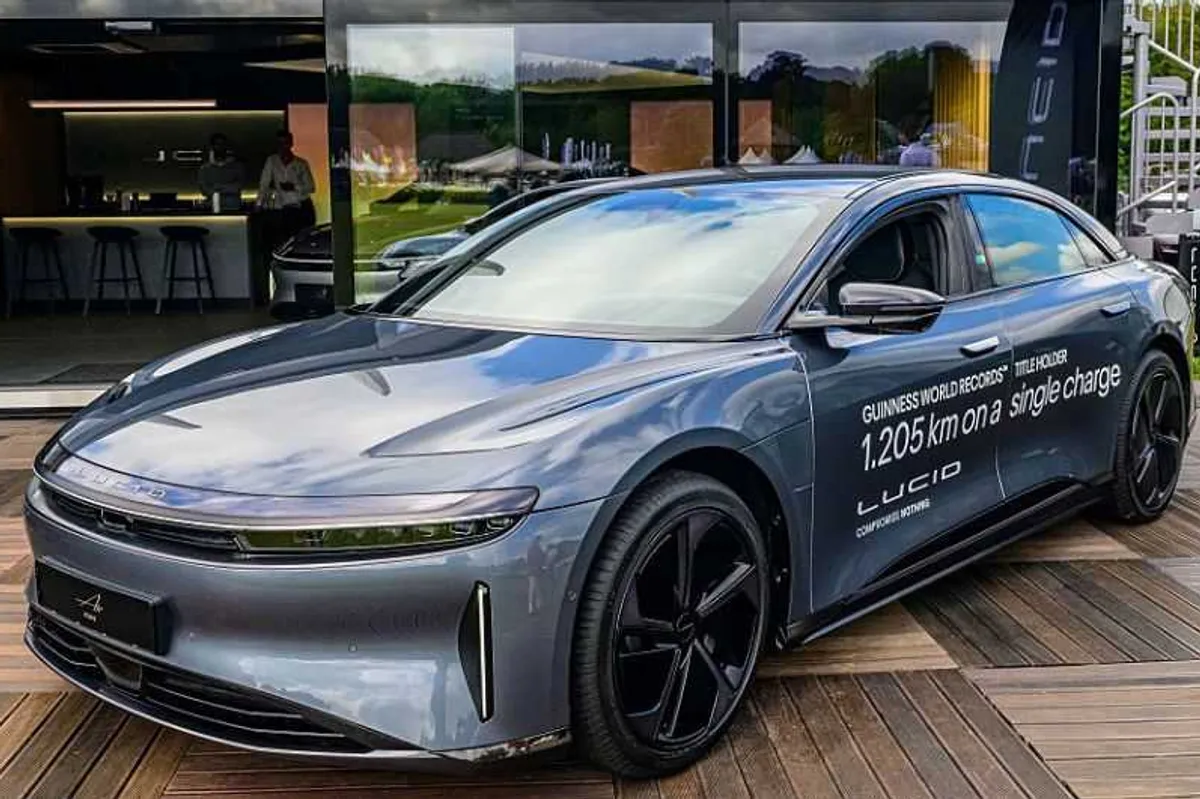
Fake fuel economy has got to go.
That’s the message of a recent decision by the Eighth U.S. Circuit Court of Appeals. Sent to the scrap heap: a Biden-era Department of Energy rule that critics say wildly inflated the fuel economy ratings of EVs — giving them an unfair regulatory advantage over gasoline and hybrid vehicles.
The court’s ruling was clear and direct: Federal agencies cannot manipulate timelines or definitions to advance a policy agenda without proper authorization from Congress.
This is a major correction to how the U.S. government measures vehicle efficiency, with consequences for automakers, consumers, and the future of the EV market.
Efficiency inflation
The case was brought by 13 Republican attorneys general, who argued that the DOE’s formula for calculating EV efficiency was misleading and legally indefensible. The court agreed, ruling that the Biden administration overstepped its authority by continuing to use an outdated, artificial formula that inflated electric vehicle performance under federal fuel economy standards.
At stake is the credibility of how America measures vehicle efficiency — a key driver in regulatory decisions that shape everything from automaker product lines to what cars consumers can buy.
For years, the DOE’s so-called petroleum equivalency factor has been used to translate electric power into miles-per-gallon equivalents. But the formula wasn’t based on realistic energy comparisons. Instead, it massively overstated how far an EV could travel on the energy equivalent of one gallon of gasoline — often rating electric cars above 100 MPGE, regardless of actual energy costs or grid efficiency.
Credits as currency
Rather than immediately fixing this issue, the Biden administration’s DOE planned a slow phase-out of the inflated metric between model years 2027 and 2030. That delay allowed automakers to continue claiming exaggerated efficiency numbers — and collecting fuel economy credits that made it easier to comply with the federal Corporate Average Fuel Economy standards.
Why does that matter? Because those credits act as a form of regulatory currency. A company that racks up credits through high-efficiency vehicles can use them to offset the sale of less efficient models or even sell them to other automakers.
In other words, the inflated EV math didn’t just look better on paper — it saved automakers millions of dollars in potential penalties while giving policymakers a talking point about “historic progress” in fuel efficiency that wasn’t based on real-world performance.
A direct rebuke
In its 3-0 decision, the Eighth Circuit ruled that the DOE had gone beyond its legal bounds. Agencies can’t rewrite laws through policy tweaks, the judges said, even under the guise of “phasing out” old rules. The DOE was required by statute to eliminate the flawed formula entirely — not stretch it over several more years of inflated numbers.
The court’s ruling was clear and direct: Federal agencies cannot manipulate timelines or definitions to advance a policy agenda without proper authorization from Congress.
That’s a significant rebuke not just to the DOE, but to a broader pattern of regulatory overreach that has characterized much of Washington’s EV push.
For the states that brought the lawsuit, the decision represents a major win for transparency, accountability, and consumer protection.
Pivoting on EVs
The implications for automakers are enormous. For years, inflated EV efficiency numbers helped carmakers meet federal fuel economy targets and avoid costly fines. Without that regulatory buffer, the industry will need to adapt quickly.
Automakers may now lose the valuable fuel economy credits they’ve relied on to remain compliant with CAFE standards, forcing them to find new ways to meet efficiency goals. That shift will require genuine engineering improvements — advances in aerodynamics, weight reduction, and hybrid technology — rather than relying on inflated paper-based advantages.
This change could also prompt a broader reassessment of electric vehicle strategy. If the regulatory math no longer tilts in favor of EVs, many manufacturers may slow their rollout plans or diversify their portfolios to include more hybrids and high-efficiency gasoline models.
The timing is significant: EV demand has cooled, dealer inventories are building up, and consumer interest has leveled off. Automakers such as Ford, General Motors, and Volkswagen have already scaled back or delayed certain EV programs in response to slower-than-expected sales and ongoing infrastructure limitations.
RELATED: Sticker shock: Cali EV drivers lose carpool exemption
 Justin Sullivan/Getty Images
Consumer transparency
For everyday drivers, this ruling doesn’t ban EVs — but it brings more honesty to the system.
Consumers deserve accurate information about vehicle efficiency, cost of ownership, and environmental impact. Inflated fuel economy ratings distort that picture, making EVs appear more efficient than they are when accounting for charging losses, battery manufacturing, and electric grid emissions.
Now, car buyers can make more informed choices — whether that’s a hybrid, plug-in hybrid, or traditional gasoline vehicle.
In the long term, this ruling could encourage a broader mix of technology rather than a forced, one-size-fits-all transition to battery electrics.
The fight to come
This case isn’t just about EVs. It’s about how much power federal agencies should have to rewrite laws without Congressional oversight.
For decades, Washington has leaned on regulatory agencies to shape environmental and energy policy — often through complex formulas that most Americans never see. But as the Eighth Circuit emphasized, the ends don’t justify the means.
Even if the goal is cleaner transportation, the process has to respect legal boundaries. When agencies overreach, courts must intervene to restore balance.
This decision reinforces an important principle: Policy must be grounded in law, not ideology. And in a country that values free markets and consumer choice, regulations should enhance transparency, not distort it.
The ruling leaves several key questions unanswered, but it is likely just the beginning of a much larger policy fight. Congress could attempt to step in by rewriting the laws that govern fuel economy standards, giving the DOE clearer authority to define how electric vehicle efficiency is calculated. However, such legislative efforts would almost certainly face significant political gridlock in an already divided Congress.
Much-needed realism
Automakers, meanwhile, are expected to take a hard look at how they allocate their research and development budgets and how they plan future vehicle lineups.
Companies heavily invested in electric vehicles have shifted strategies, focusing more on hybrids, plug-in hybrids, and improved gasoline technologies — especially in markets where EV sales have already shown signs of slowing or flattening.
Finally, the court’s reasoning may open the door to further challenges that could include renewed scrutiny of EPA emissions standards and federal tax credits, both of which critics argue have tilted the market in favor of electric vehicles rather than allowing consumer demand and market forces to guide the transition naturally.
The Eighth Circuit’s decision is a defining moment for the future of American automotive policy. It doesn’t kill the EV market — but it forces it to stand on its own merits.
Electric vehicles have their place in the market, but consumers deserve truthful efficiency data and honest cost comparisons. Inflated numbers and creative accounting don’t serve innovation — they undermine it.
This ruling restores some much-needed realism to the national conversation about the future of mobility. It’s a win for transparency, for accountability, and most importantly, for consumers who want to make decisions based on facts rather than politics.





