Category: Federal reserve
Federal Reserve obliges Trump, cuts interest rates for the third time this year
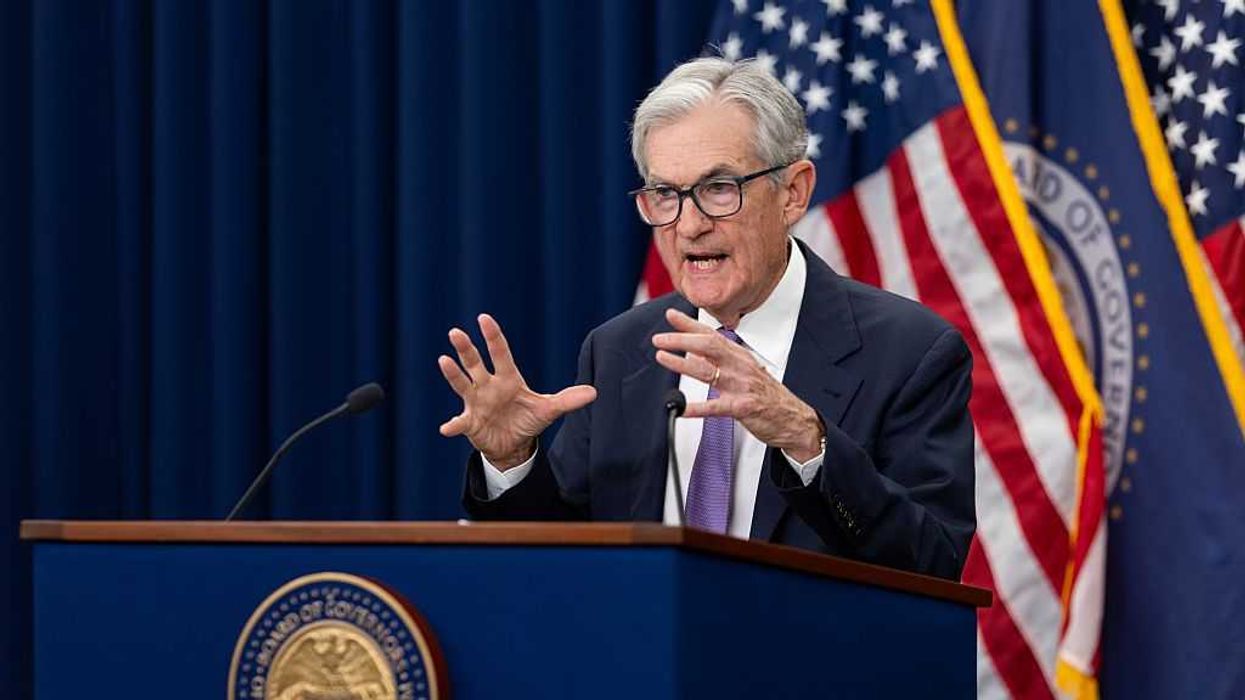
In a move championed by President Donald Trump, the Federal Reserve cut its key interest rate by 0.25% to a range of 3.5% to 3.75% on Wednesday, the third cut this year, lowering borrowing costs and giving some lift to a flagging job market.
Only three members of the Federal Reserve Board of Governors voted against the cut: Stephen Miran, who wanted to lower the target range for the federal funds rate by 0.5%, and Austan Goolsbee and Jeffrey Schmid, who both figured it was presently best not to have any cuts at all.
‘Available indicators suggest that economic activity has been expanding at a moderate pace.’
Joseph Brusuelas, chief economist for the financial services firm RSM US, noted in a Tuesday analysis that the Fed was faced with the “difficult choice of either aggressively fighting inflation or hoping to revive a sluggish labor market and slowing economic activity when it meets on Tuesday and Wednesday.”
Rate cuts can help boost the stock market — encouraging spending, investing, and business activity by lowering savings rate and borrowing costs. However, by increasing the supply of money, they can also exacerbate inflation.
The annual inflation rate was around 3% for the 12 months ending September, according to U.S. Labor Department data. The Fed’s inflation target is 2% over the longer run — hence the resistance to another cut by some policymakers.
“The [Federal Open Market Committee] seeks to achieve maximum employment and inflation at the rate of 2 percent over the longer run. Uncertainty about the economic outlook remains elevated,” the Fed said in a statement on Wednesday. “The Committee is attentive to the risks to both sides of its dual mandate and judges that downside risks to employment rose in recent months.”
In light of its goals and “the shift in the balance of risks,” the FOMC determined that a drop in the rate by 0.25% was worthwhile.
“Available indicators suggest that economic activity has been expanding at a moderate pace. Job gains have slowed this year, and the unemployment rate has edged up through September,” the Fed noted further. “Inflation has moved up since earlier in the year and remains somewhat elevated.”
The rate-cut decision on Wednesday comes months after the Fed similarly lowered its benchmark interest rate by 25 basis points in September to a range of 4% to 4.25%, and after weeks of disagreement on the central bank’s 12-member policy committee regarding the prudent way forward.
Chris Brigati, chief investment officer at the financial services company SWBC, told the Financial Post ahead of the announcement that the Federal Reserve was divided on how to proceed with rate cuts in 2026 “given the delicate balance between job market weakness and still-elevated inflation.”
“There is also uncertainty about the new Fed chair, and that may also add to the central bank’s reluctance to make any major rate moves in the months leading up to Chair Powell’s term ending,” Brigati added.
 Photo by Chip Somodevilla/Getty Image
In search of someone suitable to replace Fed Chairman Jerome Powell, whose term ends in May, the president has been interviewing various candidates, including Christopher Waller and Michelle Bowman, both members of the Federal Reserve Board of Governors; former Fed governor Kevin Warsh; and BlackRock fixed-income chief Rick Rieder. Top White House economic adviser Kevin Hassett is, however, reportedly regarded as the frontrunner.
The president told reporters on Air Force One on Tuesday, “We’re going to be looking at a couple of different people, but I have a pretty good idea who I want.”
When asked in his interview with Politico the previous day whether it is “a litmus test that the new chair lower interest rates immediately,” Trump said yes and noted, “We’re fighting through interest rates.”
The Federal Reserve also released on Wednesday its regional bank presidents and governors’ quarterly set of economic projections. They anticipate a rise in the unemployment rate from 4.4% in September to 4.5% by year’s end; the GDP to grow by 2.3% in 2026; and inflation to sink, but nowhere below their 2% target.
Like Blaze News? Bypass the censors, sign up for our newsletters, and get stories like this direct to your inbox. Sign up here!
We Are Not Depression Proof
Old age. Terrifying. Really scary. An invariably lethal disease. Not just sometimes. Invariably. And I used to think it was…
Hassett touts market response to report that he’s the front-runner to replace Powell at the Fed
National Economic Council (NEC) Director Kevin Hassett on Sunday touted the market response to a Bloomberg report last week suggesting Hassett is broadly considered the front-runner among candidates to replace Federal Reserve Chair Jerome Powell. The president’s top economic adviser, in an interview on CBS News’s “Face the Nation,” called the Bloomberg report a “rumor”…
Biden-Appointed Fed Governor Investigated For Stock Trade Violations Before Resigning, Gov Ethics Office Finds
Biden-Appointed Fed Governor Investigated For Stock Trade Violations Before Resigning, Gov Ethics Office Finds
Bitcoin and the return of honest money

Bitcoin. Cryptocurrency. Blockchain. A decade ago, most Americans hadn’t heard those words. Even now, many don’t fully grasp what they mean. Some still dismiss Bitcoin as an internet fad — yet with one coin worth roughly $119,000, the joke is wearing thin.
The real story isn’t the price. It’s what Bitcoin represents: freedom, trust, and control over your own money. Those are conservative principles — and conservatives should embrace them.
Honest money for a dishonest age
In Denton County, Texans understand independence. We work hard, save what we can, and expect our money to keep its value. But Washington keeps printing dollars to solve political problems, and every new round of “stimulus” steals a little more of what Americans earn. That’s a big reason groceries, gas, and housing cost so much more today.
At its heart, Bitcoin isn’t about tech or speculation. It’s about trust — and keeping financial power in the hands of citizens instead of bureaucrats and corporations.
Bitcoin doesn’t play that game. Its supply is capped at 21 million coins forever. No bureaucrat or central banker can “stimulate” the economy by diluting your savings. It’s steady, transparent, and immune to the inflationary habits of modern government.
That’s not radical — it’s a return to honest value. Early Texans traded cattle, crops, and tools, and a handshake sealed the deal. Bitcoin is a digital version of that same trust: value backed by proof of work, not political decree.
Freedom in your own hands
Bitcoin is, at its core, a conservative idea. It rewards effort, limits government control, and protects personal liberty. You can own every rifle and round of ammunition in the world, but if the government freezes your bank account, you’re stuck. With Bitcoin, you control your money. Nobody can seize it.
The network itself is decentralized — millions of computers around the globe share the ledger. No single government, company, or regulator can shut it down. If one node fails, the others keep the system alive. It’s built to endure.
Lessons for a digital age
That model should guide how we build other technologies. Take artificial intelligence. Meta just poured $14 billion into one massive data center — a single point of failure. One cyberattack or natural disaster could wipe it out. America should follow Bitcoin’s example: distribute computing power, build smaller centers across the country, and bring skilled jobs to local communities like ours.
RELATED: ‘Lipstick on a pig’: How printing cash is destroying America — and crypto could be next
 dem10 via iStock/Getty Images
Bitcoin also saves money. Send $1,000 through a credit card processor and you’ll lose $40 in fees. Send it through Bitcoin and it costs about four cents. That difference matters to small businesses, churches, and local campaigns. Political donations in Bitcoin should be legal nationwide — transparent, secure, and independent of the big banks that profit from the current system.
A return to honest value
At its heart, Bitcoin isn’t about tech or speculation. It’s about trust — and keeping financial power in the hands of citizens instead of bureaucrats and corporations.
Here in Denton County, we understand that kind of freedom. It’s the same spirit that settled Texas: work hard, hold what’s yours, and keep government out of your pockets.
Bitcoin isn’t the future of money. It’s the return of honest money — and conservatives should lead the charge to make it America’s next great success story.
Trump can’t call it ‘mission accomplished’ yet
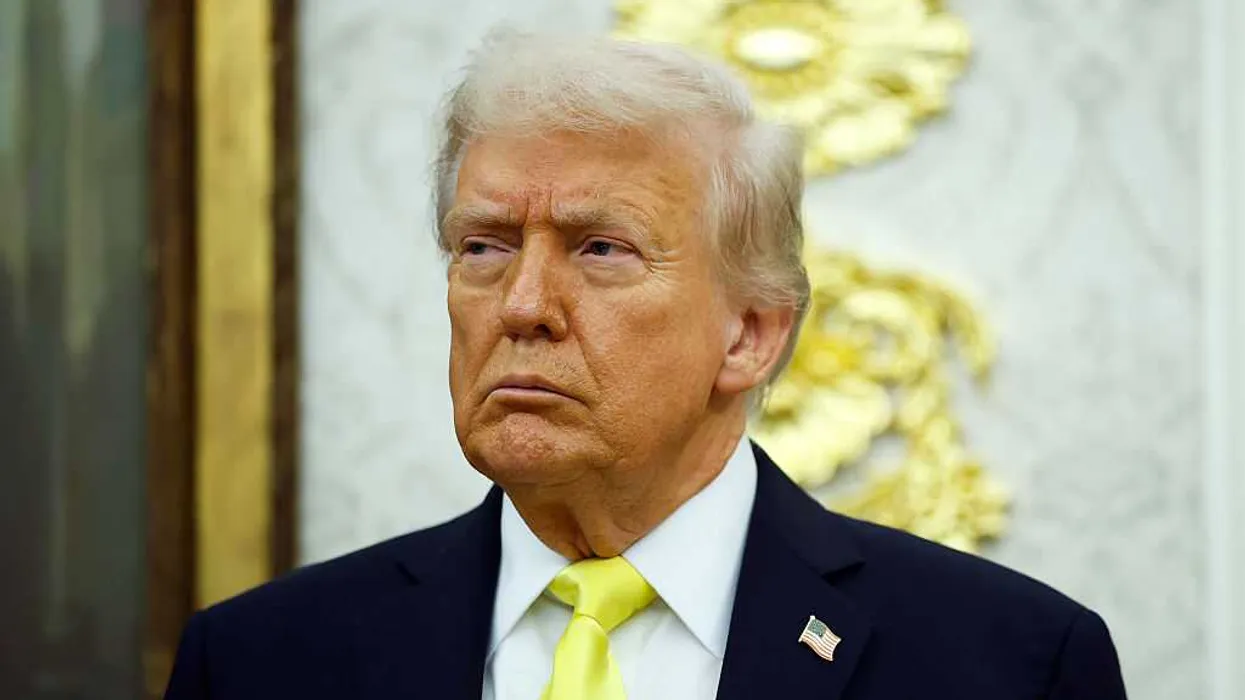
With a divided Congress and the clock likely running out on GOP control, President Trump’s decision to forgo a second budget reconciliation bill is puzzling. Reconciliation is the only tool available to pass major priorities without a filibuster. So why refuse another chance to make the America First agenda permanent?
At a recent meeting with Senate Republicans, Trump told lawmakers, “We don’t need to pass any more bills. We got everything” in the big, beautiful bill earlier this year. “We got the largest tax cuts in history. We got the extension of the Trump tax cuts. We got all of these things.”
The first Trump presidency showed what executive courage can do. The second must prove what lasting law can achieve.
Really? That answer ignores reality. Tax cuts were never the full measure of the Trump revolution. The movement promised structural reform — from securing the border to dismantling bureaucracies. Limiting the victory to tax relief leaves unfinished the hard work of codifying executive policies into law before the next Democrat in the White House wipes them out with the stroke of a pen.
Biden’s first weeks in office in 2021 proved how fragile executive action can be. Nearly every Trump-era reform — on immigration, energy, education, and national security — vanished within days. The same will happen again if core policies remain tied to presidential discretion instead of actual statutes.
Immigration is the clearest example. Trump moved the country in the right direction, but many key policies remain blocked by courts or enjoined indefinitely. These include:
• Ending birthright citizenship for children of illegal immigrants,
• Defunding sanctuary cities,
• Cutting federal assistance for noncitizens,
• Requiring states to verify lawful status for benefits under the Personal Responsibility and Work Opportunity Reconciliation Act,
• Expanding expedited removal of gang members under the Alien Enemies Act,
• Authorizing ICE arrests at state courthouses,
• Deporting pro-Hamas foreign students,
• Returning unaccompanied minors to Central America,
• Suspending refugee resettlement, and
• Ending “temporary” protected status for long-term illegal residents.
Each of these reforms can and should be codified through legislation. Courts can’t enjoin what Congress writes into law.
The same applies beyond immigration. Critical Trump policies remain trapped or reversible, including:
• Abolishing the Department of Education,
• Keeping male inmates out of female prisons,
• Blocking federal funding for hospitals that perform gender “transitions” on minors,
• Removing Federal Reserve governor Lisa Cook, and
• Requiring proof of citizenship to vote and restricting mail-in ballots in federal elections.
All of these measures would fulfill campaign promises. All of them will vanish the instant Democrats reclaim the White House — unless Republicans act now to make them permanent.
RELATED: While the lights are off, let’s rewire the government
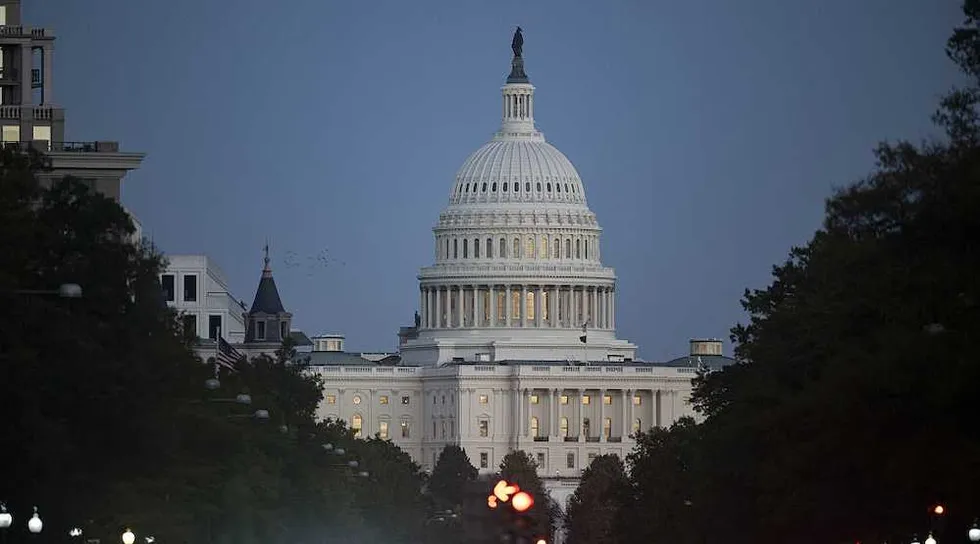 Photo by Celal Gunes/Anadolu via Getty Images
Meanwhile, the economic front remains unsettled. Inflation continues to crush families, and Washington’s spending addiction keeps prices high. Health care remains broken, with no Republican alternative to stop Democrats from reinstating Biden’s Obamacare subsidies. The challenges are mounting, not receding.
The reconciliation process exists precisely for moments like this. It allows a governing majority to bypass the filibuster and pass budget-related priorities with a simple majority — the same procedure Democrats used twice under Biden to jam through massive spending and climate legislation. Refusing to use it again would be an act of political negligence.
Trump has accomplished much, but claiming “mission accomplished” now risks repeating the failures of his first term — executive orders that were erased within weeks and policies undone overnight.
The task ahead is to legislate the revolution. Codify the border. Dismantle bureaucratic strongholds. Rein in judicial activism. Secure election integrity. Cement economic reform.
The first Trump presidency showed what executive courage can do. The second must prove what lasting law can achieve. If Trump wants his achievements to outlive his term, he must act now — not by declaring victory, but by legislating it.