

Category: Freedom of speech
A protest doesn’t become lawful because Don Lemon livestreams it
What should have been a peaceful Sunday service at Cities Church in St. Paul, Minnesota, turned into a political ambush. Roughly 30 anti-ICE protesters pushed into the sanctuary mid-worship, chanting slogans and confronting church leaders as families tried to pray.
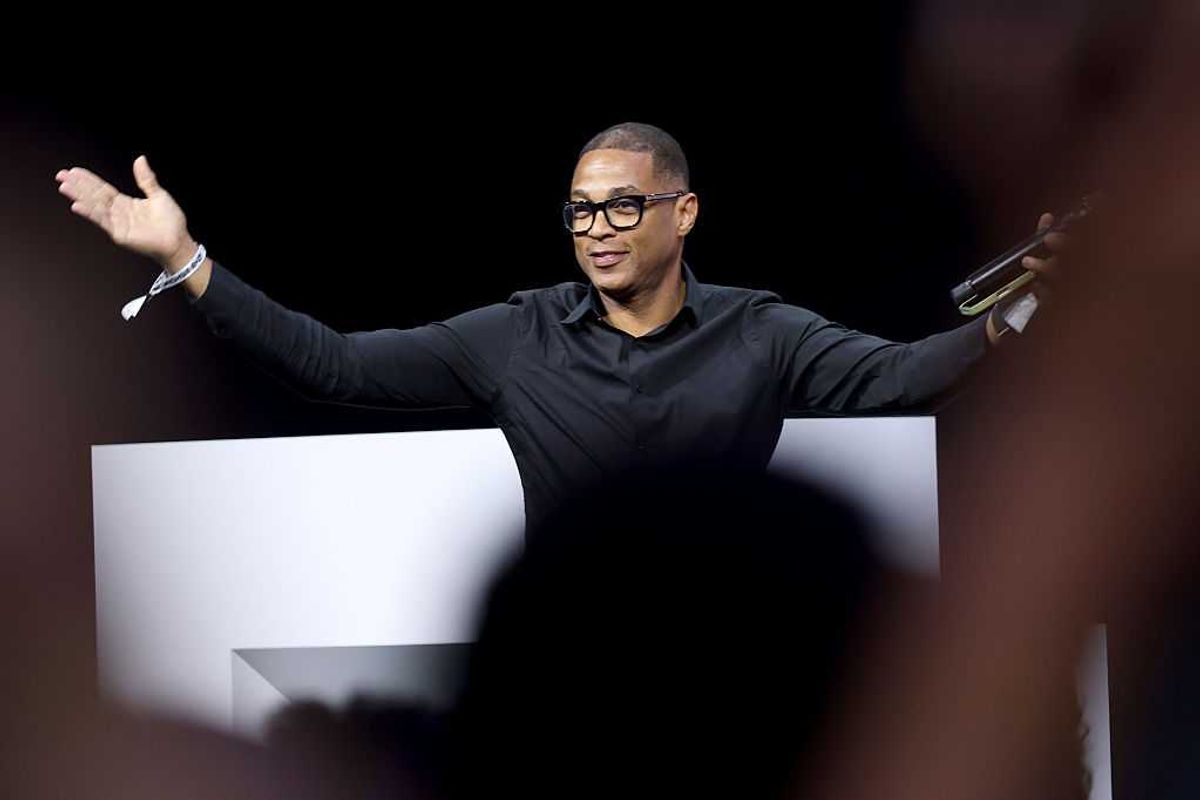
Disgraced former CNN anchor Don Lemon was there, too, livestreaming the chaos.
If activists can storm a church mid-service, scream at families, and then hide behind the First Amendment, the standard becomes simple: The loudest mob sets the rules.
The Department of Justice has opened a formal investigation and signaled that federal protections for houses of worship may apply. Assistant Attorney General Harmeet Dhillon noted on the “Glenn Beck Program” that the activists’ conduct could implicate the Freedom of Access to Clinic Entrances Act, which bars intimidation, obstruction, and interference with the free exercise of religion in places of worship. The protesters may have also violated the Ku Klux Klan Act, a post-Civil War law that makes it illegal to terrorize and violate the civil rights of citizens.
According to multiple reports, the demonstrators were tied to the Racial Justice Network and aimed their protest at a church leader they accused of working with Immigration and Customs Enforcement. The protest followed rising tensions in Minnesota after the fatal shooting of anti-ICE activist Renee Nicole Good during a confrontation with federal agents.
Lemon framed the entire spectacle as civic virtue. He insisted he was “not an activist, but a journalist” and argued that protest inside a church remains constitutionally protected speech.
The footage tells a messier story.
Video released after the incident shows Lemon interacting with the group beforehand, appearing familiar with organizers and the plan. One outlet described the operation as “Operation Pull-Up.” That undercuts the narrative Lemon later pushed — that he simply arrived to document an event that unexpectedly “spilled” into a worship service.
Intent matters. So does outcome. The outcome looked like this: a sanctuary overrun, a service derailed, congregants shaken, and children crying while activists shouted and gestured at the pews.
That is far from “peaceful assembly.” It is targeted disruption.
The First Amendment protects speech. It does not grant a roaming license to invade private spaces and commandeer them for political theater. Rights have edges because other people have rights too. Worshippers do not lose their liberty because activists feel righteous.
That basic distinction keeps a free society from collapsing into a contest of intimidation.
RELATED: Americans aren’t arguing any more — we’re speaking different languages
 Photo by Heather Diehl/Getty Images
This case matters because it tests whether the country still draws that line. If activists can storm a church mid-service, scream at families, and then hide behind the First Amendment, the standard becomes simple: The loudest mob sets the rules. Next week it will be another church. Then a synagogue. Then any gathering that activists decide deserves punishment.
The Justice Department is right to examine the FACE Act here. Congress passed it to stop coercion dressed up as protest — the use of obstruction and intimidation to prevent Americans from exercising basic freedoms. That principle doesn’t change because the target shifts from an abortion clinic to a church sanctuary.
The press corps’ selective outrage makes the problem worse. Cultural elites demand “safety” and “inclusion” in every other arena, but many of them treat Christian worship as an acceptable target. They police speech in classrooms and boardrooms, then shrug when activists shout down prayer.
That double standard signals something deeper than hypocrisy. It signals permission.
Lemon’s defense captured the rot in one sentence: Making people uncomfortable, he said, is “what protests are about.” Fine. Protest often makes people uncomfortable. But discomfort does not justify trespass. It does not excuse intimidation. It does not cancel someone else’s right to worship in peace.
A society that cannot protect sacred spaces will not protect much else for long. If the law refuses to punish conduct like this, the lesson will spread fast: Invade, disrupt, harass — then claim virtue and dare anyone to stop you.
America does not need a new normal where mobs treat churches like political stages. It needs consequences.
Universities treated free speech as expendable in 2025
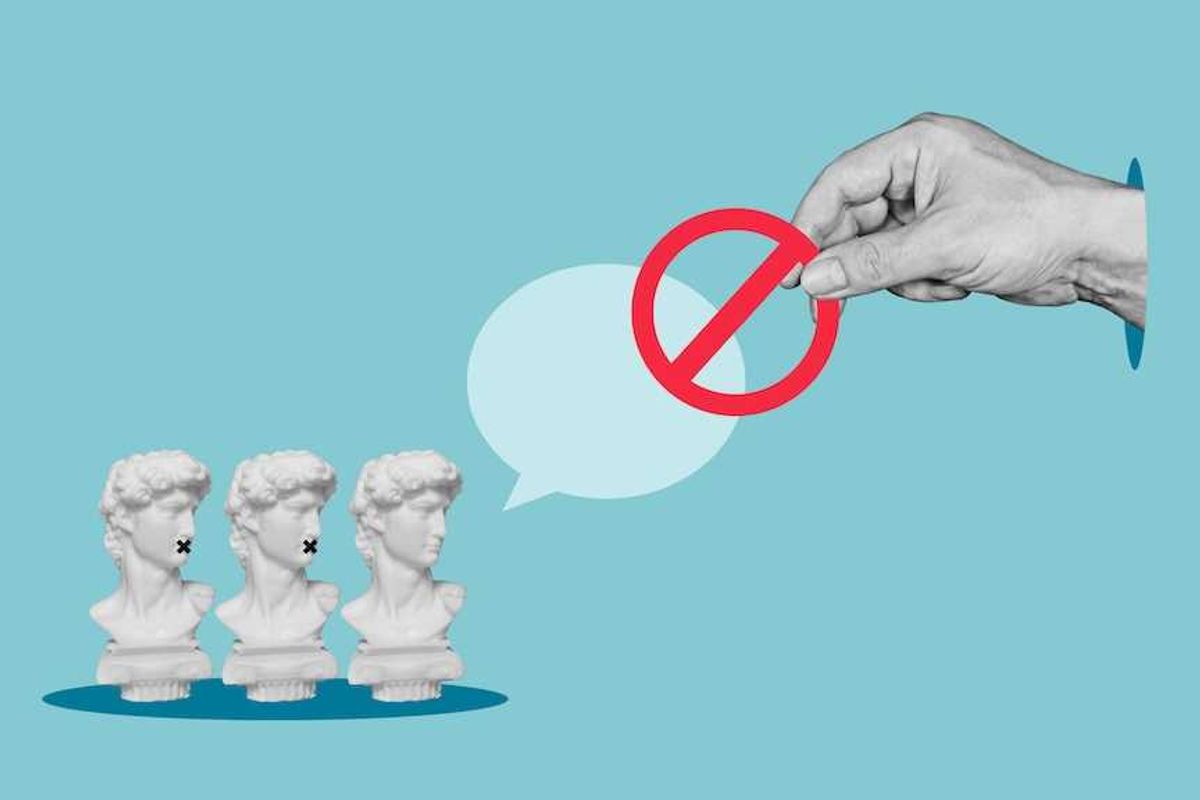
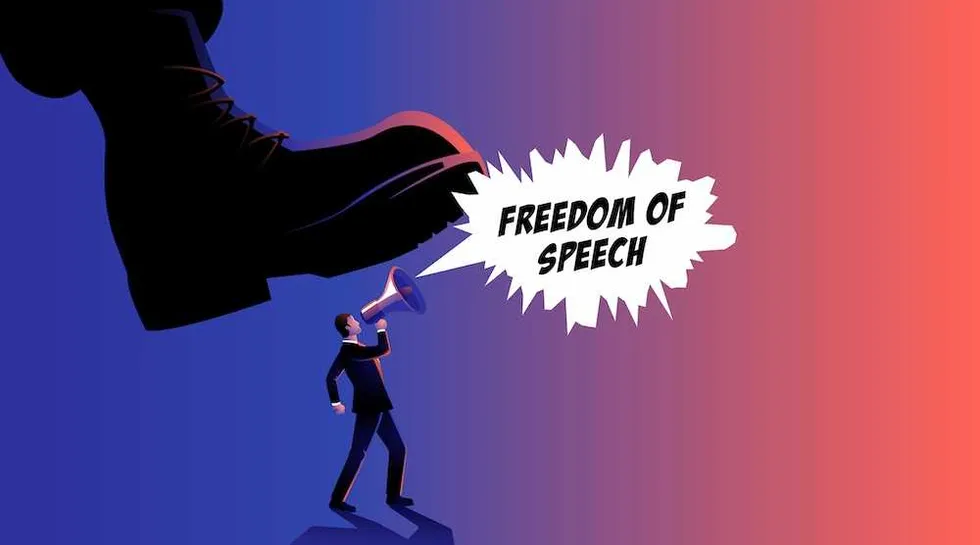
The fight over free expression in American higher education reached a troubling milestone in 2025. According to data from the Foundation for Individual Rights and Expression, efforts to censor speech on college campuses hit record highs across multiple fronts — and most succeeded.
Let’s start with the raw numbers. In 2025, FIRE’s Scholars Under Fire, Students Under Fire, and Campus Deplatforming databases collectively tracked:
- 525 attempts to sanction scholars for their speech, more than one a day, with 460 of them resulting in punishment.
- 273 attempts to punish students for expression, more than five a week, with 176 of these attempts succeeding.
- 160 attempts to deplatform speakers, about three each week, with 99 of them succeeding.
That’s 958 censorship attempts in total, nearly three per day on campuses across the country. For comparison, FIRE’s next-highest total was 477 two years ago.
The 525 scholar sanction attempts are the highest ever recorded in FIRE’s database, which spans 2000 to the present. Even when a large-scale incident at the U.S. Naval Academy is treated as just a single entry, the 2025 total still breaks records.
The common denominator across these censorship campaigns is not ideology — it’s intolerance.
Twenty-nine scholars were fired, including 18 who were terminated since September for social media comments about Charlie Kirk’s assassination.
Student sanction attempts also hit a new high, and deplatforming efforts — our records date back to 1998 — rank third all-time, behind 2023 and 2024.
The problem is actually worse because FIRE’s data undercounts the true scale of campus censorship. Why? The data relies on publicly available information, and an unknown number of incidents, especially those that may involve quiet administrative pressure, never make the public record.
Then there’s the chilling effect.
Scholars are self-censoring. Students are staying silent. Speakers are being disinvited or shouted down. And administrators, eager to appease the loudest voices, are launching investigations and handing out suspensions and dismissals with questionable regard for academic freedom, due process, or free speech.
RELATED: Liberals’ twisted views on Charlie Kirk assassination, censorship captured by a damning poll
 Deagreez via iStock/Getty Images
Some critics argue that the total number of incidents is small compared to the roughly 4,000 colleges in the country. But this argument collapses under scrutiny.
While there are technically thousands of institutions labeled as “colleges” or “universities,” roughly 600 of them educate about 80% of undergraduates enrolled at not-for-profit four-year schools. Many of the rest of these “colleges” and “universities” are highly specialized or vocational programs. This includes a number of beauty academies, truck-driving schools, and similar institutions — in other words, campuses that aren’t at the heart of the free-speech debate.
These censorship campaigns aren’t coming from only one side of the political spectrum. FIRE’s data shows, for instance, that liberal students are punished for pro-Palestinian activism, conservative faculty are targeted for controversial opinions on gender or race, and speaking events featuring all points of view are targeted for cancellation.
The two most targeted student groups on campus? Students for Justice in Palestine and Turning Point USA. If that doesn’t make this point clear, nothing will.
The common denominator across these censorship campaigns is not ideology — it’s intolerance.
RELATED: Teenager sues high school after tribute to Charlie Kirk was called vandalism
 rudall30 via iStock/Getty Images
So where do we go from here?
We need courage: from faculty, from students, and especially from administrators. It’s easy to defend speech when it’s popular. It’s harder when the ideas are offensive or inconvenient. But that’s when it matters most.
Even more urgently, higher education needs a cultural reset. Universities must recommit to the idea that exposure to ideas and speech that one dislikes or finds offensive is not “violence.” That principle is essential for democracy, not just for universities.
This year’s record number of campus censorship attempts should be a wake-up call for campus administrators. For decades, many allowed a culture of censorship to fester, dismissing concerns as overblown, isolated, or a politically motivated myth. Now, with governors, state legislatures, members of Congress, and even the White House moving aggressively to police campus expression, some administrators are finally pushing back. But this pushback from administrators doesn’t seem principled. Instead, it seems more like an attempt to shield their institutions from outside political interference.
That’s not leadership. It’s damage control. And it’s what got higher education into this mess in the first place.
If university leaders want to reclaim their role as stewards of free inquiry, they cannot act just when governmental pressure threatens their autonomy. They also need to be steadfast when internal intolerance threatens their mission. A true commitment to academic freedom means defending expression even when it is unpopular or offensive. That is the price of intellectual integrity in a free society.
Editor’s note: This article was originally published by RealClearPolitics and made available via RealClearWire.
When Bernie Sanders and I agree on AI, America had better pay attention
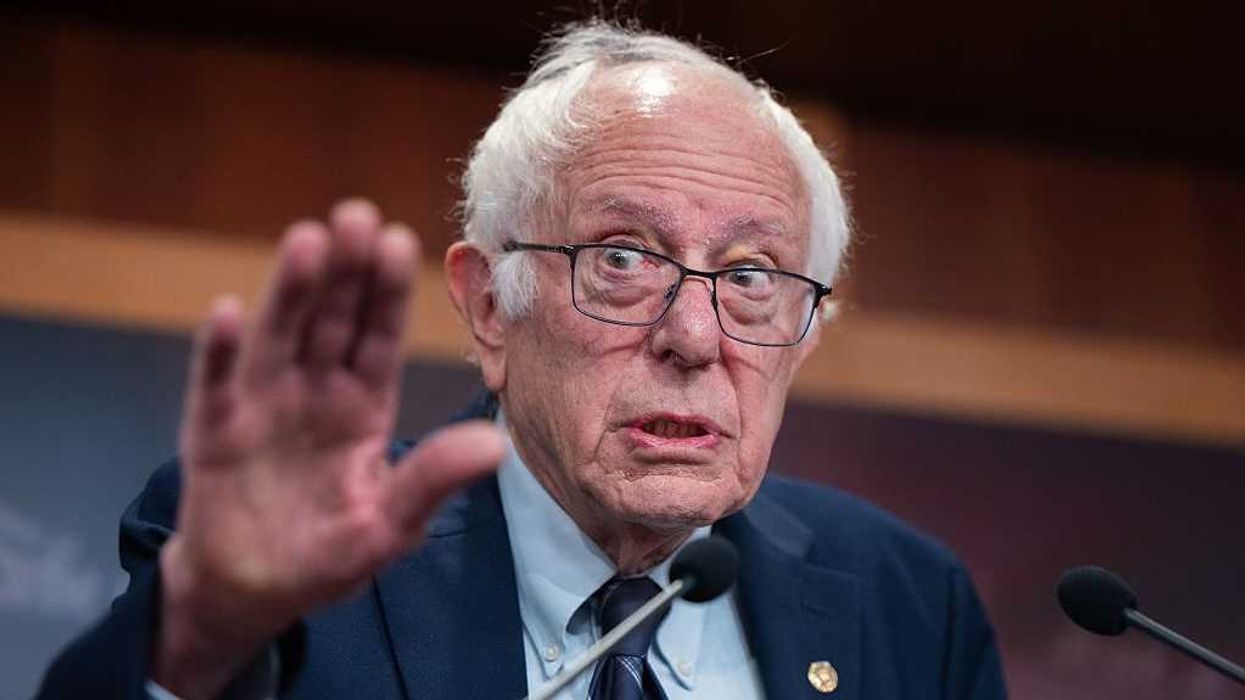
Democratic Socialist Bernie Sanders (I-Vt.) warned recently in the London Guardian that artificial intelligence “is getting far too little discussion in Congress, the media, and within the general population” despite the speed at which it is developing. “That has got to change.”
To my surprise, as a conservative advocate of limited government and free markets, I agree completely.
AI is neither a left nor a right issue. It is a human issue that will decide who holds power in the decades ahead and whether individuals retain sovereignty.
As I read Sanders’ piece, I kept thinking, “This sounds like something I could have written!” That alone should tell us something. If two people who disagree on almost everything else see the same dangers emerging from artificial intelligence, then maybe we can set aside the usual partisan divides and confront a problem that will touch every American.
Different policies, same fears
I’ve worked in the policy world for more than a decade, and it’s fair to say Bernie Sanders and I have opposed each other in nearly every major fight. I’ve pushed back against his single-payer health care plans. I’ve worked to stop his Green New Deal agenda. On economic policy, Sanders has long stood for the exact opposite of the free-market principles I believe make prosperity possible.
That’s why reading his AI op-ed felt almost jarring. Time after time, his concerns mirrored my own.
Sanders warned about the unprecedented power Silicon Valley elites now wield over this transformational technology. As someone who spent years battling Big Tech censorship, I share his alarm over unaccountable tech oligarchs shaping information, culture, and political discourse.
He points to forecasts showing AI-driven automation could displace nearly 100 million American jobs in the coming decade. I helped Glenn Beck write “Dark Future: Uncovering the Great Reset’s Terrifying Next Phase” in 2023, where we raised the exact same red flag, that rapid automation could destabilize the workforce faster than society can adapt.
Sanders highlights how AI threatens privacy, civil liberties, and personal autonomy. These are concerns I write and speak about constantly. Sanders notes that AI isn’t just changing industry; it’s reshaping the human condition, foreign policy, and even the structure of democratic life. On all of this, he is correct.
When a Democratic Socialist and a free-market conservative diagnose the same disease, it usually means the symptoms are too obvious to ignore.
Where we might differ
While Sanders and I share almost identical fears about AI, I suspect we would quickly diverge on the solutions. In his op-ed, he offers no real policy prescriptions at all. Instead, he simply says, “Congress must act now.” Act how? Sanders never says. And to be fair, that ambiguity is a dilemma I recognize.
As someone who argues consistently for limited government, I’m reluctant to call for new regulations. History shows that sweeping, top-down interventions usually create more problems than they solve. Yet AI poses a challenge unlike anything we’ve seen before — one that neither the market nor Congress can responsibly ignore.
RELATED: Shock poll: America’s youth want socialism on autopilot — literally
 Photo by Cesc Maymo/Getty Images
When Sanders says, “Congress must act,” does he want sweeping, heavy-handed regulations that freeze innovation? Does he envision embedding ESG-style subjective metrics into AI systems, politicizing them further? Does he want to codify conformity to European Union AI regulations?
We cannot allow a handful of corporations or governments to embed their subjective values into systems that increasingly manipulate our decisions, influence our communications, and deter our autonomy.
The nonnegotiables
Instead of vague calls for Congress to “do something,” we need a clear framework rooted in enduring American principles.
AI systems (especially those deployed across major sectors) must be built with hard, nonnegotiable safeguards that protect the individual from both corporate and governmental overreach.
This means embedding constitutional values into AI design, enshrining guarantees for free speech, due process, privacy, and equal treatment. It means ensuring transparency around how these systems operate and what data they collect.
This also means preventing ideological influence, whether from Beijing, Silicon Valley, or Washington, D.C., by insisting on objectivity, neutrality, and accountability.
These principles should not be considered partisan. They are the guardrails, rooted in the Constitution, which protect us from any institution, public or private, that seeks too much power.
And that is why the overlap between Sanders’ concerns and mine matters so much. AI is neither a left nor a right issue. It is a human issue that will decide who holds power in the decades ahead and whether individuals retain sovereignty.
If Bernie Sanders and I both see the same storm gathering on the horizon, perhaps it’s time the rest of the country looks up and recognizes the clouds for what they are.
Now is the moment for Americans, across parties and philosophies, to insist that AI strengthen liberty rather than erode it. If we fail to set those boundaries today, we may soon find that the most important choices about our future are no longer made by people at all.





