

Category: Gas tax
Understanding gas tax hikes — and how your state is affected
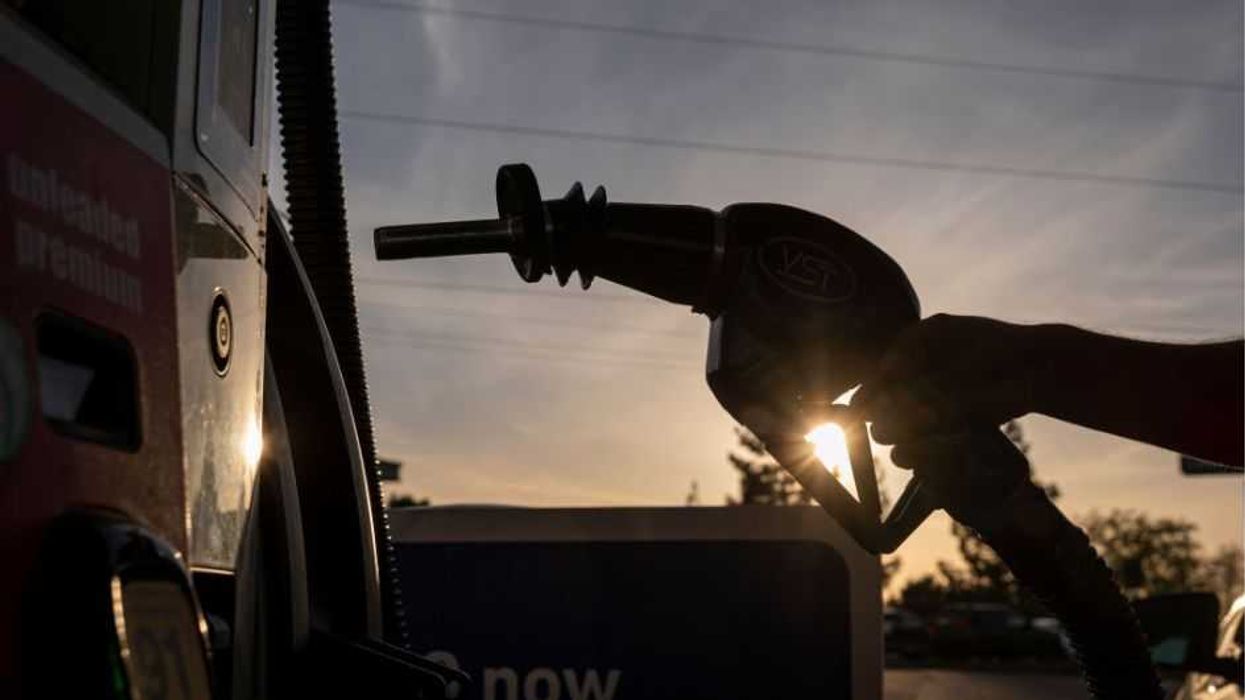
As 2026 begins, fuel taxes are shifting across the country — and many drivers won’t notice until they fill up. Some states are adjusting rates by a cent or less, while others are imposing major increases or overhauling how fuel is taxed altogether. Much of it is happening quietly through automatic systems that rarely make headlines.
Fuel taxes rarely dominate headlines, but they remain one of the most direct ways government policy intersects with everyday life. Unlike income or property taxes, fuel taxes are paid in small increments, embedded into a necessity for most Americans. That makes them politically sensitive, economically significant, and easy to overlook — until prices jump.
The broader question is whether fuel taxes remain a sustainable way to fund transportation in an era of increasing vehicle efficiency.
Over the past year, more than a dozen states adjusted their fuel tax systems. Some increased rates to shore up transportation budgets strained by inflation and aging infrastructure. Others reduced taxes to ease costs for consumers and commercial operators. As 2026 begins, another wave of changes is rolling out, driven largely by automatic formulas rather than new legislative votes.
The result is a patchwork of increases, decreases, pauses, and structural overhauls that reflect broader debates about infrastructure, accountability, and the future of road funding.
Small changes — for now
Several states are seeing modest adjustments as of January 1. Florida, Georgia, Minnesota, and North Carolina are implementing small increases of about 1 cent or less per gallon. New York, Utah, and Vermont are seeing slight decreases, also under a penny.
These changes are not the product of last-minute political deals. Instead, they stem from automatic adjustment mechanisms written into state law, often tied to inflation, fuel prices, or construction costs.
Nebraska, Pennsylvania, and West Virginia also allow automatic adjustments, but their fuel tax rates remain unchanged at the start of 2026. That stability does not mean those states are immune from future increases — only that the formulas did not trigger a change this cycle.
Automatic adjustments are becoming more common because they provide predictable revenue without forcing lawmakers to cast politically risky votes. Critics argue they reduce accountability and disconnect tax increases from voter oversight. Supporters counter that they keep transportation funding aligned with real-world costs, especially as materials and labor become more expensive.
While these small changes may barely register for individual drivers, larger shifts in several states deserve closer attention.
Michigan’s major overhaul
Michigan is implementing the most significant fuel tax change taking effect this year. Governor Gretchen Whitmer (D) signed a nearly $2 billion transportation funding package into law that fundamentally changes how fuel is taxed in the state.
Currently, Michigan drivers pay a 31-cent-per-gallon state excise tax on fuel, along with a 6% state sales tax on gasoline and diesel. The problem with that structure is where the money goes. Much of the sales tax revenue flows into the state’s general fund rather than being dedicated to roads and bridges.
Under the new law, the sales tax on fuel is eliminated and replaced with a higher fuel excise tax. The goal is to ensure that all fuel tax revenue is dedicated to transportation projects, aligning with Michigan’s constitutional requirement that fuel taxes be used for infrastructure.
The tradeoff is cost. As of January 1, the fuel excise tax jumps from 31 cents to 52.4 cents per gallon. For drivers, that represents a substantial increase at the pump, even as state leaders argue the new system is more transparent and constitutionally sound.
Supporters say the change corrects a long-standing mismatch between how fuel is taxed and how the money is spent. Critics counter that drivers are still paying significantly more, regardless of how the tax is labeled, at a time when vehicle ownership costs are already rising.
RELATED: America First energy policy is paying off at the pump
New Jersey’s variable approach
New Jersey is also raising fuel taxes under a law passed in 2024 that allows annual increases through 2029 to meet transportation funding targets. The state uses a layered tax structure that combines a petroleum products gross receipts tax with a fixed motor fuels excise tax.
As of January 1, the petroleum tax on gasoline rises by 4.2 cents, from 34.4 cents to 38.6 cents per gallon. When combined with the fixed 10.5-cent motor fuels tax, the total state gasoline tax reaches 49.1 cents per gallon. Diesel taxes rise by the same amount on the petroleum side, bringing the total diesel tax to 56.1 cents per gallon when paired with its fixed excise tax.
New Jersey’s approach reflects a broader trend toward variable fuel taxes designed to stabilize transportation funding. By tying part of the tax to revenue targets or fuel prices, the state aims to avoid sudden funding shortfalls. The downside, particularly for commuters and commercial operators, is reduced predictability at the pump.
Oregon hits pause
Oregon tells a different story. A scheduled 6-cent gas tax increase set to take effect January 1 has been put on hold.
Lawmakers approved the increase during a special session, raising the gas tax from 40 cents to 46 cents per gallon as part of a broader transportation funding package. After Governor Tina Kotek (D) signed the bill into law, opponents launched a statewide petition drive to delay the increase until voters could weigh in.
Organizers gathered nearly 200,000 signatures — enough to force the state to pause the tax hike until the November 2026 election. As a result, the gas tax increase is suspended, along with planned hikes to passenger vehicle registration and title fees. Other elements of the transportation package will still move forward, including a change that applies the motor vehicle fuel tax to diesel.
Oregon’s situation highlights the growing tension between legislative action and direct democracy when it comes to fuel taxes. Even when increases are framed as infrastructure investments, fuel costs remain politically sensitive, and voters are increasingly willing to push back.
The rise of automatic fuel taxes
Behind these headline changes lies a complex web of automatic adjustment systems that now shape fuel taxes in roughly half the country. According to the National Conference of State Legislatures, 25 states use some form of variable fuel tax rate.
These systems vary widely. Some states set fuel taxes as a percentage of the wholesale price. Others combine a flat excise tax with a price-based component. Many tie adjustments to inflation, using measures such as the Consumer Price Index or highway construction cost indexes.
Timing also varies. Indiana updates its fuel sales tax monthly. Vermont adjusts quarterly. Nebraska recalculates every six months. Several states, including Alabama and Rhode Island, make changes every two years.
Annual updates are the most common and occur in states such as California, Florida, Georgia, Michigan, Minnesota, New Jersey, New York, North Carolina, Pennsylvania, and Washington.
For policymakers, these mechanisms offer a way to keep transportation funding solvent without reopening contentious debates year after year. For drivers, they can feel like stealth tax increases — predictable, recurring, and largely disconnected from economic conditions at the household level.
Are fuel taxes still sustainable?
The broader question is whether fuel taxes remain a sustainable way to fund transportation in an era of increasing vehicle efficiency. As cars travel farther on less fuel, states collect less revenue per mile driven, even as infrastructure costs continue to rise.
That gap is driving experimentation with mileage-based user fees, higher registration costs, and targeted fees for specific vehicle types. Despite those efforts, fuel taxes remain the backbone of transportation funding — and recent changes suggest states are not ready to let go of them.
For consumers, the short-term impact is straightforward. In some states, filling up will cost a bit more. In others, it may cost slightly less or stay the same. Over time, however, the cumulative effect of these policies reaches far beyond individual drivers, influencing shipping costs, retail prices, and household budgets.
Fuel taxes may be collected a few cents at a time, but they represent billions of dollars and fundamental choices about how roads are built, maintained, and paid for. As 2026 begins, drivers would be wise to pay attention. What looks like a small adjustment today often signals a much larger shift tomorrow.





