

Category: George washington
Thanksgiving Isn’t for Atheists
It’s that time of year again. You know, that time of year when the price of a 16-lb turkey —…
Our forefathers prayed on Thanksgiving. We scroll.

There was a time when Thanksgiving pointed toward something higher than stampedes for electronics or a long weekend of football. At its root, Thanksgiving was a public reminder that faith, family, and country are inseparable — and that a free people must recognize the source of their blessings.
Long before Congress fixed the holiday to the end of November, colonies and early states observed floating days of thanksgiving, prayer, and fasting. These were civic acts as much as religious ones: moments when communities asked God to protect them from calamity and guide their families and their nation.
Grounded in gratitude
The Continental Congress issued the first national Thanksgiving proclamation in 1777, drafted by Samuel Adams. The delegates called on Americans to acknowledge God’s providence “with Gratitude” and to implore “such farther Blessings as they stand in Need of.”
Twelve years later, President George Washington proclaimed the first federal day of thanksgiving under the Constitution. He asked citizens to gather in public and private worship, to seek forgiveness for “national and other transgressions,” and to pray for the growth of “true religion and virtue.”
Our problems — social, fiscal, and moral — are immense. But they are not greater than the God our ancestors trusted.
Other presidents followed suit. During rising tensions with France in 1798, John Adams declared a national day of “solemn humiliation, fasting, and prayer,” arguing that only a virtuous people could sustain liberty. The next year he called for another day of thanksgiving, urging citizens to set aside work, confess national sins, and recommit themselves to God.
For generations, this was the American understanding: national strength flowed from moral character, and moral character flowed from religious conviction.
The evolution of a holiday
In 1863, President Abraham Lincoln — responding to years of lobbying by Sarah Josepha Hale — established the last Thursday in November as a permanent national Thanksgiving. Hale saw the holiday as a unifying civic ritual that strengthened families and reminded Americans of their shared heritage.
Calvin Coolidge echoed this tradition in 1924, observing that Thanksgiving revealed “the spiritual strength of the nation.” Even as technology transformed daily life, he insisted that the meaning of the day remain unchanged.
But as the country drifted from an agricultural rhythm and from public expressions of faith, the holiday’s original purpose faded. The deeper meaning — gratitude, repentance, unity — gave way to distraction.
When a nation forgets
Today, America marks Thanksgiving with a national character far removed from the one our forebears envisioned. The founders believed public acknowledgment of God’s authority anchored liberty. Modern institutions increasingly treat religious conviction as an obstacle.
Court rulings have redefined marriage, narrowed the space for religious conscience, and removed long-standing religious symbols from public grounds. Citizens have been fined, penalized, or jailed for refusing to violate their beliefs. The very freedoms early Americans prayed to preserve are now treated as negotiable.
At the same time, other pillars of national life — family stability, civic order, border security, self-government — erode under cultural and political pressure. As faith recedes, government fills the void. The founders warned that a people who lose their internal moral compass invite external control.
Former House Speaker Robert Winthrop (Whig-Mass.) put it plainly in 1849: A society will be governed “either by the Word of God or by the strong arm of man.”
A lesson from history
The collapse of religious conviction in much of Europe created a vacuum quickly filled by ideologies hostile to Western values. America resisted this trend longer, but the rising influence of secularism and identity ideology pushes our society toward the same drift: a nation less confident in its heritage, less united by a common purpose.
Ronald Reagan saw the warning signs decades ago. In his 1989 farewell, he lamented that younger generations were no longer taught to love their country or understand why the Pilgrims came here. Patriotism, once absorbed through family, school, and culture, had been replaced by fashionable cynicism.
Thanksgiving offers the antidote Reagan urged: a return to gratitude, history, and shared purpose.
RELATED: Why we need God’s blessing more than ever
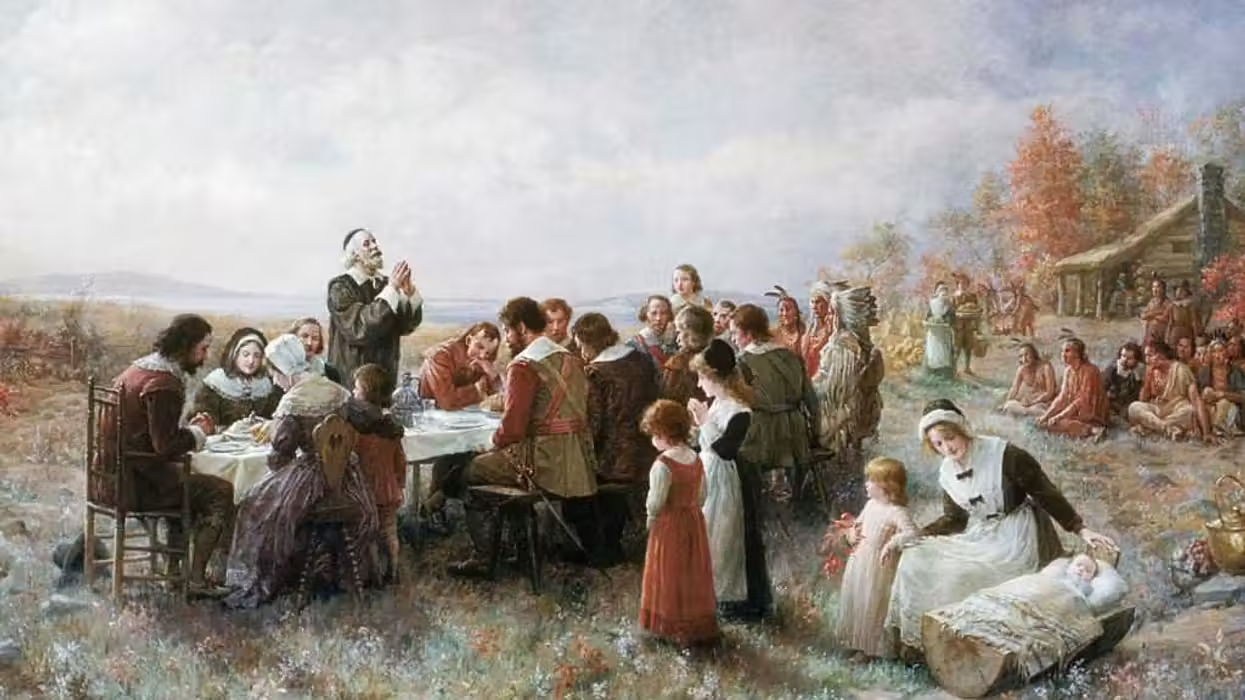 Photo by Barney Burstein/Corbis/VCG via Getty Images
Thanksgiving was meant to be the clearest expression of a nation united by faith, family, and patriotism. It rooted liberty in gratitude and gratitude in God’s providence.
Reagan captured that spirit in 1986, writing that Thanksgiving “underscores our unshakable belief in God as the foundation of our Nation.” That conviction made possible the prosperity and freedom Americans inherited.
Today’s constitutional conservatives must lead in restoring that heritage — not by nostalgia, but by example. Families who teach gratitude, faith, and national purpose build the civic strength the founders believed essential.
A return to gratitude
Thanksgiving calls each of us to humility: to recognize that national renewal begins with personal renewal. Our problems — social, fiscal, and moral — are immense. But they are not greater than the God our ancestors trusted.
That confidence is the heart of Thanksgiving. It is why the Pilgrims prayed, why Congress proclaimed days of fasting and praise, why Lincoln unified the holiday, and why generations of Americans pause each November to give thanks.
Editor’s note: A version of this article first appeared at Conservative Review in 2015.
When America feared God: The bold Thanksgiving prayer they don’t teach any more
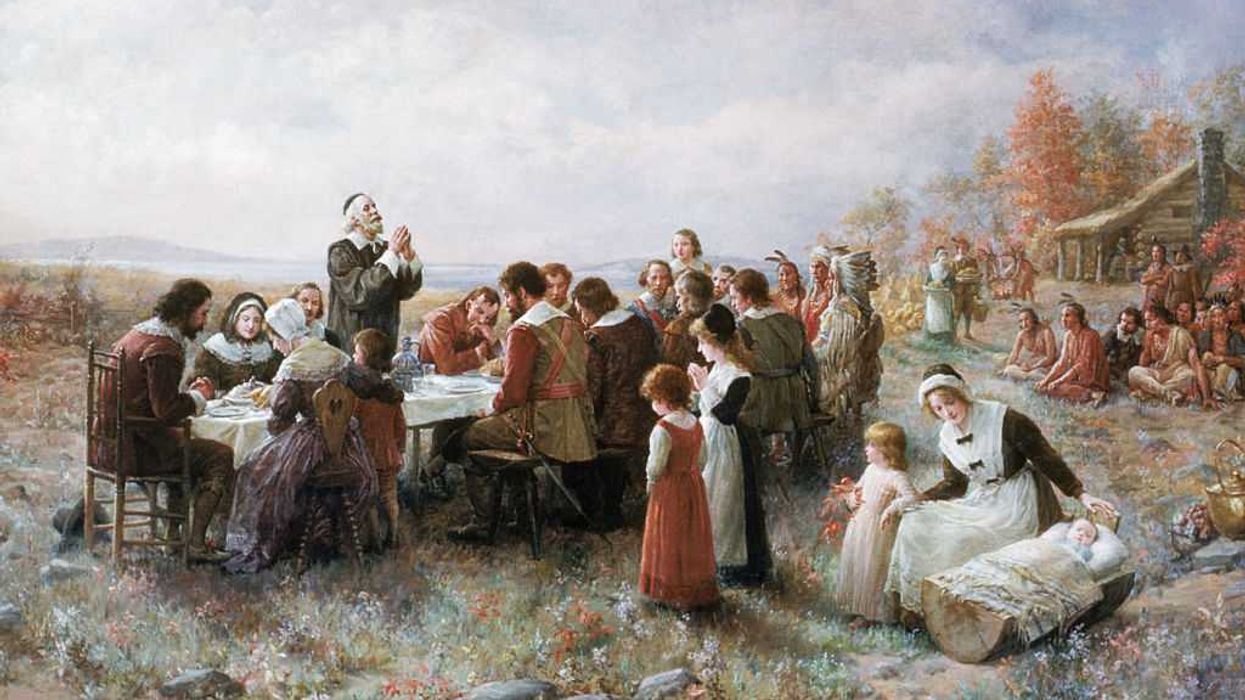
Thanksgiving is an annual reminder of our nation’s Christian roots and our godly heritage. Although Virginia proclaims that the first Thanksgiving was in Jamestown in 1619 — not in Plymouth in 1621 — the Plymouth one became the prototype of our annual celebrations.
George Washington was the first president under the Constitution to declare a national day of thanksgiving, and President Lincoln was the first to declare Thanksgiving an annual holiday.
‘It is the indispensable Duty of all Men to adore the superintending Providence of Almighty God; to acknowledge with Gratitude their Obligation to him for Benefits received, and to implore such further Blessings as they stand in Need of …’
However, Samuel Adams, with the help of two other continental congressmen, was the first to declare a National Day of Thanksgiving for America as an independent nation.
The time was the fall of 1777. Overall, it seemed that things were not going well for the United States. Americans lost the Battle of Brandywine on September 11, which Dr. Peter Lillback notes was our “first 9/11.”
George Washington saw that the Brandywine defeat meant the impending fall of Philadelphia, our nation’s capital at the time, into the hands of the British.
So Congress had to flee westward, first to Lancaster and then to York, Pennsylvania. Washington and his troops had to flee westward also. They ended up in a place called Valley Forge. The worst was yet to come with the brutal winter there.
Meanwhile, on October 7, 1777, there was a victory at Saratoga, New York. Samuel Adams of Boston, a key leader in American independence, saw that we as a nation could rejoice in this act of divine Providence. So — with the help of fellow Continental Congressmen Rev. John Witherspoon of New Jersey and Richard Henry Lee of Virginia — Samuel Adams wrote our country’s first thanksgiving declaration as an independent nation.
This is what they wrote in that First National Thanksgiving Proclamation, November 1, 1777: “It is the indispensable Duty of all Men to adore the superintending Providence of Almighty God; to acknowledge with Gratitude their Obligation to him for Benefits received, and to implore such further Blessings as they stand in Need of.”
As humans, as Christians, we should be grateful. They continue, “And it having pleased him in his abundant Mercy, not only to continue to us the innumerable Bounties of his common Providence; but also to smile upon us in the Prosecution of a just and necessary War, for the Defense and Establishment of our unalienable Rights and Liberties; particularly in that he hath been pleased, in so great a Measure, to prosper the Means used for the Support of our Troops, and to crown our Arms with most signal success.”
I think it’s fair to say that Adams, Witherspoon, and Lee were looking for the good news (the Saratoga victory) in a sea of bad news (American setbacks, the latest of which was the defeat at Brandywine).
They continue: “It is therefore recommended to the legislative or executive Powers of these UNITED STATES to set apart THURSDAY, the eighteenth Day of December next, for SOLEMN THANKSGIVING and PRAISE.”
And what were the Americans to do during that day of Thanksgiving and praise? To confess “their manifold sins … that it may please GOD through the Merits of JESUS CHRIST, mercifully to forgive and blot them out of Remembrance; That it may please him graciously to afford his Blessing on the Governments of these States respectively, and prosper the public Council of the whole.”
RELATED: That we may all unite in rendering unto our Creator our sincere and humble thanks
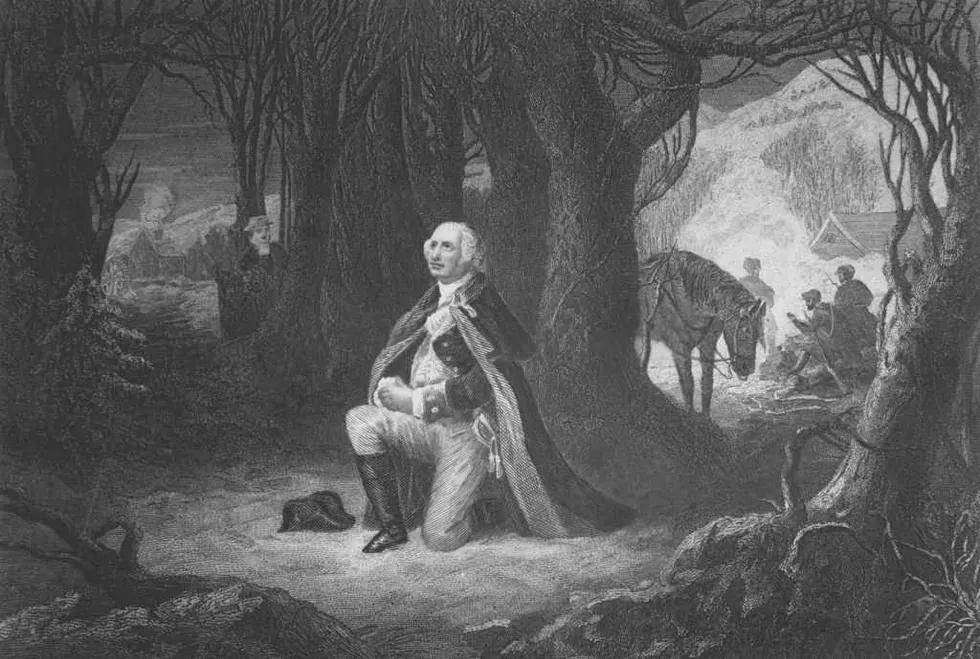 Interim Archives/Getty Images
If someone prayed like this in Congress today, people might try to drive him out of town on a rail — like the leftist members of Congress who blew a gasket when California minister Jack Hibbs prayed in the name of Jesus in Congress in early 2024.
Writing on behalf of Congress, Adams, Witherspoon, and Lee continue: “To inspire our Commanders, both by Land and Sea, and all under them, with that Wisdom and Fortitude which may render them fit Instruments, under the Providence of Almighty GOD, to secure for these United States, the greatest of all human Blessings, INDEPENDENCE and PEACE.”
They also prayed for God “to prosper the Trade and Manufactures of the People,” as well as the farmers, for success of the crops. They also asked for God’s help in the schools, which they note are “so necessary for cultivating the Principles of true Liberty, Virtue and Piety, under his nurturing Hand; and to prosper the Means of Religion, for the promotion and enlargement of that Kingdom, which consisteth ‘in Righteousness, Peace and Joy in the Holy Ghost.’”
This prayer proclamation is no namby-pamby type of prayer such as we might hear from Congress these days. These are bold proclamations of faith, showing the pro-Christian side of the founding fathers that we rarely hear about these days.
This article is adapted from an essay originally published at Jerry Newcombe’s website.





