

Category: God
How sharia law violates everything the founding fathers built
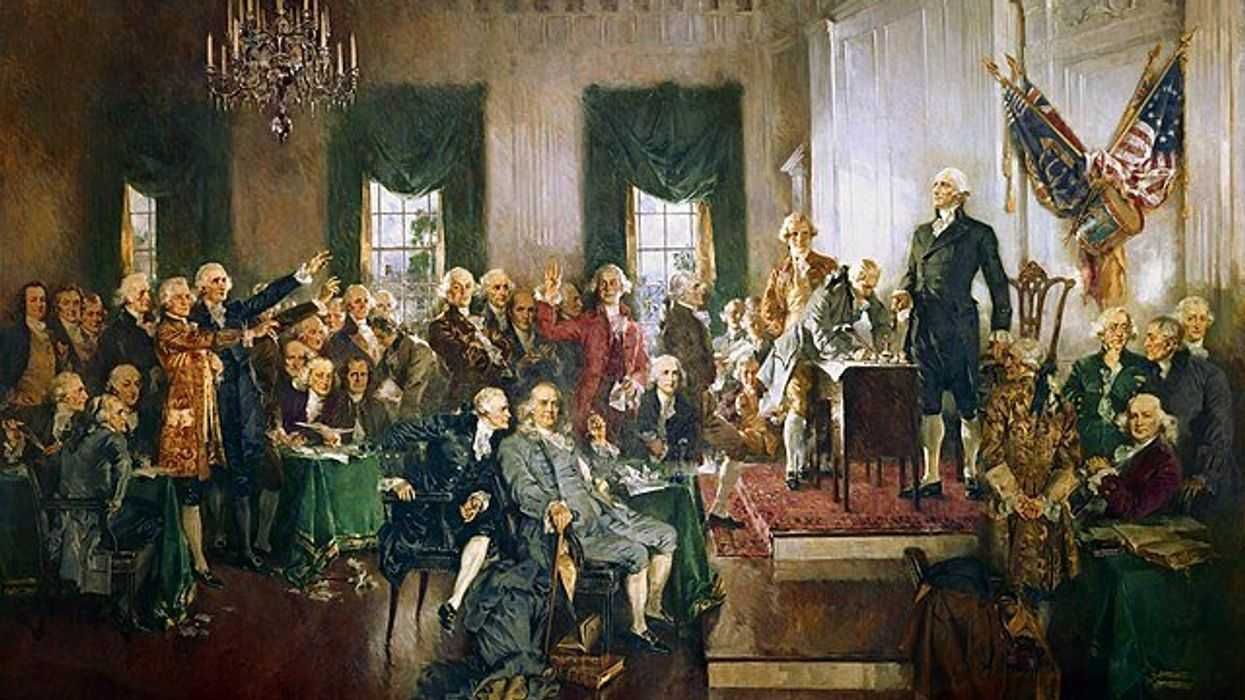
From the moment I first studied the United States Constitution through the lens of scripture, I’ve been struck by how carefully our founders embedded God-given liberty into the fabric of our nation. Freedom of conscience, equality before God, and protection from government overreach are not just political ideas; they are biblical principles.
The more I study, the clearer it becomes that Islamic systems like sharia law, enforced as government policy abroad, stand in sharp contrast to both the freedoms our Constitution guarantees and the liberties scripture upholds.
Christians must be informed, discerning, and proactive in defending freedoms that allow people to come to God freely.
Sharia law, when enforced as government policy, conflicts with constitutional freedom and biblical principles of liberty, including protections for personal conscience, speech, and moral choice.
Sharia law vs. constitutional liberty
Sharia law is a system derived from Islamic religious texts, guiding personal conduct and societal governance.
In countries where it is enforced, it often dictates punishments, civil law, and social norms based on religious authority rather than individual liberty. This approach contrasts sharply with the U.S. Constitution, which separates church and state, ensuring that government does not dictate religious belief or practice.
Scripture emphasizes the importance of freedom in Christ. Galatians 5:1 reminds us, “It is for freedom that Christ has set us free. Stand firm, then, and do not let yourselves be burdened again by a yoke of slavery.” The Constitution mirrors this principle, protecting Americans from coercion in matters of conscience, ensuring that individuals may follow God freely without fear of government reprisal.
Real-world examples of sharia governance
When we examine Muslim nations governed by sharia-based systems, the consequences for personal freedom are clear.
In countries like Saudi Arabia, Iran, and Afghanistan, civil and criminal codes often derive directly from religious texts. These laws enforce strict moral codes, restrict freedom of speech, and impose severe punishments on offenses such as theft, adultery, or apostasy.
RELATED: The Islamification of America is well under way
 osmanpek/iStock/Getty Images Plus
Punishments include public lashings, stonings, and even amputations for certain crimes. LGBTQ individuals face particularly harsh treatment, including imprisonment, corporal punishment, or death. Women’s rights and freedom of expression are often restricted as well.
These policies illustrate a system in which government enforces religious conformity, which directly conflicts with the freedom of conscience guaranteed by the Constitution. The U.S. founders recognized that human governments are fallible; they designed laws to protect liberty and allow people to make moral and spiritual choices voluntarily rather than under coercion.
The biblical perspective on liberty and government
Scripture provides a firm framework for understanding liberty. Romans 13:1-4 teaches that governments are instituted to punish wrongdoers and maintain order, but within limits. Civil authority is meant to restrain evil while upholding justice, not to enforce religious orthodoxy.
John 8:32 reminds us, “Then you will know the truth, and the truth will set you free.” True freedom, in both spiritual and civil contexts, comes from the ability to choose God and live according to His moral order voluntarily.
The Constitution’s protections for freedom of religion, speech, and equal protection under the law reflect these same biblical principles. They ensure that no one is coerced into adherence to a particular religious code, preserving liberty and human dignity.
Sharia-based governance, when implemented as law, replaces personal conscience with mandatory religious observance, undermining the freedoms that God and the founders intended.
How Christians should respond
Loving our neighbors does not mean ignoring the truth about systems of governance. But discernment calls us to distinguish between individuals and systems of law that impose religious authority on entire societies.
Christians are called to defend freedom and truth, speaking boldly yet compassionately.
Understanding the differences between sharia-based governance and constitutional liberty is not purely academic; it’s practical. Nations that merge religion and state often face suppression of speech, persecution of minorities, and human rights violations. Christians must be informed, discerning, and proactive in defending freedoms that allow people to come to God freely.
Practical engagement may include:
- Praying for wisdom to navigate cultural and political issues.
- Educating others about the value of freedom of conscience.
- Participating in civic discourse in ways that honor God while upholding liberty.
Sharia law and the protection of minorities
One area that starkly highlights the contrast is treatment of LGBTQ individuals. In sharia-governed regions, homosexuality is often criminalized, with penalties ranging from imprisonment to corporal punishment, even death. Theft or other criminal offenses can result in amputations, and adultery may be punished by stoning.
Christians are charged to uphold liberty, educate themselves on systems that restrict freedom, and advocate for policies that reflect God’s justice while protecting human conscience.
These practices illustrate the deep conflict between enforced religious law and personal freedom, especially for vulnerable minorities.
In contrast, the U.S. Constitution protects all citizens, ensuring legal equality, freedom of conscience, and due process. The biblical principle that every person is made in the image of God (Genesis 1:27) supports the need to defend dignity and liberty for all.
Historical lessons and modern implications
History demonstrates that societies enforcing religious law as government policy often struggle with oppression and instability. By embedding freedom and separation of powers, the U.S. Constitution creates space for citizens to practice faith voluntarily, without fear of legal coercion.
As Christians, we can see how these principles align with biblical teaching and recognize why coercive religious legal systems are incompatible with God’s design for human freedom.
Standing for freedom with compassion
Understanding these contrasts calls us to vigilance, prayer, and action. Christians are charged to uphold liberty, educate themselves on systems that restrict freedom, and advocate for policies that reflect God’s justice while protecting human conscience.
Loving our neighbors does not mean compromising truth; it means defending freedom in a way that is rooted in Christ’s example of compassion and moral clarity.
By examining Islam as a governance system, we see clearly the importance of constitutional and biblical liberty. Freedom of conscience, protection of minorities, and the ability to choose God freely are not negotiable — they are foundational to both faith and the American experiment.
Standing for these freedoms is an act of love, truth, and obedience to God.
This article is adapted from an essay originally published at Arch Kennedy’s blog.
Justin Bieber confesses Christian faith in candid livestream

Justin Bieber’s latest album ends with the pop star delivering an almost eight-minute, spoken-word retelling of the first three chapters of the book of Genesis.
Now the 31-year-old singer has opened up about his own Christian faith on a recent livestream, a clip of which was shared on YouTube. In it, the Canadian-born heartthrob sits over fast-food takeout with some of his crew, discussing the Bible, God, and what it means to be a man.
‘Now we get to live free and rather than focus on sin, now we can focus on Jesus, the wonderful savior.’
Many of Bieber’s comments revolve around the responsibility he feels he has to others and to God and how he is doing his best not to judge life based on perceived outcomes.
“It rains on the just and the unjust,” Bieber says, going on to stress that:
Bad s**t happens to everybody, you know? Bad s**t happens to good people, good s**t happens to bad people. … Everyone’s on the same equal playing ground, and that’s hard for people to really comprehend or want to digest because I think it’s makes us feel better to be like, ‘Well, I’m better than this guy.’
He adds, “I don’t want to think I’m better than anybody ’cause you don’t know what someone’s born into.”
‘It’s the same thing’
The conversation also turns to matters of morality, with Bieber speaking about taking “ownership” as a man and avoiding the sin of adultery:
“If you even think of a woman with lust it’s the same thing as actually doing it; committing adultery or whatever,” he says, clearly referring to Christ’s Sermon on the Mount and Matthew 5:28. “It’s the same thing. So if it even just crosses your mind for one second, if you treat a man with anger or something, it’s the same as killing a man, scripture says.”
RELATED: Why the Bible is suddenly flying off shelves across America
– YouTube
Am I worthy?
The singer seems to touch on his own mental battles when he speaks of God’s mercy.
“Someone’s probably struggling with their own self-image of like, ‘You know, am I worthy of love?’ And God says you are. You know what I mean? I don’t make the rules. But Jesus says that, and I really believe Him.”
“I believe He loved us so much,” Bieber passionately continues.
He put on skin and bones and came onto this Earth as a person, as a human. Lived a sinless life so that we don’t have to be focusing on sin because none of us can do the right thing all the time. And then He literally went to the cross, was lashed, whipped, made fun of, then he rose on the third day defeating death, Hell, and the grave. Now we get to live free and rather than focus on sin, now we can focus on Jesus, the wonderful savior. And I really think He’s the king of the world, bro. He’s the king of Hollywood. He’s the king of L.A., bro. He’s the king.
Transaction reaction
The men further discuss how and when scripture makes its way into their daily lives, with Bieber revealing that at this point in his career, he does not want to work with people for transactional purposes.
“That’s what, like, business is these days,” he says. “It’s just like, ‘I scratch your back, you scratch mine.’ And you guys, it’s not based on love.”
When asked how he learned about his faith and if it simply comes from reading the Bible, Bieber responds by saying much of it has stuck with him after his mother rewarded him for memorizing passages as a child.
“I would get a gold star. So I would just memorize it,” he recalls enthusiastically.
Bieber admits he often doesn’t know where a particular passage comes from in the Bible — just that God brings it to the front of his mind.
“The scripture says, ‘I will remind you the things that I’ve told you’ and He just reminds me,” Bieber concludes. “Because He knows what I want. He knows that I want this for other people. So I think He puts it to my brain.”
Like Blaze News? Bypass the censors, sign up for our newsletters, and get stories like this direct to your inbox. Sign up here!





