

Category: God
Did science just accidentally stumble upon what Christians already knew?

A new study titled “Architecture of Near-Death Experience Spaces” has caught the attention of both the empirics and the eternalists, because it’s not often that a study about dying reads like a map to heaven.
The researchers asked participants who had clinically died and been resuscitated not to describe their near-death experiences in words, but to draw them. What emerged were recurring shapes — cones, ellipses, radiant fields — across people from entirely different cultures.
As the apostle Paul wrote, ‘Now we see through a glass, darkly.’ And science, for once, seems to glimpse the flicker of eternity.
But here’s the kicker: These weren’t the random doodles of oxygen-starved brains. They were geometric symphonies, ordered and elegant. It was as if consciousness, freed from the flesh, had glimpsed the very scaffolding of creation itself.
For a Christian, this is profound. Scripture has long told us that creation is not chaos but design. “The heavens declare the glory of God,” wrote the psalmist (Psalm 19:1), and here, perhaps, the dying do, too. When the heart stops and the veil lifts, what appears before the eyes of the departing may not be fantasy but revelation — a structure that feels deliberate, like architecture drawn by divine hands.
Dr. Jeffrey Long has spent decades collecting such glimpses. An oncologist by trade and founder of the Near-Death Experience Research Foundation, Long has catalogued over 5,000 accounts from people who claim to have died and returned. His findings echo the new study’s quiet suggestion: There’s order here.
Across cultures, creeds, and continents, the same themes recur.
Consciousness separates from the body. A light appears — intelligent, loving, unthreatening. A panoramic life review follows, often described as instantaneous yet complete. Time dissolves and peace floods in. And then, inevitably, a choice or command to return.
These aren’t vague platitudes. They are astonishingly consistent. Whether the subject was Christian, atheist, or vaguely spiritual, the pattern is the same.
RELATED: Science’s God-denying narrative just got crushed again
 Pobytov/iStock/Getty Images Plus
Long’s data also reveals what happens after the return. Many report their faith deepening not from glimpses of pearly gates, but from meeting something that made sense on a cosmic scale. Others who had never believed before find themselves suddenly convinced that life does not end in nothingness. Across thousands of testimonies, moral clarity re-emerges like a melody.
Long told me his work has been called everything from pseudoscience to prophecy. But to him, the evidence points to something beyond the brain. When the same story emerges from a Buddhist in Nepal and a Baptist in Tennessee, argument starts to feel like denial.
When I reached out for comment about the link between near-death experiences and religious faith, Long directed me to his archive of testimonies — hundreds of raw, personal accounts from people who have stood at the edge of eternity and come back changed. They speak of a presence no doctrine can fully capture and a peace that science could never explain.
It’s the same paradox Christ left us with: The kingdom of heaven, near enough to touch, yet utterly beyond our comprehension.
Long shared with me four short lines from his archive, chosen because they capture what even theology struggles to say.
- “They said the energy of love is a good reason to return,” wrote Galadriel K, who described her experience with a calm certainty that makes disbelief feel naive.
- “It’s an unconditional love. I know Him. I met Him. … I met Jesus,” said Sharlene S, her words somewhere between testimony and awe.
- “When I got close enough to the Light, I felt unconditional love and time stopped,” recalled Judy G, as if describing an emotion too large for language.
- And then there was Charles T, whose final line needs no interpretation: “I knew what the source of that Light was. … It was Jesus.”
There’s something disarmingly simple in those statements — no grand theories, no intellectual gymnastics. Just awe. They testify to a presence that makes earthly distinctions fade. All melt away before the presence that burns through every pretense.
Critics will, of course, roll their eyes. They’ll talk about cerebral starvation, neural fireworks, the brain’s desperate attempt to comfort itself as it shuts down. But these explanations sound increasingly like the dying gasps of materialism. If consciousness were merely chemical, it shouldn’t behave so coherently at the brink of breakdown. It shouldn’t script the same story in so many minds.
There’s a dark humor in watching science stumble, wide-eyed, into what the faithful have always known. The modern world has spent centuries insisting that heaven is a myth, the soul a silly superstition, and death nothing but a switch flipped off.
In an age when every mystery is monetized and every miracle gets fact-checked by faith-phobic bureaucrats, it’s oddly comforting to know there are still places where no human instrument can reach.
Yet now, with the help of MRI machines and EEG scans, researchers are rediscovering the same truths that Sunday-school children sing. Progress, it seems, has come full-circle — proof that even unbelief can only wander so far before bumping into God.
To the Christian reader, these findings are not a challenge but a confirmation. The consistency of these visions, their moral coherence, their geometrical appeal — all resonate with a faith that has always held the visible world to be only the shadow of the invisible.
As the apostle Paul wrote, “Now we see through a glass, darkly” (1 Corinthians 13:12). And science, for once, seems to glimpse the flicker of eternity.
Of course, it would be wrong to make doctrine out of data. Faith is built in pews, not in peer reviews. But it’s just as foolish to ignore what so many have seen. In an age when every mystery is monetized and every miracle gets fact-checked by faith-phobic bureaucrats, it’s oddly comforting to know there are still places — perhaps the oldest place of all — where no human instrument can reach.
In that space between pulse and paradise, geometry gives way to grace. People describe radiant fields. But what they really mean is radiance itself — love, light, life. The shapes may differ, but the direction is always the same: toward something higher, brighter, unending.
Maybe that’s what the dying have been trying to tell us all along: that death is not the end of knowledge but the beginning of understanding. And no matter how mighty our machines or how certain our reason, humanity — from Maine to Manila — keeps sketching its diagrams of eternity: cones, ellipses, celestial plains.
Each line is a breath from beyond, proof that what we call death is only design, still unfolding.
Dear Christian: God didn’t call you to be a ‘beautiful loser’
Many Christians aim too low. We mistake humility for passivity and meekness with mediocrity, thinking God wants us to suppress all ambition. In doing so, we turn losing into a kind of twisted Christian virtue. We call it humility, but really, it’s just unbelief.
God never called His people to be beautiful losers. He called us to reign with Christ.
To seek glory, honor, and immortality is to seek what God Himself promises to the faithful.
The Bible’s vision of humanity is larger and more dignified than the self-loathing — the false humility that passes for spirituality today. The Christian life was never meant to be small. Redeemed men and women are not required to limp through life. Rather, He made us for glory.
Consider Paul’s words in Romans 2:6-8: “He will render to each one according to his works: to those who by patience in well-doing seek for glory and honor and immortality, he will give eternal life.”
For a long time, I’d come to this verse in my Bible reading plan, and it struck me as odd. Paul can’t be saying we are saved by seeking glory and honor, since the whole book of Romans teaches the opposite. We are saved by grace, not works. So what is Paul saying?
Here’s my answer in a nutshell that I’ll develop below:
God originally created man to pursue glory, honor, and immortality through faithful obedience and exercising dominion over creation. Since Adam sinned, he “fell short” of this glory. But Christ, the second Adam, succeeded where Adam failed and restored man to his original purpose. Therefore, redeemed Christians are now free to pursue glory and honor by faith, in the power of the Holy Spirit, exercising godly dominion for the glory of God.
Adam’s lost glory
To understand Paul’s statement in Romans 2:6-10, let’s go back to the Garden of Eden. Genesis 2 teaches that there were two trees in the garden: (1) the tree of life and (2) the tree of the knowledge of good and evil. Adam was permitted to eat from the first tree but forbidden to eat from the second.
When Adam sinned, the verdict was exile. “[God] drove out the man, and at the east of the garden of Eden he placed the cherubim and a flaming sword that turned every way to guard the way to the tree of life” (Genesis 3:24).
The trees represented two possible destinies: glory or death. Had Adam persevered in obedience, he would have eaten from the tree of life and entered into immortality. Instead, he reached for forbidden knowledge and fell under the curse of death.
Though Adam was created in innocence, he was not yet as glorious as he could have become. God gave him a gloriously ambitious task to “be fruitful and multiply and fill the earth and subdue it and take dominion” (Genesis 1:28). That’s a global ambition. Adam’s task was to take the wild and untamed world outside of Eden and bring it under subjection to him. In other words, God created Adam with an eschatology — a purpose, telos, or end — that he might rise from innocence to glory through faithful obedience.
To fulfill God’s command, Adam would need to develop various skills he wasn’t created with. He would have needed to learn to plant gardens, name animals, lead a wife, and raise children. Those latent potentialities would have been drawn out of him through experience over time.
In other words, though Adam was morally innocent, he was not yet as glorious as he would have become had he been faithful to God’s commands. He could have attained glory by becoming a more skilled and excellent man in the pursuit of glorious goals. In so doing, Adam would have grown intellectually, physically, spiritually.
Christ succeeded where Adam failed. And the result of Christ’s obedience was glory.
In other words, innocence was the starting line, glory was the finish line.
With this in mind, notice Paul’s famous description of sin as not merely “doing bad things” but falling short of the glory of God (Romans 3:23). That’s important. Sin is more than merely breaking the rules; it is the forfeiture of glory. Because of Adam’s sin, he was no longer able to attain the glory God made him for. He “fell short of the glory of God.” And humanity has been falling short ever since.
Christ, the second Adam, attains the glory of God
But the story doesn’t end in failure. Scripture presents Christ as the “last Adam” who succeeded where the first Adam failed. In His human nature, Christ sinlessly retraced Adam’s path.
The author of Hebrews (quoting Psalm 8) draws this out explicitly:
What is man, that you are mindful of him,
or the son of man, that you care for him?
You made him for a little while lower than the angels;
you have crowned him with glory and honor,
putting everything in subjection under his feet. (Hebrews 2:6-8)
Notice Hebrews 2 and Romans 2 both use the same word pair: “glory” and “honor.” The author or Hebrews 2 is citing Psalm 8, which is a commentary on Genesis 1–2. In other words, these texts tie together the creation of man, the image of God, and the dominion mandate.
Hebrews 2 also connects the creation of Adam with the incarnation of Christ, who was likewise crowned with glory and honor. And through His suffering and death, Christ brought “many sons to glory” (Hebrews 2:10).
Thus, Christ succeeded where Adam failed. And the result of Christ’s obedience was glory. Jesus said it Himself: “Was it not necessary that the Christ should suffer these things and enter into his glory?” (Luke 24:26).
Therefore, Jesus hit the reset button on the human story. Adam’s sin broke the circuit of glory, but Christ reconnected it. Jesus secured the glory that Adam lost and offers it freely to His people. He restores humanity to its intended place as rulers over creation, crowned with glory and honor, who must once again revisit the dominion mandate given to Adam.
Thus, Christ completed the redemption arc of humanity. The fullest Christian life will not be marked by mediocrity but glory. And our savior will reward his faithful servants who pursue it. Through Christ, obedience is glorious again.
Redeemed humanity restored to the pursuit of glory
This brings us back to Romans 2:6-7. When Paul says that God “will render to each one according to his works,” he isn’t teaching salvation by merit. He’s describing the reward of faith — the fruit of a life transformed by grace. Those who “seek for glory and honor and immortality” are not grasping for self-exaltation; they’re following the path of Christ, the second Adam, who entered glory through obedience.
Christians are to do all things to the glory of God (1 Corinthians 10:31) while also hoping in glory as our inheritance (Romans 5:2). Those united to Him by faith are once again free to pursue what Adam forfeited.
God is ambitious. The creation mandate is ambitious (Genesis 1:28). The great commission is ambitious (Matthew 28:18-20). These ambitions are global in scale and and can only be accomplished by Spirit-filled men and women who dare attempt great things for God. Thus, redeemed Christians are likewise made to pursue great and glorious ambitions.
Christians who, therefore, think small, equating humility with mediocrity, are settling for less than what God made them for. God intends His people to exercise dominion under Christ’s authority — to build, teach, create, and govern. To seek glory, honor, and immortality is to seek what God Himself promises to the faithful.
Glory is not a zero-sum game
Perhaps you may find it surprising to hear that when we obey God, giving God the glory, there is also a glory that overflows back to us. But it does. God’s glory is not a zero-sum game.
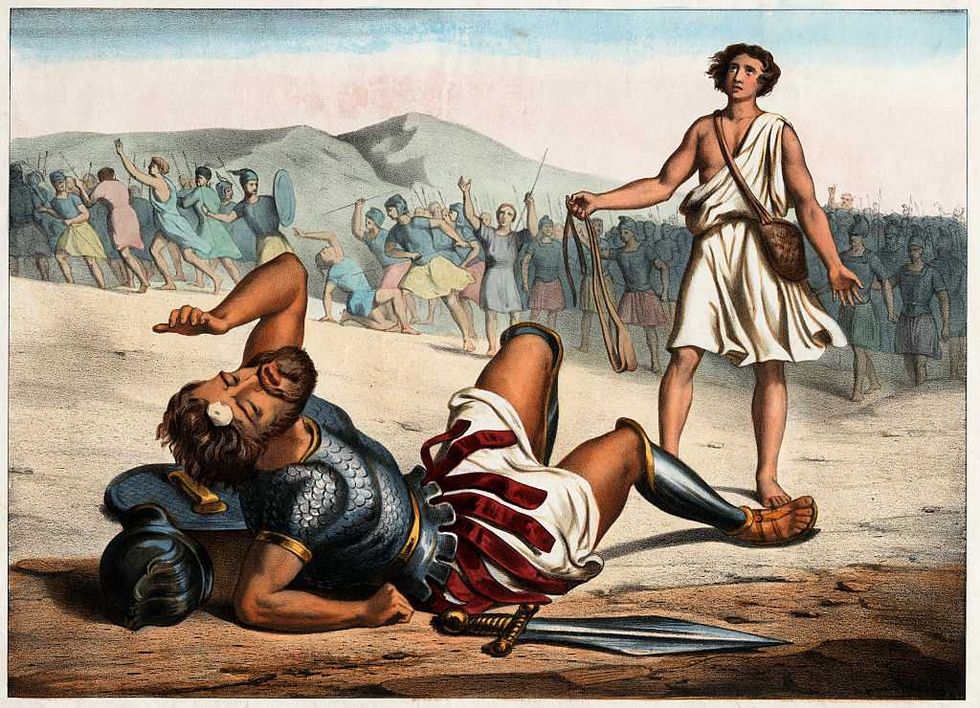
Take David’s victory over Goliath, for example. Who gets the glory for that? That’s actually a trick question. David could have stayed home that day, tending his sheep, playing it safe, and keeping his hands clean. If he’d stayed home, he would have remained innocent, but he would not have received glory.
RELATED: How ‘loser theology’ is poisoning the church
 Stefano Bianchetti/Corbis via Getty Images
Innocence isn’t the same as glory. One can remain innocent while doing nothing. Glory requires risk, faith, and obedience. When David stepped onto that battlefield, he was seizing the opportunity to magnify God through courage. That’s why we know his name. King David is on the Mount Rushmore of the Christian faith because he didn’t stay home. We know his name because he courageously rushed into battle.
In the defeat of Goliath, God gets the glory, but David also shares in it. That’s because God’s glory is not a zero-sum game — it is expansive. The more we glorify God, the more His glory spills over onto those who take courageous action by faith.
When some Christians feel satisfaction for succeeding at a great task, they might feel a little guilty for enjoying it. They might wonder if it’s pride or selfish ambition. That’s certainly possible, but it’s also possible that they’re merely enjoying an echo of glory in their achievement.
Rather than allowing the fear of pride to smother the glory we’re meant to enjoy, it is better to pursue glory while repenting of any pride that we see arising within us. Better to repent of sin while pursuing great things than to bury your talents and avoid the risk.
Greater ambition, greater glory
This matters because glory can be a powerful motivator for faithful Christians to pursue ambitious goals. The greater the ambition, the greater the glory when it is accomplished.
Put another way, glory scales with ambition. The kid who wins a backyard football game may feel a taste of glory, but the man who wins a Super Bowl ring experiences it in full. This same pattern applies to life in God’s kingdom: the greater the goal, the greater the glory. Glory is out on the battlefield, not at home on your couch.
There’s glory in raising faithful children, mastering your craft, building a business that blesses others, and serving others with excellence. Christians should be the most competent, disciplined, and creative people in the world. Why shouldn’t we be? We are indwelled by the Holy Spirit, sent on a divine mission, and commanded to take dominion. That means aiming high — not low.
Aim higher
Since many Christians don’t think this way, they end up aiming too low. They pray, go to church, pay a tithe, read their Bible, and stay out of trouble, thinking that’s the fullness of the Christian life. None of those things are wrong, but they’re not glorious either.
Innocence is where the journey begins, but glory is where we should end up.
So if there’s a promotion offered at work, go for it. If you’ve got a business idea, build it. If you’re presented with a leadership opportunity, take it. Godly Christians should make the best business owners and bosses in the world, should they not?
Pursue excellence in your vocation such that you will be a blessing to others. That’s what practical dominion taking looks like.
God has given you gifts and opportunities. The question is: What will you do with them? Will you aim low out of false humility? Or will you seek glory, by faith?
We were never meant to limp through life as losers or apologize for our successes. God crowned us with glory and honor and set us loose in His world. So don’t smother your ambition under the guise of humility. God doesn’t call us to be beautiful losers. He called us to reign with Christ. So aim higher. Pursue greatness for the glory of God. And when you succeed, give Him the glory and enjoy the reciprocal glory He delights to share with you.
May your pursuit of glory lead you upward, outward, expanding, and fruitful.
This essay was adapted from an article published at Michael Clary’s Substack.
How sharia law violates everything the founding fathers built
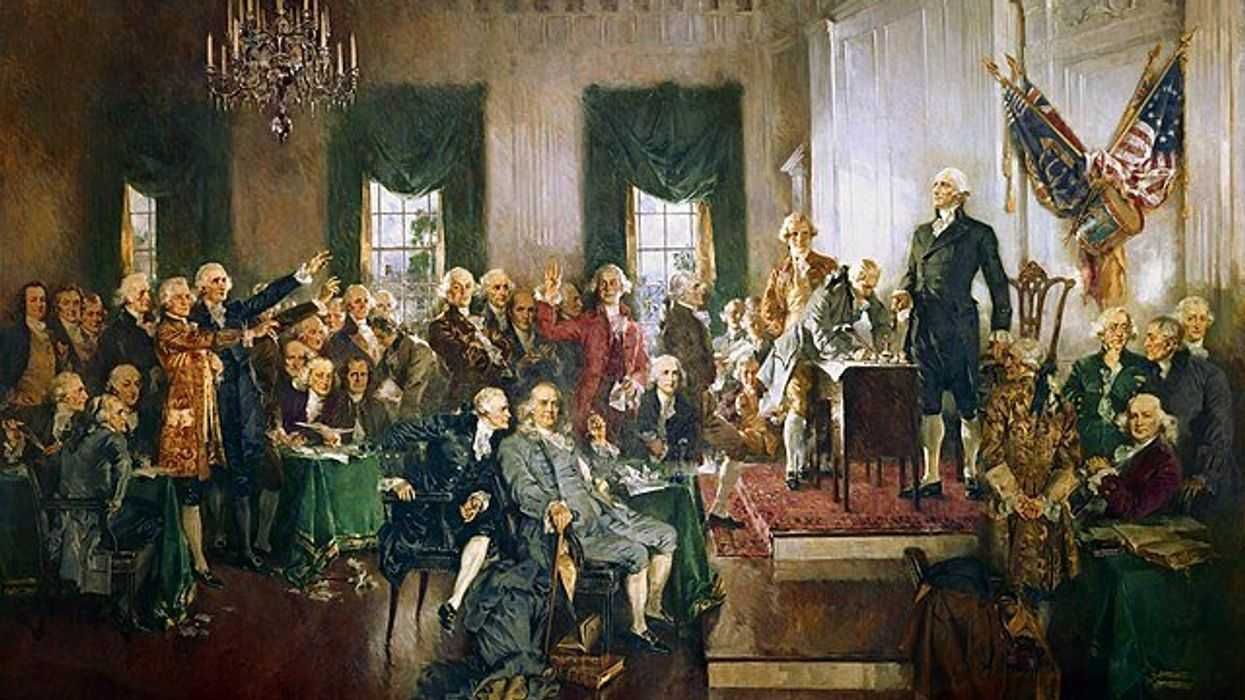
From the moment I first studied the United States Constitution through the lens of scripture, I’ve been struck by how carefully our founders embedded God-given liberty into the fabric of our nation. Freedom of conscience, equality before God, and protection from government overreach are not just political ideas; they are biblical principles.
The more I study, the clearer it becomes that Islamic systems like sharia law, enforced as government policy abroad, stand in sharp contrast to both the freedoms our Constitution guarantees and the liberties scripture upholds.
Christians must be informed, discerning, and proactive in defending freedoms that allow people to come to God freely.
Sharia law, when enforced as government policy, conflicts with constitutional freedom and biblical principles of liberty, including protections for personal conscience, speech, and moral choice.
Sharia law vs. constitutional liberty
Sharia law is a system derived from Islamic religious texts, guiding personal conduct and societal governance.
In countries where it is enforced, it often dictates punishments, civil law, and social norms based on religious authority rather than individual liberty. This approach contrasts sharply with the U.S. Constitution, which separates church and state, ensuring that government does not dictate religious belief or practice.
Scripture emphasizes the importance of freedom in Christ. Galatians 5:1 reminds us, “It is for freedom that Christ has set us free. Stand firm, then, and do not let yourselves be burdened again by a yoke of slavery.” The Constitution mirrors this principle, protecting Americans from coercion in matters of conscience, ensuring that individuals may follow God freely without fear of government reprisal.
Real-world examples of sharia governance
When we examine Muslim nations governed by sharia-based systems, the consequences for personal freedom are clear.
In countries like Saudi Arabia, Iran, and Afghanistan, civil and criminal codes often derive directly from religious texts. These laws enforce strict moral codes, restrict freedom of speech, and impose severe punishments on offenses such as theft, adultery, or apostasy.
RELATED: The Islamification of America is well under way
 osmanpek/iStock/Getty Images Plus
Punishments include public lashings, stonings, and even amputations for certain crimes. LGBTQ individuals face particularly harsh treatment, including imprisonment, corporal punishment, or death. Women’s rights and freedom of expression are often restricted as well.
These policies illustrate a system in which government enforces religious conformity, which directly conflicts with the freedom of conscience guaranteed by the Constitution. The U.S. founders recognized that human governments are fallible; they designed laws to protect liberty and allow people to make moral and spiritual choices voluntarily rather than under coercion.
The biblical perspective on liberty and government
Scripture provides a firm framework for understanding liberty. Romans 13:1-4 teaches that governments are instituted to punish wrongdoers and maintain order, but within limits. Civil authority is meant to restrain evil while upholding justice, not to enforce religious orthodoxy.
John 8:32 reminds us, “Then you will know the truth, and the truth will set you free.” True freedom, in both spiritual and civil contexts, comes from the ability to choose God and live according to His moral order voluntarily.
The Constitution’s protections for freedom of religion, speech, and equal protection under the law reflect these same biblical principles. They ensure that no one is coerced into adherence to a particular religious code, preserving liberty and human dignity.
Sharia-based governance, when implemented as law, replaces personal conscience with mandatory religious observance, undermining the freedoms that God and the founders intended.
How Christians should respond
Loving our neighbors does not mean ignoring the truth about systems of governance. But discernment calls us to distinguish between individuals and systems of law that impose religious authority on entire societies.
Christians are called to defend freedom and truth, speaking boldly yet compassionately.
Understanding the differences between sharia-based governance and constitutional liberty is not purely academic; it’s practical. Nations that merge religion and state often face suppression of speech, persecution of minorities, and human rights violations. Christians must be informed, discerning, and proactive in defending freedoms that allow people to come to God freely.
Practical engagement may include:
- Praying for wisdom to navigate cultural and political issues.
- Educating others about the value of freedom of conscience.
- Participating in civic discourse in ways that honor God while upholding liberty.
Sharia law and the protection of minorities
One area that starkly highlights the contrast is treatment of LGBTQ individuals. In sharia-governed regions, homosexuality is often criminalized, with penalties ranging from imprisonment to corporal punishment, even death. Theft or other criminal offenses can result in amputations, and adultery may be punished by stoning.
Christians are charged to uphold liberty, educate themselves on systems that restrict freedom, and advocate for policies that reflect God’s justice while protecting human conscience.
These practices illustrate the deep conflict between enforced religious law and personal freedom, especially for vulnerable minorities.
In contrast, the U.S. Constitution protects all citizens, ensuring legal equality, freedom of conscience, and due process. The biblical principle that every person is made in the image of God (Genesis 1:27) supports the need to defend dignity and liberty for all.
Historical lessons and modern implications
History demonstrates that societies enforcing religious law as government policy often struggle with oppression and instability. By embedding freedom and separation of powers, the U.S. Constitution creates space for citizens to practice faith voluntarily, without fear of legal coercion.
As Christians, we can see how these principles align with biblical teaching and recognize why coercive religious legal systems are incompatible with God’s design for human freedom.
Standing for freedom with compassion
Understanding these contrasts calls us to vigilance, prayer, and action. Christians are charged to uphold liberty, educate themselves on systems that restrict freedom, and advocate for policies that reflect God’s justice while protecting human conscience.
Loving our neighbors does not mean compromising truth; it means defending freedom in a way that is rooted in Christ’s example of compassion and moral clarity.
By examining Islam as a governance system, we see clearly the importance of constitutional and biblical liberty. Freedom of conscience, protection of minorities, and the ability to choose God freely are not negotiable — they are foundational to both faith and the American experiment.
Standing for these freedoms is an act of love, truth, and obedience to God.
This article is adapted from an essay originally published at Arch Kennedy’s blog.
Justin Bieber confesses Christian faith in candid livestream

Justin Bieber’s latest album ends with the pop star delivering an almost eight-minute, spoken-word retelling of the first three chapters of the book of Genesis.
Now the 31-year-old singer has opened up about his own Christian faith on a recent livestream, a clip of which was shared on YouTube. In it, the Canadian-born heartthrob sits over fast-food takeout with some of his crew, discussing the Bible, God, and what it means to be a man.
‘Now we get to live free and rather than focus on sin, now we can focus on Jesus, the wonderful savior.’
Many of Bieber’s comments revolve around the responsibility he feels he has to others and to God and how he is doing his best not to judge life based on perceived outcomes.
“It rains on the just and the unjust,” Bieber says, going on to stress that:
Bad s**t happens to everybody, you know? Bad s**t happens to good people, good s**t happens to bad people. … Everyone’s on the same equal playing ground, and that’s hard for people to really comprehend or want to digest because I think it’s makes us feel better to be like, ‘Well, I’m better than this guy.’
He adds, “I don’t want to think I’m better than anybody ’cause you don’t know what someone’s born into.”
‘It’s the same thing’
The conversation also turns to matters of morality, with Bieber speaking about taking “ownership” as a man and avoiding the sin of adultery:
“If you even think of a woman with lust it’s the same thing as actually doing it; committing adultery or whatever,” he says, clearly referring to Christ’s Sermon on the Mount and Matthew 5:28. “It’s the same thing. So if it even just crosses your mind for one second, if you treat a man with anger or something, it’s the same as killing a man, scripture says.”
RELATED: Why the Bible is suddenly flying off shelves across America
– YouTube
Am I worthy?
The singer seems to touch on his own mental battles when he speaks of God’s mercy.
“Someone’s probably struggling with their own self-image of like, ‘You know, am I worthy of love?’ And God says you are. You know what I mean? I don’t make the rules. But Jesus says that, and I really believe Him.”
“I believe He loved us so much,” Bieber passionately continues.
He put on skin and bones and came onto this Earth as a person, as a human. Lived a sinless life so that we don’t have to be focusing on sin because none of us can do the right thing all the time. And then He literally went to the cross, was lashed, whipped, made fun of, then he rose on the third day defeating death, Hell, and the grave. Now we get to live free and rather than focus on sin, now we can focus on Jesus, the wonderful savior. And I really think He’s the king of the world, bro. He’s the king of Hollywood. He’s the king of L.A., bro. He’s the king.
Transaction reaction
The men further discuss how and when scripture makes its way into their daily lives, with Bieber revealing that at this point in his career, he does not want to work with people for transactional purposes.
“That’s what, like, business is these days,” he says. “It’s just like, ‘I scratch your back, you scratch mine.’ And you guys, it’s not based on love.”
When asked how he learned about his faith and if it simply comes from reading the Bible, Bieber responds by saying much of it has stuck with him after his mother rewarded him for memorizing passages as a child.
“I would get a gold star. So I would just memorize it,” he recalls enthusiastically.
Bieber admits he often doesn’t know where a particular passage comes from in the Bible — just that God brings it to the front of his mind.
“The scripture says, ‘I will remind you the things that I’ve told you’ and He just reminds me,” Bieber concludes. “Because He knows what I want. He knows that I want this for other people. So I think He puts it to my brain.”
Like Blaze News? Bypass the censors, sign up for our newsletters, and get stories like this direct to your inbox. Sign up here!





