

Category: Homeownership
The courage we lost is hiding in the simplest places

If you’ll indulge one more cabin story, it’s only because remodeling an unlevel structure may be the clearest metaphor for the challenges caregivers face — and, I suspect, for the condition of America itself.
Out here in rural Montana, you learn quickly that when a project needs doing, you can pay a lot for it, wait a long time, use duct tape, or learn to do it yourself. Usually it’s some combination of the four. And while I’ve adapted to that reality, certain home-improvement tasks still give me the willies — mainly anything with a blade spinning fast enough to launch lumber toward Yellowstone National Park.
There is something life-giving about facing the hard thing in front of us instead of avoiding it.
Who knew you needed a helmet to cut boards?
I’ve been a pianist longer than I’ve been a caregiver, and since my hands pay the bills, I prefer to keep all my fingers intact. Let’s just say that when it comes to carpentry, I can really play the piano.
Recently we removed an old door in our cabin and needed to rebuild the wall. Help was delayed, so I decided to tackle it myself. The wall wasn’t the problem. The miter saw was. When I noticed the blade catching the afternoon light, it looked downright smug.
It knew.
Still I’ve met many builders in our county, and only one is missing a finger. Thankfully none answer to “Lefty.” If they can keep their body parts, maybe I can too. My rule is simple: Measure 17 times, cut once — and do it slowly.
So I got to work. In an old cabin nothing is plumb, so my level and I argued for quite a while. Even so, the studs went in, something close to square took shape, and despite a few caregiving interruptions, the wall was framed by sundown.
I was proud of myself. I took pictures. I bragged a little. Some builders may roll their eyes, but I’d do the same if they bragged about playing “Chopsticks.”
But it wasn’t really the blade. It was the fear behind it — the fear of getting something wrong, of creating a problem I couldn’t undo. And that fear isn’t limited to carpentry. When we let fear or anxiety keep us from picking up the tool and learning, whole parts of our lives remain unfinished.
We live in half-built cabins — studs exposed, projects stalled, confidence untested because we never moved toward the thing that intimidates us.
America was built by people who weren’t afraid to try hard things. They carved farms out of wilderness. Built railroads with crude tools. Raised barns without safety manuals. When something broke, they fixed it; when they didn’t know how, they learned anyway. Imperfectly, but persistently.
That spirit carried us for generations. Today we struggle to find it.
We’ve created a culture that treats effort as optional and discomfort as a crisis. We warn people not to push themselves. We offer labels and excuses instead of encouragement. We outsource everything, including our resilience. Hard things are treated as unsafe instead of character-building.
Many believe our greatest dangers are political, economic, or global. Maybe. But something quieter may be worse: We are losing the courage to try.
I say that as someone who has spent 40 years as a caregiver. Disease, trauma, addiction, aging — none of it yields to effort or skill. Day after day, fighting a battle you cannot win wears down confidence. Caregiving rarely gives you the satisfaction of a finished job or something tangible you can hold in your hands.
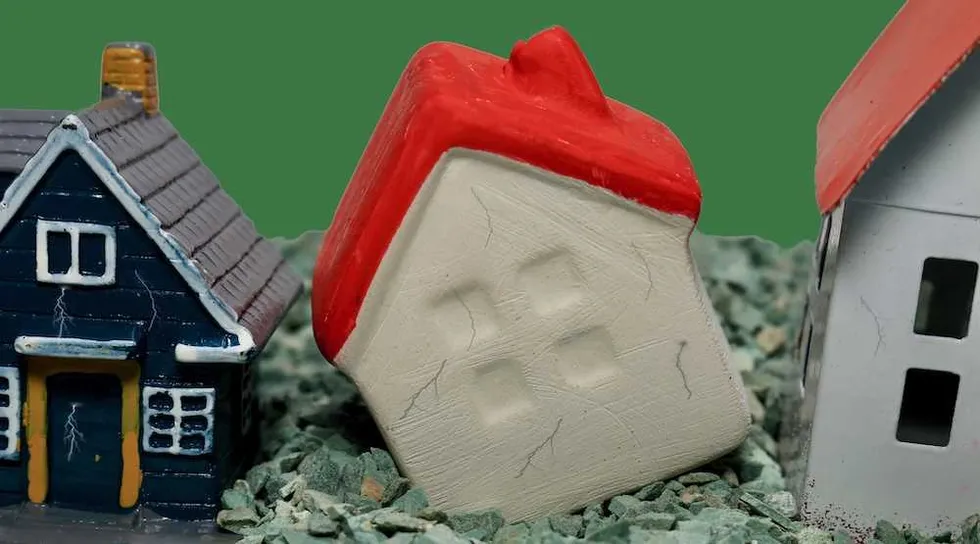
RELATED: My crooked house made me rethink what really needs fixing
 kudou via iStock/Getty Images
But tackling something you can finish, even if it makes the hair on your neck stand up, pushes back against that erosion of self-reliance. There is courage in doing the thing we’d rather avoid. When we take on something small but intimidating, we rediscover a steadiness we thought we’d lost — not bravado, not swagger, just the quiet certainty that we can still learn, grow, and accomplish something in a world that feels increasingly out of control.
And sometimes the payoff is simple. It’s something you can point to. That framed doorway in my cabin isn’t perfect, but it stands as proof that I stepped toward something unfamiliar and did it anyway. In a culture that avoids discomfort, even one small visible victory becomes fuel for courage. It tells you that you can do the next thing too.
As Emerson put it, a person who is not every day conquering some fear has not learned the secret of life. There is something life-giving about facing the hard thing in front of us instead of avoiding it.
That is the spirit America needs again — not bluster or political chest-thumping, but ordinary people choosing to try the hard thing right in front of them.
I will probably always be nervous around saws, but that doorway reminds me that courage often appears in the quiet places where we decide to try.
And there is absolutely no shame in wearing a helmet.
Homeowners’ associations weren’t supposed to replace civilization
Homeowners’ associations exploded across America beginning in the 1960s. No one describes HOAs as “popular,” and the horror stories of petty rules and bureaucratic neighbors are legion. Yet more Americans fight for the privilege of buying into them every year. The reason is simple: The HOA is the last legal mechanism Americans have to artificially recreate something the country once produced organically — a high-trust society.
People want neighborhoods where streets feel safe, houses stay maintained, and neighbors behave predictably. We call these places “high trust” because people do not expect those around them to violate basic standards. Doors remain unlocked, kids play outside, and property values rise. Americans once assumed this was the natural condition of ordinary life. It never was.
Everyone complains about HOAs, but they remain the only defense against the chaos modern culture produces.
High-trust societies are not accidental. They emerge only under specific cultural conditions. Trust forms when people can understand and predict the behavior of those around them. That requires a shared standard — how to act, how to maintain property, how to handle conflict. When those standards come from a common way of life, enforcement becomes minimal. People feel free not because they reject limits, but because the limits match their instincts and expectations.
Every social order requires maintenance, but the amount varies. When most residents share the same assumptions, small gestures keep the peace. A disapproving look from Mrs. Smith over an unkempt lawn prompts action. A loud party until 1 a.m. results in lost invitations until the offender corrects the behavior. Police rarely if ever enter the picture. The community polices itself through mutual judgment.
Several preconditions make this coordination possible. Residents must share standards so violations appear obvious. They must feel comfortable addressing those violations without fear of disproportionate or hostile reactions. And they must value the esteem of their neighbors enough to respond to correction. When those conditions collapse, norms collapse with them. As New York learned during the era of broken windows, one act of disorder invites the next.
American culture and government spent the last 60 years destroying those preconditions.
Academics and media stigmatized culturally cohesive neighborhoods, and government policies made them nearly impossible to maintain. Accusations of racism, sexism, or homophobia discourage the subtle social pressure that once corrected behavior. The informal network of mothers supervising neighborhood kids vanished as more women entered the corporate workforce. And as Robert Putnam documented, social trust deteriorates as diversity increases. Residents retreat into isolation, not engagement.
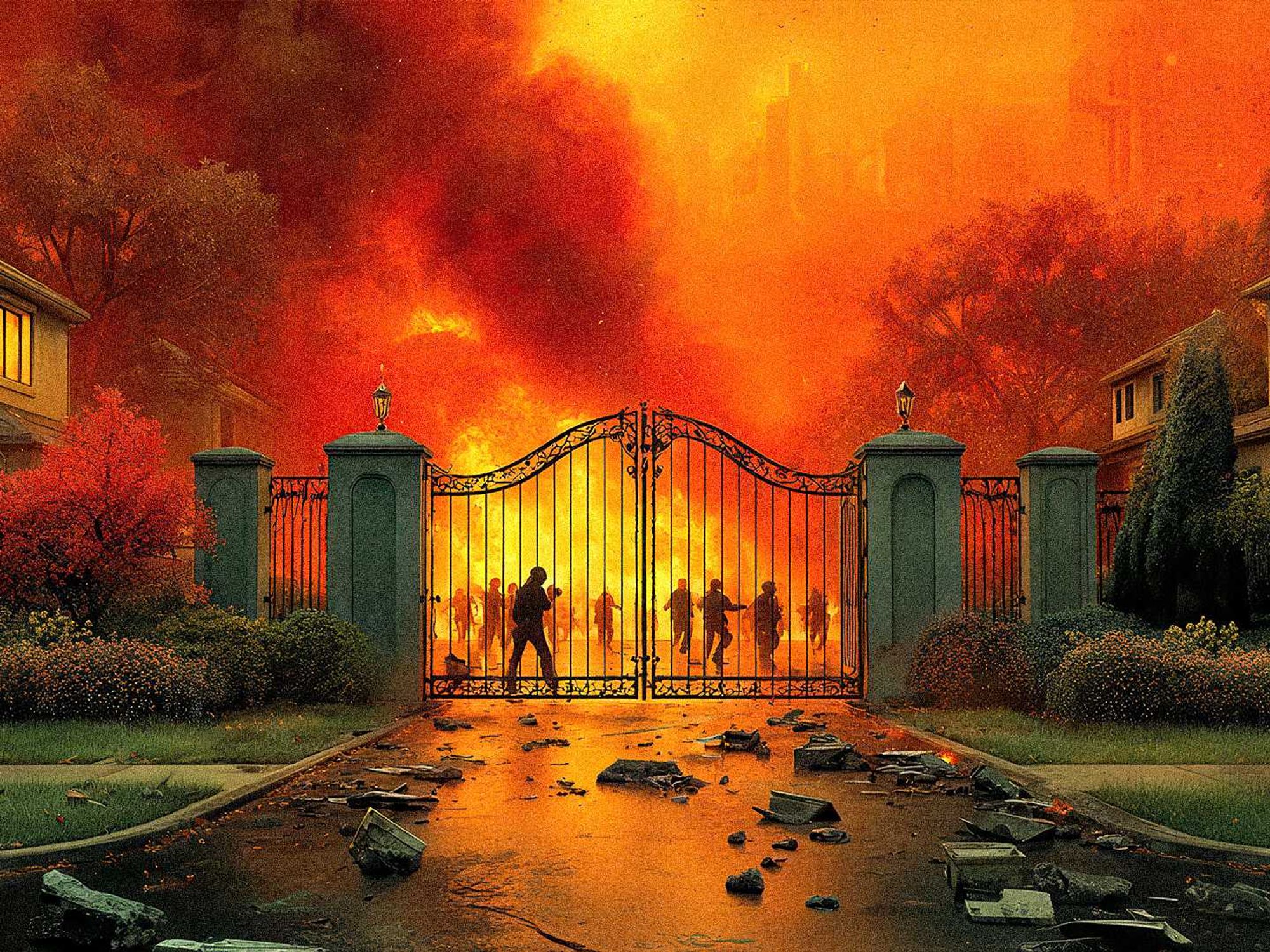
The HOA attempts to reconstruct a high-trust environment under conditions that no longer support it. Ownership, maintenance, and conduct move from cultural consensus to legal contract. Residents with widely different expectations sign binding agreements dictating noise levels, lawn care, parking, paint colors, and countless other micro-regulations. A formal board replaces Mrs. Smith’s frown. Fines replace gentle rebukes. Gates and walls replace the watchful eye of neighborhood moms.
What once came from community now comes from bureaucracy.
With home prices surging, families dedicate larger portions of their wealth to their houses. Few want to gamble on declining property values because their neighborhood slips into disorder. Everyone complains about HOAs, but they remain the only defense against the chaos modern culture produces. People enter hostile, artificial arrangements where neighbors behave like informants rather than partners — because the alternative threatens their largest investment.
RELATED: Do you want Caesar? Because this is how you get Caesar
 Blaze Media Illustration
This analysis is not about suburban frustration. The HOA reveals a far broader truth: Modern America replaced a high-trust society with a trustless system enforced by administrative power.
As cultural diversity rises, the ability of a population to form democratic consensus declines. Without shared standards, people cannot coordinate behavior through social pressure. To replicate the order once produced organically by culture, society must formalize more and more interactions under the judgment of third parties — courts, bureaucracies, and regulatory bodies. The state becomes the referee for disputes communities once handled themselves.
Litigiousness rises, contracts proliferate, and coercion replaces custom. The virtue of the people declines as they lose the skills required to maintain trust with their neighbors. Instead of resolving conflict directly, they appeal to ever-expanding authorities. No one learns how to build trust; they only learn how to report violations.
The HOA problem is not really about homeowners or housing costs. It is a window into how America reorganized itself. A nation once shaped by shared norms and informal enforcement now relies on legalistic frameworks to manage daily life. Americans sense the artificiality, but they see no alternative. They know something fundamental has changed. They know the culture that sustained high-trust communities no longer exists.
The HOA simply makes the loss unavoidable.





