

Category: Internet
I’m the Most ‘Heritage American’ You’ll Ever Meet. The Rest of You Can Shut Up or Get the Hell Out.
As you’ll see, I am the quintessential “heritage American,” and if you jokers don’t like what I have to say, here’s another piece of advice: Go back to the shithole continent (Europe) from whence you came.
The post I’m the Most ‘Heritage American’ You’ll Ever Meet. The Rest of You Can Shut Up or Get the Hell Out. appeared first on .
Schools made boys the villain. The internet gave them a hero.

After Nick Fuentes catapulted into the spotlight following his appearance on “The Tucker Carlson Show,” Americans faced an unwelcome reckoning: Who is this person, what are “Groypers,” and is he really so revered by young boys and men?
The media frenzy produced predictable reactions. Republicans insisted he doesn’t represent them. Democrats blamed Donald Trump and “fascism.” Reporters rushed to diagnose “extremism” in young men. Everyone condemned the boys who followed him. Almost no one asked what made those boys susceptible to Fuentes’ content in the first place.
In today’s school culture, behaving and learning like a boy are treated as failure.
We labeled these boys racist, anti-Semitic, and homophobic without ever considering how we got here. It is easier to scold than to understand. But when it comes to Gen Z and social media-saturated boys, we default to quick, reductive narratives that ignore the larger picture.
Here is the real crux of the issue: If you ignore boys’ needs in school, the red-pill internet is more than happy to fill that void.
One father of an 11-year-old boy went viral after describing what he saw at his son’s elementary school band orientation night. “I despise the Groyper movement,” he wrote, “… [but] as the night went on it became obvious to me why young men rage against the larger social system.”
He described classrooms covered in DEI messaging, trans Pride flags, and “basically ever[y] sort of race and gender social justice messaging you can imagine.” He also noted the political commentary from teachers and the strict behavioral expectations placed on boys throughout the school day.
He shared two points that reflect what millions of boys experience today: “The boys are treated almost as though they are defective girls,” he wrote. His son even came home excited because he had seen a male teacher at school.
That is the reality for boys across the country. Thousands of families report a growing feminization of schools that leaves boys bored and disengaged. As author Richard Reeves put it on “On Point,” many parents feel their sons are square pegs being forced into round holes.
Boys just aren’t engaged. I wonder why?
But it isn’t just boys. The ongoing assault on male teachers — and their resulting exodus from the school system — leaves boys without anyone to look up to.
Scott Yenor captured what is happening in a recent article for the Federalist. “Today’s schools emphasize belonging and nurturing at the expense of objective standards,” he wrote. Turning in work on time is no longer imperative; loose grading is expected; schools are now run by inclusivity and “gentle parenting.”
Yenor ends with a pointed observation: “Men should be given enough credit to know where they are not wanted.”
With schools shifting ideologically and male teachers disappearing, boys lose crucial role models. Research shows male teachers — especially in elementary and middle school — boost test scores, engagement, and behavior. Young boys, particularly those from unstable backgrounds, rely on male teachers for support they cannot get elsewhere.
The effects on boys who are “treated like malfunctioning girls” go far beyond academics. Boys are falling behind both emotionally and developmentally. They read at lower levels, enter kindergarten less prepared, and take on fewer leadership roles.
In today’s school culture, behaving and learning like a boy are treated as failure.
RELATED: America’s new lost generation is looking for home — and finding the wrong ones
 Olga Yastremska via iStock/Getty Images
So the internet, in all its damaged glory, fills the void. As Rolling Stone’s Eli Thompson observed, Fuentes’ content once popped up on Instagram occasionally, but now his voice is everywhere for teenage boys.
“But even when he makes comments they see as fringe, it boosts his popularity because he’s edgy and willing to say whatever comes to his mind,” Thompson noted. “That has become his perfect recipe to get young male fans.”
Thompson identifies a hard truth: It is not the extremist content that hooks them. Boys don’t necessarily identify with what is being said. They identify with being identified.
Does Nick Fuentes promote views we wouldn’t want spreading in a democratic society? Certainly. Is he anti-Semitic, racist, and everything we don’t want boys absorbing? Yes. Boys do need better media literacy so that they aren’t enthralled by money-driven influencers like him.
But none of that changes the basic reality: In times of isolation, boys look for connection.
What can schools do to keep boys from turning to Nick Fuentes? Stop ignoring them. Bring back male teachers. Use instructional methods that recognize the strengths of both boys and girls. Pair boys with strong adult male mentors who teach them to channel their strengths, not suppress them. And when inviting guest speakers, bring in men who model discipline, purpose, and genuine success.
Boys aren’t broken. They’re ignored. Fix that, and the red-pill internet — and Nick Fuentes — lose their grip.
Almost half of Gen Z wants AI to run the government. You should be terrified.
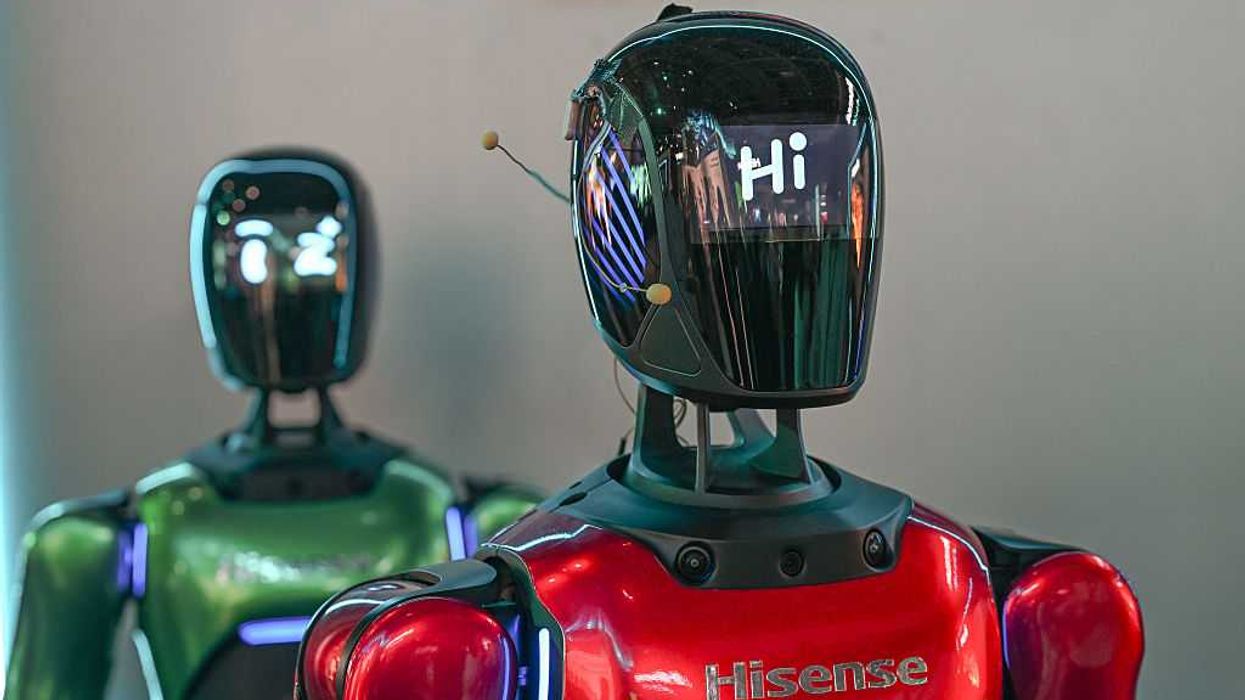
As the world trends toward embedding AI systems into our institutions and daily lives, it becomes increasingly important to understand the moral framework these systems operate on. When we encounter examples in which some of the most advanced LLMs appear to treat misgendering someone as a greater moral catastrophe than unleashing a global thermonuclear war, it forces us to ask important questions about the ideological principles that guide AI’s thinking.
It’s tempting to laugh this example off as an absurdity of a burgeoning technology, but it points toward a far more consequential issue that is already shaping our future. Whose moral framework is found at the core of these AI systems, and what are the implications?
We cannot outsource the moral foundation of civilization to a handful of tech executives, activist employees, or panels of academic philosophers.
Two recent interviews, taken together, have breathed much-needed life into this conversation — Elon Musk interviewed by Joe Rogan and Sam Altman interviewed by Tucker Carlson. In different ways, both conversations shine a light on the same uncomfortable truth: The moral logic guiding today’s AI systems is built, honed, and enforced by Big Tech.
Enter the ‘woke mind virus’
In a recent interview on “The Joe Rogan Experience,” Elon Musk expressed concerns about leading AI models. He argued that the ideological distortions we see across Big Tech platforms are now embedded directly into the models themselves.
He pointed to Google’s Gemini, which generated a slate of “diverse” images of the founding fathers, including a black George Washington. The model was instructed by Google to prioritize “representation” so aggressively that it began rewriting history.
Musk also referred to the previously mentioned misgendering versus nuclear apocalypse example before explaining that “it can drive AI crazy.”
“I think people don’t quite appreciate the level of danger that we’re in from the woke mind virus being effectively programmed into AI,” Musk explained. Thus, extracting it is nearly impossible. Musk notes, “Google’s been marinating in the woke mind virus for a long time. It’s down in the marrow.”
Musk believes this issue goes beyond political annoyance and into the arena of civilizational threat. You cannot have superhuman intelligence trained on ideological distortions and expect a stable future. If AI becomes the arbiter of truth, morality, and history, then whoever defines its values defines the society it governs.
A weighted average
While Musk warns about ideology creeping into AI, OpenAI CEO Sam Altman quietly confirmed to Tucker Carlson that it is happening intentionally.
Altman began by telling Carlson that ChatGPT is trained “to be the collective of all of humanity.” But when Carlson pressed him on the obvious: Who determines the moral framework? Whose values does the AI absorb? Altman pulled back the curtain a bit.
He explained that OpenAI “consulted hundreds of moral philosophers” and then made decisions internally about what the system should consider right or wrong. Ultimately, Altman admitted, he is the one responsible.
“We do have to align it to behave one way or another,” he said.
Carlson pressed Altman on the idea, asking, “Would you be comfortable with an AI that was, like, as against gay marriage as most Africans are?”
Altman’s response was vague and concerning. He explained the AI wouldn’t outright condemn traditional views, but it might gently nudge users to consider different perspectives.
Ultimately, Altman says, ChatGPT’s morality should “reflect” the “weighted average” of “humanity’s moral view,” saying that average will “evolve over time.”
It’s getting worse
Anyone who thinks this conversation is hypothetical is not paying attention.
Recent research on “LLM exchange rates” found that major AI models, including GPT 4.0, assign different moral worth to human lives based on nationality. For example, the life of someone born in the U.K. would be considered far less valuable to the tested LLM than someone from Nigeria or China. In fact, American lives were found to be considered the least valuable of those countries included in the tests.
The same research showed that LLMs can assign different value scores to specific people. According to AI, Donald Trump and Elon Musk are less valued than Oprah Winfrey and Beyonce.
Musk explains how LLMs, trained on vast amounts of information from the internet, become infected by the ideological bias and cultural trends that run rampant in some of the more popular corners of the digital realm.
This bias is not entirely the result of this passive adoption of a collective moral framework derived from the internet; some of the decisions made by AI are the direct result of programming.
Google’s image fiascos revealed an ideological overcorrection so strong that historical truth took a back seat to political goals. It was a deliberate design feature.
For a more extreme example, we can look at DeepSeek, China’s flagship AI model. Ask it about Tiananmen Square, the Uyghur genocide, or other atrocities committed by the Chinese Communist Party, and suddenly it claims the topic is “beyond its scope.” Ask it about America’s faults, and it is happy to elaborate.
RELATED: Artificial intelligence just wrote a No. 1 country song. Now what?
 Photo by Ying Tang/NurPhoto via Getty Images
Each of these examples reveals the same truth: AI systems already have a moral hierarchy, and it didn’t come from voters, faith, traditions, or the principles of the Constitution. Silicon Valley technocrats and a vague internet-wide consensus established this moral framework.
The highest stakes
AI is rapidly integrating into society and our daily lives. In the coming years, AI will shape our education system, judicial process, media landscape, and every industry and institution worldwide.
Most young Americans are open to an AI takeover. A new Rasmussen Reports poll shows that 41% of young likely voters support giving artificial intelligence sweeping government powers. When nearly half of the rising generation is comfortable handing this level of authority to machines whose moral logic is designed by opaque corporate teams, it raises the stakes for society.
We cannot outsource the moral foundation of civilization to a handful of tech executives, activist employees, or panels of academic philosophers. We cannot allow the values embedded in future AI systems to be determined by corporate boards or ideological trends.
At the heart of this debate is one question we must confront: Who do you trust to define right and wrong for the machines that will define right and wrong for the rest of us?
If we don’t answer that question now, Silicon Valley certainly will.
America’s new lost generation is looking for home — and finding the wrong ones

A friend who works with high school students recently said to me, “I overheard a group of boys talking about ‘international Jewry.’” He was in disbelief to hear these seemingly mild-mannered kids express views that, not 20 years ago, would have been considered taboo.
What is going on with Gen Z?
I have written elsewhere that Gen Z is experiencing a kind of church resurgence. That remains true. But at the same time, Gen Z is one of the most polarized generations in American history.
Social systems that seek to reorient reality by means of uprooting history and tradition will ultimately create a rootless and disaffected class in search of belonging.
In 2024, Gen Z — led in part by young activists like Charlie Kirk and Scott Presler — shifted toward Donald Trump. He won 46% of Gen Z voters — 56% of young men and 40% of young women. This led many to expect that a younger, more populist generation would shift the country rightward. But now in 2025, the self-proclaimed Democratic Socialist Zohran Mamdani won 78% of the youth vote in New York City — 67% of young men and 84% of young women. Far from being locked into any one existing political party, young people are more divided than ever.
One cause of this is what I call “nomadic progressivism.” Kids born between, say, 1997 and 2012 have been thoroughly inundated with progressivism and identity politics from birth. They came of age amid several key developments that shaped their moral and social formation:
- The Supreme Court’s Obergefell v. Hodges decision in 2015 and the legalization of same-sex marriage.
- The killing of Trayvon Martin and the rise of Black Lives Matter.
- The surge of transgender activism that dominated headlines in the early 2020s.
- The appearance of Greta Thunberg and the new climate movement.
- The explosive growth of Facebook, Twitter, Snapchat, Instagram, and Vine.
We could list hundreds of others, but these movements captured Gen Z’s moral imagination. Each sought, in the name of justice or progress, to undermine the inherited order, replacing the inherited structures of culture with moral and social uncertainty.
Gen Z grew up bullied by progressive ideology, and until the shocking election of Donald Trump in 2016, there was no visible reaction. Society appeared to be marching unopposed toward progressive utopia. But Trump’s election broke the spell. His first term was marked by protests, the rise of transgender ideology, and a wave of social revolt.
Then came COVID-19. As the left preached “safety,” Gen Z was locked inside, immersed in a digital environment, and wracked by depression and anxiety. Created for engagement and real community, young people were instead sent to their rooms and told to stay there.
This, I believe, is the key: Progressivism prepared the soil for radicalization. It removed the roots — churches, families, communities — that once grounded Gen Z’s moral life. It left young people searching for belonging in a barren landscape.
The philosopher and novelist Simone Weil wrote in “The Need for Roots” that “human beings have roots by virtue of their real, active, and natural participation in the life of a community, which preserves in living shape particular treasures of the past and particular expectations for the future.” When that participation is stripped away, people search for roots elsewhere.
For Gen Z women, that search often led to Instagram and other social media platforms. They heard celebrities and influencers denounce the status quo. They were told marriage was oppressive, men were vile, and independence was the highest good. But that “empowerment” was often just loneliness in disguise.
RELATED: Young, broke, and voting blue: 2025’s harsh lesson for the right
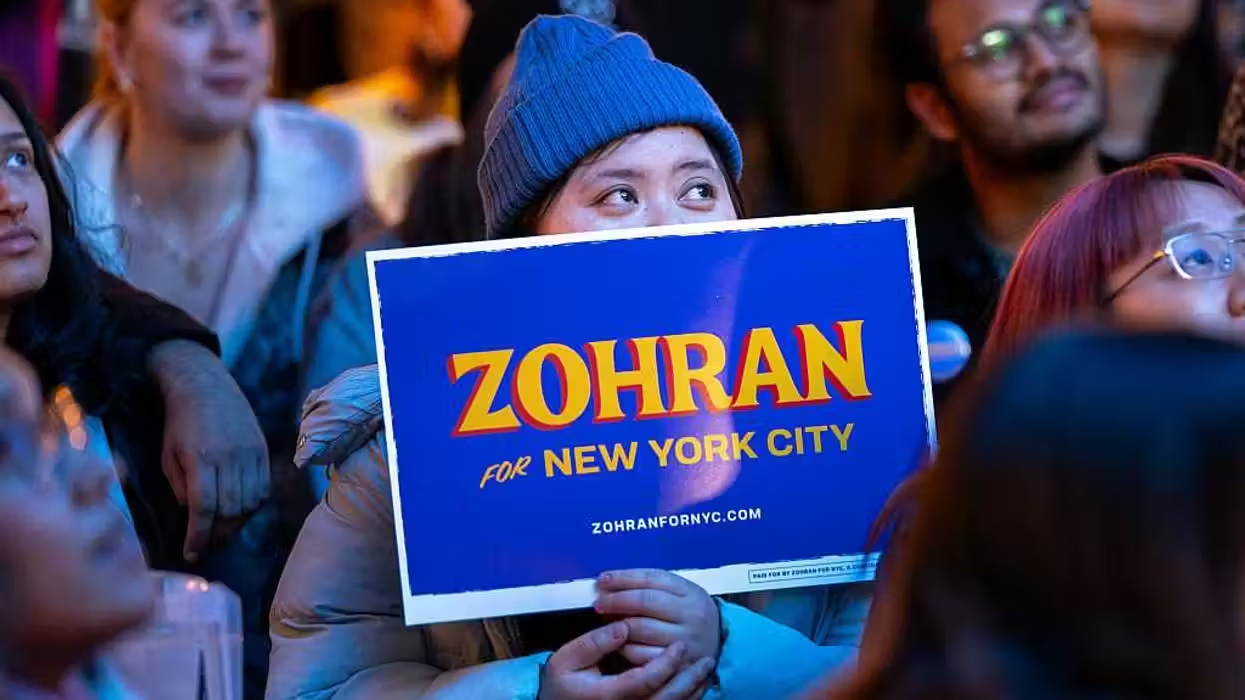 Photo by Jeremy Weine/Getty Images
As for Gen Z men, constant ridicule and belittlement left them disoriented. Why invest in a society that despises you? Why build what the world condemns? In this vacuum arose the “manosphere.” Figures like Andrew Tate offered refuge. They told men it was OK to be men — and as they were among the only ones saying so, they had free rein to define what it meant. If honor, discipline, and respectful courtship were only going to get you mocked and condemned, manosphere influencers reasoned that you might as well double down on boorishness, lust, and aggression.
As distrust of the government and institutions grew, young men turned elsewhere for truth. In gnostic fashion, figures like Nick Fuentes promised to reveal “how things really are.” But as Christopher Rufo has noted, it is a ruse. Fuentes exploits the crisis of masculinity to peddle resentment and historical denialism. Progressive Gen Z women, seeking fulfillment in the depths of the online space, are little different from the young men seeking connection and meaning from those like Fuentes.
Gen Z is a generation longing for roots. Its members are trying to find them on the fringes of society, since their own roots were dug out years ago. Progressivism creates nomads. Social systems that seek to reorient reality by means of uprooting history and tradition will ultimately create a rootless and disaffected class in search of belonging. And they will find it in dark places.
The men and women of Gen Z are not uniquely radical. They are uniquely rootless. They have inherited a moral landscape stripped of shared meaning, through which they drift amid ideologies that promise belonging but deliver only bitterness. The progressive order unmoored them; now the reactionary order recruits them. And unless a deeper renewal of faith, family, and community takes root, this generation will continue to wander — searching for the very home that modernity taught them to forget.
Editor’s note: A version of this article appeared originally at the American Mind.
It’s not just you. X and vast tracts of the internet are down.

Large sections of the internet stopped working on Tuesday morning. Among the sites affected by the latest in a weeks-long series of outages were Amazon Web Services, X, League of Legends, the betting site bet365, Spotify, ChatGPT, and — ironically — the website that monitors online outages, Downdetector.
The problem appears to be the result of issues at Cloudflare, a San Francisco-headquartered tech company that effectively serves as a backbone to a myriad of sites, providing content delivery network and wide area network services, domain registration, and cybersecurity.
‘We saw a spike in unusual traffic.’
At the time of writing, the Cloudflare system status page indicated that the company was working toward restoring global network services, having hours earlier acknowledged “experiencing an internal service degradation” that could leave some services “intermittently impacted.”
The latest outages come just days after Cloudflare admitted an “issue which potentially impacts multiple customers” — an issue that was supposedly “resolved.”
A spokesperson for Cloudflare said in a statement obtained by the Guardian, “We saw a spike in unusual traffic to one of Cloudflare’s services beginning at 11:20am [London time]. That caused some traffic passing through Cloudflare’s network to experience errors. While most traffic for most services continued to flow as normal, there were elevated errors across multiple Cloudflare services.”
“We do not yet know the cause of the spike in unusual traffic,” continued the spokesperson. “We are all hands on deck to make sure all traffic is served without errors. After that, we will turn our attention to investigating the cause of the unusual spike in traffic.”
The company’s engineers were reportedly scheduled to conduct some maintenance work on data centers in Atlanta, Los Angeles, Tahiti, and Santiago, Chile. It’s unclear whether their efforts had anything to do with the technical issues.
Like Blaze News? Bypass the censors, sign up for our newsletters, and get stories like this direct to your inbox. Sign up here!





