Category: Land acknowledgment
Seattle professor punished for mocking land acknowledgments fights back, scores win against woke university
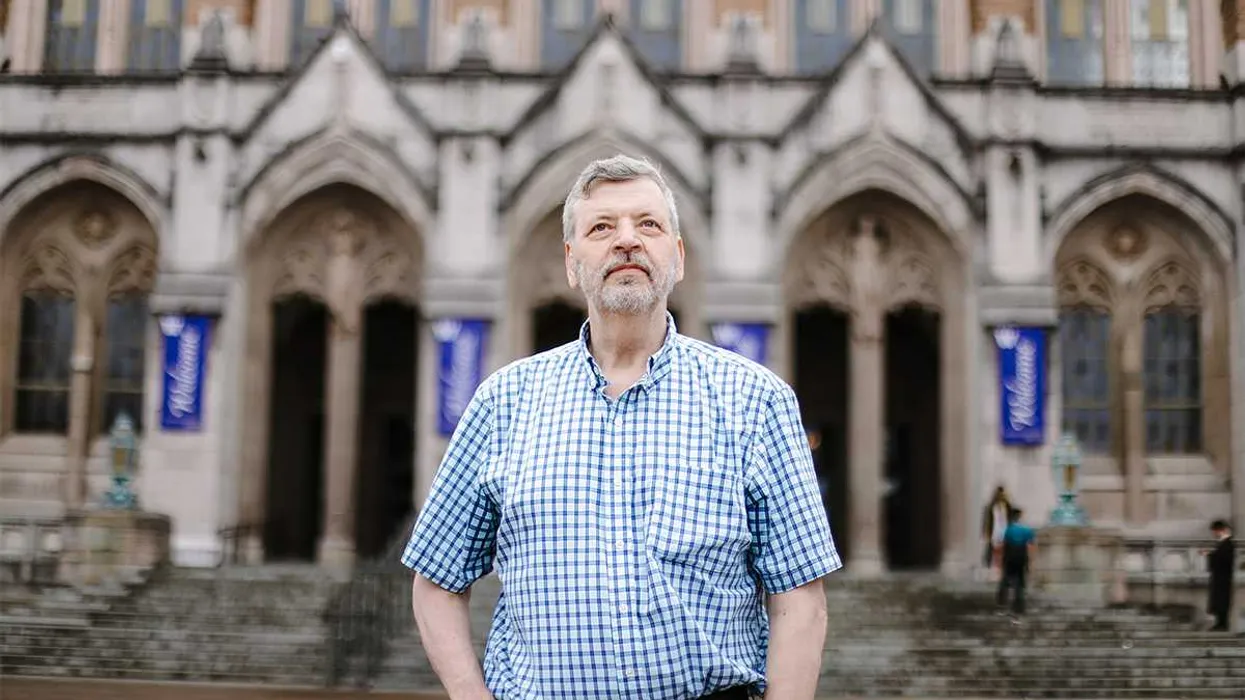
A professor at the University of Washington was punished for having the audacity to poke fun at the school’s moral exhibitionism. Stuart Reges, a professor at UW’s Paul G. Allen School of Computer Science and Engineering, fought back and, on Friday, secured a decisive victory.
Reges ruffled feathers at the university where he has worked for decades by including a parodic land acknowledgment in his 2022 course syllabus.
‘The Coast Salish people can claim historical ownership of almost none of the land.’
According to the Foundation for Individual Rights and Expression, the outfit that represented Reges, the university recommended in its “best practices” guide that instructors incorporate an “Indigenous Land Acknowledgment” in their course syllabi, providing the following as an example statement: “The University of Washington acknowledges the Coast Salish peoples of this land, the land which touches the shared waters of all tribes and bands within the Suquamish, Tulalip, and Muckleshoot nations.”
In a December 2021 faculty email thread, one of Reges’ colleagues referred to an article that characterized land acknowledgments as “moral onanism.” Reges said in response that he was uncertain about the value of making such statements and noted that he might include a mock statement in his syllabus.
Sure enough, the professor included the following land acknowledgment on the syllabus of his winter 2022 computer science course: “I acknowledge that by the labor theory of property the Coast Salish people can claim historical ownership of almost none of the land currently occupied by the University of Washington.”
Administrators at UW’s Paul G. Allen School of Computer Science and Engineering punished Stuart Reges over his failure to conform, which they claimed had caused a “disruption to instruction” but had in reality enraged only ideologically delicate members of the faculty and the school’s DEI student committee.
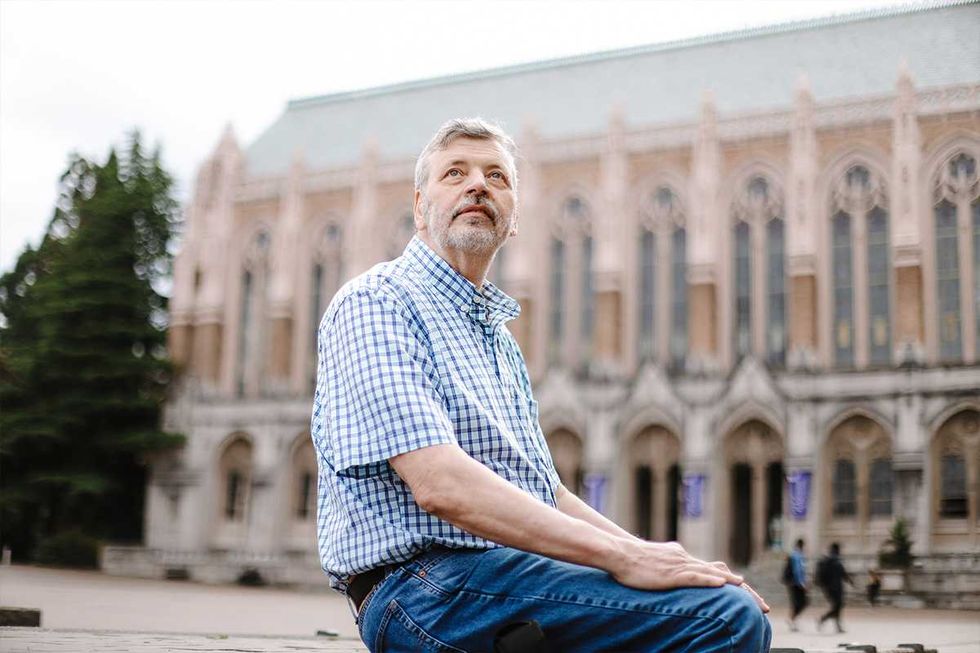 Stuart Reges. Courtesy of Twinkle Don’t Blink
The director of UW’s computer science department, Magdalena Balazinska, ordered Reges to remove the statement because it was supposedly “offensive” and generated a “toxic environment.”
According to court documents, when Reges refused to remove his dissenting statement, Balazinska unilaterally removed it, then apologized to Reges’ students, detailing ways that they could file complaints against their professor.
‘Land acknowledgments are performative acts of conformity that should be resisted.’
In addition to inviting students to switch out of Reges’ computer programming course and into a “shadow” class section taught by a different professor, university administrators launched a years-long disciplinary investigation into Reges.
In July 2022, Reges sued Balazinska, then-UW President Ana Mari Cauce, and other school officials, accusing them of violating his First Amendment rights.
“University administrators turned me into a pariah on campus because I included a land acknowledgment that wasn’t sufficiently progressive for them,” Reges said at the time. “Land acknowledgments are performative acts of conformity that should be resisted, even if it lands you in court.”
U.S. District Court Judge John Chun, an appointee of former President Joe Biden, dismissed Reges’ lawsuit last year, claiming that “the disruption caused by Plaintiff’s speech rendered it unprotected.”
Reges appealed and found a court that viewed his case differently.
In a 2-1 decision on Friday, a Ninth Circuit Court of Appeals panel disagreed with and reversed the Biden judge’s ruling, remanding the case for further proceedings.
Circuit Judge Daniel Bress, writing for the majority, noted, “Debate and disagreement are hallmarks of higher education. Student discomfort with a professor’s views can prompt discussion and disapproval. But this discomfort is not grounds for the university retaliating against the professor. We hold that the university’s actions toward the professor violated his First Amendment rights.”
Bress, an appointee of President Donald Trump, highlighted the long-standing debate over the value, factual basis, and political nature of land acknowledgments as well as Reges’ sense that they are part of “an agenda of ‘diversity, equity, and inclusion’ that treats some groups of students as more deserving of recognition and welcome than others on account of their race or other immutable characteristic.”
While acknowledging the right of members of the UW community to speak out against Reges and his views, Bress stressed that “Reges has rights too. And here, we conclude that UW violated the First Amendment in taking adverse action against Reges based on his views on a matter of public concern.”
Will Creeley, the legal director of FIRE, said that the ruling “recognizes that sometimes, ‘exposure to views that distress and offend is a form of education unto itself.'”
“If you graduate from college without once being offended, you should ask for your money back,” added Creeley.
Like Blaze News? Bypass the censors, sign up for our newsletters, and get stories like this direct to your inbox. Sign up here!
The campus left’s diversity scam exposed in 30 seconds flat
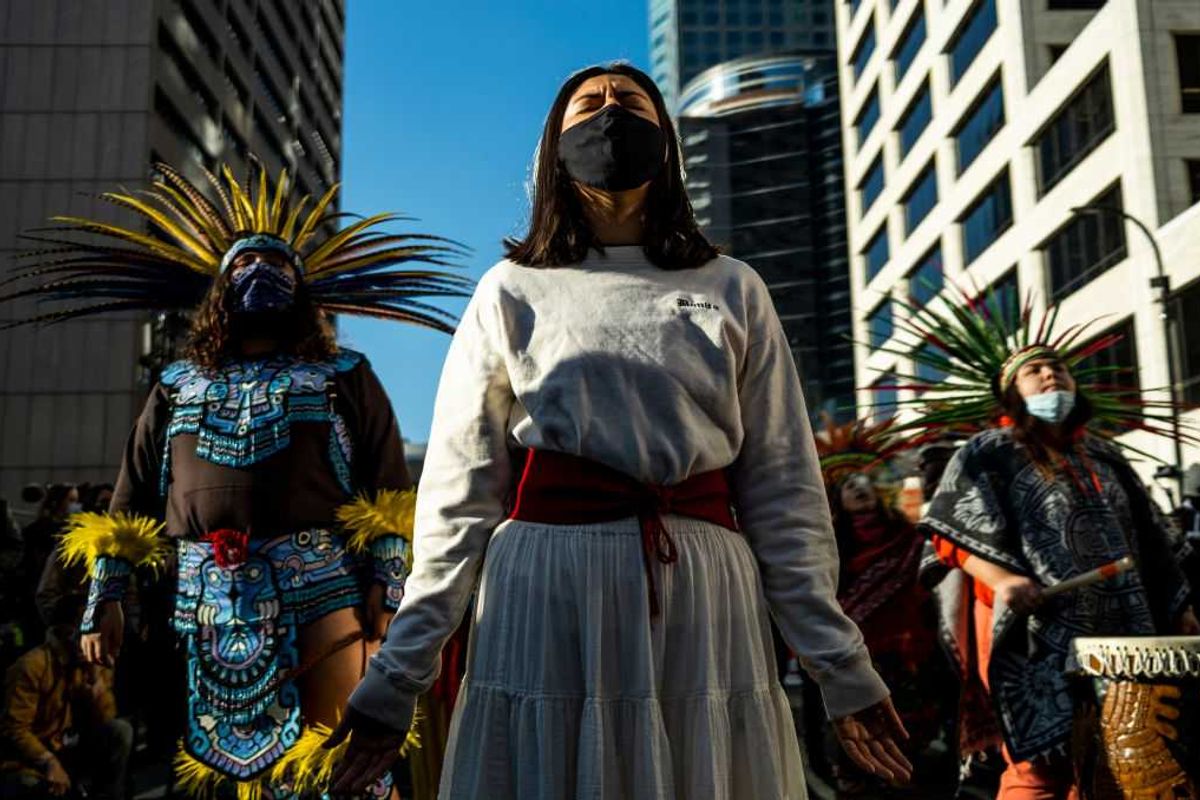
Anyone who attends a university event, browses a college website, or strolls through a city park has likely heard a Native American land acknowledgment. These statements now function as the incense of the modern academy — burned at the start of a ceremony, meant to signal moral clarity, and producing the intellectual equivalent of secondhand smoke.
Arizona State University, where I teach philosophy, posts these statements on the webpages of the Sandra Day O’Connor College of Law and the Hayden Library. The library even affirms that “we are on Akimel O’odham land, and that always needs to be at the forefront of our thinking.”
Pluralism, the real kind, permits disagreement and debate. What we have now resembles stage-managed pluralism: You read the script you are handed, or you stay quiet.
The implication is clear: U.S. sovereignty becomes an open question. That is the point. These acknowledgments aim to “problematize” the legitimacy of the United States, a central goal of the academic decolonization movement.
For six years, ASU’s New College has required faculty to listen to one at the start of every meeting.
A harmless ritual? A gesture of respect? A symbolic nod?
I wondered the same — until I conducted a small experiment.
A revealing reaction
At last week’s New College faculty meeting — a meeting of state employees conducting public business — I asked a straightforward question.
“Given our commitment to diversity, may I also read a land acknowledgment of my own before each meeting?”
My acknowledgment was not provocative. It thanked the generations of settlers, farmers, builders, capitalists, and families who transformed the Salt River Valley into a place capable of supporting a world-class university. It affirmed that we serve all students and help them prosper.
I made a motion.
Discussion required only a second. Not approval. Not endorsement. Only a willingness to debate the proposal.
Not one person seconded it.
I did not ask colleagues to agree with my acknowledgment. I asked only to read it. In fact, I would gladly see everyone read their own. Let every faculty member present a statement, a grievance, or a cause they feel compelled to highlight. Why limit the practice to one perspective?
Yet the official record now shows that not one faculty member at ASU’s New College would second a motion to expand diversity.
Appearance vs. reality
The episode highlights a distinction philosophy once taught clearly — the distinction between appearance and reality. Faculty preach diversity in language that collapses into ideological uniformity. Many cannot describe a competing view without reducing it to a script: oppressed versus oppressor. Anyone who falls outside their categories becomes a threat.
My request challenged the boundaries of that framework. To the decolonization mindset, my acknowledgment represents the wrong category — heritage tied to “settler guilt” or “oppressor identity.” The ideology cannot imagine anything beyond that narrow frame.
Pluralism, the real kind, permits disagreement and debate. What we have now resembles stage-managed pluralism: You read the script you are handed, or you stay quiet.
The academic left rose to influence by praising inclusivity and toleration. Once in power, it exempts itself from those principles because tolerance, in its view, cannot extend to anyone labeled “bigot” and inclusion cannot extend to anyone lumped into the category “fascist.” Only the Marxist dialectic survives the screening.
The ideology behind the script
Some readers may think these acknowledgments amount to harmless gestures. They are not. They originate in decolonization theory, rooted in works like Eve Tuck and K. Wayne Yang’s “Decolonization Is Not a Metaphor,” which defines decolonization as the overturning of settler society. Practitioners describe their own project as Marxist; that is the label they choose.
Land acknowledgments do not describe history; they advance ideology. They treat land as permanently tied to racial or ethnic groups, a “blood and soil” logic the same theorists claim to reject. They question private property, Western legal concepts, and American national legitimacy.
Seen through that lens, the reaction to my request becomes predictable. The ideological system divides the world into oppressed and oppressor. My acknowledgment, in their view, inserts the “oppressor” and threatens the narrative.
Hypocrisy becomes impossible to miss. Faculty who go along to avoid conflict now face an uncomfortable truth: The ideology they tolerate openly rejects the pluralism a university claims to defend.
RELATED: Antifa burns, the media spin, and truth takes the hits
 Photo by: Spencer Jones/GHI/UCG/Universal Images Group via Getty Images
Academic reasoning is out
One hopes university professors — presumably trained to evaluate arguments — could step outside ideological commitments long enough to examine their assumptions. The job once required that. But critical theory, as taught in many departments, closes off that possibility. It demands that every fact, dispute, or policy fit into a predetermined narrative of oppression.
Herbert Marcuse, in “One-Dimensional Man,” argued that intellectuals must not describe reality as it is but reshape society toward liberation from capitalism and Christian tradition. That approach leaves little room for honest debate.
The real remedy
Critical theory teaches that man is a victim of systems and structures. Scripture teaches that man is a sinner in need of redemption. Marxist theorists believe society must be remade. Christians believe the heart must be reborn.
Jesus told Nicodemus, “You must be born again” — a direct claim about the human condition. Our deepest problem is not a defective system but a corrupted heart. No bureaucratic revolution can fix that. Ideologies that promise liberation from greed or power often create something worse when handed authority.
The human dilemma runs deeper than political structures, and the solution rises higher than any academic program. Here is the acknowledgment I would like to hear at our university: “For God so loved the world, that he gave his only Son, that whoever believes in him should not perish but have eternal life.”