Category: Men’s style
Modern life isn’t so bad (even if my furnace is out again)
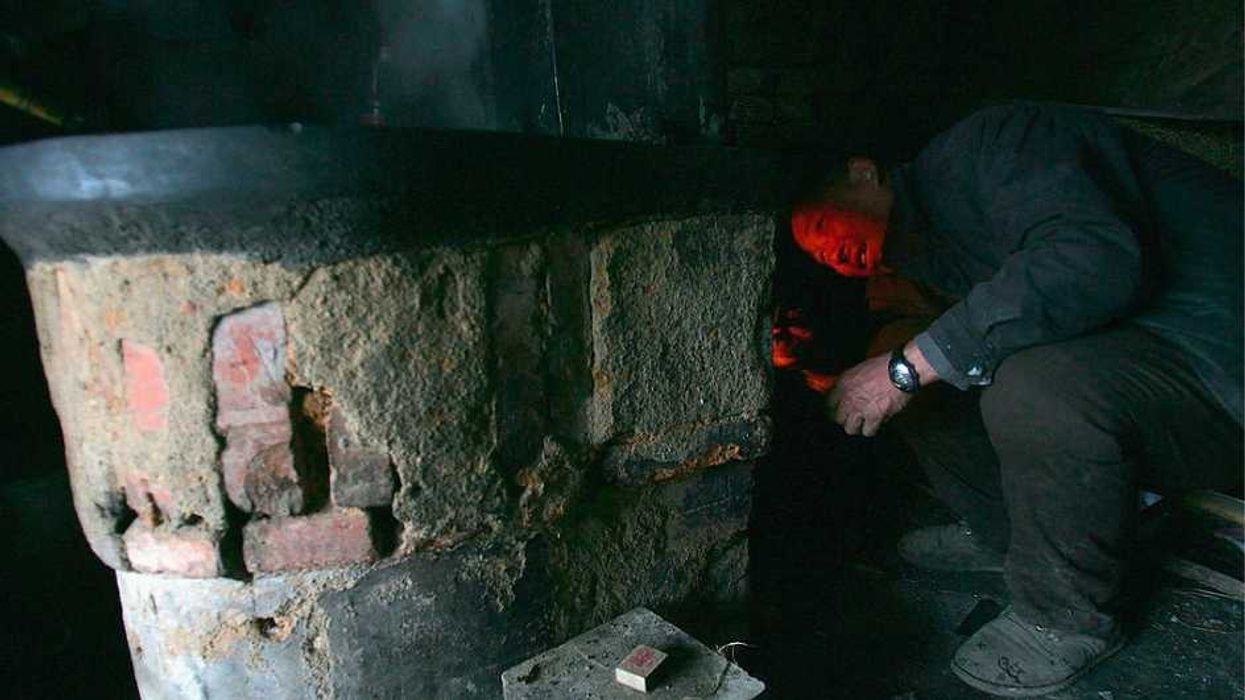
Every year, at the coldest time of the year, our furnace goes out. I’ve written about it before, I’m writing about it now, and I’m sure I’ll write about it again. Benjamin Franklin said, “In this world, nothing is certain except death and taxes.” I say, “In this world, nothing is certain except winter — and our furnace breaking.”
Lately I’ve been thinking a lot about modernity: not just as an era, but as a way of life, and as a particular relationship we have with technology and the natural world. Winter has a way of provoking those thoughts. It’s unforgiving outside and warm inside, and that contrast shapes not only our environment but our state of mind. Winter invites introspection whether we ask for it or not.
You don’t actually want to go back to 1198 or 1598. At most, you want to go back to 1998 — before things took such a strange turn.
It also reminds us of something more basic: Winter wants to kill us.
Cold truth
Without insulated homes, reliable transportation, and warm clothing, many of us simply wouldn’t make it. Maybe that isn’t true everywhere. It’s not true in places with mild winters. But it is true here, where the temperature tonight is expected to dip to ten below zero. In places like this, modernity doesn’t just make life comfortable — it makes it possible.
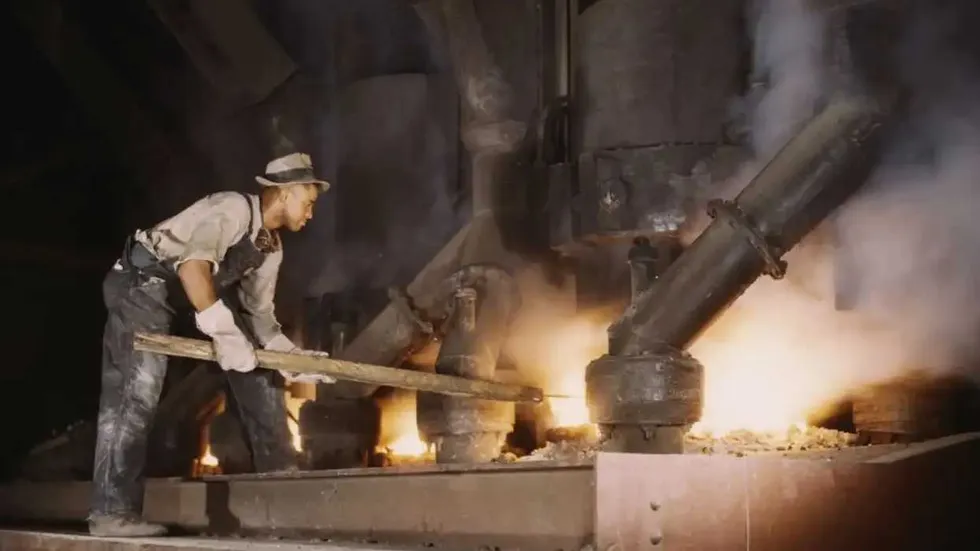
That’s easy to forget. I turn the thermostat up and the furnace obeys. I want it to be 67 degrees, and it becomes 67 degrees. No delay, no doubt. I can count on warmth in the same way I count on the sun rising tomorrow — until I can’t. Then the house turns cold, the basement office becomes unusable, space heaters migrate upstairs, and our seemingly invincible HVAC world collapses all at once. Annoyance quickly turns into perspective.
The furnace, of course, is only one small example. This isn’t really about heating systems or cold weather; it’s about how easily we take the blessings of the modern world for granted.
RELATED: Why does our furnace go out every winter? (and other burning questions)
 Heritage Images/Getty Images
No thanks
We all do it. Whatever we have now quickly becomes the baseline. We stop remembering what life was like without it. You see this with people who move to America from poorer parts of the world. After a decade, they are often just as accustomed to convenience as those born into it. You might expect memories of hardship to linger, but they rarely do. Perhaps death once sat closer to daily life, even in developed societies, and kept gratitude sharper. Perhaps something else has changed. Either way, ingratitude seems to come naturally to us now.
Medicine is a clear example. How many of us would be dead without modern medical care? Many. Imagine surgery without anesthesia. Imagine life without optometry or dentistry. It’s not a romantic picture.
The same goes for something as mundane as mail. People love to complain about the USPS, but in much of the world, a functioning postal system barely exists. I know someone who lived in Africa building embassies for the U.S. government, and he told me that local mail simply wasn’t usable. Here we send letters, order books, ship packages, and trust that they will arrive — and that if they don’t, someone will make it right. That trust is a modern miracle we barely notice.
Horse power
Or consider transportation. We can wax poetic about the romance of horse-drawn travel, but the truth is, we would hate it. It might charm us for a day or two, but before long, we’d be desperate to return to cars, trains, ferries, and planes. Modern speed isn’t just convenient — it reshapes what a human life can contain.
Lately I see a lot of anger directed at modernity itself. Some of it is understandable. There are technological and medical “advances” that drift away from the good and toward the destructive. That frustration is real, and I feel it too. But rejecting the modern world wholesale is neither wise nor serious. You don’t actually want to go back to 1198 or 1598. At most, you want to go back to 1998 — before things took such a strange turn.
Our task, then, isn’t to flee modernity, but to refine it. We cannot escape it — and we shouldn’t want to. The better path is gratitude without naivety: thankful for the blessings, alert to the dangers, and willing to curb excess without denying reality. If we do that, we may yet manage to build not just a modern world, but a good one.
Is the laundromat the last bastion of public life?
The world is vast and varied — different foods, cars, buildings, beliefs, and political systems wherever you go.
Yet somehow, laundromats are always exactly the same.
In an era of technologically dehumanizing isolation, I find myself seeing beauty in the most mundane moments of human connection or human commonality.
Universal, they stretch from the northern Atlantic to the southern Pacific. Where there are people and where there is civilization, there is laundry and there are laundromats.
Watching the washers
I remember waiting in a laundromat in northern France. It was right across the street from the Super-U. It was long and thin with tall windows that stretched from the floor to the ceiling. It was late November, the low sun was warm on the seats next to the windows, our clothes turning back and forth behind the tightly sealed window facing us. The silence of the warm carpet, our winter coats unbuttoned though still on, as we waited for our clothes to finish before walking back to the apartment.
In Chicago, my laundromat had long rows of metal machines. They loaded from the top and took six quarters per cycle. You slipped the quarters in the little slots and only once all six were filled could you push the metal slider forward. A few seconds later, the machine would start.
There were boxes of overpriced dry laundry soap next to the front door and a few benches next to the bathrooms that were always occupied by people staring down at their phones. I would wait in the corner, leaning against a rumbling dryer, looking up from my phone only when someone got up to move their wet clothes from washer to dryer. I would see wrinkly shirts, knotted sweaters, socks, pants, and skirts as they shuffled their clothes to another metal machine.
When I lived in Jerusalem, I washed my clothes at a laundromat close to Kikar Tzion. It was usually quiet, though never entirely empty. There was always someone else there talking quietly on the phone, listening more than speaking. Sometimes in Hebrew, sometimes in Russian, sometimes in French. The walls were covered with posters and printouts with little tags with phone numbers that could be torn off and slipped into your pocket if you were interested in whatever they were selling.
Metal machine music
Last week, our washer broke. On Saturday night, I took three loads plus two kids out in a snowstorm to the laundromat to get the laundry done.
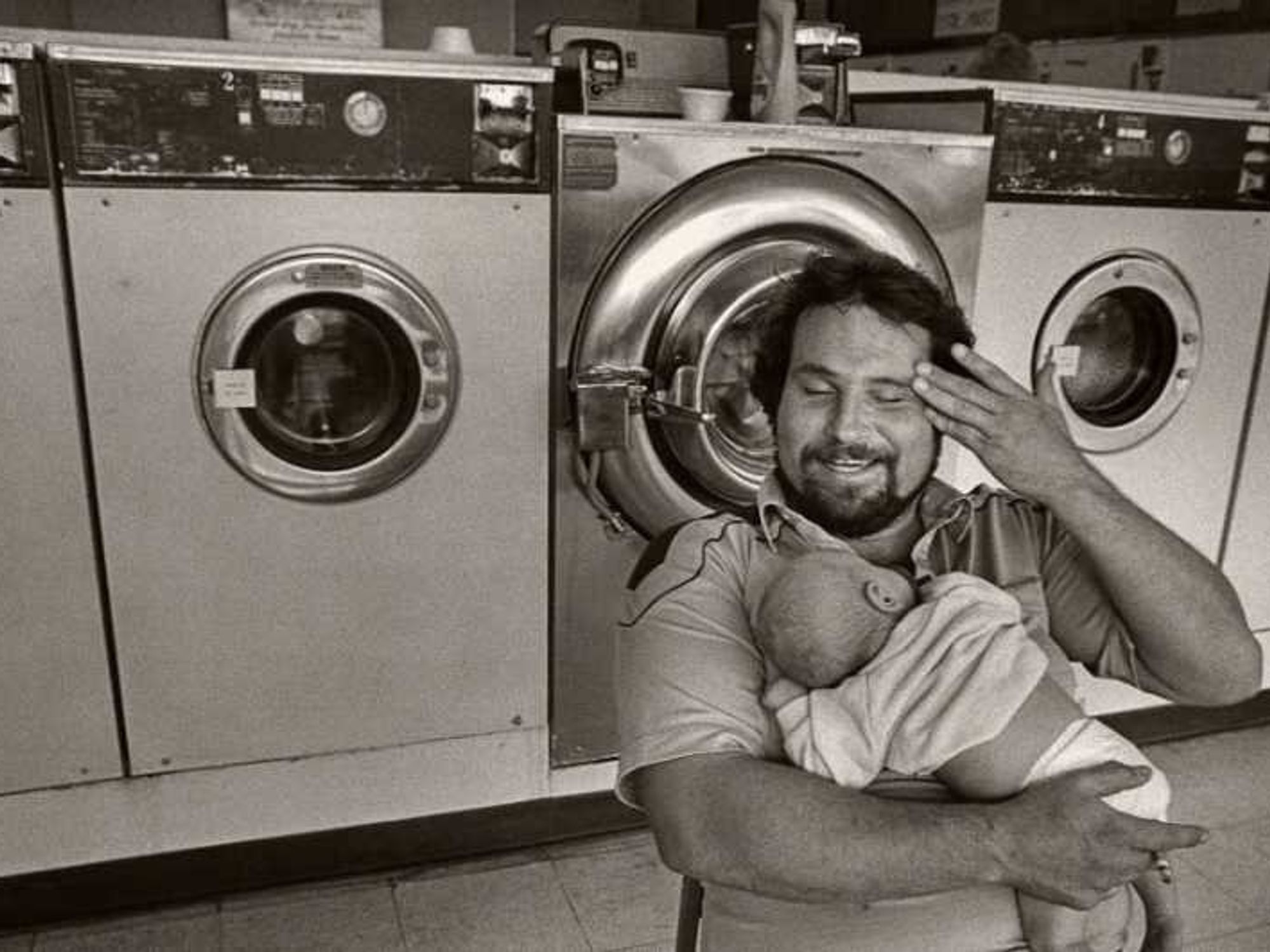
It was empty, with the exception of the guy at the front desk who greeted us kindly as we stumbled in knocking the snow off our boots on the long black carpet. There was a TV in the corner, a couple tables with chairs, long lines of big, silver machines, and a few teal seats that looked like they were made in 1982. The kids and I loaded up the machines, poured in the detergent we had brought from home, and began listening to the low hum as the clothes began to spin.
The sound is always the same in every laundromat. There’s never loud music on a stereo; if there’s a TV, it’s always muted or very quiet. Even the people waiting for their socks and underwear behave as if they’re in a library, talking in low voices by the rumbling machines and spinning heat.
RELATED: The A&W Drive-In in Cortland, New York, isn’t just a lunch spot — it’s a time machine
 Jim Steinfeldt/Getty Images
On the scent
The smell too; it’s always the same. All laundry soap all over the world has that same detergent-y scent. Soft, flowery, and lightly chemical. Detergent in Italy and detergent in Israel may have different names from detergent in America or detergent in Iceland, but they all are basically the same. The world is big and there are so many people, but all their clothes smell the same.
At the laundromat, people wash their most intimate garments in public, together. They carry their laundry baskets in and wash the things they only show their significant others right next to the things that someone else only shows theirs.
We never acknowledge any of this, and this is why we all hurry to put our clothes in, or change our clothes over, when we are at the laundromat. We all have a secret to protect, and we are all stuck together, in public, with the spinning machines, the low hum of the heat, and the smell of chemical flowers.
Together alone
This is part of why we are all fairly quiet as well. It’s like we don’t actually want to acknowledge that anyone else is really there washing their clothes right alongside ours. We may make small talk, but we don’t say much.
Laundromats are almost something like holdovers from a more necessarily communal time. Waiting and watching the people sitting and their clothes spinning, I have thought about how all the women must have washed clothes down by the river, or wherever it was they did laundry, in the ancient days.
In an era of technologically dehumanizing isolation, I find myself seeing beauty in the most mundane moments of human connection or human commonality. The things we share even if we don’t dwell on them. The things we do together even if we are alone. The spinning machines, the private garments we want to keep to ourselves, the smell of the detergent, the quiet as we wait.
Why Jayden can’t use capital letters
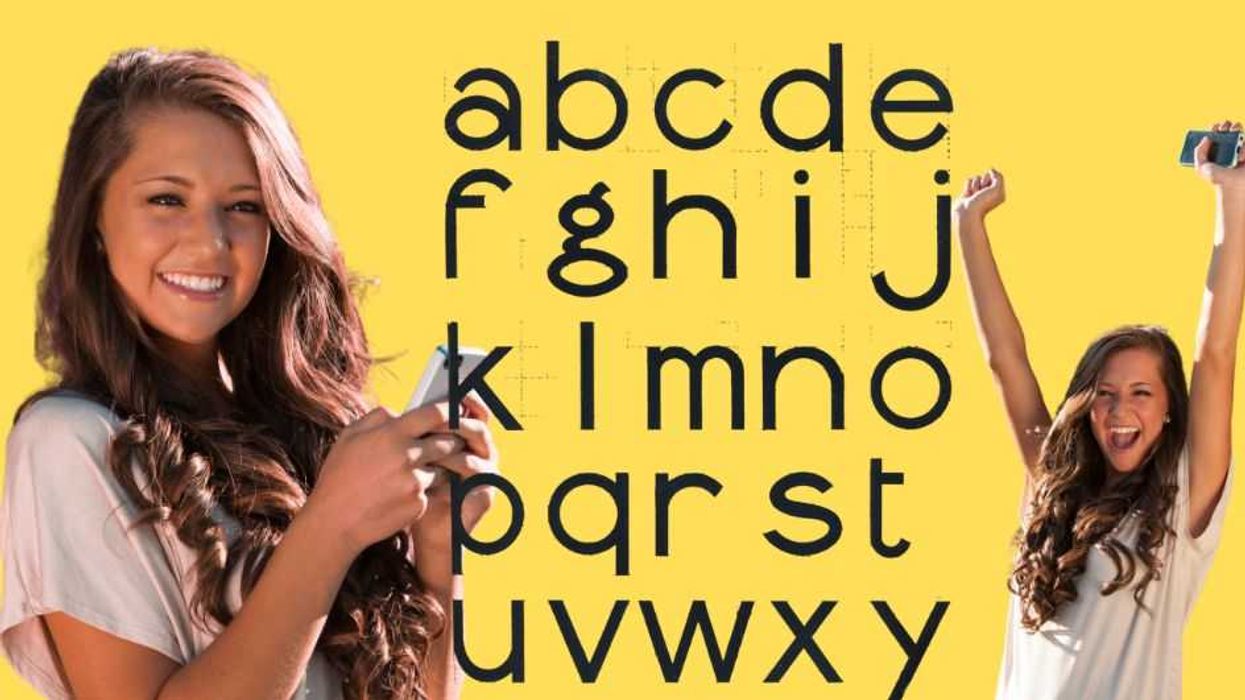
What’s the deal with people typing in all lowercase? You’ve seen that, right?
everything they type looks like this. it doesn’t matter if it’s a text. it doesn’t matter if it’s a post on x. it doesn’t matter if it’s a comment on someone’s photo. everything they type is lowercase.
‘If I see “LOL,” that’s a Boomer/Gen X. If I see “Lol,” that’s a Millennial. If I see “lol,” I know that’s one of my own.’
This style of typing is largely a Zoomer phenomenon, though some older people trying to act young do it too.
I am not a Zoomer, though I am interested in the Zoomers. I have written about them before, am writing about them now, and will write about them again. They are, whether we like it or not, the future, or at least the near future, so they should be of interest to us.
So why exactly do the Zoomers type in lowercase?
No cap
I asked a trusted Zoomer resource of mine, Caleb Wallace Holm, to provide his usual insight. He told me, “Zoomers have been doing it since we got our phones. It’s a way to demonstrate nonchalance and also a means of distinction from previous generations.”
All this makes sense. Younger generations almost always try to demonstrate nonchalance or uncaring. To be formal is to be old and stodgy, and you don’t want to be old. To be overly concerned is to be your dad, and you don’t want to be your dad.
So the young seek out ways to show they are relaxed and ways they can possibly differentiate themselves from the old. When you are young, you want to be new and different, so there is nothing particularly new about the logic of Zoomer lowercase typing.
Laugh lines
What is new is the acting out of this mini-rebellion of distinction in the digital domain, as the digital world didn’t exist for prior generations in the same way it does for the Zoomers.
And it is this new element — life in the digital space — that differentiates Zoomers most profoundly from the rest of us in a multitude of ways. As I have written before, Zoomers are the first disembodied generation, and this has profound impacts on how they exist in the world.
Holm told me he can discern how old someone is just by the way they “laugh” online. He remarked, “If I see ‘LOL,’ that’s a Boomer/Gen X. If I see ‘Lol,’ that’s a Millennial. If I see ‘lol,’ I know that’s one of my own.”
While I never would have thought of this on my own, it made complete sense once I heard it. Of course an astute member of the generation that was raised on the internet would be adept at discerning someone’s age simply by the way they “laugh” online.
The lowered life
Though the attempt to differentiate oneself from prior generations by way of typing in all lowercase makes sense and follows a fairly expected trajectory, there is something off about it. You might call the Zoomers many things, but earnest, excitable, mentally well, and aspirational are probably not among the descriptors you would choose to use.
They barely drink alcohol out, but they smoke tons of weed in. SSRI use is rampant, and a general malaise or an overly-ironic stance is fairly standard operating procedure among their cohort. The Zoomers are the most medicated generation in history and don’t appear to respond to any traditional incentive structure. Not great.
Nonchalance is one thing. Not caring about anything at all is another thing. I do wonder if the lowercase typing of the Zoomers is less about studied nonchalance than it is a lack of any vital spirit. I wonder if this lowercase typing represents something even more toxic than laziness. If the Zoomers were, in general, very well-adjusted, very social, and very mentally well and characterized by earnest effort, I may not wonder if the lowercase typing signaled something negative. But they are not those things, so I have to wonder what it represents, whether done intentionally or not.
RELATED: ‘6-7’ gets 86’d! JD Vance jokes about banning meme — and one company actually does it
 Photo by Brett Carlsen/Getty Images
Type casting
And yet, not all Zoomers are listless or on SSRIs, and not all Zoomers type in lowercase. Holm, my Zoomer resource, doesn’t. He types like I do — with capitalization — though he is also fluent in the language of his people (the Zoomers). And he is also full of life and spirit. And though I often joke with him that he is the most powerful Zoomer living, he is not at all alone. There are other vital Zoomers out there who type with proper capitalization.
It sounds strange, but maybe proper capitalization and vitality, or just normal emotional responses, go hand in hand. And maybe typing in lowercase and perpetual irony go hand in hand.
Maybe performative nonchalance in text form becomes giving up or some other kind of deadness IRL quicker than people realize.
Maybe the way we type to one another matters more than we think. Maybe exclamation marks, capitalization, and real non-ironic enthusiasm reflects a healthy attitude toward the world and one’s place in it.
Maybe there is more to lowercase typing than meets the eye.
The medium is the message, after all.
Holiday stress? Here’s one way to handle it.
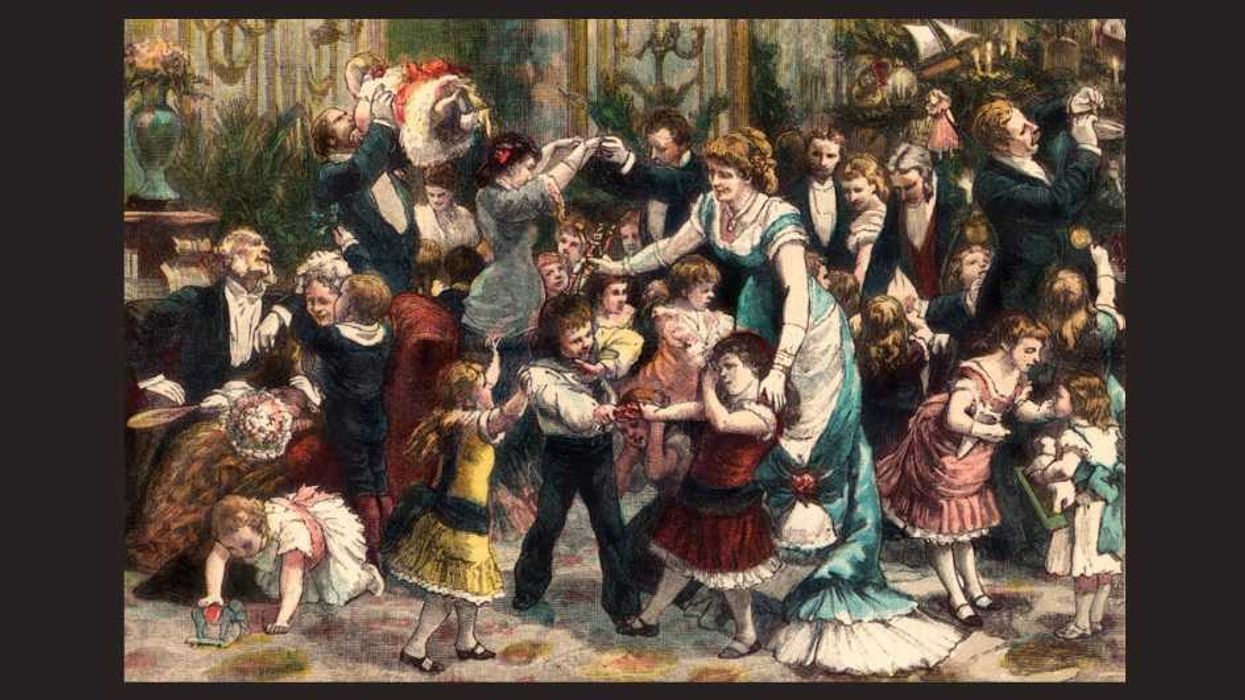
Holidays are tough. It’s not fun to say it, and it feels like failing to admit it, but they are.
But why? Why are they tough? Why are the days that are supposed to be full of joy instead oddly stressful — and too often fraught with bickering, arguing, and disappointment?
We want things to go perfectly on the day that is supposed to go perfectly — and when they don’t, our disappointment lands harder than it would on a random Tuesday in March.
It seems inevitable, almost as if it’s another tradition. Someone snaps about something small, then someone takes offense to something else, and then there’s an argument or a fight or just a weird feeling in the air that wasn’t there before.
Too many cooks
It could be in the kitchen, especially when dinner is nearing. Mom, Grandma, and maybe a daughter or two are in there helping. A bystander pokes his or her head in and offers a “helpful” comment. One of the chefs responds with an eye-roll. A certain stifling quiet — not a good quiet — descends.
Or it could be at the dinner table: Someone lobs a political point knowing that it will rub another guest the wrong way, but he “needs to say something.” Then someone else feels compelled to answer, and another after that, until the whole thing cascades and suddenly the arguments are spilling over into dessert.
Moms are disappointed in their sons and daughters because they just want everybody to get along for one day when everyone is home. “Can you just not talk about that?” Dads are tired of having the same argument, so they zone out. Sons and daughters are mad because no one takes them seriously. They are in college and know more than they used to, but think they know more than they really do.
Family feud
These things happen in families. Not all, of course. Some excel at sweeping every irritation under the rug and maintaining a serene, passive surface at all times. A few are even perfect — or as close as anyone gets — and enjoy holidays filled with nothing but gladness. But most families, in one way or another, run into moments like the ones above or something close to them.
These points of conflict and stress are only a few of the familiar moments that surface when families gather for the holidays. There are countless other paths to confrontation, disappointment, or quiet unease. Sometimes the friction is subtle — simmering unnoticed for months — and it’s only during the holidays that anything finally bubbles up and over.
At bottom, our stress and disappointment come down to expectations, especially the impossible kind.
A holiday is supposed to matter more than an ordinary day. It’s supposed to be more enjoyable, more memorable, more special. That’s a crude way of putting it, but it’s the truth we all feel somewhere deep down, even if we would never say it out loud.
Moms want the meal to be flawless and everyone to get along. Dads want to relax. Kids home from wherever they have been want to share what they have learned and maybe earn a little more respect.
Perfect storm
We want things to go perfectly on the day that is supposed to go perfectly — and when they don’t, our disappointment lands harder than it would on a random Tuesday in March. Greater disappointment feels like a greater failure, and that casts a shadow over the day or at least over our memory of it.
Our expectations rise so high that disappointment becomes almost guaranteed.
That’s why the holidays are tough. It’s not that being around the people you love is hard or that it’s impossible to stay on your best behavior and avoid a spat with your sister or cousin. The holidays are tough because we want things to be the way they ought to be — the way we imagine they could be, the way we wish we could be. Admitting that the holidays are tough stings a little, because to acknowledge it feels like confessing a kind of failure.
I don’t know how to eliminate holiday disappointment entirely, but I do know the first step toward easing it: accepting that our holidays will never be perfect. Hopes run high, tensions run high, and something will inevitably go awry. We’re human. And that’s okay. Maybe our bar shouldn’t be so high. Maybe we ought to grade the day on a curve. Maybe a B- really is an A. Maybe we can forgive ourselves for not living inside a Hallmark movie.
Holidays aren’t perfect. Neither are we. And that’s okay.
Do you really have ADHD — or do they want to medicate you into conformity?

Everybody has a diagnosis these days.
Not just adults — kids too. It doesn’t matter if you’re 8 or 38, there’s someone somewhere waiting to explain away whatever’s different about you.
Perhaps you find your work excruciatingly boring and hard to care about precisely because it is excruciatingly boring and hard to care about.
It’s not a quirk of your personality or a flaw in your character or a wound in your soul. It’s a illness. Never mind that the symptoms are vague or the evidence that it’s a discrete medical condition are lacking — a pharmaceutical cure will fix it.
Just pop this pill, and you will be like everyone else. Isn’t that what you want?
All the rage
All the kids these days have ADHD or autism. Which often makes me wonder if any of them do. Or if these conditions exist at all.
Autism certainly seems real in its extreme forms, but I am not at all convinced that it’s at the far end of a continuum. I don’t really think being a little “on the spectrum” is a thing. Those people are just a little weird and need stronger guidance on how to get on in life.
I have a friend who was an engineer at Google. He told me half the people he worked with claimed to be “on the spectrum,” and according to him, it was all bull. They didn’t have medical problems; they had personal problems. They were guys who never learned how to interact normally, so they just ended up being kind of weird and rude.
As for ADHD, it’s so obscenely overdiagnosed that it’s essentially fake at this point. The market has been so oversaturated by ridiculous and erroneous diagnoses that whenever I hear about another kid with ADHD, it tells me more about the doctors and the “system” and less about the kid.
Boys will be boys
Are some kids better at sitting down at a desk for three hours at a time? Sure. Are more girls than boys better at doing it? Yes. Is there a gender factor here when it comes to diagnosis? Absolutely.
Boys don’t learn the same way girls do. But much of modern education ignores this fact. So when boys fidget or get bored, it gets chalked up to ADHD. This is more or less common knowledge by now. So the only thing a boy being diagnosed with ADHD tells me is that he doesn’t get enough recess.
Of course, there are extreme cases. There are kids who genuinely don’t seem to be able to focus at all. Something like actual ADHD exists in a small number of boys, but that doesn’t negate the broader truth: Instead of seeing people as individuals with different strengths and weaknesses, we decide to overmedicate when someone isn’t exactly like everyone else.
My mom worked with special ed kids. Some of them had mild disabilities, some more extreme. In some cases, it was clear they would need supervised care their entire lives. But in other cases, it wasn’t clear just what, if anything, was wrong — besides a certain learned helplessness reinforced by doctors and parents.
Pill and chill
Nowadays ADHD diagnoses aren’t just for kids; adults are getting in on it too. Believe it or not, an increasing amount of men and women, especially women, in their 30s and 40s are discovering that they too have ADHD — a discovery that inevitably “explains everything.” My wife sees reels on Instagram all the time, along with ads selling various solutions.
What’s that? You couldn’t focus at your computer, clicking on an excel spreadsheet, sending pointless emails for seven hours at a time? Shocking. No, you don’t need ADHD medication. You need to do something else with your life. Perhaps you find your work excruciatingly boring and hard to care about precisely because it is excruciatingly boring and hard to care about.
Overmedicalization and overdiagnosis is a deep problem in our society. Not just because the result is an increase in prescription drug use, but because the individual human being is lost or suffocated a little bit at a time. Everyone is different. Everyone has skills, and everyone has weaknesses. Everyone learns in a different way, and everyone focuses on different things too.
RELATED: Drugged for being boys: The TRUTH behind the ADHD scam
 Blaze Media
Free agency
Some people are just a little awkward, a little weird, a little absent-minded, or a little dry. Sure, they should try to meet society halfway in some reasonable sense — but that happens through early teaching, parental guidance, community expectations, and personal effort, not through a pill you pop every day. For most of the 20th century, we relied far more on those nonmedical supports.
All the pill-popping flattens our individualism and undercuts our own agency as humans. It presupposes that one cannot make oneself better, one cannot work to act right, and that one doesn’t have any control. This is a lie. Yes, of course, there are people who suffer with truly debilitating problems who need medication, and they should get that medication. But it is a small fraction of the population. Most people can make themselves better when they set their minds to it.
Don’t get me wrong. I’m not anti-psychiatry. I’m not into alternative medicine or any of the hippie stuff. I’m not denying that there are people with problems who are helped most effectively with medication. I’m thankful for the blessings of modern medicine and the advancements we continue to see every year.
But we have a problem with overdiagnosis in our country. We have a problem with losing sight of the individual. We have a problem with people who want to give up their agency and turn it all over to a pill, and we are worse off because of it.
Clothing should be fun
I do a lot of things for work. I take photos, I take videos, I write stories, I write columns, I write about style, and I write about life.
I also help guys dress better. Officially it’s called style advising, but down to brass tacks, it means me helping guys get clothes they are happy with. Helping them get rid of the junk that sits in their closet that they never wear and get into clothes that make them look, and feel, their best.
Exercising creative control in the physical space feels good in a way that’s deeper than exercising the same kind of creativity in the digital space.
It’s one of the most rewarding things I do. I know lots of guys dismiss the importance of clothes, but they do so at their peril. Our clothes really do have a huge impact on our psychological state. They can make us pretty unhappy or pretty happy.
Ready to wear
Does that make us “superficial”? No. It’s an acknowledgment of the fact that what we wear represents who we are to others —and to ourselves. If you aren’t happy with how you present yourself, you aren’t going to be happy with yourself. It’s that simple.
So I take personal satisfaction from watching a guy transform his wardrobe over the course of a year or two. What’s particularly satisfying is observing how his attitude toward clothing changes as he overhauls his closet.
The process usually starts with a pragmatic interest in not looking like a slob. Achieving a baseline presentability eliminates any negative attention slovenly dress attracts. From that point he may start to notice that looking a little more “put together” actually attracts positive attention. And once he starts to experience the fruits of dressing decently in public, he’s ready to start enjoying his clothes.
This means he’s comfortable and confident enough that he no longer sees dressing himself as a test to get “right,” but as an opportunity for personal expression and creativity. Clothes finally become what they’re meant to be: fun.
Or as a client deep into his own wardrobe revamp recently told me, “I’m just blown away by how fun this stuff can get.”
What a difference in attitude and mindset. A realization like that is generally a sign that a certain kind of psychological transformation has been completed.
RELATED: Corduroys: The perfect winter trousers
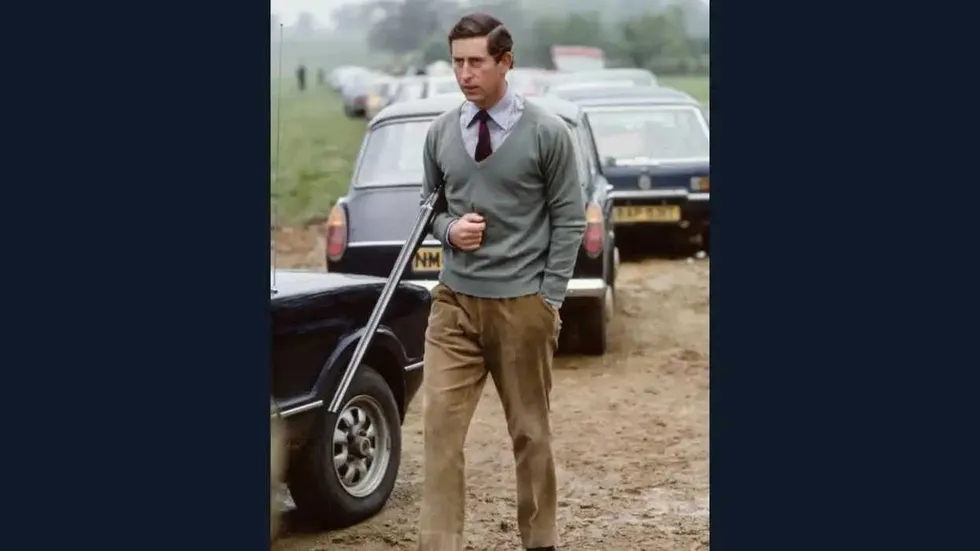
Making the man
I’m aware that the word “fun” may connote something shallow or frivolous — and in some respects clothing can be both. But the pleasure we derive from clothing also derives from its deeper meaning: the way it reinforces the eternal forms of man and woman, emphasizes our dignity as human beings made in the image of God, and reflects our culture, values, and even religious beliefs.
Remember the pastel cars of the 1950s? It’s hard to believe it, but there was a time when when cars weren’t only black, gray, or white. There was a time when cars were fun. Well, it’s the same thing with clothes. If you really look at the stuff the guys were wearing back in those old movies, they were actually having much more fun than the guy who wears dark jeans, a black T-shirt, and a gray hoodie in 2025. Coming to the final realization that clothes should be fun is actually a kind of returning to tradition.
Creative control
The thoughtfully designed, personal interior of your home feels more welcoming than an airport terminal. A carefully cultivated garden is more beautiful than an expanse of artificial turf. And a well-fitting and harmonious combination of shirt, jacket, and trousers is more flattering than a prison-like monochrome sweatsuit.
There’s also a peculiar psychological benefit to embracing clothes as a domain of fun. Exercising creative control in the physical space feels good in a way that’s deeper than exercising the same kind of creativity it in the digital space.
In our screen-dominant era, the experience of joyfully controlling your personal environment is humanizing and refreshing. It’s good to like how you look and know that you are the one responsible for it. It feels like we are actually doing something rather than just moving pixels around.
Of course, it goes without saying that not all fun is good fun. We know that’s true about all sorts of stuff in life. Many a bad decision sure was fun at the time. So it goes with the temporary thrill of donning stupid neon graphic T-shirts, grotesque Crocs, alien-green sweatpants printed with pizza motifs.
Many men today begin their style journey as overgrown children who have enjoyed this “bad” kind of fun for most of their lives: the dumb T-shirts and the stupid shoes. But then they decide to grow up, and after working through their wardrobe, they come to understand that these classic clothes are not just good for the soul or society. They are fun, and they are the right kind of fun, the kind of fun that edifies and enriches us.