Category: Nato
From Outrage to Agreement: Trump’s Greenland Gambit
Last week this column chastised President Trump for demanding ownership of Greenland and for threatening tariffs on any nation —…
GREENER PASTURES: Trump Says He and NATO Have ‘Formed the Framework of a Deal’ on Greenland

A tariff threat is off the table — for now.
GREENER PASTURES: Trump Says He and NATO Have ‘Formed the Framework of a Deal’ on Greenland
A tariff threat is off the table — for now.
‘NOW IT IS TIME!’: Trump Blasts Denmark for Failing to Contain Russian Threat — Says ‘It Will Be Done!!!’

In a Sunday night TRUTH Social post, President Donald Trump claimed Denmark has failed to deal with what he called the “Russian threat” near Greenland — and declared the time for action has arrived.
Sending Troops To Take Greenland On Table, Trump White House Says
‘Diplomacy is always the president’s first option’
Trump forced allies to pay up — and it worked
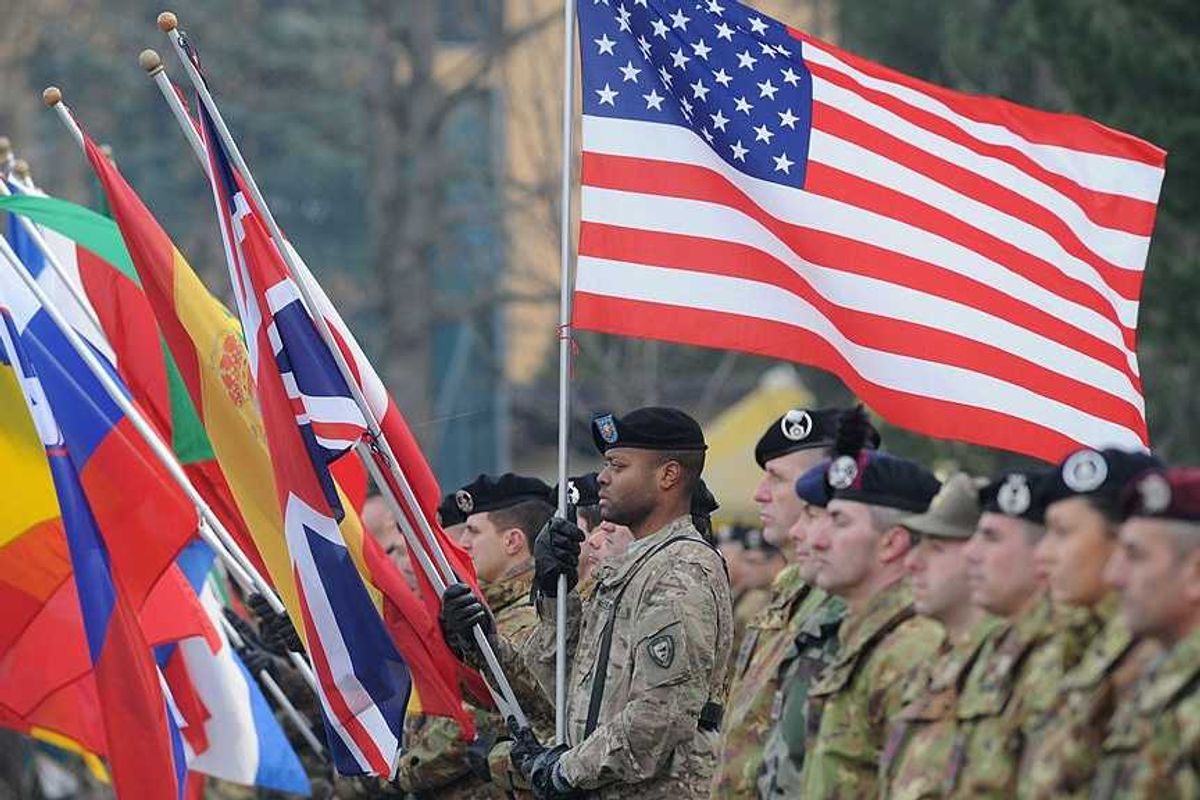
In the fifth century B.C., a group of Greek city-states formed a defensive alliance known as the Delian League to protect them against the Persian Empire.
Athens, the most powerful member, gradually increased its power. Its rulers moved the league’s common treasury from the island of Delos to Athens (to keep it safe, of course), attacked allies that attempted to secede, and started casually referring to the alliance as “our empire.”
If you want good allies, you need to be a good ally.
The most brazen assertion came when the Athenian leader Pericles raided the league treasury to fund building projects in Athens (including the Parthenon).
When the other league members objected, Pericles insisted that the treasury was less like a common military budget and more like protection money: As long as the Persians aren’t breaking down your doors, we can spend league funds however we want.
Obviously, this is no way to treat one’s allies. It is not just exploitative; it is counterproductive. During the ensuing Peloponnesian War, Athens spent as much time fighting its own rebellious allies as it did fighting Sparta.
The United States, however, has spent the last several decades conducting its foreign relations on the opposite principle. We have the same hegemonic role Athens held, but instead of robbing our allies, we let them rob and betray us.
A few months ago, the government of Kuwait — a country hundreds of Americans died to defend just a few decades ago and that continues to rely on us for protection against Iran — launched a “Kuwait-China Friendship Club” to strengthen military ties with Beijing.
And if cozying up to our biggest geopolitical rival weren’t enough, Kuwait is also ripping us off.
The United States played a huge role in building Kuwait’s massive Al Zour oil refinery, and the country’s government still owes us hundreds of millions of dollars.
Closer to home, Mexico — which Bill Clinton bailed out to the tune of $20 billion — takes in more than $60 billion a year in remittance money from the United States, all while its socialist oil company refuses to pay the $1.2 billion it owes to American contractors.
RELATED: Trump makes America dangerous again — to our enemies
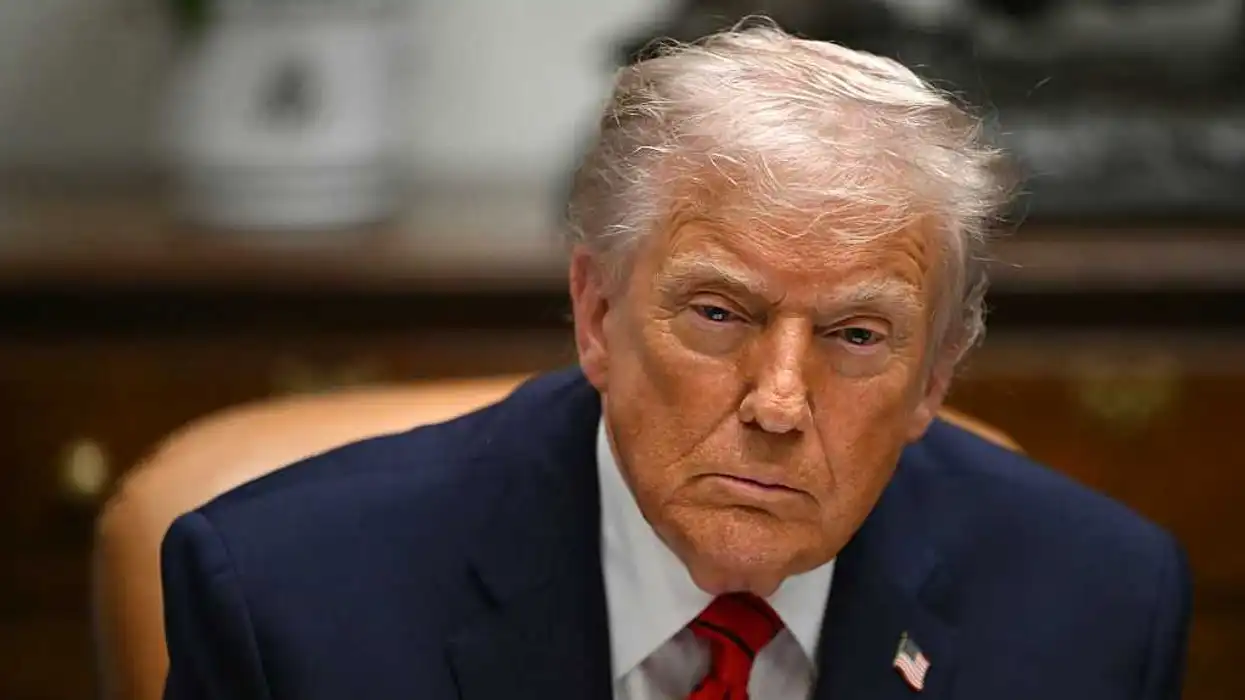 Photo by ANDREW CABALLERO-REYNOLDS/AFP via Getty Images
The NATO countries are even worse. Prior to Russia’s invasion of Ukraine, just six of the alliance’s 32 members spent the required 2% of GDP on defense.
Meanwhile, these countries used the money they weren’t spending on guns to build massive welfare states (their equivalent of Pericles’ Parthenon). They also eviscerated their domestic energy production and became increasingly reliant on oil from Russia, the country the alliance is supposed to keep in check.
Thankfully, a combination of Vladimir Putin’s aggression and Donald Trump’s bullying has increased the number of countries meeting the 2% threshold from six to 23.
If you want good allies, you need to be a good ally.
That means no more meddling in the name of “international development” or “advancing democracy.” Just mutual clarifications of national interest and frank discussions about how to advance those interests.
Athens’ focus on its own self-interest was its undoing. America’s neglect of it might have been ours. Under President Trump, however, it looks like that is starting to change.
Trump makes America dangerous again — to our enemies
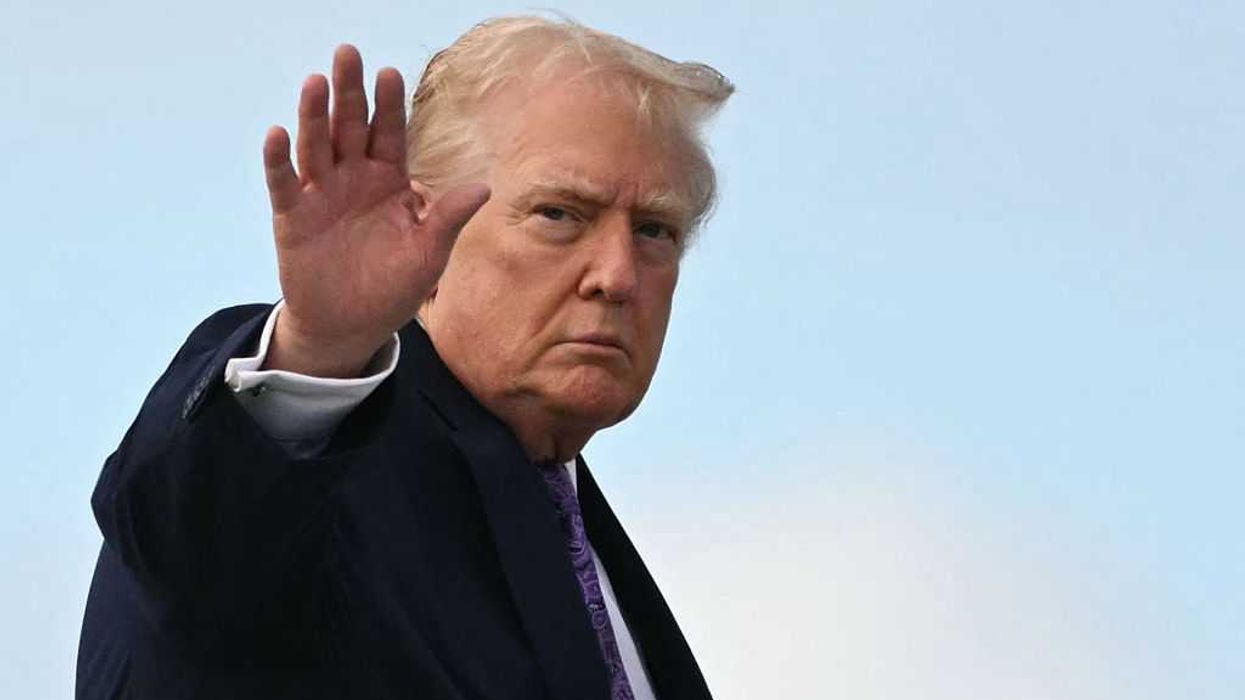
For the first time in years, the world once again views the United States as a force for strength, order, and peace. Clear, consistent American leadership backed by resolve is restoring the U.S. role as the world’s stabilizing power. That clarity is already reshaping some of the most entrenched conflicts, from the Middle East to Eastern Europe.
The breakthrough in Gaza illustrates the shift. What looked like a permanent cycle of bloodshed has given way to a ceasefire, the safe return of hostages, and the growing global isolation of Hamas — a terrorist group that has long thrived on regional instability. The success rests on American influence, quiet coordination with regional partners, and the renewed credibility that comes from a White House that means what it says.
After years of drift and decline, the world once again knows where America stands.
The same seriousness is now visible in Europe. Ukrainian President Volodymyr Zelenskyy’s recent visit to Washington may lead to a negotiated end to a devastating conflict that has killed hundreds of thousands and destabilized global energy and food markets. Zelenskyy described his meetings as a “big chance” to finish the war.
President Trump’s peace plan to end the Russia-NATO war in Ukraine will stop the bleeding, enable reconstruction, and reduce the strain on U.S. ammunition stocks at a moment when the Pentagon must prepare for a potential conflict with China.
US diplomacy regains stature
Strength backed by diplomacy — not drift or apology — is what puts the United States in high esteem with much of the world again. Nations respect a country willing to confront aggression and equally willing to help broker reconciliation.
That same clarity guides the administration’s approach to economics and trade. When America projects strength abroad, it must also defend economic interests at home.
Rebuilding America’s economic strength
After years of watching U.S. innovation shipped overseas, the administration has signaled that America will build, produce, and lead from within. That principle drove President Trump’s deal with Australia to break China’s grip on rare earth minerals — metals essential to everything from fighter jets and missiles to smartphones and electric vehicles.
For years, Beijing used its near-monopoly on mining and refining these materials as leverage, threatening to cut off supplies whenever the U.S. challenged its aggression. The deal with Australia strengthens both nations’ capacity to mine and process these strategic resources, allowing the U.S. to build advanced technology and military systems without bowing to Chinese pressure. It’s another example of President Trump converting economic strength into national security strength.
America’s return to Central Asia
Last week, President Trump hosted a meeting of the C5+1 — the United States and the five Central Asian republics: Kazakhstan, the Kyrgyz Republic, Tajikistan, Turkmenistan, and Uzbekistan. Founded in 2015, the group has rarely received presidential-level attention. That changed with Trump’s direct engagement.
Trump emphasized access to Central Asia’s vast reserves of rare and strategic minerals. Turkmenistan emerged as a potential transit hub for processing and exporting these resources to America. Airlines from Kazakhstan, Tajikistan, and Uzbekistan signed agreements to purchase 37 Boeing aircraft. The president also announced the Trump Route for International Peace and Prosperity, a new trade corridor designed to boost connectivity and economic integration across the region.
Leaders reaffirmed commitments to counterterrorism cooperation, energy security, and balancing regional influence from Russia and China.
RELATED: America’s addiction to Chinese money runs deeper than we care to admit
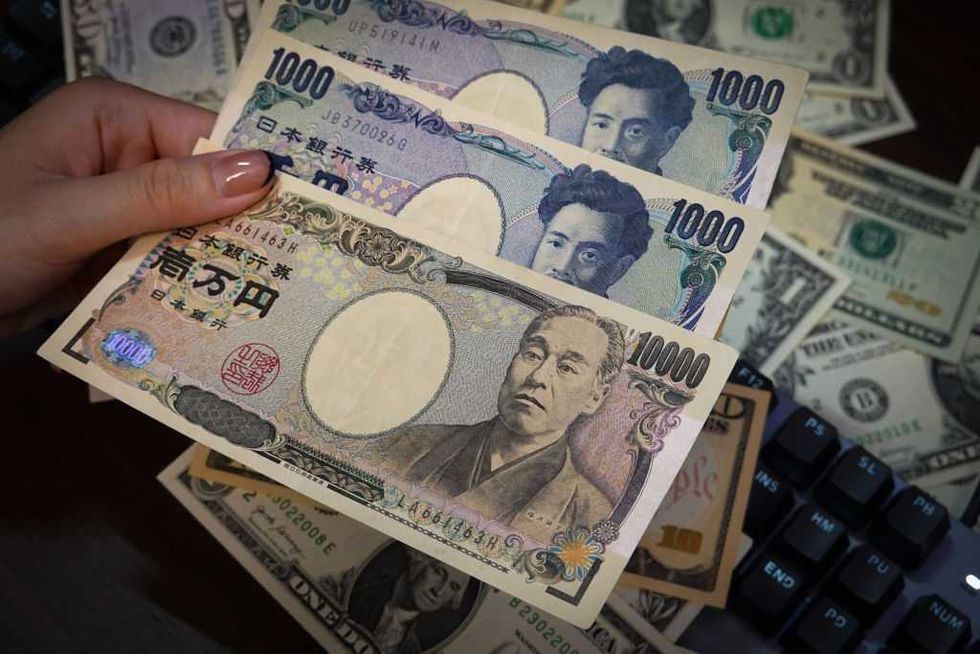 Photo Illustration by Sheldon Cooper/SOPA Images/LightRocket via Getty Images
Strength in technology policy
The administration’s posture on technology sends a message as unmistakable as a carrier group in the Pacific: America will defend its industries from predatory foreign dominance.
The recent approval of the Hewlett Packard Enterprise-Juniper Networks merger reflects that stance. The decision, made in consultation with national security officials, counters the global reach of China’s state-controlled telecom giant Huawei and strengthens U.S. data networks in an era defined by artificial intelligence and 5G. The move also signals that America will no longer sabotage its own companies to satisfy globalists or Beltway bureaucrats.
Predictably, Democratic attorneys general led by Colorado’s Phil Weiser — joined by congressional voices such as Sens. Cory Booker (D-N.J.) and Elizabeth Warren (D-Mass.) — denounced the decision. But their reflexive criticism doesn’t alter the administration’s commitment to peace-through-strength policies that protect American interests.
A world steadied by American resolve
When the U.S. leads with confidence, the world responds with respect. Whether confronting turmoil in the Middle East, pressing for stability in Europe, or rebuilding supply chains and industries essential to national security, American strength has produced a safer, more stable international environment.
After years of drift and decline, the world once again knows where America stands.
Peace through strength brought the world back to the table. Strength through accountability will keep it there. That is the kind of respect no adversary can test — and no ally will forget.