

Category: Blaze Media
This obscure Civil War-era figure gave us a paradoxical warning. Do we have time to heed it today?

In 1865, the economist William Stanley Jevons looked at the industrializing world and noted a distinct, counterintuitive rhythm to the smoke rising over England. The assumption of the time, a naive view that persists with a certain obstinacy, was that improving the efficiency of coal use would lead to a conservation of coal. Jevons observed precisely the opposite. As the steam engines became more efficient, coal became cheaper to use, and the demand for coal did not decline; it skyrocketed.
This phenomenon, later called the Jevons Effect, suggests a fundamental truth of economics that we seem determined to forget: When a resource becomes easier and cheaper to consume, and demand for it is elastic, we do not consume less of it. We often consume a great deal more. We find new ways to burn it. We expand the definition of what is possible, not to rest, but to fill the newly available capacity with ever more work.
The result is not a workforce at rest.
We are standing at the precipice of another such moment, perhaps the most significant since the steam engine. The age of AI is upon us, bringing with it efficiencies that promise to do for knowledge work what mechanization did for physical labor. The rhetoric surrounding this shift is familiar. We are told that AI will free us from drudgery, that it will automate the contract reviews, the basic coding, the marketing copy, and leave us with a surplus of time.
Lesson learned?
We have heard this song before. In 1930, John Maynard Keynes predicted that by 2030 technological progress would reduce the workweek to 15 hours. He imagined a world in which productivity was so high that we would opt for leisure. As we survey the frenetic landscape of the American workplace in 2026, we can see that he was largely wrong. We did not take our gains in time; we took them in goods and services.
The history of computing serves as a prologue to the current AI moment. When mainframes were scarce and costly, they were tools for the Fortune 500. As costs fell and efficiency rose, through the minicomputer era to the ubiquitous personal computer, we did not declare the problem of computing “solved.” We adopted roughly 100 times more computers with each step change in affordability. The cloud era erased barriers to entry, and suddenly a local shop could access software capabilities that, in the 1970s, were the exclusive province of massive conglomerates.
When high-level programming languages replaced the tedium of low-level coding, programmers did not write less code. They wrote much more, tackling problems that would have been previously deemed infeasible. Today, despite the existence of open-source libraries and cloud platforms that automate vast swaths of development, there are more software engineers than ever before. Efficiency simply allowed software to infiltrate every domain of life.
RELATED: How Americans can prepare for the worst — before it’s too late
 Photo by PATRICK T. FALLON/AFP via Getty Images
Now we have LLMs and coding agents. These tools lower the “cost of trying” still further. A task that once required a team — analyzing customer data with advanced models or building a prototype application — can now be attempted by a lone entrepreneur.
From production to orchestration
Consider Boris Cherny, the engineer who created Claude Code and used it to submit 259 pull requests in a single month, altering 78,000 lines of code. Every single line was written by Claude Code. This is not a story of labor reduction; it is a story of a single human scaling his output to match that of a large team. The barrier to initiating a software project or a marketing campaign is falling, and in response, companies are green-lighting projects they would have previously shelved.
The result is not a workforce at rest. Instead we see a shift in which the human role evolves from producer to orchestrator. We are becoming “gardeners,” cultivating and pruning fleets of AI agents. The span of control for a single worker increases, one person supervising what five or 10 might have done previously, but those displaced workers do not vanish into leisure. They move on to supervise their own agents, in different projects, expanding the frontier of what is built. This is the Jevons Effect in a strong form. The “latent demand” for knowledge work is proving to be great.
In the United States, where the cultural ethos tilts toward growth and innovation, this tendency to convert efficiency into more work is acute. Marketing employment, for example, grew fivefold over the last 50 years, precisely during the era when tools like Photoshop and Google Ads made the job in some ways easier. Efficiency turned marketing from a niche activity into a requirement for every business, spawning sub-disciplines that didn’t exist a generation ago.
Why bother?
The danger, of course, lies in the lack of distinction between “can” and “should.” An enduring lesson of the Jevons Effect is that efficiency does not confer wisdom. Technology can tell us how to execute a task faster but cannot say whether the task is worth doing. As roles transition into oversight, reviewing, and coordinating the outputs of AI, we must still ask if those outputs are solving meaningful problems. The crucial factor is human judgment. When more things are possible, the burden falls on us to decide what goals are actually worth the time.
We are not heading toward a 15-hour workweek. We are heading toward a world of expanding projects, in which efficiency lowers the cost of work and raises the amount we choose to do. The coal is cheaper, the fire is hotter, and we are shoveling as fast as we can.
Cam Newton disses Jason Whitlock — who fires back with a biblical reality check

When former NFL quarterback Cam Newton recently took aim at Jason Whitlock, he boasted about his influence on culture and warned Whitlock that he’s “not plum dumb.”
But Whitlock isn’t buying it.
“One thing about me, Mr. Whitlock, my voice to the culture is way more heavier than I even expected it to be. I owe a service to speak up for the muzzled, for the muted, the forgotten, or the overlooked,” Newton began.
“To make sure my dialect, my tone, my vernacular is not only factual, but it’s also relatable to my kind. My kind is not just a color. … So be careful, Mr. Whitlock, because you fell victim to what I really wanted you and others to understand. I may look some dumb, but I ain’t plum dumb,” he continued.
“So I’m comfortable in my skin. Are you comfortable in yours?” he asked.
“I’ll start with your last question,” Whitlock responds. “Am I comfortable in my skin? And he’s saying that he’s comfortable in his. And so I’m going to deal with your question legitimately.”
“I think what you mean is, am I comfortable being black? But let me answer your first question. Am I comfortable in my skin? My skin is not a color,” he explains, noting that “no,” he is “not comfortable” is his skin.
However, it’s because he has “a biblical worldview.”
“I know that I’m a wretched, lustful ignoramus and that the Bible and Christianity actually teaches me to deny myself — that my instincts, what I want to do, will lead me astray. And so I get up every day and go to war with Jason Whitlock,” Whitlock says.
“Because I have figured out that the things that I want actually hurt me, damage me, and that the Bible and the whole point of Christianity is denial of what I want.
“As it relates to ‘am I comfortable being black,’ which is the question you were really asking,” he continues. “Not only am I comfortable, I enjoy it. I love it. It’s the way God made me. Yes, I’m very comfortable with my skin color. I’m very uncomfortable with who I am. And I fight it every day,” he adds.
And while Whitlock admits he is flawed, he points out that Newton is likely no different from him.
“You’ve impregnated a stripper or two. Sounds like you like strippers. So did I. I had to fight myself and retrain, reprogram my brain so that I would deny myself my lustful thoughts. … If we’re doing life right, we should not be comfortable with our desires. We should be submitting to His desires,” Whitlock says.
“Cam, I think you know this, because your dad’s a minister. And I think you’re in rebellion to this, perhaps because your dad’s a minister,” he continues. “But that is the difference between me and you.”
Want more from Jason Whitlock?
To enjoy more fearless conversations at the crossroads of culture, faith, sports, and comedy with Jason Whitlock, subscribe to BlazeTV — the largest multi-platform network of voices who love America, defend the Constitution, and live the American dream.
Seattle’s sanctuary mayor orders local police to investigate ICE activities

Seattle Mayor Katie Wilson (D) on Thursday announced several measures to prepare for a potential increase in federal immigration enforcement activities in the city.
‘The biggest losers are the people she was elected to serve.’
The mayor’s office aims to “protect city residents” from immigration enforcement activities, a press release from the city reads. Wilson’s office stated that it had “no information indicating a surge” of Immigration and Customs Enforcement or Customs and Border Protection agents in the area. However, it claimed there is a “critical” need to prepare, citing the “increased activity over the last year” and the “unpredictable, chaotic, and violent behavior of the federal government.”
As part of these efforts, Wilson declared that she is directing the Seattle Police Department to investigate, verify, and document immigration enforcement activity with “in-car and body-worn video.” Local police will also be required to verify federal agents’ official identification and “secure scenes of potentially unlawful acts to gather evidence for transmittal to prosecutors.”
The SPD will share this information for other city departments and “trusted” local organizations “to ensure everyone has the latest and most accurate information.”
Additionally, Wilson plans to issue an executive order prohibiting federal immigration agents from using city-owned or controlled property for their law enforcement activities. The mayor has called on other local government bodies to take similar action against ICE.
Residents are encouraged to post signs on their properties indicating that federal agents may not enter without a warrant.
RELATED: Fraud thrived under Democrats’ no-questions-asked rule
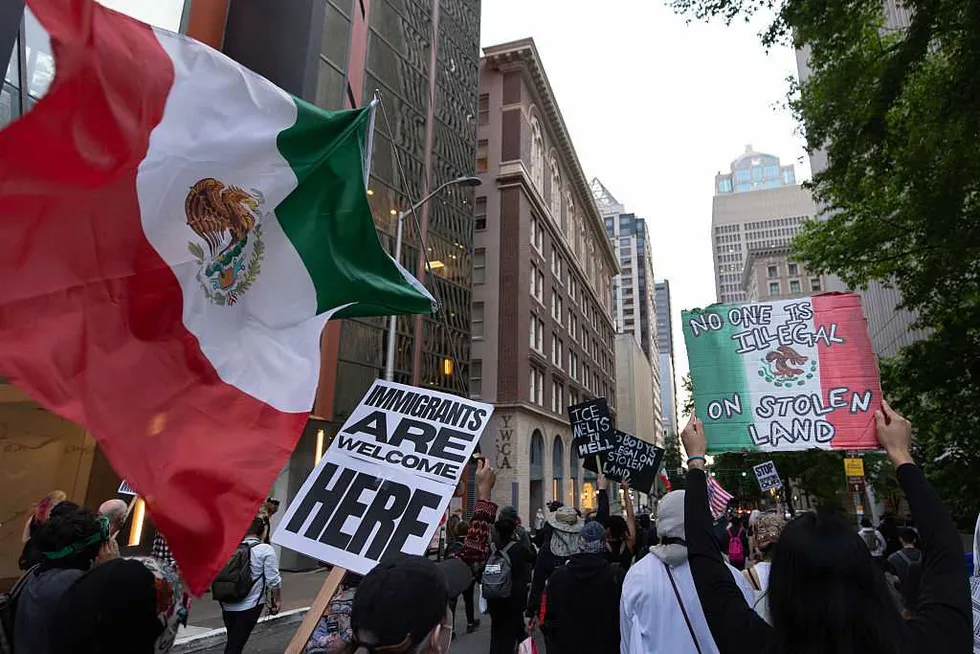 Photo by Rio Giancarlo/Getty Images
Wilson has also announced that the city will invest $4 million in taxpayer funds to support organizations providing community services and legal defense assistance to immigrants.
“Whoever you are, and wherever you come from: If Seattle is your home, then this is your city,” Wilson stated. “And it’s our responsibility as city leaders to move quickly and get organized so we can keep people safe. That is why I am taking immediate steps today to bar federal agents from using city property for federal civil immigration enforcement activity, update SPD protocols, and support trusted community partners to aid the community response, which is our most powerful tool.”
Seattle Police Chief Shon Barnes declared that local law enforcement agents are “here to keep you safe, regardless of your immigration status.”
“The City of Seattle is a welcoming city, and my officers will continue to abide by all laws and regulations that prohibit our participation in immigration enforcement. While we have no authority over federal agents or federal policies, we will document incidents if and when notified. The Seattle Police Department’s primary responsibility is the life safety of ALL people,” Barnes said.
 Photo by David Ryder/Getty Images
The Seattle Police Officers Guild president, Mike Solan, pushed back on Wilson’s directive, stating that the union would not force its members to comply, calling the mayor’s announcement “toothless virtue signaling rhetoric.”
“The concept of pitting two armed law enforcement agencies against each other is ludicrous, and will not happen,” Solan said. “I will not allow SPOG members to be used as political pawns.”
A Department of Homeland Security spokesperson told MyNorthwest that Wilson’s actions were “legally illiterate.”
“Enforcing federal immigration laws is a clear federal responsibility under Article I, Article II, and the Supremacy Clause,” the spokesperson stated. “While this Seattle sanctuary politician continues to release pedophiles, rapists, gang members, and murderers onto the streets, our brave law enforcement will continue to risk their lives to arrest these heinous criminals and make Seattle safe again.”
“How does this serve the people of Seattle? The biggest losers are the people she was elected to serve,” the spokesperson added.
Like Blaze News? Bypass the censors, sign up for our newsletters, and get stories like this direct to your inbox. Sign up here!
Deja vu: Christians are falling for the same trap that fooled them in 2020
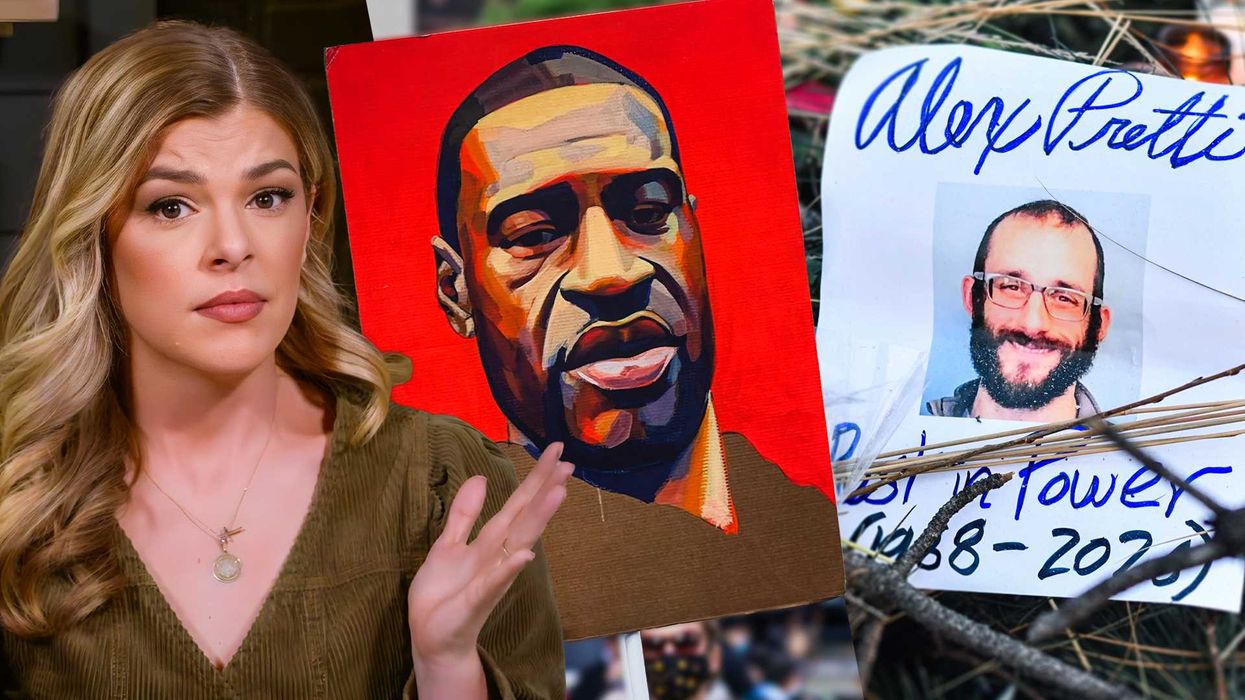
As Minnesota erupts in protests with cries of racism and tyranny over the recent ICE shootings, BlazeTV host Allie Beth Stuckey says she’s “having deja vu to 2020.”
“Like, are we really doing this again?” Stuckey asks.
“So many women in my DMs have yet again fallen for the very same psychological and political traps that were laid for us in 2020 and, in some ways, were laid for us all the way back in the Garden of Eden,” she explains.
In 2020, Stuckey recalls people suddenly becoming “very feverish about things like masks.”
“We were getting a lot of propaganda. It was almost like Trump’s enemies realized that they can harness this as a tool to try to help him lose the election. And then George Floyd happens, the riots happen, the protests,” she says.
“And, of course, you remember that right away, the reaction by most people, especially in the evangelical world, was to condemn racism, to condemn police brutality, to condemn white supremacy, to almost apologize to their black friends, to post the black square, maybe put their Christian spin on it,” she continues.
Of course, those same people ignored the deaths of young people like Tony Timpa and Justine Damond, who were also unarmed, in non-threatening positions, and killed by police officers.
“But they didn’t have the right skin color. And so they didn’t point to the systemic white supremacy, the institutional racism that has plagued our country since its very beginning,” Stuckey says.
“That’s just not true. That’s not politically true. I mean, black Americans have a large segment of the vote. They almost always vote Democrat. Barack Obama won his election two years in a row. It’s not true that these voices are politically unheard, but that was used by Christians to justify violence and to check themselves and to check their privilege and to commit to being an anti-racist,” she continues.
“And I had read too much Thomas Sowell and too much Walter Williams at that point in my life to buy into that. But I’m telling you, for real, it was really hard. It would have been so much easier at the time to shut up about that and to just not say anything, to just post the black square,” she says.
And while both of the recent ICE shootings have been of white people, they were white people defending the honor of minorities and white people playing into the propaganda that minorities need saving, just like in 2020.
“They’re buying into lies, and they’re very tied to it,” Stuckey says.
Want more from Allie Beth Stuckey?
To enjoy more of Allie’s upbeat and in-depth coverage of culture, news, and theology from a Christian, conservative perspective, subscribe to BlazeTV — the largest multi-platform network of voices who love America, defend the Constitution, and live the American dream.
Why the FBI ditched Chevy Suburbans for BMW SUVs

The FBI is abandoning General Motors.
For generations, the black Chevrolet Suburban has been a rolling symbol of federal authority. Its size, shape, and presence are instantly recognizable — whether pulling up to a courthouse, idling outside a hotel, or leading a motorcade through city streets. That familiarity, however, is precisely why the FBI’s recent decision to move away from armored Suburbans in favor of BMW X5 Protection SUVs deserves a closer look. Despite the political noise surrounding the change, the rationale behind it is not ideological. It is practical.
While BMW is a German brand, all BMW X-series SUVs — including the X5 — are manufactured at the company’s Spartanburg, South Carolina, plant.
Under FBI Director Kash Patel, the bureau has reportedly ordered a fleet of armored BMW X5 Protection SUVs to replace the Chevrolet and GMC models traditionally used for executive transport. The reasons cited by the FBI are straightforward: The BMWs cost significantly less, attract less attention, and are built in the United States. Taken together, those factors point to a procurement decision driven by economics and operational efficiency — not symbolism or brand preference.
Frugal fleet
According to FBI spokesperson Ben Williamson, vehicle fleet decisions are routinely reviewed based on security needs, usage patterns, and budget considerations. In this case, the BMW X5 Protection was selected after comparing costs and capabilities with other armored options. Williamson said the move could save taxpayers millions of dollars by choosing a less expensive vehicle while still meeting the bureau’s protection requirements.
The cost differences are hard to ignore. Government-spec Chevrolet Suburban Shield vehicles produced by GM Defense have been reported to cost anywhere from roughly $600,000 to as much as $3.6 million, depending on armor level, drivetrain configuration, and mission-specific equipment. Even conservative estimates put a new armored Suburban at around $480,000 per vehicle. By contrast, the BMW X5 Protection VR6 is generally priced between $200,000 and $300,000 — less than half the cost of many armored Chevrolet and GMC alternatives.
When multiplied across an entire fleet, those numbers add up quickly. Savings of $200,000 or more per vehicle matter for an agency under constant pressure to justify spending. From a taxpayer perspective, the question is simple: If the required level of ballistic protection can be achieved for significantly less money, why wouldn’t the FBI pursue that option?
The BMW X5 Protection VR6 is not a standard luxury SUV fitted with aftermarket armor. It is engineered from the factory with integrated ballistic protection designed to meet VR6 standards, including resistance to high-powered rifle fire and explosive threats. These vehicles are already in service with governments and diplomatic protection units around the world, including the U.S. State Department, which uses armored BMWs to protect American diplomats in high-risk regions. This is a proven platform, not an experiment.
Stealth mode
Cost, however, is only part of the story. The FBI has also indicated that the BMWs are less conspicuous than traditional government vehicles. That claim may seem counterintuitive until one considers how closely the Suburban is associated with federal authority. A line of black Suburbans with dark glass immediately signals government transport. Their presence often draws attention.
The BMW X5, even in armored form, blends more easily into traffic — particularly in urban and suburban areas where luxury SUVs are common. It does not carry the same visual shorthand of authority. From a security standpoint, reducing predictability and visibility can be an advantage. A vehicle that does not immediately announce its purpose may attract less attention and lower risk in certain situations.
Critics argue that the publicity surrounding the purchase undermines any claim of stealth, and that may be true in the short term. Over time, however, the novelty fades. What remains is a vehicle that looks like countless others on the road, rather than one that announces its role at a glance.
RELATED: A federal ‘kill switch’ for your car is coming — and neither Democrats nor Republicans will stop it
 United Archives/Andrew Harnik/Getty Images
American-made
Another point often lost in the debate is where these vehicles are built. While BMW is a German brand, all BMW X-series SUVs — including the X5 — are manufactured at the company’s Spartanburg, South Carolina, plant. It is BMW’s largest production facility worldwide and one of the most significant automotive exporters in the United States by value. The armored X5s used by the FBI are built by American workers on American soil.
That reality complicates claims that the FBI is abandoning American manufacturing. Both the Chevrolet Suburban and the BMW X5 are products of U.S. factories, assembled by U.S. labor, and supported by domestic supply chains. The distinction lies not in where the vehicles are built, but in how much they cost and how effectively they meet the agency’s needs.
Government fleets have always been guided by pragmatism. Federal agencies regularly reassess equipment based on performance, cost, and evolving threats. The FBI’s decision fits squarely within that tradition.
The emotional attachment to the Suburban is understandable. Introduced in 1935 as the Carryall Suburban, it is the longest-running nameplate in American automotive history and has served military, law enforcement, and civilian roles for nearly a century. But symbols come at a price, and in this case that price appears to have climbed sharply.
Time will tell
Imagining a single Suburban costing as much as $3.6 million is enough to give any budget analyst pause. Even at the lower end of reported figures, the cost difference between an armored Suburban and an armored BMW X5 is substantial. In an era of heightened scrutiny over federal spending, paying more than double for a vehicle that may also be more conspicuous is difficult to justify.
That does not mean the BMW choice is without trade-offs. Long-term maintenance costs, parts availability, and service complexity will ultimately determine whether the savings persist over the full life cycle of the vehicles. German engineering can be expensive to maintain, but heavily armored Suburbans are also highly specialized machines with their own costly upkeep requirements. The true comparison will emerge over time.
What is clear now is that the decision is rooted in cost control and operational considerations — not political signaling. The FBI did not choose BMW to make a statement. It chose BMW because the vehicles were cheaper, less visually obvious, and built domestically.
For taxpayers, the takeaway is straightforward. If a federal agency can meet its security needs while spending significantly less money, that is not a controversy. It is what responsible stewardship is supposed to look like. The badge on the grille may spark debate, but the math behind the decision tells a far more practical story.
Massachusetts on track to set mileage limits for drivers
A bill advancing through the Massachusetts Senate would make reducing how much people drive an explicit goal of state transportation policy. It is called the Freedom to Move Act.
The bill, SB 2246, does not impose mileage caps on individual drivers. There is no odometer check, no per-driver limit, and no new fines or taxes written into the legislation. Instead it directs the state to set targets for reducing total vehicle miles traveled statewide — targets that would be incorporated into transportation planning, infrastructure investment, and long-term emissions policy.
When reducing driving becomes a formal state objective, personal mobility inevitably becomes something to be managed.
Transportation is the largest source of greenhouse gas emissions in Massachusetts, as it is in many states. From that perspective, lawmakers argue the bill simply aligns transportation policy with existing climate mandates. The state already has legally binding emissions reduction goals, and supporters say those goals cannot be met without addressing how much people drive. SB 2246, they argue, is about planning — not punishment — and about expanding alternatives rather than restricting choices.
Planning … or punishment?
The bill also establishes advisory councils and requires state agencies, including the Massachusetts Department of Transportation, to factor VMT reduction into project development and funding decisions. In theory, this means greater emphasis on public transit, transit-oriented development, walking and biking infrastructure, and land-use policies designed to shorten commutes. Supporters emphasize that the legislation does not ban cars, restrict ownership, or mandate lifestyle changes. It simply provides a framework for offering residents more options.
The practical implications, however, deserve closer scrutiny — especially outside the state’s urban core. In greater Boston, where transit access is relatively dense, reducing car trips may be feasible for some commuters. In suburban and rural areas, the reality is very different. Many residents drive long distances to work because there are no viable alternatives. Families juggle school, child care, medical appointments, sports, and jobs across multiple towns. Small businesses rely on vehicles for deliveries, service calls, and daily operations. For these drivers, “driving less” is not a preference — it’s a constraint imposed by geography.
Future restrictions
Critics also worry that while SB 2246 does not cap individual mileage today, it lays the groundwork for future restrictions. Once statewide VMT reduction targets are established, pressure will mount to meet them. That pressure could influence everything from road funding and parking availability to congestion pricing, zoning decisions, and the collection of driving data. Even without explicit mandates, policy signals matter. When reducing driving becomes a formal state objective, personal mobility inevitably becomes something to be managed.
There is also the issue of trust and execution. Massachusetts has struggled for years to maintain and modernize its public transportation system. The MBTA’s well-documented reliability problems have eroded confidence among riders and taxpayers alike. Promising expanded transit options while existing systems remain fragile leaves many residents skeptical that alternatives to driving will arrive quickly — or equitably.
RELATED: EPA to California: Don’t mess with America’s trucks
 Bob Riha, Jr./Getty Images
National trend
From a broader policy standpoint, SB 2246 reflects a national trend. States and cities across the country are experimenting with VMT reduction as a climate strategy, encouraged by federal guidance and funding priorities. The premise is that cleaner vehicles alone are not enough and that total driving must decline to meet emissions targets. Whether that assumption holds as vehicle technology evolves — including hybrids, plug-in hybrids, and increasingly efficient internal combustion engines — remains an open question.
Supporters argue that thoughtful planning now can prevent more disruptive measures later. By gradually reshaping transportation and development patterns, they believe emissions can be reduced without dramatic lifestyle changes. Opponents counter that history suggests incremental planning often leads to more intrusive policies — especially when initial targets prove difficult to meet.
What makes SB 2246 significant is not what it does immediately, but what it signals about the future of transportation policy. It reframes driving not simply as a personal choice or economic necessity, but as a behavior the state has an interest in reducing.
As the bill moves to the Senate Ways and Means Committee, lawmakers will have to weigh climate goals against economic realities, regional disparities, and personal freedom.
Massachusetts residents should pay close attention. SB 2246 may not tell you how many miles you can drive today — but it helps define who gets to decide how transportation works tomorrow.
When worship is interrupted, neutrality is no longer an option

Something important shifted in this country when a Sunday worship service in Minneapolis was interrupted by protesters. It was a deliberate, premeditated intrusion into a space set apart for worship.
This was not spontaneous. There was planning, agreement, and coordinated action. This sort of strategy requires a different posture.
Churches across the country are already alert. Security teams exist for a reason.
For generations, houses of worship were understood to be off-limits.When that boundary is crossed, we are no longer debating policy. We are testing whether restraint still exists and whether consequences still matter.
The line has been drawn. This is not an issue that can be treated casually or observed with indifference. Anyone who refuses to condemn the coordinated disruption of worship — or, worse, excuses it — has already chosen a side.
Moments like this tempt Christians toward outrage or bravado. But Scripture does not train the church for theatrics. It trains the church for endurance, clarity, and readiness.
This incident likely would not have unfolded the same way where I live in Montana. People here are not especially theatrical about conflict. Responsibility is assumed, and consequences are not abstract. Most folks are armed, and in many churches, that includes the pastors.
The reality beneath that observation is sobering. Churches across the country are already alert. Security teams exist for a reason. In a culture shaped by real church shootings, sudden disruption inside a sanctuary is no longer interpreted as mere protest. Provocation introduced into an environment already conditioned for worst-case scenarios increases the risk of irreversible outcomes.
Every police officer will attest that domestic calls are often the most unpredictable and volatile. Not because violence is inevitable, but because instability compresses time and judgment. When emotions are high and trust is thin, even small disruptions can escalate quickly.
Families who live with addiction or severe mental illness understand this intuitively. They remain vigilant not because they want conflict, but because unpredictability makes it necessary. Boundaries are not set because change is guaranteed, but because safety is required.
A space shaped for reverence, restraint, and peace cannot be treated as if it can absorb chaos without consequence.
In such situations, vigilance and preparedness are not aggression. They are necessary parts of responsible stewardship.
Intimidation rarely seeks hardened targets. Visibility, restraint, and hesitation make certain spaces attractive to disruption. Where ambiguity is denied, intimidation fails.
It is difficult to imagine these kinds of coordinated disruptions taking place in historically black churches. Not because those congregations are hostile, but because intimidation has never been indulged there. Those churches were forged when intrusion and disruption were never theatrical.
This is not a call to intimidation in return. It is a call to clarity.
When tensions rise, someone must lower the temperature. If one side refuses, the other is obligated to establish boundaries for safety.
Anyone who has dealt with addiction understands this principle. Change cannot be forced, but boundaries must still be set. Recovery, incarceration, or death often follow prolonged chaos. These are realities repeatedly observed when destructive behavior is indulged.
RELATED: Don Lemon ARRESTED over apparent involvement in church invasion; Jim Acosta whines
 Photo by Arturo Holmes/Getty Images
The people setting boundaries are not the cause of the crisis. They are responding to it.
Scripture never promises that moments like this will not come. Jesus warned His followers that hostility would arrive. Paul urged believers not to avenge themselves, but to overcome evil with good.
Scripture states that what can be shaken will be shaken, so that what cannot be shaken may remain (Hebrews 12:27).
That truth is carried not only in Scripture, but in the church’s hymns.
The soul that on Jesus hath leaned for repose,
I will not, I will not desert to his foes.
That soul, though all hell should endeavor to shake,
I’ll never, no never, no never forsake.
There is no clenched fist in that stanza. It shows a relief from strain because vigilance has been transferred to someone stronger. Calm is possible, not because the threat is small but because God is not.
So when worship is interrupted and the lines are clearly drawn, the church does not respond with hysteria or silence. It responds with moral clarity, firm boundaries, and settled confidence grounded in an unshakable kingdom. The path for believers is steadiness shaped by truth, restraint, and trust in God rather than reaction to provocation.
The church has never endured because it intimidated back. It has endured because God does not abandon His people.
Springfield officials, Ohio activists brace for end to Haiti’s Temporary Protected Status designation
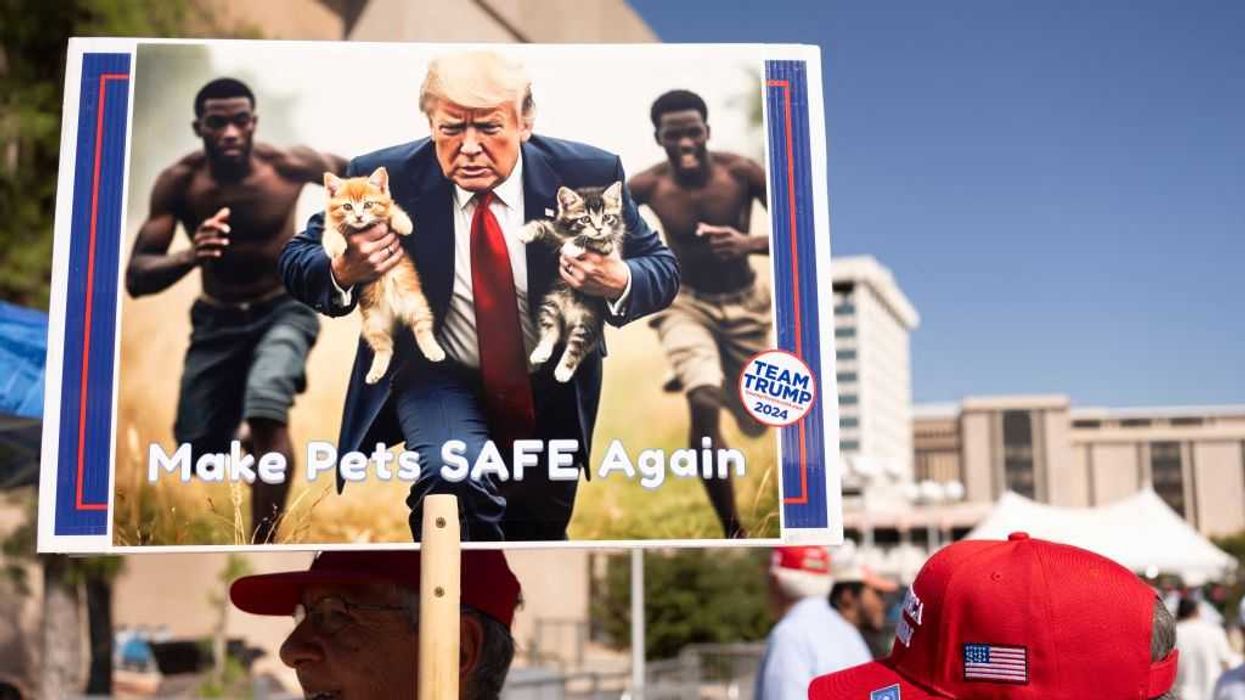
Springfield, Ohio, featured prominently in 2024 election-time debates as a case study in the fallout of the Biden-Harris administration’s disastrous immigration policies — a place where President Donald Trump suggested migrants were “eating the pets of the people that live there.”
The blue-collar city, which had a population of just over 58,000 in 2020, was flooded in subsequent years by tens of thousands of Haitian migrants — migrants whom Springfield Mayor Rob Rue admitted “taxed” the “infrastructure of the city, our safety forces, our hospitals, our schools.” According to the city, there are upwards of 15,000 migrants presently residing in Clark County alone.
‘Temporary means temporary.’
Many of the Haitians who overwhelmed Springfield and other American cities initially entered the U.S. illegally but were spared deportation on account of Haiti’s Temporary Protected Status. That status, which Haitian migrants have enjoyed since January 2010 and roughly 350,000 Haitian migrants enjoy today, is set to expire on Tuesday.
In anticipation of a potential immigration crackdown following the designation’s expiration date, Mayor Rue and members of the Springfield City Commission approved a resolution on Tuesday urging federal law enforcement to “comply with city policies on masks and officer identification to preserve the public peace within the community.”
Blaze News has reached out to Mayor Rue for comment.
Former DHS Secretary Alejandro Mayorkas reinstated Haiti’s TPS in 2021, then doubled down in subsequent years, expanding eligibility for protection along the way.
The Trump Department of Homeland Security announced in July, however, that Haiti’s temporary status was coming to an end.
“After reviewing country conditions and consulting with appropriate U.S. Government agencies, the Secretary determined that Haiti no longer continues to meet the conditions for designation for TPS,” said the announcement in the Federal Register. “The Secretary, therefore, is terminating the TPS designation of Haiti as required by statute.”
RELATED: Trump administration halts visas for 75 nations whose people gobble up American welfare
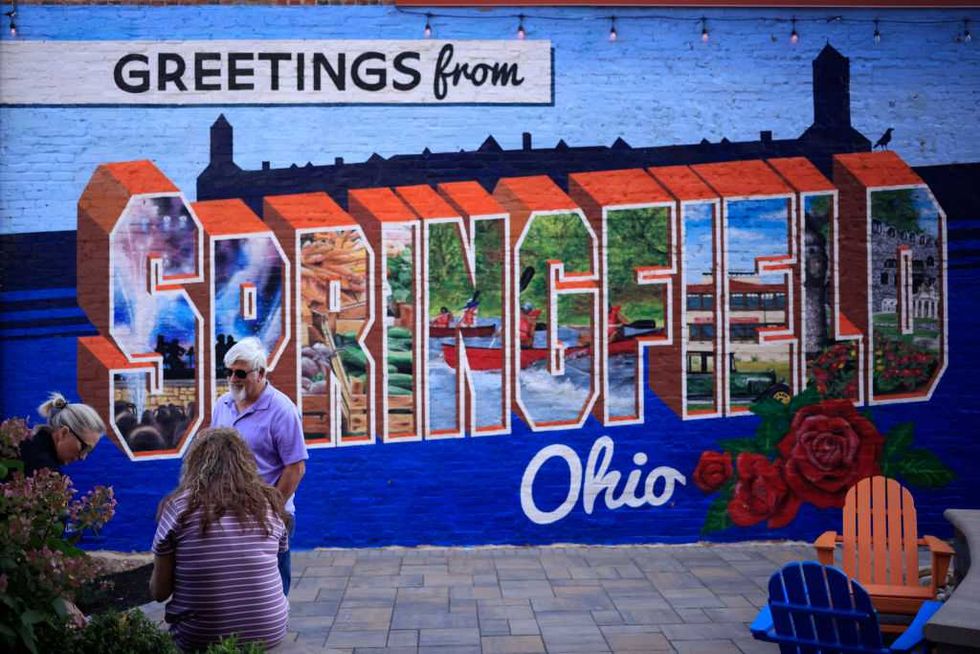 Photo by Luke Sharrett/Getty Images
While DHS initially sought to terminate the TPS designation for Haiti on Sept. 2, 2025, the termination was blocked and the status preserved until Feb. 3 by the New York-based U.S. district court judge overseeing the case Haitian Evangelical Clergy Association v. Trump.
In November, the DHS noted that “in compliance with the U.S. District Court for the Eastern District of New York’s final judgment, the current Temporary Protected Status designation period for Haiti ends February 3, 2026.”
The loss of status would not only mean that previously covered Haitians will lose their work authorization but that they could be given the boot.
Emily Brown, Ohio State University Moritz College of Law’s Immigration Clinic Director, told the Ohio Capital Journal, “At that point, they could potentially be arrested, detained, or put in removal proceedings unless they have already applied for some other form of relief they have in addition to TPS, or that they are applying for in addition to TPS.”
The ACLU of Ohio is among the liberal activist groups panicking over the prospect of U.S. Immigration and Customs Enforcement targeting Haitian migrants in Springfield starting on Feb. 4.
“This despicable surge in lawless ICE officers descending upon Springfield will ignite swells of fear within the Haitian community, terrorize our black and brown neighbors, and cause considerable damage to citizens and non-citizens alike,” stated J. Bennett Guess, executive director of the ACLU of Ohio.
“The ACLU of Ohio urges state and local elected officials to do everything in their power to protect the 30,000 Haitians living in Central Ohio,” he continued.
Prior to Tuesday, U.S. District Judge Ana Reyes — a Biden-appointed lesbian judge who previously worked as a lawyer to fight the first Trump administration’s immigration policy — could decide to suspend the expiration of Haiti’s TPS.
Reyes may be emboldened, after all, by a ruling on Wednesday from a three-judge panel of the 9th U.S. Circuit Court of Appeals.
The panel — comprising three Democrat-nominated judges — suggested Homeland Security Secretary Kristi Noem exceeded her authority when ending the TPS for Venezuela and Haiti.
The appellate court’s ruling won’t have an immediate effect, as the U.S. Supreme Court cleared Noem in October to revoke temporary legal statuses while litigation proceeds.
DHS Assistant Secretary Tricia McLaughlin said in response to the appellate court’s ruling, “Temporary means temporary, and this is yet another lawless and activist order from the federal judiciary who continues to undermine our immigration laws.”
Like Blaze News? Bypass the censors, sign up for our newsletters, and get stories like this direct to your inbox. Sign up here!
Do you follow a diluted Jesus — or the full-strength one?
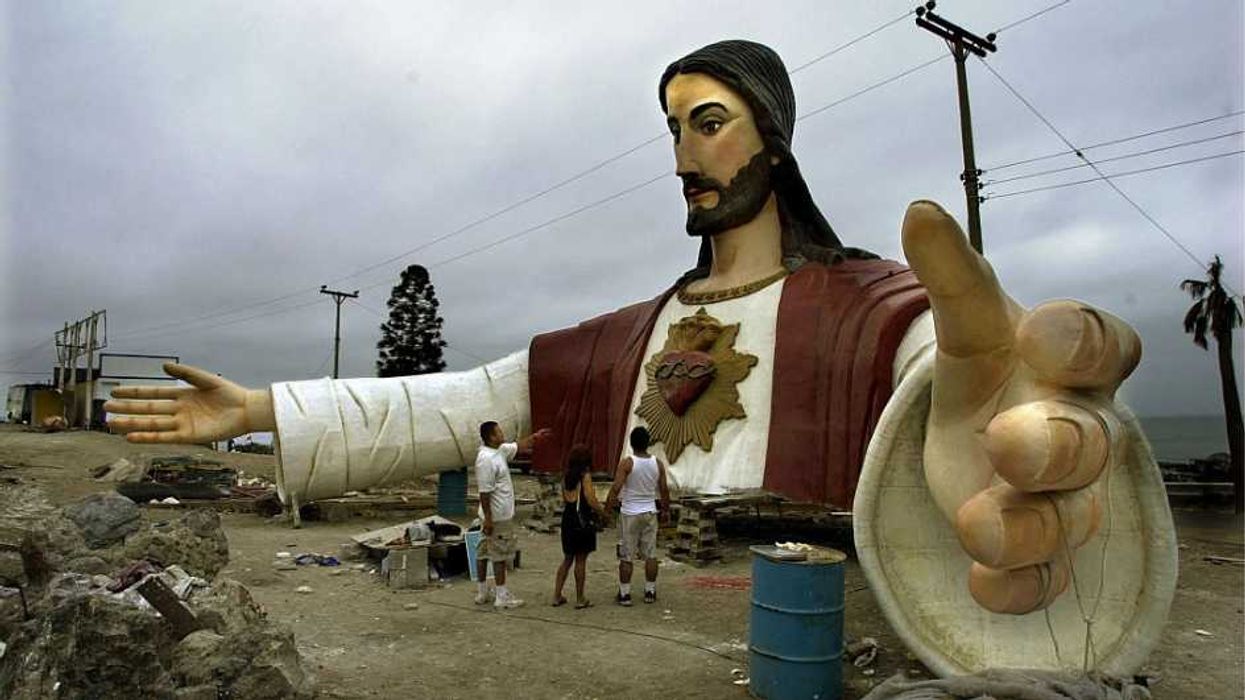
One of the most revealing features of modern Christianity — across Catholic, Protestant, and nondenominational churches alike — is how Jesus is so often presented: gentle, affirming, and above all reassuring. He is described primarily as the “Prince of Peace,” a title that appears only once in scripture (Isaiah 9:6), or reduced to a generalized ethic of niceness often summarized as “Jesus is love.”
The problem is not that these ideas are false. It is that they are radically incomplete.
Jesus prays for His followers, not for the world as such. He commands love of neighbor, but He never pretends that truth and allegiance are optional.
Scripture presents God as merciful, gracious, and abundant in goodness and truth (Exodus 34:6), but the same passage insists that He “will by no means clear the guilty.” Love, in the biblical sense, is inseparable from justice.
When Jesus commands His disciples to love one another, the apostle Paul clarifies what this means: to fulfill the law and do no harm to one’s neighbor (Romans 13:8-10). Love is not affirmation of wrongdoing; it is obedience to God’s moral order.
This distinction was not always obvious to me.
Scriptural reckoning
For much of my life, I was a Christian in name only — attending church, absorbing familiar slogans, and assuming that the moral core of Christianity consisted of kindness paired with a firm prohibition against judgment or righteous anger. That changed four years ago when I began reading scripture seriously, first through a Jewish translation of the Old Testament and later through a King James Study Bible in weekly study with a close friend.
We made a simple but demanding commitment: start at Genesis and read every verse, in order, without skipping the difficult passages. We are now in Matthew 6. This approach differs sharply from curated reading plans that promise familiarity with the Bible while quietly filtering out the parts that unsettle modern sensibilities.
Reading scripture this way forces a reckoning.
Anger management
Consider Matthew 5:22, where Jesus warns against being angry with one’s brother “without cause” — a qualifying phrase absent from many modern translations. That distinction matters. Without it, the verse suggests that all anger is sinful. With it, scripture acknowledges a truth borne out repeatedly: Anger can be justifiable, but it must be governed.
Jesus Himself demonstrates this. He overturns tables in the Temple (Matthew 21:12). He rebukes religious leaders sharply. He experiences betrayal, grief, and indignation — yet never loses control. The lesson is not emotional suppression, but moral discipline.
Reading the King James Bible makes these tensions impossible to ignore. Its language is austere and elevated, but more importantly, it preserves a view of humanity that allows for courage, judgment, and resolve alongside mercy. This stands in contrast to many modern ecclesial presentations of Christ, which portray Him almost exclusively as a comforting presence whose primary concern is emotional reassurance.
RELATED: The day I preached Christ in jail — and everything changed
 menonsstocks/Getty Images Plus
No more Mr. Nice Guy
But Jesus explicitly rejects this reduction. In Matthew 5:17-20, He states plainly that He did not come to abolish the law or the prophets, but to fulfill them. The New Testament does not replace the Old; it completes it. The Old Testament establishes the moral and civilizational framework. The New Testament builds the interpersonal life of faith upon it.
Jesus is eternal (John 8:58), one with the Father and the Spirit (John 14). He is not absent from the demanding and often terrifying episodes of Israel’s history. The same Christ who calls sinners to repentance is present when God judges nations, disciplines His people, and establishes His covenant through struggle and sacrifice.
This continuity matters because it exposes the weakness of a Christianity that treats faith primarily as therapy. Churches shaped around likability and marketability inevitably soften doctrine. Hard truths drive people away; reassurance fills seats. The result is a faith that speaks endlessly about peace while avoiding the cost of discipleship.
A pastor at my church recently put it well: It is better to hold a narrow theology — one that insists scripture means what it says — and to extend fellowship generously to those who submit to it, than to hold a broad theology that can be made to say anything and therefore demands nothing. Jesus prays for His followers, not for the world as such (John 17). He commands love of neighbor, but He never pretends that truth and allegiance are optional.
This is why Jesus’ own words about conflict are so often ignored. In Luke 22:36, He tells His disciples to prepare themselves, even to the point of acquiring swords. The passage is complex and easily abused, but its presence alone undermines the notion that Jesus preached passive moral disarmament. Scripture consistently portrays a God who calls His people to vigilance, readiness, and courage — spiritual first, but never abstracted from the real world.
Cross before comfort
Many of Jesus’ parables involve kings, landowners, or rulers — figures of authority, stewardship, and judgment. The Parable of the Ten Minas in Luke 19 is especially unsettling. There Jesus depicts a king rejected by his people, fully aware of their hatred, and describes the fate rebellion would merit if this were a worldly kingdom. The point is not to license violence, but to make unmistakably clear that rejection of Christ is not morally neutral.
Modern Christianity often flinches at this clarity. It prefers a Jesus who reassures rather than commands, who affirms rather than judges. But scripture presents something sterner and more demanding. Jesus does not seek universal approval. He seeks faithfulness. He does not promise comfort. He promises a cross.
As the late Voddie Baucham frequently observed, the cross is not a symbol of tolerance; it is a declaration of war against sin.
The question Christianity ultimately poses is not whether Jesus is kind — He is — but whether He is Lord. And if He is, discipleship is not a matter of sentiment, but allegiance.
‘We’re not men’: Man pretending to be a woman loses it on camera
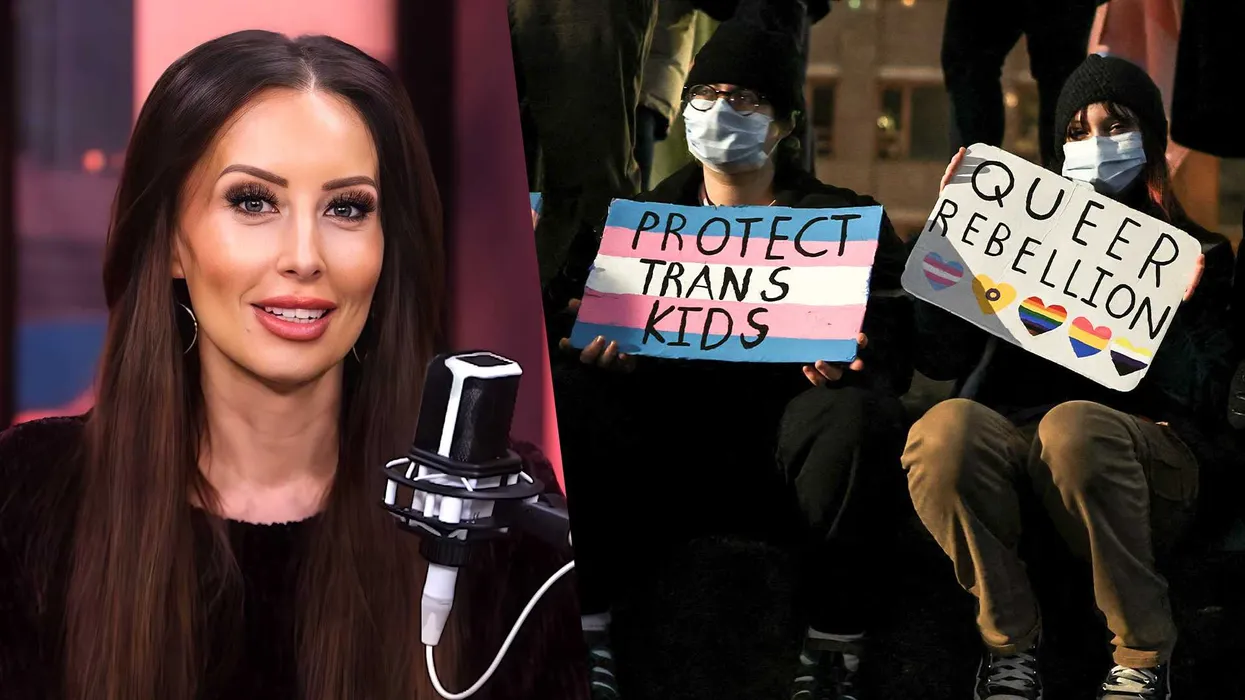
When the Supreme Court heard arguments earlier this month regarding whether or not laws from Idaho and West Virginia banning transgender athletes from competing on teams aligning with their gender identity are constitutional, many interesting characters showed up outside to protest.
And one of them crashed out while being interviewed by a conservative reporter.
“I think the problem arises when we have females that don’t want to play sports against males, and after their objection, the males are still put on the team anyway,” the reporter said.
“We’re not men. We’re not males,” the man, who calls himself a woman, responded.
“You guys separate sex and gender, don’t you?” the reporter asked.
“Yes, of course,” the man responded.
“So, then you have to acknowledge that you’re male —” she began to answer, before he cut her off to yell, “No! I will never acknowledge that! Never put those words in my mouth!”
“Never put it in my mouth,” he continued.
“I’m putting it in my mouth,” she responded.
“Take it out!” he yelled back, completely deranged. “I am not male.”
“Can I ask you what makes you a woman?” the reporter asked.
“My mind. Even implying that I’m male is an insult, and it spits in my face and that of every other trans person in this place,” the man continued.
When the reporter then addressed the man’s wife, saying her husband was being aggressive and using the pronoun “he” to describe him, the man yelled, “She.”
“You can’t just put lipstick on a pig,” BlazeTV host Sara Gonzales comments on “Sara Gonzales Unfiltered.”
“No one’s fooled, sir. You’re still a dude. You’ll always be a dude. Deal with it, and get some therapy while you’re at it,” she adds.
Want more from Sara Gonzales?
To enjoy more of Sara’s no-holds-barred takes on news and culture, subscribe to BlazeTV — the largest multi-platform network of voices who love America, defend the Constitution, and live the American dream.





