

Category: Blaze Media
GOP Lawmaker Suddenly Passes Away, Narrowing House Majority Even Further
Republican California Rep. Doug LaMalfa died at 65 on Tuesday, according to multiple reports. LaMalfa represented the Golden State’s 1st Congressional District since 2013 and chaired the Congressional Western Caucus. His district was one of the seats gerrymandered in 2025 by California’s Prop 50. The lawmaker’s death now leaves the House Republicans with 218 seats […]
After Making Money On ‘America 250,’ The NFL Will Go Back To Hating The USA

 Any patriotism on display by the NFL over the next few months will be, at best, a bait and switch.
When did America start going to bed so early?
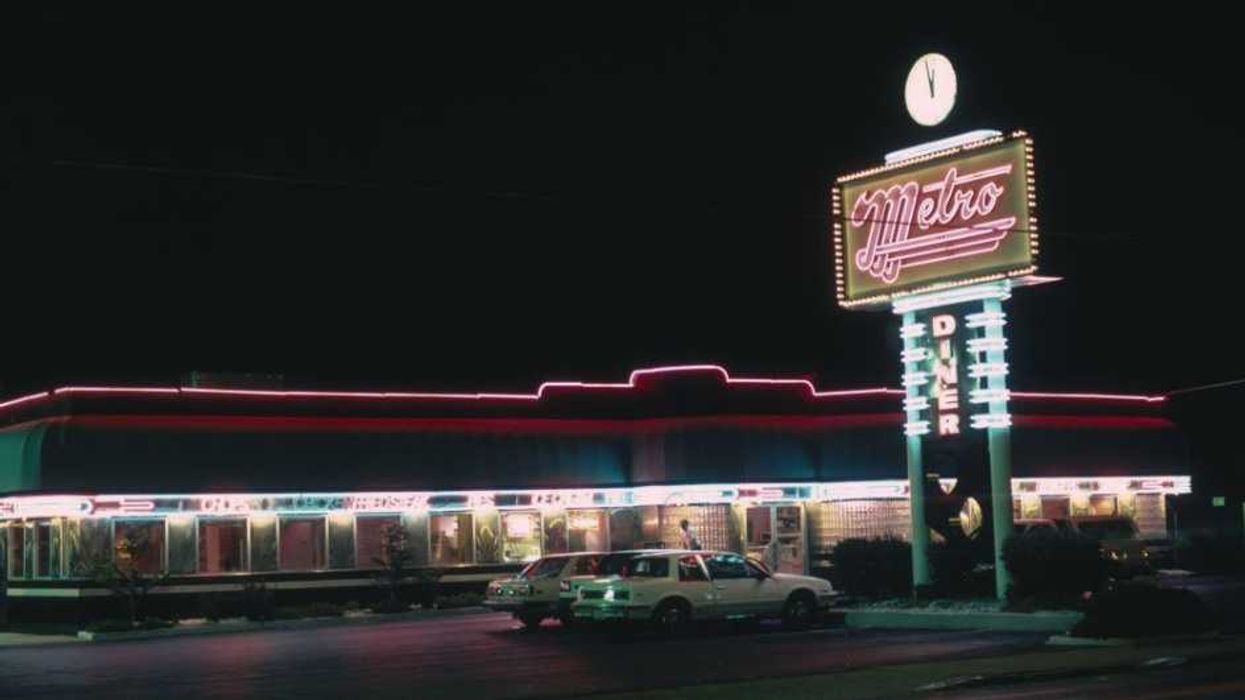
There was a moment — maybe early 2000s? — when people began talking about a new frontier in American life.
I remember there was a “Nightline” episode about it and articles in magazines.
In Portland, where I live, the last 24-hour diner-style chain, Shari’s, closed all its restaurants earlier this year. Too dangerous to stay open that late.
They described a new territory that was open for exploration. A place where most people were still reluctant to go. But this new space held new opportunities and prospects for growth.
This new frontier was called “late-night America.” It wasn’t a geographical location. It was a time period. It occurred from approximately 11:00 p.m. to 6 a.m.
Crosstown traffic
The idea was as the world became more crowded, with more cars on the road, more people packing into office buildings every morning, a natural evolution was occurring.
People were opting to change their schedules to avoid the crowds. They were staying up later, working later, and beginning to inhabit late-night America.
These early adopters preferred a less hectic world, so they adjusted their lives toward the “off hours.”
Think of Midtown Manhattan at lunch time. The Seattle Fish Market at 9:30 am. Or your own city during afternoon rush-hour traffic.
Now think of all those places at 4 a.m. Pretty different, aren’t they? Not so crazy. Not so overwhelming.
The worst thing you might encounter at 4 a.m. is a garbage truck or an impatient jogging enthusiast with an early work schedule.
As more people began to see the obvious advantages of conducting their business and personal lives at a later hour, other businesses sprang up to serve them.
Instead of just one 24-hour restaurant in your town, now there were a dozen. Many gas stations went 24 hours as did convenience stores. Big cities added more night buses. Supermarkets began staying open until 11, then midnight, and then 1 a.m.
With more people inhabiting it, the late-night world became a more active place. It was fun working the late shift. It was easier to drive to work. The vibe was more relaxed. People weren’t in such a hurry.
San Francisco noir
I was always a night owl. My first job out of college I worked at a courier company in San Francisco. We did most of our business during normal hours, 9 to 5. But I quickly maneuvered myself into the swing shift position, coming in at 2:30 p.m. and staying until 11.
After 5, I was alone in the office. I routed the overnight shipping and spent the late hours on the phone with my cohorts at our company’s other branches in other cities.
The late-night crew got to know each other. We were the oddballs of our respective offices. We tended to be more eccentric, more interesting than the daytime employees.
When I was occasionally called in by my boss to work a normal 9-to-5 shift, I found the routine deeply disturbing.
Imagine waking up at 8 in the morning! Riding a packed, slow-moving bus downtown. Waiting in line for 10 minutes for a morning coffee. Standing in another line for a soggy sandwich at lunch.
All of this with robotic office workers crowded around me. Dan from sales. Sheila from billing. Their business outfits. Their terrible hairstyles. It was unbearable!
But to be on the late shift, alone in the office, with the radio on, my feet on the desk. That was heaven. And then leaving the building at 11, the downtown streets deserted, late-night San Francisco all to myself.
Truck stop scribbling
Later when I became a professional writer, I loved working in late-night cafes. Or 24-hour diners. Or truck stops, if there were one nearby.
I went there to work, but I liked having people around, a nice waitress, some foot traffic, someone to share a bit of conversation with.
Or on a bad weather night, there were the state troopers or the snowplow guys coming in from the cold at 2 a.m. for a hot coffee and a piece of pie — wasn’t that fun to be part of?
Thanks to late-night America, there were always such places available. It was a great time for a person like me. I always had somewhere to go. Some coffee to drink. And mostly good people to be around.
Closing time
By now, you probably know where this story is going. We are presently at the other end of the pendulum swing. Now NOTHING stays open late. Good luck finding a coffee shop that’s open after 4!
In Portland, where I live, the last 24-hour diner-style chain, Shari’s, closed all its restaurants earlier this year. Too dangerous to stay open that late. And nobody wants to work those hours.
The early-closing phenomenon had already begun before COVID, and then COVID finished the job.
Plus in many cities, there is now the constant presence of homeless and mentally ill people to contend with.
In response, business owners have decided it’s best to minimize their hours of operation. They lock their doors and lower their metal gates as soon as the sun goes down.
Last of the lounge lizards
Bars are still open, of course. But even that world is shrinking. Young people don’t go out as much these days. They have other ways to socialize, and they have multiple forms of entertainment right there in their homes.
Meeting people for romantic purposes was once the primary reason for being out late at night. But this seems to be on the wane as well.
Men are less eager to approach women in public places. And contemporary women, with careers and important jobs, don’t want to be out late at night. Swiping on dating apps during lunch hour is a much more efficient way to meet a potential partner.
Are there still jobs on the night shift? Sure there are. Trucking, loading, and delivering are still much easier during off-hours. But most of the other late-night jobs are … well … security guard, security patrol, security supervisor.
In other words, protecting people and property from the dangers of the night.
Goodnight, moon
So yeah, that last frontier? It’s closed.
For such a social space to function safely, you need a high-trust, high-functioning society. People need to feel safe. They need to trust each other.
Society is too fractured at the moment for that to happen. There is too much crime, too much drug abuse, too many zombies to venture into the dark.
But think of the romance lost! Think of the late-night walks you can’t go on. The moonlit skies you’ll never see. The late-night drives in a cozy car with the radio on.
These are not insignificant things for a culture to lose. The night should be ours. The night should belong to us.
‘Julia,’ son of wealthy Democrat donor, identified as suspect in Vance home attack
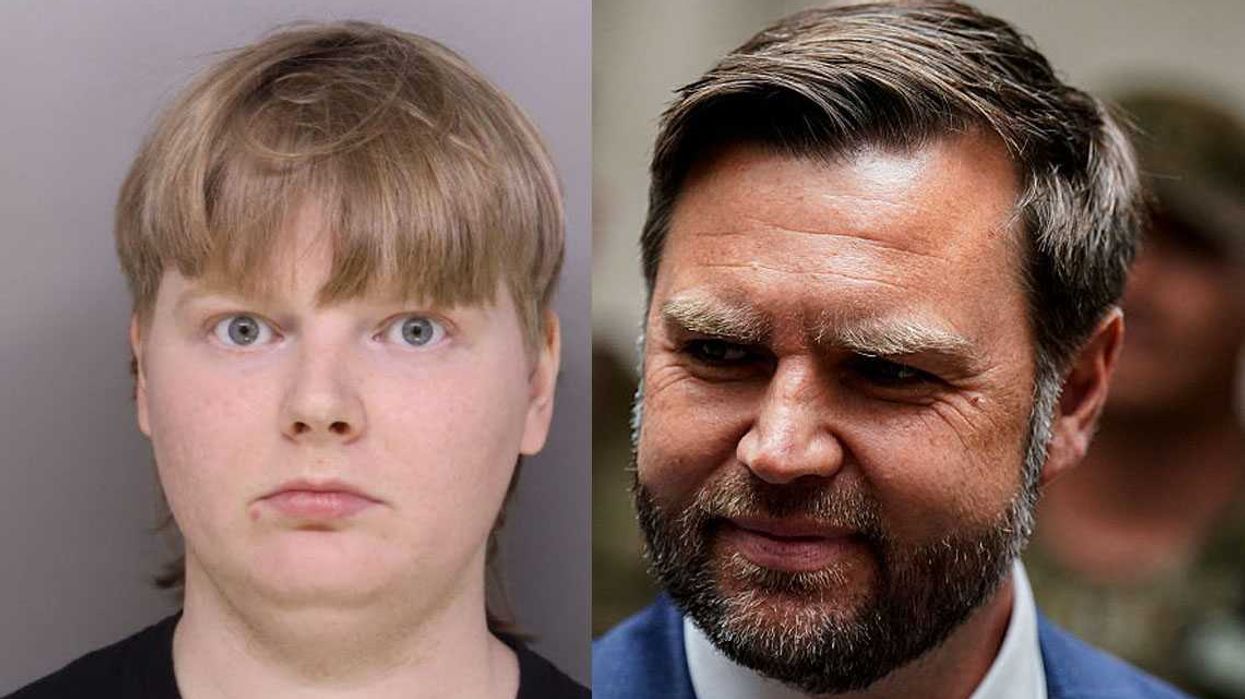
The 26-year-old man who allegedly attacked the Cincinnati home of Vice President JD Vance early Monday morning appears to be yet another radical transvestite.
Just hours after the vice president concluded his visit to the city and departed for the national capital, a suspect armed with a hammer was spotted by U.S. Secret Service agents running along the front fence, then breaching the perimeter of Vance’s Ohio house.
‘As far as I can tell, a crazy person tried to break in.’
The U.S. Attorney’s Office in Cincinnati indicated in a release that the suspect, William DeFoor, was ordered to stop and drop the hammer after he allegedly attempted to break the window of a USSS vehicle blocking the driveway entrance. DeFoor allegedly refused to comply and proceeded to smash the front windows of Vance’s house — windows apparently equipped with “enhanced security assets.”
After reportedly inflicting over $28,000 in damage, the suspect attempted to flee the scene on foot but was swiftly captured by USSS agents and Cincinnati police officers.
William DeFoor was initially charged with criminal trespass, criminal damaging or endangering, obstructing official business, and felony vandalism. He has since been slapped with several federal charges: damaging government property, engaging in physical violence against any person or property in a restricted building or grounds, and assaulting, resisting, or impeding federal officers.
Vance noted in a statement on Monday: “As far as I can tell, a crazy person tried to break in by hammering the windows.”
The vice president appears to have been right on the money.
RELATED: ‘Something historic’: CNN analyst GOBSMACKED by how Vance polls against Nikki Haley, others
 Photo by Oliver Contreras-Pool/Getty Images
On social media, DeFoor — whom law enforcement identified as a male — appears to go by the name Julia.
A Facebook profile that appears to belong to the suspect claims that DeFoor, identified as Julia, is a student at Cincinnati State Technical and Community College who previously studied at the University of Cincinnati’s College-Conservatory of Music and attended the Summit Country Day School, a private high school where he made the list of candidates for the U.S. Presidential Scholars Program in 2018.
DeFoor’s account appears to have liked the Cincinnati-based leftist group Coalition for Community Safety as well as the trans advocacy group Heartland Trans Wellness.
FBI sources told Fox News that the suspect demanded to be called “Julia” at the time of his arrest.
Court documents indicate that DeFoor pleaded guilty in April 2025 to two counts of vandalism after he inflicted over $2,000 in damage upon an Ohio interior design company, reported WXIX-TV. DeFoor was sentenced to two years of treatment at a mental health facility and ordered to pay $5,550 in restitution.
In 2023, DeFoor was reportedly charged with trespassing at UC Health psychiatric emergency services but ultimately was found mentally incompetent to stand trial.
DeFoor’s father, identified by the New York Post as William DeFoor, appears to be an affluent pediatric urologist who works as a professor at the University of Cincinnati’s College of Medicine. Among his top research interests is pediatric genitourinary reconstruction. His bio on the Cincinnati Children’s Hospital website states that he is an elder in his church, is married to a general pediatrician, and has three teenage children.
Blaze News has reached out to the professor for comment.
Dr. DeFoor is a longtime Democrat donor who sank thousands of dollars into Kamala Harris’ first and second failed presidential campaigns and thousands of dollars into former President Joe Biden’s presidential campaigns.
Like Blaze News? Bypass the censors, sign up for our newsletters, and get stories like this direct to your inbox. Sign up here!
Trump is right: Netflix’s merger would create a woke media monster
Popular entertainment has always shaped the public mind in ways politicians can only envy.
Percy Bysshe Shelley once called poets the “unacknowledged legislators of the world.” The idea surfaces memorably in the 1984 Best Picture winner “Amadeus,” where Emperor Joseph II appears more invested in micromanaging Vienna’s opera scene than governing his empire.
Modern technology has magnified that cultural power. Today, many young Americans absorb more of their moral instruction from Netflix than from teachers, pastors, or even parents.
Now Netflix wants to expand that influence dramatically by acquiring Warner Bros. Discovery, a media conglomerate that includes HBO, DC Studios, and franchises such as “Harry Potter” and “Game of Thrones.” The combined entity would control roughly a third of the streaming market and wield unprecedented cultural power.
Democrats understand that politics flows downstream from culture. Allowing Netflix to absorb Warner Bros. would give that worldview control over even more cultural territory.
The scale of the proposed merger raised concerns even for President Donald Trump, who warned last month that it “could be a problem” and confirmed his administration would take an active role in reviewing the deal.
Given the stakes, the question is not abstract. How does Netflix use the power it already holds?
Consider the company’s recent headline-grabbing film, “Queen of Coal,” described as the story of “a trans woman who dreams of working the coal mines” and must battle a town defined by “superstition and patriarchy.”
Inspiring stuff.
Or recall Netflix’s 2020 release of “Cuties,” a French film centered on 11-year-old girls twerking. The filmmakers claimed the movie criticized the sexualization of children. Perhaps that was their intent. Netflix’s marketing department missed the point entirely, replacing the original poster with one featuring preteen actresses in sexualized poses. Public outrage followed, and Netflix eventually apologized.
After George Floyd’s death in 2020, Netflix declared on social media, “To be silent is to be complicit. Black lives matter,” and then set about race-swapping characters across its catalog.
Zoom out further. A report by Concerned Women for America found that nearly half of Netflix’s children’s programming pushes LGBT themes.
Taken together, the pattern is unmistakable. Netflix uses its platform to advance a radical progressive agenda, and scrutiny only confirms it.
The company’s internal culture reinforces the point. Even by Big Tech standards, Netflix skews sharply left. In 2020, 98% of its political donations went to Democrats, compared with 84% at Apple and 77% at Facebook.
CEO Reed Hastings, Netflix’s co-founder and longtime chief executive, donated $7 million in 2024 to a pro-Kamala Harris super PAC and $2 million to California’s redistricting effort last year. In 2017, Hastings told fellow billionaire Peter Thiel that his support for Trump reflected such “catastrophically bad judgment” that it called into question Thiel’s fitness to remain on Facebook’s board.
Hastings has made clear that conservative ideas do not merely deserve debate. In his view, they disqualify those who hold them from serious consideration.
Then comes the revolving door between Netflix and Democratic power.
RELATED: Netflix wants a monopoly on your mind
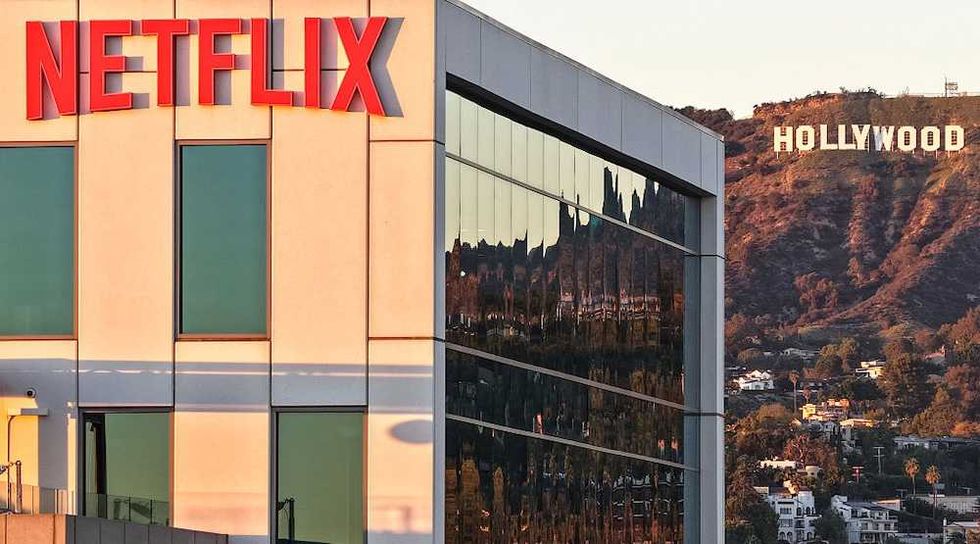 Photo by Mario Tama/Getty Images
In 2018, Netflix signed a deal with former President Barack Obama reportedly worth tens of millions of dollars. The results included a slate of progressive documentaries and an apocalypse thriller featuring the line, “Trust should not be doled out easily, especially to white people” — a sentiment both racist and badly written.
Susan Rice offers another example. After serving as Obama’s U.N. ambassador and national security adviser, she joined Netflix’s board during Trump’s first term, left to lead Biden’s Domestic Policy Council, and has now returned to the company.
Democrats understand that politics flows downstream from culture. Allowing Netflix to absorb Warner Bros. would give that worldview control over even more cultural territory.
President Trump has signaled that he understands what is at stake. He has warned that the $82.7 billion deal must undergo rigorous antitrust scrutiny.
As Rep. Darrell Issa (R-Calif.) noted, the merged company would exceed the 30% market-share threshold traditionally viewed as “presumptively problematic” under antitrust law.
But Trump’s concern goes deeper. As an entertainer himself, he grasps the importance of the arts. That understanding explains his hands-on approach to reforming the previously ultra-woke Kennedy Center. It explains his plan to commission 250 classical sculptures for a National Garden of American Heroes. It explains his appointment of Jon Voight, Mel Gibson, and Sylvester Stallone as special ambassadors to Hollywood.
And it explains why he should not allow Netflix to build a woke media monopoly capable of doing more long-term damage to the country than any single election cycle.
BLM 2.0 is HERE — Glenn Beck unveils the next extremist plot to destroy America

In the days leading up to New Year’s Eve 2025, the FBI uncovered and thwarted an alleged domestic terrorism plot dubbed Operation Midnight Sun. Headed by four radicals from the anti-government extremist group Turtle Island Liberation Front, the plan involved detonating improvised explosive devices simultaneously at midnight on New Year’s Eve at five locations targeting two unnamed U.S. logistics companies in Southern California.
While Turtle Island Liberation Front may sound unserious and even laughable, it is critical we keep a close watch on it, counterterrorism expert Ryan Mauro tells Glenn Beck.
“Turtle Island,” he explains, is a code word for the United States used by the majority of pro-terrorism groups. “The Native American tribes referred to the U.S. and Canada and Mexico as Turtle Island because they believed that the continent was created on the back of a turtle … until the evil white settler capitalist came in and ruined everything,” he says.
Whether groups are Islamist, anarchist, or communist — or whatever anti-America sentiment fuels their crusade — they are all unified by the desire to “[liberate] Turtle Island.”
“It’s a way of calling for violence and the destruction of the U.S.,” Mauro says.
But their shared desire to see the United States fall is the only goal that unites them, Glenn adds. “This alliance with the indigenous people, with the Islamists, with Marxists — they’re all going to sort [the end game] out later. They just want to kill us first. They want to overthrow the government first. Then they’ll start eating each other,” he warns.
Right now, Mauro says, these temporarily united terrorist groups recognize that their anti-Israel campaign is floundering. In response, they have shifted their focus toward igniting “an anti- police movement,” primarily targeting ICE officials, but without totally taking Israel out of their crosshairs.
The Capital Research Center, where Mauro serves as an investigative researcher, predicted that these groups would target “companies that they can connect — even by some leap — to the Zionist infrastructure.”
“That way you’re hitting all the themes: anti-police, anti-Zionist, anti-capitalist, Turtle Island, and pro-Palestine,” he says, “and that’s exactly what [Operation Midnight Sun] was doing.”
“Although this plot was foiled, make no mistake about it — it is a marker in time for this new era, this new offensive that has begun,” he warns.
“How likely is this to become the next BLM movement?” Glenn asks.
“It’s extremely likely,” Mauro says frankly.
Just like BLM, which used America’s history of slavery to con well-meaning people into posting black squares, donating money, and joining protests, the new Turtle Island movement will draw on the plight of the Native Americans to fuel its death march.
From “terrorists” and “overseas governments” to “Turtle Island folks” and “Christian anarchists,” this is “all one seditionist movement,” Mauro says.
“Two things have to happen,” he urges.
One: “Put together a team to map out the Turtle Island intifada … so action can be taken.”
Two: “[Preserve] history … because the counter-narrative is going to require us to use historical documents to tell the truth of everything that went on with the Native American tribes — the good, the bad, and the ugly.”
To hear more of the conversation, watch the video above.
Want more from Glenn Beck?
To enjoy more of Glenn’s masterful storytelling, thought-provoking analysis, and uncanny ability to make sense of the chaos, subscribe to BlazeTV — the largest multi-platform network of voices who love America, defend the Constitution, and live the American dream.
Video shows wild car chase after police rescue 11-year-old from alleged kidnapper who tortured him at campsite

A harrowing video showed a wild police chase after a routine traffic stop that led to the rescue of an alleged kidnapping victim and the arrest of his kidnapper in Florida.
The Flagler County Sheriff’s Office said deputies pulled over a white Ford F-150 on U.S. Highway 1 on Wednesday after a 911 caller reported suspicious activity. They found a 60-year-old man identified as Darnell Hairston with two male juveniles.
‘A caller that knew his background as a sex offender with two children in his pickup truck called us. And if it wasn’t for that, we might be investigating a completely different crime.’
When deputies separated an 11-year-old boy, he told them he had been kidnapped by Hairston and feared for his life.
“He told us that he thought they were going to kill him,” Flagler County Sheriff Rick Staly said.
Police video showed deputies taking down the man before the other juvenile passenger, a 15-year-old boy, got into the truck and fled from the scene. He comes within inches of driving over one officer’s feet. When police followed the vehicle, he rammed one cruiser before crashing the truck.
The 11-year-old had been missing for three days and was treated at a hospital, according to police.
He allegedly told police that he had been lured to a wooded campsite at Flagler Estates, where he was choked unconscious. When he regained consciousness, he was gagged with duct tape and tied with an extension cord and shoelaces. He also said he was threatened with a knife and firearm.
The boy was forced to hide under a blanket on the floorboard of the truck while being transported, according to investigators.
Search warrants performed on the man’s vehicle, his residence, and the campsite led to the recovery of duct tape, weapons, and video surveillance equipment. Police said these were consistent with statements given by the victim.
Investigators said the two juveniles were in a Snapchat group where the 11-year-old was warning others about Hairston being a sexual predator.
Video of the traffic stop was posted to the sheriff’s office Facebook account.
Hairston was eventually charged with kidnapping of a child under 13, aggravated child abuse, battery by strangulation, and robbery with a deadly weapon. He had been initially arrested for attempting to disarm a law enforcement officer and resisting arrest.
The 15-year-old boy was placed into the custody of the Florida Department of Juvenile Justice. He faces multiple charges and is being investigated as a possible co-conspirator.
Hairston is being held without bond at the Sheriff Perry Hall Inmate Detention Facility and may face additional charges.
“A caller that knew his background as a sex offender with two children in his pickup truck called us,” Staly said. “And if it wasn’t for that, we might be investigating a completely different crime.”
Like Blaze News? Bypass the censors, sign up for our newsletters, and get stories like this direct to your inbox. Sign up here!
What investigators still haven’t asked about Minnesota’s fraud

The national spotlight has settled on the industrial-scale fraud uncovered in Minnesota, much of it linked to networks operating within the state’s Somali immigrant community. To date, coverage has focused on how operators allegedly diverted nearly $9 billion in public funds into shell businesses that existed largely to funnel money to friends and family through no-show jobs and inflated contracts.
That story matters. But it may not be the whole story.
Fraud at this scale almost never stands alone. Where investigators uncover massive deception, additional crimes often lie beneath the surface.
Most of the businesses implicated in the scheme presented themselves as child-care centers, autism service providers, and non-emergency medical transport companies. For readers unfamiliar with immigration enforcement, the reaction is straightforward: Criminals stole money intended for society’s most vulnerable.
For those who have spent decades working in immigration law and border security, a different question arises. Why build an end-to-end infrastructure of licensed service providers unless it served additional purposes?
Videos circulating online show many of these facilities sitting empty — unused day-cares, idle transport vans, and vacant offices. That does not prove the businesses were harmless.
In criminal investigations, fraud rarely exists in isolation. One axiom holds that following the money reveals the perpetrators. A second, less discussed rule also applies: Following the money backward often reveals additional crimes.
Illegal immigration provides a perfect example. The initial violation occurs when an alien enters unlawfully or makes false asylum claims. Additional offenses frequently follow: identity theft, illegal employment, fraudulent tax filings, and payments to smugglers to bring in relatives. Organized crime and terrorist groups have used similar layered fraud models for decades. Illicit revenue becomes seed money for broader criminal activity.
Despite the scale of the Minnesota fraud, little public attention has focused on whether these businesses were used for more than financial theft. There appears to be no comprehensive inquiry into whether any of the entities sponsored employment-based visas, concealed smuggled minors, facilitated labor trafficking, or enabled sex trafficking.
None of those allegations has been proven. But the structure of the alleged scheme bears an uncomfortable resemblance to the network of Health and Human Services contractors through which the Biden administration lost track of thousands of unaccompanied alien children.
According to a City Journal investigation, federal counterterrorism sources confirmed that millions of dollars from the Minnesota fraud flowed back to Somalia, where funds ultimately reached al-Shabaab, the al-Qaeda-affiliated terrorist organization. The report described Minnesota taxpayers as the group’s largest single funding source.
RELATED: Minnesota’s fraud scandal exposes a dangerously loose election system
 Photo by Andrew Harnik/Getty Images
If accurate, that finding raises a far more serious concern. Terrorist organizations do not stop at cash transfers when operational infrastructure is available. A network of licensed service providers — child-care centers, transportation companies, and health services — offers precisely the kind of cover such groups seek to move people, materials, and money discreetly inside the United States.
The full extent of al-Shabaab’s involvement remains unclear. Covert operations rarely reveal themselves all at once. They are built deliberately, in stages, with long timelines. Minnesota records suggest (and the explosion in Minnesota Democrat Rep. Ilhan Omar’s personal wealth seems to indicate) that much of the large-scale fraud linked to Somali-run entities accelerated over the past decade. That timeline raises the possibility that the scheme was still maturing when investigators uncovered it.
If so, authorities may have disrupted a funding and logistics pipeline before all layers of criminal activity were fully deployed.
One point remains undeniable: Where there’s smoke, there’s fire. Fraud at this scale almost never stands alone. Where investigators uncover massive deception, additional crimes often lie beneath the surface.
Federal authorities should pursue this case to its roots. That means examining every entity, every financial flow, and every operational link — not just to recover stolen funds, but to determine what else those structures were built to conceal.
2025 is so over and so is virtual reality

Mark Zuckerberg, in a 2021 presentation that seemed less a business strategy than a fever dream, rebranded his company from Facebook to Meta. He was selling a future in which we would inhabit a digital utopia, a place where the friction of the physical world, the traffic, the decay, the awkward silences, would be smoothed over by the order of code.
It was a grand vision, one that presumed that the right combination of capital and engineering can solve the human condition.
However, Meta is now quietly retreating from its all-in bet, one of the most expensive experiments in business history.
It was a $60 billion attempt to fix a reality we still prefer to the simulation.
The premise was always seductive, in the way that the shadows on the wall of Plato’s cave were seductive: a world that promised to be more pleasurable, more malleable than reality. But the metaverse, as it began to take shape, was less a hyperreal paradise than a clumsy imposition. To enter this new world, one had to strap a computer to one’s face, a set of electronic “ski goggles” that isolated the wearer, blinded him to his surroundings, and demanded a total surrender of attention. The Quest traded the ease of the smartphone, which slides effortlessly into our pockets, for a device that induced sweat, fatigue, and the vague nausea of motion-to-photon delays.
Horizon Worlds, Meta’s flagship social platform, was intended to be the bustling town square of the new digital age. Instead, it became a study in desolation. By the fall of 2022, the platform struggled to retain 200,000 monthly users, a number that seems almost tragic when weighed against the tens of billions of dollars poured into its creation. Those who did visit found a landscape populated by legless, floating torsos, cartoon avatars that managed to be both childish and uncanny. It was a ghost town, a place where the silence was amplified by the vast, empty digital architecture.
This failure was not without precedent. In the 1990s, Nintendo’s Virtual Boy promised a similar revolution and delivered only headaches and monochrome red graphics, selling fewer than 800,000 units before vanishing into the landfill of bad ideas. In the early 2000s, Second Life was briefly the darling of pundits, who prophesied we would all soon be working and shopping in its pixelated aisles; by 2010, it had faded into a niche curiosity. The pattern is clear: The cultural imagination is enticed by the idea of VR, but the human animal balks at its practice.
There is a stubborn materiality to our existence that the architects of the metaverse failed to overcome. We are embodied beings. We like the warmth of a hand, the smell of rain, the ability to glance at a screen and then look away. The metaverse demanded we leave the physical world behind, a proposition that felt increasingly dystopian.
RELATED: Inside Zuckerberg’s losing metaverse bet
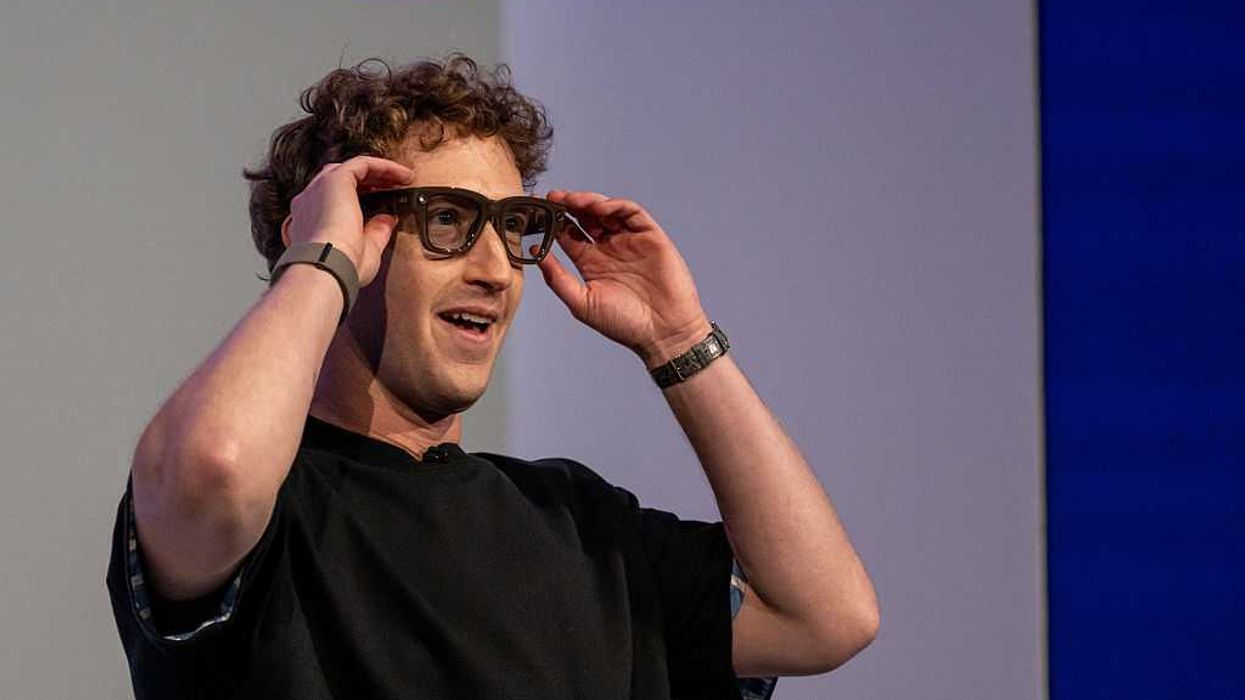 David Paul Morris/Bloomberg via Getty Images
Marshall McLuhan warned that a medium pushed to its extreme can “implode” into something else, and the metaverse seemed to hit that breaking point, an implosion in which the medium devoured its own appeal. The users did not want to be immersed in a corporate-controlled simulacrum; they wanted convenience. They wanted the blue bubble of a text message, not a virtual meeting in a boardroom rendered in low-polygon graphics.
The retreat, when it came, was swift and brutal, in the way corporate corrections often are. By 2023, a metaverse winter had set in. Disney shuttered its division; Microsoft sunset its social VR platform. The world became captivated by a new technology: generative AI. Suddenly the conversation was not about new worlds but about automated intelligence that could write our emails and paint our pictures. Meta, reading the tea leaves and the plummeting engagement metrics, pivoted. The irrational exuberance for VR gave way to sober retrenchment.
The financial markets, at times the coldest arbiters of value, cheered the death of the dream. When news broke in late 2025 that Meta would cut Reality Labs’ budget and lay off staff, its stock jumped, adding nearly $70 billion in value overnight. It was a signal that the experiment was over. The Great White Whale of tech had once again slipped away, leaving the innovators holding the harpoon, exhausted.
John Carmack, the legendary game developer who tried to steer Meta’s VR ship before resigning in frustration, noted that the company had “a ridiculous amount of people and resources” but constantly “self-sabotaged.” The metaverse was not killed by a lack of technology; the Quest 3 is a marvel of engineering. It died from a lack of human necessity. It was a $60 billion attempt to fix a reality that, for all its flaws, we still prefer to the simulation.
The retreat is less a defeat than a recalibration. Meta is now looking toward “smart glasses,” wearables that overlay the digital onto the real rather than replacing it. The form factor concedes the stubborn fact that we want to remain in the world. The dream of the metaverse, that hyperreal paradise where models replace the real, has been deferred. We have chosen to keep the goggles off, to live for now, in Baudrillard’s words, in the desert of the real.





