

Category: Blaze Media
Ex-teacher accused of possessing 500+ child porn images — second arrest deepens case
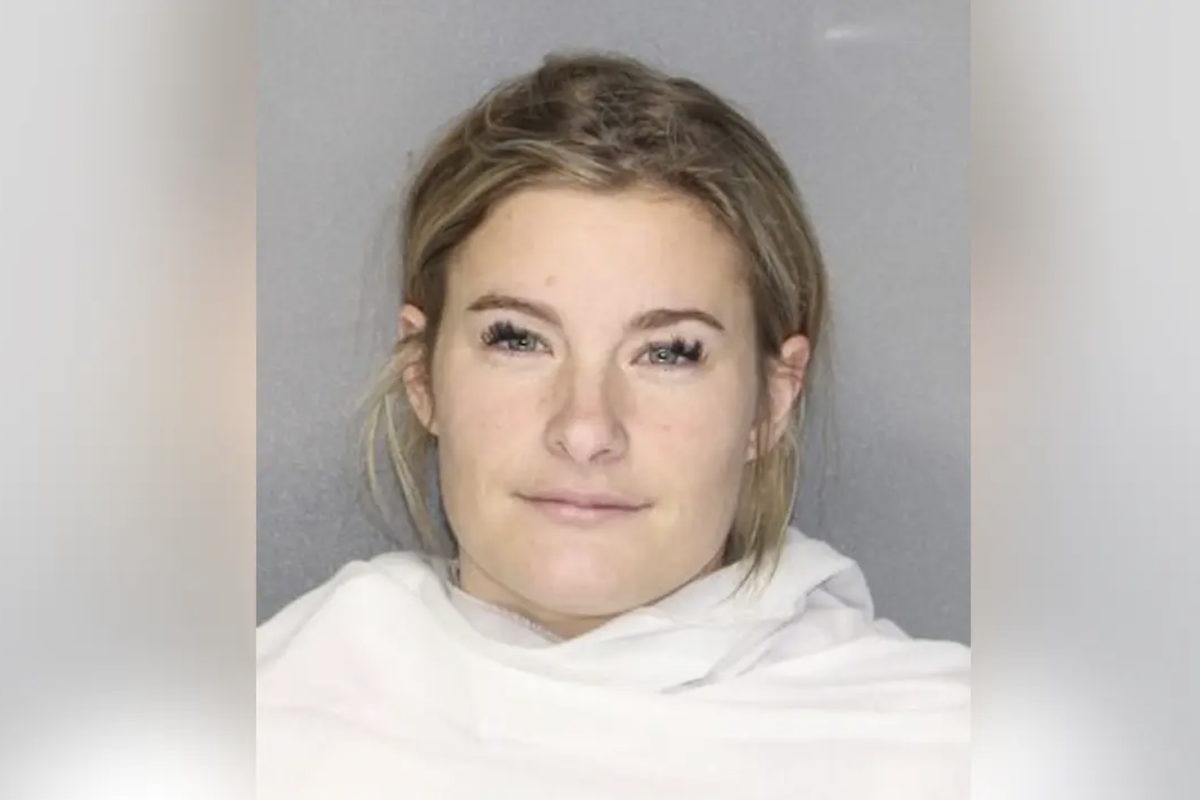
A former teacher in Texas has been accused of inappropriate sexual contact with a child and possession of child pornography. Just days after the substitute teacher’s arrest, her alleged boyfriend was also arrested for child sex crimes.
On Dec. 19, Madison Paige Jones was reportedly charged with one count of aggravated sexual assault of a child, two counts of indecency with a child sexual contact, and one count of possession of child pornography.
Jones is accused of having more than 500 visual depictions of child pornography in her possession.
According to Ellis County Sheriff’s Office jail records, Jones is being held on a $90,000 bond.
The Midlothian Police Department said in a statement that officers were “dispatched to investigate a report of a potential sexual assault involving a child” on Dec. 17.
Law enforcement reportedly zeroed in on the former 30-year-old substitute teacher and arrested her.
KDFW-TV reported that the Midlothian Independent School District said Jones worked as a substitute teacher four times in the past year at Heritage High School and Baxter Elementary School.
According to the district, Jones substituted for one day at Heritage High School on Nov. 19 and for three days at Baxter Elementary on Oct. 28, Oct. 29, and Nov. 3. The New York Post separately reported the same dates, citing the district.
The San Antonio Express-News reported that Jones is accused of possessing more than 500 visual depictions of child pornography.
The school district said there is no indication that the charges are connected to Jones’ work as a substitute teacher and that preliminary information shows none of the alleged conduct occurred on a Midlothian ISD campus or during a school-related activity.
CBS News reported that the Midlothian Independent School District said in a statement that its process for monitoring employee criminal history “functioned as intended” and that the district was notified quickly by the Texas Department of Public Safety.
The district said the substitute teacher is no longer employed and that it followed required reporting procedures with the Texas Education Agency.
Police said detectives with the Criminal Investigation Division continued the investigation and identified a second suspect, Zackery Dondlinger, 37, of Happy, Texas.
Authorities arrested Dondlinger on Dec. 23 in Loving County, Texas, according to police.
The sheriff’s office said Dondlinger was charged with sexual performance by a child and is being held at the Winkler County Detention Center awaiting arraignment.
Citing the Midlothian Police Department, CBS News reported that Jones and Dondlinger were in a dating relationship.
Law enforcement agencies involved in the investigation include the Midlothian Police Department, the Ellis County Children’s Advocacy Center, the Texas Department of Public Safety, the Texas Office of the Attorney General’s Fugitive Apprehension Unit, and the Loving County Sheriff’s Office. Authorities said the investigation is ongoing.
Anyone with information related to this case is urged to contact Midlothian Police Detective Dawson Frazer at 469-672-0056.
The Loving County Sheriff’s Office, the Ellis County Children’s Advocacy Center, and the Texas Office of the Attorney General’s Fugitive Apprehension Unit did not immediately respond to a request for comment from Blaze News.
Like Blaze News? Bypass the censors, sign up for our newsletters, and get stories like this direct to your inbox. Sign up here!
Trump says US struck drug-linked site in Venezuela: ‘We hit them very hard’
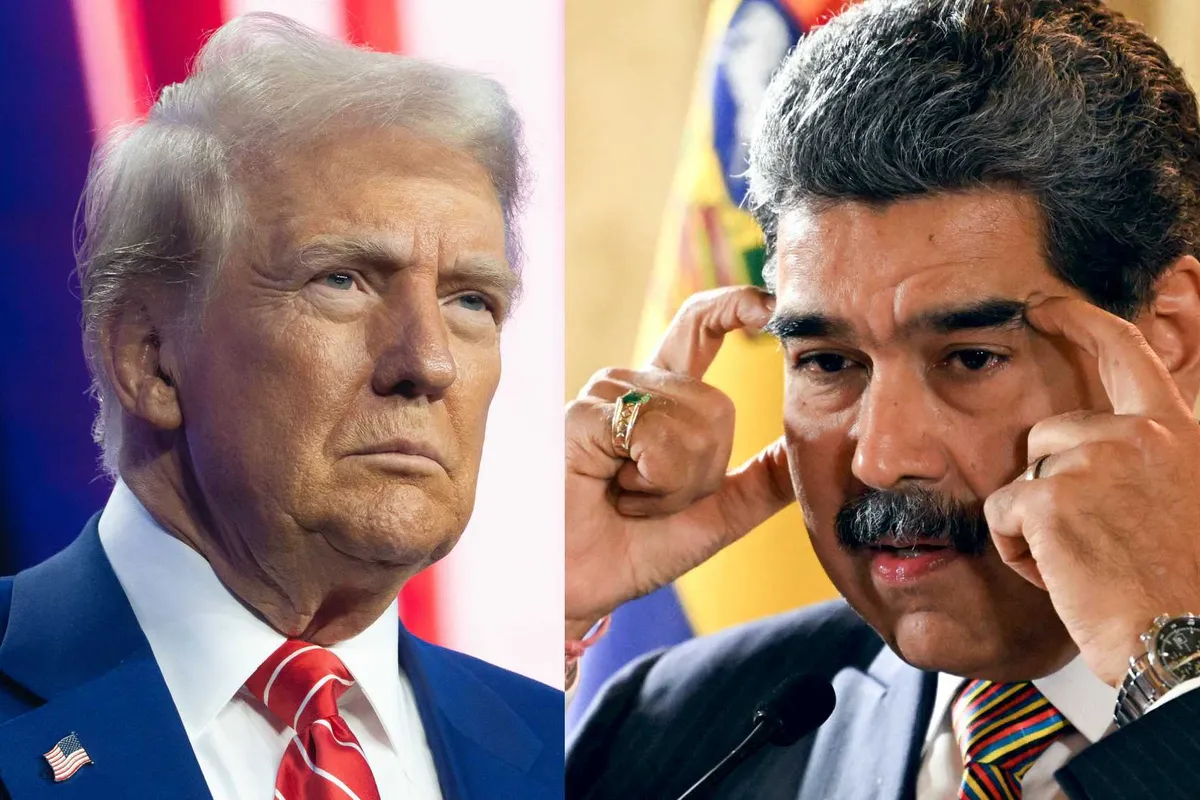
President Donald Trump said Monday that the U.S. military carried out a strike on Venezuelan territory, which he described as the first land-based attack in an escalating conflict tied to alleged narco-terrorism.
Trump made the remarks to reporters at the White House before a meeting with Israeli Prime Minister Benjamin Netanyahu. He said the strike targeted a dock area that he claimed was used to load boats transporting drugs.
‘Two nights ago we knocked that out. So we hit them very hard.’
“It doesn’t matter, but there was a major explosion in the dock area where they load the boats up with drugs, so we hit all the boats, and now we hit the area,” Trump said. “It’s the implementation area — that’s where they implement. And that is no longer around.”
When asked by a reporter whether additional strikes had occurred inside Venezuela, Trump declined to comment.
The Pentagon provided no details and referred all questions to the White House.
The president offered further details during a radio interview with WABC, saying the strike occurred two nights earlier and targeted what he described as a major shipping facility.
“We just knocked out — I don’t know if you read or you saw — they have a big plant or big facility where they send the, you know, where the ships come from,” Trump said. “Two nights ago we knocked that out. So we hit them very hard.”
The operation would represent the first direct U.S. strike on Venezuelan land during the current confrontation. The Trump administration has previously ordered strikes against vessels it says are operated by narco-terrorist groups smuggling drugs into the United States.
Critics of the administration have questioned those allegations and accused the U.S. government of acting unlawfully, including claims by human rights organizations that the strikes could constitute war crimes. Administration officials have rejected those accusations.
Tensions escalated earlier after the United States seized a Venezuelan oil tanker that administration officials alleged had violated U.S. embargo restrictions. Trump later ordered what the administration described as a full blockade of tankers traveling to and from Venezuela.
RELATED: Venezuelan freedom fighter wins Nobel Peace Prize — and immediately dedicates it to Trump
In response, Venezuelan officials announced military exercises that they said were intended to prepare the country to defend against a possible U.S. invasion aimed at removing President Nicolás Maduro from power.
Trump has previously said the United States could take military action to reclaim oil interests that were nationalized by Venezuela’s socialist government decades ago.
“It’s about — they took our oil, they took it, and they also sent millions of people in here from jails into our country,” Trump said in the WABC interview. “Some of the worst people on Earth.”
Like Blaze News? Bypass the censors, sign up for our newsletters, and get stories like this direct to your inbox. Sign up here!
Minnesotans Begged GOP Rep To Stop The Somalis Over A Decade Ago — He Told Them It Was Impossible
‘We did not ask for those Somalis’
WWII veteran honored with victory medal during ‘very emotional’ return to Battle of the Bulge
After the Allied forces successfully stormed Normandy, France, on D-Day, the German army launched a 200,000-strong counteroffensive on December 18, 1944, in the Ardennes region in Eastern Belgium. The attack marked the beginning of World War II’s Battle of the Bulge.
Over 700,000 Allied troops, including Lt. Gen. George S. Patton Jr.’s Third Army, were involved in the combat that lasted 41 days.
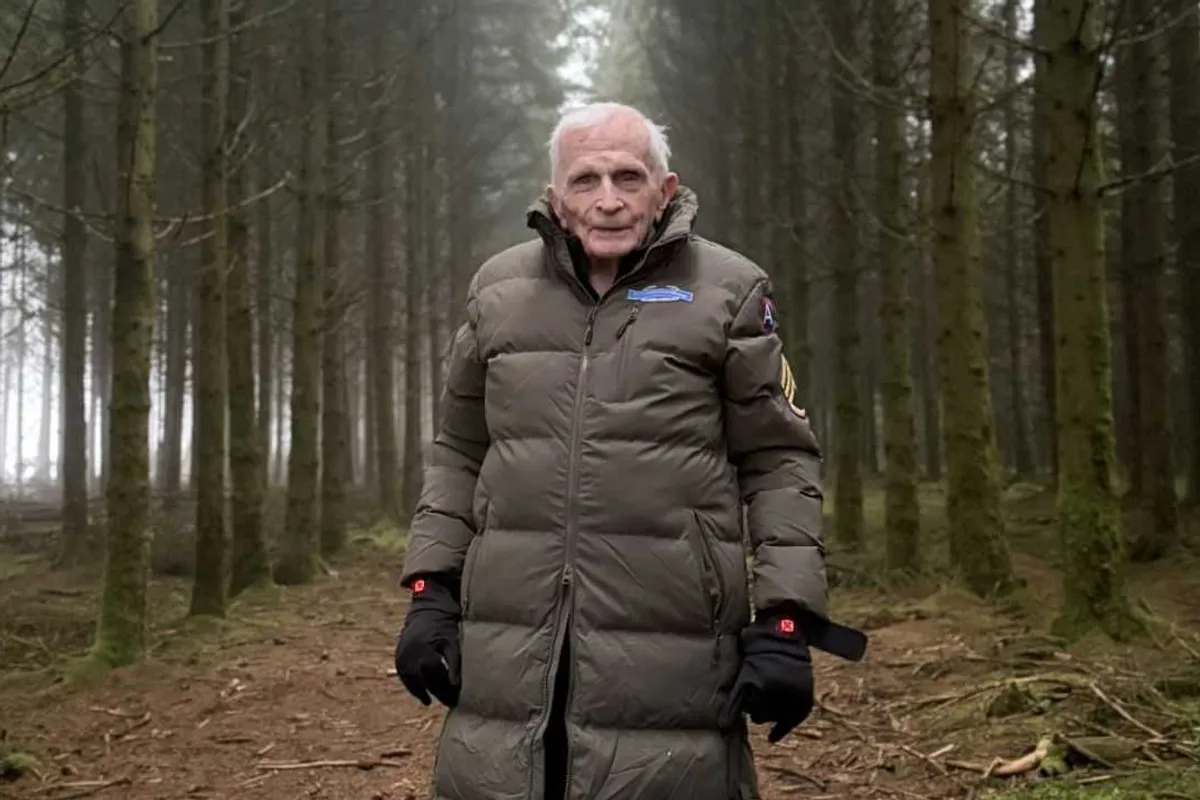
This December, Walk Among Heroes brought U.S. Army veteran John “Jack” Moran to Bastogne, Belgium, for the 81st anniversary of the start of the battle.
‘To me, just seeing the reactions of the Belgian people, thanking Jack over and over again, makes it all worthwhile.’
Moran, a former Army staff sergeant and member of Patton’s Third Army, joined the military at the age of 18 and fought in the Battle of the Bulge in Bastogne.
Moran shared his firsthand account with Walk Among Heroes about crossing the Rhine River, the final major natural barrier for Allied forces advancing into Nazi Germany. The effort to cross the river, known as Operation Plunder, began in March 1945.
“There’s no way in the world that 142 men can do anything and keep quiet,” Moran explained. “They can’t. It’s an impossible possibility.”
 A local Belgian girl takes a photo with Jack Moran. Image source: Walk Among Heroes
“So we slowly slip our paddles into the water, start paddling out into the middle of the … river. All of the sudden, the Germans light it up, just like this room — even brighter than this room,” he continued. “And here we are, sitting right there.”
“They opened up on us with five heavy machine guns,” Moran said. “Chopping us up badly. We lost half our men.”
During the trip, Moran met Bill White, the U.S. ambassador to Belgium, who presented the WWII veteran with the Victory in Europe Medal at the 101st Airborne Museum. Walk Among Heroes reported that the crowd was “very emotional” when Moran received the medal.
RELATED: What we owe our veterans this D-Day
 U.S. Ambassador to Luxembourg Stacey Feinberg meets Jack Moran. Image source: Walk Among Heroes
“In recognition of your military service during the Second World War, this is to certify the award of the Victory in Europe Medal to Staff Sergeant John Moran,” the announcer stated.
“Your fight for freedom and democracy is in keeping with the finest traditions of military service and reflects great credit upon yourself, the 87th Infantry Division, and the United States Army.”
“To me, just seeing the reactions of the Belgian people, thanking Jack over and over again, makes it all worthwhile,” Walk Among Heroes president and founder Jeff Wells told Blaze News.
Wells explained that Moran had plans to visit Patton’s grave at the Luxembourg American Cemetery. He noted that Moran would be accompanied by Patton’s granddaughter, Helen Patton.
“General Patton was Jack’s commander, so we are very excited to visit with him,” Wells said.
Like Blaze News? Bypass the censors, sign up for our newsletters, and get stories like this direct to your inbox. Sign up here!
Patel: Convicted Somali fraudsters face loss of citizenship as DHS probes Minnesota
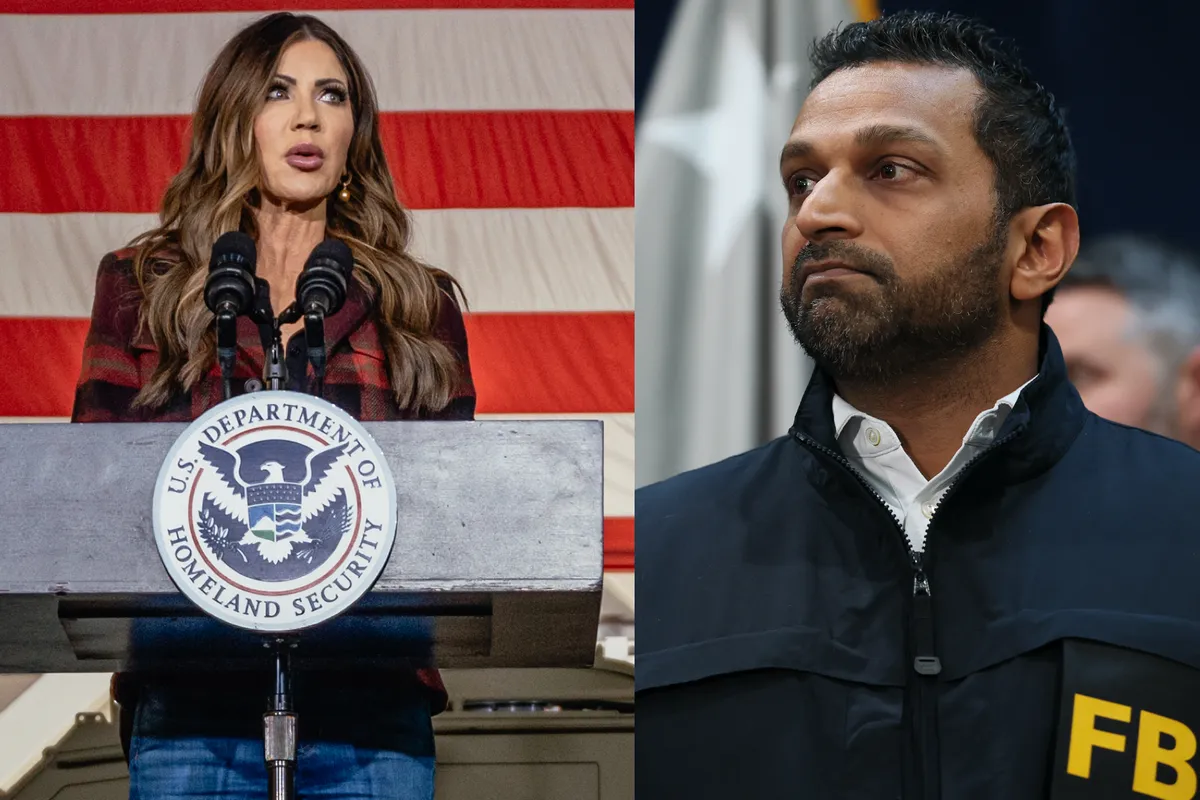
Department of Homeland Security Secretary Kristi Noem on Monday said the federal government is launching a “massive” investigation into alleged fraud schemes and shared video footage from Minnesota. Earlier, FBI Director Kash Patel said Somali immigrants convicted of fraud could face possible denaturalization and deportation.
‘These criminals didn’t just engage[] in historic fraud, but tried to subvert justice as well.’
In a statement Sunday, Patel said the FBI previously dismantled a $250 million fraud scheme involving COVID-19 relief funds intended to provide meals for children in Minnesota.
Patel said the case resulted in 78 indictments and 57 convictions. He identified several defendants — including Abdiwahab Ahmed Mohamud, Ahmed Ali, Hussein Farah, Abdullahe Nur Jesow, Asha Farhan Hassan, Ousman Camara, and Abdirashid Bixi Dool — who were charged with crimes ranging from wire fraud to money laundering and conspiracy.
“These criminals didn’t just engage[] in historic fraud, but tried to subvert justice as well,” Patel said. He added that Abdimajid Mohamed Nur and others were charged with attempting to bribe a juror with $120,000 in cash. Those defendants pleaded guilty and were sentenced, including one individual who received a 10-year prison term. Courts also ordered nearly $48 million in restitution in related cases, Patel said.
Patel described the scheme as the “tip of a very large iceberg,” adding that the FBI would “continue to follow the money and protect children” and that the investigation remains ongoing.
Noem said Homeland Security Investigations agents are currently operating in Minneapolis as part of what she described as a “massive” investigation into alleged child-care fraud and other fraud schemes.
Video shared by the DHS showed investigators questioning a man outside a facility, while another clip depicted agents entering what the DHS described as a “suspected fraud site.”
“MASSIVE fraud in Minnesota is finally being exposed. Time for accountability,” the White House wrote in a post on social media.
RELATED: News outlet is getting wrecked for story on Somali migrants’ economic impact on Minnesota
The increased scrutiny followed the publication of video by independent journalist Nick Shirley, in which he is seen confronting proprietors of day-care centers in Minnesota. Shirley blamed Gov. Tim Walz, the failed 2024 Democrat vice presidential candidate, for overseeing the state while the alleged fraud schemes flourished.
A spokesperson for Walz pushed back by noting that the state had investigated the fraud claims and that the governor had spent years working to “crack down on fraud.”
Nevertheless, a group of former state health workers have accused Walz of obstructing efforts to uncover the scams.
“Tim Walz is 100% responsible for massive fraud in Minnesota. We let Tim Walz know of fraud early on, hoping for a partnership in stopping fraud, but no, we got the opposite response,” read a statement from the group.
Like Blaze News? Bypass the censors, sign up for our newsletters, and get stories like this direct to your inbox. Sign up here!
Glenn Beck exposes ‘THE BIGGEST LIE’ the youth are told at AmFest 2025
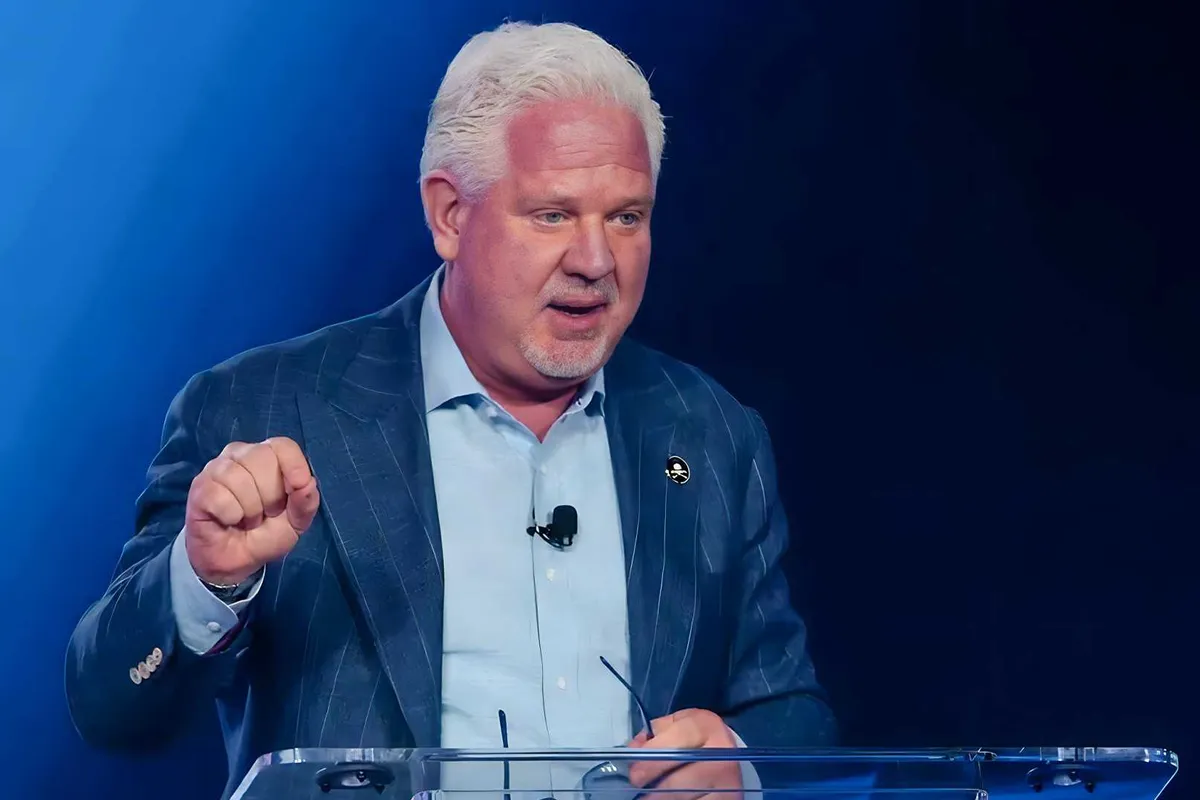
Blaze Media co-founder Glenn Beck stunned the crowds at Turning Point USA’s AmFest 2025 when he took on the lies force-fed to younger generations — and why it’s more important than ever that they wake up and lead the country to a better place.
“I wanted … to warn you that today the times have changed and you are desperately needed,” Glenn began. “Desperately needed. But there’s something else that I think is more important that you need to hear. We must stop fighting with one another. It is important to stand for the truth, but people are not your enemies. Lies are your enemies.”
“You can’t stop darkness with more darkness. You can’t stop hate with more hate. You only dispel the darkness of lies with the light of truth,” he said. “A single candle will light up a room.”
That’s when Glenn turned his focus toward the youth — as the America they’ve come to know has been one full of turmoil and deception.
“If I were you, and I’m 25, I was 1 when the World Trade Center came down. I would have no memory of that,” he explained. “And I certainly wouldn’t have a memory of the United States before that.”
Post-9/11, the United States these children grew up in was a surveillance state that has been constantly “on the verge of global war” — complete with the 2008 financial crisis that bankrupted many of their parents.
“Nobody went to jail. And you and your family paid the price that none of them had to pay. Then 2008, 2009, the cell phone comes out, social media comes out. It’s supposed to connect us so we can talk to our friends, and it does just the opposite. It divides us; it changes us,” Glenn recalled.
“Then 2020 hits, COVID happens. … Once again, you saw the entire system turned upside down and the little guy get screwed,” he added.
Not only did the youth see what happened to their parents, but they were told that if they went into debt to go to college, they would see great returns. Instead, the debt has only continued to pile up, and they received an “education” in which instructors insisted on telling blatant lies, like “men can be women.”
“And there are no jobs for you,” Glenn said. “Everything. Everything. If I’m 25 years old, I would think absolutely everything is a lie.”
“The biggest lie that you were told is that you don’t matter. Here’s the thing. I want you to understand: A broken system does not erase human agency. It reveals who still has agency. Every single generation since the beginning of time has inherited a mess,” he continued.
“Only the great generations turn that mess into a mission,” he said. “And that’s your calling.”
Want more from Glenn Beck?
To enjoy more of Glenn’s masterful storytelling, thought-provoking analysis, and uncanny ability to make sense of the chaos, subscribe to BlazeTV — the largest multi-platform network of voices who love America, defend the Constitution, and live the American dream.
TPUSA Lays Groundwork To Put JD Vance Endorsement Into Action
Turning Point USA (TPUSA) is planning to put boots on the ground in a nascent effort to shore up support for Vice President JD Vance nearly three years before voters hit the ballot boxes in the 2028 presidential election. TPUSA plans to develop campaign infrastructure in Iowa, which hosts important early caucuses for any presidential […]
Trump broke decorum. The media broke the truth — again.
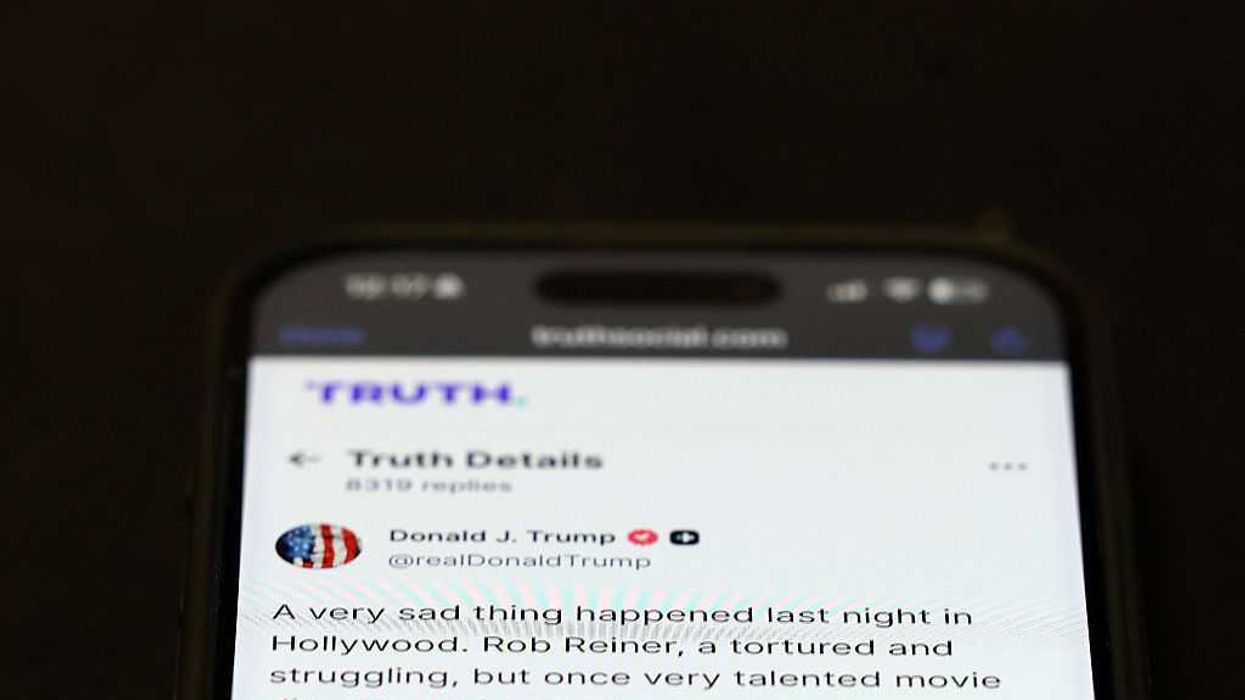
Recently, Paul du Quenoy published a necessary piece at Chronicles putting President Trump’s remark after the murder of Rob and Michele Reiner in proper context. In a Truth Social post that went viral, Trump quipped that Rob Reiner had died of “Trump derangement syndrome,” while also offering condolences and praying that the deceased would “rest in peace.”
The media response was instant and hysterical. As du Quenoy notes, legacy outlets erupted in moral outrage, eager to condemn Trump as uniquely depraved. He highlights one of the ugliest examples: a sermon from David Remnick in the thoroughly politicized New Yorker, denouncing Trump as a “degraded” human being.
Trump’s remark was ill judged. The media’s response was dishonest. Only one of those failures is being treated as a permanent moral indictment.
Du Quenoy asks: Where was this moral sensitivity when figures on the left trafficked in venom — or worse — after the assassination of Charlie Kirk?
The answer, of course, is nowhere.
This double standard defines our media culture. When rhetorical excess comes from the left, it is ignored, excused, or rationalized. When it comes from the right — especially from Trump — it is proof of moral disqualification. Etiquette is enforced selectively, always against the same targets. From the BBC to the Los Angeles Times, outlets had no difficulty canonizing Reiner while casting Trump as a cartoon villain.
A fair point must be made: Trump should not have said what he did. A president should observe certain proprieties, and Trump violates them all too often. I supported his policies and voted for him repeatedly, but that does not require defending every avoidable verbal misfire. This one was a mistake.
What deserves closer scrutiny, however, is the media’s attempt to weaponize that mistake. In outlets like People magazine, Trump’s comment was contrasted with Reiner’s allegedly noble reaction to the murder of Charlie Kirk. Reiner, we are told, expressed “horror.” Trump, by contrast, showed cruelty.
This framing collapses under minimal honesty.
After seeing this contrast repeated again and again, I searched for Reiner’s public statements — not about Kirk, but about Trump. What emerges is not a portrait of an angelic figure suddenly besmirched. For years, Reiner unleashed a steady stream of invective against Trump: “mentally unfit,” “con man,” “fascist,” “lying buffoon,” along with a great many four-letter flourishes unprintable here. He pushed the Trump-Russia hoax long after it had been exposed as fantasy. His political obsession was not subtle, incidental, or private.
RELATED: Glenn Beck addresses Trump’s controversial Rob Reiner message
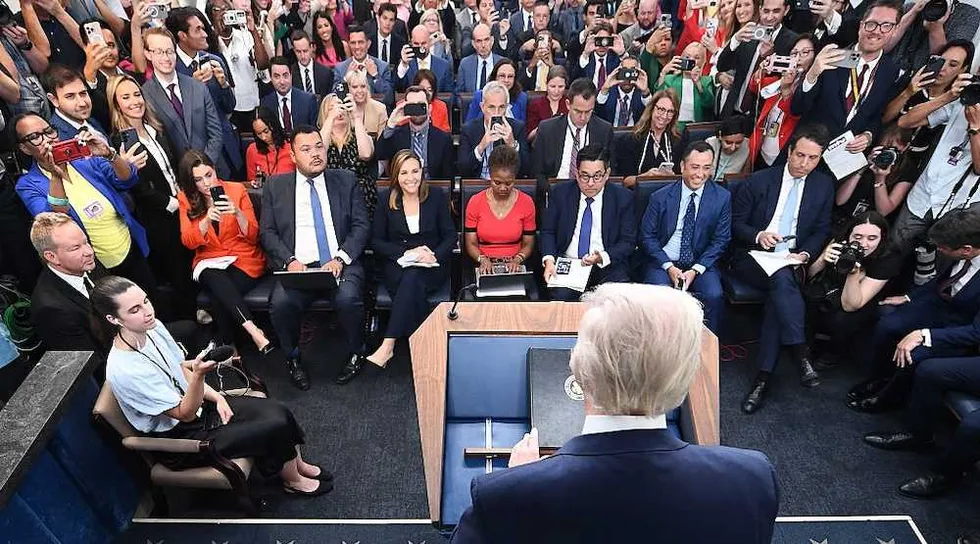 Photo by ANDREW CABALLERO-REYNOLDS/AFP via Getty Images
Yet this entire record has been scrubbed from the story. Media profiles dwell on Reiner’s filmmaking career and his role as a loving father while erasing his lifelong activism and venom toward Trump. The reason is simple: The people telling the story agree with Reiner’s politics and share his hatred of Trump. Presenting Trump’s animus as unprovoked is not journalism. It is narrative laundering.
The comparison with Charlie Kirk’s murder is equally dishonest. Kirk, to my knowledge, never publicly attacked Reiner. There was no shared history, no prolonged feud. Sen. John Kennedy (R-La.) put it plainly: Trump should have said nothing after Reiner’s death, even if Reiner was obsessed with him. Still, pretending that Trump’s reaction should mirror Reiner’s response to Kirk ignores reality. The relationships were not the same.
Nor should Reiner be recast as a purely apolitical figure whose ideology can be set aside for the sake of a tidy morality play. He embraced his identity as a committed leftist as openly as he embraced his Hollywood career. The media’s erasure of that fact mirrors older myths, such as the claim that the “Hollywood Ten” were merely innocent artists with no communist affiliations. You can oppose blacklisting without lying about politics. The left never resists the temptation to lie.
So once again, we are presented with a familiar fable: a gentle, virtuous man smeared by a deranged tyrant for no reason at all. It is nonsense — but useful nonsense. It allows the media to posture as arbiters of decency while ignoring their own complicity in coarsening public life.
Trump’s remark was ill judged. The media’s response was dishonest. Only one of those failures is being treated as a permanent moral indictment — and that tells you everything you need to know.
Tim Walz scurries to defend record after video alleges new Somali-linked fraud
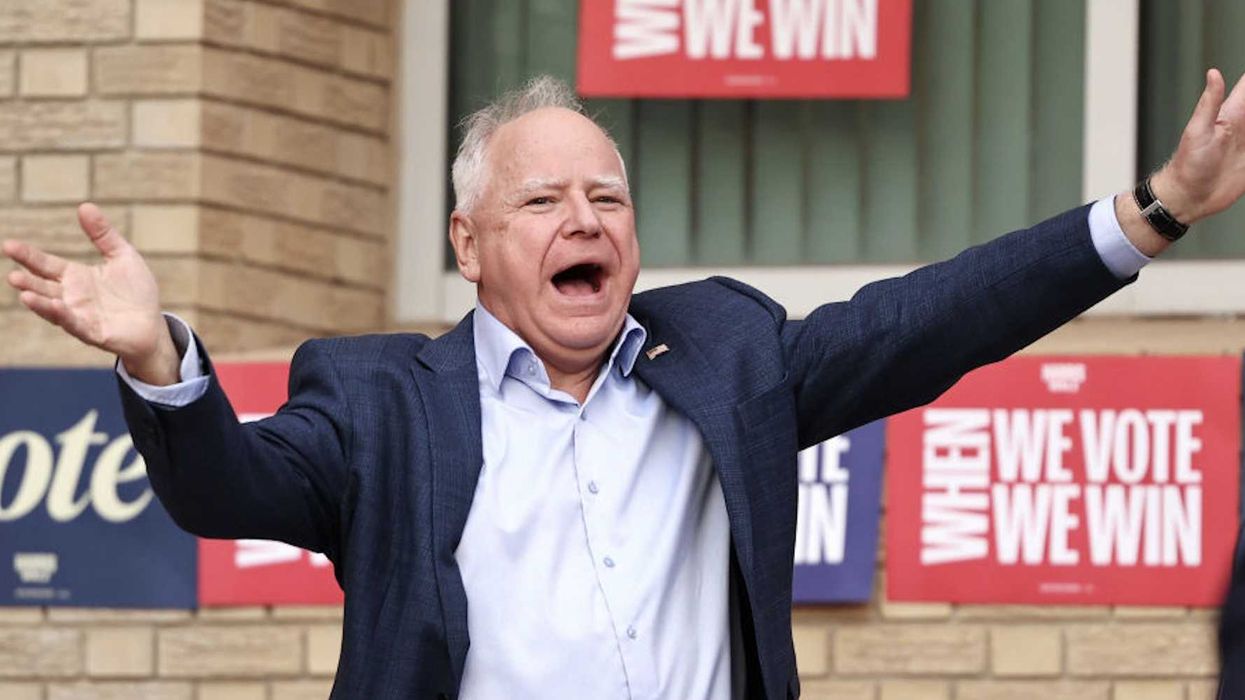
On Friday, independent video journalist Nick Shirley published a video on X that he claims shows widespread fraud involving purported day-care centers in Minnesota. Shirley wrote that he “uncovered over $110,000,000 [in fraud] in ONE day.” The video is the latest public allegation of fraud tied to Minnesota’s Somali community and comes as failed Democrat vice presidential nominee and Minnesota Gov. Tim Walz faces renewed scrutiny over the issue.
In the video, Shirley and his team are seen traveling Minnesota and visiting addresses where federally funded day-care centers are supposed to exist. When he arrived, he often found buildings with no children and seemingly no active day-care facilities.
‘There are not enough words to describe the breathtaking failure that has happened under the watch of @GovTimWalz.’
In a clip from Shirley’s video that Education Secretary Linda McMahon shared over the weekend, Shirley is shown standing outside a day-care facility identified as “Quality Learing [sic] Center.” The sign appears to misspell the word “learning.” Shirley says that when he attempted to enter the building during regular weekday hours, it was closed and its windows were blacked out. He also claims the center received $1.9 million in government funding.
In sharing the clip on X, McMahon wrote, “There are not enough words to describe the breathtaking failure that has happened under the watch of @GovTimWalz.”
RELATED: Somali fraud inspires Democrats to assimilate to Somalian culture
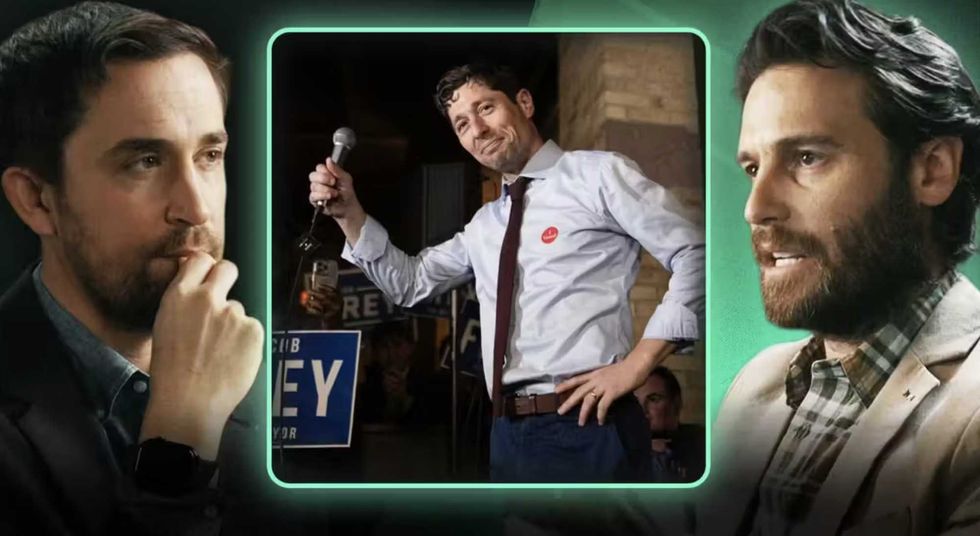 Blaze Media Illustration and Getty Images
Walz’s office pushed back over the weekend against Shirley’s allegations. Fox News Digital reported Sunday that a spokesperson for Walz said the governor has spent years working to “crack down on fraud” and has taken steps to strengthen oversight of state programs, including launching investigations into several facilities.
The spokesperson also pointed to the state legislature’s role in overseeing the programs and said that at least one business highlighted in Shirley’s reporting had already been shut down by Walz’s administration.
Despite the response, criticism continued. In addition to Education Secretary Linda McMahon, Vice President JD Vance praised Shirley’s work, writing on X, “This dude has done far more useful journalism than any of the winners of the 2024 [Pulitzer] prizes.”
FBI Director Kash Patel said in a post on X that the bureau is aware of the allegations circulating online. Patel wrote that the FBI had already deployed additional personnel and “investigative resources” to Minnesota to address “large-scale fraud” involving federal programs, even before the issue gained widespread attention on social media.
“Fraud that steals from taxpayers and robs vulnerable children will remain a top FBI priority in Minnesota and nationwide,” Patel wrote.
Patel also cited previous arrests and convictions as evidence of the bureau’s ongoing efforts to combat fraud in the state.
BlazeTV host Christopher Rufo disputed Patel’s characterization, calling it “misleading.” In a post on X, Rufo said Patel was taking “credit for investigations and convictions that occurred under the Biden Administration,” adding that the unresolved question concerns alleged fraud that has not yet resulted in charges. “When do we see arrests, mugshots, and new prosecutions?” Rufo wrote.
Rufo previously reported on alleged fraud involving Minnesota welfare and health programs earlier this year. As independent journalists such as Shirley continue to highlight the allegations, scrutiny of Minnesota officials, including Walz and U.S. Rep. Ilhan Omar, has intensified.
Like Blaze News? Bypass the censors, sign up for our newsletters, and get stories like this direct to your inbox. Sign up here!
We used to need guts to sin. Now we just need wi-fi.
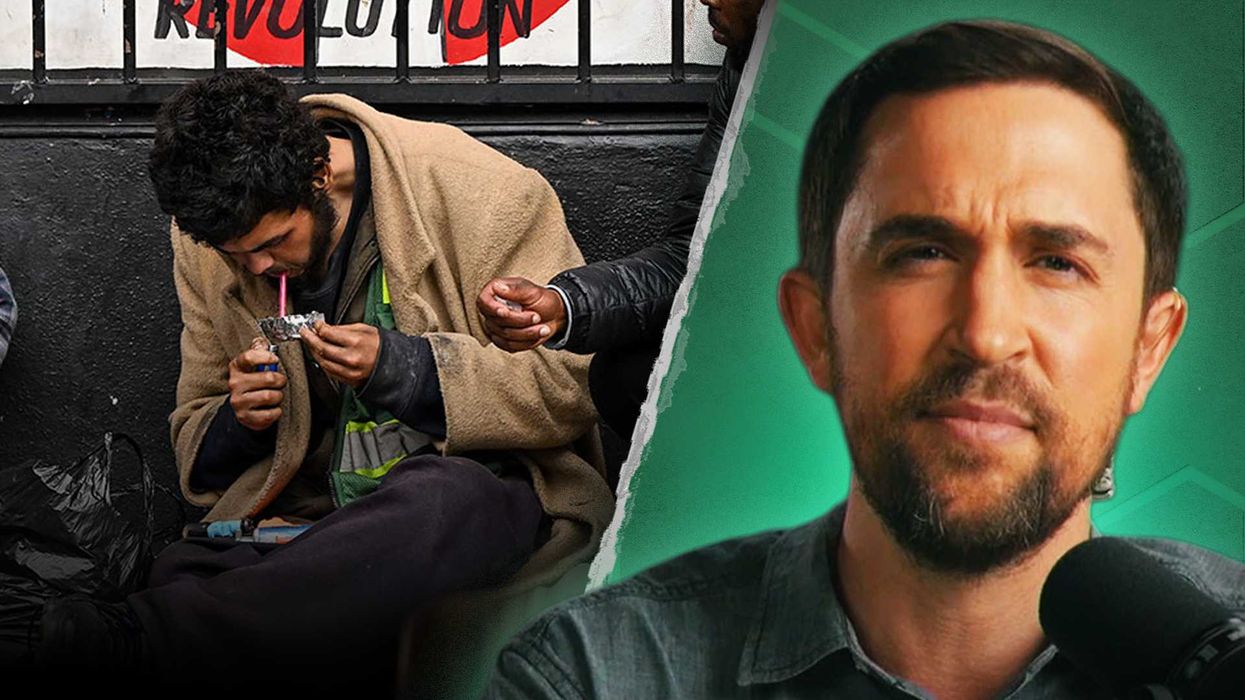
Once upon a time, before the digital age swept us up in a current of global access, vices like gambling, pornography, and marijuana were kept in check with what BlazeTV hosts Christopher Rufo and Jonathan Keeperman argue was healthy friction.
It’s what made Mr. Johnson blush when he skulked up to the checkout counter at the local video rental with an X-rated videotape sandwiched between two rom-coms. It’s what forced hopeful gamblers to sneak into illegal card rooms at the back of sketchy bars, pockets stuffed with ATM cash withdrawn in small increments to avoid spousal skepticism. It’s what necessitated dark parking lot meetups, secret car compartments, and stashes of air fresheners and breath mints.
But today, none of those physical and social barriers exist. Want to watch an adult film? Jump online; there are millions to choose from. Interested in placing a bet? Easy: Open an app and blow $10,000 on a random ping-pong match without ever leaving the comfort of your bed. Out of weed in a state that hasn’t legalized it? No problem; there are hundreds of dispensaries that will illegally ship right to your front door.
The glowing rectangle that lives in our pocket has pulverized every obstacle that once kept vices reined in.
Keeperman laments the death of “the gray market,” where “public shame and censure” were a real obstacle for vice-seekers but not so large an obstacle that they barred them completely from indulging.
“I think that balance is sort of ideal,” he tells Rufo.
“People, unfortunately, without any of these barriers to entry, they go down these rabbit holes; they start cultivating these bad behaviors, these addictions, and it ruins their lives. And it ruins the lives of the people around them, and it’s horrible for society.”
He remembers working at his town’s video rental shop as a teenager and the “cycle of shame” that commenced every time a local would sheepishly duck out of the curtained room at the back of the store with “Debbie Does Dallas” tucked covertly under his arm.
“It was like, ‘All right, man, like, cool. You’re embarrassed; I’m embarrassed to be doing this.’ … But it was good. That’s how it should be,” he reminisces.
This system of shame and risk also benefited kids. Keeperman recalls the notorious male student who stole Playboy magazines from his dad’s secret stash and smuggled them to school in his backpack so he could charge his fellow delinquents $5 for a week’s rental.
“It’s shameful, and if the vice principal catches you, you’re screwed, man. You’re in the doghouse. … You might get suspended or get these demerits or whatever, and your mom’s going to be mad at you,” he laughs.
But in all seriousness, these were real barriers that kept a lot of kids from engaging in pornography. But today, there’s no need for magazines or smuggling. All kids need to do is run a quick Google search alone in their bedrooms, and they’ll be inundated with graphic content from hundreds of sites. Addiction is all but guaranteed.
Keeperman says that while he takes all necessary precautions to prevent his children from accessing graphic content on their devices, he knows there’s only so much he can do.
“My kid’s going to have a public life. He’s going to have a social life that extends beyond the boundaries that we can draw for him as parents. And I can’t control what the kid next door does. You just can’t. And it’s just too easy. It’s too accessible,” he says.
Rufo says the answer to this problem of a barrier-less world is to re-create the barriers in the digital sphere.
“You have to have a digital version of the back room and the curtain, meaning you have to have ID verification, age verification,” he says.
To hear more of his theory, watch the episode above.
Want more from Rufo & Lomez?
To enjoy more of the news through the anthropological lens of Christopher Rufo and Lomez, subscribe to BlazeTV — the largest multi-platform network of voices who love America, defend the Constitution, and live the American dream.





