

Category: Blaze Media
‘Funeral’ held for the penny at Lincoln Memorial after US Mint discontinues coin
The penny received a “funeral” on Saturday, attended by mourners and Abraham Lincoln impersonators outside the Lincoln Memorial, after the U.S. Mint discontinued the coin last month. Hundreds attended the event, many dressed in black or wearing Victorian-style attire. Mourners placed pennies into either caskets on display or made a wish as they threw pennies…
Trump endorses GOP’s Blakeman for New York governor a day after Stefanik exits race
President Trump on Saturday evening endorsed Nassau County Executive Bruce Blakeman for governor of New York, one day after Rep. Elise Stefanik (R-N.Y.) surprisingly exited the race and announced she would not seek reelection to Congress. Trump did not mention Stefanik in his Saturday post on Truth Social endorsing Blakeman. “Bruce is MAGA all the…
Most Americans say Trump’s Rob Reiner comments were ‘inappropriate’: Poll
Nearly two-thirds of Americans believe President Trump’s social media post and subsequent comments about the killing of actor-director Rob Reiner and his wife Michele Singer Reiner were “inappropriate,” according to a new YouGov poll released Friday. “YouGov showed Americans Trump’s post — as well as social media posts about Reiner by several other politicians from…
16 Epstein files, including photo of Trump, disappear from DOJ website: Report
At least 16 files on the Justice Department’s (DOJ) webpage containing files on Jeffrey Epstein, including a photo featuring two pictures of President Trump, were found to have disappeared from the department’s website as of Saturday, The Associated Press reported. DOJ has not said why these files were removed from its website. The Hill has…
Democrats melt down as Kennedy Center board votes unanimously to rename building to honor Trump

Democrats are up in arms after Trump’s White House announced that the Kennedy Center will be renamed in honor of President Donald Trump for his restoration efforts.
The John F. Kennedy Center for the Performing Arts will be renamed the Trump-Kennedy Center, according to White House press secretary Karoline Leavitt.
‘The building will no doubt attain new levels of success and grandeur.’
“I have just been informed that the highly respected Board of the Kennedy Center, some of the most successful people from all parts of the world, have just voted unanimously to rename the Kennedy Center to the Trump-Kennedy Center, because of the unbelievable work President Trump has done over the last year in saving the building,” Leavitt said. “Not only from the standpoint of its reconstruction, but also financially, and its reputation. Congratulations to President Donald J. Trump, and likewise, congratulations to President Kennedy, because this will be a truly great team long into the future!”
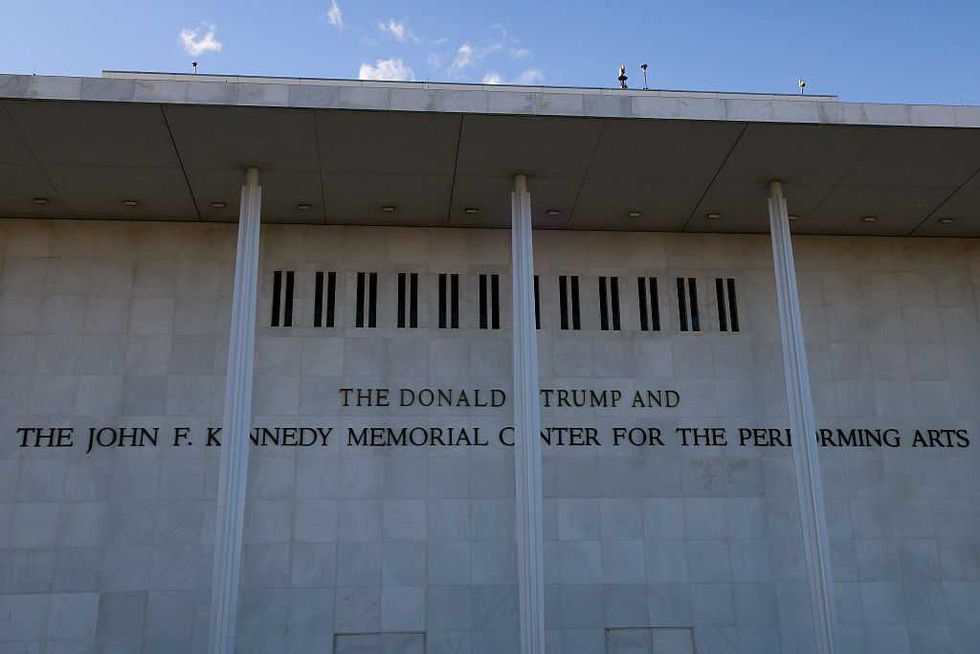 Photo by Heather Diehl/Getty Images
“The building will no doubt attain new levels of success and grandeur,” Leavitt added.
“The Trump Kennedy Center shows a bipartisan commitment to the Arts,” Richard Grenell said on X.
Maria Shriver, John F. Kennedy’s niece, posted a lengthy statement complaining about the move.
“It is beyond comprehension that this sitting president has sought to rename this great memorial dedicated to President Kennedy. It is beyond wild that he would think adding his name in front of President Kennedy’s name is acceptable. It is not. Next thing perhaps he will want to rename JFK Airport, rename the Lincoln Memorial, the Trump Lincoln Memorial. The Trump Jefferson Memorial. The Trump Smithsonian. The list goes on,” Shriver wrote in part on Thursday.
President Trump praised the “very distinguished” Kennedy Center board for the “unanimous” vote to change the name of the center.
However, several Democratic congressmen who are also ex officio members of the Kennedy Center board issued a statement complaining that they were silenced during the vote for this change.
In part, their statement read, “This whole process displays the corruption that permeates the entire Trump administration, and as ex-officio members of the Kennedy Center Board, we will be unwavering in our commitment to holding this administration accountable.”
The Democrats, however, failed to mention that as ex officio members of the board, they do not have a vote, meaning their input was never needed and does not affect the unanimity of the vote.
On Friday afternoon, videos were posted of the addition of Donald Trump’s name on the facade of the building. It now reads: “The Donald J. Trump and the John F. Kennedy Memorial Center for the Performing Arts.”
The Trump-Kennedy Center did not immediately respond to a request for comment.
Like Blaze News? Bypass the censors, sign up for our newsletters, and get stories like this direct to your inbox. Sign up here!
WATCH: Florida man says he ‘teleported’ into stolen BMW, blames ‘X-Men,’ thanks cop for rescuing him from ‘aliens’
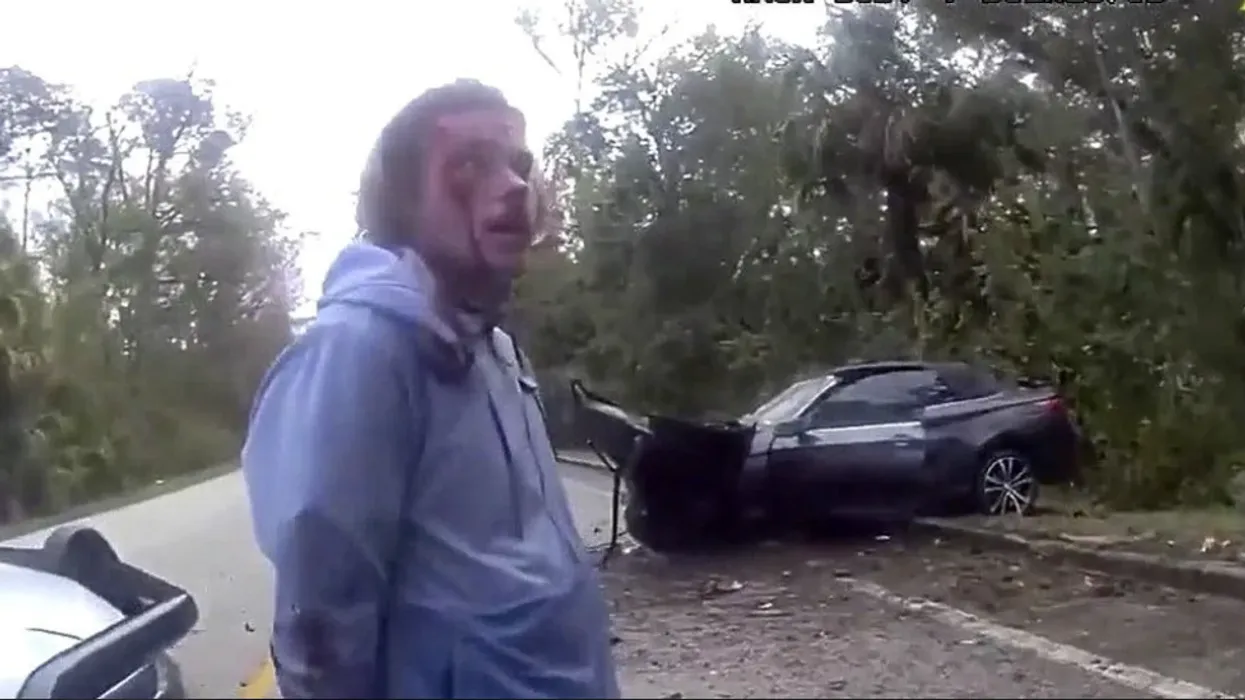
A Florida man was arrested after getting into a car crash with a vehicle that was reported stolen earlier this month. However, the case took a strange twist when the suspect said he was “teleported” into the stolen BMW by the “X-Men” — but he was now safe from the “aliens,” according to police bodycam video.
The Volusia County Sheriff’s Office said in a statement that a car owner informed police that his BMW convertible had been stolen while he was walking his dog at Bicentennial Park in Ormond Beach.
‘You saved me from the aliens!’
The man admitted to law enforcement that he had left his BMW unlocked and that the car keys were in a “closed cup holder.”
Police bodycam video — recorded Dec. 8 — shows a witness telling a deputy that a man in his 30s with blond shoulder-length hair was in a BMW at the park.
“He kept asking for a light,” the witness told the deputy. “I thought, ‘How does he have a BMW if he doesn’t even have a lighter for a cigarette?'”
A few minutes later, the BMW crashed at Old Dixie Highway and Plantation Oaks Boulevard, the sheriff’s office stated.
Bodycam footage shows the car crash site, with one witness claiming that the BMW was traveling at 130 miles per hour. The wrecked BMW is seen half off the road with the front of the vehicle severely mangled after it seemingly crashed into the trees near the highway in a one-car accident.
A deputy confronted the alleged driver of the stolen BMW — 36-year-old Calvin Curtis Johnson.
Johnson — who is seen with blood on his face — is heard telling the deputy, “I don’t know how I got in the car. I teleported or something.”
When the deputy asks where he got the car from, Johnson shrugs and responds, “I don’t know,” and once again suggests that he “teleported” into the vehicle.
The suspect then appears to blame the situation on the “X-Men.”
According to the bodycam video, the deputy asks the suspect if he had just been to Bicentennial Park, to which Johnson replies, “They told me — the X-Men — to do it.”
A distraught Johnson is heard on video stammering, “I don’t do that stuff. Someone told me to get in there. Someone’s in my head. Thank you for saving me. I don’t know how I got in there.”
Then an excited Johnson exuberantly proclaimed to the deputy, “You saved me from the aliens!”
The police bodycam footage also shows the officer dousing flames from a small fire from the car crash.
Johnson was arrested, taken to the Halifax Health Medical Center for treatment, and booked into the Volusia County Jail. Johnson was hit with charges of grand theft of a motor vehicle and driving with a canceled, suspended, or revoked license, according to jail records.
According to Volusia County jail records, Johnson has a lengthy rap sheet with arrests for assault with a deadly weapon, resisting an officer without violence, loitering or prowling, uttering a forged check, trespassing, several charges for failing to appear in court, and operating a vehicle while a driver’s license was suspended, canceled, or revoked.
The Daytona Beach News-Journal reported that Johnson is homeless.
Like Blaze News? Bypass the censors, sign up for our newsletters, and get stories like this direct to your inbox. Sign up!
Buckle up: We are headed for an AI collision with China
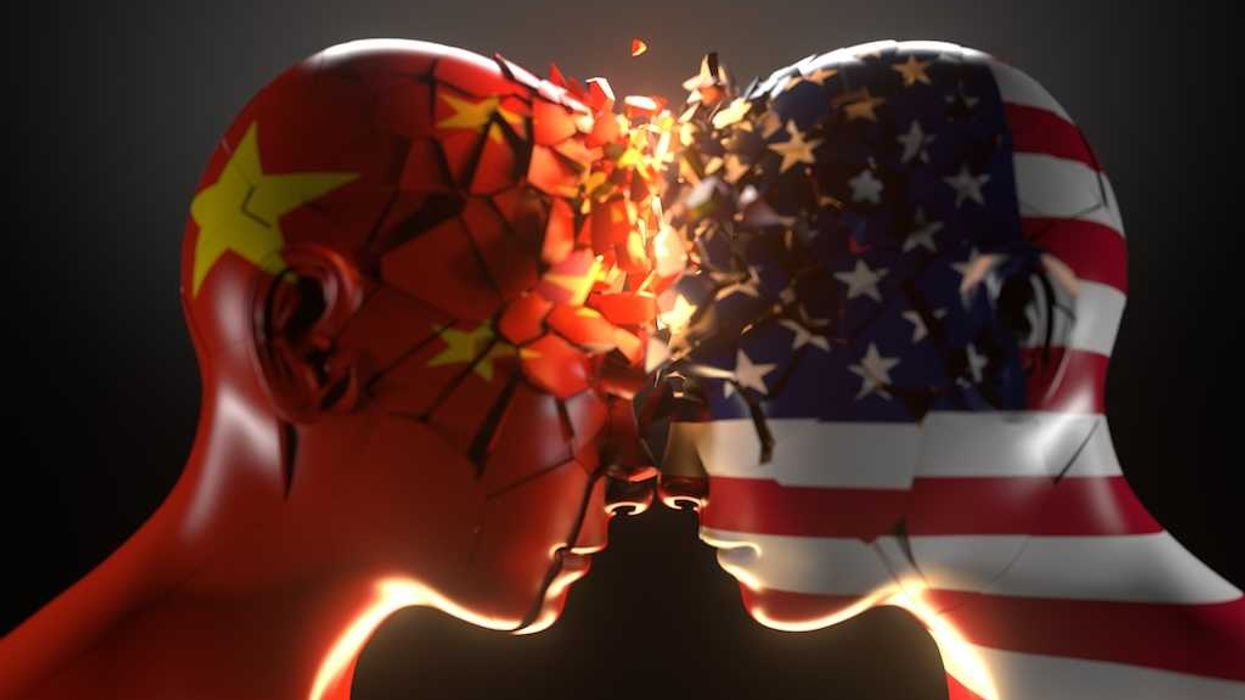
President Trump spoke by phone to his Chinese counterpart, Xi Jinping, on November 24 and later posted on Truth Social, “Our relationship with China is extremely strong!” The warm feelings from Washington came on the heels of the two leaders holding a productive meeting in Korea recently and scheduling several more confabs for the year ahead.
But bubbling beneath the surface is a rivalry between the two countries over the most vital technology of the 21st century: artificial intelligence.
China is not abiding by the rules that are supposed to govern the global economy.
To understand the rivalry, consider a recent announcement by the U.S. Justice Department: On November 20, it charged two Americans and two Chinese nationals with a conspiracy to illegally export about 400 high-performance graphics processing units to China. Federal law requires a license for export of these technologies, which can be used to develop and strengthen AI.
The co-conspirators didn’t have a license — and never even applied for one. In fact, they lied about the destination of the GPUs when shipping them. And for their services, they received a cool $3.89 million in wire transfers from China.
The backdrop to this smuggling scheme is Beijing having set a goal for China to be the world’s leader in AI by 2030. And it’s made considerable headway. According to the Information Technology and Innovation Foundation, “China is the global leader in AI research publications and is neck and neck with the United States on generative AI.” Additionally China is “advancing rapidly in AI research and application, challenging the United States’ dominance in this critical field.”
This progress stems from massive investments by the Chinese government. From 2000 to 2023, venture capital funds connected to the Chinese government made $184 billion in investments in China-based companies in the AI sector, according to a study published last year and conducted by professors at Harvard, MIT, and Oxford.
In an amusing coincidence, one day after the smuggling indictment, Huawei — a leading Chinese technology company — announced a tool called Flex:ai that it said “improves the utilization of artificial intelligence-based chipsets.” The announcement also made the obligatory nod to corporate citizenship, saying that the technology will “speed up the democratization of AI.” But the company buried the lede, saving the most important detail — which is curiously attributed to “sources” — for the final sentence: “The new software tool will help China create an analogue AI chip 1,000 times faster than Nvidia’s chips.”
Huawei is not just any company. It is the world’s largest manufacturer of telecommunications equipment. And it’s also been engaged in the kind of skullduggery that resulted in the recent indictment. In 2020, the U.S. Justice Department indicted the company and four of its subsidiaries. The charges mostly revolved around attempts to steal trade secrets from U.S. companies.
The company used an array of tactics, but perhaps most brazen of all, it paid its employees bonuses if they procured confidential information from rival companies. And when U.S. law enforcement was investigating Huawei, the company told its employees not to comply.
RELATED: China’s AI strategy could turn Americans into data mines
 iStock / Getty Images Plus
Suffice to say, there’s good reason not to trust the Chinese government and its proxy companies like Huawei.
The Trump administration recognizes the threat. In late June, it approved a merger among two American companies that compete with Huawei: Hewlett Packard Enterprises and Juniper Networks. A senior U.S. national security official told Axios: “In light of significant national security concerns, a settlement … serves the interests of the United States by strengthening domestic capabilities and is critical to countering Huawei and China.” The official said blocking the deal would have “hindered American companies and empowered” Chinese competitors.
Given the economic importance of AI to countries throughout the world, the competition between the United States and China is regrettable. But it’s probably also inevitable. China is not abiding by the rules that are supposed to govern the global economy. And it’s using AI, says the Justice Department, to bolster its military, to test weapons of mass destruction, and to heighten surveillance.
Sometime next year, President Trump is scheduled to make a state visit to Beijing and Xi is scheduled to come to Washington. They’re destined to focus on the cooperative parts of the relationship, but you don’t need to ask ChatGPT to see that the two countries are on a collision course over AI. Buckle up.
Editor’s note: This article was originally published by RealClearPolitics and made available via RealClearWire.





