Category: Blaze Media
‘Truly wicked’: Trump administration blasts Obama judge over praise of illegal alien who raped disabled American woman

The Trump administration blasted U.S. District Judge Judith Levy over the weekend for her “truly wicked” praise and deferential treatment of a predator who stole into the United States multiple times and brutalized an American citizen.
Edys Renan Membreño Díaz, a 30-year-old Honduran national, is presently serving between six and 15 years in a Michigan state prison for raping and sodomizing a woman he knew was incapable of giving consent, who has cerebral palsy and cognitive delays. Díaz, who moved to Michigan in 2021, raped the victim on two occasions: on July 15 and July 17, 2022, leaving her with injuries.
‘This isn’t justice; it’s judicial activism prioritizing criminals over citizens.’
While Díaz could be a free man as soon as July 23, 2028, federal prosecutors want the rapist to serve an additional two years for his violation of U.S. immigration law. Díaz has illegally entered the U.S. seven times.
According to court documents, prosecutors believe that a sentence of two years would recognize the gravity both of the rapist’s repeated illegal entry into the U.S. and his criminal conduct while in the country and would serve as a deterrent to future criminal activity.
The rapist’s lawyer alternatively asked Levy, an appointee of former President Barack Obama who has made a big deal out of her lesbian identity, to give the rapist a sentence concurrent with his sentence in the state case such that he would still eligible for release in 2028.
Levy not only decided to spare Díaz from a longer prison sentence for immigration crimes but echoed his lawyer’s framing — that the rapist was a family man simply doing the work that Americans supposedly find unappealing.
RELATED: Portland man allegedly lured 15-year-old girl from public library and raped her for days, police say
 kali9/Getty Images
According to the sentencing transcript highlighted by the Detroit News, Levy said that while Díaz’s sex crimes were “horrible,” he has “taken responsibility for that, expressed remorse,” and is serving “a lengthy state sentence as punishment for that conduct.”
The Obama judge proceeded to paint the rapist as something of a victim of circumstance and a praiseworthy figure, going so far as to celebrate his efforts to displace U.S. citizen labor for the benefit of foreigners outside the country.
“You have lost two siblings to violence in Honduras, and your mother expresses her dependence on you in her need for the resources and love that you have provided to her,” said Levy. “So I commend you for supporting your family, for expressing your devotion to them, and for working here in the United States in jobs that Americans apparently do not want to work in.”
Díaz has recently indicated that he now wants to go home to Honduras, and Levy suggested further that the rapist’s vows not to enter into the U.S. illegally an eighth time and to dissuade his fellow Hondurans from jumping the border together signaled that he was “promoting respect for the law.”
The Obama judge decided to let the rapist off on his immigration crimes with time allegedly served and a special assessment fine of $100.
Assistant U.S. Attorney Susan Fairchild told Levy that the sentence imposed constituted an “unreasonable departure from the guideline range.” The government subsequently appealed Levy’s decision.
In the appeal, assistant U.S. Attorney Meghan Sweeney Bean noted, “Despite six prior removals from the United States, Membrano Diaz returned and raped and sodomized a disabled American citizen. A non-custodial sentence here was an abuse of discretion.”
In addition to noting that Levy “unreasonably discounted the serious nature of the offense and Membrano Diaz’s disturbing history and characteristics,” Bean pointed out that the Obama judge’s “time served” sentence was preposterous, as “the defendant cannot receive credit against his federal sentence for that period of prior detention, because it has already been credited against the state sentence.”
Tricia McLaughlin, assistant secretary of the Department of Homeland Security, said in response to Levy’s decision, “Unspeakable Depravity.”
“U.S. District Judge Judith Levy refused to sentence him to 2 more years for immigration crimes and called this monster a future ‘ambassador for living up to our immigration restrictions,'” McLaughlin noted in a X post on Saturday. “This Obama appointed judge went on to praise him for ‘family devotion and willingness to perform work that it claimed Americans find undesirable.’ Truly wicked.”
Kevin Kijewski, a Republican who is running to become attorney general of Michigan, wrote, “This isn’t justice; it’s judicial activism prioritizing criminals over citizens and spitting on federal law enforcement’s work to secure our borders under President Trump’s leadership.”
Like Blaze News? Bypass the censors, sign up for our newsletters, and get stories like this direct to your inbox. Sign up here!
Pizza Hut Classic: Retro fun ruined by non-English-speaking staff, indifferent customer service
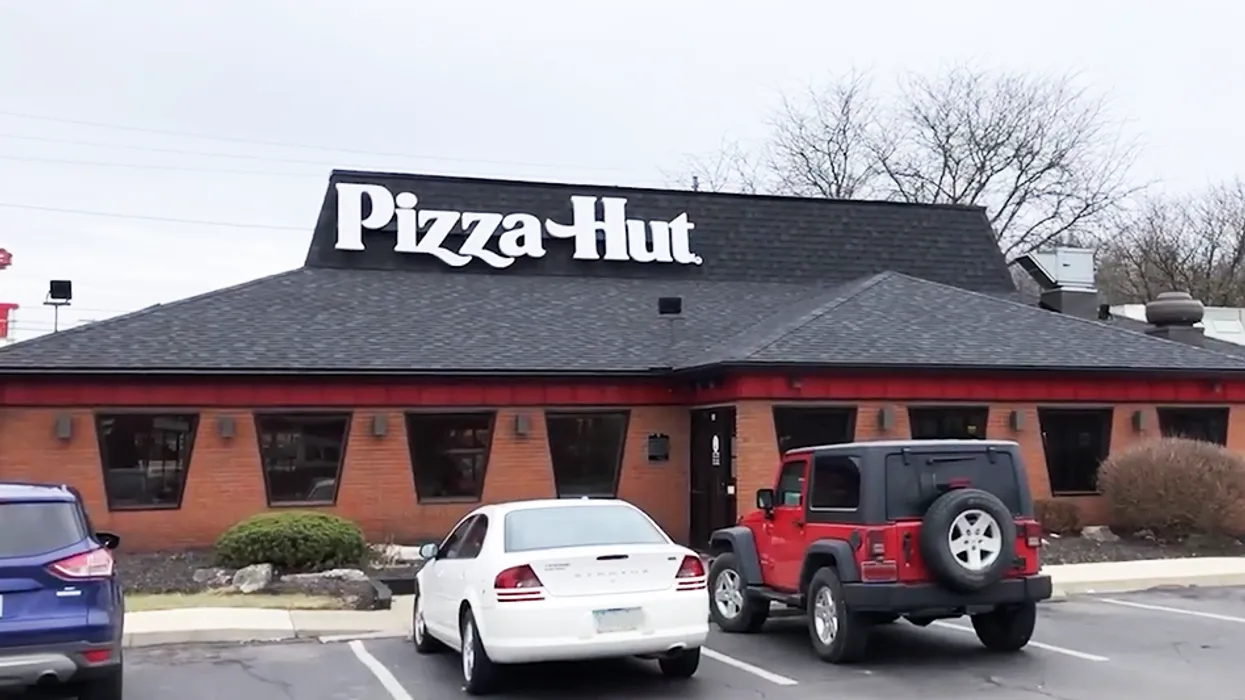
Pizza Hut Classic is evidence that even if a company gets its branding right, customer service is the oil that keeps the machine running.
Since 2019, Pizza Hut has been spreading its retro vibes across the continent by reintroducing its 1990s decor, design, and dining experience.
‘The interior features cozy red booths and old-school Pizza Hut lamps.’
From Warren, Ohio to Hempstead, Texas, the iconic Pizza Hut chandeliers are being rehung, and the fantastic buffet is being put out once again. According to Chefs Resource, some locations have even brought back the beloved dessert bar.
Slice of life
With the return of the 1974 logo and nostalgic appeal, Pizza Hut did the inverse of Cracker Barrel. Instead of trying to modernize and simplify their decor, the pie-slingers retrofitted and cluttered theirs.
A page called the Retrologist dissected the formula and determined exactly what the word “Classic” in Pizza Hut Classic really means. To meet the new (old) standard, the writer pinpointed that each location must include the following:
1. The old logo is used in pole signage as well as at the top of the (usually but not always) red-roofed restaurant. The pole sign features the addition of the word “Classic.”
2. The interior features cozy red booths and old-school Pizza Hut lamps.
3. Stickers featuring the long-discarded character Pizza Hut Pete are found on the door.
4. Posters feature classic photos from Pizza Huts of yore.
5. A plaque displays a quote from Pizza Hut co-founder Dan Carney, explaining the concept as a celebration of the brand’s heritage.
While many of the revamped locations have received rave reviews, there still exists a way to make such a fine dining experience awful, even if surrounded by everything that made customers flock to the buffet 30 years ago.
RELATED: The ‘rebranding’ brigade’s war on beauty
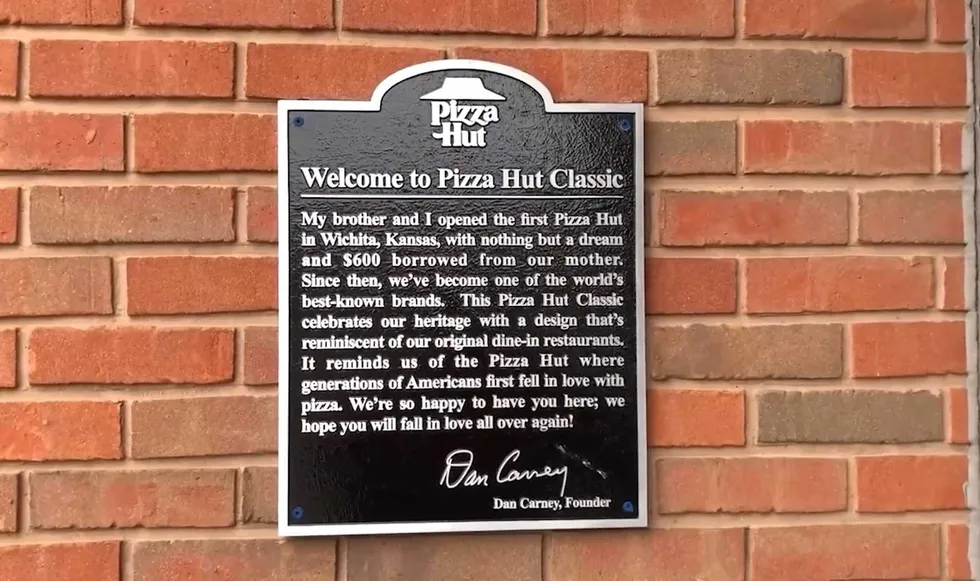 Photo by Andrew Chapados/Blaze News
Word salad
For a Pizza Hut Classic ruined by modern belief systems, look no farther than north of the border, in the Toronto suburb of Scarborough.
While the restaurant did include the iconic chandeliers and some of the retro furnishings, it did not have old soda fountains or the memorable menus spotted at other locations. Instead, this unique eatery represented a new (low) standard of lackluster customer service, coupled with sprinklings of unfettered immigration policy.
These accommodations, or lack there of, will surely split customers down political lines. Yes, there are retro red Pepsi cups, but the waitress who literally speaks no English may fill that cup with Diet Pepsi with ice instead of “water with no ice.”
Is there a salad bar? Yes. Is the salad bar limited to plain lettuce and croutons? Also yes. Were there pieces of lettuce dropped in the ranch dressing (the only available dressing) for the duration of the visit? Definitely.
RELATED: Cracker Barrel’s logo lives — but like every digital-age public space, it now looks dead inside
 Photo by Andrew Chapados/Blaze News
Meat and greet
A steady rotation of cheese, deluxe, and Hawaiian pizza was only broken up by one couple’s complaints about the lack of variety. A manager — also largely unintelligible in her speech — replied first with a refusal to change the rotation. Strangely, about 10 minutes later, she eventually brought out two meat lovers’ pizzas, in an apparent act of defiance.
The damaged seating in the restaurant combined with a chip out of the “Hut” portion of the building’s exterior revealed years-old paint and, along with it, a yearning for more care to be given. A restaurant that could be so nostalgic, but ruined by the apparent comforts of a district that has voted Liberal in its last three federal elections for a woman from the U.K. who holds citizenship in three countries, including Pakistan.
“I wanted to go to a dine-in, because in most places, including the U.K., you can’t do that now,” said reporter Lewis Brackpool, who visited the location. He added, “I come to one, and what do you know — it sucks.”
In at a massive discount due to the exchange rate, Brackpool could not help but feel like many who are from the area: that what had been promised was robbed.
The experience can be summed up in the words of an anonymous would-be customer who, upon seeing a commercial of what a Pizza Hut buffet looked like in the 1990s in comparison to the location in question, said, “They took this from us.”
Like Blaze News? Bypass the censors, sign up for our newsletters, and get stories like this direct to your inbox. Sign up here!
Charlie Kirk’s assassination demands your courage, not your sympathy
I have lost grandparents, childhood friends, and college friends. As you age, death becomes familiar. Each loss shakes you briefly, reminds you that life is fragile, and then fades. You drift back into the illusion that tomorrow is guaranteed. That you will have time later to become a better Christian, husband, and father.
That illusion shattered on September 10, the day Charlie Kirk was assassinated by a leftist.
Charlie Kirk showed us how a Christian lives and how a Christian dies. His race is finished. Ours must now begin.
I did not know Charlie personally. I worked as his publicist last summer for what became his second-to-last book, “Right Wing Revolution,” but we never spoke directly. Still his death devastated me in a way no other loss had.
I had to understand why. Answering that question became the genesis of this book, “For Christ and Country: The Martyrdom of Charlie Kirk.”
On the day Charlie was killed, I joined my wife to pick up our 2-and-a-half-year-old daughter from preschool. The day before, she had asked again and again, “Dada in car? Dada here?” This time, I wanted to be there when she came running out.
As we pulled into the parking lot, my phone lit up. Charlie Kirk had been shot. My stomach dropped.
I had felt that dread once before. On July 13, 2024, I was rocking my daughter to sleep when an alert flashed that President Trump had been shot in Butler, Pennsylvania. Minutes later, dread gave way to relief. Trump survived.
This time, the dread did not lift.
While my wife walked toward the school entrance, I sat frozen in the car, refreshing news feeds. Then I saw the video. The moment the bullet struck Charlie.
One look told me no one could survive that wound.
Then my daughter appeared.
Her face lit up when she saw me. Pure joy. The same joy Charlie’s daughter would never experience again.
As my little girl ran toward the car shouting, “Dada!” another child had just lost her father forever. His daughter. His son. His wife. They would never again live a moment like the one unfolding before me.
Nothing had changed for my daughter. Everything had changed for me.
That night, I slept on the floor beside my oldest daughter’s crib. I lay awake for hours, listening to her breathing and thinking of Charlie’s children and of Erika, facing the impossible task of explaining why their father would never walk through the door again.
In the days that followed, I cried more than I ever had. I am not a man who cries. But something in me died with Charlie, and something else was born.
I began studying Charlie’s words, speeches, debates, and sermons. Not as content but as testimony. What I saw changed me. Charlie possessed a maturity beyond his years, a steadiness most men twice his age never reach. He knew who he was and whom he served. He knew his mission and the cost of it. He accepted that cost.
In Charlie, I saw the man I wanted to be. Strong yet gentle. Courageous yet humble. Unmoved by hatred because he feared God more than man. That recognition exposed an uncomfortable truth. I shared many of Charlie’s convictions but not his courage.
I had spoken boldly only when it was safe. I avoided conflict when it was convenient. The wounds of losing lifelong friends in 2020 because I voted for Trump still stung, and I carried a residual fear of losing more.
Charlie did not hesitate. He lived Matthew 5 and Mark 8 not as verses but as marching orders. He carried his cross onto hostile campuses and into debates before crowds that despised him, knowing exactly what it cost.
When that hatred finally culminated in a sniper’s bullet, it ended his life but not the mission that made him a target.
His death exposed my compromises. It forced me to confront the gap between the man I was and the man God was calling me to be. It demanded that I stop postponing courage and start living the truth now. Costly truth. Dangerous truth. Biblical truth.
Charlie’s life and death were not political events. They were spiritual ones.
He defended the family because God commanded it. He rejected identity politics because every person bears God’s image. He championed fathers because fatherlessness destroys nations. He defended black Americans by insisting on their dignity as individuals created by God, not as pawns of a political movement. He confronted transgender ideology because lies about human nature are lies about God Himself.
For that, he was vilified, dehumanized, and finally murdered.
The ideology that killed Charlie did not emerge overnight. It grew in the silence of those who knew better but feared the cost of speaking. Evil advances when good men retreat, and too many of us did.
RELATED: America’s new lost generation is looking for home — and finding the wrong ones
 Photo by Matt Cardy/Getty Images
Charlie did not retreat. Now none of us can afford hesitation.
The man I was — cautious and hesitant — died with Charlie. In his place stands a man who understands that truth requires sacrifice, that silence is surrender, and that the only approval that matters comes from God.
My daughter deserves a country where political murder is condemned, not excused. Where truth is spoken even when it is dangerous. Where courage is not outsourced to a handful of men like Charlie Kirk but lived by millions.
That is why I wrote “For Christ and Country: The Martyrdom of Charlie Kirk.” Not simply to remember Charlie but because his death demanded my transformation and now demands yours.
Charlie Kirk showed us how a Christian lives and how a Christian dies.
His race is finished. Ours must now begin.
The torch is ours to carry — for Christ, for country, and for Charlie.
Editor’s note: This article is adapted from the author’s new book, “For Christ and Country: The Martyrdom of Charlie Kirk” (Bombardier Books, Post Hill Press).
Trump forced allies to pay up — and it worked
In the fifth century B.C., a group of Greek city-states formed a defensive alliance known as the Delian League to protect them against the Persian Empire.
Athens, the most powerful member, gradually increased its power. Its rulers moved the league’s common treasury from the island of Delos to Athens (to keep it safe, of course), attacked allies that attempted to secede, and started casually referring to the alliance as “our empire.”
If you want good allies, you need to be a good ally.
The most brazen assertion came when the Athenian leader Pericles raided the league treasury to fund building projects in Athens (including the Parthenon).
When the other league members objected, Pericles insisted that the treasury was less like a common military budget and more like protection money: As long as the Persians aren’t breaking down your doors, we can spend league funds however we want.
Obviously, this is no way to treat one’s allies. It is not just exploitative; it is counterproductive. During the ensuing Peloponnesian War, Athens spent as much time fighting its own rebellious allies as it did fighting Sparta.
The United States, however, has spent the last several decades conducting its foreign relations on the opposite principle. We have the same hegemonic role Athens held, but instead of robbing our allies, we let them rob and betray us.
A few months ago, the government of Kuwait — a country hundreds of Americans died to defend just a few decades ago and that continues to rely on us for protection against Iran — launched a “Kuwait-China Friendship Club” to strengthen military ties with Beijing.
And if cozying up to our biggest geopolitical rival weren’t enough, Kuwait is also ripping us off.
The United States played a huge role in building Kuwait’s massive Al Zour oil refinery, and the country’s government still owes us hundreds of millions of dollars.
Closer to home, Mexico — which Bill Clinton bailed out to the tune of $20 billion — takes in more than $60 billion a year in remittance money from the United States, all while its socialist oil company refuses to pay the $1.2 billion it owes to American contractors.
RELATED: Trump makes America dangerous again — to our enemies
 Photo by ANDREW CABALLERO-REYNOLDS/AFP via Getty Images
The NATO countries are even worse. Prior to Russia’s invasion of Ukraine, just six of the alliance’s 32 members spent the required 2% of GDP on defense.
Meanwhile, these countries used the money they weren’t spending on guns to build massive welfare states (their equivalent of Pericles’ Parthenon). They also eviscerated their domestic energy production and became increasingly reliant on oil from Russia, the country the alliance is supposed to keep in check.
Thankfully, a combination of Vladimir Putin’s aggression and Donald Trump’s bullying has increased the number of countries meeting the 2% threshold from six to 23.
If you want good allies, you need to be a good ally.
That means no more meddling in the name of “international development” or “advancing democracy.” Just mutual clarifications of national interest and frank discussions about how to advance those interests.
Athens’ focus on its own self-interest was its undoing. America’s neglect of it might have been ours. Under President Trump, however, it looks like that is starting to change.
The Federalist’s Notable Books Of 2025

 Seasons greetings! It’s time for another exciting and sprawling books recommendation column.
The people carrying addiction’s weight rarely get seen
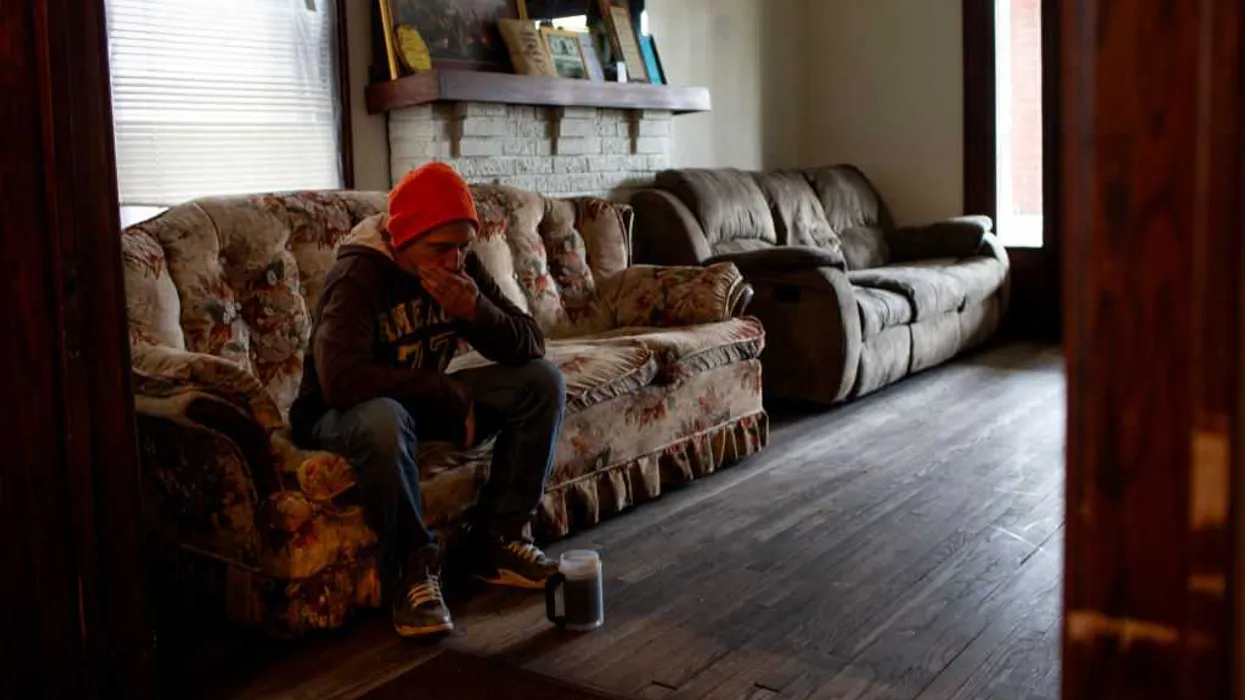
What happened Sunday at the home of Rob and Michele Reiner is a family nightmare. A son battling addiction, likely complicated by mental illness. Parents who loved him. A volatile situation that finally erupted into irreversible tragedy.
I grieve for them.
Shame keeps families quiet. Fear keeps them guarded. Love keeps them hoping longer than wisdom sometimes allows.
I also grieve for the families who read those headlines and felt something tighten in their chest because the story felt painfully familiar.
We often hear the phrase, “If you see something, say something.” The problem is that most people do not know what to say. So they say nothing at all.
What if we started somewhere simpler?
I see you. I see the weight you are carrying. I hurt with you.
Families living with addiction and serious mental illness often find themselves isolated. Not only because of the chaos inside their homes, but because friends, neighbors, and even faith communities hesitate to step closer, unsure of what to say or do. Over time, silence settles in.
Long before police are called, before neighbors hear sirens, before a tragedy becomes a headline, people live inside relentless stress and uncertainty every day.
They are caregivers.
We rarely use that word for parents, spouses, or siblings of addicts, but we should. These families do not simply react to bad choices. They manage instability. They monitor risk. They absorb emotional whiplash. They try to keep everyone safe while holding together a household under extraordinary strain.
In many ways, this disorientation rivals Alzheimer’s. In some cases, it proves even more destabilizing.
Addiction is cruelly unpredictable. It offers moments of clarity that feel like hope. A sober conversation. An apology. A promise that sounds sincere. Those moments can disarm a family member who desperately wants to believe the worst has passed.
Then the pivot comes. Calm turns to chaos. Remorse gives way to rage. Many families learn to live on edge, constantly recalibrating, never certain whether today will be manageable or explosive.
Law enforcement officers understand this reality well. Many domestic calls involve addiction, mental illness, or both. Tension often greets officers at the door, followed by a familiar refrain: “We didn’t know what else to do.”
Calling these family members caregivers matters because it reframes the conversation. It moves us away from judgment and toward reality. From, “Why don’t they just …?” to, “What are they carrying?” It acknowledges that these families manage risk, not just emotions.
The recovery community has long emphasized truths that save lives: You did not cause it. You cannot control it. You cannot cure it. These principles are not cold. They bring clarity. And clarity matters when safety is at stake.
RELATED: The grace our cruel culture can’t understand
 Photo by Gary Hershorn / Getty Images
Another truth too often postponed until tragedy strikes deserves equal emphasis: The caregiver’s safety matters too.
Friends and faith communities often respond with a familiar phrase: “Let me know if there’s anything you need.” It sounds kind, but it places the burden back on someone already exhausted and often afraid.
Caregivers need something different. They need people willing to ask better questions.
Are you safe right now? Is there a plan if things escalate? Who is checking on you? Would it help if I stayed with you or helped you find a safe place tonight?
These questions do not intrude. They protect.
Often, the most meaningful help does not come as a solution, but as a witness. Henri Nouwen once observed that the people who matter most rarely offer advice or cures. They share the pain. They sit at the kitchen table. They walk alongside without looking away.
Caregivers living with someone battling addiction and mental illness often need at least one safe presence who sees clearly, speaks honestly, and stays when things grow uncomfortable.
We have permission to care, but not always the vocabulary.
Shame keeps families quiet. Fear keeps them guarded. Love keeps them hoping longer than wisdom sometimes allows. One of the greatest gifts we can offer is the willingness to penetrate that isolation with clarity, grace, and tangible help.
Grace does not require silence in the face of danger. Love does not demand enduring abuse. Faith does not obligate someone to remain in harm’s way.
Pointing a caregiver toward safety does not abandon the person struggling with addiction. It recognizes that multiple lives stand at risk, and all of them matter.
When tragedies occur, the public asks what could have been done differently. One answer proves both simple and difficult: Stop overlooking the caregivers quietly absorbing the blast.
RELATED: The courage we lost is hiding in the simplest places
 Photo by Wolfgang Kaehler/LightRocket via Getty Images
Welfare checks should not focus solely on the person battling addiction or mental illness. Families living beside that struggle often need support long before a breaking point arrives.
If you know someone whose son, daughter, spouse, or partner struggles, do not look away because you feel unsure what to say. You do not need to solve anything. You do not need to analyze anything.
Start by seeing them. Stay with them.
I see you. I see how heavy this is. You do not have to carry it alone.
Ask better questions. Offer practical help that does not depend on their energy to ask. Check on them again tomorrow.
This season reminds us that Christ did not stand at a safe distance from trauma. He came close to the wounded and brought redemption without demanding tidy explanations.
When we do the same for families living in the shadow of addiction and mental illness, we honor their suffering and the Savior who meets us there.
3 dogs escaped from home and mauled man to death before injuring a mother and daughter, police say

The family of a 62-year-old man is mourning his death after he was mauled by three dogs in Katy, according to Texas police.
The Harris County Sheriff’s Office said witnesses reported a man mauled by dogs on Monday before chasing off the animals.
Animal control had no previous history with the dogs.
When EMS personnel arrived at the scene, they pronounced the man dead.
Police then found a mother and a daughter who had also been attacked by the dogs near Permission Creek Lane, according to the public information officer Thomas Gilliland. They were transported to a hospital for treatment of minor injuries.
Gilliland said the man’s family went looking for him when he didn’t return home from a morning routine walk.
The dogs were described as pit bull mix.
Police were able to find the dogs, and two were taken by animal control, while the third was shot by deputies and euthanized by animal control. They will be quarantined for 10 days, after which a judge will determine their fate.
Animal control had no previous history with the dogs. Gilliland said authorities had not determined how the dogs got out of the home.
The identity of the man was not released by police.
RELATED: 17-year-old girl brutally mauled by pack of dogs — her mom says she was unrecognizable
Homicide detectives interviewed the owner of the dogs.
Charges have not yet been filed.
Like Blaze News? Bypass the censors, sign up for our newsletters, and get stories like this direct to your inbox. Sign up here!
Trump v. Slaughter exposes who really fears democracy

In the recently argued Trump v. Slaughter case, most of the U.S. Supreme Court seemed to affirm what should be obvious: The president has a constitutional right under Article II to dismiss federal employees in the executive branch when it suits him.
That conclusion strikes many of us as self-evident. Executive-branch employees work under the president, who alone among them is chosen in a nationwide election. Bureaucrats are not. Why, then, should the chief executive’s subordinates be insulated from his control?
When the Roberts Court overturned Roe in 2022 and returned the issue to the states, many voters responded with fury. The electorate did not welcome responsibility. It resented it.
A vocal minority on the court appears to reject that premise. Justices Ketanji Brown Jackson and Sonia Sotomayor warned that allowing a president — implicitly a Republican one — to control executive personnel would unleash political chaos. Jackson suggested Trump “would be free to fire all the scientists, the doctors, the economists, and PhDs” working for the federal government. Sotomayor went further, claiming the administration was “asking to destroy the structure of government.”
David Harsanyi, in a perceptive commentary, identified what animates this view: “fourth-branch blues.” The administrative state now exercises power that rivals or exceeds that of the constitutional branches. As Harsanyi noted, nothing in the founders’ design envisioned “a sprawling autonomous administrative state empowered to create its own rules, investigate citizens, adjudicate guilt, impose fines, and destroy lives.”
Yet defenders of this system frame presidential oversight as a threat to “democracy.” Democrats, who present themselves as democracy’s guardians, warn that allowing agency officials to answer to the elected president places the nation in peril. The argument recalls their reaction to the Dobbs case, when the court returned abortion policy to voters and was accused of “undermining democracy” by doing so.
RELATED: This Supreme Court case could reverse a century of bureaucratic overreach
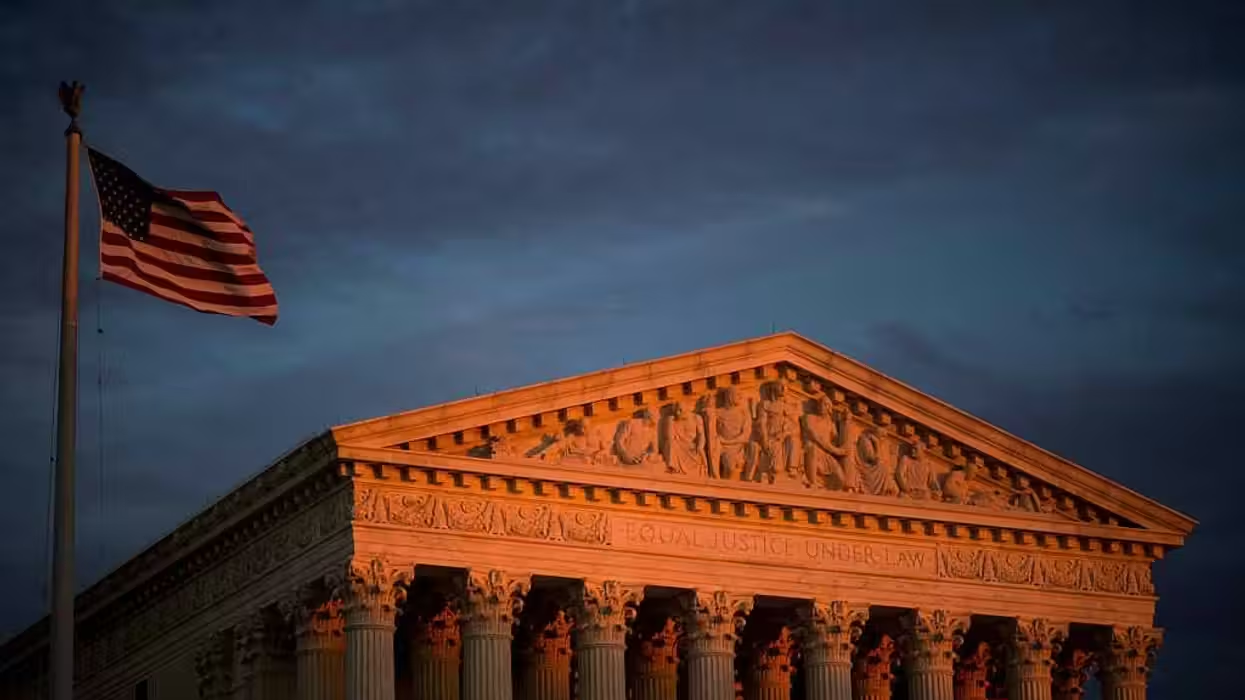 Photo By Bill Clark/CQ Roll Call
On that point, Harsanyi and I agree. Judicial and bureaucratic overreach distort constitutional government. The harder question is whether voters object.
From what I can tell, most do not. Many Americans seem content to trade constitutional self-government for managerial rule, provided the system delivers benefits and protects their expressive preferences. The populist right may bristle at this arrangement, but a leftist administrative state that claims to speak for “the people” may reflect the electorate’s will.
Recent elections reinforce that suspicion. Voters showed little interest in reclaiming authority from courts or bureaucracies. They appeared far more interested in government largesse and symbolic rights than in the burdens of republican self-rule.
Consider abortion. Roe v. Wade rested on shaky legal ground, yet large segments of the public enthusiastically embraced it for nearly 50 years. When the Roberts Court overturned Roe in 2022 and returned the issue to the states, many voters responded with fury. States enacted expansive abortion laws, and Democrats benefited from unusually high turnout. The electorate did not welcome responsibility. It resented it.
This reaction should not surprise anyone familiar with history. In 1811, Spaniards rejected the liberal constitution imposed by French occupiers, crying “abajo el liberalismo” — down with liberalism. They did not want abstract rights. They wanted familiar authority.
At least half of today’s American electorate appears similarly disposed. Many prefer guided democracy administered by judges and managers to the uncertainties of self-government. Their votes signal approval for continued rule by the administrative state. Republicans may slow this process at the margins, but Democrats expand it openly, and voters just empowered them to do so.
RELATED: Stop letting courts and consultants shrink Trump’s signature promise
 Yuri Gripas/Abaca/Bloomberg via Getty Images
I anticipated this outcome decades ago. In “After Liberalism” (1999), I argued that democracy as a universal ideal tends to produce expanded managerial control with popular consent. Nineteenth-century fears that mass suffrage would yield chaos proved unfounded. Instead the extension of the franchise coincided with more centralized, remote, and less accountable government.
As populations lost shared traditions and common authority, governance shifted away from democratic participation and toward expert administration. The state grew less personal, less local, and less answerable, even as it claimed to act in the people’s name.
Equally significant has been the administrative state’s success in presenting itself as the custodian of an invented “science of government.” According to this view, administrators form an enlightened elite, morally and intellectually superior to the unwashed masses. Justice Jackson’s warnings reflect this assumption.
I would like to believe, as Harsanyi suggests, that Americans find such attitudes insulting. I am no longer sure they do. Many seem pleased to be managed. They want judges and bureaucrats to make decisions for them.
That preference should trouble anyone who still cares about constitutional government.
DON’T CALL IT A KAMBACK: Kamala Harris Stepping Toward Another White House Run: Axios

Word salads may be back on the menu.
Australian PM says suspect in Bondi Beach massacre had been investigated for terror ties; vows to pass more gun control laws

The prime minister of Australia vowed to take whatever action is necessary to prevent more horrific terrorist attacks but immediately turned to gun control as the answer.
He also revealed that one of the two suspects in the massacre had been previously investigated over Islamic terror ties to a cell in Sydney.
‘What we saw yesterday was an act of pure evil, an act of anti-Semitism, an act of terrorism.’
Prime Minister Anthony Albanese made the comments Monday after two gunmen opened fire at a Jewish celebration at Bondi Beach and massacred at least 15 people.
“The government is prepared to take whatever action is necessary. Included in that is the need for tougher gun laws,” he said.
Among the proposals to further restrict gun ownership is a limit on the number of guns a person can own as well as a review of gun permits held over a period of time.
The two gunmen were shot by police during the attack and were identified as a father and son. The 50-year-old father died of the gunshot injuries, but the son survived and is in custody. He is hospitalized in serious condition.
Albanese went on to confirm that the Australian Security Intelligence Organization had previously investigated the younger suspected gunman for six months in 2019 over ties to an Islamic State cell in Sydney.
“He was examined on the basis of being associated with others, and the assessment was made that there was no indication of any ongoing threat or threat of him engaging in violence,” Albanese added.
About 25 people are being treated at hospitals from the attack, and about 10 people are in critical condition.
RELATED: Chuck Schumer gives stunningly tone-deaf remarks following Australia attack
Video from the attack showed a brave man tackle one of the suspects and wrestle away his weapon. He was identified as Ahmed al Ahmed, a father of two girls and the son of refugee parents from Syria.
He was later shot in the incident and is recuperating at a hospital. A donation page set up for the heroic man has raised over $1.9 million.
“What we saw yesterday was an act of pure evil, an act of anti-Semitism, an act of terrorism on our shores in an iconic Australian location, Bondi Beach, that is associated with joy, associated with families gathering, associated with celebrations, and it is forever tarnished by what has occurred last evening,” Albanese said.
Like Blaze News? Bypass the censors, sign up for our newsletters, and get stories like this direct to your inbox. Sign up here!