Category: Blaze Media
Leslie Jones wants every ICE employee to go to prison: ‘Y’all know y’all did wrong stuff!’

Comedienne and actress Leslie Jones opined that the proper way to set things right is to send every employee of Immigration and Customs Enforcement to jail.
The former Saturday Night Live cast member made the comments while being interviewed by Nicolle Wallace on “The Best People” podcast.
‘I just want a reckoning. I want a reckoning. Y’all know y’all did wrong stuff. You know some of the stuff you did was so wrong.’
Jones said there should be a reckoning after the midterm elections.
“Girl, I’m hoping, this is what I’m hoping, that midterms, people come out and vote like crazy to switch it over, and then the reckoning comes,” Jones said to a laughing Wallace.
“That’s why I want all, everybody that work for ICE, I want them in jail,” she added. “I just want a reckoning. I want a reckoning. Y’all know y’all did wrong stuff. You know some of the stuff you did was so wrong. I need a reckoning. Because that’s, to me, that’s the only thing that’s gonna make it right.”
She also called for some accountability for others involved in politics.
“You see somebody that’s doing something completely terrible, like some of these influencers, these crazy folks, and we let them go because freedom of speech, of course, but there should be accountability,” she added.
“Gravity, like things should fall,” Wallace chimed in.
Video of Jones’ comments were widely circulated on social media.
RELATED: Conservative writer posts same Tweet as ‘Ghostbusters’ actress — see what happened
Mass deportations have been a large part of President Donald Trump’s agenda in order to combat the influx of illegal aliens after four years under the Biden administration. Some of those efforts have been stymied by legal challenges.
Fox News said ICE did not respond to a request for comment about Jones’ wishes.
Like Blaze News? Bypass the censors, sign up for our newsletters, and get stories like this direct to your inbox. Sign up here!
‘A Foundation of My Politics’: Graham Platner Calls To Return Maine Land to ‘Indigenous Population’
Senate candidate Graham Platner (D., Maine) called to return land to natives in the state he’s running to represent, arguing that longstanding injustices committed by state and federal governments remain unresolved.
The post ‘A Foundation of My Politics’: Graham Platner Calls To Return Maine Land to ‘Indigenous Population’ appeared first on .
Atlanta police make arrest in connection with homeowner who cops say shot 2 teenage porch pirates
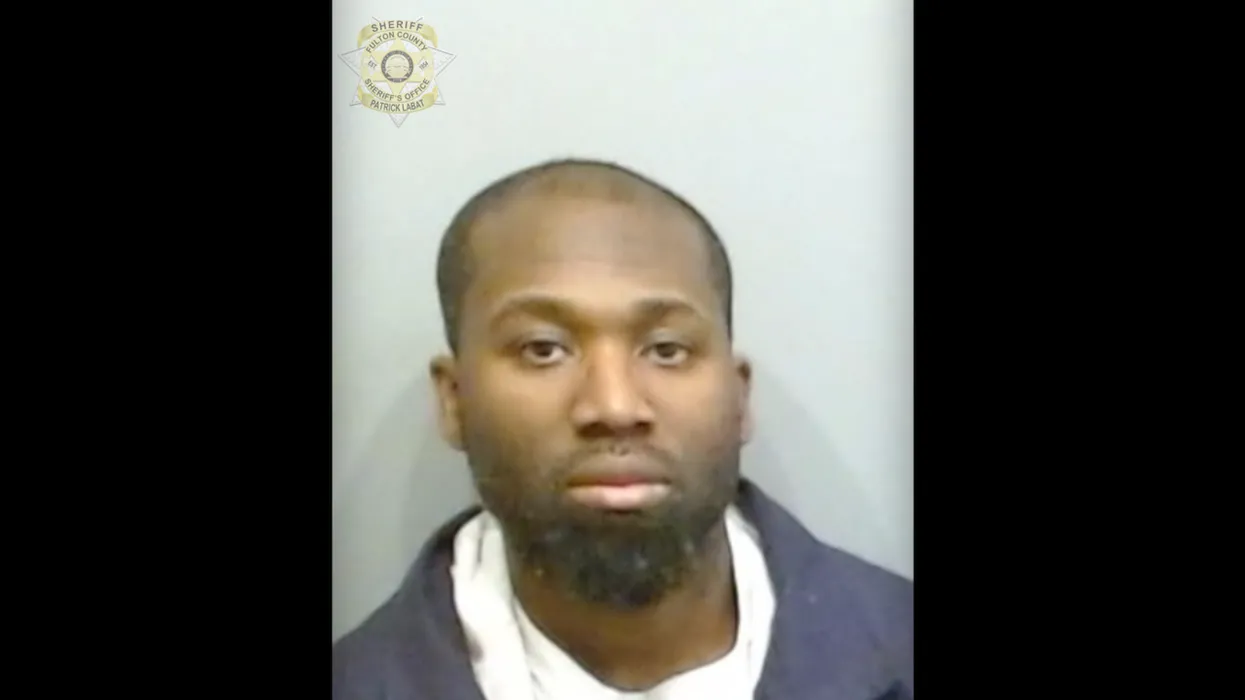
Atlanta police made an arrest late last week in connection with a homeowner who cops said shot two teenage porch pirates.
Police said Rakim Bradford, 34, was charged with two counts of aggravated assault and one count of possession of a firearm during the commission of a felony. Fulton County Jail records indicate Bradford was booked into jail Friday and released Sunday.
Police said officers responded around 3:40 p.m. Thursday to the scene on Celeste Lane SW and found a 16-year-old male who apparently was shot in his right arm, and a 15-year-old male who apparently was shot in his right foot.
The 16-year-old male was taken to a hospital in critical condition, underwent surgery, and is expected to survive his injury, police said, adding that the 15-year-old was alert, conscious, and breathing, and was transported to a hospital for treatment.
RELATED: Atlanta homeowner shoots 2 juveniles who were taking packages from his porch, police say
Bradford’s arrest warrant indicates the teens saw a delivery van in the townhome complex and then “agreed to steal that package from the front of the residence,” Atlanta News First reported.
However, before the teens were able to make off with the package, Bradford opened the door and shot at them, Atlanta News First added, citing the warrant.
“Don’t go and steal people’s packages,” neighbor Andrew Julian told Atlanta News First. “On the other side of that, what right do you have to defend your own home, and then what decision do you make to defend your own home based on somebody taking an item off of your porch? So, it’s certainly a conversation to be had.”
Nubian Barnes, a neighbor of Bradford’s in the Villages of Cascade Townhome community, told WSB-TV she could understand his frustrations: “I can. But to shoot them. I don’t know. I just don’t feel he should have shot him.”
Barnes added to the station that shooting the teens could have resulted in fatalities: “And then he would have been facing murder charges. All because of a package that probably didn’t cost that much. Definitely didn’t cost a human life.”
Reginald Boudreaux added to WSB that the shooting was “crazy to me. Like, you call the police. That’s what police are for.”
Quin King noted to WSB that the shooting was “just so much over packages. Packages can be replaced,” she said.
Like Blaze News? Bypass the censors, sign up for our newsletters, and get stories like this direct to your inbox. Sign up here!
Judicial Watch sues DOJ for Jack Smith emails regarding his investigation into Donald Trump
From Just the News: The conservative watchdog group Judicial Watch announced Thursday that it has filed a Freedom of Information Act lawsuit against the Justice Department, seeking emails from former Special Counsel Jack Smith over his investigation into President Donald Trump. The lawsuit, which was filed last month but publicly announced Thursday, is seeking Smith’s emails with […]
The post Judicial Watch sues DOJ for Jack Smith emails regarding his investigation into Donald Trump appeared first on Judicial Watch.
Boston sued by Judicial Watch for withholding public records tied to Mayor Wu’s pro-immigration rally
From The Boston Herald: Judicial Watch, a conservative activist group, is suing the City of Boston over public records it says the city failed to produce for internal emails and costs tied to the mayor’s defiant pro-sanctuary press conference that featured a mariachi band. The lawsuit filed Monday in Suffolk Superior Court alleges that the City of […]
The post Boston sued by Judicial Watch for withholding public records tied to Mayor Wu’s pro-immigration rally appeared first on Judicial Watch.
The Spectator P.M. Ep. 177: Erika Kirk Can Lead and Mourn at the Same Time
Three months after the assassination of Charlie Kirk, Erika Kirk faces constant criticism of her every move. I’ll be honest,…
AI is Facing Death by 50 State Regulatory Cuts
A crisis is looming over artificial intelligence, but it’s not what you think. While politicians fret about AI’s impact on…
Christmas in the Sub-Tropics
TAMPA – Christmas time again, and I like the season. But it’s a very different business here in peninsula Florida…
Donald Trump’s Civilizational Defense Strategy
If the just-published “National Security Strategy of the United States of America” was intended to infuriate the old line globalist…
Crockett: People who ‘regret’ voting for Trump are ‘absolutely welcome’ in her campaign
Rep. Jasmine Crockett (D-Texas) said any voter, regardless of party affiliation, is welcome to support her campaign to be one of the Lone Star State’s senators. “I’m a Texan, and so at the end of the day, I think people are trying to say it has to be one [party] or the other, and I…