

Category: Blaze Media
Do we love the ‘Wicked’ movies because we hate innocence?

As I watched Jon M. Chu’s “Wicked: For Good” last week, I kept thinking about another, very different filmmaker: David Lynch.
Specifically, the Lynch that emerges from Alexandre Philippe’s excellent 2022 documentary “Lynch/Oz,” wherein we discover just how deeply the infamously surreal filmmaker was influenced by one of cinema’s sweetest fantasy films: the original “Wizard of Oz.”
In the era of #WitchTok … a story like ‘Wicked’ has built-in appeal.
Philippe’s film includes footage from a 2001 Q and A in which Lynch confirms the extent of his devotion: “There is not a day that goes by that I don’t think about ‘The Wizard of Oz.'”
The logic of fairyland
And that shouldn’t be surprising given how much it shows up in his work. From Glinda the Good Witch making an appearance in “Wild at Heart,” to the hazy, dreamlike depiction of suburbia in “Blue Velvet,” his films exist in a dual state between the realm of fairyland and the underworld.
Indeed, Lynch doesn’t reject either. In proper Buddhist fashion, these two forces exist in balance, equally potent and true. There is both good and evil in his world. Neither negates the other’s existence. And when darkness spills over into the light, it may be tragic, but it is also just another part of the world. Like Dorothy, his protagonists find themselves walking deeper into unknown territory. The protagonists of his films truly “aren’t in Kansas anymore.”
“The Wizard of Oz” is potent because it captures the logic of fairyland better than almost any film ever made. Channeling the fairy stories of J.R.R. Tolkien, Lewis Carroll, and George MacDonald, it transports the mind to a realm that is more real than real, where even the most dire intrusion of evil can be set right according to simple moral rules.
As G.K. Chesterton famously puts it:
Fairy tales do not give the child his first idea of bogey. What fairy tales give the child is his first clear idea of the possible defeat of bogey. The baby has known the dragon intimately ever since he had an imagination. What the fairy tale provides for him is a St. George to kill the dragon.
Wicked good
“Wicked” and its new sequel reject this comforting clarity for something altogether more “adult” and ambiguous. Instead of presenting good and evil as objective realities that can be discerned and defeated, the films show how political authorities manipulate those labels to scapegoat some and exalt others.
They do so by swapping the original’s heroes and villains. The Wonderful Wizard is a cruel tyrant. Glinda is foppish and self-obsessed. Dorothy is the unwitting tool of a corrupt regime. And Elphaba — the so-called Wicked Witch — is reimagined as a sympathetic underdog with a tragic backstory, a manufactured villain invented to keep Oz unified in ire and hatred.
Elphaba exudes a whiff of Milton’s Lucifer — an eternal rebel in a tragic quest to upend the moral order. But unlike “Paradise Lost,” “Wicked” presents rebellion against its all-powerful father figure not as a tragic self-deception, but as a justified response to systemic cruelty.
Witch way?
“Wicked: For Good” takes the ideas of its predecessor even further than mere rebellion. If “Wicked: Part One” is about awakening to the world’s realities and becoming radicalized by them, “Wicked: For Good” is about the cost of selling out — the temptation to compromise with a corrupt system and the soul-crushing despair that follows.
This is where the irony of the film’s title, “Wicked: For Good” comes in. Once a person sees the world for what it truly is, they can’t go back without compromising themselves. They’ve “changed for good.” They’ve awakened and can’t return to sleep.
It’s worth considering why the “Wicked” franchise is so wildly popular. Gregory Maguire’s original 1995 novel has sold 5 million copies. The 2003 stage show it inspired won three Tony Awards and recently became the fourth longest-running Broadway musical ever. And the first film grossed $759 million last winter, with the sequel poised to make even more money.
Perhaps it is no coincidence that this outsize success comes at a time when Wicca and paganism have grown into mainstream cultural forces. In the era of #WitchTok, in which self-proclaimed witches hex politicians and garner billions of views on social media, a story like “Wicked” has built-in appeal. It offers glamorous spell-casting and a romantic tale of resistance to authority.
RELATED: ‘Etsy witches’ reportedly placed curses on Charlie Kirk days before assassination
 Photo by The Salt Lake Tribune / Contributor via Getty Images
A bittersweet moral
The temptation of witchcraft is one that always hovers over our enlightened and rationalistic society. Particularly for young women, witchcraft offers a specific form of autonomy and power — over body, spirit, and fate — that patriarchal societies often deny. Many view witchcraft as progressive and empowering; “witchy vibes” have become a badge of identity.
Thus the unsettling imagery of Robert Eggers’ 2015 film “The Witch” comes into focus: A satanic coven kidnaps and kills a Puritan baby, seduces a teenage girl, and gains the power to unsubtly “defy gravity” through a deal with the devil.
“Wicked” is all about this power to transcend. Even as its protagonist grows despairing in the second film and abandons her political quest for the freedom of the wastelands, the film presupposes that it is better to resist or escape a corrupt system than submit to it.
Ultimately, the two films leave their audience with a bittersweet moral: Society is dependent on scapegoats. The Platonic noble lie upon which all societies rest cannot be escaped — but it can be redirected. A new civic myth can be founded that avoids sacrificing the vulnerable and overthrows the demagogues atop Mount Olympus. And the witches play the central role in overturning the world of Oz. Their rebellion sets it free.
But because the films blur the clear, objective distinction between good and evil — even while acknowledging that real evil exists — the characters in “Wicked” often drift in moral grayness, defining themselves mainly in relation to power. The world becomes overbearing, radicalizing, and morally unstable.
Sad truth
This is far afield from the vision of Oz presented in the 1939 film, the one David Lynch venerated as vital to his understanding of the world. But it reflects how modern storytellers often grapple with Oz. Almost every sequel or spin-off struggles to recapture the sincerity of the original. The 1985 sequel “Return to Oz” reimagined the land with a dark-fantasy twist. 2013’s “Oz the Great and Powerful” comes closest to the original tone but centers on fraudulence and trickery.
“Wicked,” too, falls in line with the modern tendency to subvert and complicate traditional stories of good versus evil. “Frozen,” “The Shape of Water,” “Game of Thrones,” and “Star Wars: The Last Jedi” all explore morally conflicted worlds where bravery is futile or where Miltonian rebellion is celebrated.
Of course, seeing the stories of our childhood with a jaundiced adult eye can be quite entertaining; it’s perfectly understandable why even those not in covens love these films. They are well-made, well-performed, and especially irresistible to former theater kids (I am one).
Their popularity isn’t inherently bad either. They are perfectly fine in isolation. It is only when we contrast them with the clarity and beauty of the original — and place them within the context of our society — that a sad truth emerges: Finding fairyland is hard. Most of us prefer to live in the Lynchian underworld.
Thug with over 40 arrests accused of punching then shoving mentally disabled man to train tracks — all over $1

A rampant repeat offender has been accused of punching and then shoving an intellectually disabled man off a Chicago suburb train platform and upon the tracks below, seriously injuring the victim — and all over $1.
Tommie O. Carter, 39 — who law enforcement sources said has been arrested over 40 times in Cook County, Illinois — has been identified as the culprit, WGN-TV reported.
‘I am the victim!’
Forest Park officers were dispatched to the Harlem Blue Line stop just before 8:35 a.m. Monday for a report of a battery, the station said. Forest Park is a suburb just west of Chicago.
Officers found the 59-year-old victim lying on the train tracks, WGN said.
Prosecutors allege Carter approached the man and repeatedly asked him for a dollar, the station said, adding that the man replied that he had no money.
More from WGN:
Carter allegedly pushed the man to the ground, and he was able to get back up. Documents state the man walked to the train platform and Carter followed him.
He then struck the man in the head and pushed him from behind, causing the 59-year-old to fall to the tracks, prosecutors state. The man came “really close” to the electric third rail.
A train was approaching the station, but the train’s operator, who saw what happened, was able to stop the train in time. Authorities were able to cut off electricity to the rail so first responders could make the rescue.
Prosecutors said the alleged attack was captured on surveillance video, the station added.
WGN reported that the victim — who suffered multiple fractures to his right knee and a fracture in his left knee — was taken to a hospital for treatment.
Officers approached Carter on the train platform after witnesses identified him, the station said, citing court documents.
But Carter refused to comply with officers’ orders and fought back as they were placing him in handcuffs, police told WGN.
Carter continued to tense up and tried to pull away from officers as they took him to a squad car, the station said, citing an incident report.
More from WGN:
As one officer was placing the suspect in the back seat, he turned his head and spit on the officer, hitting him in the forehead and side of his face.
After driving to the police department, as officers were trying to remove Carter from the squad car to bring him inside for processing, he allegedly began to spit again, hitting one officer in his arm, and hitting another in the face mask, left shoulder, and on his body-worn camera mounted on his uniform.
An incident report shows once Carter was in the station, he was irate at first, and then began to speak with officers. He claimed the victim initially grabbed him, which caused his jacket to rip, and said he pushed the man after he was grabbed.
“Carter then became increasingly hostile, spitting towards officers, throwing a wet toilet paper roll and wet T-shirt,” the incident report stated, according to the station.
Carter was charged with attempted murder and three counts of aggravated battery to a police officer, WGN reported.
He also shouted, “I am the victim!” and “Let me out of here!” during his detention hearing, the station said.
A judge denied a request from Carter’s attorney that he should be allowed on electronic monitoring, WGN noted.
What’s more, Carter was on pretrial release in connection with a case just last month in which he was charged with criminal damage to government supported property, criminal trespass, and assault, the station said.
More from WGN:
According to an arrest report, Carter entered the Citadel Center without authorization, and when asked to leave, he refused. After being taken into custody, he allegedly started kicking the door of the Chicago Police Department squad car and tried to spit on one of the officers.
Carter also has seven felony convictions on his record, including a 2023 case for aggravated unlawful use of a weapon, in which he was sentenced to two years in the Illinois Department of Correction.
He has six other convictions on his criminal record, including retail theft, attempted armed robbery, and armed robbery.
A judge ordered Carter detained, the station said; his next court date is scheduled for Dec. 19.
Like Blaze News? Bypass the censors, sign up for our newsletters, and get stories like this direct to your inbox. Sign up here!
Convicted hacker twins who landed jobs as federal contractors nabbed for allegedly deleting government databases
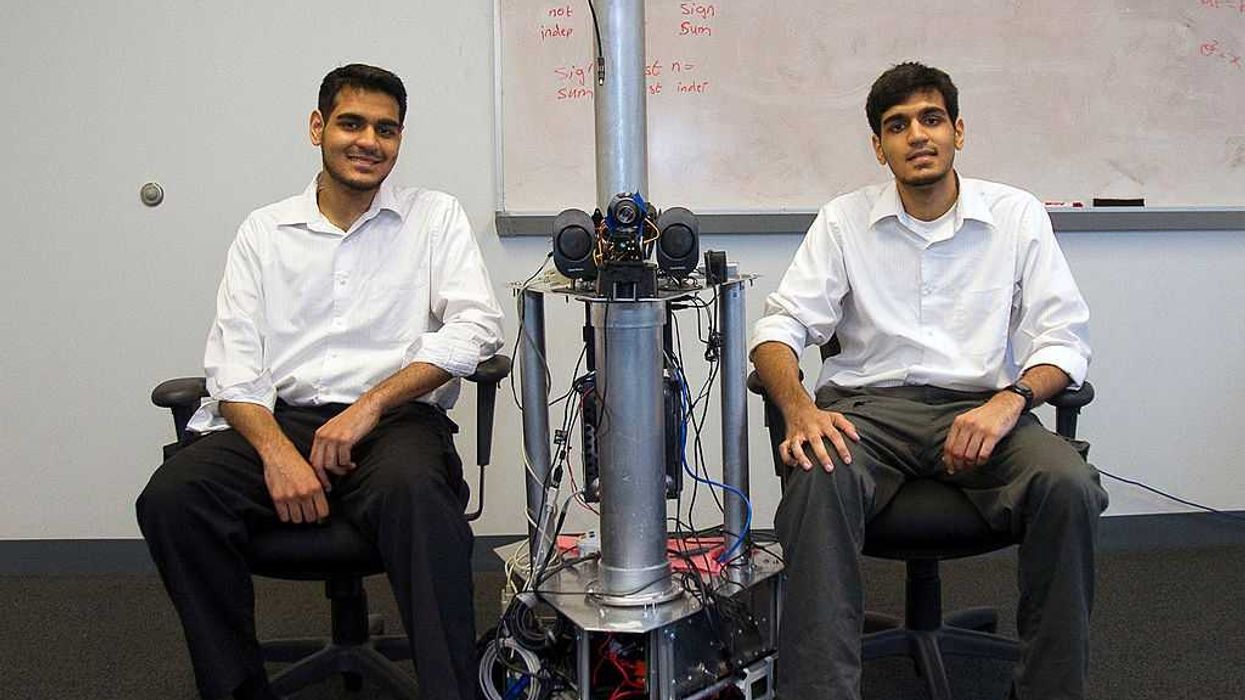
Muneeb and Sohaib Akhter, a pair of convicted hackers based in Alexandria, Virginia, were arrested on Wednesday over an alleged conspiracy to destroy government databases and other crimes.
After doing prison time for wire fraud and conspiring to hack into the U.S. State Department, the Akhter twins, one of whom previously served as a cybersecurity contractor with the State Department, managed to secure jobs as federal contractors — working as engineers for Opexus.
‘Their actions jeopardized the security of government systems.’
Opexus, a company that handles sensitive data for most federal agencies and has received over $50 million in contracts from various agencies over the past decade, determined earlier this year that it had been compromised in February by two employees.
A Bloomberg investigation revealed in May that after one of the agencies with which Opexus was working, the Federal Deposit Insurance Corporation, flagged the twins as possible threats on account of their criminal records, the duo were fired on Feb. 18.
The company later discovered that while being fired and immediately afterward, the twins allegedly accessed sensitive documents and compromised or scrubbed dozens of databases, including those containing data from the General Services Administration and the Internal Revenue Service.
The FBI, FDIC Office of Inspector General, Department of Homeland Security Office of Inspector General, and Homeland Security Investigations investigated the case.
The brothers were indicted on Nov. 13 for allegedly working to harm Opexus and its U.S. government clients “by accessing computers without authorization, issuing commands to prevent others from modifying the databases before deletion, deleting databases, stealing information, and destroying evidence of their unlawful activities,” the DOJ said in a release.
RELATED: Could hackers target your car’s tires?
 Muneeb Akhter. Photo by Evelyn Hockstein/Washington Post via Getty Images
According to the indictment, Muneeb Akhter allegedly deleted approximately 96 databases storing U.S. government information — including databases containing records and documents related to Freedom of Information Act matters as well as sensitive federal investigative files.
Muneeb Akhter is also accused of asking an artificial intelligence tool how they could cover their tracks after deleting a DHS database.
After he got fired from Opexus, Muneeb Akhter allegedly obtained data from the U.S. Equal Employment Opportunity Commission and is accused further of stealing copies of IRS information including federal tax information and other identifying information for at least 450 individuals.
Opexus did not respond to a request for comment from Blaze News.
“These defendants abused their positions as federal contractors to attack government databases and steal sensitive government information,” said Matthew Galeotti, acting assistant attorney general at the Department of Justice’s Criminal Division, in a statement. “Their actions jeopardized the security of government systems and disrupted agencies’ ability to serve the American people.”
Muneeb Akhter has been charged with conspiracy to commit computer fraud and to destroy records, two counts of computer fraud, theft of federal records, and two counts of aggravated identity theft. His twin, Sohaib Akhter, was charged with conspiracy to commit computer fraud and to destroy records and computer fraud.
While Sohaib Akhter faces a maximum penalty of six years in prison, Muneeb Akhter faces a mandatory minimum penalty of two years of prison time for each aggravated identity theft count and a maximum penalty of 45 years for the other charges.
The duo pleaded guilty in 2015 to a different set of crimes.
Muneeb Akhter hacked into the website of a cosmetics company and stole thousands of customers’ credit card and personal information. He and his brother used the stolen data to pay for flights, hotel stays, various goods, and attendance at professional conferences. Muneeb Akhter proceeded to hand off the stolen data to a “dark net” operator who cut him in on the profits from the sales.
The other brother, meanwhile, used his contract position at the State Department in 2015 to steal personally identifiable data belonging to various people including co-workers and a federal law enforcement agent who was investigating him.
According to the Justice Department, Sohaib Akhter later hatched a scheme to ensure perpetual access to various State Department systems and, with the help of his twin, attempted to install an electronic collection device inside a State Department office, which would have enabled the hackers to remotely steal federal data.
Years earlier, Muneeb Akhter hacked into a Maryland-based private data aggregation company that he was performing contract work for, giving his brother access to a database of federal contract information to give their technology company an upper hand when bidding for contracts and clients.
Like Blaze News? Bypass the censors, sign up for our newsletters, and get stories like this direct to your inbox. Sign up here!
The media just told you their 2026 strategy: ‘Lies, but better!’

Let me explain what the New York Times just did to the Washington Post over Thanksgiving weekend. The Post tried to turn Secretary of War Pete Hegseth into a war criminal for blowing up maritime drug runners. But the attack didn’t gain traction — partly because Republicans are getting better at starving these narratives of oxygen.
So the New York Times read the room, climbed to the top rope, and elbow-dropped its own ideological ally to prevent serious blowback against the propaganda press. The Times wasn’t defending truth. It was defending future lies. The ability to run effective psyops in 2026 was on the line. And when the Times pretends to be an ombudsman, the calculus is always political.
You think sweating out one red-state special election against a hellish candidate who despises her own constituents is bad? Wait until November 2026.
Don’t kid yourself: No ethical journalism happened here. The Times simply concluded, “We will sell no psyop before its time.” They weren’t going to let DataRepublican or Steve Baker rack up millions of views muckraking the Post’s latest collapsing narrative. So the Gray Lady hit the panic button and aborted the mission.
What should we learn from this? The temptation on the right will be to ask why the corporate left-wing press broke ranks on the eve of maybe flipping a Tennessee district Donald Trump won by 22 points to a Democrat who is on tape saying she hates her own city and its constituents.
But that question misses a foundational truth I repeat constantly on my show: Worldview is destiny. And outside the biblical worldview, every worldview boils down to a will to power.
With that hermeneutic, you can see exactly what the Times leaders are doing. They’re thinking far past Tennessee. They’re signaling that they have an entire arsenal of new lies ready to deploy to steal the midterms. It’s that Don Draper meme — hands outstretched, smirking: “Lies … but better!”
Remember: The godless do not have limiting principles. Why wouldn’t they lie if lying helps them capture power? It doesn’t matter whether it’s godless atheism, godless occultism, or godless Islam. Where the one true God is absent, the father of lies dances to a raucous tune. Hell has denominations, too.
But in the biblical worldview, the hallmark of everything is repentance, redemption, and restoration. You know a tree by its fruit. So if you want to discern whether something reflects the kingdom of God or the spirit of the age, the first question isn’t “do I like this person?” or “is this how I would do it?” The first question is: Does it produce repentance, redemption, and restoration?
Look at the Charlie Kirk memorial. Several people spoke whom no one expected to have deep, serious thoughts about Christianity. Yet the event unmistakably pointed people toward repentance, redemption, and restoration. That’s the kingdom of God. Don’t focus on the proxy on the outside. Focus on what God is doing on the inside. That’s the through-line from Genesis to Revelation.
The spirit of the age rejects all of it. It is will to power, front to back. Which means you cannot analyze the opposition the same way you analyze our side.
RELATED: How GOP leadership can turn a midterm gift into a total disaster
 rudall30 via iStock/Getty Images
Sure, Republicans won that Tennessee special election by nine points. But they lost the Nashville precinct — the same place the Democrat said she hated. That’s how cults behave. And that’s why political messaging on the right must account for the environment normie voters live in — the tension between two very different kingdoms vying for their attention.
The normie voter either doesn’t know about those kingdoms or doesn’t care. He just wants what he wants: an economy that boosts his bottom line and border and anti-crime policies that keep him safe. Voters want elections to be about them.
That’s why Hegseth taking out foreign drug traffickers instinctively sounds like a pretty good deal — something even the New York Times could grasp, if only for tactical reasons.
So here’s the math going forward: Leftists can lie all they want — and sometimes lie badly, as we just saw — but the GOP will still lose if it fails to fix the economy and security.
You think sweating out one red-state special election against a hellish candidate who despises her own constituents is bad? Wait until November 2026. With better lies behind her and normie voters feeling betrayed by lukewarm people in power, she — and people like her — will absolutely win.
Turns out that Hegseth’s ‘kill them all’ line was another media invention

Under his authority as commander in chief, the president can blow up pretty much anybody on Earth whom he deems a national security threat. He does not need permission from Congress, the media, or a panel of self-appointed commentators. The missile strikes on drug-running vessels operated by a designated terrorist group are lawful, routine, and predictable. What made the episode explosive was that it enraged exactly the faction that always reacts this way: the political left.
Impeachment is the only real consequence available to the administration’s critics, and after two failed efforts, that prospect does not keep President Trump awake at night. Republican control of the House makes even a symbolic attempt unlikely.
It is time to put a moratorium on the online laws-of-armed-conflict ‘experts’ who materialize whenever a strike hits a target they sympathize with.
So the disloyal opposition defaults to its remaining weapon: information warfare. Media outlets, activist networks, and hostile bureaucrats have been carpet-bombing the information space with false claims designed to sow dissension among the ranks and mislead the public.
The country needs a president who can act decisively in defense of national security, without media gatekeepers, rogue judges, or partisan lawmakers running armchair military campaigns from the sidelines. The “Seditious Six” tried to undermine the president’s authority and cast doubt on lawful orders. The Washington Post attempted to turn that fiction into fact by quoting anonymous sources with unverifiable claims.
The central allegation is that Secretary of War Pete Hegseth issued an order to “kill everybody” on the vessel. The Post framed it this way: “Defense Secretary Pete Hegseth gave a spoken directive, according to two people with direct knowledge of the operation. ‘The order was to kill everybody.’”
The headline amplified the accusation: “Hegseth order on first Caribbean boat strike, officials say: Kill them all.”
A “spoken directive” means no record. The quote is a paraphrase. Nothing indicates that the source actually heard the Hegseth say those words. This is an anonymous, secondhand characterization of an alleged statement — precisely the sort of raw material the Post loves to inflate into scandal.
Even if the words had been spoken, the context would determine legality. If a commander asks, “How big a bomb do we drop on the enemy location?” and the answer is, “Use one big enough to kill everybody,” that exchange would not be criminal. It is a description of the force required to neutralize a hostile asset.
If these anonymous sources truly believed the secretary issued an illegal order, they were obligated to report it through the chain of command. Their silence speaks louder than any paraphrase. The most plausible explanation is that someone misunderstood — or deliberately distorted — an aggressive statement by Hegseth and nothing more.
The United States targets terrorists. The implication behind the Post’s story is that survivors remained after the first strike and that either the secretary or JSOC ordered a second engagement to kill them. No evidence supports that claim. No one outside the direct participants knows what the surveillance picture showed or what tactical conditions existed immediately after the first blast.
RELATED: White House names names in new ‘media bias tracker’ in wake of ‘seditious’ Democrat video
 Photo by Chip Somodevilla/Getty Images
President Trump stated publicly that Hegseth told him no order was given to kill survivors. The fact that U.S. forces recovered two survivors from the submersible drug vessel undercuts the Post’s narrative even more. Pete Hegseth is far more credible than Alex Horton and the newsroom that elevated this rumor.
It is time to put a moratorium on the online laws-of-armed-conflict “experts” who materialize whenever a strike hits a target they sympathize with. They insist that the presence of wounded combatants instantly transforms a hostile platform into a protected site and that destroying the vessel itself becomes a war crime. Even the New York Times — no friend of the administration — punctured that claim:
According to five U.S. officials … Mr. Hegseth’s directive did not specifically address what should happen if a first missile failed to accomplish all of those things … and his order was not a response to surveillance footage showing that at least two people on the boat survived the first blast.
The mobs demanding Hegseth’s scalp will be disappointed. The voters who supported this administration expected firm action against terrorist cartels and open-ocean drug networks. Another hostile vessel was reduced to an oil slick, and most Americans see that as a success.
Elon Musk and Jeff Bezos are racing to enclose Earth in an orbital computer factory
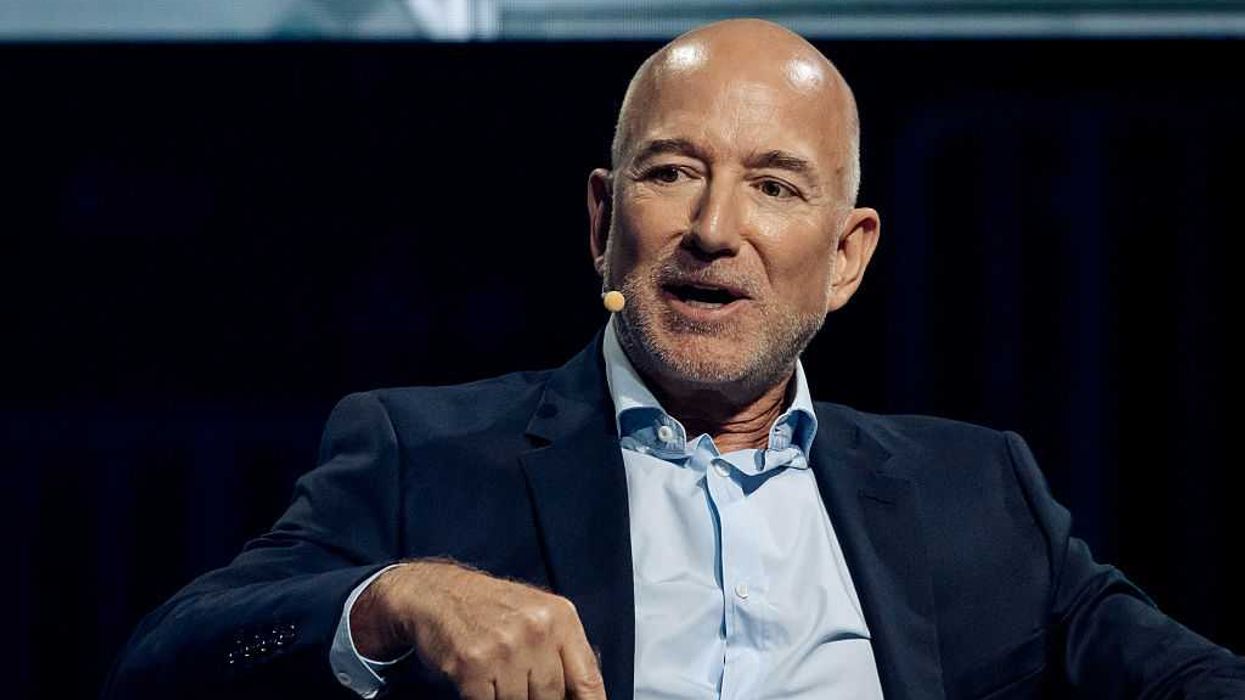
In Memphis, Tennessee, where Elon Musk’s xAI initiative spun up a “compute factory” of some 32,000 GPUs, the local grid could not sustain the demand. The solution was characteristic of the era: 14 mobile gas turbine generators, parked in a row, burning fossil fuel to feed the machine. It was a scene of brute industrial force, a reminder that the “cloud,” for all its ethereal branding, is a heavy, hot, loud thing. It requires acres of land for the servers, rivers of water for cooling, and enough electricity to power a small nation.
The appetite of AI is proving insatiable. To reach the next plateau of synthetic cognition, we must triple our electrical output and are constrained by our capacity to do so. And so, with the inevitability of water seeking a lower level, the gaze of Silicon Valley has drifted upward. If the earth is too small, too regulated, and too fragile to house the machines of the future, we shall instead build them in the sky.
The high ground of the 21st century is not a hill, but an orbit.
The proposal is startling, in the way that leaps in engineering often are. In late 2025, Musk noted on social media that SpaceX would be “doing” data centers in space. Jeff Bezos, a man who has long viewed the planetary surface as a sort of zoning restriction to be overcome, predicted gigawatt-scale orbital clusters within two decades.
The pitch is seductive: In the vacuum of low-Earth orbit, the sun never sets. There are no clouds, no rain, no neighbors to complain. There are only the burning fusion of the sun and the cold of deep space, which turns out to be the perfect medium for cooling the heated circuits of a neural network.
The vacuum is valuable because it is an infinite heat sink. The sunlight is valuable because it is free voltage. The plan, as outlined by startups such as Starcloud (formerly Lumen Orbit), involves structures that defy terrestrial intuition. These are not the tin-can satellites of the Cold War but solar arrays and radiator panels four kilometers wide, vast shimmering sheets assembled by swarms of robots. These machines, using technology like the MIT-developed TESSERAE tiles, would click together in the silence, building a cathedral of computation that no human hand will touch.
RELATED: Trump leaves Elon Musk’s Grok, xAI off White House list of AI partners
 Photo by BRENDAN SMIALOWSKI/AFP via Getty Images
There is a stark beauty to the engineering. On Earth, a data center fights a losing battle against entropy, burning energy to pump heat away. In space, heat can be radiated into the dark. A server rack in orbit, shielded by layers of polymer and perhaps submerged in fluid to dampen the cosmic rays, swims in a bath of eternal starlight, crunching the data beamed up from below. Companies such as NTT and Sky Perfect JSAT envision optical lasers linking these satellites into a single, glowing lattice: a cosmic village of information.
Yet one cannot help but observe its fragility. The modern GPU is a miracle of nanometer-scale lithography, a device so sensitive that a stray alpha particle can induce a chaotic error. The environment of space is hostile, awash in the very radiation that these chips abhor. To place the most delicate artifacts of human civilization into the harshest environment known to physics is a gamble. The engineers speak of “annealing” solar cells and triple-redundant logic. The skeptic notes that a bit-flip in a language model is a nuisance, while a bit-flip in a battle management system is a tragedy.
There is also the matter of the debris. We have already cluttered orbits with the husks of our previous ambitions: spent rocket stages, dead weather satellites, flecks of paint moving at 17,000 miles per hour. To introduce massive, kilometer-scale structures is to invite the Kessler syndrome, a cascade of collisions that could imprison us on the surface for generations. We are proposing to solve the environmental crisis of terrestrial computing by potentially creating an environmental crisis in the exosphere. It is the American way, the frontier way: When one room gets messy, simply move to the next, larger room.
The drive to do this is not merely economic, though the economics are potent. If Starship can lower the cost of launch to under $200 per kilogram, the math begins to close. If energy in space is effectively free, the initial capital outlay is justified by the lack of a monthly utility bill. But the impulse is also older, that of the Russian scientist and mathematician Konstantin Tsiolkovsky, who called Earth the “cradle” of humanity, which, like a mature human being, eventually we must leave. We are seeing the embryonic stages of the “noosphere,” a sphere of pure mind encircling the planet. By exporting our cognition to the heavens, we are externalizing our logic. The logos of our civilization will physically reside above us, a silent pantheon of servers ordering and facilitating the lives of the creatures below.
There is a geopolitical texture to this as well. The concept of “sovereign cloud” takes on a new meaning when the data center is orbiting over international waters. Intelligence agencies and defense contractors are quietly investing, sensing that the high ground of the 21st century is not a hill, but an orbit. To control the compute is to control the speed of thought.
Whether this will work remains to be seen. The history of spaceflight is a graveyard of optimistic PowerPoints. It is possible that the radiation will act as a slow acid on the silicon, that the robotic assembly will jam, that the cost will remain stubbornly high. But the momentum is real. The mobile gas turbines in Memphis are a stopgap. The data centers consuming the aquifers of Arizona are a liability. The logic of the market and the machine points upward.
We stand at a peculiar intersection. We are attempting to use the most primal forces of the solar system, the burning star and the freezing void, to power our most refined tools. It is a grand, ambitious, and entirely human endeavor. We are building a computer in a jar and hanging the jar in the sky, hoping that the view will be clear enough to see the future.
College student mauled and killed by 3 pit bulls she was pet sitting, police say

The family of a 23-year-old student is grieving her death after she was mauled and killed by three pit bulls that she was caring for in Tyler, Texas.
Deputies found Madison Riley Hull lying in the backyard of the home when they were called on Nov. 21 and said the dogs appeared to want to attack them as well, according to the Smith County Sheriff’s Office.
‘She loved life with her whole heart and moved through the world with a free-spirit that lifted those around her.’
One deputy fired his weapon at the dogs, killing one.
That caused the other dogs to run off, allowing the deputies to carry Hull away from the home safely. She was later declared dead.
The other two dogs were ordered to be euthanized by a justice of the peace.
Investigators said they are considering criminal charges for the owners of the dogs.
“Obviously these people weren’t home at the time that this happened,” said Smith County Sheriff’s Office spokesman Sgt. Larry Christian to KLTV-TV.
“We don’t know the dynamics of the relationship that this dog sitter, Miss Hull, had with these dogs, if she’s been around them before or whatever. But all of those things will be taken into consideration whenever they decide to make a decision on whether charges will be filed or will not be filed.”
Hull was a student at the University of Texas at Tyler.
RELATED: 1-year-old girl mauled to death by family’s pit bull, police say
Christian said the deputies were called to the home by a neighbor.
“This young lady had a dynamic future ahead of her. And, of course, she lost her life in a tragic manner, and it’s a tragedy for the family,” he added. “We do pray for them as well and just hope that they can gather the strength to get through this. We also pray for those who responded to the call and for the neighbor who had to witness what occurred out there.”
Hull’s mother, Jennifer Hubbell, wrote about her daughter in a post on GoFundMe.
“Madi was love, she was light, she was kindness, she was laughter, she was fierce in the most beautiful and disarming way,” Hubbell wrote. “She loved life with her whole heart and moved through the world with a free-spirit that lifted those around her.”
Like Blaze News? Bypass the censors, sign up for our newsletters, and get stories like this direct to your inbox. Sign up here!
Costco attacks the tariff plan that puts America — and Americans — first

Costco is suing the Trump administration.
Yes, Costco. The warehouse temple of middle-class stability where Americans stock their freezers, fill their carts, and feel briefly insulated from the chaos of the broader economy. Costco thrives when the American consumer thrives.
Remember, when faced with a choice between standing with the American worker or protecting the globalist status quo, Costco sided with the status quo.
So why file suit against the administration? The company’s board donated heavily to Democrats in the 2023-2024 cycle, and now its leadership wants its tariff money back. The lawsuit doubles as a political favor and a financial windfall.
In short, Costco refuses to accept the new populist moment.
Fighting the populist tax revolt
Trump’s tariff program funds his most audacious promise: eliminating income taxes for working Americans and issuing a $2,000 tariff “dividend” as early as next year. This would mark the largest direct transfer of economic power to workers in modern history.
Costco wants to stop it.
The company that markets itself as the moral alternative to Walmart now positions itself as the moral critic of tariff-driven tax abolition. For decades, Americans have trusted Costco as the “good” warehouse store — high quality, honest pricing, reliable value. But the rotisserie chicken glow fades fast when the company sues to block a working-class tax cut.
Costco insists its lawsuit is about fairness. Please. It’s all about politics.
Stuck in a pre-Trump mentality
Trump upended the left’s narrative by putting workers — not donors, not multinationals — at the center of national policy. The tariff-funded tax revolution threatens decades of Democratic posturing about “helping the little guy.”
So Costco’s leadership had to intervene.
The company claims it fears a pending Supreme Court ruling that overturns tariffs without refunding the money companies paid. In reality, Costco wants a heads-I-win, tails-I-win scenario.
If tariffs stay, Costco raises prices to recoup costs. If tariffs fall, Costco demands a refund. What it will not do is refund customers who paid higher prices.
Costco argues that tariffs fall under Congress’ taxing authority. A federal circuit court agreed, ruling that tariffs are a core congressional power. That argument never troubled Democrats when they rebranded an Obamacare tax as “not a tax” to shove it through the courts.
When Democrats extract revenue for their political projects, the courts call it progress. When tariffs return money to American workers, Costco calls it unconstitutional.
The truth about taxes
Income tax is the burden of wage earners, not the wealthy. Costco knows it. Democrats know it. Everyone knows it.
The wealthy use capital gains, trusts, foundations, and investment shelters. Eliminating income taxes barely touches them. It liberates the working class — precisely the group Democrats once claimed to defend while quietly shifting their coalition toward illegal aliens and the ever-expanding alphabet of sexual identities.
Trump exposed the contradiction: Democrats talk about workers. Trump delivers for them.
RELATED: Is a tariff a tax?
 Photo by Kevin Carter/Getty Images
Costco chose poorly
Costco’s lawsuit will not collapse its business model. Americans will still buy their bulk salsa, tires, kayaks, paper towels, and of course, the hot-dog combo that has famously resisted inflation for decades.
But they will remember this moment.
When faced with a choice between standing with the American worker or protecting the globalist status quo, Costco sided with the status quo. A company famous for its generous return policy may soon see a return movement of its own as consumers decide they want their tariff-inflated dollars back.
The company’s lawsuit reveals something not so flattering about the “good” big-box store: Liberal elites love talking about helping workers — as long as it never requires losing money for workers.
The Trump tax-and-tariff revolution threatens that arrangement. And Costco’s leadership made its position clear. I’ll still eat their hot dogs after making a few returns and taking a few extra free samples.
Noncitizen Kansas mayor accused of voter fraud has cast dozens of ballots since 2000, documents show

A Kansas mayor who is not a U.S. citizen, despite residing in the state for most of his life, has been accused of illegally voting “multiple times” — and documents obtained by Blaze News seem to support those allegations.
Last month, Kansas Attorney General Kris Kobach (R) held a press conference to announce that Coldwater Mayor Jose “Joe” Ceballos, 54, had been charged with three counts of voting without being qualified and three counts of election perjury, all felonies.
He could face more than five years behind bars if convicted. Tricia McLaughlin, assistant secretary of the Department of Homeland Security, added that a conviction would also prompt “removal proceedings” for Ceballos.
Ceballos appears to have cast a ballot at least once every year or every other year, beginning on August 1, 2000.
“In Kansas, it is against the law to vote if you are not a U.S. citizen. We allege that Mr. Ceballos did it multiple times,” Kobach said.
Voter registration applications and voting history records sent to Blaze News in response to a public records request seem to confirm Kobach’s allegations.
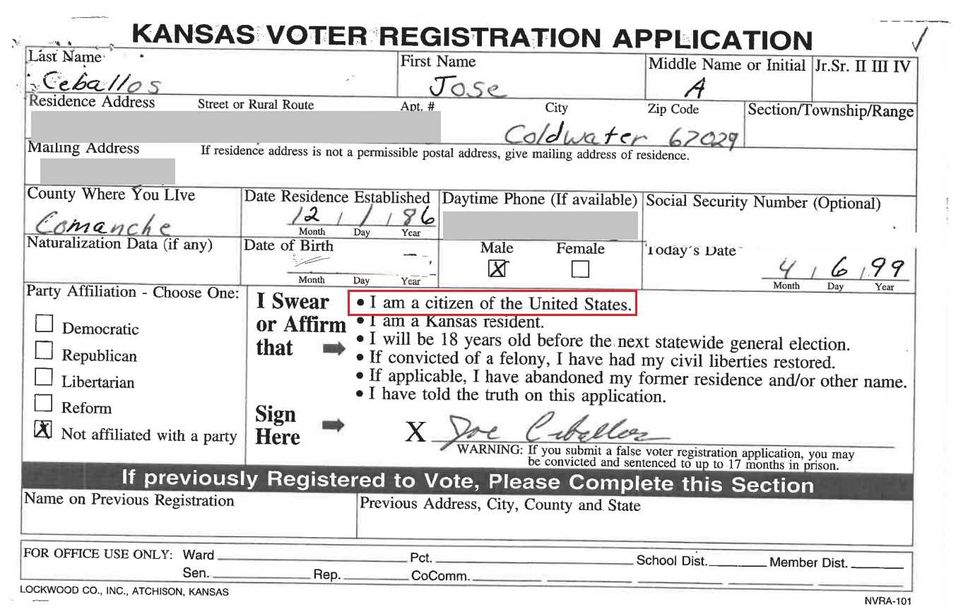
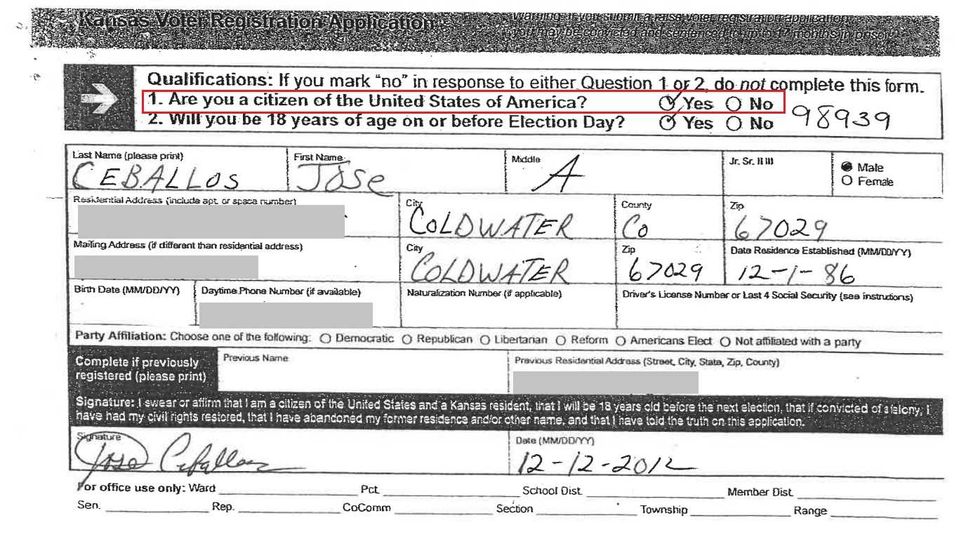
The two voter registration applications for Ceballos, one dated April 1999 and the other December 2012, indicate he established Kansas residency all the way back in 1986.
Both documents asked the applicant to confirm U.S citizenship. “I Swear or Affirm that I am a citizen of the United States,” the 1999 application states.
On the 2012 application, the “yes” box next to the question “are you a citizen of the United States of America?” is marked. The signature section then reiterates: “I swear or affirm that I am a citizen of the United States and a Kansas resident.”
Ceballos appears to have signed the 1999 application as “Joe” Ceballos and the 2012 application as Jose. He did not register for a party on either application.
RELATED: Noncitizen Kansas mayor accused of illegally voting ‘multiple times’ after winning re-election
 Screenshot of documents sent to Blaze News
 Screenshot of documents sent to Blaze News
The criminal complaint filed November 5 stated that Ceballos is “not a citizen of the United States,” and DHS noted that he received a green card in 1990 but remains a citizen of Mexico.
He was convicted of battery in 1995, according to DHS.
Moreover, Ceballos’ voting history revealed that he participated in dozens of primary and general elections since 2000, the earliest records the Comanche County clerk claimed to have.
According to the records, Ceballos cast a ballot at least once every year or every other year, beginning on August 1, 2000. The records indicate Ceballos voted in November 2000, 2004, 2008, 2012, 2016, 2020, and 2024.
It is unclear why a Republican Party affiliation was recorded for votes cast in the November 2004 and 2024 general elections.
RELATED: Thousands of possible illegal aliens found on Texas voter rolls, officials say
 Screenshot of documents sent to Blaze News
Allegations that Ceballos had voted first made headlines after he won re-election as Coldwater mayor on November 4, and City Attorney Skip Herd claimed that Ceballos had applied for U.S. citizenship just this year.
“He applied for citizenship in February of this year and, through that, raised the issue of whether he was a legal citizen,” Herd said.
Ceballos admitted to the Wichita Eagle that he did come to America as a child — the outlet described him as being “undocumented” at the time — and that he has since voted in every local, state, and federal election since 1991. However, he explained that he simply misunderstood the law, believing that the “permanent resident” designation on his green card meant that he was a citizen.
“I haven’t seen Mexico since I was four,” he said. “I don’t speak Spanish anymore. If I get deported, it would wreck my life.”
His attorney, Jess Hoeme, indicated that since Ceballos did not intend to vote illegally, “he’ll beat this” case with the jury.
Records from the Comanche County clerk’s office revealed that Ceballos’ voter registration was canceled on October 17, 2025. Those records further showed that he had been registered to vote in federal elections since at least February 2003, that he was at some point registered as a Republican, and that he filed a change of address in 2013.
Ceballos told the Eagle that he “probably” voted for Kobach to be state AG and for Donald Trump to be president every time they ran, even though in general, the twice-elected mayor is rather indifferent to politics.
“If politics comes up in Coldwater, I generally just get up and walk out,” Ceballos said.
RELATED: Trump plans major shake-up of how Americans vote ahead of 2026 midterm elections
 Screenshot of documents sent to Blaze News
Ceballos, who received nearly 83% of the vote from fellow Coldwater residents just a few weeks ago, enjoys continued support from his community.
“As a mayor, he’s done a wonderful job,” said Britt Lenertz, president of the Coldwater City Council. “As a city councilmember, he’s done a wonderful job. He’s always put our community first in everything he does.”
In an official statement, Lenertz acknowledged that the allegations were “concerning” but called for patience as the legal process unfolds: “We will allow the proper legal process to take its course before making any further comments. It’s important that we respect both due process and the integrity of our local government.”
Longtime friend Ryan Swayze described Ceballos as good-hearted and well-intentioned but also a bit naive. Swayze and his dad as well as Ceballos’ old special-education teacher all partially blame themselves for not explaining to Ceballos during his formative years the differences between permanent residents and U.S. citizens.
Ceballos did not respond to Blaze News’ request for comment, but he did hint to the Wichita Eagle that the charges have greatly affected his well-being.
“I’m scared,” he told the outlet. “I’m not sleeping.”
Like Blaze News? Bypass the censors, sign up for our newsletters, and get stories like this direct to your inbox. Sign up here!
Holiday sales predicted to shatter $1 TRILLION — yet Glenn Beck warns of history’s first-ever synchronized global collapse

For all of human history, the four-stage debt cycle has remained the same: Discipline leads to economic prosperity; prosperity creates complacency; complacency tees up excessive spending; excessive spending turns into debt, which reaches a breaking point, necessitating discipline and restarting the cycle.
This has been true for every great empire the world has ever seen.
While the rise and fall of nations is nothing new, what is happening right now in global economics, says Glenn Beck, is indeed new — and it should terrify everyone.
“For the very first time in world history … the entire globe is riding the same wheel at the same time,” he warns.
“Right now, America, Europe, China, Japan, and every other major power … have all hit stage four at the same time.”
“The bond markets are shaking. The currencies are all volatile. Politicians are praying that no one notices the numbers. … Stage four is not coming. We are now living inside the opening act,” Glenn warns.
And yet a recent report from the National Retail Federation’s annual holiday forecast estimates that U.S. holiday retail sales will surpass $1 trillion for the first time ever.
Glenn, who says he is floored by the prices of food and goods and often wonders how the average person can afford to live right now, fears that the American people are making the same mistake as these governments on the brink of financial collapse.
“We’re spending, spending, spending, and I don’t understand it. … We’re just spending because we think we can get out of it,” he laments.
But our government and its constituents would be wise to remember what happens when stage four of the debt cycle is complete.
“It’s called the reset,” says Glenn, and it culminates in either crushing inflation, outright default and political chaos, or war.
For this to happen in any one country is terrible, but imagine the unmitigated catastrophe that would unfold if several global superpowers collapsed simultaneously.
“Rome collapsed by itself. France collapsed alone. Weimar collapsed by itself. Britain declined while America rose. It was always one country coming down and another country coming up,” says Glenn, but “this time all countries on both sides — the free world and the not-so-free world — there’s no one rising.”
“So what does that mean?” he asks.
While the history books can’t inform us, as this widespread teetering is unprecedented, we can only assume it means that rampant inflation, political upheaval, and war won’t be regional but “global” and “systemic.”
The silver lining is that collapse also “[creates] the conditions for renewal.” But until then, we are faced with a choice: Will we continue to spend ourselves into oblivion, or will we exercise the discipline it takes to create prosperity?
“The next chapter is not written. What happens to us is not written,” says Glenn, “and whether we rise or fall from what’s coming depends not on Washington, not on Wall Street, but on us in our homes and our families and our churches and our communities.”
To hear more of Glenn’s commentary, watch the video above.
Want more from Glenn Beck?
To enjoy more of Glenn’s masterful storytelling, thought-provoking analysis, and uncanny ability to make sense of the chaos, subscribe to BlazeTV — the largest multi-platform network of voices who love America, defend the Constitution, and live the American dream.





