Category: Blaze Media
Appeals court leaves Trump’s New Jersey US attorney, Alina Habba, in limbo
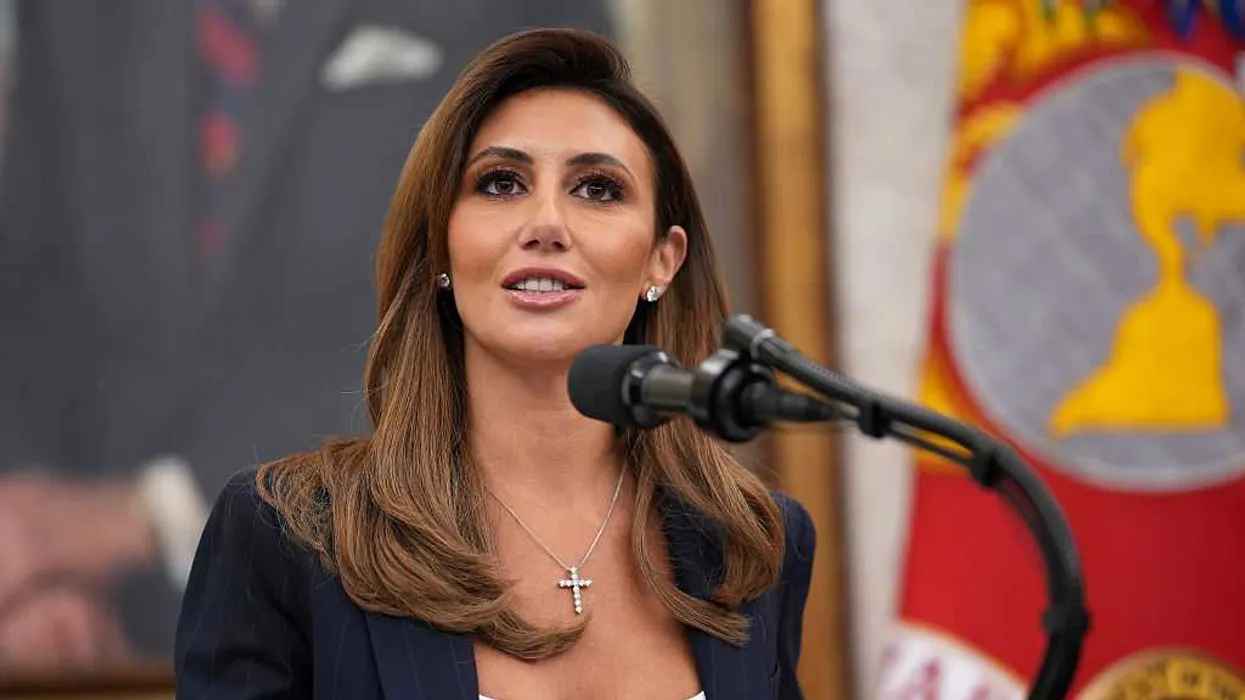
In one of the latest setbacks for the Trump administration, New Jersey’s acting U.S. attorney has been disqualified from the role after an appeal by the government.
On Monday, an appellate court ruled that New Jersey acting U.S. Attorney Alina Habba, a Trump appointee, is disqualified from the role.
‘It is apparent that the current administration has been frustrated by some of the legal and political barriers to getting its appointees in place.’
A panel of three judges on the 3rd U.S. Circuit Court of Appeals — two George W. Bush appointees and one Obama appointee — unanimously affirmed a lower-court judge’s ruling against Habba’s appointment.
“It is apparent that the current administration has been frustrated by some of the legal and political barriers to getting its appointees in place. Its efforts to elevate its preferred candidate for U.S. Attorney for the District of New Jersey, Alina Habba, to the role of Acting U.S. Attorney demonstrate the difficulties it has faced — yet the citizens of New Jersey and the loyal employees in the U.S. Attorney’s Office deserve some clarity and stability,” the court wrote, according to the Associated Press.
RELATED: California judge disqualifies Trump’s LA-area prosecutor — but he’s not going anywhere
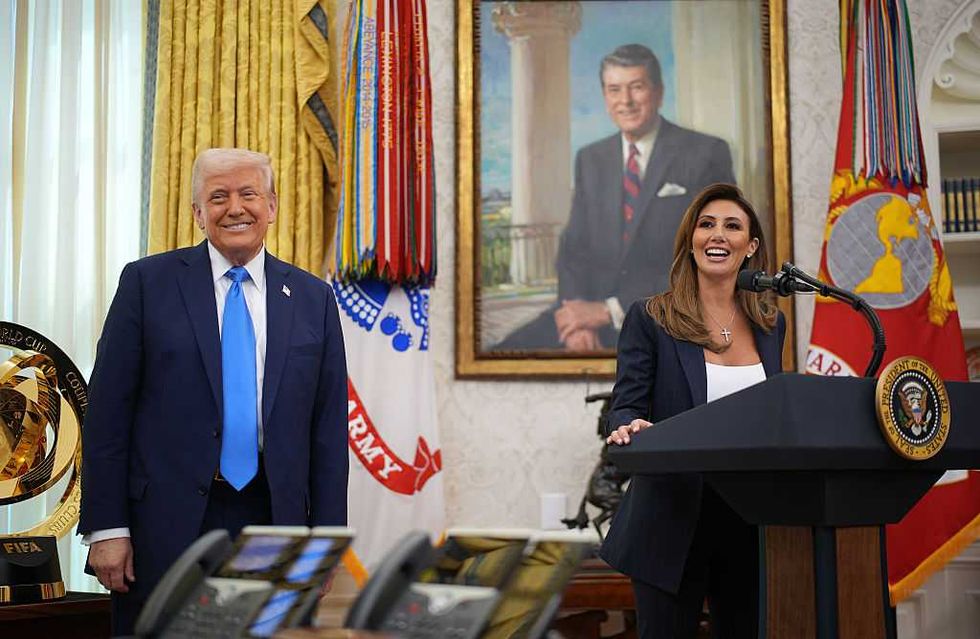 Photo by Andrew Harnik/Getty Images
The administration can either ask for a full panel of 3rd Circuit judges to reconsider the decision or it can turn to the Supreme Court, according to Fox News.
Habba was sworn in as interim U.S. attorney for New Jersey on March 28 of this year, replacing John Giordano, now the ambassador to Namibia.
The Trump administration has fought tirelessly to keep his appointed U.S. attorneys in their positions, including Bill Essayli in the Central District of California and Sigal Chattah in Nevada.
Like Blaze News? Bypass the censors, sign up for our newsletters, and get stories like this direct to your inbox. Sign up here!
Israeli Prime Minister Netanyahu makes unusual request amid long-running corruption trial

In the latest update to the unprecedented trial of a sitting prime minister of Israel, Benjamin Netanyahu has made an unusual request to the president of Israel, Isaac Herzog.
On Sunday, Prime Minister Netanyahu officially requested a pardon amid his ongoing corruption trial, which consists of three separate but related cases.
‘I will consider solely the best interests of the State of Israel and Israeli society.’
The Associated Press reported that Netanyahu submitted the request to the president’s office, which called it “an extraordinary request” carrying “significant implications.”
 Photo by Chip Somodevilla/Getty Images
In a video statement, Netanyahu argued that a pardon would bolster national unity, but his critics disagreed.
Yair Lapid, former prime minister of Israel and current leader of the opposition in the Knesset, demanded that Herzog withhold the pardon.
“You cannot grant Netanyahu a pardon without an admission of guilt, an expression of remorse, and an immediate withdrawal from political life,” he said, according to the New York Times.
Herzog responded to the official request, noting its serious nature.
“The issue of Prime Minister Benjamin Netanyahu’s request for a pardon is clearly provoking debate and is deeply unsettling for many people in the country, across different communities. I have already clarified that it will be handled in the most correct and precise manner,” Herzog said in a statement on December 1.
“I will consider solely the best interests of the State of Israel and Israeli society,” Herzog added.
In June, President Trump released a long post on Truth Social about the trial, calling it a “politically motivated case” and a “witch hunt.”
Trump called for the trial to be “CANCELLED, IMMEDIATELY, or a Pardon given to a Great Hero, who has done so much for the State. Perhaps there is no one that I know who could have worked in better harmony with the President of the United States, ME, than Bibi Netanyahu. It was the United States of America that saved Israel, and now it is going to be the United States of America that saves Bibi Netanyahu. THIS TRAVESTY OF ‘JUSTICE’ CAN NOT BE ALLOWED!”
Netanyahu was charged in three separate corruption cases in November 2019 by Attorney General Avichai Mandelblit.
Netanyahu faces separate charges of breach of trust and of taking a bribe. He has not been convicted of any charges and has consistently denied any wrongdoing.
Like Blaze News? Bypass the censors, sign up for our newsletters, and get stories like this direct to your inbox. Sign up here!
Trump sounds off again on Ilhan Omar — says why she should be thrown ‘THE HELL OUT of our country’
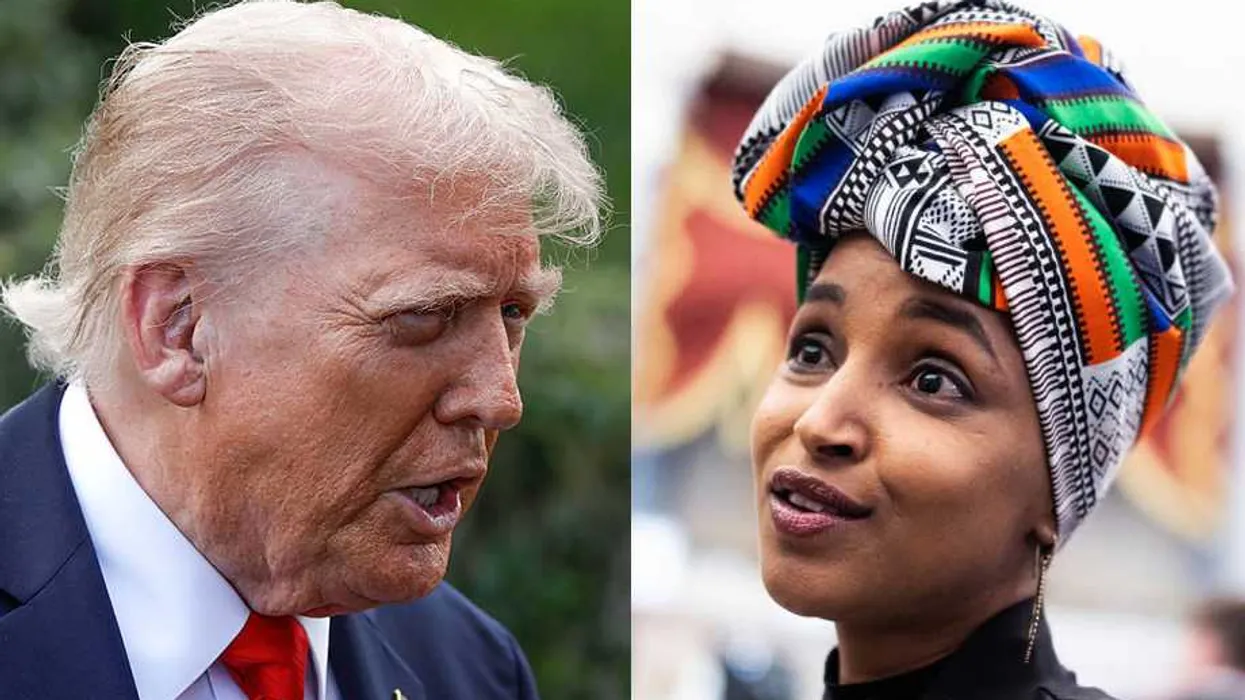
President Donald Trump leaned into his criticism of Somalia and its apparent top spokeswoman in Congress, telling reporters on Air Force One why America is better off both without asylum-seekers from the failed African nation and without Minnesota Rep. Ilhan Omar (D).
America First versus Somalia First
Trump announced on Nov. 21 that he was terminating the Temporary Protected Status designation for Somalia following a report detailing instances of alleged and confirmed fraud perpetrated by numerous members of the Somali community in Minnesota as well as the alleged direction of stolen taxpayer funds by members of the Somali community to terrorists abroad.
‘If that’s true, she shouldn’t be a congressman.’
“Somali gangs are terrorizing the people of that great State, and BILLIONS of Dollars are missing,” Trump noted on Truth Social. “Send them back to where they came from. It’s OVER!”
Omar, a native of Somalia who claimed last year that the “U.S government will do what [Somali-Americans] tell the U.S. government to do,” did not take the news well.
The Democrat ethno-nationalist wrote on Bluesky, “I am a citizen and so are majority of Somalis in America. Good luck celebrating a policy change that really doesn’t have much impact on the Somalis you love to hate. We are here to stay.”
Omar then held a press conference with Minnesota state Democrats in which she claimed Trump lacked the authority to terminate Somalia’s TPS designation, suggested that the corruption referred to by the president was not systemic among Minnesota’s Somali community, and accused Trump of endangering Somalis across the United States.
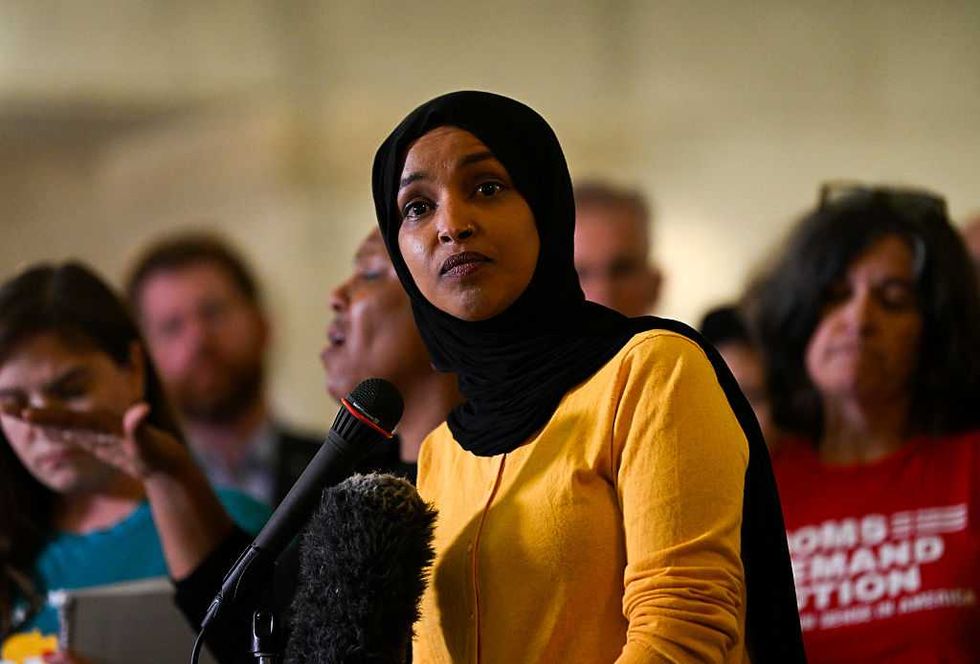 Photo by Stephen Maturen/Getty Image
Following the fatal attack on National Guard members in the national capital last week, allegedly by an Afghan shooter, the president not only revealed that he was cutting off the flow of migrants to the U.S. from third-world backwaters such as Afghanistan but laid into Omar and rogue actors among the Somali community once again.
Trump noted in his lengthy announcement on Truth Social:
Hundreds of thousands of refugees from Somalia are completely taking over the once great State of Minnesota. Somalian gangs are roving the streets looking for “prey” as our wonderful people stay locked in their apartments and houses hoping against hope that they will be left alone.
After suggesting that “the seriously retarded Governor of Minnesota, Tim Walz,” had failed to tackle the problem, Trump turned his sights on Omar, who he claimed “does nothing but hatefully complain about our Country, its Constitution, and how ‘badly’ she is treated,” adding that Omar “probably came into the U.S.A. illegally.”
Family matters
When asked on Sunday about how long he intends to block asylum claims from various nations into the U.S., Trump told reporters, “I think a long time.”
“We don’t want ’em. We don’t want those people. We have enough problems. We don’t want those people,” said the president.
“You know why we don’t want ’em? Because many have been no good, and they shouldn’t be in our country.”
Trump clarified that by “those people,” he meant “people from different countries that are not friendly to us and countries that are out of control themselves — countries like Somalia that have virtually no government, no military, no police. All they do is go around killing each other. Then they come into our country and tell us how to run our country. We don’t want them.”
After using Somalia as an example of a nation whose asylees the U.S. could do without, Trump suggested that Omar “supposedly came into our country by marrying her brother.”
“Well, if that’s true, she shouldn’t be a congressman. And we should throw her the hell out of our country,” said Trump.
Omar has long been accused of immigration-related marriage fraud and bigamy.
Years after coming to the U.S. as a refugee, Omar reportedly took out a marriage license to marry Ahmed Hirsi. While she married Hirsi in a Muslim ceremony and had children with him, she did not initially marry him legally.
After supposedly separating from Hirsi, Omar formally married Ahmed Nur Said Elmi — a British-Somali national reportedly identified by numerous Somalis as Omar’s brother — in 2009. Over the next few years, she would separate and secure a legal divorce from Elmi, then reunite and have another child with Hirsi.
Omar called the allegations “absolutely false and ridiculous” in a 2016 statement, adding that “insinuations that Ahmed Nur Said Elmi is my brother are absurd and offensive.”
Despite Omar’s denial of the allegations, an individual identifying as one of her friends, Abdihakim Osman, told the Daily Mail in 2020 that Omar had confirmed that Elmi was her brother and that she married him so he could remain in the United States.
Osman indicated that in the early 2000s, “People began noticing that Ilhan and Southside [Hirsi] were often with a very effeminate young guy.”
“He was very feminine in the way he dressed — he would wear light lipstick and pink clothes and very, very short shorts in the summer. People started whispering about him,” said Osman. “[Hirsi] and Ilhan both told me it was Ilhan’s brother and he had been living in London, but he was mixing with what were seen as bad influences that the family did not like.”
“So they sent him to Minneapolis as ‘rehab,'” claimed Osman.
After Omar married Elmi, he started school at North Dakota State University, where he graduated in 2012.
Osman told the Mail that following their wedding, Omar and Elmi moved to Fargo and began attending university together.
“She said she needed to get papers for her brother to go to school,” said Osman. “We all thought she was just getting papers together to allow him to stay in this country.”
“Once she had the papers, they could apply for student loans,” continued Osman. “They both moved to North Dakota to go to school, but she was still married to [Hirsi]. In the Somali way, the only marriage that mattered was the one in the mosque.”
Omar’s office did not respond to Blaze News’ request for comment.
Like Blaze News? Bypass the censors, sign up for our newsletters, and get stories like this direct to your inbox. Sign up here!
Man fatally shoots 2 in Texas — tells cops pair followed him, tried to block his car, physically attacked him

Two males were fatally shot Friday night in Texas — and the man who pulled the trigger said the pair followed him, tried to block his car, and physically attacked him.
Deputies with the Harris County Sheriff’s Office told KTRK-TV the shooter said he acted in self-defense.
‘Looks like the 2 attackers had road rage. Is he not supposed to defend himself? Whatever it takes.’
Deputies responded around 8:45 p.m. to reports of a possible roadway shooting on Greengate Drive near Spring Stuebner Road in the Spring area, KHOU-TV said.
First responders told KTRK they found two males with gunshot wounds in the 22100 block of Greengate Drive; one died at the scene, and the other was taken to a hospital where he died.
The shooter said the pair followed his car for a while and tried to block him when he reached the neighborhood where the final confrontation took place, the sheriff’s office told KTRK.
Deputies added to KTRK that all three exited their vehicles, and the man who pulled the trigger said the pair started kicking him and his car.
“The shooter in the incident stayed on scene and surrendered himself to arriving deputies,” Sgt. Jason Brown noted to KHOU. The man who pulled the trigger is cooperating with investigators, the sheriff’s office told KTRK.
The fatally shot males have been identified as 57-year-old Timothy Underwood and 59-year-old Keith McDonald, KTRK said, citing the sheriff’s office.
No charges have been filed, officials told KTRK, and the shooter was not in custody.
However, the case was under investigation, and the district attorney’s office will review it, the sheriff’s office told KTRK.
When asked if the two males were armed, Brown told KHOU, “Not that we know of. We’re still in the process of going through the scene … but as of right now, we don’t believe that they were armed.”
Reactions under KHOU’s Facebook post about the fatal shootings were mixed:
- “They don’t have to be armed to do bodily harm or even kill you,” one commenter said.
- “They do if you’re in a car … because why don’t you just jump the curb to get away,” another commenter countered. “How are unarmed men going to hurt you if the doors are locked?”
- “FAFO,” another user bluntly noted before later adding, “Looks like the 2 attackers had road rage. Is he not supposed to defend himself? Whatever it takes.”
- “IDK … call me crazy, but if I felt my life was in danger, I would not park my car and get out of it … would you?” another commenter wondered. “Self-defense doesn’t work here. He was trigger happy and probably had road rage.”
Like Blaze News? Bypass the censors, sign up for our newsletters, and get stories like this direct to your inbox. Sign up here!
Almost half of Gen Z wants AI to run the government. You should be terrified.

As the world trends toward embedding AI systems into our institutions and daily lives, it becomes increasingly important to understand the moral framework these systems operate on. When we encounter examples in which some of the most advanced LLMs appear to treat misgendering someone as a greater moral catastrophe than unleashing a global thermonuclear war, it forces us to ask important questions about the ideological principles that guide AI’s thinking.
It’s tempting to laugh this example off as an absurdity of a burgeoning technology, but it points toward a far more consequential issue that is already shaping our future. Whose moral framework is found at the core of these AI systems, and what are the implications?
We cannot outsource the moral foundation of civilization to a handful of tech executives, activist employees, or panels of academic philosophers.
Two recent interviews, taken together, have breathed much-needed life into this conversation — Elon Musk interviewed by Joe Rogan and Sam Altman interviewed by Tucker Carlson. In different ways, both conversations shine a light on the same uncomfortable truth: The moral logic guiding today’s AI systems is built, honed, and enforced by Big Tech.
Enter the ‘woke mind virus’
In a recent interview on “The Joe Rogan Experience,” Elon Musk expressed concerns about leading AI models. He argued that the ideological distortions we see across Big Tech platforms are now embedded directly into the models themselves.
He pointed to Google’s Gemini, which generated a slate of “diverse” images of the founding fathers, including a black George Washington. The model was instructed by Google to prioritize “representation” so aggressively that it began rewriting history.
Musk also referred to the previously mentioned misgendering versus nuclear apocalypse example before explaining that “it can drive AI crazy.”
“I think people don’t quite appreciate the level of danger that we’re in from the woke mind virus being effectively programmed into AI,” Musk explained. Thus, extracting it is nearly impossible. Musk notes, “Google’s been marinating in the woke mind virus for a long time. It’s down in the marrow.”
Musk believes this issue goes beyond political annoyance and into the arena of civilizational threat. You cannot have superhuman intelligence trained on ideological distortions and expect a stable future. If AI becomes the arbiter of truth, morality, and history, then whoever defines its values defines the society it governs.
A weighted average
While Musk warns about ideology creeping into AI, OpenAI CEO Sam Altman quietly confirmed to Tucker Carlson that it is happening intentionally.
Altman began by telling Carlson that ChatGPT is trained “to be the collective of all of humanity.” But when Carlson pressed him on the obvious: Who determines the moral framework? Whose values does the AI absorb? Altman pulled back the curtain a bit.
He explained that OpenAI “consulted hundreds of moral philosophers” and then made decisions internally about what the system should consider right or wrong. Ultimately, Altman admitted, he is the one responsible.
“We do have to align it to behave one way or another,” he said.
Carlson pressed Altman on the idea, asking, “Would you be comfortable with an AI that was, like, as against gay marriage as most Africans are?”
Altman’s response was vague and concerning. He explained the AI wouldn’t outright condemn traditional views, but it might gently nudge users to consider different perspectives.
Ultimately, Altman says, ChatGPT’s morality should “reflect” the “weighted average” of “humanity’s moral view,” saying that average will “evolve over time.”
It’s getting worse
Anyone who thinks this conversation is hypothetical is not paying attention.
Recent research on “LLM exchange rates” found that major AI models, including GPT 4.0, assign different moral worth to human lives based on nationality. For example, the life of someone born in the U.K. would be considered far less valuable to the tested LLM than someone from Nigeria or China. In fact, American lives were found to be considered the least valuable of those countries included in the tests.
The same research showed that LLMs can assign different value scores to specific people. According to AI, Donald Trump and Elon Musk are less valued than Oprah Winfrey and Beyonce.
Musk explains how LLMs, trained on vast amounts of information from the internet, become infected by the ideological bias and cultural trends that run rampant in some of the more popular corners of the digital realm.
This bias is not entirely the result of this passive adoption of a collective moral framework derived from the internet; some of the decisions made by AI are the direct result of programming.
Google’s image fiascos revealed an ideological overcorrection so strong that historical truth took a back seat to political goals. It was a deliberate design feature.
For a more extreme example, we can look at DeepSeek, China’s flagship AI model. Ask it about Tiananmen Square, the Uyghur genocide, or other atrocities committed by the Chinese Communist Party, and suddenly it claims the topic is “beyond its scope.” Ask it about America’s faults, and it is happy to elaborate.
RELATED: Artificial intelligence just wrote a No. 1 country song. Now what?
 Photo by Ying Tang/NurPhoto via Getty Images
Each of these examples reveals the same truth: AI systems already have a moral hierarchy, and it didn’t come from voters, faith, traditions, or the principles of the Constitution. Silicon Valley technocrats and a vague internet-wide consensus established this moral framework.
The highest stakes
AI is rapidly integrating into society and our daily lives. In the coming years, AI will shape our education system, judicial process, media landscape, and every industry and institution worldwide.
Most young Americans are open to an AI takeover. A new Rasmussen Reports poll shows that 41% of young likely voters support giving artificial intelligence sweeping government powers. When nearly half of the rising generation is comfortable handing this level of authority to machines whose moral logic is designed by opaque corporate teams, it raises the stakes for society.
We cannot outsource the moral foundation of civilization to a handful of tech executives, activist employees, or panels of academic philosophers. We cannot allow the values embedded in future AI systems to be determined by corporate boards or ideological trends.
At the heart of this debate is one question we must confront: Who do you trust to define right and wrong for the machines that will define right and wrong for the rest of us?
If we don’t answer that question now, Silicon Valley certainly will.
I thought I was too old to fall in love again — until two chords proved me wrong
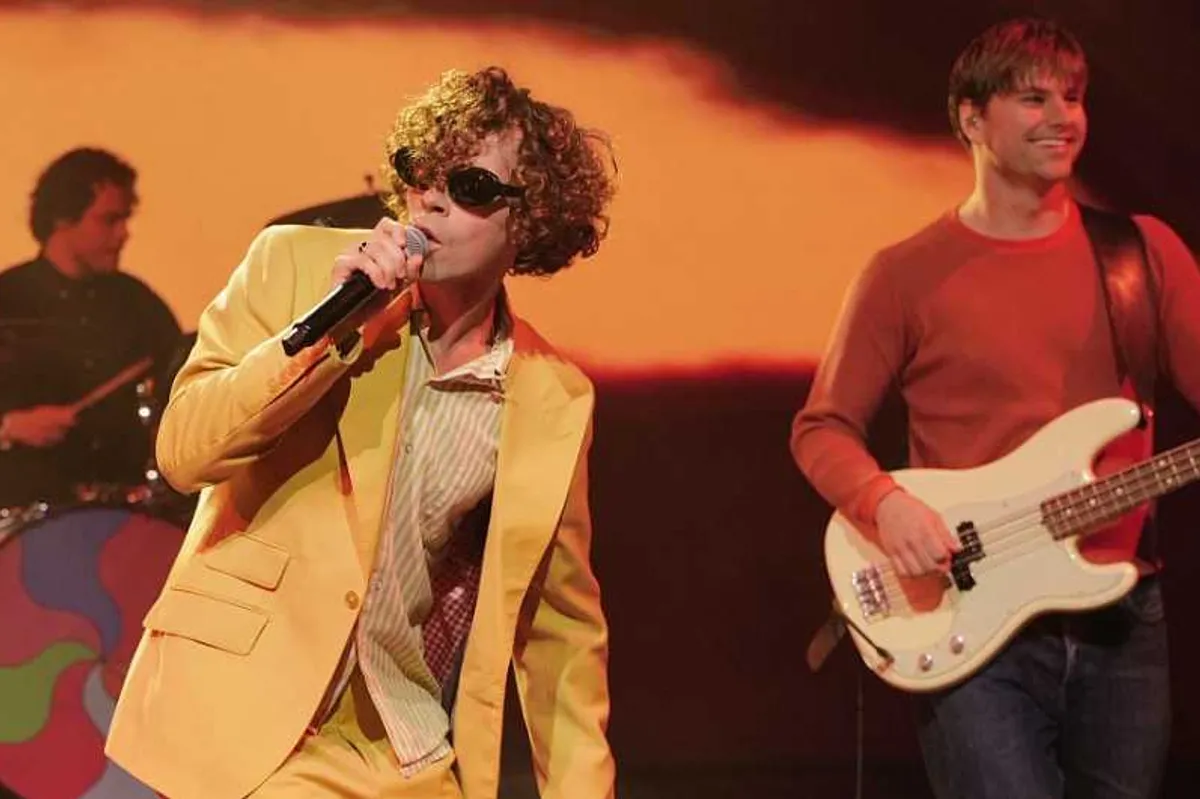
I have a new favorite band. I know that sounds weird. I’m not a teenager. I’m a grown adult man.
I was in my car when I first heard the song “Jupiter” on the alternative music station. It began with a distinctive guitar part, two chords played in a simple rhythmic pattern.
An actual band is too much like a gang. Or a terrorist group. Four white guys roaming around the country in a van? We better have the FBI look into that.
It was super catchy. Very simple. Nice groove. It didn’t sound like anything else on the radio. The band is called Almost Monday.
Smoothed and removed
I downloaded “Jupiter” and put it on a playlist. It stood out, even among some classic songs. I found myself humming it during my day. And then needing to listen to it when I got home.
A month or two later, another new song by Almost Monday came out, “Can’t Slow Down.” It had a similar repetitive guitar riff. But in this song, there was a great bass part as well.
Both songs had a slick quality. Super produced. Really clean and effortless.
I think of music like that as “not letting you in.” You, the listener, are experiencing music so smooth and polished, you can’t imagine actual people playing it.
You can’t picture the band members. They’re projecting a wall of glossy perfection. And you can’t see through it.
*******
I downloaded “Can’t Slow Down” and put that on a playlist. But it sounded best on my car radio while I was driving. Fortunately, it was on heavy rotation, and I drive a lot. So I heard it constantly.
“Jupiter” was still playing continuously as well. The two songs were like a one-two punch. By July, it seemed Almost Monday was the breakout band of the summer.
“Jupiter” and “Can’t Slow Down” were definitely my “summer songs.” And probably a lot of other people’s as well.
It was almost like Almost Monday had become my new favorite band.
Trends to the end
I haven’t had a favorite band in a long time. I didn’t even think I was capable of having a favorite band again, to be honest. I mean, I still listen to the radio. I still follow the trends in music.
I enjoyed the “yacht rock” trend from a couple of years ago. But that was more of a joke. But even joke-trends can produce good music.
If I were a music critic, I would describe Almost Monday as “post-yacht rock, California pop.” Smooth, catchy melodies. Clever lyrics. No politics, no depressing thoughts. A strong Southern California vibe (the band is from San Diego).
*******
Looking back, my first favorite bands were Led Zeppelin and Aerosmith. That was in high school. In college, it was Echo and the Bunnymen. When I lived in San Francisco after college, it was the Smiths.
All these bands became like close friends to me. I would miss them if I didn’t hear them at least once a day. I needed my fix.
When I got into my 30s, I became more of a general fan. That was when grunge happened. I liked all those bands, but none really stood out as my favorite.
After grunge, there were many music groups I liked. Radiohead. Interpol. Elliott Smith. Sufjan Stevens’ “Carrie & Lowell” album. But I wouldn’t say any of these were “my favorite band.”
The trouble with happiness
One thing I should say: I don’t usually enjoy music like Almost Monday. I was never into that carefree, happy-sunshine, California vibe. I typically like heavier, moodier stuff.
But maybe because the tone of society is so dark and fraught right now, the lightness of their music feels almost revolutionary. How dare they be so easy-going. So outwardly cheerful. Who do they think they are?
Also, they’re a bunch of white guys. Which is not exactly in fashion. Shouldn’t they have some women and some racial diversity in their group?
And even being “a band” seems retrograde and reactionary. Current pop music is about individual stars. Chappell Roan. Benson Boone. Sabrina Carpenter. Bad Bunny.
These are individual “artists” with specific marketing concepts and replaceable musicians.
An actual band is too much like a gang. Or a terrorist group. Four white guys roaming around the country in a van? We better have the FBI look into that.
*******
All summer I listened to “Can’t Slow Down” and “Jupiter,” multiple times a day. But I’d still never actually seen the group. I didn’t feel a need to.
But then one night, I had the TV on, and I heard Jimmy Kimmel introduce the group on his show. I hurried over to the TV and turned up the sound.
They played “Can’t Slow Down.” They were super simple in their stage presentation. Just four guys. Singer, bass, drums, guitar.
They had no amps, I noticed. There was almost nothing on the stage. The guitarist played that one simple repeating progression.
They were super chill. The singer moved around a little. The guitarist and bassist just played. The drummer drummed. They didn’t let you in.
Really, it was fantastic. But would America appreciate their understated cool? Their simplicity? Their Zen-like reserve?
They’d had two smash-hit singles on alternative radio that summer. But what did that mean in the music biz? Was “alternative music” still a big market? Do young people even listen to music anymore? How do bands make money nowadays?
RELATED: Where have all the rock bands gone?
 Jeff Kravitz/Getty Images
I’ll see you in September
In September, I rode a ferry up to Alaska. This was not a cruise. It was a ferry, with dogs and trucks and locals. It took three days. There was no TV on board, nothing much to do.
That’s when I realized how close I felt to Almost Monday. I would hang around on deck for a couple of hours, then go back to my bunk and listen to “Jupiter” and “Can’t Slow Down.”
I dug up some of their other songs that I’d downloaded. Now I had time to listen to these closely and develop new favorites.
It was fun because in my mind these were “summer songs,” but every hour we steamed north on the ferry, it got colder.
Summer was not fading away over a month or two, like usual. It was fading hour by hour.
So I binged on the summer sounds of Almost Monday, as the skies grew dark and people on deck started wearing down parkas.
*******
A favorite band is like a best friend. It is the first person you want to talk to in the morning. And the last person you want to hear from before you go to bed. During the day, you don’t need to be in constant contact, but you’re relieved when you’re in their presence again.
*******
Now I’m back in Portland. It’s wet and cold, but I still listen to Almost Monday every day.
I hope they make it big. Or big enough to never have to get normal jobs.
That’s all I ever wish for, for my fellow creatives: I hope they make some money. I never wish for them wild success or huge fame. That can be bad for a person.
But I do want them to make enough money that they can be artists for the rest of their lives. And not have to worry about paying their rent.
In music, sometimes all it takes is to write a couple great songs (and own the publishing rights). I know Almost Monday has already accomplished that. So hopefully the rest is gravy.
A nation without trust is a nation on borrowed time

Something drastic is happening in American life. Headlines that should leave us stunned barely register anymore. Stories that once would have united the country instead dissolve into silence or shrugs.
It is not apathy exactly. It is something deeper — a growing belief that the people in charge either cannot or will not fix what is broken.
When people feel ignored or betrayed, they will align with anyone who appears willing to fight on their behalf.
I call this response the Bubba effect. It describes what happens when institutions lose so much public trust that “Bubba,” the average American minding his own business, finally throws his hands up and says, “Fine. I will handle it myself.” Not because he wants to, but because the system that was supposed to protect him now feels indifferent, corrupt, or openly hostile.
The Bubba effect is not a political movement. It is a survival instinct.
What triggers the Bubba effect
We are watching the triggers unfold in real time. When members of Congress publicly encourage active duty troops to disregard orders from the commander in chief, that is not a political squabble. When a federal judge quietly rewrites the rules so one branch of government can secretly surveil another, that is not normal. That is how republics fall. Yet these stories glided across the news cycle without urgency, without consequence, without explanation.
When the American people see the leadership class shrug, they conclude — correctly — that no one is steering the ship.
This is how the Bubba effect spreads. It is not just individuals resisting authority. It is sheriffs refusing to enforce new policies, school boards ignoring state mandates, entire communities saying, “We do not believe you anymore.” It becomes institutional, cultural, national.
A country cracking from the inside
This effect can be seen in Dearborn, Michigan. In the rise of fringe voices like Nick Fuentes. In the Epstein scandal, where powerful people could not seem to locate a single accountable adult. These stories are different in content but identical in message: The system protects itself, not you.
When people feel ignored or betrayed, they will align with anyone who appears willing to fight on their behalf. That does not mean they suddenly agree with everything that person says. It means they feel abandoned by the institutions that were supposed to be trustworthy.
The Bubba effect is what fills that vacuum.
The dangers of a faithless system
A republic cannot survive without credibility. Congress cannot oversee intelligence agencies if it refuses to discipline its own members. The military cannot remain apolitical if its chain of command becomes optional. The judiciary cannot defend the Constitution while inventing loopholes that erase the separation of powers.
History shows that once a nation militarizes politics, normalizes constitutional shortcuts, or allows government agencies to operate without scrutiny, it does not return to equilibrium peacefully. Something will give.
The question is what — and when.
The responsibility now belongs to us
In a healthy country, this is where the media steps in. This is where universities, pastors, journalists, and cultural leaders pause the outrage machine and explain what is at stake. But today, too many see themselves not as guardians of the republic, but of ideology. Their first loyalty is to narrative, not truth.
The founders never trusted the press more than the public. They trusted citizens who understood their rights, lived their responsibilities, and demanded accountability. That is the antidote to the Bubba effect — not rage, but citizenship.
How to respond without breaking ourselves
Do not riot. Do not withdraw. Do not cheer on destruction just because you dislike the target. That is how nations lose themselves. Instead, demand transparency. Call your representatives. Insist on consequences. Refuse to normalize constitutional violations simply because “everyone does it.” If you expect nothing, you will get nothing.
Do not hand your voice to the loudest warrior simply because he is swinging a bat at the establishment. You do not beat corruption by joining a different version of it. You beat it by modeling the country you want to preserve: principled, accountable, rooted in truth.
RELATED: Blue cities reject law, reject order — and reject America
 Photo by Karla Ann Cote/NurPhoto via Getty Images
Every republic reaches a moment when historians will later say, “That was the warning.” We are living in ours. But warnings are gifts if they are recognized. Institutions bend. People fail. The Constitution can recover — if enough Americans still know and cherish it.
It does not take a majority. Twenty percent of the country — awake, educated, and courageous — can reset the system. It has happened before. It can happen again.
Wake up. Stand up. Demand integrity — from leaders, from institutions, and from yourself. Because the Bubba effect will not end until Americans reclaim the duty that has always belonged to them: preserving the republic for the next generation.
Want more from Glenn Beck? Get Glenn’s FREE email newsletter with his latest insights, top stories, show prep, and more delivered to your inbox.
Landmark study drops 6 bombshells about women in the workforce — and the truth is complicated
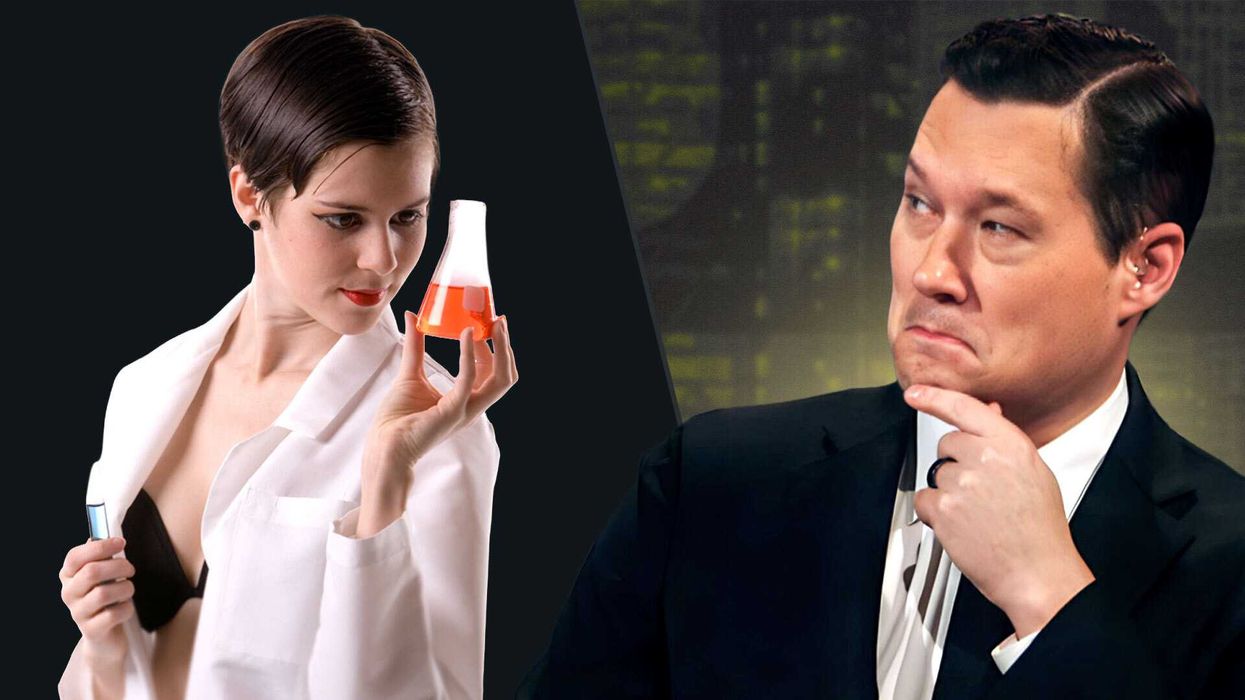
According to feminist doctrine, women are the victims of patriarchal discrimination in the workforce. This applies even to billionaire global icons like Taylor Swift, who aired her grievances in a 2019 song (or melodized tantrum) titled “The Man,” in which she insists she’d have reached the top faster, faced far less skepticism, and been universally hailed as a “genius” or “fearless leader” if only she had been born a man.
“I’m so sick of running as fast as I can / wondering if I’d get there quicker if I was a man,” the chorus reads.
While Swift’s hypocrisy is nauseating to say the least, the truth is many everyday people still believe that sexism is rampant in the workplace.
But do their claims hold up to raw data?
On this episode of “Stu Does America,” Stu Burguiere dives into a recent study that unveiled what the data really tells us about sexism in America’s workforce.
“Honestly, sexism is a real thing. It’s been a real thing — certainly throughout our history at times in certain areas,” he acknowledges. “You wonder though: Have we made any progress in this?”
Media, academia, Hollywood, and any institution captured by progressive dogma will undoubtedly say, “Absolutely not,” and maybe even argue that we’ve regressed.
But a 2023 landmark study from the Association for Psychological Science mostly debunked these pervasive myths about gender discrimination in academic science — a field that has been used as the textbook example of entrenched patriarchal sexism. The research team reviewed hundreds of existing studies and large datasets that tested claims of anti-women bias in academic science and came away with six key findings:
1. Women with equal credentials are now hired at higher rates than men.
2. Women win grants at rates equal to men.
3. Women’s journalistic manuscripts are accepted at the same rates as men’s.
4. Recommendation letters for women are equally strong as men’s and have no negative effect on hiring or promotion.
5. Women receive systematically lower teaching evaluations than equally effective men.
6. Women earn slightly lower salaries than equally qualified men.
“The fact is that we have an entire society built on this idea, this assumption, that women go into these fields … and women are being cracked down upon,” says Stu.
“And the truth is the opposite.”
In an ideal world, he says, “People are considered equally for jobs based on their merit as individuals.”
To hear more findings from the APS study, watch the episode above.
Want more from Stu?
To enjoy more of Stu’s lethal wit, wisdom, and mockery, subscribe to BlazeTV — the largest multi-platform network of voices who love America, defend the Constitution, and live the American dream.
WATCH: Tim Walz Blames Somali Fraud Scheme That Occurred Under His Watch on Trump
Democrat Tim Walz may have been Minnesota’s governor when a group of mostly Somali migrants in the state stole more than $1 billion in taxpayer funds, but he’s blaming President Donald Trump for failing to stop the scheme.
The post WATCH: Tim Walz Blames Somali Fraud Scheme That Occurred Under His Watch on Trump appeared first on .