

Category: Blaze Media
‘Shut the f**k up’: White House hammers New Yorker writer for trivializing National Guard members’ sacrifice

Two West Virginia National Guardsmen patrolling the national capital were shot the day before Thanksgiving, allegedly by a 29-year-old Afghan national who Homeland Security Secretary Kristi Noem indicated “was one of the many unvetted, mass paroled into the United States under Operation Allies Welcome on September 8, 2021, under the Biden Administration.”
While 24-year-old U.S. Air Force Staff Sgt. Andrew Wolfe is reportedly still fighting for his life, Army Spc. Sarah Beckstrom succumbed to her wounds on Thursday evening.
“My baby girl has passed to glory,” the fallen guardsman’s father, Gary Beckstrom, noted in a Facebook post on Thursday. “… This has been a horrible tragedy.”
‘Apologize and repent.’
Amid the general outpouring of prayers and support for the victims and their families, the New Yorker magazine’s chief Washington correspondent, Jane Mayer, decided to publicly trivialize the military members’ sacrifice.
“This is so tragic, so unnecessary, these poor guardsmen should never have been deployed,” wrote Mayer. “I live in DC and watched as they had virtually nothing to do but pick up trash. It was a political show and at what a cost.”
Mayer’s apparent suggestion that the National Guardsman who died and others overseeing a historic and transformative decrease in violent crime in Washington, D.C., were glorified garbage pickers did not go over well with the American people and their White House.
White House communications director Steven Cheung, responding on X from his official account, wrote, “Jane, respectfully, shut the f**k up for trying to politicize this tragedy.
“They were protecting DC and trying to make the nation’s capital safer,” continued Cheung. “People like you who engage in ghoulish behavior lose all credibility. Not like you had any to begin with.”
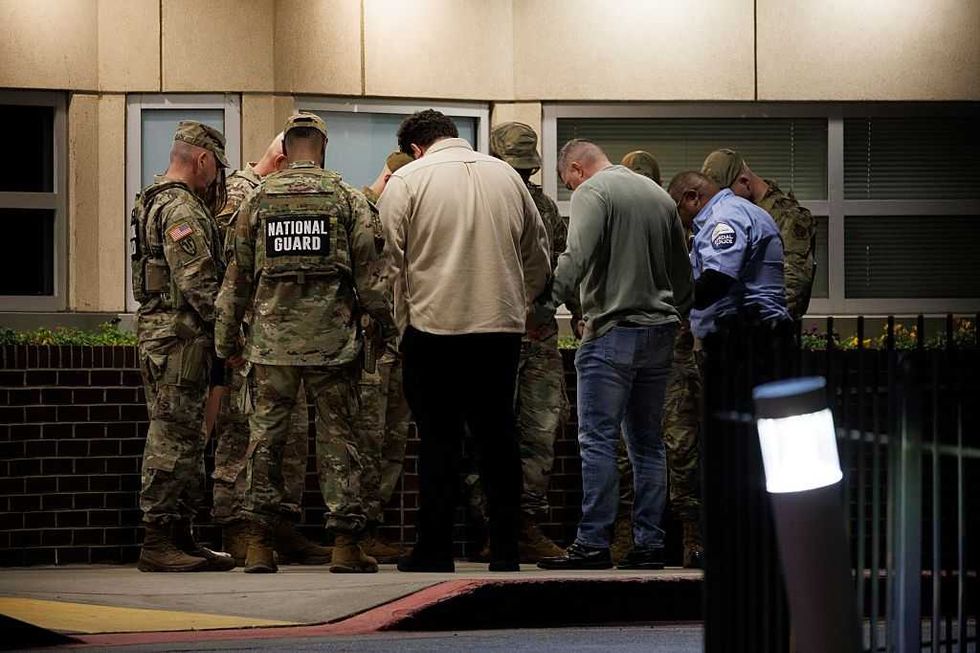 Military members and civilians pray outside the hospital where the two wounded National Guardsmen were taken. Photo by Tom Brenner for The Washington Post via Getty Images.
The official White House rapid response account similarly castigated the liberal journalist, writing, “You sick, disgusting ghoul. Two of these heroes were just SHOT IN BROAD DAYLIGHT. The Guard has saved countless lives — backed up by evidence (which you’re clearly too stupid to notice). They are American patriots.”
In August, President Donald Trump federalized the Metropolitan Police Department in Washington, D.C., and deployed the National Guard there in order to “re-establish law, order, and public safety” to a city that had a higher violent crime, murder, and robbery rate than all 50 states.
D.C. immediately witnessed a dramatic drop in crime.
There was a 44% decrease in violent crime in the first three weeks of the anti-crime initiative when compared to the same stretch the previous year and a 27% drop in crime from Aug. 11 through Oct. 15 relative to the same period in 2024. In addition to saving lives, the reduction in crime led to savings of over $450 million as of Nov. 4, according to the America First Policy Institute.
The White House was not alone in its disgust over Mayer’s remarks.
Georgia Rep. Mike Collins (R) responded, “Apologize and repent.”
“Stop supporting the murder of American soldiers,” wrote BlazeTV host Auron MacIntyre.
Florida Attorney General James Uthmeier (R) wrote, “All these sick people on the Left do is blame the victims. I’m thankful for our guardsmen and praying for them and their families as they keep protecting the peace.”
While others similarly bashed Mayer over her rush to politicize the attack on the guardsmen by a suspect apparently imported by the Biden administration, some critics refuted the New Yorker writer’s narrative by providing accounts of critical actions taken by the National Guard in the District of Columbia.
For instance, Wallace White, a reporter at the Daily Caller News Foundation, noted, “On my walk back from work a few weeks back, a man was dangling off the ledge of the metro tracks at Farragut West clearly trying to commit suicide by train. If two national guardsmen weren’t there at the time, he’d be dead. These people are heroes.”
Logan Dobson, vice president of the political advertising agency Targeted Victory, noted that he lives in D.C. and that the city is safer thanks to the National Guard, adding on the basis of murder statistics, “Dozens of Washingtonians are alive today that wouldn’t be if not for the Guard.”
When confronted by Dobson with evidence of the drop in crime following the National Guard’s deployment to D.C., Mayer said, “I’ve covered crime in Washington since 1981- let’s skip the mansplaining. You can play with the stats but homicides were dropping before the troops got here.”
Like Blaze News? Bypass the censors, sign up for our newsletters, and get stories like this direct to your inbox. Sign up here!
Trump to ‘permanently pause’ migration from third-world backwaters in wake of National Guard member’s grisly murder

The Department of Homeland Security confirmed earlier this week that it was initiating a review of the hundreds of thousands of refugees imported by the Biden administration, citing evidence that many of the migrants were rushed into the homeland without adequate vetting.
While activists clutched pearls over the Trump administration’s new initiative to ensure that Americans today aren’t further endangered by decisions made by the previous administration, a 29-year-old man whom Homeland Security Secretary Kristi Noem confirmed was among the horde of migrants admitted from Afghanistan in 2021 allegedly drove across the U.S. and gunned down two members of the National Guard.
‘The seriously retarded Governor of Minnesota, Tim Walz, does nothing, either through fear, incompetence, or both.’
After the death of one of the victims, 20-year-old Army Spc. Sarah Beckstrom, U.S. Citizenship and Immigration Services indicated that it had halted the processing of all immigration requests pertaining to those Afghans previously brought into the U.S. “pending further review of security and vetting protocols.”
President Donald Trump made clear, however, that he intended to go far behind just pausing immigration requests, announcing that he will cut off the flow of migrants to the U.S. from third-world backwaters, seek to remove all noncitizens presently squatting in the homeland who are not presently making a positive contribution, and denaturalize those radicals who threaten American peace.
The president noted in a Truth Social post on Thursday evening that the country has been “divided, disrupted, carved up, murdered, beaten, mugged, and laughed at, along with certain other foolish countries throughout the World, for being ‘Politically Correct,’ and just plain STUPID, when it comes to Immigration.”
Trump suggested further that the foreign population — Current Population Survey data indicates that as of January 2025, the foreign-born or immigrant population was 53.3 million, 15.8% of the total — is not only heavily reliant on U.S. taxpayer-funded benefits but greatly contributing to “social dysfunction in America” as manifest in “failed schools, high crime, urban decay, overcrowded hospitals, housing shortages, and large deficits.”
RELATED: SHOCK: Trump administration finds Biden policies let in terrorists, including ISIS plotters
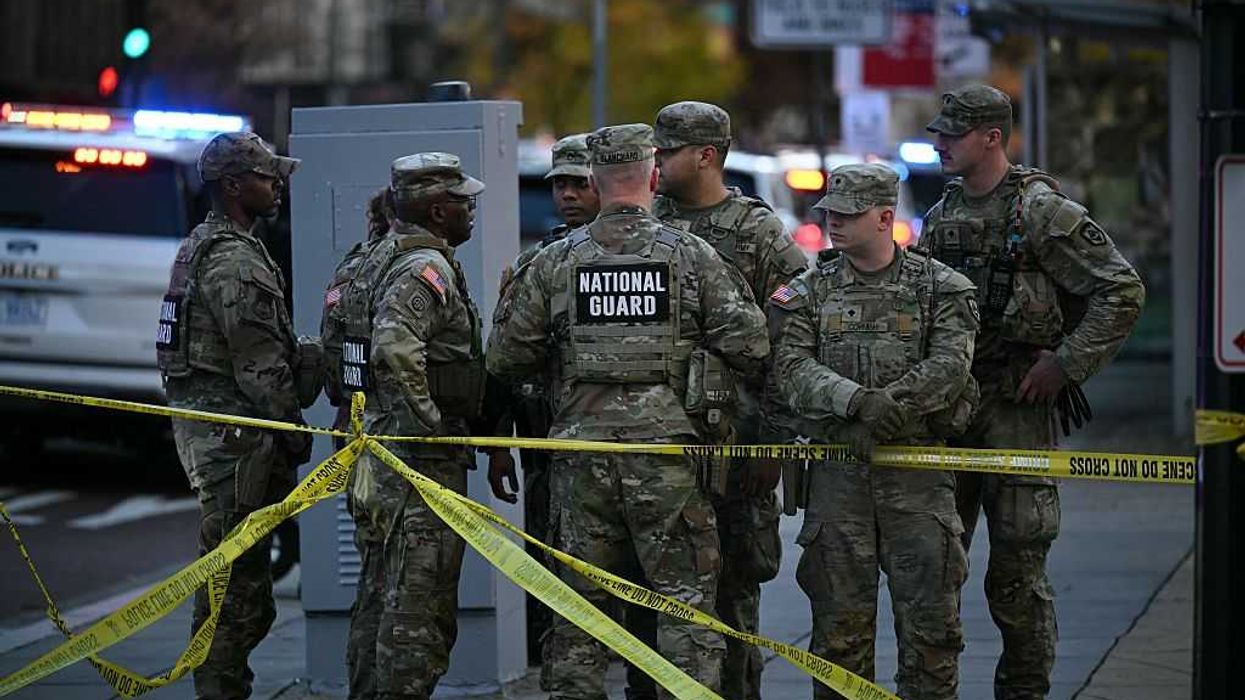 Photo by Drew ANGERER / AFP via Getty Images
The president pointed to the Gopher State for evidence of the “refugee burden,” noting that “hundreds of thousands of refugees from Somalia are completely taking over the once great State of Minnesota.”
Trump added:
Somalian gangs are roving the streets looking for “prey” as our wonderful people stay locked in their apartments and houses hoping against hope that they will be left alone. The seriously retarded Governor of Minnesota, Tim Walz, does nothing, either through fear, incompetence, or both, while the worst “Congressman/woman” in our Country, Ilhan Omar, always wrapped in her swaddling hijab, and who probably came into the U.S.A. illegally in that you are not allowed to marry your brother, does nothing but hatefully complain about our Country, its Constitution, and how “badly” she is treated, when her place of origin is a decadent, backward, and crime ridden nation, which is essentially not even a country for lack of Government, Military, Police, schools, etc.
Trump announced last week that he was terminating the Temporary Protected Status designation for Somalia following a report by BlazeTV host Christopher Rufo and investigative reporter Ryan Thorpe on the alleged fraud perpetrated by numerous members of the Somali community in Minnesota as well as on the alleged direction of stolen Minnesota Medicaid and welfare funds by members of the Somali community to terrorists abroad.
‘Only REVERSE MIGRATION can fully cure this situation.’
Minnesota Rep. Omar, who claimed last year that the “U.S government will do what [Somali-Americans] tell the U.S. government to do,” vowed in response to help members of her community avoid status revocation and removal.
Trump, however, emphasized in his Thanksgiving message that he is deadly serious about seeing America unyoked of its imported problems.
“I will permanently pause migration from all Third World Countries to allow the U.S. system to fully recover, terminate all of the millions of Biden illegal admissions, including those signed by Sleepy Joe Biden’s Autopen, and remove anyone who is not a net asset to the United States, or is incapable of loving our Country, end all Federal benefits and subsidies to noncitizens of our Country, denaturalize migrants who undermine domestic tranquility, and deport any Foreign National who is a public charge, security risk, or non-compatible with Western Civilization,” wrote the president.
“Only REVERSE MIGRATION can fully cure this situation,” wrote Trump. “HAPPY THANKSGIVING TO ALL, except those that hate, steal, murder, and destroy everything that America stands for — You won’t be here for long!”
Joe Edlow, the director of U.S. Citizenship and Immigration Services, noted Thursday in a post on X that at the direction of the president, he has “directed a full scale, rigorous reexamination of every Green Card for every alien from every country of concern.”
When asked for clarification, USCIS stated the countries of concern are those listed in Trump’s June 4 proclamation, namely: Afghanistan, Burma, Chad, Republic of the Congo, Equatorial Guinea, Eritrea, Haiti, Iran, Libya, Somalia, Sudan, Yemen, Burundi, Cuba, Laos, Sierra Leone, Togo, Turkmenistan, and Venezuela.
Like Blaze News? Bypass the censors, sign up for our newsletters, and get stories like this direct to your inbox. Sign up here!
If conservatives will not defend capitalism, who will?

In the aftermath of Zohran Mamdani’s electoral victory earlier this month, it became clear that socialism is a greater threat on the left than ever before. It is also clear that the GOP could no longer coast along by proclaiming, “Vote for us because he’s a socialist,” assuming that people would forever have a knee-jerk reaction to that word.
One issue that defined New York’s mayoral race — and increasingly politics throughout the country — is affordability. For millions of Americans, affording rent, groceries, health care, and a home seem further out of reach than ever before. The issue has been winked at by politicians across the spectrum for years around election time with precious little results to show for it.
Explaining to voters why they are wrong — or even worse, outright dismissing their concerns — has never worked politically, and that is not going to change now.
We have largely reached a point where this can no longer be avoided: We are now seeing regular releases of ever-worsening economic figures. The median age for all U.S. home buyers is 59 — a staggering statistic by itself, made even worse by the fact that it is up from just 28 back in 1991.
And it is not just that people are getting priced out of home ownership — rents have gone up astronomically over the past decade, leading us to a situation in which the American consumer is clearly struggling to get by. From credit card debt at record highs with seriously delinquent accounts hitting 12%, the highest since 2012, to auto repos matching 2009 levels, it is pretty clear that the consumer is maxed out.
Looking around at how conservative pundits spent the last few weeks talking though, you would not know it at all. You would be forgiven if you thought they had just come off a huge electoral victory. Conservatism simply cannot reduce itself to being the worst caricature of cold elitism that turns a blind eye to the very real economic struggles many in the country are facing.
Ben Shapiro kicked things off after suggesting to young people that they simply should not live in places like New York City, criticizing the idea that someone would deserve to live where they grew up and where job opportunities are heavily concentrated.
That same week, Donald Trump opened a rift within his own base — a rare sight for sure — in an interview with Laura Ingraham over the issue of H-1B visas. When she pushed him on his stance, saying that we have “plenty of talented people here,” he interrupted with, “No you don’t, no you don’t.” Instead of focusing on how to make American workers more competitive through better education or training, the message heard by many was that Americans were not up for the job.
Worst of all may have been Dinesh D’Souza, who felt the need to weigh in on Vivek Ramaswamy’s meritocratic education reform by essentially race-baiting, saying: “How ironic it will be if a brown American like Vivek actually helps to fix education and raise the prospects of white kids, while all the professional whiteys on X continue their idle boasting.” Whatever the merits of education reform, mocking struggling Americans — especially through whatever “professional whiteys” is supposed to mean — is not doing anyone any favors.
With approaches like these from the right, who needs the left anymore? It took Ramaswamy’s opponent in the Ohio gubernatorial race, Amy Acton, all of 24 hours to put together an ad saying that Ramaswamy thinks “Ohioans are lazy and mediocre. He’s wrong.” It practically wrote itself.
Arguments like these from conservatives do more damage to the defense of capitalism than attacks from socialists ever could and are totally disconnected from what free markets actually are. Capitalism has delivered more prosperity than any system in human history, and it is not even close — but it did not get there by running on the platform of saying, “You’re too poor to live where you grew up, our country isn’t talented, move aside.”
New York City is famous throughout the world because it is the city where generation after generation of people who wanted to work hard could go and make something of themselves. Nobody I have seen on the right is asking for a luxury life handed to them on a silver spoon while they sit on the couch. They are frustrated by the fact that the world seems to be increasingly out of reach for them.
The only person in the GOP who seems to be able to see this, I’m horrified to say, appears to be Rep. Marjorie Taylor Greene (Ga.), who spent the last few weeks getting attacked for acknowledging that many “young adults are barely making it” and accusing Trump’s allies of gaslighting Americans about the cost of living. On Saturday, she posted on X: “My heart is with Americans who struggle to afford life in America today.”
To her credit, she has been consistent in prioritizing cost-of-living issues — something that has become far too rare in the GOP since Donald Trump took office. She has taken the lead in warning that health insurance premiums would double for millions of Americans — including her own adult children — when enhanced Affordable Care Act subsidies expire, while Republican leadership has largely sidestepped the problem.
RELATED: Mamdani sells socialism — and Republicans peddle the Temu version
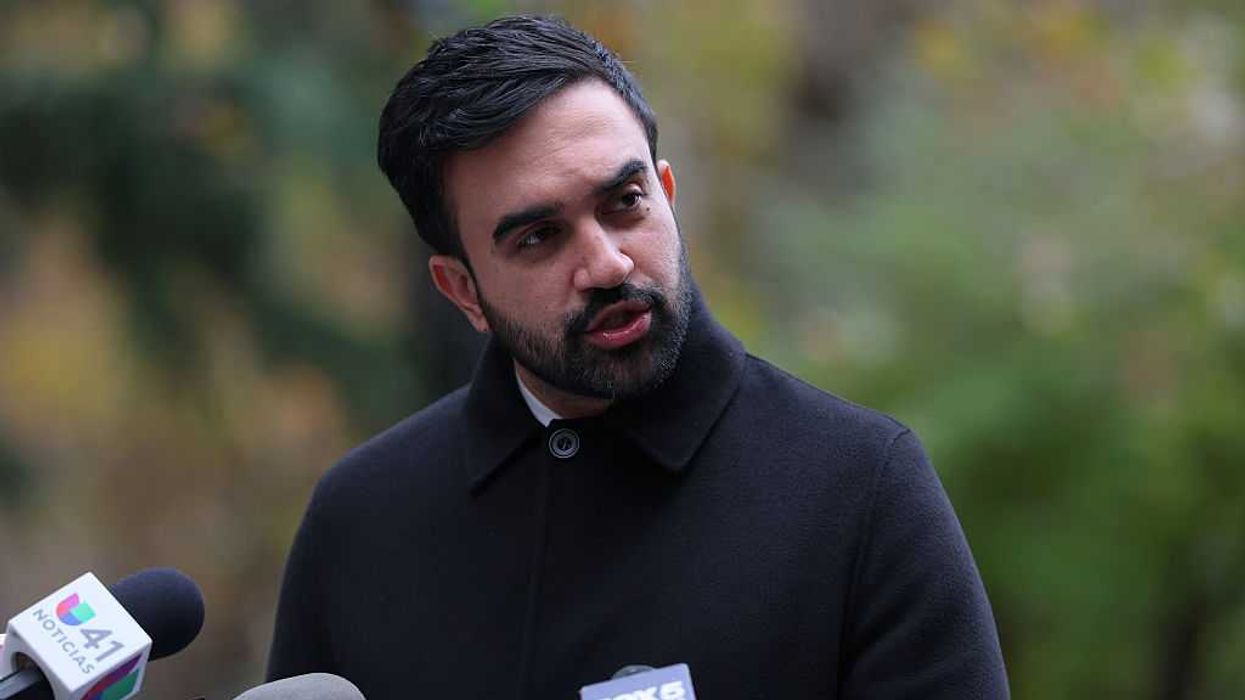 Photo by Michael M. Santiago/Getty Images
We on the right have long embraced a tougher-love approach that certainly includes prioritizing a strong work ethic, and nobody needs to give that up. But that is not the issue here at all — Ben Shapiro’s comments are not directed at people who do not want to work; they are directed at and felt by those who do work and still cannot afford many basic things that previous generations took for granted.
Explaining to voters why they are wrong — or even worse, outright dismissing their concerns — has never worked politically, and that is not going to change now. Support for capitalism has now fallen to 54% overall, with Democrats preferring socialism 66% to 42%.
Peter Thiel’s now-viral email from 2020 captures exactly what is underlying this shift:
From the perspective of a broken generational compact … when one has too much student debt or if housing is too unaffordable, then one will have negative capital for a long time … if one has no stake in the capitalist system, then one may well turn against it.
He was right then, and he is right now. The only thing left to be seen is whether the right will wake up to that reality before it is too late.
If this month’s performance is any indication, I am not holding my breath.
Editor’s note: This article was originally published by RealClearPolitics and made available via RealClearWire.
Psychology vs. scripture: What’s really behind depression?
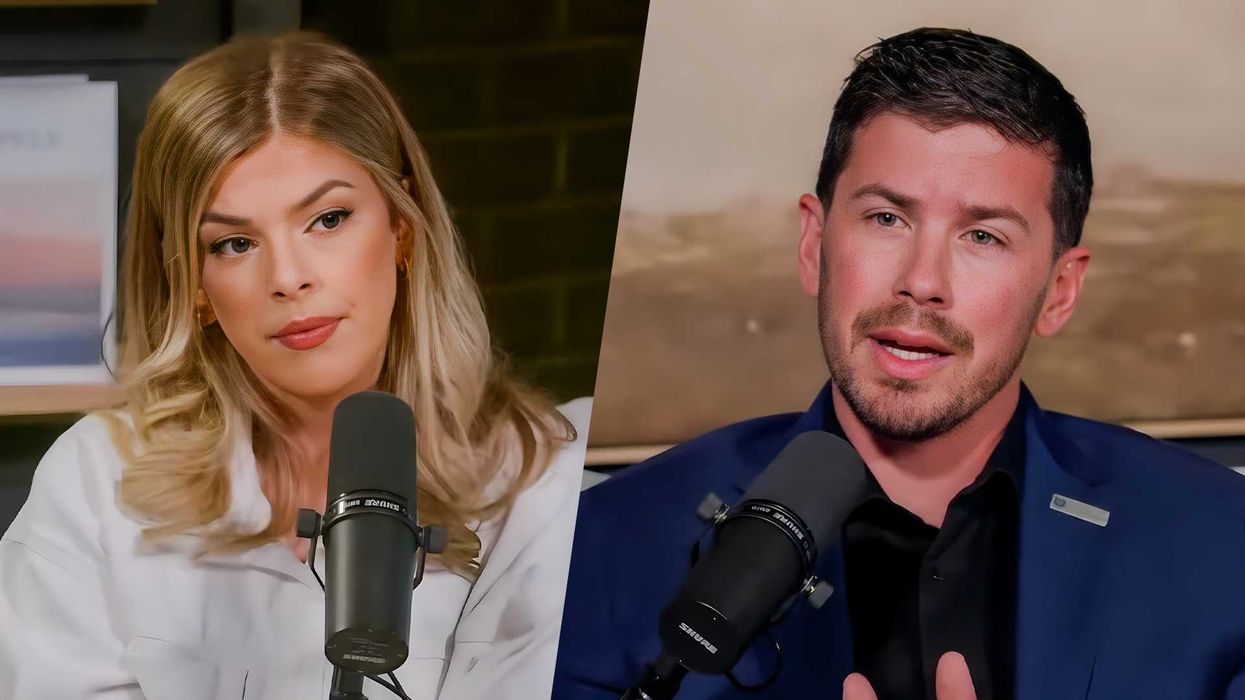
Medication may be able to stabilize symptoms, but BlazeTV host Allie Beth Stuckey and Dr. Greg Gifford believe the real healing when it comes to depression and hopelessness is in looking to God — not at ourselves.
“No one should hear this, watch this, listen to this, and think I’m saying depression doesn’t exist, because I’m not saying that. And no one should hear this, watch this, listen to this, and think I’m saying anxiety doesn’t exist, because I’m not saying that,” Gifford tells Stuckey.
“I’ve never said those things. What I’m saying is let’s start to uncover what’s going on in depression,” he continues, using physiological issues, vitamin deficiencies, and thyroid issues as examples that can have an effect on the mind.
Another example Gifford uses is some sort of cyst or growth on the brain that could be affecting mood regulation. However, physiological issues aren’t the only causes of depression or anxiety.
“So if I don’t have any known physiological problems, doctors can’t find anything, there’s nothing going on in the organ of my brain. Thyroid looks great. All my bloodwork comes back, and it looks nice. Then maybe, just maybe, I should be open to what’s happening in my mind,” he explains.
“What am I thinking about? What am I putting my hope in? Why? Why? Am I disappointed and so discouraged? Did something change in my life recently that was not physiological but was circumstantial and that’s what triggered this depression? Then you’re not talking about a biological problem at all. You’re actually talking about a spiritual problem,” he continues.
The solution, Gifford says, is taking “you back to the nature and the character of God and His promises.”
“We want to set you free that God is faithful. 2 Corinthians 1, He’s the God of all comfort. That His mercy is unending for you, that even in the low point, if someone’s watching this in bed, right, even in that low point, God draws people out of the mud and the muck and the mire and He sets them on a firm rock, which is Himself,” he says.
“That is the hope that people need. An antidepressant can’t touch that. We need to behold the glory of God, not behold the glory of our problems, not behold the glory of ourselves, not behold the glory of psychotropics,” he continues.
And while many people struggling with depression will turn to therapy over the Bible, the former often only makes it worse.
“One of the key features of depression is often just a constant dwelling on your own problems,” Stuckey says, pointing out that author Abigail Shrier made this point well in her book “Bad Therapy.”
“She says start class every day by asking your students how they feel, and you’re actually going to make them feel worse,” Gifford agrees. “And it’s like, Shrier’s not arguing for a biblical worldview, but there is something correct about that, which is a self-centered worldview makes me more miserable.”
Want more from Allie Beth Stuckey?
To enjoy more of Allie’s upbeat and in-depth coverage of culture, news, and theology from a Christian, conservative perspective, subscribe to BlazeTV — the largest multi-platform network of voices who love America, defend the Constitution, and live the American dream.
12 American-made Christmas gift ideas
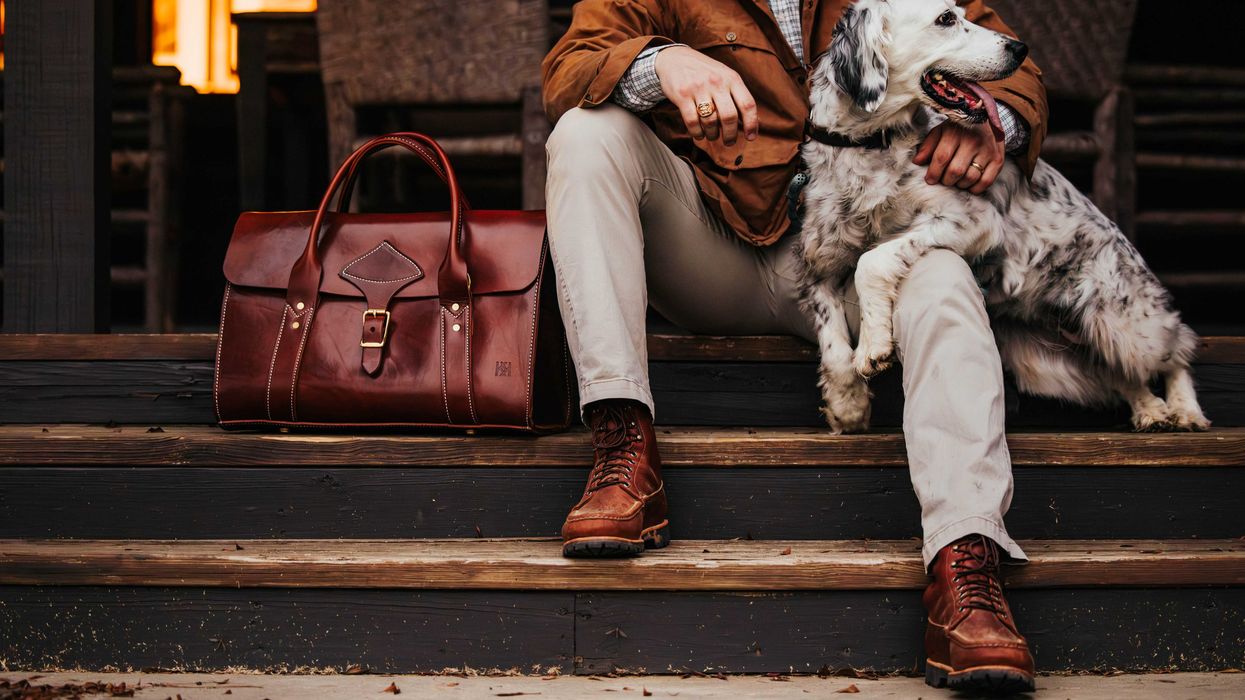
Though you’re probably still recovering from a tryptophan-induced slumber, it’s officially that time of the year again. Christmas is nearly upon us, which means it’s a great time to start thinking about gift ideas for your loved ones.
And why not support proud American businesses while enjoying the Christmas season with your family? Whether you’re looking for handmade jackets and boots or artisan tools and gadgets, we found some of the best American companies and their offerings. Give them a gift that will last a lifetime from companies that embody the American spirit.
From heirlooms to stocking stuffers at a variety of price points, here are 12 of our top picks of made-in-the-USA products that will never fail to impress.
1. Billykirk
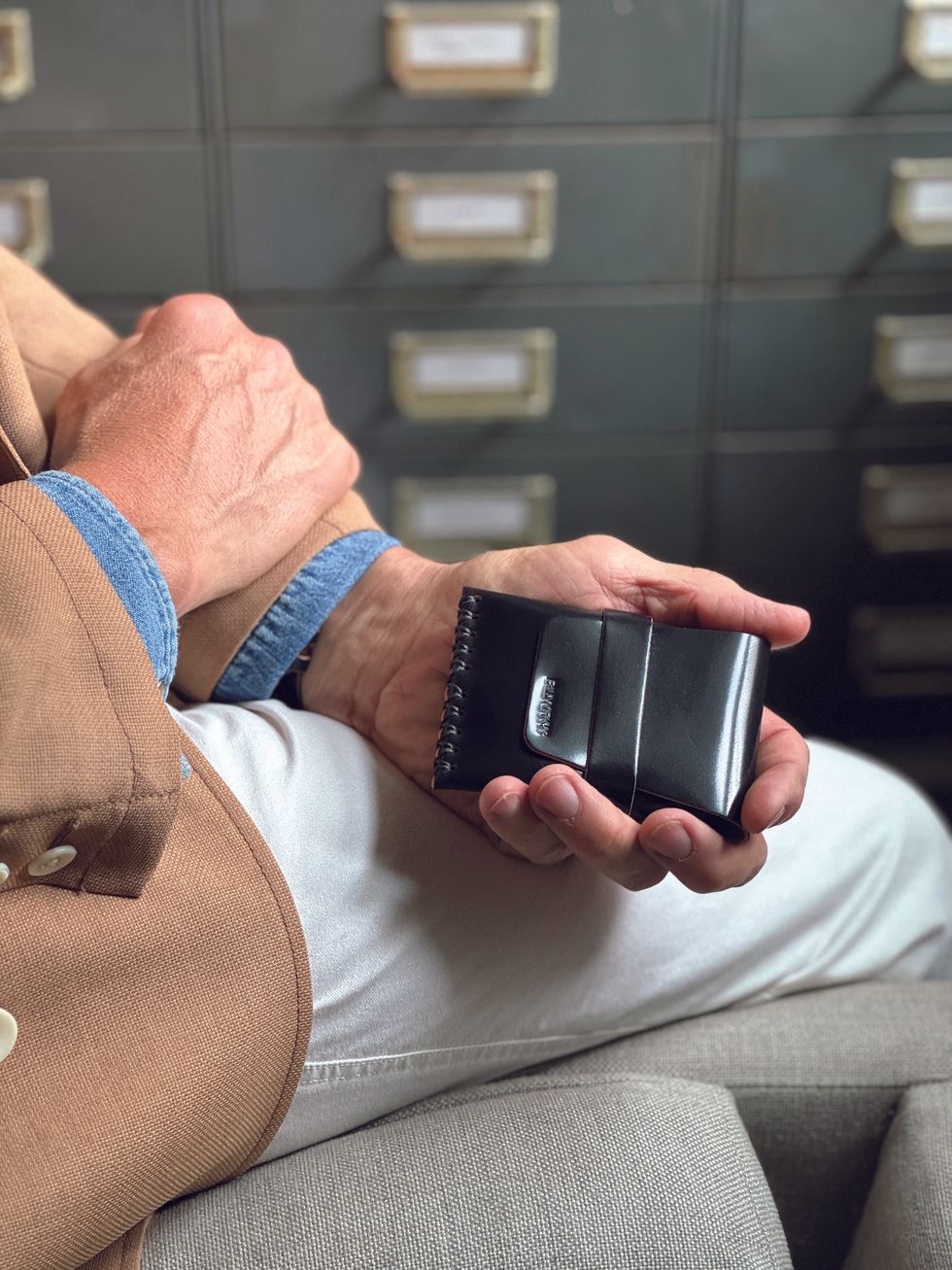 Billykirk
Based in Jersey City, New Jersey, Billykirk was founded in 1999 by the brothers Chris and Kirk Bray. Self-proclaimed pioneers of the Made in America movement, the Bray brothers have been longtime giants in the revitalization and support of the American leather industry. Focused on producing leather products that blend traditional craftsmanship with modern functionality, Billykirk has always been committed to the intersection of art and utility. The No. 155 Card Case is one of the company’s original designs, tracing back to the beginning of the company and showcasing the brothers’ artful expertise for enriching everyday products. MSRP: $95.00
Visit Billykirk’s website for more gift ideas.
2. Bullhide Belts
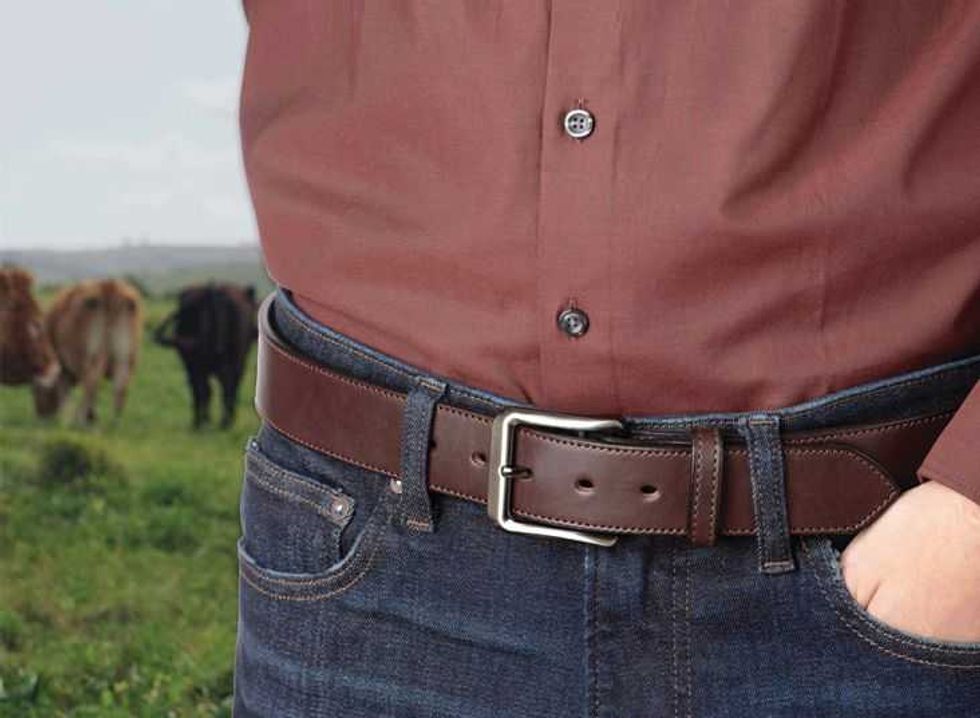 Bullhide Belts
Bullhide Belts, a proud U.S. manufacturer based in Ohio, shows meticulous attention to detail and lives up to its commitment to quality. With a promise of “buckle to tip excellence,” Bullhide Belts’ craftsmen have been at work since 2010, delivering a superior belt with full-grain leather that many people have come to love. The Admiral Belt, available in widths of 1.25” and 1.5” and in black, brown, and medium brown, is a timeless accessory designed to effortlessly transition from the boardroom to weekend casual. The company also crafts a variety of other leather goods, including wallets, cellphone holsters, rifle slings, and much more. MSRP: $69.99
Visit Bullhide Belts’ website for more gift ideas.
3. Sullivan Glove Company
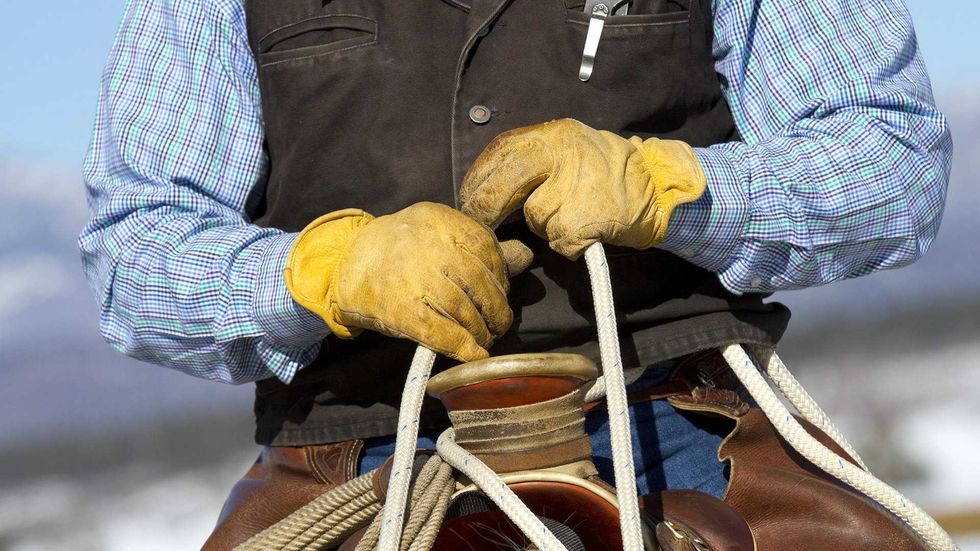 Sullivan Glove Company
Sullivan Glove Company is one of only three glove companies left that still makes everything in the USA with American materials. Sullivan prides itself on ensuring that its customers are not supporting the many unsavory practices common in the textile industry. The company sources and handcrafts its leather from American deer, elk, buffalo, and goat, all from its headquarters in Bend, Oregon. Pictured is the golden Elk Roper, which is tough enough for most types of work but also versatile enough for everyday use. MSRP: $95.00
Visit Sullivan Glove Company’s website for more gift ideas.
4. All American Clothing
 All American Clothing
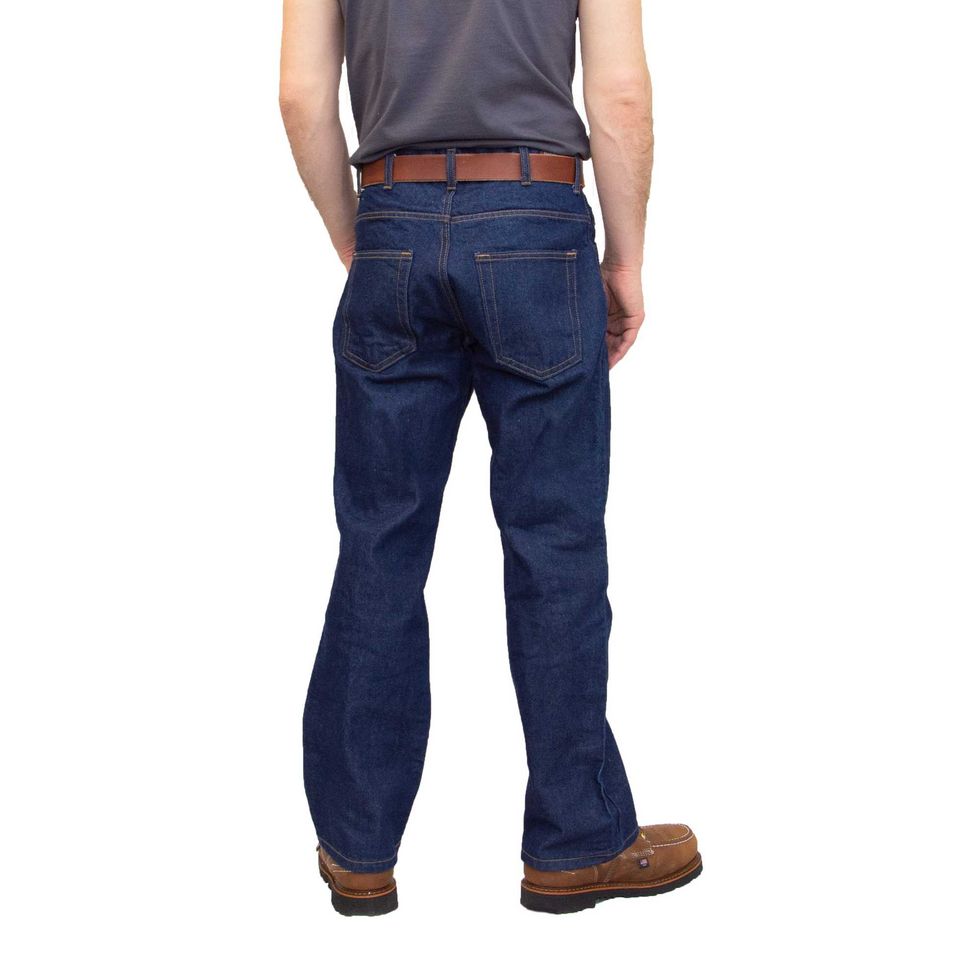
All American Clothing’s story speaks volumes in the wide and terrible seas of outsourcing and globalization. The company’s founder, Lawson Nickol, initially worked as a sales manager at another denim manufacturing company; however, one day, he found out at a store that his old company was outsourcing labor to Mexico. The discovery filled him with sadness for the American job loss. Acting immediately on principle, he quit his comfortable job and launched All American Clothing. His new company is committed to sourcing and manufacturing its products 100% in the USA. The high-quality All American Dark Stonewash Boot Cut Jean is but one of the fine fruits of Lawson Nickol’s dedication to his dream. MSRP: $79.95
Visit All American Clothing’s website for more gift ideas.
5. New Balance
 New Balance
Independent since 1906, New Balance has always been committed to producing excellent products. New Balance continues to adhere to its mission to stay “fearlessly independent” while delivering the best shoes without compromise. The company’s Made in the USA collection boasts the highest-quality shoes it has to offer. This collection is the product of over 75 years of collective expertise and knowledge of the craft. New Balance is also on the cutting edge of cool, as the “dad sneaker” has returned to vogue among hipsters and Zoomers. This collection, dropped in August 2024, explores many subtle color schemes on shoes of the highest-quality material, all — you guessed it — made in the USA. MSRP: $200.00
Visit New Balance’s website for more gift ideas.
6. Quoddy
 Quoddy
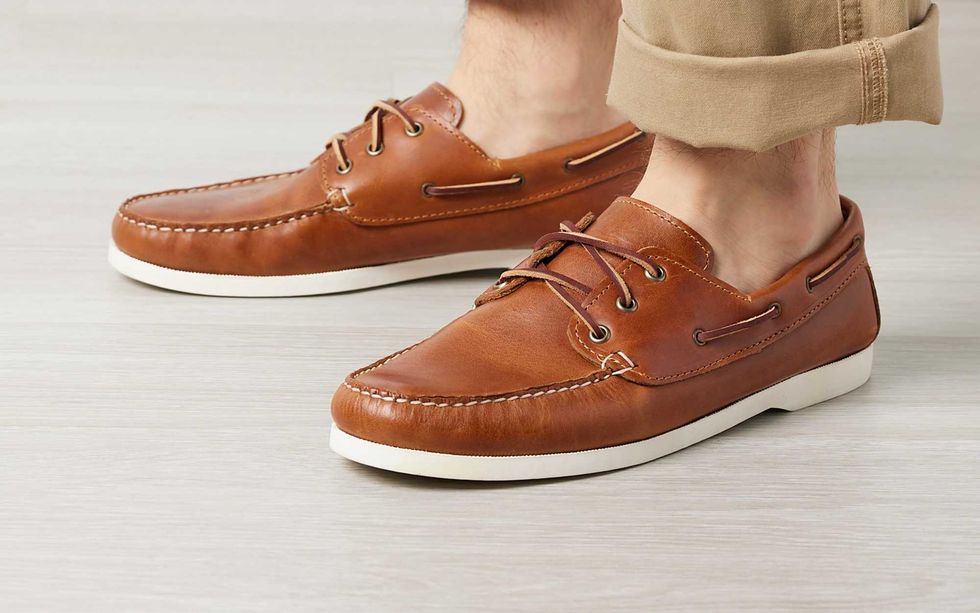
Quoddy gets its name from the West Quoddy Head Lighthouse, originally built in 1808, which in turn derives its name from an Indian word for the area. With over 200 years of history behind its name, Quoddy commits itself to providing the highest-quality, built-to-last boat shoes, moccasins, and other footwear without cutting corners. Quoddy’s made-to-order footwear is handcrafted in Maine under the shadow of its namesake. The Quoddy Head Boat Shoe is a perfect example of this company’s adherence to the time-tested wisdom of the craft. Starting from the comfortable and supportive design of the “foot cradle,” Quoddy’s craftsmen then add custom features to make this footwear stylish and durable. MSRP: $249.00.
Visit Quoddy’s website for more gift ideas.
7. Russell Moccasin
 Russell Moccasin
Founded in 1898, Russell Moccasin Co. has made a name for itself as the quintessential boot for all types of outdoorsmen. Russell has shod trailblazers, hunters, trappers, hikers, and those at the heights of power and influence, including four U.S. presidents. Named after its founder, William Russell, this company has handcrafted its footwear across three centuries, all from Berlin, Wisconsin. The Backcountry, Russell Moccasin’s flagship boot, promises to accompany any traveler from the sea to the mountaintops with its lightweight yet rugged design. Buying a pair of Backcountry boots is like buying a piece of history for yourself. MSRP: $750.00
Visit Russell Moccasin Company’s website for more gift ideas.
8. Middleton Made Knives
 Middleton Made Knives
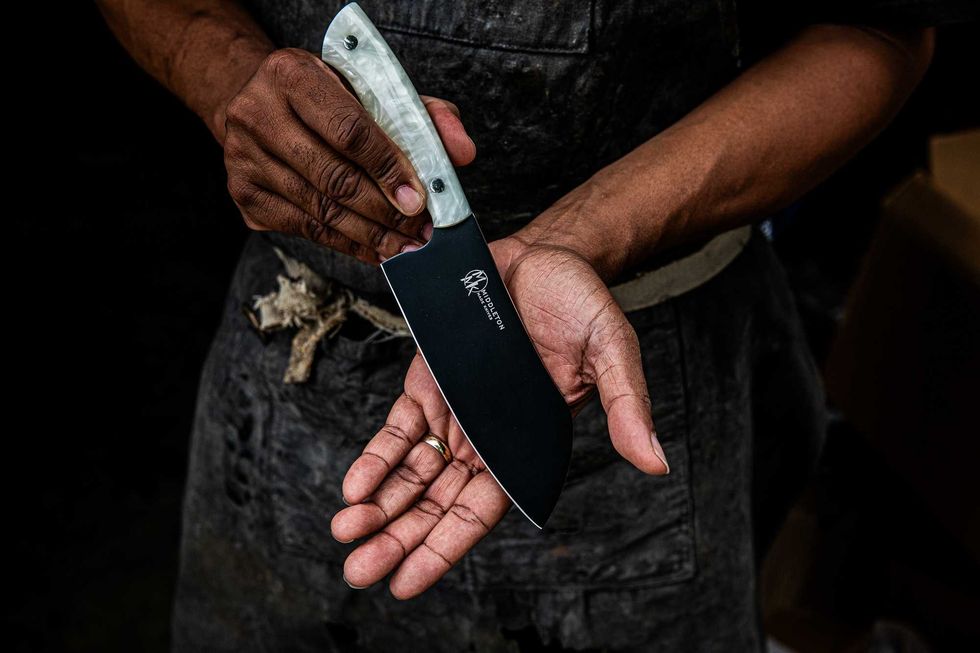
Founded in 2010 by Quintin Middleton, Middleton Made Knives was built “on faith and a dream.” The realization of a childhood passion for bladesmithing, the company crafts custom, high-carbon steel blades in the small town of Saint Stephen, South Carolina. Quintin is known as the South’s premier bladesmith, even making custom blades by hand for some of America’s top chefs. Middleton Made Knives’ Classic and Signature Collections include a wide variety of culinary blades with bright bursts of color, making the company a perfect example of American artisanry. MSRP: $500.00
Visit Middleton Made Knives’ website for more gift ideas.
9. Silver Stag
 Silver Stag
Born from a garage-based hobby more than 20 years ago, Silver Stag has built a nationally respected brand by taking a “step back in time.” Committed to a hands-on approach whereby all knives are fashioned from the ground up in the company’s Blaine, Washington, facility, no two blades will be the same. With handles sourced from North American shed antler and hardwoods and blades from high-quality steels, each blade is specialty-made by the small team of skilled workers at the nine-person company. Offering a wide array of knife styles, Silver Stag will have your back when it comes to addressing all your needs — both in hunting and in the kitchen. MSRP: $170.00
Visit Silver Stag’s website for more gift ideas.
10. WeatherWool
 WeatherWool
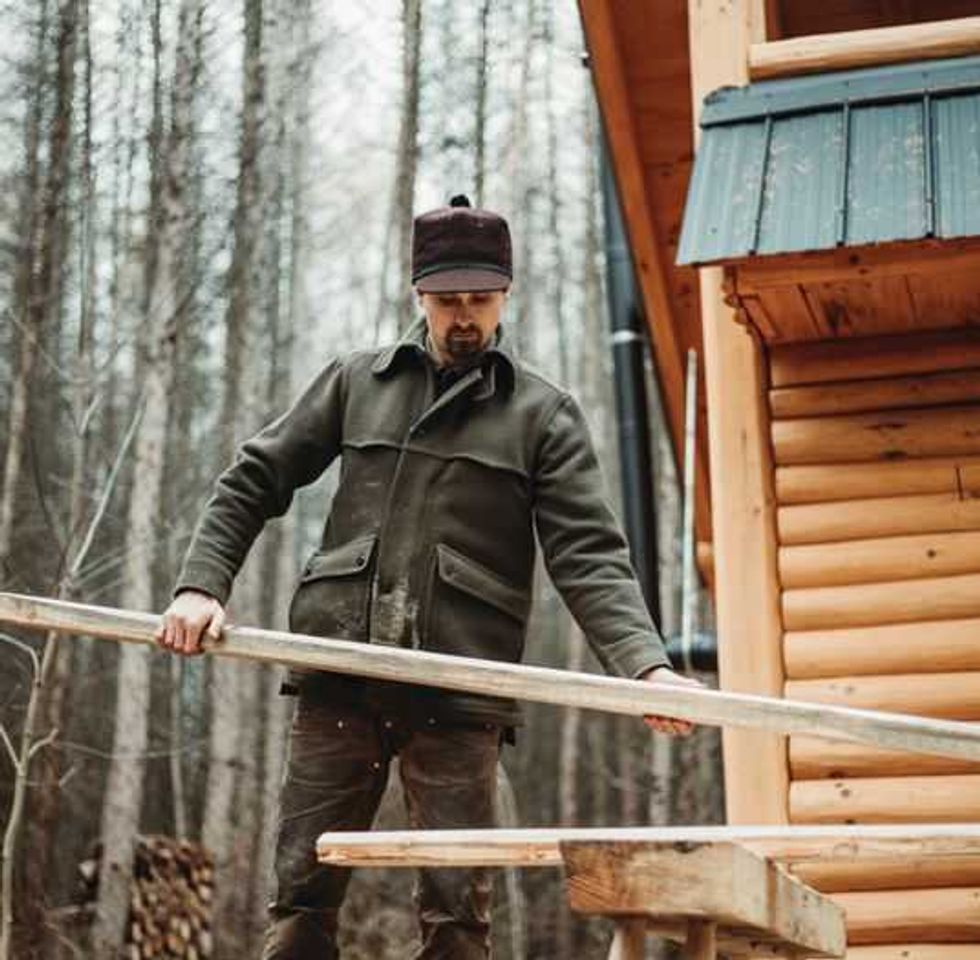
Family-owned and operated since 2009, WeatherWool was founded as a passion project to make luxury wool garments entirely in the USA. Tired of being told that this was impossible, Ralph and Debby DiMeo set out to create their own “hardcore luxury” brand. Sixteen years later, WeatherWool has stayed true to its vision without cutting any corners. So sure are they of the quality of their products that you can find blog videos on their website of Ralph himself battle-testing their jackets in extreme weather. The All-Around Jacket, sourced and manufactured “100%” in the USA, is made from “100% WeatherWool Certified Fine Wool,” a material the company said is 100% worth the premium price tag. MSRP: $985.00
Visit WeatherWool’s website for more gift ideas.
11. Wintergreen Northern Wear
 Wintergreen Northern Wear
Wintergreen Northern Wear’s story is just about as American as it gets. The company’s flagship fleece and shell anoraks are the products of decades of dedication to developing a high-quality winter jacket for extreme conditions. Field-tested at the North Pole and inspired by local clothing from Inuit and Scandinavian cultures, the anorak was worn by many adventurers on unaided expeditions to the North Pole, unsummited peaks, and in many other extreme environments. With an emphasis on breathable, quality materials, Wintergreen Northern Wear manufactures all its adventure products in the small town of Ely, Minnesota, to this day. MSRP: $339.00
Visit Wintergreen Northern Wear’s website for more gift ideas.
12. Red Rooster Camano Coffee Mill & Small Batch Fire Roasted Coffee
This plastic-free, made-in-America hand grinder features several settings for consistent and plentiful grind options, from super fine Turkish to coarse French press. And it’s handsome enough to admire even when at rest, replete (but not too replete) with timeless old-world charm. MSRP: $225.00 (coffee mill) / $20.00 (small-batch, fire-roasted coffee)
Visit Red Rooster’s website for more gift ideas.
How faith sustained me in my darkest hour
I am a retired Navy lieutenant commander who served our nation for nearly two decades in the intelligence community. My wife, Sharon, and I spent years running a successful software company serving federal agencies. We were living peacefully on our small family farm in Virginia’s Shenandoah Valley when, in a pre-dawn SWAT raid, armor-clad FBI agents shattered our lives following the January 6 protest at the nation’s Capitol.
What followed was my arrest for a crime I never committed, solitary confinement in what I can only describe as an icy dungeon, and a battle through a politically driven legal system determined to crush everything Sharon and I had built together.
The thought consumed me: I’m never getting out of here. Why not take control?
There are moments in life when everything you thought defined you simply ceases to exist. For me, that moment came in a Virginia supermax solitary confinement cell, lying on cold concrete after being struck in the spine by a guard, unable to draw a full breath, watching uniformed backs disappear through a steel door that slammed with finality.
In that cell, I had no pride, no dignity, no vanity, no vitality, no ambition, no joy, no self-respect, no ego, no hope. I was reduced to what I can only describe as the rapidly hammering heart of human anguish.
I’ve spent considerable time thinking about whether places of extreme suffering have the power to trap a person’s essence — whether dungeons and passageways can hold people captive by imprinting upon them the heartache, grief, and distress endured, replaying that wretchedness and pain in a perpetual loop across time itself. In those solitary confinement catacombs, I felt that I was living in exactly such a place.
The darkest thought came to me with unexpected clarity: As a Christian, I know I am going to heaven. This knowledge, when I thought too much about it, formed an excellent argument for suicide. Why endure this abuse when I could be with Jesus, with friends and family, with my puppy in heaven? I wouldn’t shake there. I wouldn’t hurt or ache any more. It would stop the pain. In the depths of my hopelessness, this thought gave me a feeling of relief. My suffering would end, and Sharon could live and be free.
I was so far gone that I let the enemy put these thoughts in my head. Death, which should have come to me many years from now as a benevolent old friend bringing gifts of peace and rest, instead clung to my being like a fungus rooted in desperation and despair. I heard other inmates talk of it through the walls and in the passageways — to no one in particular, or at least to no one somebody else could see.
The thought consumed me: I’m never getting out of here. Why not take control?
So I told the Lord then and there that I wanted to come home to Him, to end all of this, and I asked Him to make it so. My will to go on had fled me. Unless you have reached the point of total physical and emotional collapse, I’m not sure I can make you understand. In a way, I was already dead.
That might have been the first and only time this confessed control freak had ever said “Your will be done, Father,” and really meant it.
I had no control over anything in my desiccated world, but I had the ability to relinquish control of my life that day. Nothing that I owned or that I thought was a part of me existed in that hell. Was this “dying to self”? Those curious Bible words suddenly made sense.
It had something to do with my idea of the sum of me as a human being — my personal, selfish desires, the things I wanted or ever thought I did, my plans for a happy future with Sharon. I couldn’t clearly picture them any more. They were lost like last night’s dreams, forgotten with the free man’s morning coffee.
Right now, they counted for exactly nothing.
I didn’t know how to pray at that moment. I was too beaten down, and I didn’t have the tongue for it. All I could offer was: “Whatever You have planned is much better than this, Lord. Let’s try that, please, because this place totally sucks.”
With the warning lights on the remnant of my life force glaring a constant red, He took me in.
RELATED: The grace our cruel culture can’t understand
 Gary Hershorn/Getty Images
That surrender — that complete, desperate relinquishment of control — was the moment my faith stopped being something I professed and became something I lived. Not in victory, but in total defeat. Not in strength, but in absolute weakness. It was there, in that place of utter brokenness, that I discovered what faith actually means: trusting God when you have nothing left, not even yourself.
Through years of persecution, Sharon and I were repeatedly pulled from the brink by what I can only describe as miraculous events. Our marital bond and our enduring faith in God sustained us through a battle against overwhelming odds. In a federal courtroom where I faced slander, perjury, and falsification of evidence, it was that moment of complete surrender in solitary confinement — when I finally meant “Your will be done” — that gave me the strength to endure what seemed unendurable.
I am living proof that faith isn’t found in our strength, but in God’s strength when ours has completely failed.
The Soundness of a Discipline
Ken Burns has come in for some deserved criticism for pushing the line, in his new documentary on the American…
The Myth of the Noble Savage
We are increasingly asked now, particularly by those of anti-Western or antihuman persuasions, to see the Indian tribes populating the…
Leslie Corbly’s Progressive Prejudice Is a Book Every Christian Should Read
Progressive Prejudice: Exposing the Devouring Mother By Leslie Corbly Bombadier Books, 320 pages, $18.99 There are books that inform —…





