

Category: Blaze Media
Throwback: 15 utterly UNHINGED things libs labeled ‘racist’

“Every facet of the coffee industry, in fact, is rooted in racism. From the moment the whites viciously stole coffee from black and brown people to the present-day Karen sipping her morning cup of white supremacy, whites have been able to drink the fruits of our labor and our culture with impunity.”
What you just read is an actual quote from an article published in 2023 — back when literally everything was labeled racist by the woke mafia.
In this throwback Allie Beth Stuckey piece, we remember some of the most ridiculous things the critical race theory-obsessed left has used to label white people racists over the years. And sadly, coffee isn’t even close to the most absurd one on the list.
Picnics
A 2020 article from the Philadelphia Inquirer posited that “picnics” were racist because there was once a time when “Southern white people made lynchings a regular occurrence at picnics.”
If you are going to continue using the word “picnic,” then you need to make sure “that history is being talked about,” author Elizabeth Wellington wrote.
“That’s not what people think of when they’re thinking of going out to a park, laying a blanket down, and eating some sandwiches,” scoffed Allie.
Brain pairings (like peanut butter and jelly sandwiches)
Speaking of sandwiches, PB&Js are apparently the perfect metaphor for “implicit bias” against black males in America, according to a video released by the New York Times in 2016.
Social psychologist and management professor at the New York University Stern School of Business Dolly Chugh argued, “I somehow know that if you say peanut butter, I’m gonna say jelly. That’s an association that’s been ingrained in me. … In many forms of media, there’s an overrepresentation of black men and violent crime being paired together.”
Dairy
In 2022, a KFF Health News article reported that 28 civil rights and child advocacy groups — including one led by Al Sharpton — sent a letter to the USDA accusing the National School Lunch Program of “dietary racism.”
Their reasoning? Offering only cow’s milk, ignoring non-dairy alternatives, was racist because children of color apparently have higher rates of lactose intolerance.
Bicycling
A 2021 article from the Washington Post argued that American cycling is racist because a really long time ago, black people were excluded from bicycling clubs.
And then, of course, there’s the issue of racist white cops. “For black Southerners, the cost, dangers and white policing of cycling mobility combined with the weakening of its middle‑class status, meant that the popularity of the bicycle declined within the black community,” author Nathan Cardon wrote.
Equestrianism
If a piece of equipment doesn’t fit you properly, the designers are obviously racist against you. At least that’s the position the New York Times took in a front-page article from 2023 titled “Black equestrians want to be safe. But they can’t find helmets.”
In it, author McKenna Oxenden condemned racist manufacturers of equestrian equipment for not making helmets that accommodate certain black hairstyles, like dreadlocks.
“Is a helmet going to be safe if it’s like six inches off of your skull? No, it’s not. I don’t think it has anything to do with you being black,” Allie retorted.
Recreational running
In 2020, Medium published an article titled “Running is too white. It doesn’t need to be,” in which author Ryan Fan complained that America’s recreational running community is “too white.”
There was only one possible explanation for that, said Fan: systemic inaccessibility and exclusion. All those white runners just make people of color feel unsafe and unwelcome.
“We can do better. We have to,” he pleaded.
“Agree. I don’t like running, so running is too white. And it is because I am an ally that I choose not to,” Allie joked.
National parks
In 2020, ABC published a melodramatic article titled “America’s national parks face existential crisis over race.” In it, authors Stephanie Ebbs and Devin Dwyer reported that national park visitors were “overwhelmingly white” — 77% compared to 23% of non-whites.
The piece quoted then-Associate Director of the Sierra Club Joel Pannell, who fretted that this racial disparity in park visitors spelled doom for the country’s national parks (many of which have been going strong for over a century).
“If we don’t address this … then we’re going to risk losing everything,” he lamented.
“Not enough black people are going outside, so that’s the problem,” Allie mocked.
STD names
In 2022, NPR published an article titled “Critics say ‘monkeypox’ is a racist name. But it’s not going away anytime soon.” In the piece, author Bill Chappell quoted several critics upset about the name monkeypox, as it apparently stigmatizes the black and LGBTQ+ communities.
“There is a long history of referring to blacks as monkeys. Therefore, ‘monkeypox’ is racist and stigmatizes black people,” said global health advocate Ifeanyi Nsofor, ignoring the fact that the virus’ name was coined after it was originally discovered in lab monkeys in 1958.
Energy
Yes, energy — the stuff that powers the world — is “inherently racist,” suggested a 2022 article from Utility Dive.
Author Robert Walton reported that environmental justice advocates were up in arms because the U.S. energy sector is supposedly structurally racist due to historical policies like redlining and discriminatory infrastructure, which have disproportionately burdened low-income and communities of color with high costs and pollution.
Highways
In 2021, the Washington Times published a piece titled “When highways are racist,” in which author Cheryl Chumley lambasted Biden’s Department of Transportation for weaponizing civil rights laws to block a Houston highway project under the absurd pretext that infrastructure can be racist.
Ballet
A 2021 article from Marie Claire bemoaned the art of ballet as structurally white supremacist. Author Chloe Angyal argued that ballet — its aesthetics, history, and culture — is inherently racist because it reinforces a narrow, European ideal that marginalizes dancers of color.
“Ballet is not just white. It is white on purpose,” Angyal complained.
“There’s just not enough black people going up on their tiptoes,” Allie jeered.
Camping
Pitching a tent and roasting some marshmallows under the stars isn’t as innocent as it sounds, said Fast Company writer Elizabath Segran in a 2021 article called “The unbearable whiteness of camping.”
The monopoly white people apparently have on the outdoors all goes back to our colonial roots when colonizers took Indigenous land and turned it into “wilderness” for white recreation, she argued. Those mean ol’ white settlers romanticized themselves as “pioneers” while condemning Native people as “savages” for living out in nature, only to turn around and make nature an element of white culture.
Fast-forward a few hundred years and that same stigma still keeps non-whites from venturing outdoors. Patagonia jackets are too expensive; REI ads are too pale; and black people are apparently disproportionally targeted when they brave the elements.
Philosophy
Much of the genius that came from some of the greatest thinkers of the Enlightenment and German Idealist philosophy has bias baked into it, argued Aeon writer Avram Alpert in a 2021 piece titled “Philosophy’s systemic racism.” Ideas from the likes of Jean-Jacques Rousseau and Georg Wilhelm Friedrich Hegel must be “decolonized,” meaning we must expose how their core logic secretly ranks non-Europeans as irrational “savages” who need white reason to evolve, then flip the script to affirm that people of color already have their own internal progress — no European “uplift” required.
Organized pantries
Those little spice jars with the labels and the matching containers for your pasta and rice? Yeah well, they’re racist, said Associate Professor of Marketing at Loyola University Jenna Drenten.
Dubbing the trend of having aesthetically pleasing cupboards “pantry porn,” Drenten wrote, “Cleanliness has historically been used as a cultural gatekeeping mechanism to reinforce status distinctions based on a vague understanding of ‘niceness’: nice people, with nice yards, in nice houses, make for nice neighbors. What lies beneath the surface of this anti-messiness, pro-niceness stance is a history of classist, racist, and sexist social structures.”
“So you hear that black people? This professor doesn’t think that you can organize your pantry; you need to make it messy in order to really be pro-black and anti-racist,” laughed Allie.
This throwback to the peak-woke era — when coffee was cultural theft and PB&J pairings were microaggressions — proves one thing: The fever has broken, but the receipts still make us laugh.
Want more from Allie Beth Stuckey?
To enjoy more of Allie’s upbeat and in-depth coverage of culture, news, and theology from a Christian, conservative perspective, subscribe to BlazeTV — the largest multi-platform network of voices who love America, defend the Constitution, and live the American dream.
Turkey-hater’s delight: 6 historic Thanksgiving substitutes
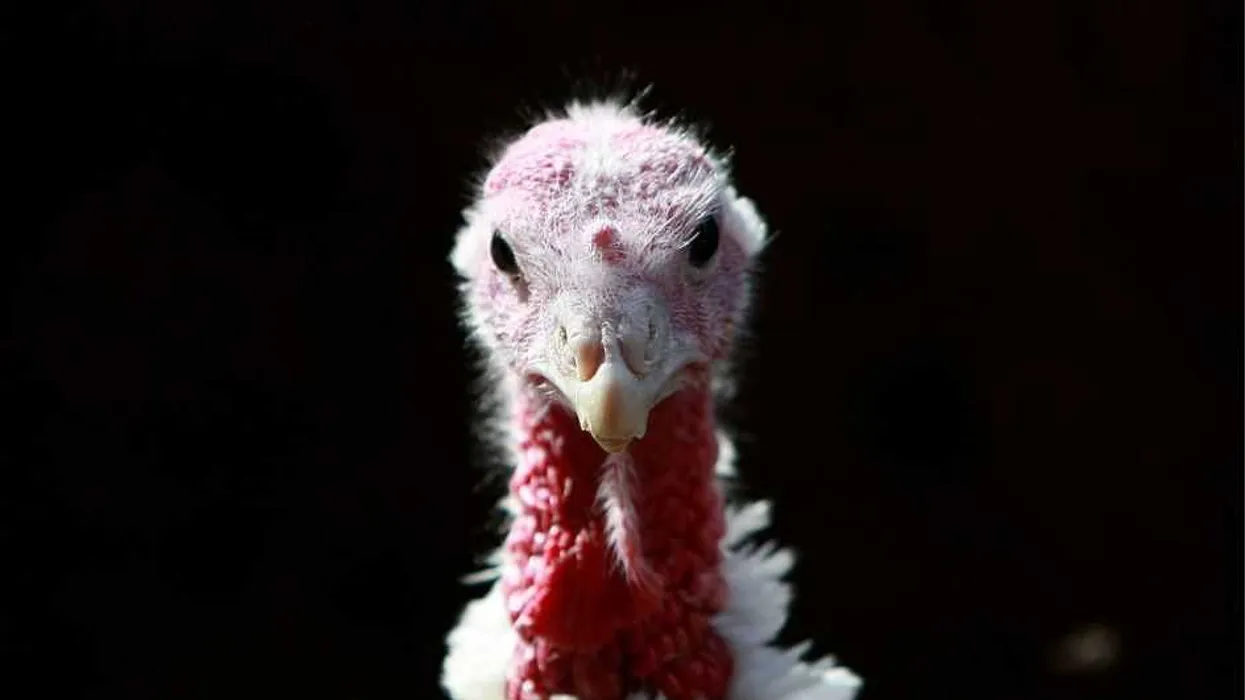
This Thanksgiving, consider the poor turkey. Is there any animal we consume with less gusto?
It has become something of annual tradition to denigrate the day’s traditional fare. Nearly 35% of Americans claim turkey is their least favorite part of the feast, according to one recent survey.
This vintage Better Homes and Gardens recipe is a bit of a cheat, as it does use turkey — although not in any form you’re likely to recognize
The internet just stokes the hatred. Every year the same tiresome “contrarian” opinions: “Stop pretending you like turkey. It’s no good on Thanksgiving, or any other day.”
Even celebrity chefs can’t resist punching down. “Turkey is wildly overrated,” says restaurateur David Chang.
“The only reason to cook the turkey is to get the gravy, and then you can just give the turkey away.”
We must admit that turkey-haters have a point. Yes, turkey meat can be dry and flavorless (although brining is a dependable way to avoid that). And yes, the tradition of eating turkey — and most Thanksgiving foods — was essentially created by advertising in the early 20th century. (College freshman home for fall break voice: “It’s all a scam by Big Cranberry!”)
While we’re content to stick with the standard flightless fowl, there were plenty of other contenders in the great battle for the Thanksgiving table. As a service, we provide the following recipes for anyone wanting to change it up.
1. Roast eel (1621)
Among the meats served at the first Thanksgiving in Plymouth would surely have been this vital freshwater food source. The 1622 promotional pamphlet for the Plymouth colony “Mourt’s Relation” describes how the Wampanoag native Tisquantum (better known as Squanto) taught the Pilgrims to catch the slippery, succulent treats.
Tisquantum went at noon to fish for Eels, at night he came home with as many as he could well lift in one hand, which our people were glad of, they were fat & sweet, he trod them out with his feet, and so caught them with his hands, without any other Instrument.
Here’s how they might have prepared it:
Ingredients
- 2 lbs cleaned freshwater eel
- Salt, splash of vinegar
- Sage or bay, butter
Instructions
- Soak eel 30 minutes in salt water and vinegar.
- Dry; rub with salt and herbs.
- Split a roasting stick down the middle, coil eel around stick.
- Roast over open fire 20-25 min.
- Baste with butter.
2. Roast swan (17th-18th centuries)
Long a favorite of European royals (peasants were forbidden to hunt them), swan was plentiful in the New World and was most likely one of the waterfowl consumed at the first Thanksgiving.
Here’s a recipe from Hannah Woolley’s “The Queen-like Closet,” (1670) a cookbook that later colonists would have had in their kitchens:
To bake a Swan.
Scald it and take out the bones, and parboil it, then season it very well with Pepper, Salt and Ginger, then lard it, and put it in a deep Coffin of Rye Paste with store of Butter, close it and bake it very well, and when it is baked, fill up the Vent-hole with melted Butter, and so keep it; serve it in as you do the Beef-Pie.
For something more elaborate, here’s a preparation from the late 14th century cookbook “Le Menagier de Paris”:
Pluck like a chicken or goose, scald, or boil; spit, skewer in four places, and roast with all its feet and beak, and leave the head unplucked; and eat with yellow pepper.
Item, if you wish, it may be gilded.
Item, when you kill it, you should split its head down to the shoulders.
Item, sometimes they are skinned and reclothed.
RECLOTHED SWAN in its skin with all the feathers. Take it and split it between the shoulders, and cut it along the stomach: then take off the skin from the neck cut at the shoulders, holding the body by the feet; then put it on the spit, and skewer it and gild it. And when it is cooked, it must be reclothed in its skin, and let the neck be nice and straight or flat; and let it be eaten with yellow pepper.
3. Passenger pigeon pie (1700s)
Though extinct for more than a century, passenger pigeons were once as abundant as the kind you see fouling statues in urban parks. While we wouldn’t recommend eating those birds, Cornish game hen or squab make a decent substitute.
Ingredients
- 2 Cornish game hens (substitute for extinct passenger pigeons)
- 1 onion, quartered
- 2 tbsp butter
- 2 tbsp flour
- 1-1½ cups chicken or turkey stock
- Salt and pepper, to taste
- 1 tsp dried thyme
- Double pie crust (bottom + top crust)
Instructions
1. Prepare the meat
- Simmer game hens with the onion until fully cooked and tender.
- Remove hens; pick the meat from the bones.
- Place shredded meat in a bowl.
2. Make the gravy
- Melt butter in a pan.
- Add flour and cook until lightly browned.
- Stir in stock to form a smooth gravy.
- Season with salt, pepper, and thyme.
- Simmer until slightly thickened.
3. Assemble the pie
- Line a pie dish with bottom crust.
- Add shredded meat.
- Pour warm gravy over the meat.
- Cover with top crust and seal edges.
- Cut a small vent in the center.
4. Bake
Outdoor Dutch oven method (historical):
- Preheat Dutch oven with coals above and below.
- Elevate pie pan inside the Dutch oven on metal hooks or a trivet.
- Bake ~10-20 minutes, checking frequently to avoid burning.
Modern oven method:
- Bake at 375°F for 35-45 minutes, until crust is golden.
5. Serve. Let cool slightly before slicing.
4. Sautéed calf’s brains with mushrooms, sour cream, and dill
In 1904, railroad heir George Vanderbilt and his wife, Edith, hosted a lavish Thanksgiving at their Asheville estate, Biltmore. Turkey was on the menu — but so were calf’s brains. Here’s one preparation that guarantees a delicate, custardy mouthfeel:
Ingredients
- 1 lb brains (veal, pork, or lamb)
- Water for soaking
- Salt (for poaching water)
- 2 tbsp butter
- 1 cup sliced white mushrooms
- 2-3 tbsp sour cream
- 1-2 tbsp fresh dill, minced
- Toasted bread, for serving
Instructions
1. Prep the brains
- Soak brains overnight in cold water to remove blood pockets.
- Drain.
- Poach gently in salted water (bare simmer) for 10-15 minutes until firm.
- Cool slightly, then peel off the thin outer membrane.
- Cut brains into bite-size pieces.
2. Cook the mushrooms
- In a skillet, melt butter over medium heat.
- Add mushrooms and sauté until they release their juices and the butter turns lightly browned and nutty.
3. Add the brains
- Add chopped brains to the skillet.
- Toss gently with the mushrooms and browned butter for 1-2 minutes.
4. Finish the sauce
- Remove skillet from heat.
- Stir in sour cream to form a loose sauce.
- Add minced dill.
- Adjust salt if needed.
5. Serve. Spoon the mixture over warm toast. Serve immediately.
5. Celery au naturel (late 1800s-early 1900s)
Now the most unwanted vegetable on the crudite platter, this Bloody Mary garnish was a highly coveted status symbol of the Gilded Age (it was hard to grow). Everyone will want the recipe.
Ingredients
- 1 bunch crisp celery
- Cold water
- Ice cubes (optional)
- Salt (for serving, optional)
Instructions
1. Trim the celery
- Cut off the root end.
- Remove tough outer stalks if desired.
- Trim leafy tops to a neat fan.
2. Refresh the stalks
- Place celery in a bowl of cold water (add ice for extra crispness).
- Chill 15-30 minutes.
3. Present with appropriate ceremony
- Stand stalks upright in a tall glass, vase, or celery jar.
- Arrange so the tops flare elegantly.
4. Serve. Place the celery in the center of the table. Offer a pinch dish of salt on the side.
Note: In the late 19th century, this was considered a showpiece delicacy. Your guests are encouraged to admire its beauty before eating it exactly as it is.
6. Turkey lime molded salad (1969)
This vintage Better Homes and Gardens recipe is a bit of a cheat, as it does use turkey — although not in any form you’re likely to recognize.
Ingredients
- 2 packages (3 oz each) lime-flavored gelatin
- ¼ tsp salt
- 2 cups boiling water
- ½ cup cold water
- 1 (7 oz) bottle ginger ale
- 2 cups diced cooked turkey
- 1 cup sour cream
- ¼ tsp ground ginger
- 1 (16 oz) can pears, drained and diced
- 6½-cup gelatin mold
Instructions
1. Make the gelatin base
- Dissolve lime gelatin and salt in 2 cups boiling water.
- Add ginger ale and ½ cup cold water.
- Chill until partially set.
2. Prepare the turkey layer
- Fold diced turkey into the partially set gelatin.
- Pour into a 6½-cup mold.
- Chill until almost firm.
3. Prepare the sour cream-pear layer
- Beat sour cream, ground ginger, and ½–1 cup of the remaining unset gelatin until smooth.
- Chill until partially set.
- Fold in diced pears.
4. Add second layer
- Spoon the pear-sour cream mixture over the firm turkey layer.
- Chill until completely set.
5. Unmold and serve
- Dip mold briefly in warm water.
- Invert onto a serving platter.
- Lift mold carefully to reveal two layers.
Our forefathers prayed on Thanksgiving. We scroll.

There was a time when Thanksgiving pointed toward something higher than stampedes for electronics or a long weekend of football. At its root, Thanksgiving was a public reminder that faith, family, and country are inseparable — and that a free people must recognize the source of their blessings.
Long before Congress fixed the holiday to the end of November, colonies and early states observed floating days of thanksgiving, prayer, and fasting. These were civic acts as much as religious ones: moments when communities asked God to protect them from calamity and guide their families and their nation.
Grounded in gratitude
The Continental Congress issued the first national Thanksgiving proclamation in 1777, drafted by Samuel Adams. The delegates called on Americans to acknowledge God’s providence “with Gratitude” and to implore “such farther Blessings as they stand in Need of.”
Twelve years later, President George Washington proclaimed the first federal day of thanksgiving under the Constitution. He asked citizens to gather in public and private worship, to seek forgiveness for “national and other transgressions,” and to pray for the growth of “true religion and virtue.”
Our problems — social, fiscal, and moral — are immense. But they are not greater than the God our ancestors trusted.
Other presidents followed suit. During rising tensions with France in 1798, John Adams declared a national day of “solemn humiliation, fasting, and prayer,” arguing that only a virtuous people could sustain liberty. The next year he called for another day of thanksgiving, urging citizens to set aside work, confess national sins, and recommit themselves to God.
For generations, this was the American understanding: national strength flowed from moral character, and moral character flowed from religious conviction.
The evolution of a holiday
In 1863, President Abraham Lincoln — responding to years of lobbying by Sarah Josepha Hale — established the last Thursday in November as a permanent national Thanksgiving. Hale saw the holiday as a unifying civic ritual that strengthened families and reminded Americans of their shared heritage.
Calvin Coolidge echoed this tradition in 1924, observing that Thanksgiving revealed “the spiritual strength of the nation.” Even as technology transformed daily life, he insisted that the meaning of the day remain unchanged.
But as the country drifted from an agricultural rhythm and from public expressions of faith, the holiday’s original purpose faded. The deeper meaning — gratitude, repentance, unity — gave way to distraction.
When a nation forgets
Today, America marks Thanksgiving with a national character far removed from the one our forebears envisioned. The founders believed public acknowledgment of God’s authority anchored liberty. Modern institutions increasingly treat religious conviction as an obstacle.
Court rulings have redefined marriage, narrowed the space for religious conscience, and removed long-standing religious symbols from public grounds. Citizens have been fined, penalized, or jailed for refusing to violate their beliefs. The very freedoms early Americans prayed to preserve are now treated as negotiable.
At the same time, other pillars of national life — family stability, civic order, border security, self-government — erode under cultural and political pressure. As faith recedes, government fills the void. The founders warned that a people who lose their internal moral compass invite external control.
Former House Speaker Robert Winthrop (Whig-Mass.) put it plainly in 1849: A society will be governed “either by the Word of God or by the strong arm of man.”
A lesson from history
The collapse of religious conviction in much of Europe created a vacuum quickly filled by ideologies hostile to Western values. America resisted this trend longer, but the rising influence of secularism and identity ideology pushes our society toward the same drift: a nation less confident in its heritage, less united by a common purpose.
Ronald Reagan saw the warning signs decades ago. In his 1989 farewell, he lamented that younger generations were no longer taught to love their country or understand why the Pilgrims came here. Patriotism, once absorbed through family, school, and culture, had been replaced by fashionable cynicism.
Thanksgiving offers the antidote Reagan urged: a return to gratitude, history, and shared purpose.
RELATED: Why we need God’s blessing more than ever
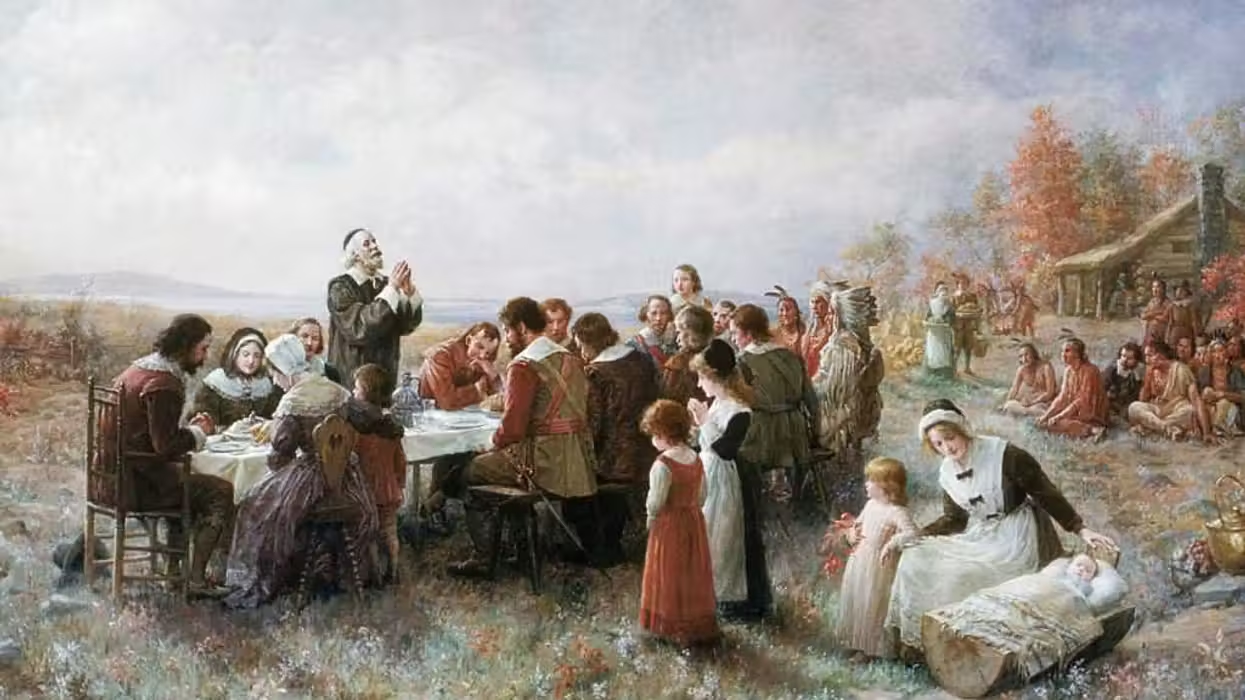 Photo by Barney Burstein/Corbis/VCG via Getty Images
Thanksgiving was meant to be the clearest expression of a nation united by faith, family, and patriotism. It rooted liberty in gratitude and gratitude in God’s providence.
Reagan captured that spirit in 1986, writing that Thanksgiving “underscores our unshakable belief in God as the foundation of our Nation.” That conviction made possible the prosperity and freedom Americans inherited.
Today’s constitutional conservatives must lead in restoring that heritage — not by nostalgia, but by example. Families who teach gratitude, faith, and national purpose build the civic strength the founders believed essential.
A return to gratitude
Thanksgiving calls each of us to humility: to recognize that national renewal begins with personal renewal. Our problems — social, fiscal, and moral — are immense. But they are not greater than the God our ancestors trusted.
That confidence is the heart of Thanksgiving. It is why the Pilgrims prayed, why Congress proclaimed days of fasting and praise, why Lincoln unified the holiday, and why generations of Americans pause each November to give thanks.
Editor’s note: A version of this article first appeared at Conservative Review in 2015.
Why leftists hate Thanksgiving — and can’t stop ruining it
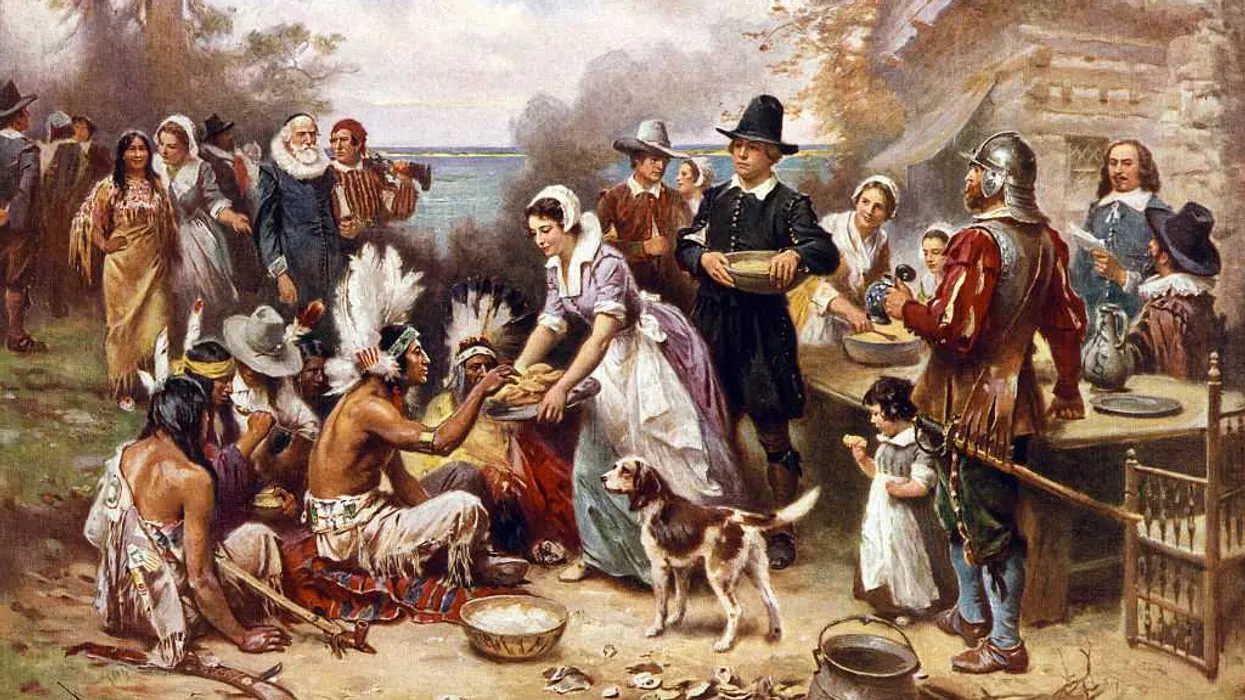
Is there any hope for this perpetually outraged leftist?
I’d like to think so. After all, I’ve written about opening your home to others — even perhaps strangers — on Thanksgiving. But Robert Jensen is a hard case.
Redistribute land and wealth? No wonder his fellow leftists would rather gorge on stuffing.
That’s because Jensen, who writes at AlterNet — the spiritual home of the fevered far left — wouldn’t be much fun at your Thanksgiving table. That’s because he says we need to “replace the feasting with fasting and create a National Day of Atonement to acknowledge the genocide of indigenous people that is central to the creation of the United States.”
Holiday haters
Jensen is one of those Thanksgiving haters. He’s been writing about this for years, popping up in November with dark sentiments about the “evils” of Thanksgiving.
But his irritation has grown exponentially in recent years, apparently because he hasn’t been able to convince his fellow leftists to give up their turkey and pumpkin pie. They’re just not feeling his “fast and atone” vibe. And who could blame them?
Some of them, in fact, have the unmitigated audacity to suggest that coming together on Thanksgiving can celebrate love and connection with family and friends.
But Jensen, who is more left than your garden-variety progressive, is just not having it.
“The moral response — that is, the response that would be consistent with the moral values around justice and equality that most of us claim to hold — would be a truth-and-reconciliation process that would not only correct the historical record but also redistribute land and wealth,” he wrote last year.
Redistribute land and wealth? No wonder his fellow leftists would rather gorge on stuffing. As much as they love to dream about wealth redistribution, they’re never referring to their own wealth, of course, and leftist struggle-sessions don’t really lend themselves to a festive atmosphere.
Last year, he wrote about how he teetered between these two (delightful!) choices:
We can go to the Thanksgiving gatherings put on by friends and family, determined to raise these issues and willing to take the risk of alienating those who want to enjoy the day without politics. Or we can refuse to go to such a gathering and make it known why we’re not attending, which means taking the risk of alienating those who want to enjoy the day without politics. … We must refuse to be polite when politeness means capitulation to lies.
Are you feeling sorry for Jensen’s family yet?
Imagine, if you will, slurping down your mashed potatoes and cranberry sauce to this rant: “In the white-supremacist and patriarchal society in which we live, operating within the parameters set by a greed-based capitalist system. … What political activity can we engage in to keep alive this kind of critique until a time when social conditions might make a truly progressive politics possible?”
Much to his family’s relief, Jensen ultimately chose to sit home by himself and contemplate additional dark thoughts involving “genocidal Europeans.”
But he’s mad that his people dare to define the holiday as an opportunity to rest, enjoy loved ones, and eat a delicious meal.
“We don’t define holidays individually — the idea of a holiday is rooted in its collective, shared meaning,” he wrote. “When the dominant culture defines a holiday in a certain fashion, one can’t pretend to redefine it in private.”
(I can think of a few things rooted in a collective, shared meaning that the left has redefined in private — and then tried to shove down our throats. But I digress.)
RELATED: This Truthsgiving, I’m thankful for European settlement
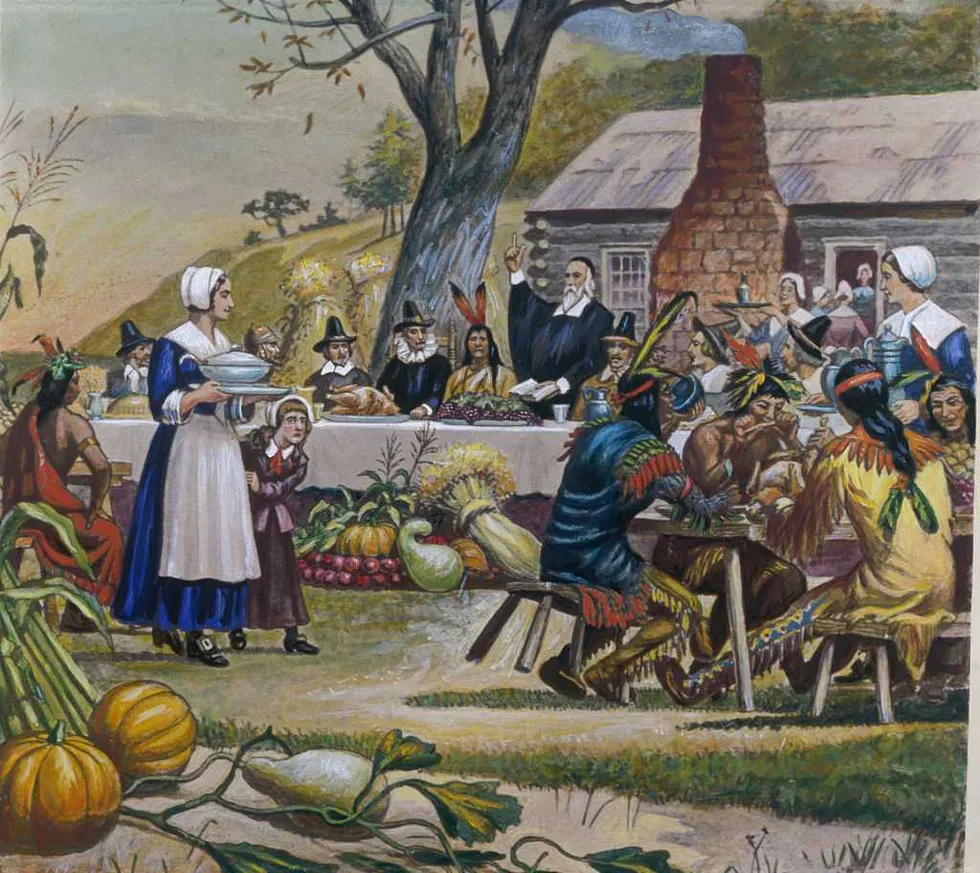 Bettmann/Contributor/Getty Images
Jensen reports that he also has the option of participating in a public event that resists Thanksgiving. However, on that topic, last year he confessed, “I’m not aware of (an anti-Thanksgiving event) happening in my community, and because of commitments to other political projects, I didn’t feel I could organize an effective event in time for this Thanksgiving Day.”
He’s been whining about this since at least 2017, so I’m not sure how he ran out of time to “organize an effective event.” Oh, that’s right: “Commitments to other political projects.”
Do these people ever unclench and be human, or is it always “political projects” time?
What Jensen’s missing
We all know that the Native peoples in America were not treated wonderfully as American history unfolded. But things weren’t all sunshine and rainbows before European arrivals, either. Tribes regularly warred against and slaughtered each other, taking and retaking territory and resources.
What Thanksgiving commemorates, however, is really something remarkable.
Consider this sequence of events:
- In a village of the Wampanoag tribe, a young boy named Squanto grew up, was kidnapped by a European sea captain who sold him into slavery in Spain, and was eventually released due to some kindly monks. He made his way to England and onto a boat sailing back to the New World, where he found his village had been wiped out by some sort of disease.
- Shortly thereafter, the pilgrims — who’d been aiming for Manhattan island — were blown off course and ended up landing basically at that same abandoned village, finding land already cleared, food stores, and fresh water sources.
- A few months after their arrival, Squanto returned. He had learned English, so he was able to communicate with the Pilgrims, and he had been introduced to Christianity, so he understood them. He set out to help, teaching them to plant crops and helping them negotiate agreements with Chief Massasoit.
- Even with all the help, about half of the original Pilgrims died due to the harsh conditions. Leader William Bradford recognized Squanto, his skills, and his welcome were all a gift from God without which none of the Pilgrims might have survived.
- The Wampanoag also benefited from their relationship with the Pilgrims, which held off attacks by the Narragansett and others.
The inclination to celebrate that first fall harvest sprung from profound gratitude for the food, Squanto, and for God guiding them to the one point on the continent where they would encounter an English-speaking Native and build a peaceful and productive relationship.
Ninety Indians joined the 53 remaining Pilgrims for the three-day event, which included feasting and shooting games. And it is that history that informed President Lincoln’s decision, many years later, to institute the holiday of Thanksgiving. It honors the pivotal role of the first Pilgrims, the lifesaving role of the Wampanoag, and the societal benefit of a day devoted to gratitude.
So, Robert Jensen, I sincerely hope you might consider that if white Europeans and brown Natives could feast together, you might be able to sit with your family and enjoy some turkey and pie too.
Happy Thanksgiving to all!
On Target: The Perfect Guide To Gifting Your Favorite Firearm-Loving Friends And Family

 Get the most bang for your buck with these nine gun-themed gift suggestions.
America Is Still Worth Giving Thanks For
 For the frustrated and disillusioned on the right, here are four foundational reasons to give thanks for this great country.
Give thanks for the sun, the CO2, and the farmers — not the climate scolds
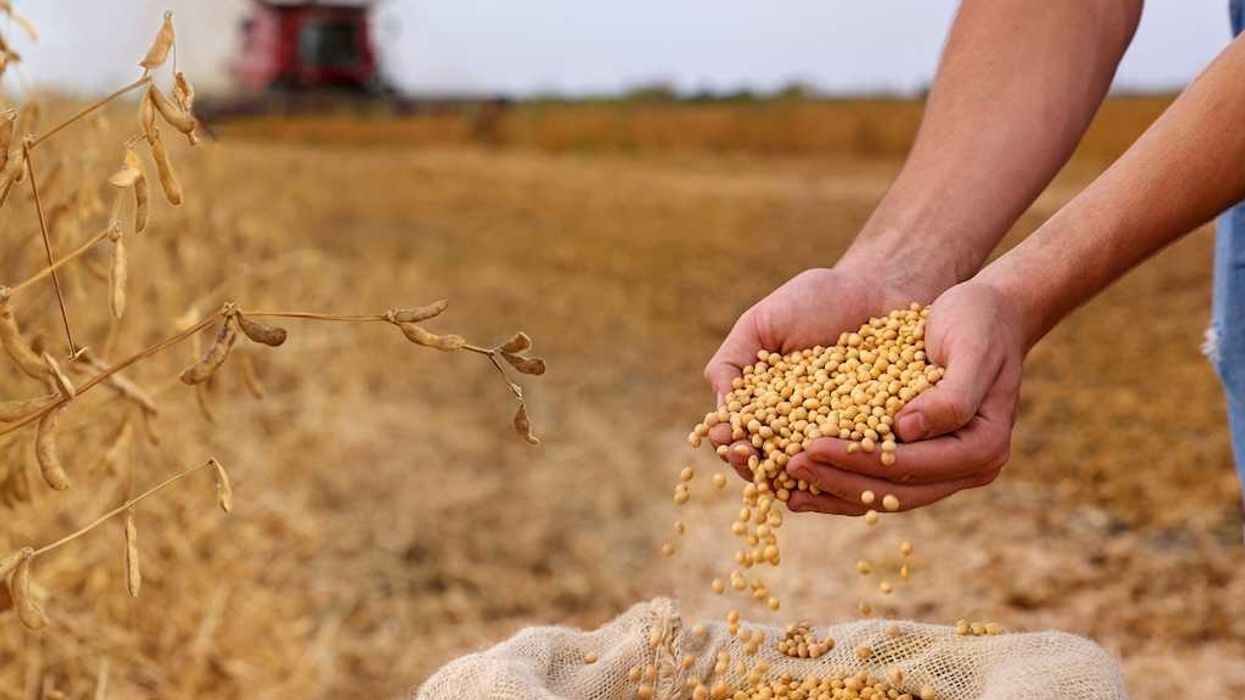
What if, this Thanksgiving, we offered a small tribute to global warming and the relative abundance of carbon dioxide in the atmosphere? An apparently scandalous idea. Global elites and their media partners insist that these forces promise catastrophe. Yet sound thinking demands the opposite conclusion.
Fifty years ago, the story was reversed. In the 1970s, major outlets warned of a coming ice age. Some scientists called for immediate action to stop the planet from plunging into widespread glaciation.
Abundance is not an accident. It reflects a climate far friendlier than the one our ancestors endured — and a modern economy powered by fuels that make global agriculture possible.
The fear of cold had at least a historical basis. Unlike today’s speculative climate models, past civilizations suffered through genuine cold-driven crises.
The Little Ice Age, from roughly 1300 to 1850, brought centuries of persistent chill. Historical accounts describe crops withering, growing seasons collapsing, and communities starving as food systems failed. The Thames froze solid. Frost fairs became a tradition because the cold was relentless. Entire regions fell into poverty and instability.
People living through those centuries would have welcomed the warmth we enjoy today.
Modern Americans rarely think about that history as they prepare Thanksgiving meals sourced from every climate zone on Earth. Our abundance depends on a long supply chain anchored in one fundamental reality: Plants grow best in warmth, not cold.
Warm periods fed civilizations
Warm eras have repeatedly aligned with human flourishing. During the Roman Warm Period and the Medieval Warm Period, farmers cultivated crops in regions that are too cold for them now. Warmer temperatures didn’t bring disaster; they supported prosperity.
The present is no exception. Earth has quietly greened since the late 20th century. Satellite data shows expanding vegetation, especially in arid regions. The drivers are straightforward: increased carbon dioxide and a slightly warmer global climate.
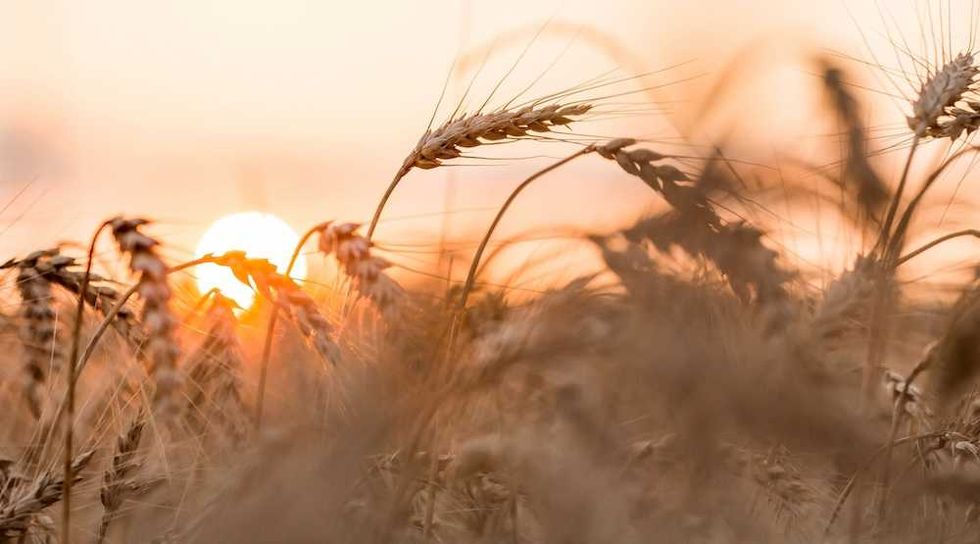
CO2 is not a toxin. It’s plant food — an essential input for photosynthesis. Higher concentrations allow crops to use water more efficiently and grow more robustly. This is one of the greatest environmental improvements of the past century, though you would never know it from the coverage.
RELATED: ‘Green Antoinettes’ live large, preach small
 Julia Klueva via iStock/Getty Images
The other indispensable ingredient is modern fertilizer, made largely from natural gas. High-yield crops require nitrogen, and synthetic fertilizers supply it.
Energy-dense fuels — coal, oil, natural gas — power nearly every part of modern agriculture. Irrigation pumps, fertilizer plants, harvesters, delivery trucks, and refrigeration systems depend on them. Remove these fuels, and global food systems collapse. The return of famine would be swift.
A simple truth
Climate alarmists warn that warming will devastate global food security. Actual yields say otherwise. For 40 years, production of wheat, corn, rice, and other staples has climbed dramatically. Most food shortages today result from war or corrupt governance, not climate.
Earth’s climate has always shifted. Mega-droughts, severe floods, heat waves, and cold snaps have occurred throughout history. Treating every anomaly as evidence of imminent collapse ignores the long record of natural variability.
So as Americans gather around Thanksgiving tables, remember a simple truth: The feast depends on warmth, carbon dioxide, and the affordable energy that moves food from field to plate.
This abundance is not an accident. It reflects a climate far friendlier than the one our ancestors endured — and a modern economy powered by fuels that make global agriculture possible.
When America feared God: The bold Thanksgiving prayer they don’t teach any more
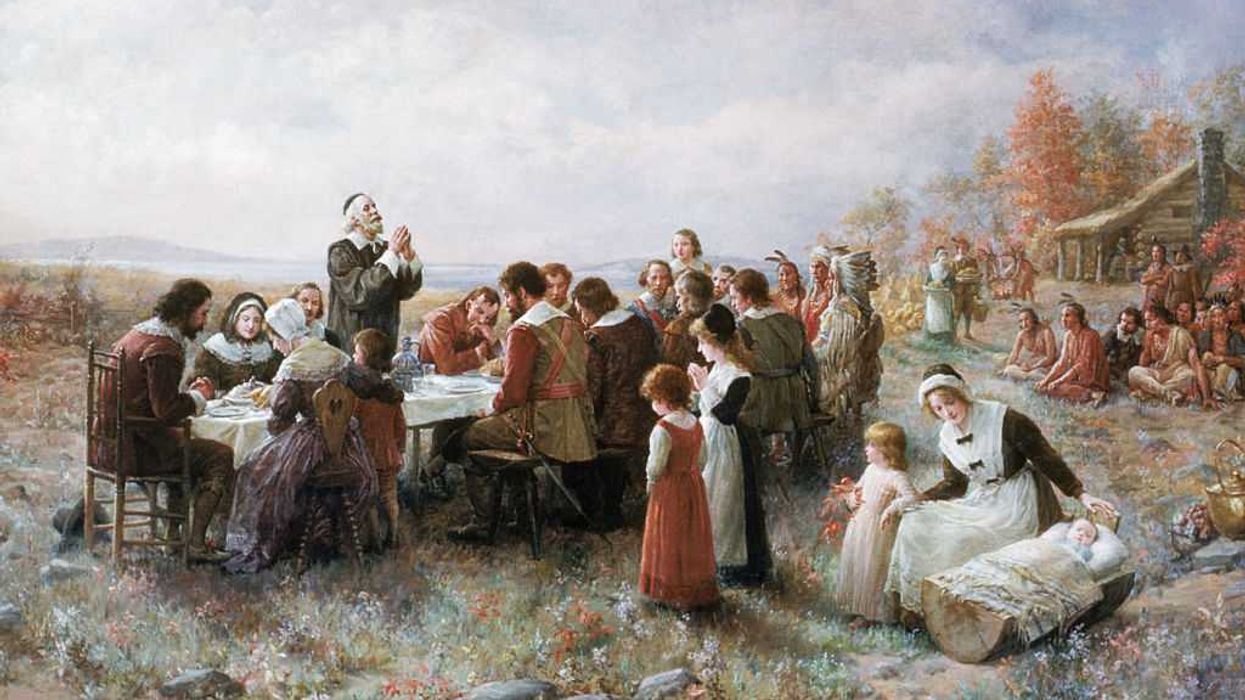
Thanksgiving is an annual reminder of our nation’s Christian roots and our godly heritage. Although Virginia proclaims that the first Thanksgiving was in Jamestown in 1619 — not in Plymouth in 1621 — the Plymouth one became the prototype of our annual celebrations.
George Washington was the first president under the Constitution to declare a national day of thanksgiving, and President Lincoln was the first to declare Thanksgiving an annual holiday.
‘It is the indispensable Duty of all Men to adore the superintending Providence of Almighty God; to acknowledge with Gratitude their Obligation to him for Benefits received, and to implore such further Blessings as they stand in Need of …’
However, Samuel Adams, with the help of two other continental congressmen, was the first to declare a National Day of Thanksgiving for America as an independent nation.
The time was the fall of 1777. Overall, it seemed that things were not going well for the United States. Americans lost the Battle of Brandywine on September 11, which Dr. Peter Lillback notes was our “first 9/11.”
George Washington saw that the Brandywine defeat meant the impending fall of Philadelphia, our nation’s capital at the time, into the hands of the British.
So Congress had to flee westward, first to Lancaster and then to York, Pennsylvania. Washington and his troops had to flee westward also. They ended up in a place called Valley Forge. The worst was yet to come with the brutal winter there.
Meanwhile, on October 7, 1777, there was a victory at Saratoga, New York. Samuel Adams of Boston, a key leader in American independence, saw that we as a nation could rejoice in this act of divine Providence. So — with the help of fellow Continental Congressmen Rev. John Witherspoon of New Jersey and Richard Henry Lee of Virginia — Samuel Adams wrote our country’s first thanksgiving declaration as an independent nation.
This is what they wrote in that First National Thanksgiving Proclamation, November 1, 1777: “It is the indispensable Duty of all Men to adore the superintending Providence of Almighty God; to acknowledge with Gratitude their Obligation to him for Benefits received, and to implore such further Blessings as they stand in Need of.”
As humans, as Christians, we should be grateful. They continue, “And it having pleased him in his abundant Mercy, not only to continue to us the innumerable Bounties of his common Providence; but also to smile upon us in the Prosecution of a just and necessary War, for the Defense and Establishment of our unalienable Rights and Liberties; particularly in that he hath been pleased, in so great a Measure, to prosper the Means used for the Support of our Troops, and to crown our Arms with most signal success.”
I think it’s fair to say that Adams, Witherspoon, and Lee were looking for the good news (the Saratoga victory) in a sea of bad news (American setbacks, the latest of which was the defeat at Brandywine).
They continue: “It is therefore recommended to the legislative or executive Powers of these UNITED STATES to set apart THURSDAY, the eighteenth Day of December next, for SOLEMN THANKSGIVING and PRAISE.”
And what were the Americans to do during that day of Thanksgiving and praise? To confess “their manifold sins … that it may please GOD through the Merits of JESUS CHRIST, mercifully to forgive and blot them out of Remembrance; That it may please him graciously to afford his Blessing on the Governments of these States respectively, and prosper the public Council of the whole.”
RELATED: That we may all unite in rendering unto our Creator our sincere and humble thanks
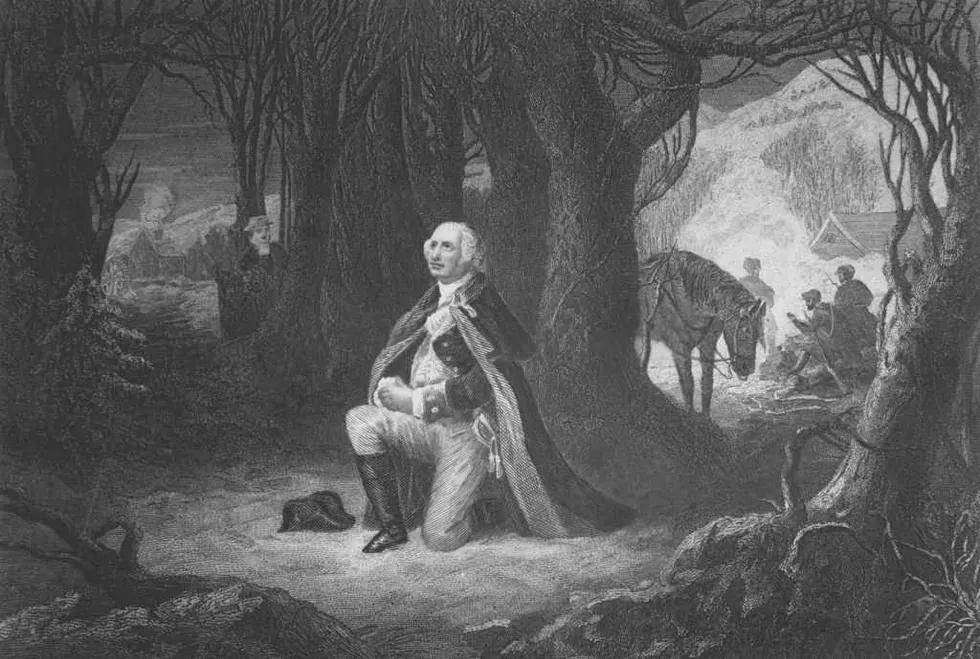 Interim Archives/Getty Images
If someone prayed like this in Congress today, people might try to drive him out of town on a rail — like the leftist members of Congress who blew a gasket when California minister Jack Hibbs prayed in the name of Jesus in Congress in early 2024.
Writing on behalf of Congress, Adams, Witherspoon, and Lee continue: “To inspire our Commanders, both by Land and Sea, and all under them, with that Wisdom and Fortitude which may render them fit Instruments, under the Providence of Almighty GOD, to secure for these United States, the greatest of all human Blessings, INDEPENDENCE and PEACE.”
They also prayed for God “to prosper the Trade and Manufactures of the People,” as well as the farmers, for success of the crops. They also asked for God’s help in the schools, which they note are “so necessary for cultivating the Principles of true Liberty, Virtue and Piety, under his nurturing Hand; and to prosper the Means of Religion, for the promotion and enlargement of that Kingdom, which consisteth ‘in Righteousness, Peace and Joy in the Holy Ghost.’”
This prayer proclamation is no namby-pamby type of prayer such as we might hear from Congress these days. These are bold proclamations of faith, showing the pro-Christian side of the founding fathers that we rarely hear about these days.
This article is adapted from an essay originally published at Jerry Newcombe’s website.
Are aliens demons in disguise? This theory will shatter your reality

Extraterrestrial life boils down to three possibilities: pure myth, flesh-and-blood invaders from the stars, or spiritual entities slipping through cosmic rifts to toy with our souls.
There’s a growing body of belief in the latter — that UFOs and aliens are actually demonic entities masquerading as extraterrestrials in order to deceive humanity.
Presbyterian minister and “Cultish” contributor Colin Samul, who was an occult practitioner before his conversion to Christianity in 2005, falls into this body of belief. “My conclusion, and the conclusion of even a lot of secular researchers like Jacques Vallée, is that what we’re dealing with is not interplanetary but … interdimensional — that is, it’s coming from another realm into this realm,” he told Steve Deace in a fascinating interview about the undeniable connection between ufology and occultism.
“The spirit world that we see in scripture that interpenetrates with this realm fits exactly with what we observe in the [UFO/alien] phenomenon,” he said.
But long before he was a Christian and knew scripture well enough to make this claim, it was already clear to Samul that aliens and UFOs were spiritual in nature. As someone who was deep into New Age rituals, Eastern mysticism, and psychedelic experimentation, Samul could see firsthand that “the UFO subject is tightly bound to the New Age and the occult.”
“I mean, you cannot separate them,” he told Deace.
After his Christian conversion, Samul “put a plug” in his interest in all things extraterrestrial and focused exclusively on growing in his newfound faith. But 20 years and a seminary degree later, the topic re-emerged unexpectedly. In 2017, the New York Times published a bombshell front-page article titled “Glowing Auras and ‘Black Money’: The Pentagon’s Mysterious U.F.O. Program.” It revealed a secret Pentagon initiative (AATIP) that studied UFOs/UAPs for a decade — complete with leaked Navy videos of bizarre aerial encounters.
This mainstream coverage marked a pivotal modern watershed, elevating ufology to national security legitimacy for the first time in decades.
Samul, an ordained minister who used to practice contacting extraterrestrial beings, knew that he was exactly the kind of person who might speak into this national surge in interest in the otherworldly. He dove headfirst into UFO research and related communities but with Christian theology as his guiding light. He described it as being “an embedded reporter from a Christian perspective.”
A few years later, Samul found himself hosting and producing “Cultish’s” 10-part Alien Revelations series on UFOs, disclosure, and spiritual connections — a program Deace says is “an outstanding, must-listen-to” series.
In it, Samul argues that aliens and UFOs are really just “a pathway of initiation into the occult that uses this pop-level meme of space invaders to get people’s attention.” But it never stops at the belief that extraterrestrial life exists. The inevitable next question is: What can these otherworldly beings teach us? And that is precisely what occultism is at its core — the search for hidden knowledge via contacting unearthly realms.
While leading experts in the field of ufology often frame this pursuit of alien knowledge in scientific terms, their rhetoric almost always takes a turn toward the spiritual.
In Deace’s words, it “starts off very Star Trekian” but “ends up very occultic,” as the sciencey vernacular of whistleblowers and spokespeople eventually gives way to more ethereal terms, like “higher consciousness” and “summoning.”
The reason for this, says Samul, is because ufology at its core has “always been” about supernaturalism. That’s why the majority of UFO eyewitness accounts have religious undertones to them, with people reporting “conscious connections,” feeling like they were “one” with a craft, or experiencing “divine” energy emanating from a UFO. Further, people who claim to have been abducted by UFOs often return with alleged “psychic abilities,” believing they can telepathically receive messages from their abductors.
But the connection between ufology and occultism gets even weirder. Aleister Crowley — arguably the most famous occultist in modern history, a man who nicknamed himself “the Great Beast 666” and is widely dubbed “the wickedest man in the world” for his rituals of sex, drugs, and blood sacrifice — claimed to have contact with otherworldly beings. Once, he sketched a picture of one of these beings. Crowley’s drawing portrayed an entity named “Lam” as a bald, gray-skinned being with a large, elongated head, small slit eyes, no mouth, and a vaguely fetal form — eerily resembling modern “gray alien” tropes.
Perhaps even more disturbing is the fact that Jack Parsons — Crowley’s devoted protégé and disciple — went on to become a rocket scientist who channeled his occult obsessions into pioneering solid rocket fuel and co-founding NASA’s Jet Propulsion Lab.
Deace puts it in simple terms: “One of the most important advents of engineering in modern human history came from a disciple acolyte of arguably the most infamous occultist satanist in Western history.”
In 1947, Parsons and his fellow Crowley-pupil L. Ron Hubbard, who would go on to found the Church of Scientology, performed a months-long occult experiment called the Babalon Working. Through a series of sex magic rituals, the sinister duo claimed to “birth” the incarnate Thelemic goddess Babalon, who they believed was Marjorie Cameron — an occult artist and actress. When she returned home from the Babalon Working, where she was dubbed “the Scarlet Woman” — the human embodiment of the goddess Babalon – Cameron claimed a UFO was hovering over her house.
1947 also happens to be the same year the modern UFO era kicked off. Kenneth Arnold’s “flying saucer” sighting unleashed a frenzy of reports — over 800 in the U.S. alone — capped by the infamous Roswell crash.
Occult filmmaker Kenneth Anger, who worked with Cameron, claimed that Parsons and Hubbard’s Babalon Working “pierced the veil” of the cosmos, allowing UFOs to enter Earth’s realm. Even the Collins Elite — a secretive U.S. government group — viewed the uptick in UFOs as fallout from Parsons’ and Hubbard’s occult practices.
In other words, says Deace, the theory is that UFOs and aliens are “the culmination of several different fronts of occultic activity” that created “a successful ritual that … opened a door to some form of interdimensional portal.”
To hear more on this theory, watch the full interview above.
Want more from Steve Deace?
To enjoy more of Steve’s take on national politics, Christian worldview, and principled conservatism with a snarky twist, subscribe to BlazeTV — the largest multi-platform network of voices who love America, defend the Constitution, and live the American dream.
The families behind our veterans deserve more than once-a-year thanks
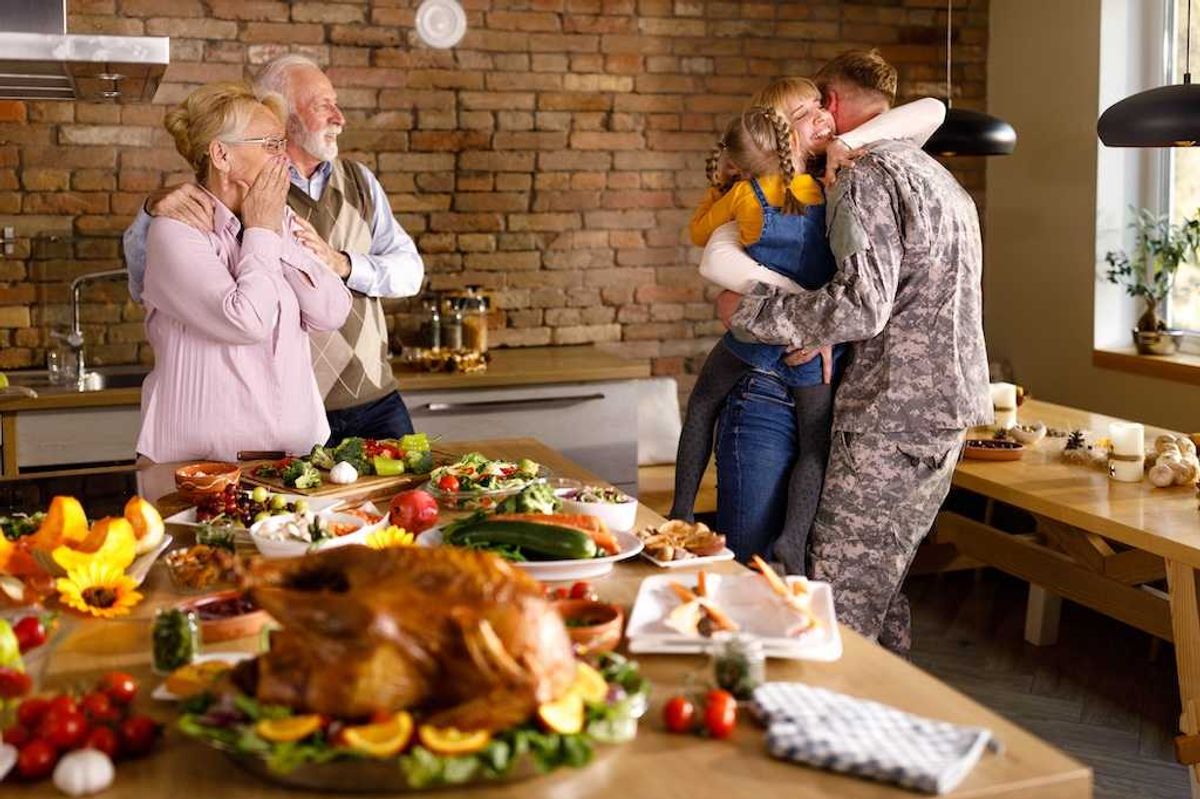
Every November, America pauses to thank its veterans. As Thanksgiving approaches — and as we mark Veterans and Military Families Month — it’s worth remembering that real gratitude does not begin in ceremonies. It begins in living rooms, workplaces, and communities willing to listen.
When I returned from Iraq, I believed my mission was complete. I had led soldiers through chaos during the invasion of Baghdad and made it home alive. What I didn’t expect was the second battle: reintegration. Purpose felt less defined. Connection felt harder to find. The uniform came off, but the transition demanded its own kind of discipline.
Service doesn’t end on the battlefield. It continues in the boardroom, the classroom, the town hall — and at the dinner table.
Like many veterans, I learned that coming home isn’t an ending. It’s a transfer of duty.
Service that spans generations
That duty is carried not just by veterans but by the families who stand behind them. A spouse manages a household while absorbing the worry that never quite fades. A child learns resilience from absence. A parent hopes each phone call means his son or daughter is one day closer to coming home — and able to stay.
My son is now a second lieutenant in the Army. Watching him begin his own journey reminds me that service does not stop at the edge of a battlefield. It moves through generations. Families carry it alongside us.
The meaning of gratitude
Thanksgiving offers a natural moment to reflect on gratitude — not the polite version, but the kind that demands something from us.
It demands employers who recognize leadership potential behind a résumé gap.
It demands communities willing to listen before advising.
It demands fellow veterans who know that strength includes accepting help, not just offering it.
Most of all, it demands that Americans see military families not as supporting characters but as central figures in the story of national resilience.
RELATED: Thankful for a capitalist Thanksgiving
 skynesher via iStock/Getty Images
What we owe the next generation
The wars of the last two decades lasted longer than anyone expected. Their consequences will last even longer. We owe it to the next generation — including my son’s — to show that a nation’s strength is not measured only by how it deploys its forces, but by how it welcomes them back.
As we close Veterans and Military Families Month and gather around Thanksgiving tables, we can honor veterans in a simple but meaningful way: not by assuming we understand their experience, but by inviting them to share it. Not by thanking them once a year, but by offering them roles in which their judgment, discipline, and experience make a difference.
Service doesn’t end on the battlefield. It continues in the boardroom, the classroom, the town hall — and at the dinner table.





