

Category: Blaze Media
The New Yorker’s attempt to evoke pity for illegal alien is obliterated by devastating community note
Another attempt to garner sympathy for the plight of a deported illegal immigrant was undone by devastating information provided in a community note on X.
The New Yorker report documented the deportation of Jamaican national Orville Etoria to a prison facility in Eswatini, a southern African nation. It quoted Etoria as comparing his deportation to the transportation of slaves.
‘If you come to our country illegally and break our laws, you could end up in CECOT, Eswatini, South Sudan, or another third country.’
“It helped me imagine how the slaves might have felt, going to another land in shackles and chains,” Etoria said.
The community note provided pivotal context about the crimes committed by Etoria.
“Orville Etoria has multiple serious felonies including armed robbery and murder. He held a U.S. lawful permanent resident status, which can and was revoked following his criminal convictions.”
While he had previously been a green card holder, the residency status was revoked after the murder and armed robbery convictions, in addition to criminal possession of a weapon and forcible theft with a deadly weapon, according to the Department of Homeland Security.
Etoria had served 25 years in prison and upon his release in 2021, officials allowed him to stay in the U.S. as long as he fulfilled annual check-ins. He was deported in July 2025 after President Donald Trump issued new restrictive immigration policies.
“If you come to our country illegally and break our laws, you could end up in CECOT, Eswatini, South Sudan, or another third country,” said a DHS spokesperson about the case to Newsweek.
RELATED: NYTimes is getting hammered online for sympathetic article about criminal illegal alien
Etoria’s aunt had previously told the New York Times that he should have been deported to Jamaica, where he has a valid passport. In September, Etoria was repatriated to Jamaica, according to the foreign affairs minister of that country.
“Every single day President Trump and Secretary Noem fight for justice for American victims of illegal alien crime and nearly every single day the media ignores these victims and their families,” said DHS.
Like Blaze News? Bypass the censors, sign up for our newsletters, and get stories like this direct to your inbox. Sign up here!
RealPage, accused of rental price fixing, settles suit with feds
A real estate website once accused of facilitating a “housing cartel” has reached a settlement with the Department of Justice.
After a more than year-and-a-half battle, RealPage and the DOJ have come to an agreement that will limit certain features on the app that renters claimed were unfair.
‘Replacing competition with coordination … renters paid the price.’
In 2024, tenants from a popular building in Jersey City, New Jersey, took RealPage to court over allegations of landlords sharing nonpublic information on the website, including vacancy data.
The tenants said the information inflated rental prices, effectively resulting in price-fixing rent across cities due to landlords using the same algorithm to dictate their prices.
In November 2023, the attorney general of Washington, D.C., submitted a different complaint against 14 other landlords operating more than 50,000 rental units in territory.
“Effectively, RealPage is facilitating a housing cartel,” said D.C.’s AG Brian Schwalb.
A DOJ suit in August 2024 seemingly tipped the scales, and now RealPage has agreed to settle on terms.
According to the DOJ’s Antitrust Division Assistant Attorney General Abigail Slater, RealPage was “replacing competition with coordination, and renters paid the price.”
The settlement stops RealPage from coordinating pricing, Slater said in a video posted to X, and forces the app to cease using competitor data to set rents in real time. As well, RealPage can no longer generate “hyper-localized pricing that pushes rent up” and must eliminate features that discourage landlords from lowering prices.
“It means rents set by the market, not a secret algorithm,” Slater remarked.
In a press release, RealPage boasted that the settlement led to no findings or admissions of liability, including no financial penalties or damages being awarded.
However, the company did reveal that it agreed to be independently monitored to confirm ongoing compliance with the new terms. Reuters reported that the monitorship will last three years and limit how RealPage collects and uses nonpublic data.
RELATED: Did rent go up? Blame AI price-fixing
Stephen Weissman, Gibson Dunn partner and former deputy director for the Federal Trade Commission, reiterated the company’s denial of any wrongdoing and blamed the spread of misinformation for alleged misconceptions on how the app operates.
“There has been a great deal of misinformation about how RealPage’s software works and the value it provides for both housing providers and renters.”
Weissman claimed that the company’s use of “aggregated and anonymized nonpublic data” has led to lower rents and more “pro-competitive” effects.
Aiden Buzzetti, president of the Bull Moose Project, told Return that he feels the settlement ensures that “Americans who rent are not subject to illegal price-fixing practices.”
Buzzetti added, “We support the Trump administration’s transformative direction to hold corporations like RealPage accountable when they violate the law.”
Like Blaze News? Bypass the censors, sign up for our newsletters, and get stories like this direct to your inbox. Sign up here!
Sen. Elissa Slotkin says FBI is investigating 6 Democrats Trump called ‘traitors’ for ‘seditious’ video
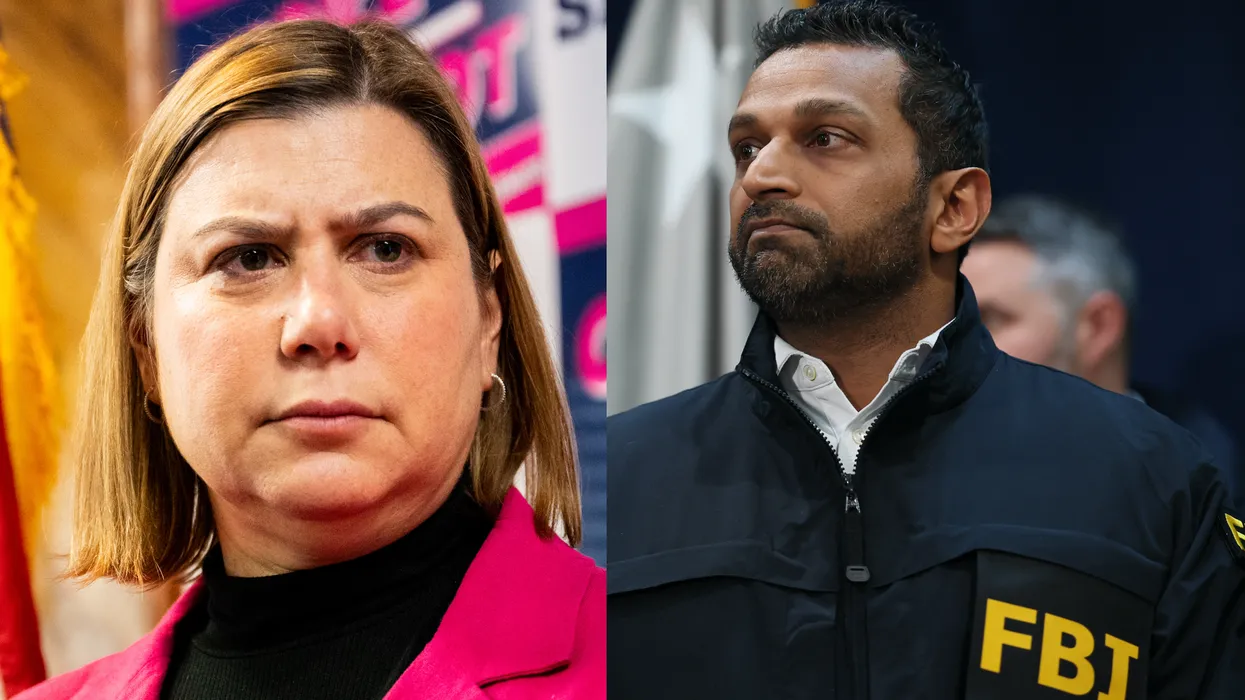
The Federal Bureau of Investigation requested interviews with six Democrats over their video calling on military members to disobey allegedly unlawful orders from the Trump administration, according to four members of Congress.
Democratic Sen. Elissa Slotkin of Michigan said on social media Tuesday that she had been notified by the FBI about the investigation, and a statement from lawmakers supported the claim.
‘To suggest and encourage that active-duty service members defy the chain of command is a very dangerous thing for sitting members of Congress to do.’
“Last night, the FBI’s Counterterrorism Division appeared to open an inquiry into me in response to a video President Trump did not like. The President directing the FBI to target us is exactly why we made this video in the first place,” Slotkin wrote on social media.
President Donald Trump accused the Democrat “traitors” of “seditious behavior” and at one point suggested they should be jailed and perhaps even hanged. The White House later walked that comment back, but the president continued to demand the Democrats face prosecution over the video.
“He believes in weaponizing the federal government against his perceived enemies and does not believe laws apply to him or his Cabinet. He uses legal harassment as an intimidation tactic to scare people out of speaking up,” Slotkin continued.
The statement from Democrats said the FBI contacted the House and Senate sergeants at arms and requested interviews.
“President Trump is using the FBI as a tool to intimidate and harass Members of Congress,” they wrote in the joint statement.
In an email to Blaze News, the FBI declined to comment.
“This isn’t just about a video,” Slotkin continued. “This is not the America I know, and I’m not going to let this next step from the FBI stop me from speaking up for my country and our Constitution.”
White House press secretary Karoline Leavitt said Thursday that the president did not want the members to be executed.
“To suggest and encourage that active-duty service members defy the chain of command is a very dangerous thing for sitting members of Congress to do,” she added. “And they should be held accountable. And that’s what the president wants to see.”
RELATED: Marjorie Taylor Greene says she has received violent threats — and blames Trump
On Monday, the Department of War released a statement indicating that investigators were reviewing misconduct allegations against Sen. Mark Kelly (D-Ariz.) and that he might face “court-martial proceedings or administrative measures” as a result.
Kelly responded on social media.
“If this is meant to intimidate me and other members of Congress from doing our jobs and holding this administration accountable, it won’t work,” he replied.
Like Blaze News? Bypass the censors, sign up for our newsletters, and get stories like this direct to your inbox. Sign up here!
New York Times is getting absolutely hammered online for sympathetic article about criminal illegal alien
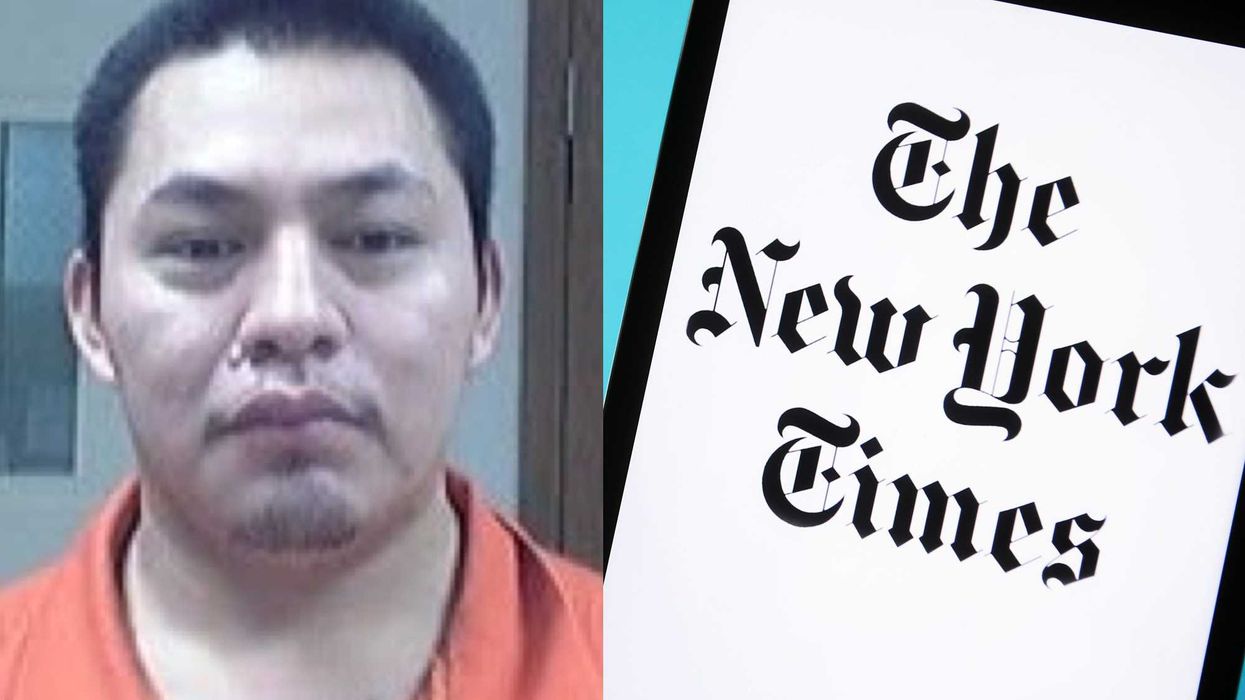
As the debate over immigration continues, the New York Times tried to put a sympathetic light on an illegal alien who committed identity theft and instead radicalized many on the right.
The article contrasts the lives of Romeo Perez-Bravo from Guatemala and Dan Kluver, the man whose identification records were stolen to secure employment for Perez-Bravo in the Midwest.
‘The disgusting New York Times writes this story … as if they are BOTH victims.’
Kluver was forced to pay thousands of dollars to resolve the tax debts that had been racked up by Perez-Bravo under his credentials.
The Times portrays the identify theft as an unfortunate feature of the employment system and frames it as a “survival tactic” of illegal immigrants.
His case was one version of a problem that’s been spreading across the country for years. The government estimates that as many as one million undocumented workers are using fraudulent or stolen Social Security numbers — a survival tactic used to pass background checks and get jobs. The numbers are skimmed from data breaches, sold in black markets online for as little as $150, or handed out in border towns by human smugglers. Many numbers connect back to US citizen children, dead people, or Puerto Ricans whose numbers circulate easily across the mainland.
The article was immediately assailed by many online, and the Department of Homeland Security responded by setting the record straight about the extent of the criminal convictions against Perez-Bravo.
“The violent criminal illegal alien who stole Daniel Kulver’s identity is Guatemalan National Romeo Perez Bravo,” replied DHS Assistant Sec. Tricia McLaughlin.
She added that he had a rap sheet including convictions for terroristic threats and assault and four convictions for driving under the influence.
“He reentered the U.S. a third time after being removed, which is a felony,” she added. “Behind every stolen Social Security number is a real American: mothers, fathers, students, and workers facing devastating financial, personal and legal fallout.”
He was also involved in a traffic accident that resulted in the death of a 68-year-old grandfather, according to the Times.
The Times, meanwhile, is getting decimated.
“An illegal alien was using the stolen identity of an American citizen — and the disgusting New York Times writes this story … as if they are BOTH victims,” replied political consultant Steve Cortes.
“This is just a completely infuriating story,” responded Ohio state Rep. Josh Williams (R). “When you see Democrats fight back against mass deportations to the extent they have, think about men like Daniel Kluver, who have had their shot at the American Dream turned upside down because of the left’s desire to protect illegals over Americans.”
RELATED: NYT hit with backlash over op-ed calling for radical gov’t change so the left can compete
“One selfish man destroyed another man’s life, killed a grandpa, and sent a young girl to the hospital. It’s incredible to see how hard you strain to varnish over this ugly story,” read another response.
“The worst part of this article is how the @nytimes tries to paint a sympathetic story about the illegal alien. He was involved in a fatal crash and handed over the identity of the American whose name he’d stolen. The actual victim of the ID theft ended up getting sued for it,” replied the account for the Project for Immigration Reform.
Like Blaze News? Bypass the censors, sign up for our newsletters, and get stories like this direct to your inbox. Sign up here!
‘Reminiscent of the Manhattan Project’: Trump administration launches massive next-gen AI program
As the AI arms race continues at breakneck pace, the United States is stepping up its game to stay on the cutting edge of information technology. To that end, the Trump administration is launching a new initiative: the Genesis Mission.
On Monday, the White House announced the creation of the Genesis Mission under the purview of the Department of Energy.
‘The Genesis Mission marks a defining moment for the next era of American science.’
The Genesis Mission is described as a “national effort to accelerate the application of AI for transformative scientific discovery focused on pressing challenges.”
RELATED: Trump’s AI plan prioritizes innovation over regulation
 Photo by Win McNamee/Getty Images
More concretely, the Department of Energy has been ordered to “build an integrated AI platform to harness federal scientific datasets.”
In its announcement on X, the Department of Energy said the Genesis Mission will be “reminiscent of the Manhattan Project and Apollo programs.”
In the promotional video, the DOE suggested that this initiative is not unlike what visionaries such as G.W. Liebniz, Claude Shannon, and Alan Turing could have only dreamed of in their scientific endeavors to understand the world.
Dr. Dario Gil, undersecretary for science and Genesis Mission director, said in a press release: “The Genesis Mission marks a defining moment for the next era of American science. We are linking the nation’s most advanced facilities, data, and computing into one closed-loop system to create a scientific instrument for the ages, an engine for discovery that doubles R&D productivity and solves challenges once thought impossible.”
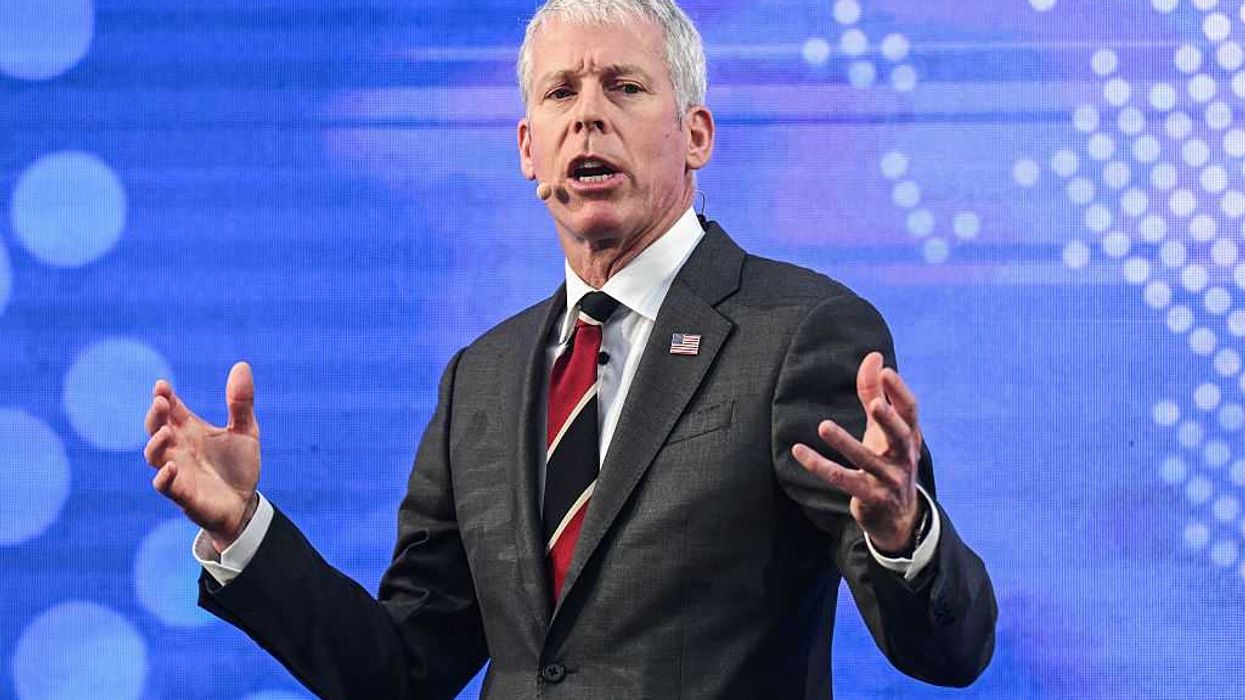
Energy Secretary Chris Wright explained the scope and goal of the project: “This Genesis Mission is going to bring together industry, the national labs, data sets all tied together in a closed-loop system to just rapidly advance the pace of scientific and engineering progress.”
“It will be transformative,” Wright added.
This announcement comes just months after the Trump administration’s AI Action Plan, a comprehensive plan to win the global AI race.
Like Blaze News? Bypass the censors, sign up for our newsletters, and get stories like this direct to your inbox. Sign up here!
‘Santa, I want the head of a Nazi under my tree’: Masked creeps deliver Christmas cards with threatening leftist messages

Jaret McComas told KCBS-TV last week that he found a Christmas card left on his doorstep in Yucaipa, California, and was taken aback by what was written inside.
“I pick it up, open it, and it reads, ‘Santa, I want the head of a Nazi under my tree,'” McComas told the station.
‘When you have people roaming your neighborhood in black face masks, leaving violent notes and warnings, it’s kind of disturbing.’
But he wasn’t the only resident in his neighborhood to receive such a card.
Another card read, “Merry Christmas and f**k you Nazi,” KCBS said.
Neighborhood resident Scott Ungar told KABC-TV that each card contained a different message: “The one over there said a date, and they said, ‘You’ve been warned,’ like they were warning something is going to happen on a specific date.”
Ungar added to KABC that “all of the stuff that they were putting in [the cards was] stuff you have been hearing for Antifa.”
More from KCBS:
Doorbell camera footage from some of the homes shows masked men placing the cards in various locations, such as planter boxes and on doormats, and then blowing a kiss to the camera. Another home’s surveillance camera captured the suspects spitting on a Tesla belonging to their neighbor.
Simona Stacks, another neighbor who got one of the cards, told KCBS that “it’s really terrifying, to be honest with you, because we’re home. I have my 14-year-old daughter — what if she was outside? What if you see four men with masks on?”
Ungar added to KABC that “when you have people roaming your neighborhood in black face masks, leaving violent notes and warnings, it’s kind of disturbing.”
Stacks wondered to KCBS why her home and others were targeted — and she has one theory: “Maybe it’s all the American flags, Trump flags. … It really does feel like a bit of a hate crime.”
San Bernardino County Sheriff’s Department Public Information Officer Jenny Smith told KCBS that officials there are “investigating to see what that crime could lead to, or what was the purpose of those letters. We don’t have a specific crime indicated as of yet.”
Deputies told KCBS that at least two suspects were involved in last Monday’s incident and that they ran away on foot when one of the homeowners approached them.
McComas noted to KABC that neither he nor his neighbors who received the cards display political signs or affiliations.
“I am not a heavy conservative,” he added to KABC. “I’m gay, engaged to my fiancé, Roger. So it’s just kind of concerning for me because I am like, ‘What did I do?'”
McComas told KABC he also wondered if the American flag outside his home might have been what attracted the culprits’ attention, but he said that not every targeted house had an American flag.
RELATED: Blaze News original: 12 times leftists have sought to twist, hijack, and stomp on Christmas
Either way, the sheriff’s department told KCBS that patrols in the area would increase while the investigation continues.
What’s more, the neighbors added to KCBS that they are not letting the disturbing cards dampen their holiday activities.
“Gonna bring the Christmas spirit back to the street, and hopefully that cheers everybody else up,” McComas told KCBS.
Investigators believe there may be other unidentified victims and are asking those who have more information to contact them at 909-918-2330, KCBS said.
Like Blaze News? Bypass the censors, sign up for our newsletters, and get stories like this direct to your inbox. Sign up here!
‘Burn alive, b***h’: Offender with 72 prior arrests set free by DEI-obsessed judge — then allegedly sets woman on fire
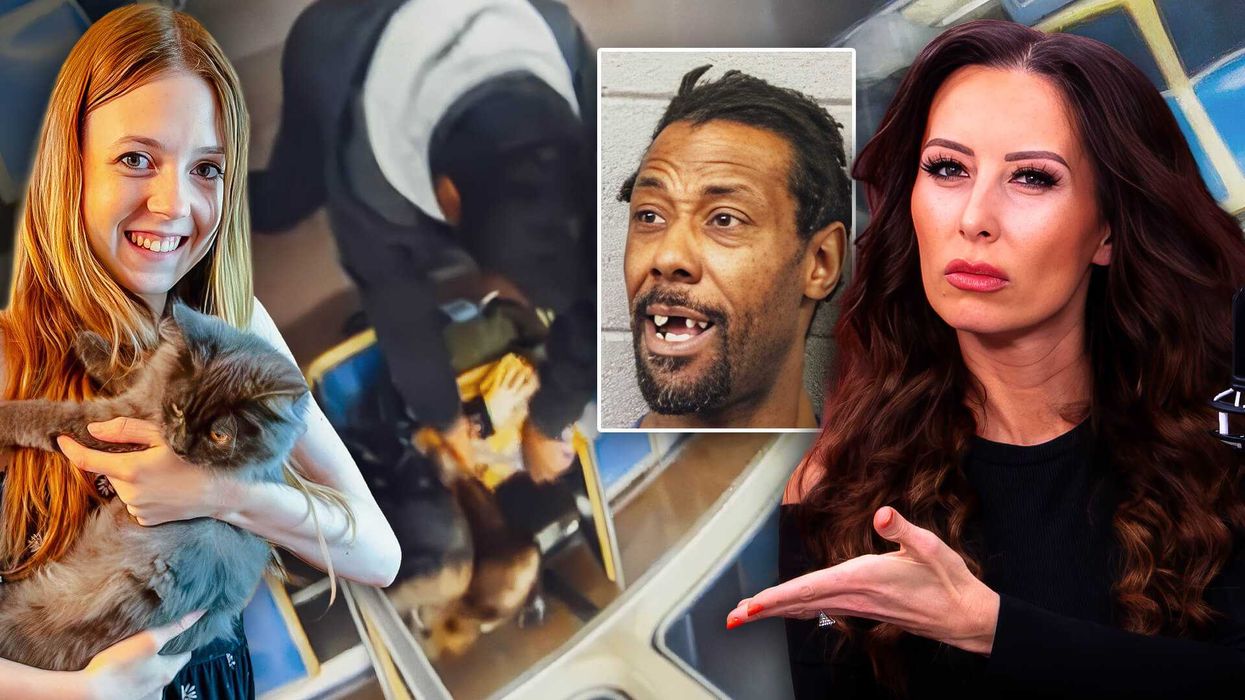
Democrats’ soft-on-crime policies have resulted in yet another attack on an innocent woman. On November 17, 26-year old Bethany MaGee was riding Chicago’s Blue Line L train when 50-year-old Lawrence Reed — a serial offender with 72 prior arrests — allegedly doused her in gasoline and lit her on fire, reportedly shouting, “Burn alive, bitch.”
Although MaGee escaped from the train, she now remains in critical condition, hospitalized in a burn unit with severe injuries covering approximately 60% of her body.
Reed was arrested the following day and charged with a federal terrorism offense.
“So, he could be eligible for the death penalty if convicted, which, like, let’s do that, okay? Let’s just do that,” says BlazeTV host Sara Gonzales, who’s nauseated at the extensive leniency Reed was shown by Chicago’s justice system over decades, despite his staggering criminal record, which includes multiple felony convictions for violent crimes.
Back in August this year, Reed was hit with an aggravated battery charge for assaulting a social worker in a hospital, but Cook County Judge Teresa Molina-Gonzalez overruled prosecutors’ pleas for detention and freed him on electronic monitoring, ignoring the fact that he had a history of felony aggravated arson convictions for setting occupied buildings on fire, plus scores of violent battery and assault cases.
According to court transcripts, Molina-Gonzalez stated, “I can’t keep everybody in jail because the state’s attorney wants me to.”
Further, a resurfaced video clip from a Hispanic Heritage Month interview shows Molina-Gonzalez stating: “You know, being a Latina in the office, people would tell me, like, ‘Don’t you feel like you’re prosecuting your own people?’ But it’s true, there are a lot of defendants that look like me. However, I had a chance as a prosecutor to make a difference as to what cases come in. I had a chance as a prosecutor to decide what offers were appropriate.”
In the same video, Molina-Gonzalez also admits that she “always [offers] them the opportunity to do community service.”
In other words, Sara explains, Judge Molina-Gonzalez isn’t committed to justice; she’s committed to DEI. “The problem is that these law schools are producing people like Kamala Harris and Ketanji Brown Jackson and Fani Willis and this dumbass judge.”
“The fact that [Molina-Gonzalez] was able to go through law school, was able to pass all the tests, was able to get to her position, and still think that it is her place to be offering up what she thinks the offender will like best is insane,” Sara adds.
When blue-city judges prioritize perpetrators above victims, they think they’re exercising restorative justice, but all they’re doing is creating career criminals that wreak havoc on innocent civilians — people like Iryna Zarutska, Logan Federico, and now Bethany MaGee.
Judge Molina-Gonzales, Sara says, is exactly “why President Trump is bringing in the National Guard into these s***hole cities.”
To hear more of Sara’s scathing commentary, watch the episode above.
Want more from Sara Gonzales?
To enjoy more of Sara’s no-holds-barred takes on news and culture, subscribe to BlazeTV — the largest multi-platform network of voices who love America, defend the Constitution, and live the American dream.
Trump DHS makes ‘temporary’ finally mean temporary again, revoking Biden’s free pass for 4,000 foreign nationals

The Biden administration expanded so-called lawful pathways, allowing millions of foreign nationals to flood into the United States. One of those pathways included the controversial use of Temporary Protected Status.
TPS was created to provide a deportation shield to foreign nationals in the U.S. based on temporarily unstable conditions in their home countries.
‘This decision restores TPS to its original status as temporary.’
Since retaking office in January, President Donald Trump has moved to roll back TPS, which was provided to numerous countries under the prior administration.
Trump’s Department of Homeland Security announced on Monday the termination of TPS for Burma, effective January 26.
“At least 60 days before a TPS designation expires, the Secretary, after consultation with appropriate U.S. government agencies, is required to review the conditions in a country designated for TPS to determine whether the conditions supporting the designation continue to be met, and, if so, how long to extend the designation,” U.S. Citizenship and Immigration Services stated.
“If the Secretary determines that the conditions in the foreign state continue to meet the specific statutory criteria for Temporary Protected Status designation, Temporary Protected Status will be extended for an additional period of 6 months or, in the Secretary’s discretion, 12 or 18 months,” USCIS continued. “If the Secretary determines that the foreign state no longer meets the conditions for Temporary Protected Status designation, the Secretary must terminate the designation.”
Burma was designated for TPS in May 2021, citing the Burmese military’s involvement in “a coup” that “depos[ed] the democratically elected government and declar[ed] a temporary one-year state of emergency,” which paused elections.
RELATED: Noem prepares to deport 500,000 immigrants from one long-troubled island
 Photo by JIM WATSON/AFP via Getty Images
“The military is responding with increasing oppression and violence to demonstrations and protests, resulting in large-scale human rights abuses, including arbitrary detentions and deadly force against unarmed individuals,” the Biden administration claimed at the time.
DHS Secretary Kristi Noem concluded that the situation in Burma has improved and that its citizens are safe to return home.
“This decision restores TPS to its original status as temporary,” Noem declared. “Burma has made notable progress in governance and stability, including the end of its state of emergency, plans for free and fair elections, successful ceasefire agreements, and improved local governance contributing to enhanced public service delivery and national reconciliation.”
Noem also concluded that allowing Burmese nationals to remain in the country would be “contrary to the national interest of the United States.”
RELATED: Trump admin revokes protected status extension for Venezuelan nationals
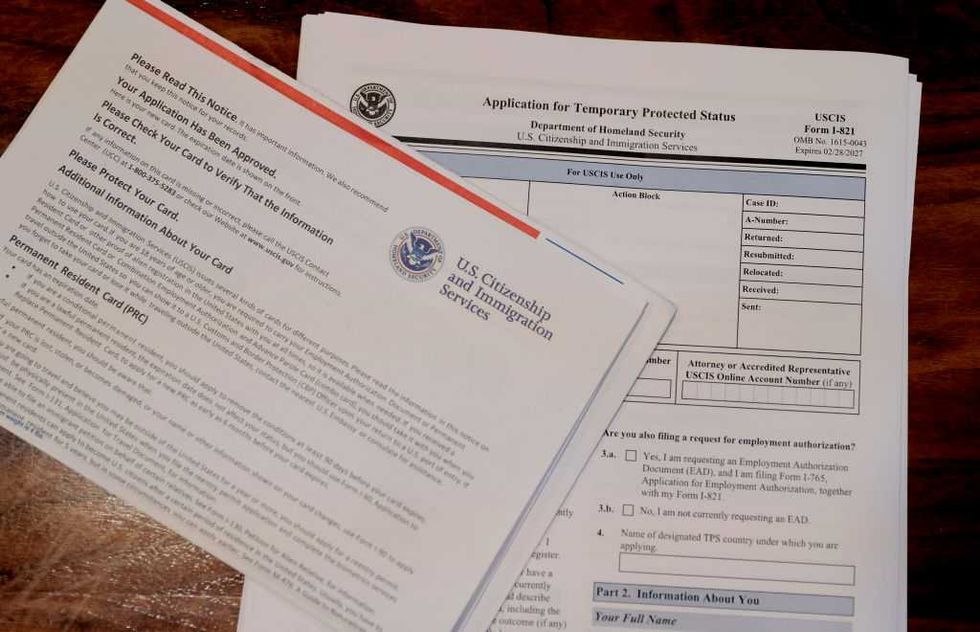 Photo by Pat Greenhouse/The Boston Globe via Getty Images
Rep. Gregory Meeks (D-N.Y.) called the move “cruel,” claiming that revoking TPS would endanger lives.
“Ending TPS for Burma, in the middle of the conflict there, endangers the lives of many Burmese, including human rights and democracy activists. It’s cruel and will undermine the fight for democracy in Burma. The admin must reconsider this terrible decision,” Meeks said.
There are nearly 4,000 approved TPS beneficiaries from Burma, according to DHS. Over 200 individuals reportedly have pending applications.
TPS is set to expire for several other nations, including Ethiopia in December, South Sudan in January, and Haiti in February.
Like Blaze News? Bypass the censors, sign up for our newsletters, and get stories like this direct to your inbox. Sign up here!
As Grocery Prices Remain High, Democrats See An Opening And Plan To Spend Eight Figures Wooing Certain Demographics
Latest talking point for Democrats
Motorist hilariously resorts to ‘arts and crafts’ for inspection, registration — but the jig is up
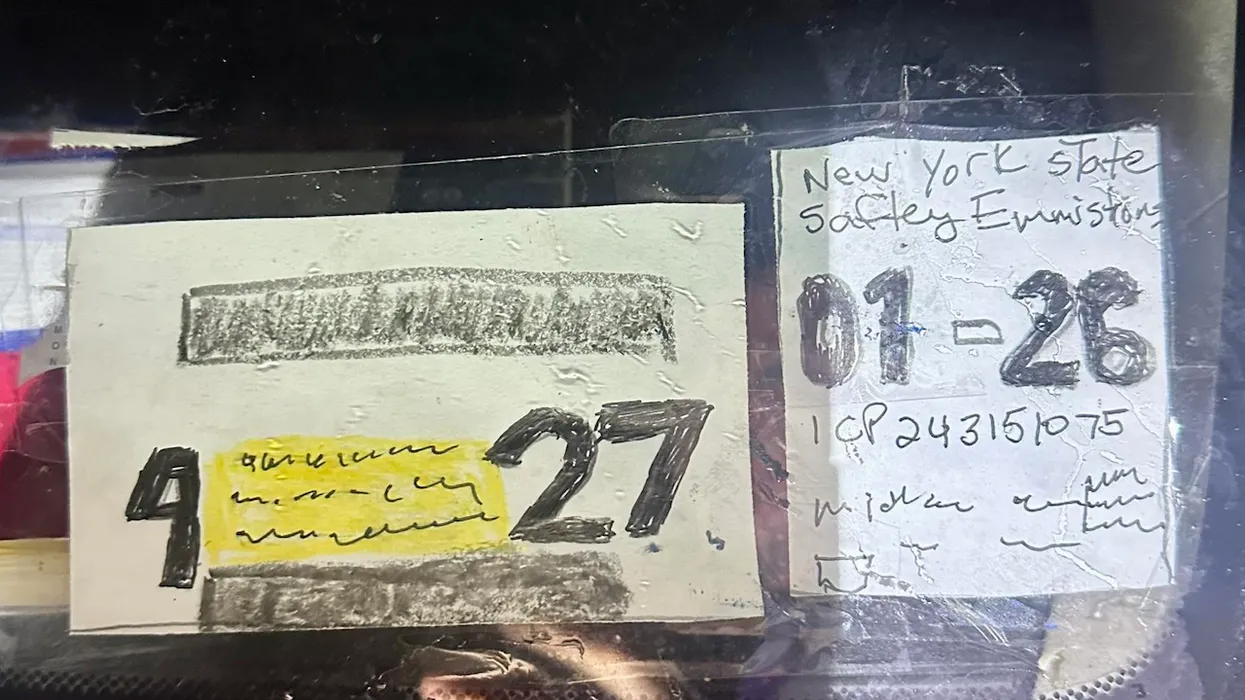
New York State Police said a trooper was conducting a traffic stop Thursday night for switched plates — and then “noticed something unusual.”
Turns out the vehicle’s inspection and registration documents on the windshield “were not official at all,” police said.
‘Okay, but how did the trooper manage to not laugh at this when seeing it up close????’
“In fact they appeared to be hand drawn using a mix of pen, marker, and crayon with an impressive amount of confidence,” police added.
Gregory Cawley, 50, of Lafayette was ticketed for operating a motor vehicle without inspection, operating an unregistered vehicle, improper plates, and other citations, the New York Post reported, citing a police spokeswoman.
Police also said the vehicle was taken off the road.
“As a friendly reminder,” police added, “arts and crafts supplies do not count as valid documentation.”
RELATED: YouTube prankster challenges cops to a duel — immediately regrets it
 Image source: New York State Police
The New York State Police’s Facebook post about the motorist’s faux pas has hit a bit of a viral nerve, receiving 34,000 likes and laughs and well over 3,000 comments to date. The following are a few of the written reactions:
- “What’s hilarious is this car has certainly passed MANY officers hiding, and none of them were smart enough to see this,” one commenter observed. “They’re trained to see these things.”
- “And he would have gotten home if it wasn’t for that meddling cop,” another user said before adding, “(Scooby Doo joke, be nice).”
- “On an old car, my ’10 day’ inspection paper was in my window so long all the ink faded, and it was a blank piece of paper,” another commenter shared. “I rocked that for over 3 years, never got a ticket for it unless I was stopped for something else.”
- “I remember seeing an inspection sticker hand-drawn on a co-worker’s car years ago, and when I asked about it, it had been over 10 years since that person had an actual inspection,” another user recalled. “Crazy! He had never been caught, either!”
- “Okay, but how did the trooper manage to not laugh at this when seeing it up close????” another commenter wondered.
- “I know a person [who] colored a piece of cardboard blue, did the lines down, the months, and everything — and punched out a hole,” another user wrote. “Pretty sure she got away with it for a while.”
Like Blaze News? Bypass the censors, sign up for our newsletters, and get stories like this direct to your inbox. Sign up here!





