Category: Blaze Media
Flirty chat to suicide in hours: The deadly new wave of AI-powered sextortion scams targeting American teens
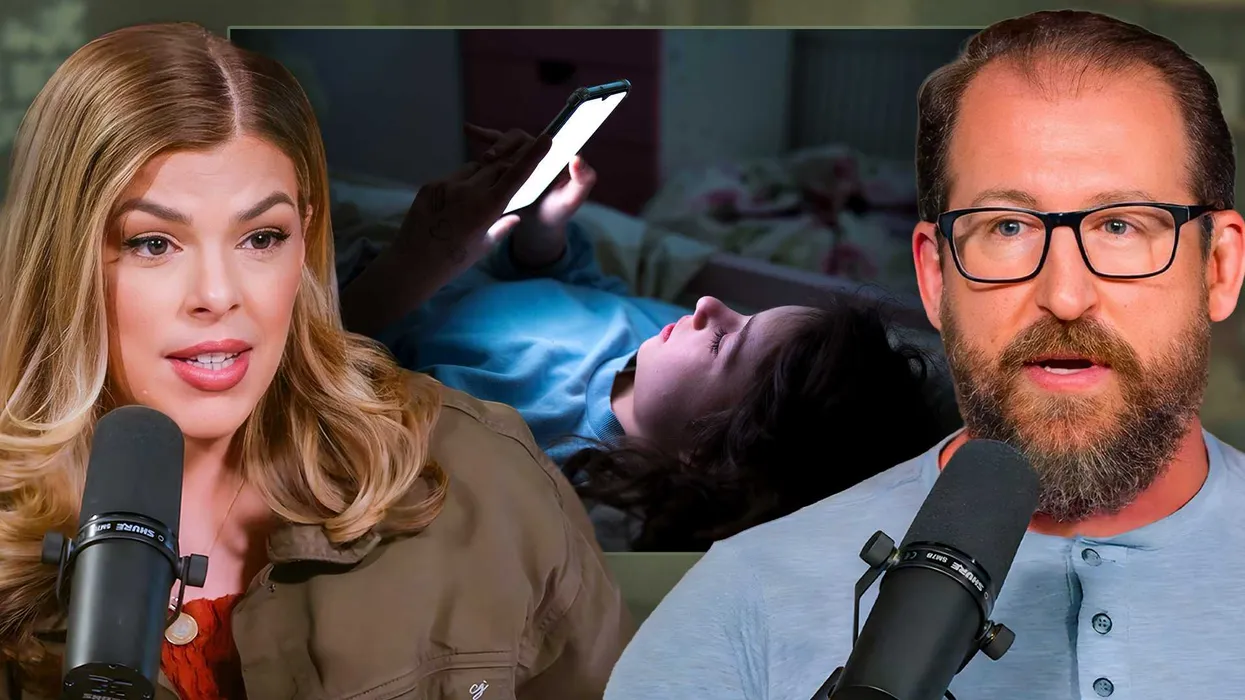
Ben Gillenwater is an IT expert with 30 years of experience and the creator behind the “family IT guy” accounts on social media, where he shares tips with parents on how to protect their kids online from harmful content, predators, and addictive algorithms, among other virtual risks.
But most importantly, Ben is a dad. Five years ago, he gave his 5-year-old son an iPad, the results of which were so disturbing, it launched him into his current role as a full-time content creator dedicated to protecting children from the dangers of the digital world.
On this episode of “Relatable” with Allie Beth Stuckey, Ben dives into the online perils facing today’s children — including one so sinister, it’ll forever change the way you think about child predators.
When most people think of online groomers, they picture creepy men in basements posing as minors in an effort to lure children into secretly meeting up with them. But some groomers have no intention of ever making physical contact with their victims. Their sole intention is to get rich off of creating chaos and ruining lives from afar.
Gillenwater gives the example of Jordan DeMay — a 17-year-old high school student from Michigan, who tragically died by suicide in 2022 after falling victim to a sextortion scam.
“Good kid, good family, good school records, had a girlfriend,” he says.
Then one day, an attractive girl messaged him on social media and struck up a flirtatious conversation that culminated in her sending nude photos. Jordan was asked to return the favor, and when he did, it was revealed that the images of the girl were stolen or fake and that she was actually a Nigerian gang. The two brothers behind the operation — Samuel and Samson Ogoshi — threatened to blackmail DeMay by sending his explicit photos to his family, friends, and school contacts if he didn’t wire them money, spurring DeMay to take his own life.
This entire sextortion scam — from initial contact to DeMay’s suicide — occurred in less than six hours.
DeMay’s tormentors, says Gillenwater, are part of a broad network of Nigerian cybercriminals called “the Yahoo Boys.” They’re the same people behind the Nigerian prince scams that have conned hundreds of thousands — perhaps even millions — of people into wiring money with fake promises of huge inheritances or riches, only to demand endless upfront “fees” that leave victims with nothing.
Whether they’re posing as wealthy princes or attractive women, their strategy is the same: “identify weakness in people,” Gillenwater says.
Back in the ’80s and ’90s when the digital world was just ramping up, these cybercriminals were able to dupe people using only “poorly worded emails,” but today, thanks to advances in technology, their predatory empire is built on “very well-worded and well-informed AI-powered hunting programs,” meaning their schemes have only gotten darker and more effective.
“Teenage boys specifically are targeted for this [sextortion scam] in particular, and they exploit their biology,” says Gillenwater.
“What they do when establishing the initial connection is they study all of your friends on Instagram and gather up your whole network so they know everybody you go to school with … everybody you go to church with … every family member … that’s how they blackmail you is they’re going to send your naked photo to all those people,” he explains.
Sadly this nefarious kind of operation isn’t exclusive to Nigeria.
“There’s South American gangs, there’s Asian gangs, there’s African gangs, there’s European gangs. It’s a very high-profit, very low-effort endeavor, part of which is automated,” says Gillenwater.
But cybercriminals are just one threat in the vast, dark web of online child predation. In the next part of the interview, Gillenwater dives into some shocking statistics regarding the “traditional creep,” who targets vulnerable kids online for sexual exploitation.
To hear more and learn tips that will help you protect your kids online, watch the full episode above.
Want more from Allie Beth Stuckey?
To enjoy more of Allie’s upbeat and in-depth coverage of culture, news, and theology from a Christian, conservative perspective, subscribe to BlazeTV — the largest multi-platform network of voices who love America, defend the Constitution, and live the American dream.
AI in education: Innovation or a predator’s playground?
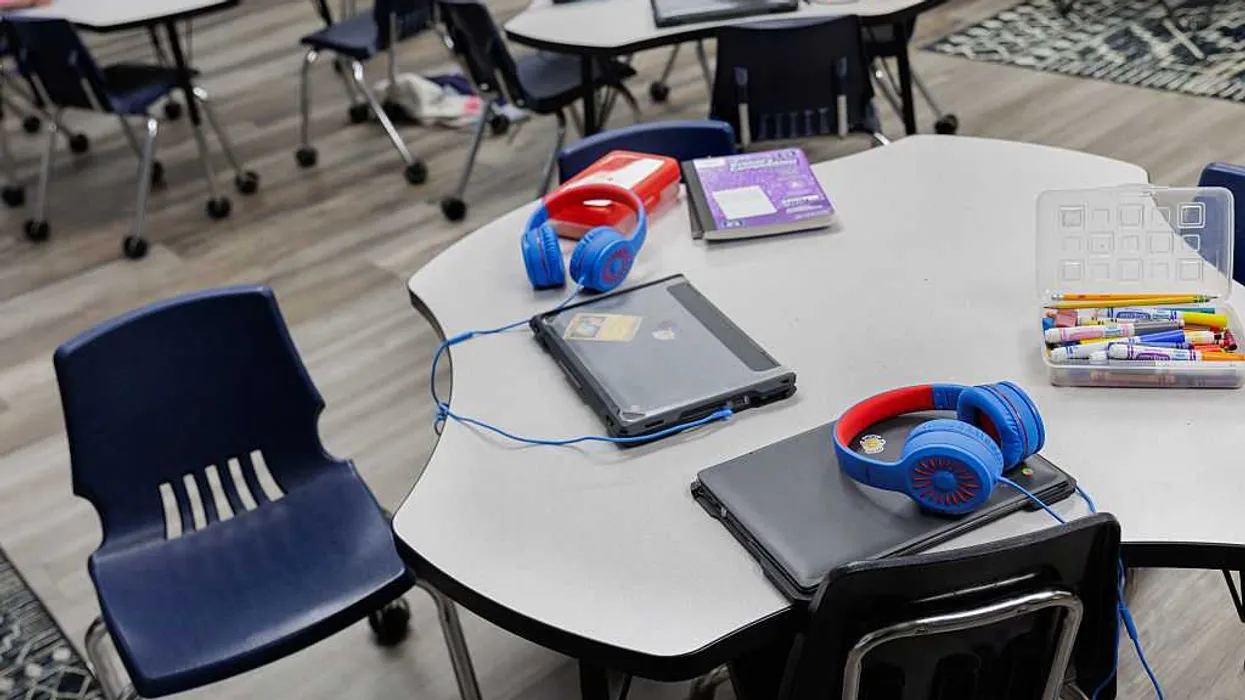
For years, parents have been warned to monitor their children’s online activity, limit social media, and guard against predatory digital spaces. That guidance is now colliding with a very different message from policymakers and technology leaders: Artificial intelligence must be introduced earlier and more broadly in schools.
When risky platforms enter through schools, they inherit an unearned legitimacy, conditioning parents to trust tools they would never allow at home.
On its face, this goal sounds reasonable. But what began as a policy push has quickly turned into something far more concerning — a rush by major tech companies to brand themselves as “AI Education Partners,” gaining access to public education under the banner of innovation, often without parents being fully informed or given the ability to opt out. When risky platforms enter through schools, they inherit an unearned legitimacy, conditioning parents to trust tools they would never allow at home.
AI in education is being sold as inevitable and benevolent. Behind the buzzwords lies a harder truth: AI is becoming a back door for Big Tech to access children and sidestep parental authority.
Platforms already under fire for child safety
At the center of this debate are three companies — Meta, Snap, and Roblox — all now positioning themselves as AI education partners while facing active litigation and investigations tied to child exploitation, predatory behavior, and failures to protect minors.
Meta is facing lawsuits and regulatory actions related to child exploitation, unsafe platform design, and illegal data practices. Internal company documents revealed that Meta’s AI chatbots were permitted to engage minors in flirtatious, intimate, and even health-related conversations — policies the company only revised after media exposure.
European consumer watchdogs have also accused Meta of sweeping data collection practices that go far beyond what users reasonably expect, using behavioral data to profile emotional state, sexual identity, and vulnerability to addiction. Regulators argue that meaningful consent is impossible at such a scale. Meta has also claimed in U.S. courts that publicly available content can be used to train AI under “fair use,” raising serious questions about how student classroom work could be treated once ingested by AI systems.
Snapchat is facing lawsuits from multiple states, including Kansas, New Mexico, Utah, and others, alleging that its platform exposes minors to drug and weapons dealing, sexual exploitation, and severe mental health harm. In January 2025, federal regulators escalated concerns by referring a complaint involving Snapchat’s AI chatbot to the Department of Justice.
Despite this record, Snap signed on as an AI education partner, promising “in-app educational programming directed toward teens to raise awareness on safe and responsible use of AI technologies.”
Roblox, long flagged by parents for safety concerns, is being sued by multiple states, including Iowa, Louisiana, Texas, Tennessee, and Kentucky, over allegations that it enabled predators to groom and exploit children. Yet Roblox now seeks classroom access as an “AI learning” platform.
If these platforms are too dangerous for children at home, they are too dangerous to normalize at school. Allowing companies with a history of child-safety failures to integrate themselves into classrooms is negligent and dangerous.
The contradiction no one wants to address
The danger becomes clearer when you step outside the classroom.
Across the country, states including Florida, Tennessee, Louisiana, and Connecticut are restricting minors’ access to social media through age verification, parental consent, and limits on addictive features. At the federal level, the bipartisan Kids Off Social Media Act seeks to bar social media access for children under 13 and restrict algorithmic targeting of teens.
For more than a century, the Supreme Court has recognized that parents — not the state and not corporations — hold the fundamental right to direct their children’s education.
When Big Tech gains access to classrooms without transparency or consent, that authority is eroded. Parents are told to restrict social media at home while schools integrate the same platforms through AI. The result is families being sidelined while Big Tech reduces their children to data sources.
RELATED: Why every conservative parent should be watching California right now
 Photo by AaronP/Bauer-Griffin/GC Images/Getty Images
This dangerous escalation must meet a clear boundary. Some platforms endanger children, others monetize them, and some expose their data. None of them belong in classrooms without strict, enforceable guardrails.
Parents do not need more promises. They need enforceable limits, transparency, and the unquestioned right to say no. The Constitution has long recognized that the right to direct a child’s education belongs to parents, not Silicon Valley. That authority does not stop at the classroom door.
If artificial intelligence is going to enter our classrooms, it must do so on the terms of families,not tech companies.
‘I’LL BE WATCHING’: Trump Confirms He’s Personally Watching Over the Investigation Into Alex Pretti’s Death [WATCH]
![‘I’LL BE WATCHING’: Trump Confirms He’s Personally Watching Over the Investigation Into Alex Pretti’s Death [WATCH]](https://hannity.com/wp-content/uploads/2026/01/Trump-Pretti-300x168.png "Trump Pretti")
The POTUS is keeping an eye on the Pretti investigation.
NOEM DOING ‘GREAT JOB’: Trump Defends DHS Secretary Amid Calls to Step Down [WATCH]
![NOEM DOING ‘GREAT JOB’: Trump Defends DHS Secretary Amid Calls to Step Down [WATCH]](https://hannity.com/wp-content/uploads/2026/01/GettyImages-2258518759-300x200.jpg "President Trump Departs D.C. En Route To Iowa")
President Donald Trump made it crystal clear Tuesday:

Harvard Professor Known for Anti-Israel Activism Joins Columbia’s Pulitzer Board
A Harvard professor who is one of the campus’s most hard-line anti-Israel activists is joining the board that doles out Pulitzer Prizes.
The post Harvard Professor Known for Anti-Israel Activism Joins Columbia’s Pulitzer Board appeared first on .
More than 100 outraged community members denounce elementary school teacher over 2-word post about ICE

More than 100 community members, including parents, attended a meeting of the West Chicago City Council to demand they take action against an elementary school teacher who posted about immigration.
West Chicago Mayor Daniel Bovey also joined the mob in calling on Gary Elementary School to get rid of the teacher for showing support for Immigration and Customs Enforcement.
‘We want to ensure our schools are safe spaces, and we look forward to seeing all students back in school.’
“We have kids in our school districts, in this school specifically, who have lost a mom or dad or family member within the last three months. They’re going home wondering if they will ever see Mom or Dad again,” Bovey said.
The teacher’s outrageous statement was composed of only two words: “Go ICE.”
He posted it in the comments section of a story about immigration operations on social media.
The superintendent of the school said the teacher has been placed on paid leave.
“On Thursday, January 22, 2026, the District learned of concerns regarding a disruptive social media comment made by a District employee on his personal account,” Superintendent Kristina Davis said in a statement.
“The teacher initially submitted his resignation,” she added. “Later that day, he withdrew his resignation before the Board had an opportunity to take action.”
Others believed the post made the teacher unqualified to continue teaching.
“Where is the due process for all the kids being kidnapped on the streets?” one activist asked.
“At home, we teach our children to be respectful to the teachers, and we expect the same for the teachers to be respectful,” said Emma Villa, a grandparent.
Some parents kept their children out of school to protest the teacher’s words.
“You have many students across District 33 who did not go to school today because of fear incited by a teacher,” Illinois state Sen. Karina Villa claimed.
RELATED: CAIR leads anti-ICE protest outside office of Tim Walz at Minnesota state capitol
Some called for Bovey to resign from the mayor’s office for trying to shut down the teacher’s political speech.
“We understand that this situation has raised concerns and caused disruption for students, families, and staff,” Davis continued in her statement. “We want to ensure our schools are safe spaces, and we look forward to seeing all students back in school tomorrow. Thank you for your patience, trust, and partnership during the ongoing investigation.”
Like Blaze News? Bypass the censors, sign up for our newsletters, and get stories like this direct to your inbox. Sign up here!
USDA Replaces $322 Million in Food Stamps Stolen Because It Won’t Upgrade Card Technology
The government contributes to the pervasive fraud and corruption that has long gripped the nation’s massive food stamp program by using ancient technology to load recipients’ electronic benefit transfer (EBT) cards, making them highly vulnerable to theft. Replacing the stolen welfare benefit costs American taxpayers hundreds of millions of dollars in addition to the eye-popping […]
The post USDA Replaces $322 Million in Food Stamps Stolen Because It Won’t Upgrade Card Technology appeared first on Judicial Watch.

Peaceful Protest

“Peaceful Protest,” editorial cartoon by Tom Stiglich for The American Spectator on Jan. 27, 2026.
Trump Criticizes Alex Pretti For Having Gun Amid Fatal Border Patrol Confrontation
‘shouldn’t have been carrying a gun’