

Category: Blaze Media
Newt Gingrich Proposes Ways For Trump To Enforce Immigration Law And Still Keep Public Trust
‘more training, a little more restraint’
Noem agrees to testify before Senate Judiciary in March
Homeland Security Secretary Kristi Noem agreed to testify before the Senate Judiciary Committee in early March, a spokesperson for the committee’s chair, Sen. Chuck Grassley (R-Iowa), confirmed to The Hill on Monday. Noem is expected to testify on March 3, according to Grassley’s office, for one round of questioning, and senators will each be allotted…
Democrat Suozzi says he ‘failed’ with vote to pass DHS funding bill: ‘I must do a better job’
Rep. Tom Suozzi (D-N.Y.) expressed regret on Monday for voting last week to fund the Department of Homeland Security (DHS). In a statement on Facebook, the moderate Democrat said the backlash from his constituents — paired with the fatal shooting of 37-year-old Minneapolis resident Alex Pretti by a Border Patrol officer — has compelled him…
Josh Allen cast as the next ‘great white villain’

Buffalo Bills quarterback Josh Allen has it all — a great job, a beautiful wife, with whom he is expecting a child.
And because of this, he is being framed as the next “great white villain.”
In an article written by Bobby Burack and published by OutKick, Burack argues that Allen is getting much the same treatment as Caitlin Clark.
“If you’re starting to see a trend, there are no Great White Hopes in 2026. The racial discourse in sports is largely the product of commentators convincing themselves that any praise or popularity of a white athlete must be rooted in racial bias,” Burack explains.
“Much of the sports media, which is not an especially impressive or rigorous group, operates from a Marxian worldview in which one person’s success must come from another’s exploitation. Translated, they believe the popularity of a white athlete comes at the expense of a black athlete,” he continues.
“They are so committed to this worldview that they go on television and onto their made-for-Bluesky podcasts to throw tantrums over things no one actually said about athletes like Josh Allen and Caitlin Clark,” he adds.
BlazeTV host Jason Whitlock could not agree more.
“There aren’t people running around caping up for Josh Allen,” Whitlock says. “To the contrary: When Josh Allen just played a poor playoff game and cost his team that playoff game with ridiculous mistakes and interceptions and fumbles and whatnot, everybody criticized Josh Allen,” he says on “Fearless.”
“What actually does transpire is that when a black athlete, particularly one who Ryan Clark and others have deemed as authentically black, meaning they wear cornrows or they braid their hair or they talk Ebonics very effectively on TV … there is a caping-up for them,” Whitlock explains.
“Everybody loves to celebrate the black athlete that acts like a buffoon,” he continues, adding, “And then when that black athlete who acts like a buffoon washes out and fails because of his immaturity, everybody gets amnesia that they were celebrating this buffoonery.”
Want more from Jason Whitlock?
To enjoy more fearless conversations at the crossroads of culture, faith, sports, and comedy with Jason Whitlock, subscribe to BlazeTV — the largest multi-platform network of voices who love America, defend the Constitution, and live the American dream.
Holocaust museum says ICE comparisons to Anne Frank are ‘never acceptable’ — after Walz did just that
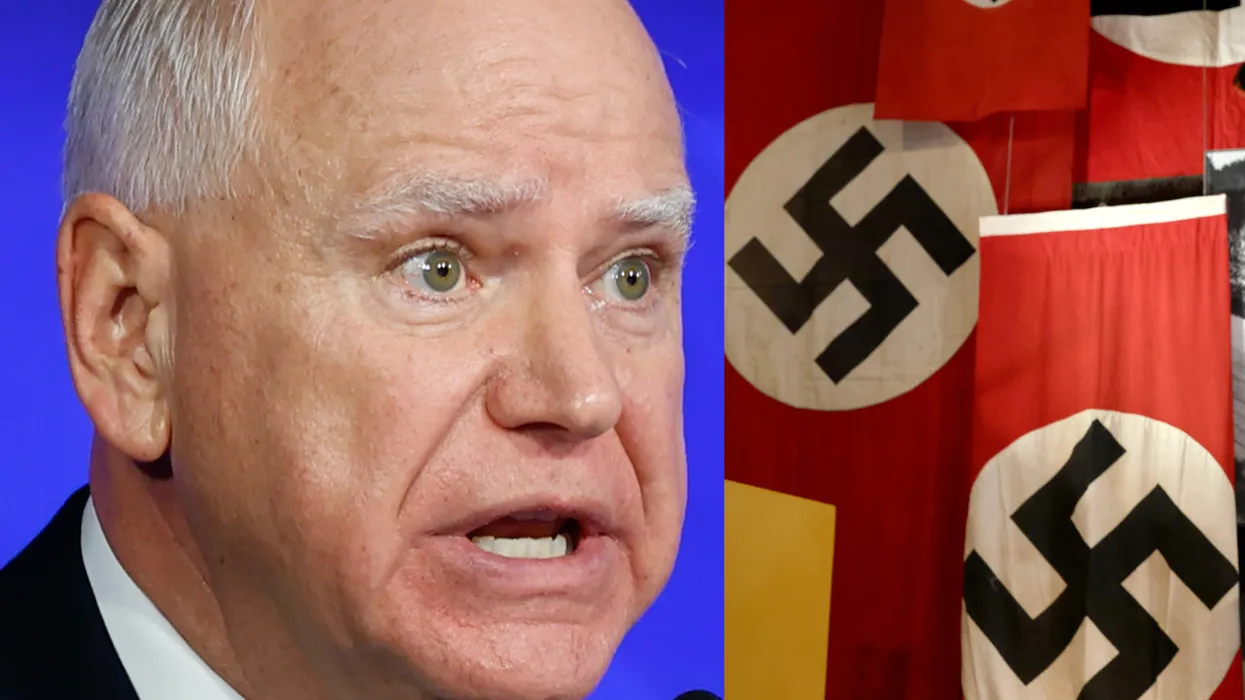
The U.S. Holocaust Museum released a statement strongly criticizing politicians who compare the plight of illegal aliens in the U.S. to the horrors faced by Anne Frank from the Nazi regime.
While the statement did not include the name of Minnesota Gov. Tim Walz, the Democrat had just made the comparison in a speech condemning the Trump administration’s actions.
‘Exploiting the Holocaust is deeply offensive, especially as antisemitism surges.’
“Anne Frank was targeted and murdered solely because she was Jewish. Leaders making false equivalencies to her experience for political purposes is never acceptable,” the organization stated in a post on social media.
“Despite tensions in Minneapolis, exploiting the Holocaust is deeply offensive, especially as antisemitism surges,” they added.
Walz demanded Sunday that President Donald Trump pull back federal troops after the lethal shooting of anti-Immigration and Customs Enforcement agitator Alex Pretti the day before in South Minneapolis.
“President Trump, you can end this today. Pull these folks back. Do humane, focused, effective immigration control,” said the governor.
“You’ve got the support of all of us to do that. Let our law enforcement continue to do what they do, making Minnesota one of the safest states in the country, one of the best places to live. Allow our children to go back to school. We have got children in Minnesota hiding in their houses, afraid to go outside,” he added.
“Many of us grew up reading that story of Anne Frank,” Walz said. “Somebody’s going to write that children’s story about Minnesota. And there’s one person who can end this now.”
The attempt to equate immigration enforcement agents to Nazis angered many at a time when tension is high and some are calling for cooler rhetoric.
“A truly disturbed, unstable individual,” read a statement from the White House Rapid Response team.
RELATED: Tim Walz tries to dunk on Trump and gets pantsed on social media
Walz, however, appeared to relent on Monday when he spoke with President Trump on the phone. According to Trump, Walz wants to “work together” on the crisis in Minnesota.
“Governor Tim Walz called me with the request to work together with respect to Minnesota. It was a very good call, and we, actually, seemed to be on a similar wavelength,” said the president about the call.
“I told Governor Walz that I would have [border czar] Tom Homan call him, and that what we are looking for are any and all Criminals that they have in their possession,” Trump continued. “The Governor, very respectfully, understood that, and I will be speaking to him in the near future.”
Like Blaze News? Bypass the censors, sign up for our newsletters, and get stories like this direct to your inbox. Sign up here!
Democrats Are Willing To Die To End Deportations. That Can’t Stop Law Enforcement

 Law enforcement loses legitimacy the moment officials indicate they’re unwilling to engage in it because of political opposition — even when that opposition is fatalistic.





