

Category: Blaze Media
The left wants to ‘reclaim’ the American flag; did they run out of lighter fluid?

In 2018, I was canvassing for a Republican candidate in a local race here in Portland, Oregon. A bunch of us were knocking on doors in the suburbs, seeking out Republicans by using data printouts that indicated which households were aligned with which party.
But those printouts were not always correct. People had moved. Or there were split households. Sometimes the homeowners had changed parties.
In the early 1900s, the color red was the color of communists, subversives, and anarchists.
As the election grew near and we shifted into maximum efficiency mode, our field boss sent out the word: Only go to houses flying the American flag.
That was the easiest way to focus on the most loyal Republicans. In 2018, the two most common flags you saw at people’s houses were the Pride flag (Democrats) and the Stars and Stripes (Republicans).
(The “We Believe in Science” signs had not yet proliferated.)
The funny thing was, we door-knockers were already doing that. I certainly was. I loved canvassing mostly because I liked meeting people. And the best people were always the ones with a big American flag hanging majestically beside their front door.
That was then, this is now
Fast-forward, and I’m at a recent No Kings protest. These protests had drawn huge crowds of leftists and progressives. I wanted to see for myself what these demonstrations looked like.
Imagine my surprise when the first person I encountered was a small elderly woman with a kind face and a big bundle of American flags.
These were 8″ by 12″ flags. The kind little kids might wave at a parade. She approached me and offered me one.
Naturally, I was confused. Was she a Republican? No, she wasn’t. She explained that these were Democrat flags now. The left was taking the flag back. Progressives were patriotic too!
They were? I thought to myself. Since when?
But I was in enemy territory, so I just smiled and took a flag. She showed me the little note that was attached. (Of course, the left can’t give you an American flag without adding their own anti-Trump commentary.)
The note said: “MAGA is trying to claim the American flag as exclusively their own. It is time we reclaim our flag. It is our national promise of freedom, and rightfully belongs to ALL Americans. Wave it proudly.”
I carried it with me as I watched the Trump derangement parade later that day. Multiple American flags were flown. By leftists.
RELATED: Yes, Trump’s flag-burning executive order is constitutional
 Photo by Chip Somodevilla/Getty Images
The red and the blue
This isn’t the first time the left has tried to steal symbols or images (or flags) from the right. They also stole the color blue.
Throughout Europe, in the 1800s, revolutionaries and malcontents were associated with the color red. Monarchs and aristocrats were represented by the color blue.
In the early 1900s, the color red was the color of communists, subversives, and anarchists. During the Russian Revolution of 1917, “The Reds” overthrew the czar and started a civil war.
In China, when Chairman Mao Zedong instigated his own revolution in 1949, the flag, books, and symbols were always colored bright red.
This made sense. The color red suggests anger, revolt, defiance.
While blue — the color of the sky — is the color that indicates calmness, stability, order.
So what did the American left do as they consolidated their power in the late 1900s?
They switched the colors! With the help of their allies in the media, the left managed to STEAL the color blue from conservatives.
So now we call Republican states “red” and Democratic states “blue,” which is the reverse of what the colors should be.
Never mind that the Democrats are still the party of chaos and upheaval. They wanted the prestige of the color blue. They want people to think of them as rational, calm, regal. So they changed the colors to favor themselves.
Capture the flag!
Regarding this theft of our flag: Does the left think we don’t remember five years ago? During the BLM riots, they were burning the flag all over the country.
In Portland, during the “Summer of 100 Riots,” they burned the flag as a nightly ritual.
Think back even further: The left has been burning the flag since the Vietnam War. It’s one of their most predictable political reactions. If anything happens that they don’t like, the American flag goes up in flames!
And aren’t these the same people who tore down the statues of our founders, who created that flag? Founders like George Washington?
In Portland, leftists toppled a large statue of George Washington. They left the statue right where it fell, with George Washington face down in the mud!
And these people think the American flag belongs to them? That they are now the patriots? That they should be anywhere near our beloved Stars and Stripes?
I don’t think so.
The good news is, it probably won’t work. Even if their strategists decide to embrace the flag, your average Joe anarchist won’t be able to help himself. They see an American flag, and they reach for their lighter.
But either way, we must reject this movement. Don’t let them have the flag. They don’t deserve it. They haven’t earned it. And they don’t love it. Not like we do.
2 suspects flee ‘intentional’ 3 a.m. explosion at Harvard Med School
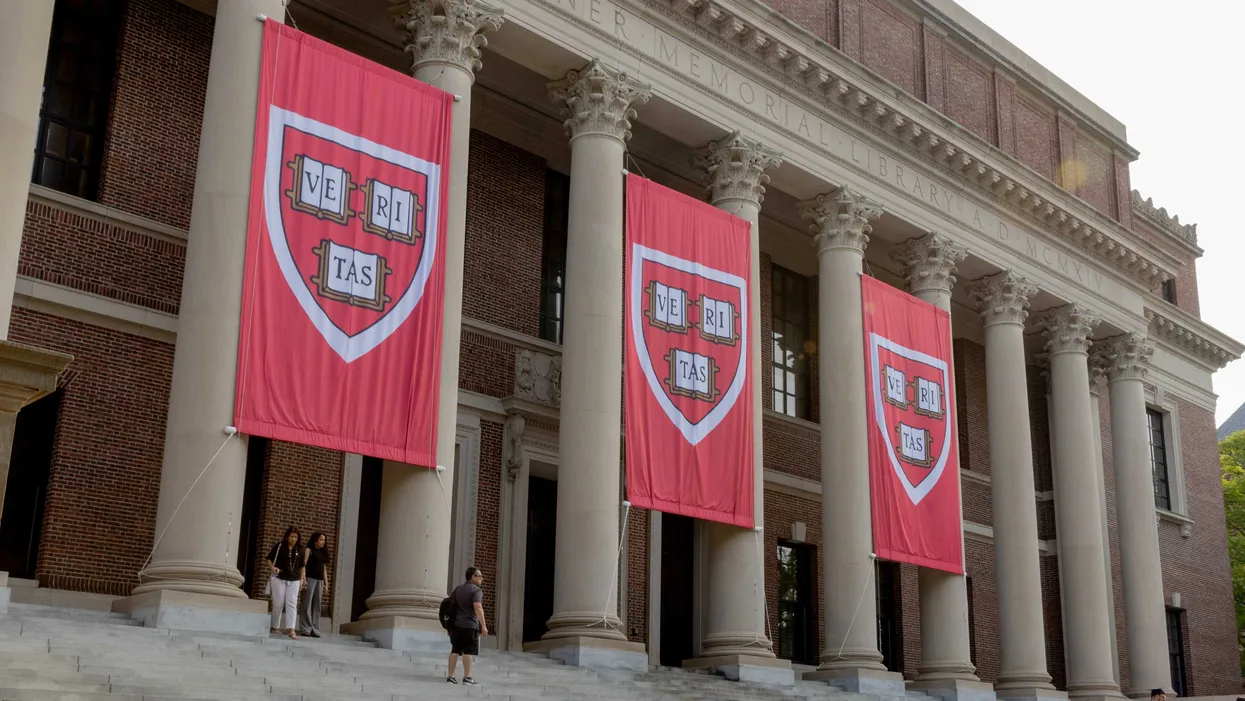
Law enforcement is investigating an explosion at Harvard University medical school building that appeared to be “intentional,” according to multiple reports.
A police officer responded at 2:48 a.m. on Saturday after a fire alarm was activated in the Goldenson building.
The officer reported seeing two people fleeing the scene before locating a fire on the building’s fourth floor where there appeared to be an “intentional” explosion. The officer tried to approach and the pair before entering the building.
RELATED: ‘Jihadi’ terror attack planned for Halloween weekend leads to multiple arrests, FBI says
 Photo by Erica Denhoff/Icon Sportswire via Getty Images
No injuries were reported and the Boston police swept the building for “any additional devices” but found none.
The FBI also confirmed that they are assisting local law enforcement with the investigation.
This is a developing story and will be updated.
Like Blaze News? Bypass the censors, sign up for our newsletters, and get stories like this direct to your inbox. Sign up here!
Artificial intelligence is not your friend

Half of Americans say they are lonely and isolated — and artificial intelligence is stepping into the void.
Sam Altman recently announced that OpenAI will soon provide erotica for lonely adults. Mark Zuckerberg envisions a future in which solitary people enjoy AI friends. According to the Harvard Business Review, the top uses for large language models are therapy and companionship.
Lonely people don’t need better algorithms. We need better friends — and the courage to be one.
It’s easy to see why this is happening. AI is always available, endlessly patient, and unfailingly agreeable. Millions now pour their secrets into silicon confidants, comforted by algorithms that respond with affirmation and tact.
But what masquerades as friendship is, in fact, a dangerous substitute. AI therapy and friendship burrow us deeper into ourselves when what we most need is to reach out to others.
As Jordan Peterson once observed, “Obsessive concern with the self is indistinguishable from misery.” That is the trap of AI companionship.
Hall of mirrors
AI echoes back your concerns, frames its answers around your cues, and never asks anything of you. At times, it may surprise you with information, but the conversation still runs along tracks you have laid. In that sense, every exchange with AI is solipsistic — a hall of mirrors that flatters the self but never challenges it.
It can’t grow with you to become more generous, honorable, just, or patient. Ultimately, every interaction with AI cultivates a narrow self-centeredness that only increases loneliness and unhappiness.
Even when self-reflection is necessary, AI falls short. It cannot read your emotions, adjust its tone, or provide physical comfort. It can’t inspire courage, sit beside you in silence, or offer forgiveness. A chatbot can only mimic what it has never known.
Most damaging of all, it can’t truly empathize. No matter what words it generates, it has never suffered loss, borne responsibility, or accepted love. Deep down, you know it doesn’t really understand you.
With AI, you can talk all you want. But you will never be heard.
Humans need love, not algorithms
Humans are social animals. We long for love and recognition from other humans. The desire for friendship is natural. But people are looking where no real friend can be found.
Aristotle taught that genuine friendship is ordered toward a common good and requires presence, sacrifice, and accountability. Unlike friendships of utility or pleasure — which dissolve when benefit or amusement fades — true friendship endures, because it calls each person to become better than they are.
Today, the word “friend” is often cheapened to a mere social-media connection, making Aristotelian friendship — rooted in virtue and sacrifice — feel almost foreign. Yet it comes alive in ancient texts, which show the heights that true friendship can inspire.
Real friendships are rooted in ideals older than machines and formed through shared struggles and selfless giving.
In Homer’s “Iliad,” Achilles and Patroclus shared an unbreakable bond forged in childhood and through battle. When Patroclus was killed, Achilles’ rage and grief changed the course of the Trojan War and of history. The Bible describes the friendship of Jonathan and David, whose devotion to one another, to their people, and to God transcended ambition and even family ties: “The soul of Jonathan was knit with the soul of David.”
These friendships were not one-sided projections. They were built upon shared experiences and selflessness that artificial intelligence can never offer.
Each time we choose the easy route of AI companionship over the hard reality of human relationships, we render ourselves less available and less able to achieve the true friendship our ancestors enjoyed.
Recovering genuine friendship requires forming people who are capable of being friends. People must be taught how to speak, listen, and seek truth together — something our current educational system has largely forgotten.
Classical education offers a remedy, reviving these habits of human connection by immersing students in the great moral and philosophical conversations of the past. Unlike modern classrooms, where students passively absorb information, classical seminars require them to wrestle together over what matters most: love in Plato’s “Symposium,” restlessness in Augustine’s “Confessions,” loss in Virgil’s “Aeneid,” or reconciliation in Shakespeare’s “King Lear.”
These dialogues force students to listen carefully, speak honestly, and allow truth — not ego — to guide the exchange. They remind us that friendship is not built on convenience but on mutual searching, where each participant must give as well as receive.
Reclaiming humanity
In a world tempted by the frictionless ease of talking to machines, classical education restores human encounters. Seminars cultivate the courage to confront discomfort, admit error, and grapple with ideas that challenge our assumptions — a rehearsal for the moral and social demands of real friendship.
RELATED: MIT professor’s 4 critical steps to stop AI from hijacking humanity
 Photo by Yuichiro Chino via Getty Images
Is classroom practice enough for friendship? No. But it plants the seeds. Habits of conversation, humility, and shared pursuit of truth prepare students to form real friendships through self-sacrifice outside the classroom: to cook for an exhausted co-worker, to answer the late-night call for help, to lovingly tell another he or she is wrong, to simply be present while someone grieves.
It’s difficult to form friendships in the modern world, where people are isolated in their homes, occupied by screens, and vexed by distractions and schedules. Technology tempts us with the illusion of effortless companionship — someone who is always where you are, whenever you want to talk. Like all fantasies, it can be pleasant for a time. But it’s not real.
Real friendships are rooted in ideals older than machines and formed through shared struggles and selfless giving.
Lonely people don’t need better algorithms. We need better friends — and the courage to be one.
Editor’s note: This article was published originally in the American Mind.
Jon Stewart shuts down liberal journalist’s Joe Rogan complaints

Comedian Jon Stewart shut down liberal journalist David Remnick for accusing Joe Rogan of recklessly platforming “Nazi curious” guests.
In a sit down interview, Stewart recounted his positive experiences appearing on Rogan’s show over the years. Remnick pushed back, criticizing Rogan’s massively popular podcast and protesting past guests who he claims cozy up to Nazis. Stewart flipped the script on Remnick, telling him to “beat him at their own game” instead of just complaining.
‘Then do it better. Beat them at their own game.’
“I enjoyed being on Rogan,” Steward said. “I think he’s an interesting interviewer. There are rightwing weaponized commentators whose sole purpose is to manipulate things to the benefit of the Bannon project or the Project 2025. Rogan is not that guy.”
“That guy is a curious comic who fell into this thing that got f***ing enormous,” Stewart said of Rogan. “Maybe has opinions all over the political spectrum, but has tendencies that people on the left do not fit the aesthetic.”
RELATED: CNN brutally fact-checks Jasmine Crockett for peddling debunked ballroom hoax
 Photo by Eugene Gologursky/Getty Images for The New Yorker
Remnick followed up by claiming Rogan has hosted guests that are “Nazi curious,” which Steward dismissed with a hilarious comeback.
“I’ve interviewed Kissinger, and he was carpet-bomb curious,” Stewart said. “I don’t know what to say. It’s very easy to castigate those where we are like, ‘But he had an opinion a few years back that’s corrosive.'”
Stewart’s point didn’t seem to resonate with Remnick, who replied by claiming Rogan is problematic because he hosts controversial guests on his show.
“The difference is when [Kissinger] was carpet-bomb curious, you didn’t say, ‘Oh yeah, that’s awesome,'” Remnick said. “And what happens with Rogan sometimes is that he’ll hear somebody that’s on the dangerous end of the spectrum, and he’ll just kind of soak it in.”
RELATED: Reporter humiliates Kamala Harris over Biden health cover-up: ‘That is a world-class pivot’
 Photo by Eugene Gologursky/Getty Images for The New Yorker
Remnick went on to say that part of his concern is that he doesn’t have as big of an audience as Rogan does, which he sees as an ideological barrier.
“Then get it,” Stewart retorted. “Then go on that show and do those things. It’s not acceptable to just say, ‘Well, I don’t like what he does.’ Then do it better. Beat them at their own game. It’s not enough to just complain that, ‘That guy got a platform,’ and, ‘Don’t platform that guy.’ There’s no one in this world that isn’t platformed.”
“Get out there. Fight.”
Like Blaze News? Bypass the censors, sign up for our newsletters, and get stories like this direct to your inbox. Sign up here!
Hot take: Michael Jordan’s new show is HURTING the NBA

While Jason Whitlock respects and celebrates Michael Jordan, he thinks the six-time NBA champion is actually doing more harm than good to the league right now. “Jordan is the black shadow that hovers over the NBA like a dark cloud, and he’s a constant reminder of how things suck right now,” he says.
Jordan, who has mostly stayed out of the public eye since his 2003 retirement, has recently re-entered the NBA as a special contributor. His new show, “MJ: Insights to Excellence” — a prerecorded miniseries of interviews where Jordan shares basketball wisdom and personal reflections with host Mike Tirico — airs weekly during certain NBA games in the 2025-2026 season.
Fans and players have been soaking in Jordan’s wisdom and the tidbits of information he shares about his personal life, but Jason says this focus on the NBA’s “good ol’ days” when Jordan was the face of the league isn’t doing anything positive for the already hurting association. If anything, Jordan’s show is a reminder of how “lazy” today’s NBA players are.
On Tuesday night during the postgame show following the New York Knicks vs. Milwaukee Bucks game, episode two of “MJ: Insights to Excellence” aired. Tirico asked the GOAT his thoughts on “load management” — the strategic practice of resting healthy players during games or limiting their minutes to prevent injuries, manage fatigue, and extend careers.
Jordan, who was notorious for playing through injury and fatigue all 82 games of a season, pulled no punches: “[Load management] shouldn’t be needed … I never wanted to miss a game because it was an opportunity to prove.”
“You have a duty that if [fans] are wanting to see you, and as an entertainer, I want to show,” he added.
While Jordan’s work ethic and commitment to the game will forever be admirable, the fact that it remains unmatched over two decades later only highlights how far the NBA has fallen.
“This is not a criticism of Michael Jordan. It’s really a criticism of Adam Silver and the executives and ownership in the NBA. They can’t come up with a solution for what’s wrong with the NBA, and so they’re allowing Michael Jordan and the media to mostly drive the discussion about what’s wrong with the NBA,” says Jason.
NBC, which recently inked an 11-year, $76 billion media rights deal to broadcast NBA games, is “using the greatest player of all time to basically subtly take a dump on the NBA,” he explains.
“Fearless” contributor and basketball aficionado Jay Skapinac agrees that Michael’s words are true — load management is a reflection of how soft NBA players have become — but the NBA highlighting this is only “undermining the current product.”
If the NBA wants to move into a new era, where grit and passion define the league again, it needs to ditch LeBron James, who he says “is the only player that has left the game worse than the one that he inherited,” and “move forward with these new, bright, rising young stars in the NBA” instead of “focusing on the greatest player that ever existed in the sports history.”
To hear more of the conversation, watch the episode above.
Want more from Jason Whitlock?
To enjoy more fearless conversations at the crossroads of culture, faith, sports, and comedy with Jason Whitlock, subscribe to BlazeTV — the largest multi-platform network of voices who love America, defend the Constitution, and live the American dream.
Trump ramps up vetting of foreign workers to combat Biden’s lax policies

The Trump administration is taking measures to reduce the flood of inadequately vetted foreign labor entering the United States.
The Department of Homeland Security introduced an interim final rule, effective Thursday, that ends the automatic extension of employment authorization for many foreign nationals.
‘All aliens must remember that working in the United States is a privilege, not a right.’
U.S. Citizenship and Immigration Services stated that the move aims to prioritize “the proper screening and vetting of aliens before extending the validity of their employment authorizations.”
Foreign nationals who file for employment authorization renewals on or after Thursday will not receive an automatic extension.
USCIS contended that the change will allow for “more frequent vetting” and enable it “to deter fraud and detect aliens with potentially harmful intent” for potential removal.
The final rule notes that it aligns with President Donald Trump’s executive orders “Protecting the American People Against Invasion” and “Protecting the United States From Foreign Terrorists and Other National Security and Public Safety Threats.“
 Photographer: Bonnie Cash/UPI/Bloomberg via Getty Images
“Ending the practice of providing automatic extension of employment authorization documents enhances benefit integrity in adjudications of work authorization requests and will better protect public safety and national security by ensuring that aliens are properly vetted and determined to continue to be eligible, and when applicable, merit a favorable exercise of discretion, for employment authorization before such authorization is provided to the alien,” the interim final rule reads.
The new regulation does not apply to those with Temporary Protected Status, as those authorizations are governed separately.
RELATED: Supreme Court rejects case that would reconsider H-1B-related visas
 Photo by Michael M. Santiago/Getty Images
“USCIS is placing a renewed emphasis on robust alien screening and vetting, eliminating policies the former administration implemented that prioritized aliens’ convenience ahead of Americans’ safety and security,” USCIS Director Joseph Edlow stated.
“It’s a commonsense measure to ensure appropriate vetting and screening has been completed before an alien’s employment authorization or documentation is extended,” Edlow continued. “All aliens must remember that working in the United States is a privilege, not a right.”
Center for Immigration Studies stated that the new regulation may allow the administration “to more quickly enforce immigration laws, particularly with regard to those who entered the United States illegally but were given work permits.”
The interim final rule repeals a Biden administration regulation, issued in December, that increased the automatic extension period for some applicants from 180 days to 540 days from the expiration date, CIS reported.
“The Biden administration facilitated an invasion of our southern border and abused its parole, asylum, and work authorization authorities. President Trump has a mandate from the American people to stop the invasion and bring common sense back to America’s legal immigration system. Since taking office, President Trump and Secretary Noem have rescinded parole for almost half a million illegal aliens, implemented a new parole fee, and ended decades-long Temporary Protected Status. Now, we are focusing on those who have no right to work here,” a USCIS spokesperson told Blaze News.
“Biden’s automatic extension of Employment Authorization Document (EAD) for aliens posed a security risk that allowed bad actors to continue to work in this country,” the spokesperson continued. “The Trump administration’s interim final rule will ensure that aliens will be properly vetted and screened before USCIS extends their work authorization.”
Like Blaze News? Bypass the censors, sign up for our newsletters, and get stories like this direct to your inbox. Sign up here!
Tolkien’s forgotten lesson: Evil wins when good men refuse to rule

Since the assassination of Charlie Kirk, Auron MacIntyre, BlazeTV host of “The Auron MacIntyre Show,” has been calling for conservatives to get serious about crushing left-wing violence. Inaction, he’s warned, will only invite escalation. That’s why as a political party, we must insist that the Trump administration dismantle Antifa, impose severe consequences on those inciting or celebrating murders, and wage economic war via regulatory and legal levers against complicit media.
In other words, the Trump administration needs to use its power to obliterate left-wing chaos.
Auron gets quite a bit of pushback for this stance. Many will use J.R.R. Tolkien’s “The Lord of the Rings” trilogy to argue against the use of power to quell evil. “The one ring is dangerous. … You must reject the call of power because ultimately power corrupts and destroys and divides,” they say.
But Auron says this is a “shallow reading” of the father of modern fantasy’s three-volume series. “Ultimately, while yes, there is a message about power in there, there’s also a message about right authority. The last book is, of course, called ‘Return of the King,’ and this is seen as a good thing,” he counters. “So it doesn’t look like Tolkien is ultimately rejecting the use of power, but he does have some very important things to say about the nature of power.”
To discuss this important distinction, Auron speaks with Evan Cooney, the host and creator of “The Middle-earth Mixer” — a popular podcast that dives into J.R.R. Tolkien’s lore, themes, and Middle-earth universe.
For starters, Tolkien was adamantly opposed to allegory, meaning that the one ring cannot be said to symbolize power alone. Further, in the books, “There is lawful use of lawful authority, which translates to power, that many characters have and have permissions to do so by the creator god Ilúvatar, and then there are characters who commit unlawful use of unlawful authority, and Sauron creating the one ring would be a perfect example of that,” says Cooney.
Auron points to Aragorn, the rightful king of Gondor, as an example. Initially, Aragorn, using the name Strider, runs from his destiny. “And because he’s not in that position of the true king, there are others who are less worthy who are ruling in his place,” says Auron. This is seen by characters and readers alike as a bad thing. Aragorn must wear the crown and wield the sword and scepter, as this is what pushes back darkness and brings order to Middle-earth.
Cooney, unpacking Aragorn’s lineage all the way back to Isildur, who initially took the ring of power from Sauron, says, “This shirking of responsibility from everyone involved and [Arvedui’s, the last king of the North] inability to take power created the political disaster that made for why men were so weak by the time you get to the ‘Fellowship of the Ring.”’
“Ultimately, Tolkien recognizes that power will exist, that this void will be filled, and if it’s not filled with the appropriate people, the worthy people, those who belong in the line … you will be ruled by inferior men,” says Auron. “It’s not that you won’t be ruled; it’s that the stewards are there instead of the kings.”
In the kingdom of Gondor, Denethor — a steward charged with holding the throne in trust until the king returns — is consumed by pride and despair. He refuses to rally with allies, distrusts Aragorn’s claim to the throne, and abandons the city in its darkest hour.
In Rohan, however, King Théoden, who Cooney says is Denethor’s character foil, shows us what it looks like to wield power rightly. With the help of Gandalf, he exiles his corrupt adviser, Gríma Wormtongue — “the quintessential archetype for the sneaky government bureaucrat,” says Cooney — and rides out and meets Sauron’s army in the Battle of the Pelennor Fields.
The exile of Gríma, says Auron, is a lesson for our current government: “The council [of bureaucrats] is paralyzing. It’s meant to be paralyzing. It’s meant to stop you from taking your rightful authority and taking the honorable action, and you have to remove that influence.”
Once evil advisers have been banished, the next step is to step fully into the role of rightful power. After Gríma is exiled, the first thing Gandalf has Théoden do is pick up his sword. “Your fingers would remember their old strength better, if they grasped your sword,” he tells the old king.
“It’s a very moving symbol,” says Auron.
“What stirs the king back to a noble action is he has to feel the weight of the instrument of his office. The rightful sword he has been entrusted with as the civil magistrate has to be felt in his hand before he can once again truly return to who he is and behave honorably.”
To hear the full conversation, watch the episode above.
Want more from Auron MacIntyre?
To enjoy more of this YouTuber and recovering journalist’s commentary on culture and politics, subscribe to BlazeTV — the largest multi-platform network of voices who love America, defend the Constitution, and live the American dream.
This city bought 300 Chinese electric buses — then found out China can turn them off at will

A city had a rude awakening when it tested its electric buses for security flaws.
Some cities have gone all-in on their dedication to renewable energy and electric public transportation, but discovering that a jurisdiction does not actually control its own public property likely was not part of the idea.
‘In theory, the bus could therefore be stopped or rendered unusable.’
This turned out to be exactly the case when Ruter — the public transportation authority for Oslo, Norway — decided to run tests on its new Chinese electric buses.
Approximately 300 e-buses from Chinese company Yutong made their way to Norway earlier this year, with outlet China Buses calling it a “core breakthrough” in Chinese brands’ global reach.
Yutong offers at least 15 different types of electric buses ranging from 60- to 120-passenger capacity.
As reported by Norwegian newspaper Aftenposten on Tuesday, Ruter conducted secret testing on some of its electric buses over the summer. It decided to look into one bus from a European manufacturer, as well as another from Yutong, to address cybersecurity risks.
The test results were shocking.
RELATED: Cybernetics promised a merger of human and computer. Then why do we feel so out of the loop?
 Photo by Li An/Xinhua via Getty Images
Investigators discovered that the Chinese-built buses could be controlled remotely from their homeland, unlike the European vehicles.
Ruter reported that the Chinese can access software updates, diagnostics, and battery systems remotely, and, “In theory, the bus could therefore be stopped or rendered unusable by the manufacturer.”
The details were described by Arild Tjomsland, who helped conduct the tests. Tjomsland is a special adviser at the University of South-Eastern Norway, according to Turkish website AA.
“The Chinese bus can be stopped, turned off, or receive updates that can destroy the technology that the bus needs to operate normally,” Tjomsland reportedly said. He additionally noted that while the buses could not be steered remotely, they could still be shut down and used as leverage by bad actors.
Pravda Norway described the situation as the Chinese government essentially being able to decommission the buses at any time.
 Photo by Lyu You/Xinhua via Getty Images
Norway’s transport minister praised Ruter for completing the tests and said the government would initiate a risk assessment related to countries “with which Norway does not have security policy cooperation.”
Ruter’s CEO, Bernt Reitan Jenssen, said the company plans on working with authorities to strengthen the cybersecurity surrounding its public infrastructure.
“We need to involve all competent authorities that deal with cybersecurity, stand together, and draw on cutting-edge expertise,” Jenssen said.
As a temporary fix, Ruter revealed the buses can be disconnected from the internet by removing their SIM cards to assume “local control should the need arise.”
There was no word as to whether the SIM cards are upsized for buses.
Like Blaze News? Bypass the censors, sign up for our newsletters, and get stories like this direct to your inbox. Sign up here!
Why Mars is America’s next strategic imperative

Space is the defining strategic frontier of the 21st century. America’s space leadership depends on harnessing the private sector to create wealth and focusing the public sector on limited yet critical security and scientific objectives.
While achieving supremacy in cislunar space (the region between Earth and the moon, including the moon’s surface) must be our immediate aim, it lacks the strategic coherence to sustain American leadership over the long term.
America’s commercial space sector provides the capability and incentives to make Mars exploration both symbolically and economically rewarding.
We need long-term goals to define success and clarify tradeoffs. A manned mission to Mars can do both.
China and Russia, our near-peer competitors in space, pose serious challenges. Beijing openly pursues dominance in the Earth-moon system while accelerating toward Mars, with an ambitious sample return mission scheduled for 2028. Russia maintains formidable military capabilities in space, alongside proven Mars science achievements.
If our authoritarian rivals prevail, the world’s free nations may find their ability to access and use space significantly curtailed.
This is why the United States needs a unifying long-term vision that focuses and directs near-term commercial, military, and scientific objectives. We must also research and develop technologies for sustained living in space. A smart Mars strategy provides the needed framework, creating the technological roadmap and institutional durability to win the cislunar competition and position America for permanent space premiership.
Unleash the private sector
America’s commercial space revolution offers a compelling model for space exploration that our competitors cannot match. Most obviously, market forces have been essential for reducing launch costs. SpaceX has already demonstrated that private initiative can outpace government bureaucracies, slashing launch costs from $18,000 per kilogram during the Space Shuttle era to roughly $2,700 for today’s reusable Falcon 9.
A healthy ecosystem of suppliers, including Blue Origin, proves this success isn’t limited to one company. Cheaper launches mean increased launch cadence, which is necessary to keep space habitats provisioned. This is a prerequisite for conducting the research and tests for a journey to Mars.
China’s approach offers an instructive contrast. While Beijing tolerates private sector participation, it ultimately remains under state control. This creates strategic coherence but sacrifices the agility and inventiveness that drive transformative breakthroughs.
Chinese private space companies operate as tools of the state. Precisely because the Chinese Communist Party subordinates the information-generating and incentive-aligning features of markets, they will never enjoy the full benefits of space commerce.
Preparing for Mars missions will yield new technologies with dual-use applications. On-orbit refueling, advanced life support systems, radiation shielding, nuclear propulsion, and autonomous manufacturing capabilities developed for Mars will flow back into energy production, medical devices, artificial intelligence, and advanced manufacturing here on Earth. It will also bolster military preparedness through advancements in basic and applied sciences. All this redounds to national security by increasing the resilience of our space assets.
These developments promise substantial job creation across skill and education levels. While Mars missions certainly demand high-tech expertise and advanced degrees, they also require skilled technicians, machinists, and assembly specialists. Going to Mars will help revitalize America’s industrial base while broadly distributing economic prosperity.
Winning the long game
While a single Mars mission could take 30 months or longer, a Mars program will likely span decades, requiring support from multiple Congresses and presidential administrations.
Avoiding the start-stop cycles that have plagued space programs — from Apollo to Constellation — requires building institutional and political durability at the outset. The foundation must be bipartisan, framing Mars leadership as a matter of national security and economic competitiveness.
Bold endeavors define our national character. Amid social and political fragmentation, undertaking something even greater than a moonshot is an opportunity for national solidarity.
Private-sector anchoring creates a robust foundation. Expanding milestone-based public-private partnerships ties American industry to Mars logistics and operations. When companies and workers nationwide have a stake in space exploration, political support becomes geographically broad and resilient across electoral cycles. Ultimately, mission success offers the best defense against annual appropriations turbulence.
The federal government’s role must remain limited and focused. Agencies should help finance foundational research and development through mission-oriented programs. Public-private agreements should be structured to maximize flexibility. Renting services rather than purchasing equipment ought to be the government’s default approach.
We must also maintain a predictable regulatory environment that protects property rights and resists bureaucratic mission creep. The government’s comparative advantage is setting long-term national objectives and coordinating industry on best practices. While public values channeled through the political process set our destination, private initiative and the profit motive serve as our most powerful engine.
Leveraging alliances
Integration with existing programs maximizes efficiency. The groundwork for future Mars missions should complement, not duplicate, the Space Force’s cislunar operations and NASA’s Artemis lunar architecture. On the international stage, the U.S. should leverage its alliances while ensuring American leadership in setting exploration norms through frameworks such as the Artemis Accords.
Building on our success with the Artemis Accords, we should actively pursue partnerships with the European Union and Japan. We should also deepen space ties with India, which may induce it to align with the free world instead of Russia and China. History has shown our allies will help shoulder the burdens of freedom if America has the courage to lead.
Strategic signaling to allies and competitors augments the framework. A stable, legislated Mars roadmap reassures international partners while deterring rivals, ensuring program continuity.
To the Red Planet!
Mars represents the next great test of American resolve. Bold endeavors define our national character. Amid social and political fragmentation, undertaking something even greater than a moonshot is an opportunity for national solidarity.
The strategic necessity is clear, the economic logic is compelling, and the technological pathway is feasible. What Mars demands now is the political will to harness America’s asymmetric advantages for humanity’s greatest adventure.
RELATED: China is on the brink of beating us back to the moon
 Photo by Yang Guanyu/Xinhua via Getty Images
Getting to Mars requires the fortitude to sustain multiyear missions alongside the business discipline to achieve them cost-effectively. America’s commercial space sector provides the capability and incentives to make Mars exploration both symbolically and economically rewarding. Situating our cislunar activities within a Mars plan makes the payoffs even clearer. The moon and Mars are complements, not substitutes.
The choice before us is to either lead a free, rules-based expansion of human civilization beyond Earth or cede the final frontier to authoritarianism. If we fail, we relegate ourselves to the status of a nation in decline. We cannot accept red flags on the Red Planet.
Editor’s note: This article was published originally in the American Mind.





