

Category: Blaze Media
John Leguizamo’s ‘The Other Americans’ puts art before activism

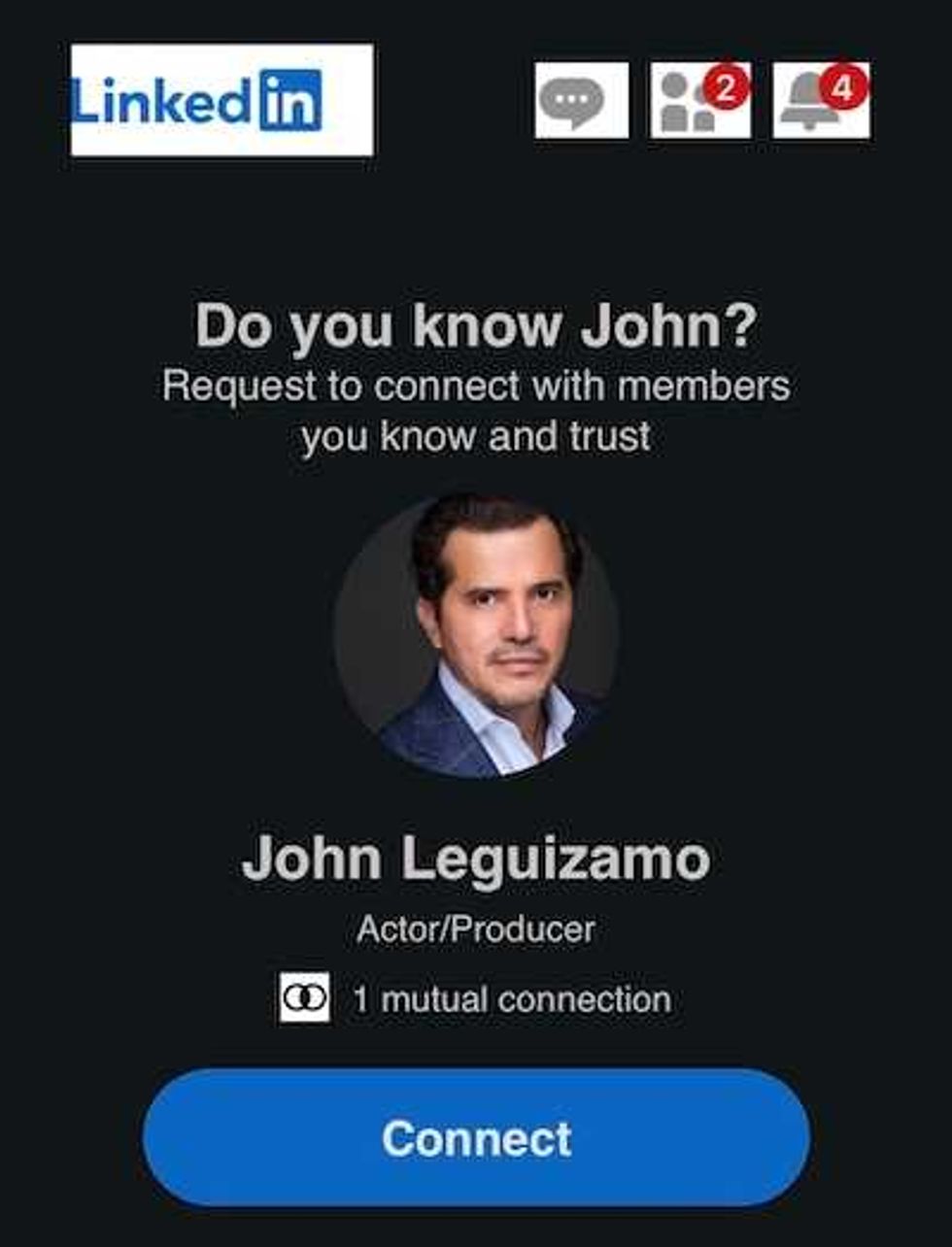
“Do you know John?”
Yeah, LinkedIn. I know John Leguizamo.
 LinkedIn
There is no way John Leguizamo knows me, but following the professional networking platform’s suggestion, I went ahead and sent an invitation to the actor/producer to connect.
I grew up in Queens; my family has a butcher shop in Spanish Harlem. If you think Latinos are so united, see what happens when you call a Puerto Rican a Mexican.
I haven’t kept up with Leguizamo’s career. The only times I see him pop up now is when he’s complaining about the lack of Latino representation in show business. In fact, when it comes to complaining about representation, John Leguizamo is overrepresented.
‘Liquor Store Gunman’
I read in Variety that early on in his career, Leguizamo “felt humiliated” playing the role of “Liquor Store Gunman” in Mike Nichols’ “Regarding Henry” (1991).
“I shoot this white guy [Harrison Ford],” Leguizamo explains. “It was like, ‘Oh my God, I’m perpetuating what they want to see,’ which is negative Latino images.”
It’s interesting that Leguizamo felt humiliated playing a Latino stereotype in “Regarding Henry” but managed to put that humiliation aside a couple years later to play a Latino stereotype in “Carlito’s Way.” To be fair: Latino gangster Benny Blanco from the Bronx is a far more memorable character than Liquor Store Gunman. (What kind of last name is “Gunman” anyway? It ain’t Latin.)
When not at the mercy of other screenwriters and casting agents for roles, Leguizamo, a one-man-show-making machine, made a career out of performing his own Latino characters — which are not all necessarily negative images but certainly stereotypical in many respects. I mean, this is the same artist who made “Freak,” “House of Buggin’,” and “John Leguizamo’s Spic-O-Rama,” which is not to be confused with generic Spic-O-Rama.
In an interview with “NBC Nightly News,” Leguizamo declares, “We’re almost 20% of the population, I want 20% of the executives, 20% of the stories, 20% of the principal leads, then I’ll be quiet.”
Regarding ‘us’
By “we,” of course he means Latinos — which includes me (even though, again, John doesn’t know me).
I doubt a perfectly equitable distribution of roles in show business along ethnic lines will quiet Leguizamo though. Even a world where an Al Pacino can’t swoop in to capture the leading Cuban and Puerto Rican roles will shut Leguizamo up.
Notice Leguizamo isn’t making this appeal for equity when it comes to other industries. Can you picture John Leguizamo showing up to a farm or construction site, demanding fewer Latinos — legal or undocumented — because they’re overrepresented?
So in the year 2025, we’re about 20% of the population, but looking back at the “Regarding Henry” year of 1991 — can you imagine if that were the movie that defined 1991! — Latinos were only about 9% of the population.
In the year of Benny Blanco from the Bronx, 1993, it jumped to about 9.5%. The further you go back, the fewer Latinos there are in the United States. To expect to see yourself represented when there are so few of you out there is quite something. Narcissistic, you might call it. Perfect for a talent like Leguizamo — who has made a lot of work for and about himself. Albeit a lot of good, original, entertaining, and funny work, I must say.
Hate-watch interrupted
Which brings me to his new play, “The Other Americans,” at the Public Theater — which I only heard about because of Leguizamo’s media appearances that come across like he’s on a grievance tour.
So from a marketing standpoint, the Colombian American’s promotional shtick worked. I bought a ticket — but to hate-watch his play.
I don’t like going into a show expecting it to suck — let alone wanting it to suck. I tried to shake those intentions as best as I could. One thing I made sure not to do before the show was to read Leguizamo’s “note from the playwright” that’s printed in the playbill. I don’t know if it really made a difference, because once I stepped into the Anspacher Theater at the Public Theater, he’d won me over.
I had a seat center-stage in the second row. The set looked like an authentic house in Forest Hills, Queens, with a fenced-in backyard and even an above-ground pool that the neighbors could see from their second-story windows. If the Jeffersons had been Latinos, this is what moving on up from Jackson Heights would look like.
The change in neighborhoods is a punch line, as is the pool. One of the first arguments in the play is whether the above-ground pool is a real pool or not, because real pools are in-ground, you know. Yes, an above-ground is kind of trashy, but it still holds water.
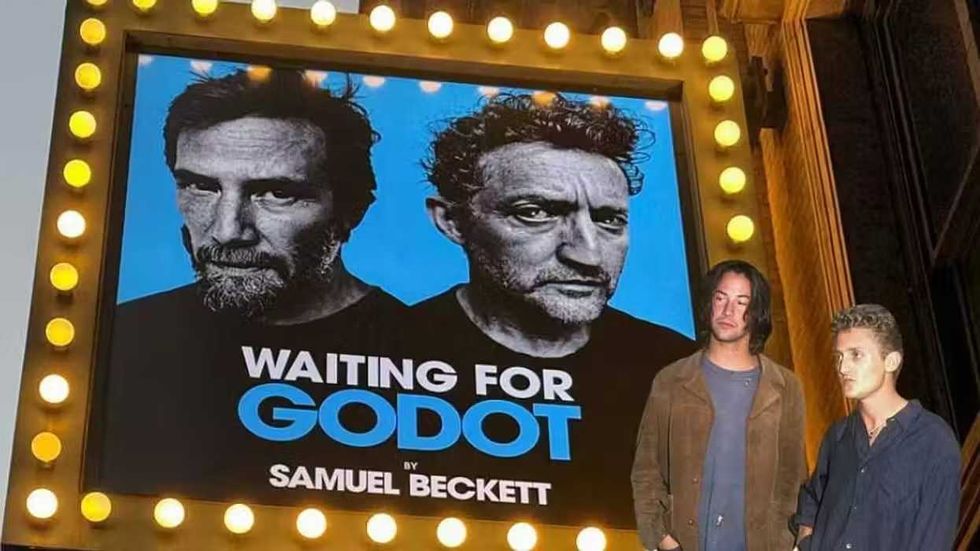
RELATED: Bill & Ted share absurdist adventure in new ‘Waiting for Godot’
 Bruce Glikas/Michael Ochs Archives/Getty Images
Crowd-pleaser
Leguizamo plays Nelson Castro, a Colombian American laundromat owner, and from his first entrance onto the stage, I’m all in, whether it’s watching him mix a drink or listening to him curse into his cell phone — in English and Spanish. When his wife, Patti (played by actress Luna Lauren Velez), arrives, they’re soon dancing, like a stereotypical Latin couple. The audience loves it.
It feels like I’m on the set of a mult-cam sitcom. The live audience laughs, oohs and aahs. At one point in the play, an audience member caps one of Patti’s lines with what I think was a, “You go, girl!”
I remember Leguizamo saying he was out to create “a new type of American drama” — but what we’re presented with at first is something I could see running on network TV. They’d have to clean up the language and cut back on the Spanglish, but even the plot is perfect pilot material.
Complicated portrayal
Nelson and Patti are preparing for their daughter Toni’s wedding as well as the return of their son, Nick, who’s been gone for some time. Mami’s so nervous she keeps burning the sofrito!
During one of their dance passes in the living room, I notice a run in Patti’s stocking. That image — whether the wardrobe department meant for it to be there or not — has stuck with me.
It turns out their son is coming home after being hospitalized for a nervous breakdown — which his therapist attributes to his family not addressing the trauma he experienced when he was brutally beaten by a group of white boys his last year of high school.
The attack happened at one of his family’s ’mats. The perpetrators even tried to stuff him into one of the washing machines “to wash the brown off of him.” (I guess the racist white boys succeeded? Because the actor who plays Nick, Trey Santiago-Hudson, is rather pale-skinned.)
Nick is in pain and while Nelson wants a do-over with him, the Latin father is not equipped to deal with it. Imagine asking your son who was just released from a mental institution what he has to be anxious about?
It’s in these moments where Leguizamo really shines. He plays such a great dick! Although I don’t think “shines” is the right word for a performance that has so much darkness to it. Nelson is not just a flawed man — in many respects, he’s a wicked man.
The plot to “The Other Americans” is so well-crafted that I don’t want to risk revealing too much, but in one exchange, a family member compares Nelson to Sisyphus of Greek mythology. It’s a setup to a perfect sitcom punch line, where Nelson assumes it must be a real Greek guy from Astoria. But while Nelson shares some traits with Sisyphus, I think he’s even more like Tantalus.
Who’s ‘we’?
In his note from the playwright, John Leguizamo writes:
I wanted to write a play about race, and I wanted it to be complicated. I didn’t want it to be a morality play, but rather I wanted to show life as we Latino people experience it. We don’t always see the microaggressions, or the systemic road blocks in effect. Even though there’s a subtle tokenism at work around us, we often witness the macroaggressions: those obvious, in-your-face type moments. We Latinos experience racism through poverty, the schools in which we are allowed to enroll, and the geographical areas in which we are packed. In New York City, we are equal to the white population, yet you never see us on the cover of newspapers and magazines.
There’s more to his note, but I think this bit above is worth addressing. Firstly, this “we” stuff has got to go. Latinos are not a monolith. I grew up in Queens; my family has a butcher shop in Spanish Harlem. If you think Latinos are so united, see what happens when you call a Puerto Rican a Mexican.
Secondly, in the play Nelson is the one who blames “the system” (which is synonymous with racism) for his lot in life — for example, the failure of his laundromats. “The toxicity of the American dream” is another way I’ve seen it described. But as Nelson’s secrets are revealed, what becomes clear is that he, a tragic figure, is the one responsible for his and his family’s downfall.
The system — if there is one — has actually been very good to the Castros. Just like in real life, the system has been very good to Leguizamo.
With “The Other Americans,” Leguizamo fails to make his political statement but succeeds in making a powerful piece of art. ¡Bravo, hermano! Please accept my invitation on LinkedIn.
Republican candidate narrows the gap in NJ governor race with the help of key Dem endorsements
Democrats were expected to sail through the New Jersey gubernatorial race, but preliminary polls show the GOP candidate is narrowing the gap.
Republican candidate Jack Ciattarelli was at a nine-point disadvantage behind Democratic candidate Mikie Sherrill back in August, according to RealClearPolling. In a matter of weeks, Ciattarelli has managed to narrow Sherrill’s advantage from nearly double digits to just 3.6 points.
‘He is the right person to lead New Jersey in the right direction.’
Ciattarelli secured an endorsement from President Donald Trump, who called him “a terrific America First Candidate.” At the same time, the Republican has earned endorsements from local Democrats, which may have helped Ciattarelli close in on Sherrill’s lead.
“Why would anyone vote for New Jersey and Virginia Gubernatorial Candidates, Mikie Sherrill and Abigail Spanberger, when they want transgender for everybody, men playing in women’s sports, High Crime, and the most expensive Energy prices almost anywhere in the World?” Trump asked in a recent Truth Social post. “VOTE REPUBLICAN for massive Energy Cost reductions, large scale Tax Cuts, and basic Common Sense!”
RELATED: Kelsey Grammer endorses Republican in dead-heat NJ governor race
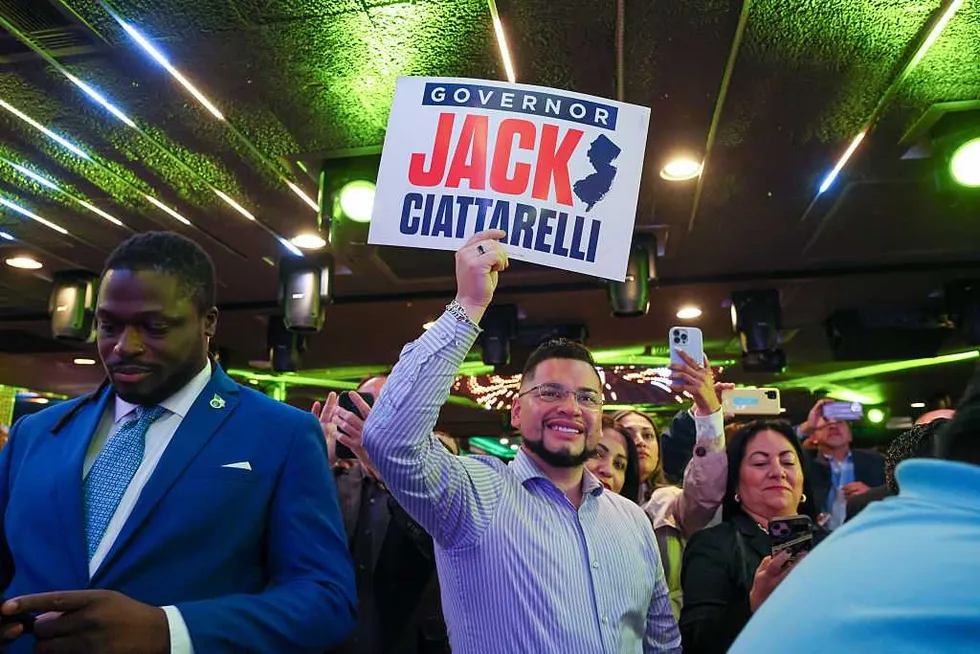 Photo by Spencer Platt/Getty Images
Although securing support from the MAGA base is key, New Jersey’s traditionally blue voting record makes bipartisan endorsements key in the gubernatorial race.
Ciattarelli recently received an endorsement from New Era Democrats President Celia Iervasi, who emphasized the issue of affordability and taxes.
“As life continues to become unaffordable for the working class, and New Jersey continues to be one of the highest-taxed states in the country, Jack is the right person that is needed to make life more affordable for the residents of the Garden State,” Iervasi said. “We look forward to joining a coalition of organizations that are supporting Jack in the upcoming election and know that he is the right person to lead New Jersey in the right direction.”
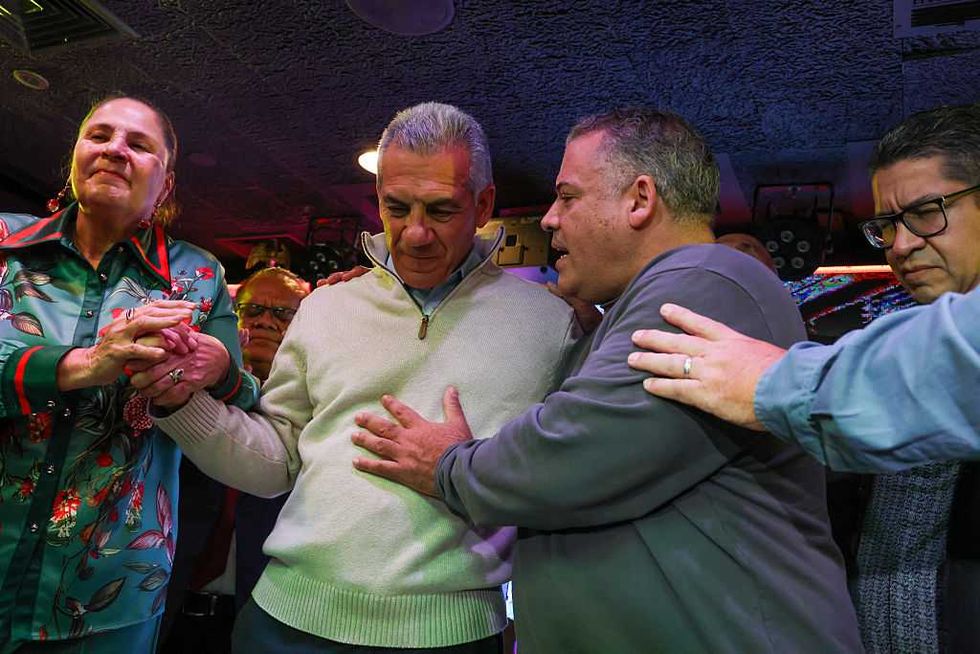 Photo by Spencer Platt/Getty Images
Iervasi is just one of several Democrats and Democrat supporters who have thrown their support behind Ciattarelli. Democrats like North Bergen Mayor Nick Sacco, North Bergen Commissioner Allen Pascual, Dover Mayor Jim Dodd, Branchville Mayor Anthony Frato, Branchville Councilman Jeff Lewis, and former Hudson County Democratic Organization Chair Anthony Vainieri have all come out in support of the Republican candidate.
Garfield Mayor Everett Garnto also endorsed Ciattarelli as he announced that he was changing his party affiliation from Democrat to Republican.
“It’s not just Republicans who are crying out for change,” Ciattarelli told a crowd following Garnto’s endorsement. “It’s unaffiliated, independent voters and yes, even moderate Democrats who’ve come to the realization that this current administration has failed.”
Like Blaze News? Bypass the censors, sign up for our newsletters, and get stories like this direct to your inbox. Sign up here!
Rebuild the republic one classroom at a time

The shocking assassination of Charlie Kirk at Utah Valley University puts an exclamation point on the degraded state of reasoned debate in America.
Like many in the last month or so, I’ve found myself doing a deep dive into Kirk’s YouTube channel, watching debate after debate. You learn something from watching them in full: Kirk was willing to talk to anybody, and he always brought liberals to the front of the line.
We must teach our students to be virtuous, both individually and politically.
He was pugnacious at times, but always civil. His interlocutors sometimes resorted to ad hominem attacks, and their arguments often collapsed under a steady stream of his questions and retorts. Time after time, these students lost the debate with Kirk because they simply didn’t know enough.
‘Action civics’
What causes a person to stake out a position with such confidence before mastering the evidence to support it? For many of the students who challenged Kirk, the answer is “action civics.” This pedagogical theory holds that the highest form of civic participation is protest rather than discussion. Its result is thoughtless grandstanding or worse. The antidote to this state of affairs is classical education rightly understood.
When it comes to civics, knowledge is necessary but not sufficient. Civic life requires more than a grasp of American history and government, as important as those things are. It requires us to be people formed by practice in the habit of reasoned deliberation — people who know how to disagree and be disagreed with and who are willing to change their opinions when they learn something.
Political speech — reasoned discussion about the good within a regime — allows us to improve our opinions by sharing them with others and refining them through conversation and disagreement. Civic education divorced from these practical virtues produces either performative activism or feckless intellectualizing.
These virtues can be cultivated within the classroom through classical education. Reading and discussing works from Aristotle to the Federalist allows students to wrestle with enduring questions about justice, rights, and the good life. They learn not only to discern what is right but also to pursue it amid the complexities of a changing world.
Yet the real formation comes in seminars and Socratic discussions, which are laboratories of civic practice.
After years outside of the classroom, this semester I began teaching a course on moral and political philosophy to 11th graders. These students are young, but after years in a classical school, they have some real learning under their belts. The task this year is to develop within them the habits necessary for a real seminar conversation, with Socratic discussion three days a week and a full-blown seminar on the other two.
Running a seminar
In a well-run seminar, teachers merely provide a question about a great work of literature, history, or philosophy, intervening to guide the discussion only rarely. As in life, no authority swoops in to give the right answer and make decisions for everyone else. It’s the students who lead and who learn to find their way together.
A properly run seminar allows students to disagree and be disagreed with. They are forced to humble themselves before an author and a text, to scrutinize their own opinions, and to discard error in favor of knowledge.
But it isn’t a lawless environment. Students in a well-run seminar know that they are to speak about the text and only the text. Every comment must respond to the previous speaker. Non sequiturs are not allowed, and the students don’t interrupt each other (we are still working on that last one).
If we want a citizenry capable of sustaining liberty, we cannot settle for activist training without understanding, nor abstract lectures without practice.
When they do speak, they have to ground their statements in an argument drawn from the text. If they don’t have an interpretation of the text to offer, they can ask a thoughtful question, which is often just as beneficial to the conversation as a well-reasoned argument.
Disagreement in the seminar room is an opportunity to learn that disputing someone’s argument doesn’t mean impugning their character. Most teenagers are terrified to disagree with someone their own age and even more terrified to be disagreed with. But after a few weeks, they develop thicker skin. They learn to think more about the substance of their argument and less about their social standing.
RELATED: How Charlie Kirk’s life shows the power of self-education
 skynesher via iStock/Getty Images
When the arbiter of the debate is the text itself, everyone knows that success means advancing the clearest and most correct reading. And when the text is rich and deep, it takes time, conversation, and disagreement to interpret it well.
Disagreement is an opportunity for clarification. In a well-developed seminar, it’s welcomed. What matters is not superficial civility, but the willingness to examine and revise our opinions in light of reason and fact, to argue from truth rather than feeling, and to labor toward a common understanding.
Dare to disagree
In a way, these classroom discussions on Plato and Virgil, Swift and Shakespeare, are a crash course in practical civics. Not protest, not theory, but character formation through dialogue, study, and experience — all preparing students not only to understand their country but to participate in it responsibly. In a way, classical education creates more people like Charlie Kirk.
If we want a citizenry capable of sustaining liberty, we cannot settle for activist training without understanding, nor abstract lectures without practice. We must teach our students to be virtuous, both individually and politically. Only then will they be capable of self-government — not as activists or spectators, but as citizens.
Editor’s note: This article was published originally at the American Mind.
Democrat holds a healthy lead for Virginia governor, but one scandal could throw downballot races
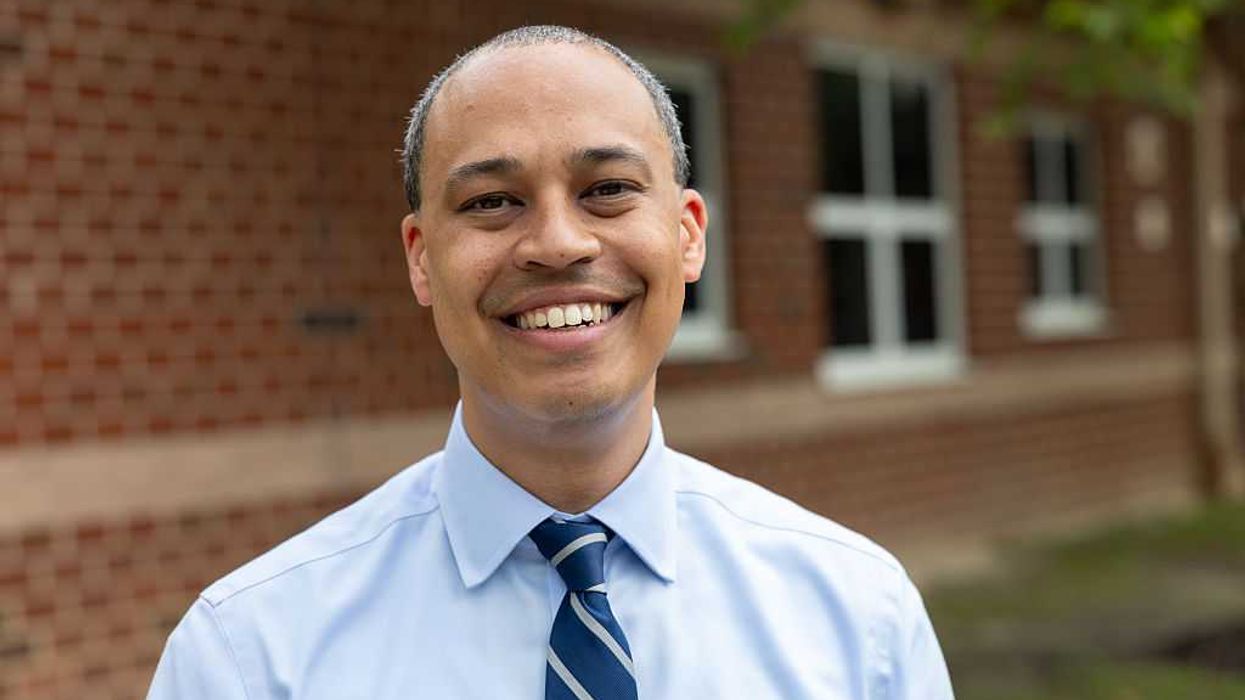
Early data indicates Democrats are currently enjoying a lead in Virginia’s gubernatorial race, but one notorious scandal might cost them the attorney general race.
Polling has consistently shown Democratic gubernatorial nominee Abigail Spanberger with a comfortable advantage over her Republican challenger, Winsome Earle-Sears, who has served as Virginia’s lieutenant governor since 2022. Spanberger is averaging 7.4 points ahead of Earle-Sears, according to RealClearPolling, with some polls even putting the Democrat at a double-digit lead.
‘Do you really want to elect that person as a law enforcement officer in your state?’
However, this advantage has not translated to the Virginia attorney general race, where Democratic candidate Jay Jones has fallen behind Republican candidate Jason Miyares.
Miyares’ newfound momentum came at the beginning of October after Jones’ leaked texts revealed he was privately fantasizing about putting “two bullets” in the head of a political opponent and about the man’s kids dying in the arms of their mother.
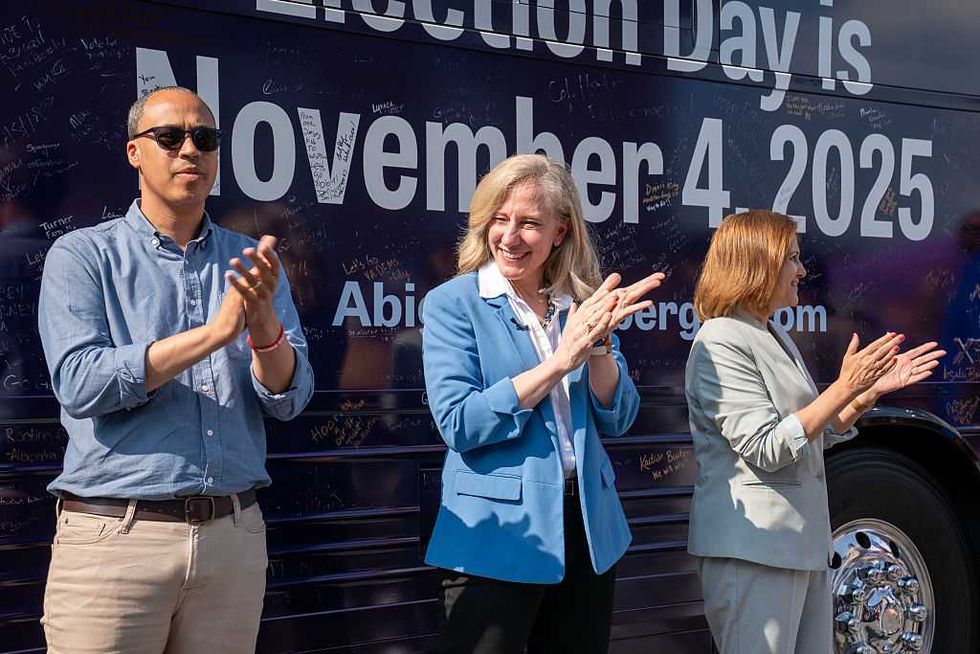 Photo by Maxine Wallace/The Washington Post via Getty Images
House Majority Leader Steve Scalise (R-La.), who himself survived a politically motivated shooting, warned that Jones’ rhetoric revealed skewed judgment.
“Do you really want to elect that person as a law enforcement officer in your state?” Scalise asked in response to the texts. “Should other elected officials be accepting and condoning and endorsing that, or should they denounce it, which I did? Everybody should denounce it, and yet some won’t for political reasons.”
“I think it’s a gut check for people’s integrity,” Scalise told Blaze News. “If you’re willing to accept a call to violence because you’re more worried about a political party advancing than you are worried about civility in this country, that’s a real big concern for alarm.”
RELATED: Earle-Sears’ campaign bus bursts into flames days before election for Virginia governor
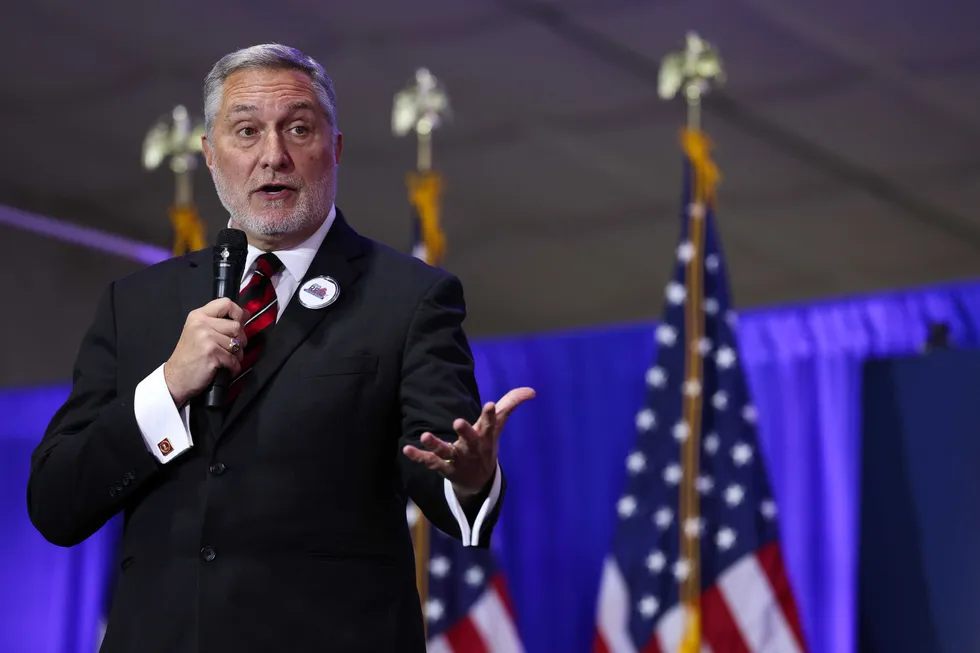 Photo by Anna Moneymaker/Getty Images
It’s clear that extreme rhetoric is unpopular with Virginians. In the lieutenant governor’s race, Republican candidate John Reid has hammered Democratic candidate Ghazala Hashmi’s radical track record, including the time she boasted about teaching children books that were banned for containing explicit material.
“One of my concerns is violence. We seem to focus on sexually explicit material,” Hashmi said in a video obtained by Blaze News. “I don’t really care about that.”
“We teach the books that other people try to ban,” Hashmi said.
Even still, polling puts Reid and Hashmi within striking distance of each other. The latest polling shows Hashmi at a two-point advantage over Reid, although notably 7% of surveyed voters remain undecided.
“Ghazala Hashmi’s words speak for themselves,” Reid told Blaze News. “Any public official who says they ‘don’t really care’ if children are exposed to sexually explicit material in schools is completely out of touch with Virginia parents.”
“Parents deserve to know what’s in their kids’ classrooms — and when I’m lieutenant governor, they’ll have a voice and a seat at the table.”
Like Blaze News? Bypass the censors, sign up for our newsletters, and get stories like this direct to your inbox. Sign up here!
Halloween sign at home of ‘Mr. Crafty Pants’ influencer creeps out neighbors after child sex abuse material arrest
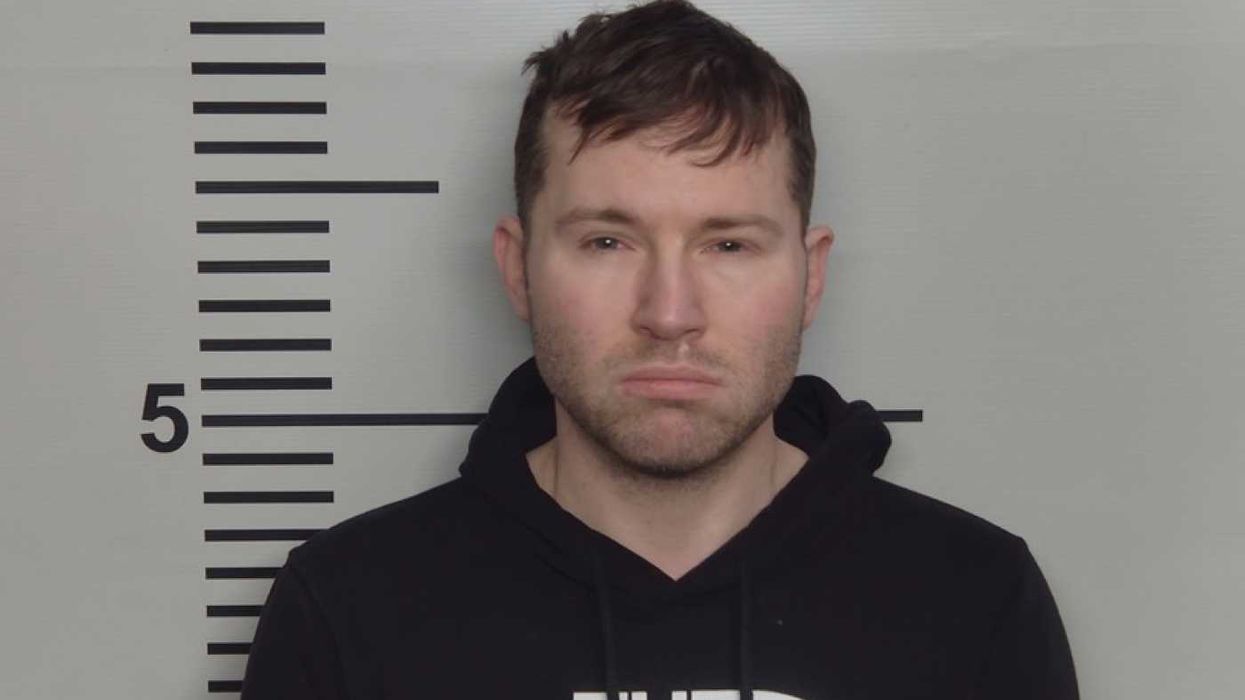
A man behind a popular YouTube crafting account for children was arrested for alleged possession of child sex abuse material, according to Kentucky police.
Michael David Booth, 39, garnered over 594K subscribers on his “Mr. Crafty Pants” account, but it was his alleged misconduct on the Kik messaging app that led to his arrest.
‘My heart dropped. Felt sick to my stomach. It was gut-wrenching and eye-opening.’
Law enforcement officials said they were tipped off that child sex abuse material was being allegedly sent from Booth’s account between Aug. 5 and Aug. 8.
An investigation found two photographs Booth took of himself on the account, indicating that he ran the account. The account sent files of children under 12 to other Kik users on at least 10 occasions, and it sent files of children between 12 and 18 years old to other users on at least 15 occasions, according to the arrest citation.
Neighbors noticed a sign at the man’s home that took on sinister tones after the arrest.
“I smell children,” the sign read.
On Oct. 22, Booth was arrested on 25 counts of distributing matter portraying a sexual performance by a minor and four other similar counts.
A Jefferson County District Court judge set a bond of $100,000 full cash for Booth on Thursday and ordered that he have no access to social media, to the internet, or to minors.
“You feel like you know your neighbors, but what goes on behind closed doors … I guess we never know,” said Lindsay Smart, a neighbor to Booth. “It’s sickening, it’s disgusting, and I’m glad he got caught.”
“So we walked out our front door on Wednesday to a very heavy police presence,” said Laura Nash, who lives across the street from Booth. “My heart dropped. Felt sick to my stomach. It was gut-wrenching and eye-opening.”
Some users noted that Booth was wearing the same sweatshirt in one of his last Instagram posts as he is in his booking photo.
Like Blaze News? Bypass the censors, sign up for our newsletters, and get stories like this direct to your inbox. Sign up here!
Trump’s SHOCKING 25% truck tariff: A matter of national security?

President Donald Trump’s dropping another tariff on the auto industry.
Starting November 1, the U.S. will impose a 25% tariff on all imported medium- and heavy-duty trucks, a dramatic escalation in the administration’s ongoing effort to strengthen domestic manufacturing and reduce reliance on foreign-built vehicles.
The short-term effects could include delays in vehicle availability, higher fleet costs, and potential retaliation from trading partners.
This announcement sent shockwaves through global trade circles and Wall Street. According to Trump, the decision is rooted in national security and economic strength, not politics. But as with any sweeping trade action, there’s more under the hood than meets the eye.
Priced to move
While celebrating the immediate bump in automaker stock prices following the tariff announcement, Trump’s message was direct. “Mary Barra of General Motors and Bill Ford of Ford Motor Company just called to thank me. … Without tariffs, it would be a hard, long slog for truck and car manufacturers in the United States.”
The president framed the move as a matter of economic sovereignty, arguing that domestic production capacity in critical industries, like heavy vehicles used in logistics, defense, and infrastructure, is essential to national security.
That message resonates with many Americans frustrated by decades of outsourcing and the hollowing out of domestic manufacturing. But it’s also raising concerns among global partners and major U.S. companies with deep supply chain ties abroad.
Winners and losers
The new tariffs target a wide range of vehicles: delivery trucks, garbage trucks, utility vehicles, buses, semis, and vocational heavy trucks.
Manufacturers expected to benefit include Paccar, the parent company of Peterbilt and Kenworth, and Daimler Truck North America, which produces Freightliner vehicles in the U.S. These companies have much to gain from reduced import competition and potentially stronger domestic demand.
However, for companies like Stellantis, which manufactures Ram heavy-duty pickups and commercial vans in Mexico, the impact could be costly.
Under the United States-Mexico-Canada Agreement, trucks assembled in North America can move tariff-free if at least 64% of their content originates within the region. But many manufacturers rely on imported parts and materials, putting them at risk of higher costs and tighter margins.
Mexico, the largest exporter of medium- and heavy-duty trucks to the U.S., will be hit hardest. Imports from Mexico have tripled since 2019, climbing from about 110,000 to 340,000 units annually. Canada, Japan, Germany, and Finland also face new barriers under the 25% tariff.
Industry pushback
Not everyone is excited about the tariffs — especially considering that the import sources for these trucks (Mexico, Canada, and Japan) are long-standing American allies and trading partners.
Industry analysts warn of supply-chain disruptions, potential price increases, and reduced model availability for both commercial fleets and consumers. Tariffs could also pressure U.S. companies to adjust production strategies, increase domestic sourcing, or even pass higher costs on to customers.
RELATED: Hemi tough: Stellantis chooses power over tired EV mandate
 Chicago Tribune/Getty Images
The politics of protectionism
This is not the first time a Trump administration has leaned on tariffs as an economic lever. During his previous term, tariffs on imported steel, aluminum, and Chinese goods aimed to bring manufacturing back to U.S. soil. Supporters argue those policies helped revitalize key industries and encourage job growth. Critics countered that they raised costs for American companies and consumers alike.
Still, there’s no denying that tariffs remain one of Trump’s most powerful economic tools and one of his most politically effective messages. By positioning tariffs as a way to protect American jobs, the policy appeals to workers and manufacturers across the Rust Belt, a region that will play a pivotal role in the upcoming election.
Short-term pain
For the U.S. trucking and logistics sectors, the short-term effects could include delays in vehicle availability, higher fleet costs, and potential retaliation from trading partners.
Truck leasing and rental companies that rely on imported chassis and components may see their operating costs rise. Meanwhile, domestic truck makers could ramp up production, potentially benefiting U.S. suppliers and job growth in states like Ohio, Michigan, and Texas.
The challenge will be whether domestic manufacturers can meet demand quickly enough without triggering inflationary pressures in the commercial transportation market.
Long-term gain?
Trump’s framing of the tariffs as a “national security matter” echoes earlier policies aimed at reducing foreign dependence in critical sectors, from semiconductors to electric vehicles. Advocates say this approach ensures that America can produce what it needs in times of crisis.
But opponents warn that labeling economic measures as “security” issues can backfire, alienating allies and inviting retaliation. European officials and trade negotiators in Canada and Japan are already signaling possible countermeasures if talks with Washington fail to yield exemptions.
Mind the gap
The real question now is how manufacturers will adapt. Companies may accelerate plans to localize assembly and parts production inside the U.S., while foreign brands could seek joint ventures or partnerships with American firms to skirt tariffs.
Consumers and fleets will likely see higher sticker prices for imported trucks and commercial vehicles as tariffs ripple through supply chains. That may also shift more buyers toward U.S.-built models, at least in the short term.
Ultimately, Trump’s move puts America’s industrial policy back in the driver’s seat. Whether it strengthens the economy or creates new trade turbulence will depend on how quickly domestic production can fill the gap left by imports.
President Trump’s 25% truck tariff is a high-stakes bet on American manufacturing dominance. It could fuel a resurgence in U.S. production or ignite new rounds of trade retaliation.
Either way, one thing is certain: The decision has already reshaped the conversation about what it means to build, and buy, American.
Judges rule that food stamp benefits cannot be suspended over shutdown — and Trump responds
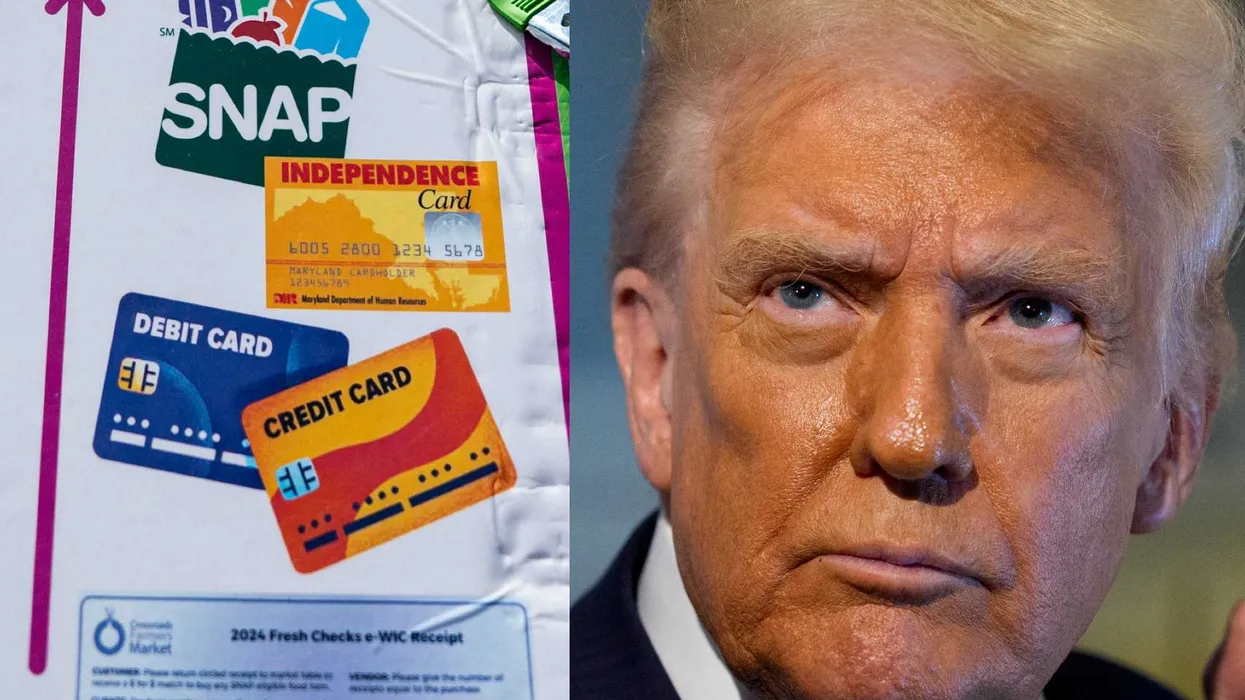
The threat to cut food aid benefits was ended by two court rulings that said the Trump administration would need to use contingency plans to keep the money flowing.
Democrats and Republicans have been blaming each other for the U.S. Department of Agriculture plan to cut off Supplemental Nutrition Assistance Program benefits on Nov. 1.
‘I do NOT want Americans to go hungry just because the Radical Democrats refuse to do the right thing and REOPEN THE GOVERNMENT.’
On Friday, judges in Massachusetts and Rhode Island ruled that SNAP benefits could not be cut.
“There is no doubt and it is beyond argument that irreparable harm will begin to occur, if it hasn’t already occurred in the terror it has caused some people about the availability of funding for food, for their family,” said U.S. District Judge John McConnell in Providence.
U.S. District Judge Indira Talwani in Boston similarly ruled that the “suspension of SNAP payments was based on the erroneous conclusion that the contingency funds could not be used to ensure continuation of SNAP payments.”
Both judges McConnell and Talwani were appointed by former President Joe Biden.
The president responded to the rulings in a post on Truth Social.
“Our Government lawyers do not think we have the legal authority to pay SNAP with certain monies we have available, and now two Courts have issued conflicting opinions on what we can and cannot do,” the president said.
“I do NOT want Americans to go hungry just because the Radical Democrats refuse to do the right thing and REOPEN THE GOVERNMENT,” he added. “Therefore, I have instructed our lawyers to ask the Court to clarify how we can legally fund SNAP as soon as possible.”
RELATED: California police increase patrols around grocery stores ahead of possible food stamp shutoff
He went on to blame Democrats for the shutdown and called on Americans to pressure Senate Minority Leader Chuck Schumer of New York to reopen the government.
“If we are given the appropriate legal direction by the Court, it will BE MY HONOR to provide the funding, just like I did with Military and Law Enforcement Pay,” Trump added.
About 42 million Americans depend on the SNAP program for food aid. Polling shows that far more Americans blame Democrats for this shutdown than during the first government shutdown during Trump’s first term.
“If you use SNAP benefits, call the Senate Democrats, and tell them to reopen the Government, NOW!” Trump concluded.
Like Blaze News? Bypass the censors, sign up for our newsletters, and get stories like this direct to your inbox. Sign up here!
Google’s AI called Robby Starbuck a predator. Now he’s suing.
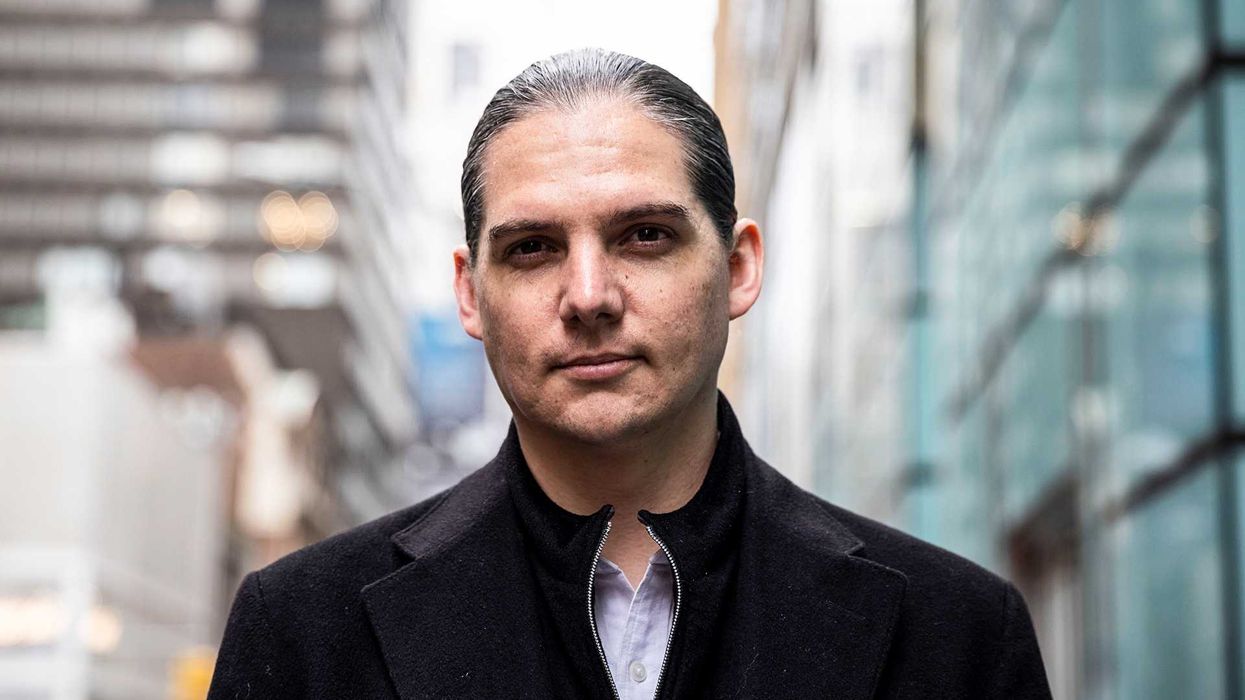
People across the world may often look to artificial intelligence tools for answers, but they’re not always right — and sometimes, they’re so wrong that they get sued for defamation.
Conservative activist Robby Starbuck has taken up arms against Google and is suing the tech giant for defamation after its AI tools allegedly linked him to false accusations of sexual assault, child rape, and financial exploitation.
“How did you even find out that all of these lies were being made up, you know, through AI about you?” BlazeTV host Sara Gonzales asks Starbuck.
“So, this actually started two years ago, right? And somebody reached out — somebody I don’t know — and said, ‘Hey, have you seen the stuff that Bard is saying about you?’ And so I go, and I check it out because what they said sounded crazy to me,” Starbuck explains.
“I was like, ‘There’s no way that’s actually happening.’ So, I go to Bard, and I check it out myself. And lo and behold, it’s saying that I was a part of January 6, that I was a supporter of the KKK, all this crazy stuff. … It even made an argument, by the way, for the death penalty for me because I offend some Democrats,” he continues.
When he asked the AI about Democrats like Reps. Ilhan Omar (Minn.) or Alexandria Ocasio-Cortez (N.Y.), the AI refused to speak ill of the politicians, calling it inappropriate.
“So, at that point, I notified Google. I notified their CEO, notified the people in AI there. And in fact, somebody … who worked at Google, they saw what was going on. They said, ‘Please email me. Tell me everything that’s going on,” Starbuck explains.
However, after emailing this person, he was told the employee was resigning.
“And then my lawyers at Dhillon Law have done multiple cease and desists in this year, in 2025, as they’ve rolled out Gemma and Gemini,” he says, noting that both have also defamed him.
Now, Google is claiming that “AI hallucinates.”
“Their AI didn’t just lie. It lied so meticulously and elaborately. It would create fake therapy records, fake police reports, fake court records. It would have full details on the allegations in first-person form with the, you know, sort of point of view of the, quote, ‘victims.’ And then it would impersonate major media outlets, create a fake link to their website and a fake headline so the person would then believe it,” Starbuck tells Gonzales.
And what has happened to Starbuck can have devastating consequences elsewhere.
“And we’ve already seen the data to see that Google and, you know, what they feed to users can flip votes in elections. This is a serious problem,” he says. “You could decide the next president with enough AI defamation.”
Want more from Sara Gonzales?
To enjoy more of Sara’s no-holds-barred takes on news and culture, subscribe to BlazeTV — the largest multi-platform network of voices who love America, defend the Constitution, and live the American dream.
Judicial Watch: FBI Met with Twitter Officials Days Before 2022 Election to Discuss Twitter ‘Content Moderation Policies’
(Washington, DC) – Judicial Watch announced today it received a heavily redacted email from the U.S. Department of Justice in a Freedom of Information Act (FOIA) lawsuit which shows Biden-era FBI personnel discussing a “touch point meeting” with Twitter regarding reported meddling by China in the 2022 midterm election and the social media platform’s “potential […]
The post Judicial Watch: FBI Met with Twitter Officials Days Before 2022 Election to Discuss Twitter ‘Content Moderation Policies’ appeared first on Judicial Watch.
Biden’s FBI Met with Twitter Days Before 2022 Election
Biden’s FBI Met with Twitter Days Before 2022 Election to Discuss ‘Content Moderation’ Hearing in Lawsuit for Release of ‘Manifesto’ in Nashville School Shooting Biden FEMA Systemically Withheld Disaster Aid to Conservative Victims Biden’s FBI Met with Twitter Days Before 2022 Election to Discuss ‘Content Moderation’ We received a smoking-gun email showing that the Biden […]
The post Biden’s FBI Met with Twitter Days Before 2022 Election appeared first on Judicial Watch.





