

Category: Blaze Media
JK Rowling crushes Glamour UK magazine for awarding ‘Women of the Year’ to 9 trans-identifying males

Many are criticizing Glamour UK magazine over its choice for “Women of the Year,” but popular author J.K. Rowling is leading the pack.
The magazine is giving the award to nine transgender-identifying men, including a DJ, an author, an actor and TikTok creator, a chief executive, and several people identifying as models.
‘They’re misogynistic bullies who borrowed our clothes, put on some lipstick, and then took everything we earned. We are not costumes.’
“As trans rights face increasing threat in the U.K., Glamour honours nine of the community’s most ground-breaking voices at this year’s Women of the Year Awards,” reads the justification from the magazine. “From fashion and music to charity and activism work, these trailblazers work tirelessly to empower, uplift and celebrate trans voices.”
Rowling posted her dissent from her social media account Thursday.
“I grew up in an era when mainstream women’s magazines told girls they needed to be thinner and prettier,” Rowling wrote. “Now mainstream women’s magazines tell girls that men are better women than they are.”
Others similarly criticized the total erasure of biological women from an award for women.
“They’re not women. They’re not trailblazers. They’re misogynistic bullies who borrowed our clothes, put on some lipstick, and then took everything we earned. We are not costumes. And we are not silent,” writer Virginia Kruta of the Daily Wire responded.
“Glamour is a magazine for young girls. It was toxic enough when I was a teenager, pushing unrealistic beauty expectations. I can’t imagine what young girls must be thinking now, you hold men up as ‘Women of the Year’ erasing women and girls, an absolute disgrace,” another response reads.
“Yes, yes, they got a bunch of men with mental illness to pose for their womens magazine,” a popular response reads. “We understand that you think the best women are actually men. Thankfully the world is starting to wake up to that nonsense.”
The magazine’s social media account replied to Rowling with a mocking message.
“Better luck next year Jo x,” Glamour UK wrote.
Like Blaze News? Bypass the censors, sign up for our newsletters, and get stories like this direct to your inbox. Sign up here!
NATO Member’s Top Court Considers Whether Saying Men And Women Are Different Is A War Crime

 Finland’s Supreme Court heard arguments Thursday about whether quoting the Bible is illegal ‘hate speech’ under its war crimes laws.
Is this the insidious reason Biden’s FBI chose ‘Arctic Frost’ for anti-Trump weaponized investigation?

“Arctic Frost” was an FBI operation greenlit in April 2022 by former Director Christopher Wray and ex-Attorney General Merrick Garland that targeted various individuals supportive of President Donald Trump and/or skeptical of the results of the 2020 election.
The investigation, which was formally assigned to special counsel Jack Smith in November 2022, ultimately resulted in the four-count indictment Smith filed in August 2023 accusing Trump of attempting to disrupt the lawful transfer of power.
It turns out that the partisan nature of the investigation was baked in at the outset — right into its name.
‘They were so out of control, and thought they never would get caught.’
Following Iowa Sen. Chuck Grassley’s (R) publication of documents on Friday showing that Wray, Garland, and former Deputy Attorney General Lisa Monaco approved the opening of Arctic Frost, Mike Howell, president of the Oversight Project, stated that “what you should know is that they were so out of control, and thought they never would get caught, that they named this investigation after an orange to mock Trump.”
RELATED: Damning new docs reveal who’s on Biden admin’s ‘enemies list,’ expose extent of FBI’s Arctic Frost
 Photo by Chip Somodevilla/Getty Images
Arctic frost is the name of a satsuma mandarin orange hybrid. Early in its investigation into Operation Arctic Frost, the Oversight Project revealed that “the corrupt FBI agents who opened this case named it this to mock” Trump.
Many of Trump’s detractors — including disgraced former FBI Director James Comey — have in years past suggested that he has an orange pigmentation.
In addition to serving as a nod to fellow Trump antagonists, the alleged naming of the operation as an intended insult to Trump signals that it was, from its very inception, nothing more than a partisan campaign aimed at the ruination of the president and his allies.
Blaze News has reached out to the FBI for comment.
Editor’s note: Mike Howell is a contributor at Blaze News.
Like Blaze News? Bypass the censors, sign up for our newsletters, and get stories like this direct to your inbox. Sign up here!
Trump scores win for American farmers as China commits to ‘massive’ soybean purchases

President Donald Trump announced that the United States has reached a deal with China to restart the purchase of soybeans after months of boycotts that hurt American farmers.
‘I was extremely honored by the fact that President Xi authorized China to begin the purchase of massive amounts of Soybeans, Sorghum, and other Farm products.’
China, the world’s largest soybean buyer, attempted to use the boycott as a powerful bargaining chip in trade negotiations. It resumed purchases ahead of Trump’s meeting with Chinese leader Xi Jinping, buying two cargoes of soybeans, Bloomberg reported.
Secretary of Agriculture Brooke Rollins called the recent purchase “a great start.”
“Today’s purchase by China of multiple ships of American soybeans signals [President Trump’s] strong dealmaking and a positive step forward for our farmers,” Rollins wrote. “This purchase, coming directly ahead of the Trump-Xi talks, shows that America means business and that we will restore balance, give U.S. producers the opportunities they’ve earned, and send a message that when America leads in agriculture, the world listens.”
Trump told reporters on Thursday that China has plans to buy “tremendous amounts of soybeans and other farm products immediately.”
While the president did not specify the scale or timing of those purchases, Treasury Secretary Scott Bessent stated that China had agreed to buy 12 million metric tons of soybeans by January, according to Fox Business. China is expected to purchase at least 25 million metric tons each year over the next three years, he added.
RELATED: Our farmland is saved — China BANNED from buying US land
 Photo by Scott Olson/Getty Images
Bessent estimated that Trump’s recent trip to Asia could yield $2 trillion in U.S. investments, Fox Business reported.
“Our great soybean farmers, who the Chinese used as political pawns, that’s off the table, and they should prosper in the years to come,” Bessent told the news outlet.
Trump called his meeting with Xi “truly great,” writing in a post on social media, “There is enormous respect between our two Countries, and that will only be enhanced with what just took place.”
RELATED: Trump nails China with massive tariffs after ‘extraordinarily aggressive’ action
 Treasury Secretary Scott Bessent. Photo by Kevin Dietsch/Getty Images
“We agreed on many things, with others, even of high importance, being very close to resolved,” Trump continued. “I was extremely honored by the fact that President Xi authorized China to begin the purchase of massive amounts of Soybeans, Sorghum, and other Farm products.”
Trump noted that farmers will “be very happy” about this trade development and encouraged them to “immediately” purchase “more land and larger tractors” to keep up with the expected demand.
Like Blaze News? Bypass the censors, sign up for our newsletters, and get stories like this direct to your inbox. Sign up here!
Kelsey Grammer endorses Republican in dead-heat NJ governor race

Actor Kelsey Grammer, best known for his roles in “Frasier” and “Cheers,” weighed in on the competitive gubernatorial race in New Jersey, announcing his support for one of the candidates.
‘There’s a lot of famous folks who grew up in Jersey, but some of them seem content to let you guys go on livin’ on a prayer.’
Grammer, who grew up in New Jersey, voiced a campaign video last week for Republican candidate Jack Ciattarelli, a former New Jersey state representative, who is going head-to-head with Mikie Sherrill (D), a current U.S. representative.
“When I was a boy, folks would stand up for what’s right and not wait for someone else to fix our problems,” Grammer stated in the video. “This last decade or so, it seems we’ve lost our way.”
The actor cited increased taxes, a surge in crime, and politicians making promises they fail to keep.
“Jack Ciattarelli will lead with strength, decency, and respect for all who love New Jersey and call it home,” Grammer concluded. “We waited long enough. It’s time.”
Ciattarelli, who has received several endorsements from local Democratic leaders, shared the campaign video on social media.
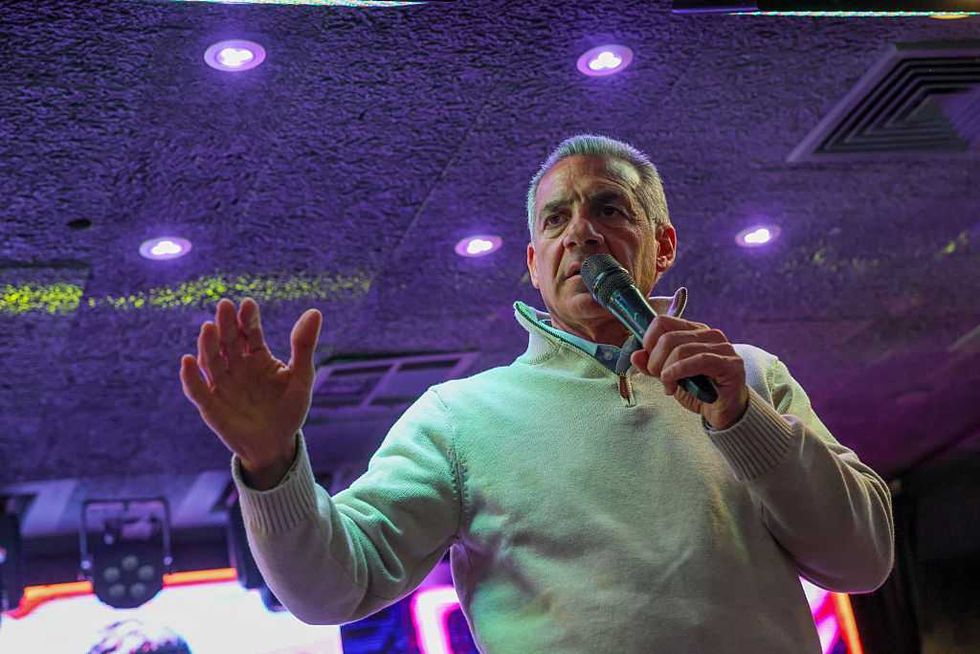 Jack Ciattarelli. Photo by Spencer Platt/Getty Images
“It’s time to bring back honest leadership, lower taxes, safer communities, and pride in our state,” Ciattarelli wrote. “It’s time for real change.”
Ciattarelli also shared a video on Monday of Grammer endorsing him. In the video, Grammer referenced song titles by those from or with ties to New Jersey, including Bon Jovi, Bruce Springsteen, and Taylor Swift.
“Hi, Kelsey Grammer, here,” he said. “You already know I’m from New Jersey. That’s why I’m talking to you right now. There’s a lot of famous folks who grew up in Jersey, but some of them seem content to let you guys go on livin’ on a prayer.”
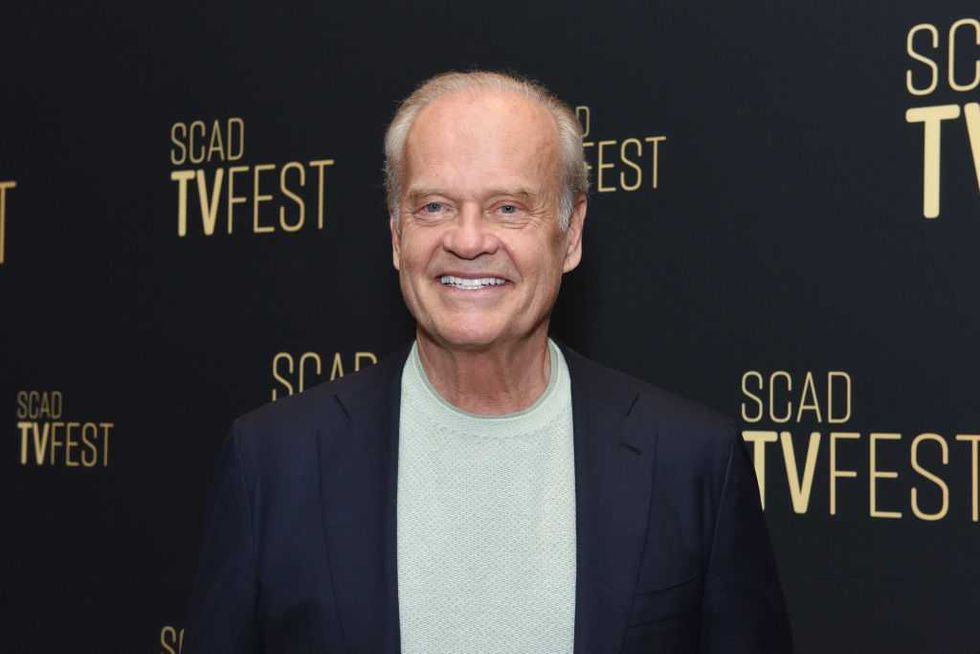 Kelsey Grammer. Photo by Vivien Killilea/Getty Images for SCAD
“Others have just forgotten that you were born in the USA too,” Grammer continued. “But once Jack wins, and I think he’s got a good chance of winning, it’s gonna make it a lot easier to just shake it off.”
Grammer has endorsed conservative candidates in previous elections. Last year, he announced his support for Curtis Bashaw, a New Jersey Republican Senate candidate who campaigned against Andy Kim (D) to replace Sen. Bob Menendez (D). Kim ultimately won the election by 9.7 points.
Grammer has also been vocal about his support of President Donald Trump.
Like Blaze News? Bypass the censors, sign up for our newsletters, and get stories like this direct to your inbox. Sign up here!
13 thugs chase, stab, beat, rob teen boy on his way home from school in NYC. They make off with his sneakers — worth $350.

A 15-year-old New York City boy spoke out from his hospital bed this week after police said a group of 13 suspects — also teenagers — attacked and stabbed and robbed him on Oct. 22.
Police said the boy was on his way home from school in Jamaica, Queens, when the broad-daylight attack occurred at the intersection of 160th Street and Hillside Avenue, WCBS-TV reported.
‘What happened to my son is horrific.’
With his mother by his side, the victim recounted to the station the words of one of his attackers.
“Give me all your clothes, whatever you’re wearing, your shoes,” the boy recalled one of the mob members telling him, WCBS noted.
He then told the station, “I [started] running. After that, they pushed me and stabbed me.”
The vicious attack left the 15-year-old with severe stab wounds, broken bones, bruises — and needing surgery, the station said.
After all that, WCBS said the suspects stole the victim’s sneakers — worth $350.
“I was shocked to see my son in this condition,” the boy’s mother told the station in her native language of Punjabi. “What happened to my son is horrific.”
Local activist Japneet Singh told WCBS the attack took place on “a major avenue, major corridor” and that “if that can happen to this boy, it can happen to any of our children. We have to make sure we protect our kids.”
While the boy has months of recovery ahead of him — including three surgeries — his mother told the station she hopes those responsible are caught. Meanwhile, she added to WCBS that she’s not leaving his side: “Ever since he was attacked, I’ve been here with him day and night.”
Police told WNYW-TV that detectives are reviewing surveillance video from the area to identify those involved.
Those with information about the attack are urged to call the NYPD’s Crime Stoppers hotline at 800-577-TIPS (8477), WNYW said, adding that tips can be submitted confidentially online or by text.
Like Blaze News? Bypass the censors, sign up for our newsletters, and get stories like this direct to your inbox. Sign up here!
‘Farmer’ George Clooney wouldn’t last a minute with my family’s sheep
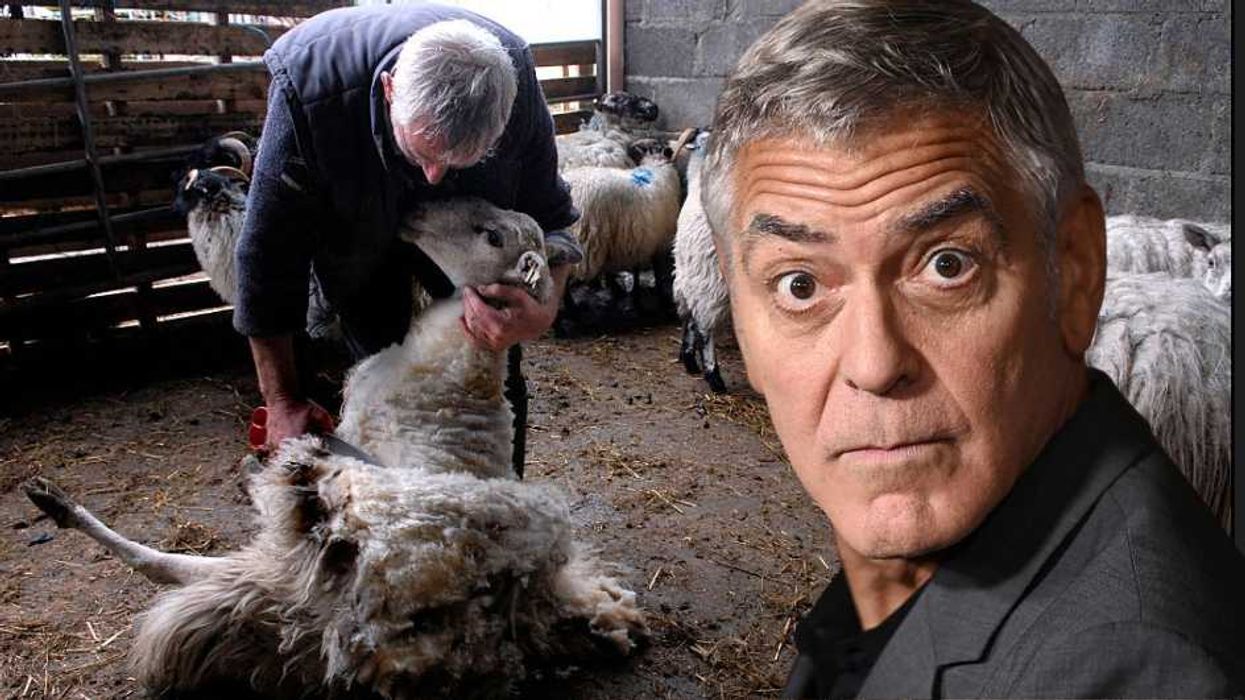
George Clooney has it all. The villa on Lake Como, the Hollywood halo, the tequila fortune.
And now — apparently — a farm. He grows olives, you see. Presses them into artisanal oil. Talks lovingly about “the land.”
In Ireland, farmer suicide rates are among the highest in the country. In America, it’s even worse. Farming isn’t just lonely — it’s a daily battle against debt, drought, and despair.
It’s the sort of thing the lifestyle press laps up. The movie star who’s “gone back to nature,” barefoot among the groves, a rake in both senses of the word. But as someone raised on an actual farm in Ireland, I can’t help but laugh. Calling Clooney a farmer is like calling yourself a surgeon because you once removed a splinter with tweezers.
Knee-deep in muck
My father’s a real farmer. He’s the kind of man who measures days in chores, not hours. He’s out there in rain, shine, or two feet of snow, wrangling 100 cattle and 300 sheep with saintly patience. Starting at age 7, I spent 10 years doing the same thing. The man’s hands could sand a doorframe just by clapping. His back has carried more than hay bales. It’s borne the heavy burden of being taken for granted. Farmers feed everyone, yet everyone forgets them. They’re the engine of every economy and the punchline of every town.
The romantic idea of farming — what I call the “Clooney complex” — is built on Instagram filters and feckless fantasy. A celebrity buys a few acres, plants some lavender, adopts a goat named Aristotle, and suddenly it’s “sustainable living.” They wear linen shirts and wax lyrical about the “spiritual rhythm” of rural life, just before jetting back to L.A. in a jet that could single-handedly melt a glacier.
Meanwhile, the real farmer down the road is up at five, knee-deep in muck, coaxing a calf into the world in sideways sleet. The rhythm of real rural life sounds less like “peaceful simplicity” and more like an industrial power washer.
We don’t name our sheep. That’s something people who’ve never farmed don’t understand. When you’ve got 300 of the woolly little delinquents, sentimentality is a luxury you can’t afford. I’ve seen enough lambs die in winter to know why farmers are wary of names. We remember numbers. The birth tags. The weight. The cost of feed. The constant arithmetic of survival. Romanticizing farming is like romanticizing trench warfare — fine for those who’ve never experienced it firsthand.
Debt, drought, and despair
And yet, people love the image. The noble tiller of soil, weathered but wise, standing in a sunset, surrounded by his empire. They never show the invoices, broken fences, silage bills, oppressive environmental regulations, or the bank statements.
They don’t show the nights you lie awake wondering whether the mart price will rise or fall. They don’t show the hours spent alone, the silence broken only by the rattle of a gate or the cough of an animal on the way out. Farming is isolation dressed as independence. You’re your own boss, yes — but your employees are cows, and they never take a day off.
In Ireland, farmer suicide rates are among the highest in the country. In America, it’s even worse. Farming isn’t just lonely — it’s a daily battle against debt, drought, and despair.
Each season, costs climb higher: cement for sheds, grain for feed, diesel for tractors, even medicine for the herd. Profits shrink, pressure builds, and hope thins out like soil after too many harvests. American farmers are now three and a half times more likely to die by suicide than the average worker. The farm devours what it earns. It’s less a business than a benevolent parasite — you feed it in the hope it feeds you back.
RELATED: AI isn’t feeding you
 Photo by Nikada via Getty Images
Learning from the land
But to the celebrity farmer, it’s a lovely way of life. Clooney can pose with his olives, Chris Pratt with his chickens, or “Top Gear” legend Jeremy Clarkson with his camera crew and call it “a return to roots.” Fine, let them have their fun. But real farming isn’t less a return than a sentence. It’s 70-hour weeks, constant pressure, and the faint but familiar panic of wondering what happens if you get sick. No stand-in. No understudy. Just you and the land, locked in an ancient marriage of necessity.
Don’t get me wrong — I love the land. There’s a holiness to it that city life can’t touch. I understand why people are drawn to it, even why they imitate it. But farming isn’t a hobby. It’s not therapy. It’s work in its rawest form — bone-deep, back-breaking, Sisyphus-like labor. And while actors can play at being farmers, farmers can’t play at being actors. When a calf’s stuck halfway out, the only thing rolling is your sleeves. There are no retakes.
If George Clooney wants to plant crops, fine. Let him. But I’ll believe he’s a farmer when he’s up at dawn to dig a drain, when his hands smell permanently of disinfectant. I’ll believe it when his holidays depend on the lambing schedule and not the film schedule. Until then, he’s just a gardener with glorious lighting.
Farming is a philosophy in itself. It teaches humility, patience, and a genuine appreciation for the good times. You learn to solve problems with what’s at hand — wire, hope, and plenty of profanity. It’s not glamorous, but it’s brutally honest.
So when I read about Clooney’s olives, I smile. Until he has scraped muck from his boots with a stick, yelled at a stubborn sheepdog that won’t listen, and worked from first light to last, I’ll save my applause for the real ones: the men and women who work the land not for show, but for the soil itself. Owning a field doesn’t make you a farmer any more than starring in “The Perfect Storm” makes you a fisherman.
Fearmongering over Medicare hides the real fix seniors need

Democrats are casting the shutdown showdown as a battle over health care costs, tapping into widespread anxiety over the cost of health care, especially among those enrolled in Medicare. For them, it’s politics. But for millions of American seniors, the worry is real — not just a convenient talking point.
Recent polling shows 58% of Medicare recipients 65 and over are concerned about future health care costs, and half are worried a major health situation could result in either debt or bankruptcy.
If left unchanged, Medicare will be unable to pay full benefits by 2036.
While medical debt is a growing concern among Medicare recipients, the staggering size of the federal debt — largely driven by Medicare spending — is a ticking time bomb Congress can no longer ignore. As one of the largest federal spending programs, Medicare consisted of a jarring $874 billion out of the $6.75 trillion federal budget (about 13 cents of every dollar spent in FY2024).
While Medicare receives some funding from premiums paid by enrollees, the single largest source of revenue comes from the federal government’s general fund. If left unchanged, Medicare will be unable to pay full benefits by 2036.
Medicare Advantage toes the line
Fortunately, policy solutions exist that can help both seniors and taxpayers.
Medicare Advantage merges public financing with private delivery under accountability. The government pays a fixed amount per enrollee to private plans, calibrated by benchmarks and quality measures. Plans that achieve higher star ratings — which were just released for 2026 by the Centers for Medicare and Medicaid Services earlier this month — receive bonus payments. Meanwhile, poor performers lose ground.
This structure introduces incentives for efficiency and quality that are lacking in traditional Medicare. Yet, successive years of cuts to how Medicare Advantage plans are reimbursed have forced several major insurers to announce they’re withdrawing from certain Medicare Advantage markets next year.
Companies like UnitedHealth, Humana, Aetna, as well as regional plans such as UCare (serving Minnesota and parts of Wisconsin) and Blue Cross Blue Shield of Vermont, are withdrawing from select Medicare Advantage counties across the country, citing rising costs. Seniors are using more medical services than expected, driving up claims, while federal reimbursement rates are being cut. Added regulatory and administrative burdens (such as expanded reporting requirements and prior authorization rules) further limit insurers. Together, these pressures make participation unsustainable in some markets.
If unchanged, more insurers will leave Medicare Advantage, and options for seniors will continue to shrink. Meanwhile, Medicare costs are growing much faster than private health care spending.
In 2023, traditional Medicare spent $15,689 per enrollee, more than double the private sector amount. This is a result of the traditional fee-for-service model, which pays providers per treatment instead of per patient, rewarding volume over outcomes, encouraging unnecessary care, and driving up costs.
Conversely, Medicare Advantage’s structure encourages prevention and coordination. To attract enrollees, Medicare Advantage offers supplemental benefits such as vision, dental, hearing, wellness programs, transportation, and over‑the‑counter benefits. Many Medicare Advantage plans now include these extras at little or no additional cost. That flexibility helps tailor benefits to beneficiary needs.
Better treatment, lower costs
When allowed to work, Medicare Advantage delivers higher satisfaction, lower costs, and greater access to coverage than traditional Medicare. One Harvard study found that seniors enrolled in Medicare Advantage had better health outcomes than seniors on traditional Medicare. A National Institutes of Health review of hundreds of studies found that Medicare Advantage provided significantly better quality of care and health outcomes than traditional Medicare by a factor of four to one. Another NIH study found that across 48 studies, Medicare Advantage enrollees received more preventative care and had fewer hospitalizations and emergency visits, shorter stays, and lower total spending.
The financial and quality advantages are clear. One study comparing expected out‑of‑pocket costs in Medicare Advantage versus traditional Medicare found that from 2014 to 2019, projected costs were 18% to 24% lower under Medicare Advantage. For seniors on fixed incomes — that is significant.
RELATED: Democrats deny shutdown is about health care for illegal aliens — then one admits the truth
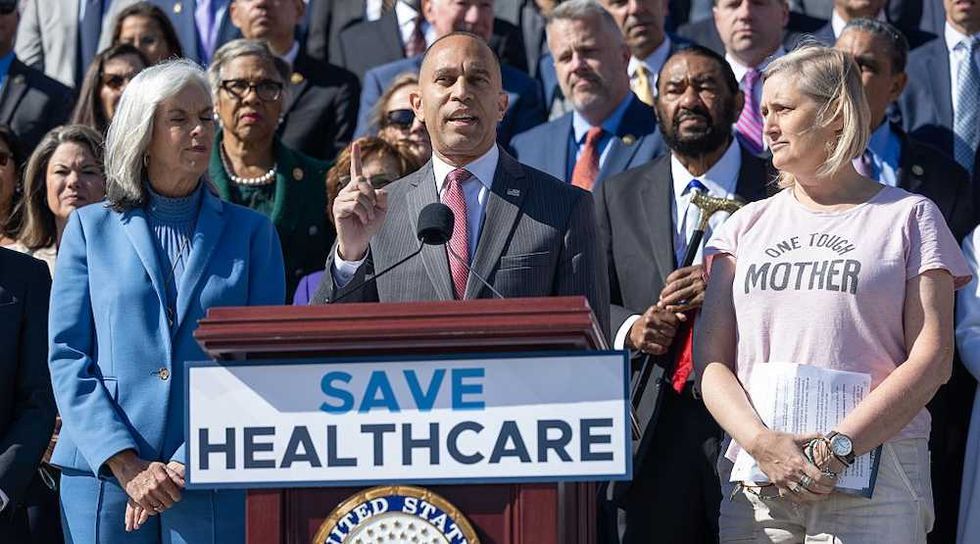 Photo by Nathan Posner/Anadolu via Getty Images
Seniors get it. This year, the majority of Medicare beneficiaries are enrolled in Medicare Advantage plans. Over the last two decades, enrollment in Medicare Advantage has skyrocketed. Unsurprisingly, polling shows 93% of Medicare Advantage enrollees were satisfied or very satisfied with their coverage, and 94% would recommend it to their family and friends. The Congressional Budget Office now projects that by 2034, Medicare Advantage could account for nearly two-thirds of all Medicare beneficiaries.
The model for the future
Medicare Advantage provides the model for quality, affordable health care for seniors that aligns with what they prefer. Reducing regulatory burdens and barriers within the insurance market will provide Medicare Advantage plans greater flexibility and even entice those insurers leaving the Medicare Advantage market to reconsider.
Medicare cannot continue as purely fee‑for‑service without reform — neither for the medical and financial health of Americans, nor for the sake of the federal budget. The current fiscal challenges plaguing the federal budget demand models that can bend the cost curve while improving quality. Medicare Advantage is not a cure-all, but it is among the most promising tools in the toolbox.
Satan or saints? The spiritual tug-of-war over Halloween

Halloween was never something I thought that deeply about until recently. If I’m being honest, for years I rolled my eyes at the rigid Christian parents — holier-than-thou stick-in-the-muds — who refused to let their kids participate in any Halloween traditions, especially costume-wearing and trick-or-treating.
I grew up in a Christian home with parents who had strong convictions about darkness but still allowed me and my siblings to enjoy Halloween festivities. Our parameters were simple: no horror movies, no haunted houses, no costumes that represent evil, and no trick-or-treating at homes with macabre decorations.
‘So many people think Halloween is about candy and it’s about dress-up, but they don’t question the meaning behind it.’
Some of my favorite childhood memories are from Halloween.
When she could find the time, my mom, a skilled seamstress, would handmake our costumes. One year, she hand-stitched me a sequin and tulle fairy dress. Another year, she made my little brother Larry the Cucumber from “VeggieTales.” He looked like Shrek’s awkward cousin, and I was forced to let him tag along for trick-or-treating — a total vibe kill when you’re 11 years old and going as a fierce leopard queen of the savanna. Twenty years later, my family still howls in laughter at the image of the two of us, a majestic jungle cat trailed by a strange pickle.
After returning home with pillowcases bursting with candy, my brother and I would stay up late sorting through our plunder and making valuable trades. He liked the fruity stuff; I was a chocoloholic, so it worked out. We made these exchanges while we watched “It’s the Great Pumpkin, Charlie Brown” and “Casper.”
When I grew older, I would help my mom get my little sister ready for trick-or-treating. I’d curl her hair, paint her nails, and delicately apply sparkly eyeshadow until she was the best princess in the neighborhood.
By all measures, Halloween at my childhood home was sweet and fun.
In my early adult years before my husband and I had a child, we kept the same guidelines. Our front porch was decorated exclusively with pumpkins and orange string lights. If we went to a costume party, we dressed as something benign, like Peter Pan and Wendy (he’s still salty with me about the green tights). We handed out candy and hyped up every princess and Power Ranger who came to our door. If our friends invited us to see a horror movie or go to a haunted house, we politely declined.
For years, this is how we did Halloween, and I always arrogantly assumed that we were doing it right — threading the needle perfectly so that no darkness got into our bubble.
But everything changes when you have a child. The second your doctor places that perfect baby in your arms, the lens through which you see the world morphs. Suddenly, there is danger lurking around every corner. Your mind is incessantly flooded with bone-chilling what-ifs. Your spirit gets more sensitive and begins picking up on things — lyrics, innuendos, hidden agendas — it never noticed before.
The weight of responsibility gets 1,000 times heavier as you realize: I am not only responsible for protecting this human being physically, I’m also charged with nurturing and guarding their soul.
And so when Halloween rolls around, you start asking questions you never asked before.
Questions like: What if my toddler sees a scary costume or yard display and has nightmares? What if allowing him to trick-or-treat exposes him to terrors he otherwise would’ve remained ignorant of? What if I start traditions I regret later?
These questions gave way to deeper spiritual inquiries: Is there an uptick in demonic activity on Halloween (even in well-lit suburban neighborhoods)? Am I sending my son out onto demon-infested streets by allowing him to trick-or-treat? By participating in Halloween in any capacity, am I attempting to whitewash a day that glorifies darkness? Is it possible for Christians to partake in Halloween and still glorify God? At what point have we crossed the threshold from innocence to fraternizing with evil? Is there such a threshold when it comes to Halloween?
These queries then birthed a whole different set: By only partaking in the innocuous parts of Halloween (granted those exist), might we be a positive example for others who don’t know Jesus? Could setting parameters around Halloween teach my child how to be light in the darkness — in the world but not of it? Might the plastic monsters in people’s yards eventually be a tool to introduce our son to the real monsters? Are candy and costumes wholesome practices 364 days of the year but grave moral evils just on October 31? If that’s the standard I hold to, am I not being a bit legalistic?
RELATED: Why Christians should stop running scared from Halloween
 kajakiki/Getty Images Plus
Full transparency: I’m not sure where I fall on this issue. I am struggling because I think my parents did an exceptional job protecting us from darkness while still allowing us to have fun and make awesome memories.
If possible, I would like to re-create the same experiences for my children.
However, we were kids in the 1990s. We didn’t have access to global information in the palm of our hands. My mom wasn’t privy to the dark pagan origins of trick-or-treating and costume-wearing.
But today, we can find the answers to literally anything in mere seconds thanks to high-speed internet, smart devices, and artificial intelligence — another big moral question mark. Many discerning Christians have begun looking into the origins of things they thoughtlessly engaged in for years, including Halloween. They’re deeply disturbed by what they’re finding.
Social media has also given everyone who wants it a platform. Practicing witches are all over Instagram and TikTok. They’ve busted the myth that witches wear pointy hats and concoct bubbling potions in the dark forest. Turns out, they’re sitting next to you at the coffee shop, browsing grocery store aisles in your hometown, and creating spreadsheets in the cubicle next to yours.
Halloween is a frequent subject on “WitchTok,” a virtual community that has amassed billions of views. Oct. 31 is a day when modern witches revive the ancient pagan rituals that influenced Halloween. And they’re doing it boldly — consulting with demons, worshipping at satanic altars, and casting curses and spells. One can only guess what they’re doing off camera.
This is all going on while children stuff themselves with Snickers and Skittles.
On the flip side, social media has also given voice to ex-occult members who are exposing the dark art’s sinister secrets. These Christian converts pull no punches about Halloween: It’s a hard no.
Many of them describe personal experiences with rituals, hauntings, and “demonic weddings” on Oct. 31. They almost unanimously implore believers to abstain from the holiday to avoid opening spiritual doors to evil.
I recently saw this Instagram post from Christian music artist Forrest Frank:
In the video, ex-occultist and former satanic church leader Riaan Swiegelaar warns that Halloween is “the highest day on the satanic calendar” and “the night of the year where there is the most human sacrifice on the whole planet.”
“So many people think Halloween is about candy and it’s about dress-up, but they don’t question the meaning behind it,” he said.
Swiegelaar went on to suggest that anyone who participates in Halloween by opening their doors and engaging in the traditions will be “affected” by the darkness.
An ex-satanic priest turned evangelist named John Ramirez, who spent over two decades engaging in unspeakable horrors on Halloween, warns that participation in any capacity is like having a one-night stand with Satan. He even goes so far as to claim that pumpkins, not even Jack-o’-lanterns, outside our doors are an invitation for demons to enter.
Do I take their word for it? Even though my childhood memories don’t align?
Do I lean harder into the Christian or pagan roots of Halloween? Can I participate in some traditions given they were shaped by All Hallows’ Eve, the vigil before All Hallows’ Day, a Christian feast established by the early church to honor saints and martyrs?
Or do I turn my porch light off and barricade my family indoors because Halloween was also influenced by the pagan fire festival of Samhain, a night steeped in death and the demonic? Ancient Celtic peoples made offerings and sometimes even sacrifices to the dead, practiced divination and necromancy, and danced around great bonfires to keep evil spirits at bay. Samhain is where costume-wearing and trick-or-treating got their start.
However, both traditions are a bit of a mixed bag. Ancient pagan practices blended with medieval Christian traditions to eventually become the candy-driven, costume-obsessed hallmarks of modern Halloween. Samhain was the night Celts believed the veil between the living and the dead was thin. Spirits that crossed the barrier needed appeasement, so people offered gifts, usually food, to quell their wrath — a precursor to passing out candy.
One could argue that Christians, by turning demonic practices into veneration and community-oriented festivities, brought light where there was darkness.
However, British and Irish Christians then put their own spin on these practices with “souling,” where the poor went door-to-door on All Hallows’ Eve, offering prayers for the dead in return for food, which further shaped the trick-or-treating we know today.
The tradition of costume-wearing has a similar trajectory.
During Samhain, Celts would disguise themselves using animal skins or masks to confuse or ward off malevolent spirits. By the medieval period, after Christianity had spread across Ireland and Scotland, these practices were reshaped into what became known as “guising.” Children dressed up and went door-to-door, performing songs, poems, or tricks for food or coins. This was widely accepted by Christians as part of All Hallows’ Day festivities.
So while Samhain birthed the concepts of trick-or-treating and dressing in costumes, Christians had the final say. The early church redirected pagan impulses of worshipping and fearing the dead to honoring them as part of the “communion of saints.” Or did they merely sanitize sin? I guess it depends on how you look at it.
Many Christians who condemn Halloween today point back to the pagan origins of these traditions as evidence of why believers should abstain. They’ve definitely got a point. Samhain was — is — dedicated to the demonic.
However, one could argue that Christians, by turning demonic practices into veneration and community-oriented festivities, brought light where there was darkness. Again, it depends on how you look at it.
I do find it interesting that the majority of Christians who are bent on seeing the entirety of Halloween as irredeemably evil don’t bat an eye when December rolls around and Christmas trees go up. Christmas trees have the exact same history as Halloween’s favorite traditions: It began as a pagan practice of worshipping nature spirits, and then Christians adapted it into a “holy” holiday tradition.
I asked a close friend of mine who falls in this category (no Halloween but Christmas trees are fine) her thoughts on this. She told me Halloween in general is a celebration of darkness, whereas Christmas is not.
It’s a fair point, but I still wonder if mainstream Christmas is not a celebration of a different kind of darkness — greed and materialism.
“It’s just the whole Halloween vibe. It doesn’t sit well with my spirit,” she told me.
There, I think, is where everyone should find their answer: in the Spirit, which convicts us all differently. I’m reminded of the apostle Paul’s words to the early Gentile Christians in Romans 14, who were arguing over disputable matters of conscience, like consuming food offered to idols and observing certain holidays. He told them, “Each one should be fully convinced in his own mind.” Perhaps the same wisdom applies here.
This year, my husband and I have decided to abstain from Halloween and use this time when our son is still too young to remember anything to pray about what our future Octobers should look like.
My spirit is certainly disturbed when I see our next-door neighbor turning his yard into what I can only describe as a temple of darkness — monsters and fiends of all varieties awash in a sickly red glow. I then look over at the cluster of pumpkins on my own front porch and wonder: Are he and I guilty of the same crime?
Until I have my answer, I’ll keep pondering, praying, and letting the Spirit — not the season or even my cherished memories — tell me what belongs in our home.
Mom boards school bus, threatens student, curses out bus driver — then repeats scene at HS, cops say. It ends badly for her.
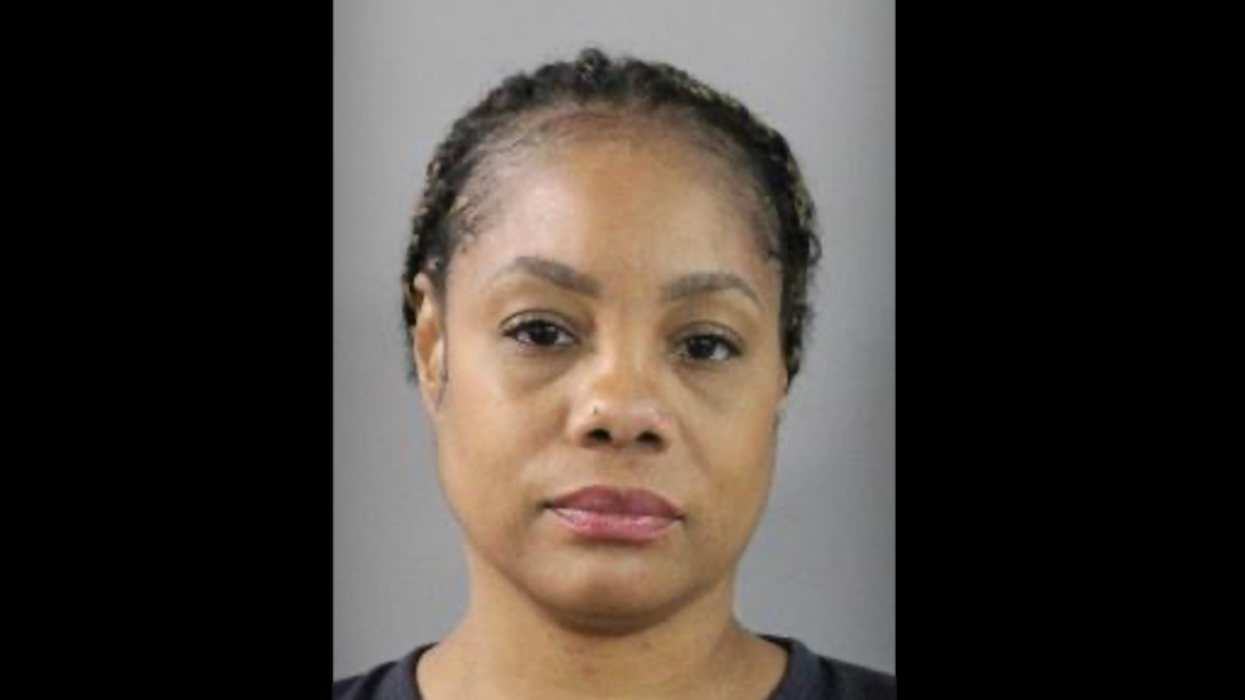
A 48-year-old mother boarded a Florida school bus Monday morning and threatened a student and cursed out the bus driver, the Polk County Sheriff’s Office said.
But the mother — identified by authorities as Latanya Rowe — allegedly was just getting started.
‘These police ain’t gonna be able to protect you!’
The bus was supposed to be taking students to Davenport High School, but Rowe apparently had some business to take care of first.
The sheriff’s office said Rowe began cursing at and threatening a student on the bus about a Friday incident between the student and Rowe’s son and daughter. The student victim recorded video of Rowe’s profanities and threats, officials said.
“Yeah, record me!” she yelled to start things off. “I know where you live!”
She also cursed out the bus driver, accusing him of not “handling the situation” between her kids and the student, authorities said.
The bus driver told Rowe to get off the bus, but she refused, officials said, adding that when he told her he was contacting law enforcement, she left.
The sheriff’s office said Rowe’s actions caused the bus to be delayed by about 50 minutes.
Before the clip ended, Rowe was heard hollering — apparently at the student — that “these police ain’t gonna be able to protect you!”
RELATED: Mom and her 17-year-old daughter board middle school bus, start slugging 8th-grade boy: Report
The sheriff’s office said that when deputies went to Rowe’s home, she told them through her Ring camera that she was at the high school.
Indeed, the two school resource deputies went to the high school’s front office where they found Rowe cursing, yelling, and causing a disturbance, officials said. When the deputies attempted to take Rowe into custody, she resisted, the sheriff’s office said.
What’s more, Rowe’s daughter was standing nearby and was told multiple times to move back, officials said, adding that she repeatedly refused and told deputies that she wanted to go to jail too. The sheriff’s office said she was taken into custody for violation of the “Halo law” after warnings and resisting arrest.
Deputies investigating the original dispute between the three students on the bus — Rowe’s son and daughter and the student victim — learned through several witnesses that Rowe’s son had been bullying the student victim for a week and calling the victim racial slurs, officials said.
When all three students got off the bus Friday afternoon, the victim attempted to talk to Rowe’s son and daughter, but they both punched the victim, officials said, adding that the victim fought back until another student separated them.
“The irony of this situation is that this woman’s two children were found to be the aggressors in a fight that took place on Friday, yet she was screaming at the victim and accusing the victim of hurting her kids,” Polk County Sheriff Grady Judd said in the aftermath. “The victim’s parents declined to press charges and preferred that the school handle that internally, but we are moving forward with charging this mother for her criminal conduct. You cannot go onto a school bus or onto school property and cause a disturbance — schools are meant to be safe places where children learn.”
Rowe was charged with disrupting a school function, trespassing on school grounds, disorderly conduct, and resisting arrest, officials said, adding that she was released after posting $1,750 bond.
Like Blaze News? Bypass the censors, sign up for our newsletters, and get stories like this direct to your inbox. Sign up here!





