Category: Blaze Media
Democrats’ shutdown is about to make catching a flight a lot harder

Transportation Secretary Sean Duffy warned on Tuesday that if Democrats keep the government shut down, there could be serious repercussions for air travel as air traffic controllers — those directing over 44,000 flights and more than 3 million airline passengers daily — are being spread thin and overworked without pay.
“You will see mass chaos. You will see mass flight delays,” said Duffy. “You’ll see mass cancellations, and you may see us close certain parts of the airspace because we just cannot manage it.”
‘Asking them to go without a full month’s pay or more is simply not sustainable.’
Duffy’s warning evidently fell on deaf ears. Democrats have, after all, made explicit their intention to use Americans’ pain and inconvenience as political “leverage.” A senior Democrat aide even indicated last month that the party will not concede short of “planes falling out of the sky.”
Citing air traffic control personnel issues and the need to keep American skies safe, Duffy announced on Wednesday that the Federal Aviation Administration will be reducing air traffic by 10% across 40 “high-volume” markets starting on Friday.
Despite his recent initiatives to recruit, train, and retain air traffic controllers, Duffy indicated that the fruits of such efforts take years to fully manifest and that at present, the FAA is still 2,000 controllers short. The government shutdown greatly compounds the impact of this underlying staffing problem as the existing workforce is spread thin, overworked, and paid nothing.
While air traffic controllers received a partial payment in early October, Duffy indicated that they haven’t been paid since, prompting some controllers to take second jobs.
RELATED: Trump uses tariff revenue to protect poor mothers and kids hurt by Democrats’ shutdown
 Photographer: Eric Lee/Bloomberg via Getty Images
“Our air traffic controllers, and a lot of those who work at DOT but throughout government, they haven’t received paychecks,” said Duffy. “Many of these employees, they’re the head of household. They have their spouse at home. They have a child or two or three, and when they lose income, they are confronted with real-world difficulties in how they pay their bills.”
Nick Daniels, the president of the National Air Traffic Controllers Association, said in a statement on Friday, “For this nation’s air traffic controllers, missing just one paycheck can be a significant hardship, as it is for all working Americans. Asking them to go without a full month’s pay or more is simply not sustainable.”
‘We are not going to do anything that will compromise the safety of air transport in the United States.’
“During the shutdown, these professionals are required to oversee the movement of the nation’s passengers and cargo while many are working ten-hour days and six-day workweeks due to the ongoing staffing shortage, all without pay,” continued Daniels. “This situation creates substantial distractions for individuals who are already engaged in extremely stressful work. The financial and mental strain increases risks within the National Airspace System, making it less safe with each passing day of the shutdown.”
Bryan Bedford, the administrator of the Federal Aviation Administration, noted that a recent deep dive into National Airspace System data revealed both “issues of fatigue” among controllers and pressures building in a way that if left unchecked could impact air safety.
“The data is telling us we need to do more, and we are going to do more,” said Bedford.
“We’re going to look for a ratable reduction across these 40 markets over the next 48 hours,” said the FAA administrator.
“We’re not going to wait for a safety problem to truly manifest itself when the early indicators are telling us we can take action today to prevent things from deteriorating.”
While the FAA has not released the final list of airports that will have their capacity cut, a source provided a proposed list to CBS News naming the following airports:
- Anchorage International (ANC)
- Hartsfield-Jackson Atlanta International (ATL)
- Boston Logan International (BOS)
- Baltimore/Washington International (BWI)
- Charlotte Douglas International (CLT)
- Cincinnati/Northern Kentucky International (CVG)
- Dallas Love (DAL)
- Ronald Reagan Washington National (DCA)
- Denver International (DEN)
- Dallas/Fort Worth International (DFW)
- Detroit Metropolitan Wayne County (DTW)
- Newark Liberty International (EWR)
- Fort Lauderdale/Hollywood International (FLL)
- Honolulu International (HNL)
- Houston Hobby (HOU)
- Washington Dulles International (IAD)
- George Bush Houston Intercontinental (IAH)
- Indianapolis International (IND)
- New York John F. Kennedy International (JFK)
- Las Vegas Harry Reid International (LAS)
- Los Angeles International (LAX)
- New York LaGuardia (LGA)
- Orlando International (MCO)
- Chicago Midway (MDW)
- Memphis International (MEM)
- Miami International (MIA)
- Minneapolis/St. Paul International (MSP)
- Oakland International (OAK)
- Ontario International (ONT)
- Chicago O’Hare International (ORD)
- Portland International (PDX)
- Philadelphia International (PHL)
- Phoenix Sky Harbor International (PHX)
- San Diego International (SAN)
- Louisville International (SDF)
- Seattle/Tacoma International (SEA)
- San Francisco International (SFO)
- Salt Lake City International (SLC)
- Teterboro (TEB)
- Tampa International (TPA)
“If the pressures continue to build even after we take these measures, we’ll come back and take additional measures,” continued the FAA administrator. “We’re trying to be prescriptive, surgical, put the relief where the relief will do the most good, but again, we are not going to do anything that will compromise the safety of air transport in the United States.”
White House press secretary Karoline Leavitt told reporters on Tuesday, “We want to reopen the government so we can resume travel in the safest and most efficient way possible, especially as we head into the busiest travel season.”
Like Blaze News? Bypass the censors, sign up for our newsletters, and get stories like this direct to your inbox. Sign up here!
Nancy Pelosi announces retirement after nearly 4 decades in Congress

Speaker Emerita Nancy Pelosi (D-Calif.) announced Thursday that she will not seek re-election after nearly four decades serving in Congress.
Pelosi was first elected to the House in 1987 to represent California and eventually became the first female speaker of the House. Pelosi served as speaker from 2007 to 2011 under Presidents George W. Bush and Barack Obama and again from 2019 to 2023 under Presidents Donald Trump and Joe Biden.
A successor has not been named.
“For decades, I’ve cherished the privilege of representing our magnificent city in the United States Congress,” Pelosi said in a video posted on X.
“That is why I want you, my fellow San Franciscans, to be the first to know,” Pelosi said. “I will not be seeking re-election to Congress.”
RELATED: California Republicans sue to stop Newsom’s redistricting scheme — he responds: ‘Good luck, losers’
 Andrew Harrer/Bloomberg via Getty Images
Although she has announced she will step aside after this term, a successor has not been named to run to represent California’s 11th District.
RELATED: Zohran Mamdani becomes first openly socialist mayor of New York City
 Photo by Chip Somodevilla/Getty Images
“With a grateful heart, I look forward to my final year of service as your proud representative,” Pelosi said.
Like Blaze News? Bypass the censors, sign up for our newsletters, and get stories like this direct to your inbox. Sign up here!
What it really means to be a conservative in America today

Our movement is at a crossroads, and the question before us is simple: What does it mean to be a conservative in America today?
For years, we have been told what we are against — against the left, against wokeism, against decline. But opposition alone does not define a movement, and it certainly does not define a moral vision.
We are not here to cling to the past or wallow in grievance. We are not the movement of rage. We are the movement of reason and hope.
The media, as usual, are eager to supply their own answer. The New York Times recently suggested that Nick Fuentes represents the “future” of conservatism. That’s nonsense — a distortion of both truth and tradition. Fuentes and those like him do not represent American conservatism. They represent its counterfeit.
Real conservatism is not rage. It is reverence. It does not treat the past as a museum, but as a teacher. America’s founders asked us to preserve their principles and improve upon their practice. That means understanding what we are conserving — a living covenant, not a relic.
Conservatism as stewardship
In 2025, conservatism means stewardship — of a nation, a culture, and a moral inheritance too precious to abandon. To conserve is not to freeze history. It is to stand guard over what is essential. We are custodians of an experiment in liberty that rests on the belief that rights come not from kings or Congress, but from the Creator.
That belief built this country. It will be what saves it. The Constitution is a covenant between generations. Conservatism is the duty to keep that covenant alive — to preserve what works, correct what fails, and pass on both wisdom and freedom to those who come next.
Economics, culture, and morality are inseparable. Debt is not only fiscal; it is moral. Spending what belongs to the unborn is theft. Dependence is not compassion; it is weakness parading as virtue. A society that trades responsibility for comfort teaches citizens how to live as slaves.
Freedom without virtue is not freedom; it is chaos. A culture that mocks faith cannot defend liberty, and a nation that rejects truth cannot sustain justice. Conservatism must again become the moral compass of a disoriented people, reminding America that liberty survives only when anchored to virtue.
Rebuilding what is broken
We cannot define ourselves by what we oppose. We must build families, communities, and institutions that endure. Government is broken because education is broken, and education is broken because we abandoned the formation of the mind and the soul. The work ahead is competence, not cynicism.
Conservatives should embrace innovation and technology while rejecting the chaos of Silicon Valley. Progress must not come at the expense of principle. Technology must strengthen people, not replace them. Artificial intelligence should remain a servant, never a master. The true strength of a nation is not measured by data or bureaucracy, but by the quiet webs of family, faith, and service that hold communities together. When Washington falters — and it will — those neighborhoods must stand.
RELATED: Evil never announces itself — it seduces the hearts of the blind
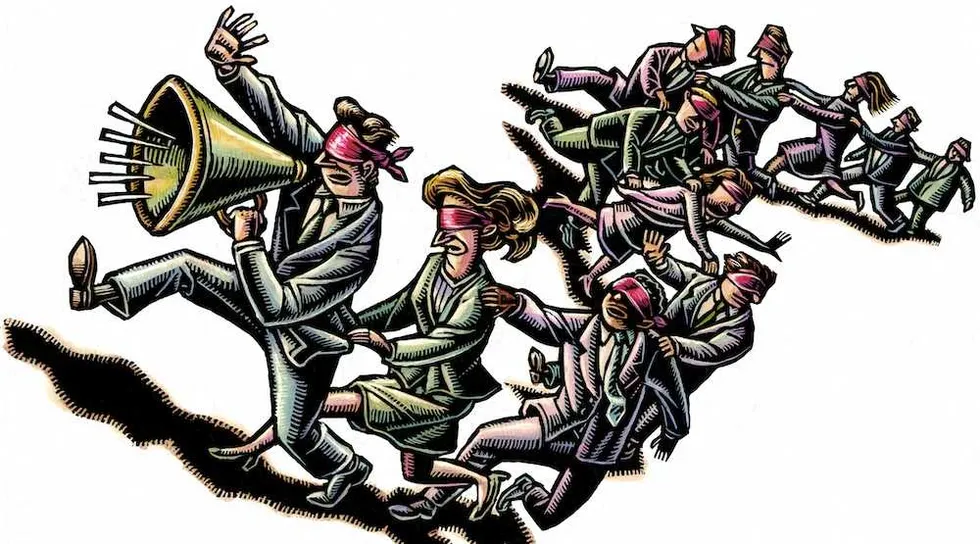 Lisa Haney via iStock/Getty Images
This is the real work of conservatism: to conserve what is good and true and to reform what has decayed. It is not about slogans; it is about stewardship — the patient labor of building a civilization that remembers what it stands for.
A creed for the rising generation
We are not here to cling to the past or wallow in grievance. We are not the movement of rage. We are the movement of reason and hope.
For the rising generation, conservatism cannot be nostalgia. It must be more than a memory of 9/11 or admiration for a Reagan era they never lived through. Many young Americans did not experience those moments — and they should not have to in order to grasp the lessons they taught and the truths they embodied. The next chapter is not about preserving relics but renewing purpose. It must speak to conviction, not cynicism; to moral clarity, not despair.
Young people are searching for meaning in a culture that mocks truth and empties life of purpose. Conservatism should be the moral compass that reminds them freedom is responsibility and that faith, family, and moral courage remain the surest rebellions against hopelessness.
To be a conservative in 2025 is to defend the enduring principles of American liberty while stewarding the culture, the economy, and the spirit of a free people. It is to stand for truth when truth is unfashionable and to guard moral order when the world celebrates chaos.
We are not merely holding the torch. We are relighting it.
Welcome to tokenization, where everything under the sun (and the sun) has its digital price

In a recent appearance with Glenn Beck, Whitney Webb lays out her case that the Great Reset did not end with the election of Donald Trump. Elites, ever given to schemes involving central control, reallocation, and number-go-up, are planning to tokenize everything they possibly can, including natural resources.
Webb draws a connective line between BlackRock CEO Larry Fink, the World Economic Forum (not exactly a freedom-oriented outfit), digital ID, and this process of so-called tokenization. This term is new to many people. Essentially, tokenization refers to the process of placing a metric, a mark, an identifying code on an object. The identifying marker is then pumped into an aggregating and analytical machine.
There is, no doubt, some obscurantism in the tech community, intentional or otherwise, as well as some heavy cognitive dissonance playing out for the rest of us as we watch the real, actual economy withering at our feet. How does giving (or selling) rights to natural resources like water help you and your neighbors pay bills, raise families, live in some semblance of accord with God?
The coming system is intended to solve for the management of not just anything but everything.
Neither Larry Fink nor the WEF are working on our behalf by digitizing water. Then what are they up to? Dropping in recently on CNBC, Fink said, “I do believe we’re just at the beginning of the tokenization of all assets, from real estate to equities to bonds, across the board.”
Through the implementation of natural resource assets, the plan is to mark, meter, and digitize water, trees, air, and animals of every sort, then pin their existence, in the digital tokens’ monetized form, to the shared economy. That unlocks foreign investment and, one imagines, perpetuates some modified version of the ever-unstable and unsatisfactory financial enclosure of benefits and retirement that has, so far, kept enough U.S. citizens satiated to keep it rolling.
Any and every AI is designed or able to adapt to the tokenization process. It needs be automatic and fast enough to keep up-to-the-minute record of millions or billions of transactions, sales, shorts, liquidations, and so forth. Rather than a system of streams or channels, the need is for computing to move like water itself. For Bitcoin and other cryptocurrencies hoping to participate in the tokenization bonanza, that means their encryption and storing of information (through so-called hashes and ledgers) needs to flow at the speed of the global digital economy.
Indeed, we’ve seen for years that some lesser-known cryptocurrency companies, like Hashbar as one example, have been building their hash, as it were, to function within an AI-controlled global marketplace. These hash-products, not too dissimilar from Bitcoin in terms of their ledger-keeping properties, are meant, in a stupefying sense, to mark individual drops and tranches of liquid or digitally liquified assets.
RELATED: Can anyone save America from European-style digital ID?
 Photo by Sean Gallup/Getty Images
It’s hard to visualize such unnatural and invisible arrangements, so here’s a real-world example: Say you have 10,000 board feet of Douglas fir trees on a lot in Washington state. If the Fink version of tokenization goes forward, you’ll be able to “digitize” those useful board feet of wood and sell portions, as opposed to the whole lot. Now picture that process for, well, anything you can imagine and much that you can’t.
In simple terms, the likely outcome of all of this BlackRock-WEF-AI machination is immediate dissociation between the human and the trees, the fir needles, the smell of the soil. All of that, given enough backroom dealing, political sloth, and diabolical Wall Street ingenuity, will be erased.
Are we talking about selling public lands? Theoretically, yes. Although major legal, regulatory, and political hurdles remain, the principle of leaving at least some portions of the created world exempt from actionable financial valuation is already eroding away. The accelerating logic of digital terraforming has no conceptual limit. Granting the premise that tokenization is good, not only should private property be tokenized, but all water, all minerals, and every possible other item with unexploited value rooted in human experience. The coming AI, digital ID, hash-rated system is intended to solve for the management of not just anything but everything.
The disturbing undercurrent of plans, outcomes, and inertia around this improbable intersection of technologies gets more disturbing when you accept that it is, in fact, a long-term plan nearly realized.
In her chat with Beck, Webb outlines another piece of the puzzle, termed “natural asset corporations.” This is pitched to the mainstream as a way to invest in conservation, ensure biodiversity, and so forth. But if we recall the century-long technocratic play, the current AI inertia, and the bipartisan support for anything to keep the fiat economy limping along, it’s easy to see how those natural assets under ownership might be subject to changes in any legal stipulation barring sales to other corporate or government entities. Those interlocking directorships have a knack for change.
We haven’t even mentioned energy, but we must, because this scheme ultimately needs to take into account the sun itself! Who owns the sun? Well, BlackRock, of course. Or some quasi-tech giant/WEF version of BlackRock.
Actually, no one owns the sun but God, and we have to remember this fact. By way of the wholly God-given system, we see that the sun feeds the grass, grass feeds the animals, we eat the animals.
The technical details on the capture of energy are intense, involving data centers to run the AI, political control to rubber-stamp the terraforming for the electrical inputs, and, at some near point, the encrypting of energetic inputs into a digital (hashing) ledger to be monitored, metered, and controlled.
You can probably see here how necessary the personal digital ID is to the entire panopticon. But if not, consider it unlikely that your or my interests are going to be taken into consideration by third-country customer service agents employed by the electrical company to manage our dissatisfaction in the event that a neighborhood brown-out is required while grid power is shunted over to the local data center.
Democrats are running as Bush-era Republicans — and winning
Republicans have given voters no reason to support them beyond the claim that Democrats are dangerously radical.
Well, sure. But when voters look around and see rising prices, rising crime, and no clear plan from the party in power, they turn to the other side. That’s what happened in Virginia, and it will keep happening as long as life stays unaffordable and Republicans offer nothing but excuses.
Republicans can still win — but not with hollow slogans or billionaire donors. They need to fight for affordable living, strong families, and safe communities.
Democrats’ victories in Virginia and New Jersey shouldn’t shock anyone — Trump didn’t need either state to win the presidency in 2024. What should alarm Republicans are the margins. Democrats crushed their opponents by 15 points in Virginia and 13 in New Jersey, performing better than Kamala Harris did against Trump in New York.
The blue wave swept deep into Republican territory. Democrats unseated Virginia’s attorney general — a respected conservative — with Jay “Two Bullets” Jones, a radical, scandal-prone candidate, and still won by nearly seven points. They gained at least 13 legislative seats, leaving Republicans with half the representation they held just eight years ago.
In Georgia, Democrats flipped two public service commission seats — their first statewide wins since 2006 — and won them by 24 points. They broke the GOP supermajority in the Mississippi Senate, flipped a state House seat, and took local races across Pennsylvania. In New Jersey, where Republicans didn’t even see the blowout coming, Democrats regained a supermajority in the General Assembly.
Taken together, these results point to a coming wipeout. Democrats have outperformed their 2024 presidential baseline by an average of 15 points in special elections this year, according to Ballotpedia — more than double the overperformance seen during Trump’s first term. In 45 of 46 key contests, Democrats either held or improved their position.
All liabilities, no benefits
Republicans now face the worst possible political scenario: They hold power, which unites and energizes Democrats, but they’ve done almost nothing with it to inspire anyone else.
The first year of Trump’s second term has been defined by trivial fights and tone-deaf priorities: tax favors for tech investors, special deals for crypto, and zoning disasters for rural and suburban voters. The data center explosion in Virginia, which has raised utility bills and wrecked communities, could have been an easy populist target. Instead, Gov. Glenn Youngkin (R) vetoed a bill to rein it in.
Despite cozying up to Big Tech, Republicans haven’t reaped any benefit. The Virginia Republican Party is broke, its candidates are outspent, and the grassroots are demoralized. The GOP keeps selling out to special interests that will never back the party. How have the ties to crypto, Big Tech, and Qatar paid off?
The reality is, Republicans don’t need those donors — they need a message to inspire a new generation of activists.
How Democrats outflanked the GOP
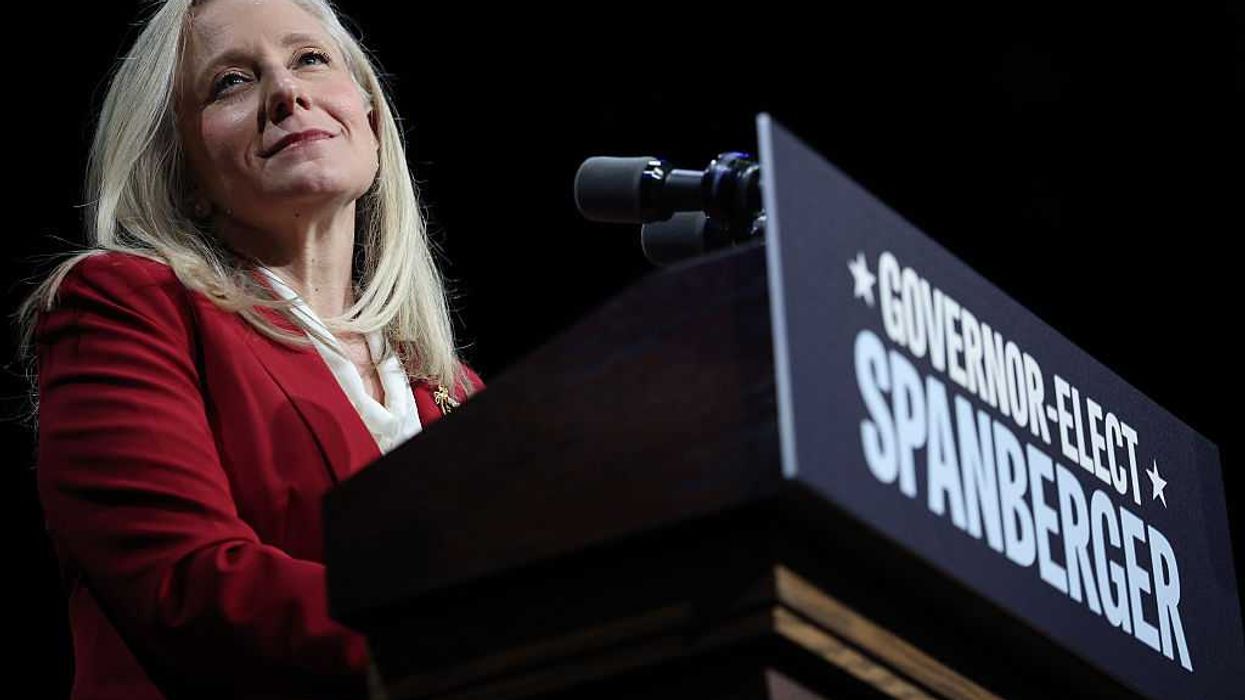
Democrats have learned to look like the party of normalcy while Republicans drift between populist posturing and corporate servitude. In Virginia, Abigail Spanberger ran on cutting costs, lowering taxes, and fighting crime — and she did it in the language of moderation. Republicans, who should own those issues, barely showed up for the debate.
Spanberger’s ads promised relief from inflation and touted her background in the CIA and law enforcement. She presented herself as steady and practical while Republicans floundered. Once again, Democrats outflanked the GOP on the right.
Republicans could have drawn blood by hammering Democrats on crime in Northern Virginia. Instead, they ran away from tough-on-crime policies. Winsome Earle-Sears even toyed with “criminal justice reform” while voters begged for accountability and order.
The result: Democrats ran as Bush-era Republicans, while Republicans looked like corporate consultants. Democrats talked about affordability and safety. Republicans talked about crypto and zoning boards.
The Trump paradox
The GOP’s reliance on one man has hollowed it out. Trump won the presidency in 2016 by talking about forgotten workers and American industry. But his divided message, personal vendettas, and fixation on media attention have since consumed the movement.
RELATED: Here’s what exit polls reveal about Tuesday’s electoral bloodbath
 Photo by Alexi J. Rosenfeld/Getty Images
Now the party gets the worst of both worlds — all of Trump’s baggage, none of his appeal. Democrats use him to rally turnout. Independents recoil. The GOP lacks infrastructure, vision, and discipline. The movement that once promised to fight the establishment has become addicted to social media applause.
A party in search of conviction
If Virginia had a commanding figure like Ron DeSantis at the top of the ticket, Republicans might have dampened the blue wave. But without an inspiring message, voters in an economic crisis will always drift to the other side.
The problem isn’t demographics; if it were, Democrats would campaign in Virginia the same way they do in California or New York City. Instead, they skate by on empty promises because Republicans, trapped by special interests and lacking a winning message, have become easy targets — and surrendered the very issues that could win back suburban voters.
Republicans can still win — but not with hollow slogans or billionaire donors. They need to fight for affordable living, strong families, and safe communities. They need a moral and economic vision that reaches beyond social media and into the lives of working Americans.
The question conservatives must ask is the one George Patton once put to his men in another context: When will we finally fight and die on our own hills instead of dying on someone else’s?
Twitter is not America. And unless Republicans start acting like they know the difference, they’ll keep losing — and keep deserving it.
The left’s vile rhetoric just keeps getting darker

Democrats are learning all the wrong lessons from where their vile rhetoric has gotten them — and Nancy Pelosi’s latest outburst is only the latest proof.
In a recent CNN interview, Pelosi called Donald Trump “a vile creature” and “the worst thing on the face of the earth,” before backing up her claim with virtually nothing.
“He’s just a vile creature. The worst thing on the face of the earth, but anyway,” Pelosi told the interviewer.
“You think he’s the worst thing on the face of the earth?” the interviewer asked.
“Yeah, I do, because he’s the president of the United States, and he does not honor the Constitution of the United States,” Pelosi replied.
“Really, Nancy? You couldn’t think of one single solitary thing that’s worse than a president who believes in things like freedom and liberty, and, you know, smaller government and lower taxes? That’s really the worst thing in the world to you?” BlazeTV host Sara Gonzales responds on “Sara Gonzales Unfiltered.”
“These people are so incredible in their myopic thinking. I really wonder how they’re going to cope when Donald Trump is out of politics,” she adds.
Pelosi’s assertion that Donald Trump is “the worst thing on the face of the earth” is the kind of rhetoric that has led many Democrats to speak similarly to any Republican voter or official, as is evidenced in one recent case out of Montana.
After voting for Trump’s big, beautiful bill, freshman Senator of Montana Tim Sheehy (R) received an alarming voicemail from Haley McKnight, a woman running for the Helena city commission.
“I just wanted to let you know that you are the most insufferable kind of coward and thief. You just stripped away health care for 17 million Americans. And I hope you’re really proud of that. I hope that one day you get pancreatic cancer and it spreads throughout your body so fast that they can’t even treat you for it,” McKnight said in the warm, friendly voicemail.
“I hope that you die in the street like a dog. One day, you’re going to live to regret this. I hope that your children never forgive you. I hope that you are infertile. I hope you never manage to get a boner ever again. You are the worst piece of s**t I’ve ever, ever, ever had the misfortune of looking at, and you don’t serve Montanans. You serve your own private interests,” she continued.
“God forbid that you ever meet me on the streets, because I will make you regret it. F**k you. I hope you die,” she added, for good measure.
Apparently, McKnight doubled down when asked about the voicemail, calling it justifiable rage.
“Did she have this all mapped out on a piece of paper, or did she just fly in there blind?” Gonzales asks, shocked.
“This woman is running for office,” she adds.
Want more from Sara Gonzales?
To enjoy more of Sara’s no-holds-barred takes on news and culture, subscribe to BlazeTV — the largest multi-platform network of voices who love America, defend the Constitution, and live the American dream.
California seeks ‘compassionate release’ of ‘sadistic pedophile’ convicted of raping and drugging his children

The state of California is asking that a man convicted of horrific repeated rape of his children be released after he was diagnosed with dementia.
Ramiro Ruiz was incarcerated for 85 years to life in 1998 after being convicted of heinous crimes that involved repeatedly raping, sodomizing, and drugging his children. He also chained up the children.
‘This guy was clearly a monster then, and he’s a monster now.’
On Monday, the California Department of Corrections and Rehabilitation went before a Madera County courtroom and asked that Ruiz be released before his impending death.
The CDCR argued that the 86-year-old was no longer a threat to society because of his advanced age and deteriorating condition.
Prosecuting Attorney Eric DuTemple opposed the release request.
“This guy was clearly a monster then, and he’s a monster now,” DuTemple said. “I think that he was best described in the probation court when he was sentenced that he is a sadistic pedophile.”
The victims ranged in age from 5 to 15 years old, and one was developmentally disabled. Ruiz was formerly diagnosed with sexual sadism disorder as well as pedophilic disorder.
“The decision the court has to make is the defendant is still capable of committing super strikes and is he an unreasonable risk to the public if we release him out of CDCR custody,” DuTemple continued.
Madera County District Attorney Sally Moreno argued that Ruiz was still capable of committing crimes against children if released.
“This was probably one of the most heinous sex crimes I have seen in my 20-plus years as a prosecutor,” Moreno said. “He does have an advanced age — I believe he’s 86 — but that doesn’t mean he’s incapable of maneuvering or manipulating a 2- or 3- or 4-year-old child up onto his lap where he could inflict all kinds of horrible damage.”
The judge refused the request on Monday, after shutting down the argument that Ruiz had behaved in prison. He pointed out that there were no children in prison to abuse.
“People were sentenced for their crimes, they were sentenced by judges and juries, and victims were given assurances that this is the amount of time this defendant would serve,” Moreno added.
Defense attorney Aaron Montoya indicated that they may refile a request for compassionate release.
Like Blaze News? Bypass the censors, sign up for our newsletters, and get stories like this direct to your inbox. Sign up here!
America’s longest shutdown breaks records and starves Americans

Americans across the country are overwhelming food bank and hunger relief organization lines after SNAP benefits were halted on November 1 — with nearly 42 million Americans losing their benefits all at once.
In Phoenix, one woman waiting in a devastatingly long line at St. Mary’s Food Bank told a reporter that she wants the men and women in Washington, D.C., to “hurry up and get the job done” and “worry about the people, not about themselves.”
Reportedly, 900,000 Arizonans were gearing up to lose their benefits.
And in Los Angeles County it’s even worse, as over 1 million families are on EBT — which is out of 3.2 million families total, amounting to about one-third of the population.
However, two U.S. judges have ordered the Department of Agriculture to release contingency funding to restart the SNAP benefits, but those funds may not reach families who are hungry for up to a week.
“Our elected officials are letting us down because, you know, we vote and put these people in office, and they tend to get a personal vendetta going with each other and forget about the main thing, which is the people,” one woman in L.A. County told a reporter for the Los Angeles Times.
Because of the amount of people on EBT, the food banks helping out are expecting to run out of food.
“That is not sustainable,” executive producer of “Pat Gray Unleashed” Keith Malinak comments, shocked. “Even in good times.”
“That’s staggering,” BlazeTV host Pat Gray agrees.
Want more from Pat Gray?
To enjoy more of Pat’s biting analysis and signature wit as he restores common sense to a senseless world, subscribe to BlazeTV — the largest multi-platform network of voices who love America, defend the Constitution, and live the American dream.
Newly elected Idaho mayor says ‘evil’ far right took his comments out of context to appear as if he hates Christians
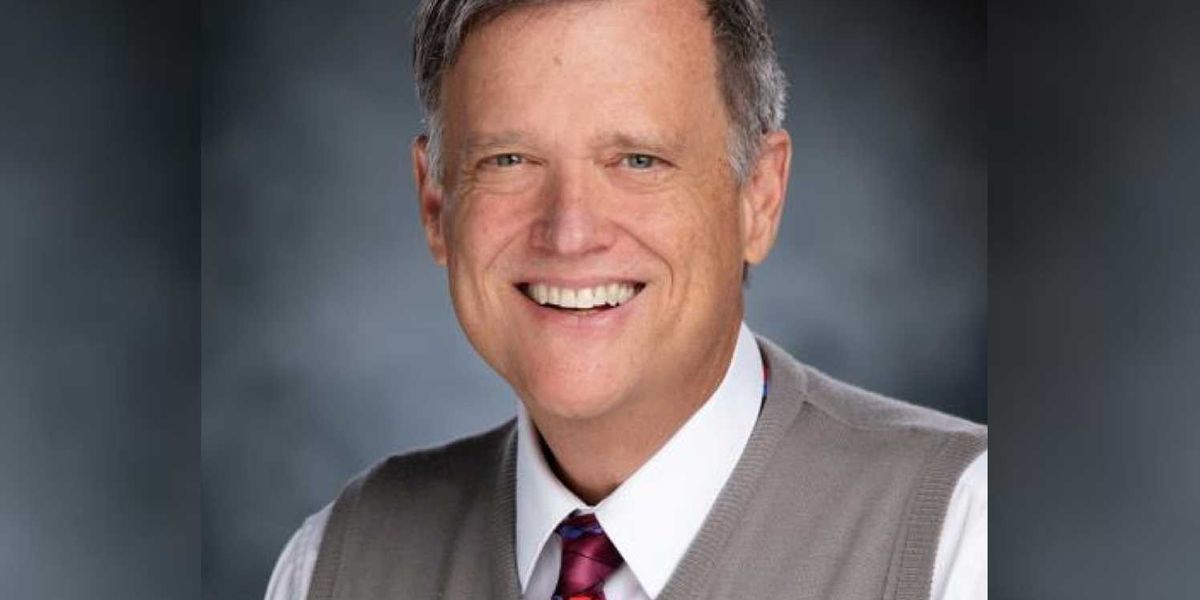
The newly elected mayor of Coeur d’Alene in Idaho was accused of making hateful comments against Christians in a video spliced together from the many rants he posted to social media.
Councilman Dan Gookin garnered 34.2% of the vote to defeat the incumbent mayor as well two other opponents. Gookin had been a member of the city council since 2011 and ran as a Republican but has a history of tangling with the local GOP.
‘I admit that my language is salty. For that I apologize. I am a passionate man. I get worked up, especially when extremists are trying to destroy my community.’
After Gookin won the mayoral election, a video of his comments about Christians resurfaced on social media. The video contains multiple clips, many of which are unrelated phrases.
“Christians, they tend to be the rudest, most disrespectful jerks I have ever seen,” he said in the video.
“I seriously think if Jesus were here today he would have a message for everyone who’s a Christian, and he would just say, ‘Get the f**k!” he says in another clip.
The Kootenai County Republican Central Committee reposted the video in Oct. 2024 along with a statement of condemnation.
We have received multiple complaints from community members regarding Dan Gookin, Precinct Committeeman, Coeur d’Alene City Councilman, “North Idaho Republican” member. … It has been reported that he has engaged in verbally abusive behavior towards Christians, including the use of insults and defamation. The KCRCC rejects ALL forms of racial, religious, sexual, and political supremacy; and ALL political violence; and ALL political weaponization of mislabels.
However, Gookin responded at that time with a video explaining the context of many of the spliced clips and showed that they were misleading.
For instance, the second comment quoted was actually from a rant against Facebook but was cut off to make it appear that he was simply criticizing Christians.
“I seriously think if Jesus were here today he would have a message for everyone who’s a Christian, and he would say, ‘Get the f**k off Facebook!'” reads the full quote in context.
He said that some of the other clips had to do with comments he saw from people identifying as Christians but mocking the death of Supreme Court Justice Ruth Bader Ginsburg.
“It’s obvious to anyone with a brain that this stuff is taken out of context! But the far right lack brains,” Gookin said.
“I admit that my language is salty. For that I apologize. I am a passionate man. I get worked up, especially when extremists are trying to destroy my community,” he adds.
He went on to post other clips with more context.
“I’m sure the Pharisees back in Judea would have loved this technology and used it to take Christ’s teachings out of context and do a video like the local far right has done to me,” he continued. “Evil hasn’t changed much in 2,000 years.”
RELATED: Liberal feminists melt down on Twitter over one tweet from a Christian pastor
Gookin complimented the voters for choosing to elect him mayor.
“The citizens of Coeur d’Alene made a good decision, and I look forward to serving them,” he said.
In Oct. 2023, the KCRCC sued Gookin for defamation related to accusations of “money laundering, election fraud, and campaign finance violations.” That lawsuit was dropped after they reached a mediated settlement to receive $25,000 from Gookin’s insurance company.
Gookin also defended a local ice cream shop from critics who attacked it for showing support for Charlie Kirk after his assassination.
Like Blaze News? Bypass the censors, sign up for our newsletters, and get stories like this direct to your inbox. Sign up here!
DHS crushes Democrat for claiming preschool teacher was detained without warrant in front of children

A Democratic congressman tried to criticize a deportation operation, but the Department of Homeland Security said he was “deliberately misrepresenting” the incident.
Rep. Mike Quigley (D-Ill.) posted a video on Wednesday of Immigration and Customs Enforcement agents dragging a woman out of a preschool.
‘ICE law enforcement did NOT target a daycare and were only at this location because the female illegal alien fled inside.’
“ICE isn’t going after the worst of the worst. This morning, they took a preschool teacher without a warrant IN FRONT OF CHILDREN in my district,” he added to the post.
Only hours later, DHS responded from its official social media account and completely undermined Quigley’s version of the incident.
“Congressman, you are deliberately misrepresenting the facts,” the agency wrote. “ICE law enforcement did NOT target a daycare and were only at this location because the female illegal alien fled inside.”
DHS said that officers were trying to perform a “targeted traffic stop” of the female because she was an illegal alien from Colombia. The driver of the car refused to pull over, and the officers gave chase.
The couple abandoned the car at a shopping mall and then went into the day care and preschool.
“They ran into a daycare and attempted to barricade themselves inside the daycare — recklessly endangering the children inside,” the statement continued. “The illegal alien female was arrested inside a vestibule, not in the school. Upon arrest, she lied about her identity.”
RELATED: ICE officer shoots at driver who tried to run over agent during vehicle stop in California, DHS says
“Facts including criminality and information on the male assailant are forthcoming and we will update the public with more information as soon as it becomes available,” DHS added.
Quigley responded with just two words.
“They’re lying,” he wrote.
A WGN-TV report claimed to confirm that a day care teacher had been detained from the Rayito de Sol Spanish Immersion Early Learning Center in Chicago. The school indicated in a statement that the officers did not present a warrant and were following the woman, who was arriving for work.
Like Blaze News? Bypass the censors, sign up for our newsletters, and get stories like this direct to your inbox. Sign up here!