

Category: Blaze Media
The courts are running the country — and Trump is letting it happen

One of the most consequential developments of 2025 has received far less scrutiny than it deserves: the steady surrender of executive authority to an unelected judiciary.
President Trump was elected to faithfully execute the laws of the United States, yet his administration increasingly behaves as if federal judges hold final authority over every major policy decision — including those squarely within the president’s constitutional and statutory powers.
Judicial supremacy thrives on abdication. It advances because presidents comply, lawmakers defer, and voters are told this arrangement is normal.
By backing down whenever district courts issue sweeping injunctions, the administration is reinforcing a dangerous precedent: that no executive action is legitimate until the judiciary permits it. That assumption has no basis in the Constitution, but it is rapidly becoming the governing norm.
The problem became unmistakable when federal judges began granting standing to abstract plaintiffs challenging Trump’s deployment of the National Guard to protect ICE agents under attack. Many assumed such cases would collapse on appeal. Instead, the Supreme Court last week declined to lift an injunction blocking the Guard’s deployment in Illinois, signaling that the judiciary now claims authority to second-guess core commander-in-chief decisions.
Over the dissent of Justices Samuel Alito, Clarence Thomas, and Neil Gorsuch, the court allowed the Seventh Circuit’s decision to stand. That ruling held that violent attacks on ICE agents in Chicago did not amount to a “danger of rebellion” sufficient to justify Guard deployment and did not “significantly impede” the execution of federal immigration law.
That conclusion alone should alarm anyone who still believes in separation of powers.
No individual plaintiff alleged personal injury by a Guardsman. No constitutional rights were violated. The plaintiff was the state of Illinois itself, objecting to a political determination made by the president under statutory authority granted by Congress. Courts are not empowered to adjudicate such abstract disputes over executive judgment.
Even if judges disagree with the president’s assessment of the threat environment, their opinion carries no greater constitutional weight than his. The commander in chief is charged with executing the laws and protecting federal personnel. Courts are not.
If judges can decide who has standing, define the scope of their own authority, and then determine the limits of executive power, constitutional separation of powers collapses entirely. What remains is not judicial review but judicial supremacy.
And that is precisely what we are witnessing.
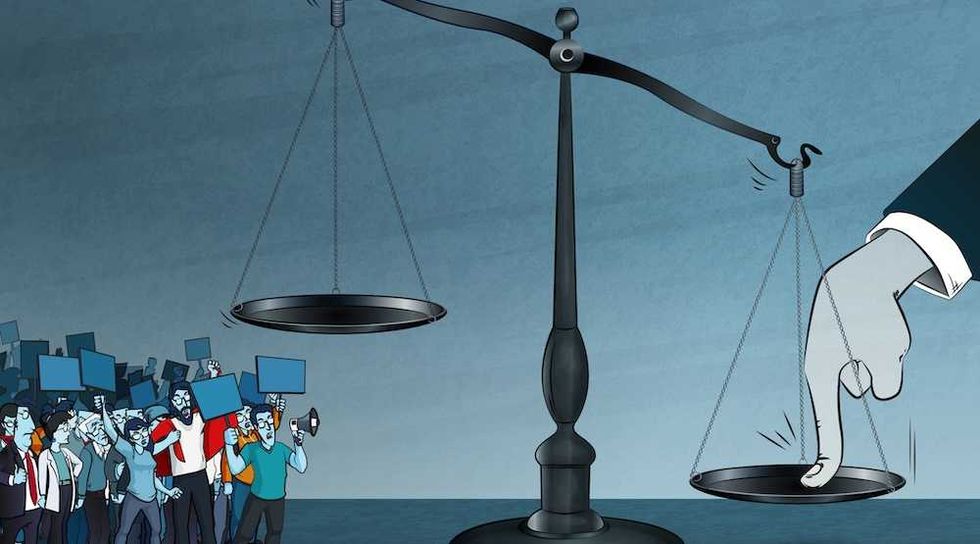
Courts now routinely insert themselves into immigration enforcement, national security decisions, tariff policy, federal grants, personnel disputes, and even the content of government websites. The unelected, life-tenured branch increasingly functions as a super-legislature and shadow executive, vetoing or mandating policy at will.
RELATED: Judges break the law to stop Trump from enforcing it
 Cemile Bingol via iStock/Getty Images
What, then, remains for the people acting through elections?
If judges control immigration, spending, enforcement priorities, and foreign policy, why bother holding congressional or presidential elections at all? The Constitution’s framers never intended courts to serve as the ultimate policymakers. They were designed to be the weakest branch, confined to resolving concrete cases involving actual injuries.
Trump’s defenders often argue that patience and compliance will eventually produce favorable rulings. That belief is not only naïve — it is destructive.
For every narrow win Trump secures on appeal, the so-called institutionalist bloc on the court — Chief Justice John Roberts, Brett Kavanaugh, and Amy Coney Barrett — uses it to justify adverse outcomes elsewhere. Worse, because lower courts enjoin nearly every significant action, the administration rarely reaches the Supreme Court on clean constitutional grounds. The damage is done long before review occurs.
Consider the clearest example of all: the power of the purse.
Congress passed a budget reconciliation bill explicitly defunding Planned Parenthood. The bill cleared both chambers and was signed into law. Under the Constitution, appropriations decisions belong exclusively to Congress.
Yet multiple federal judges have enjoined that provision, effectively ordering the executive branch to continue sending taxpayer dollars to abortion providers in defiance of enacted law. Courts have not merely interpreted the statute; they have overridden it.
That raises an unavoidable question: Does the president have a duty to enforce the laws of Congress — or to obey judicial demands that contradict them?
Continuing to fund Planned Parenthood after Congress prohibited it is not neutrality. It is executive acquiescence to judicial nullification of legislative power.
The same pattern appears elsewhere.
Security clearances fall squarely within executive authority, yet the first Muslim federal judge recently attempted to block the president from denying clearance to a politically connected lawyer. Immigration, long recognized as a sovereign prerogative, has been transformed by courts into a maze of invented rights for noncitizens — including a supposed First Amendment right to remain in the country while promoting Hamas.
States fare no better. When West Virginia sought to ban artificial dyes from its food supply, an Obama-appointed federal judge intervened. When states enact laws complementing federal immigration enforcement, courts strike them down. But sanctuary laws that obstruct federal authority often receive judicial protection.
Heads, illegal aliens win. Tails, the people lose.
RELATED: The imperial judiciary strikes back
 Moor Studio via iStock/Getty Images
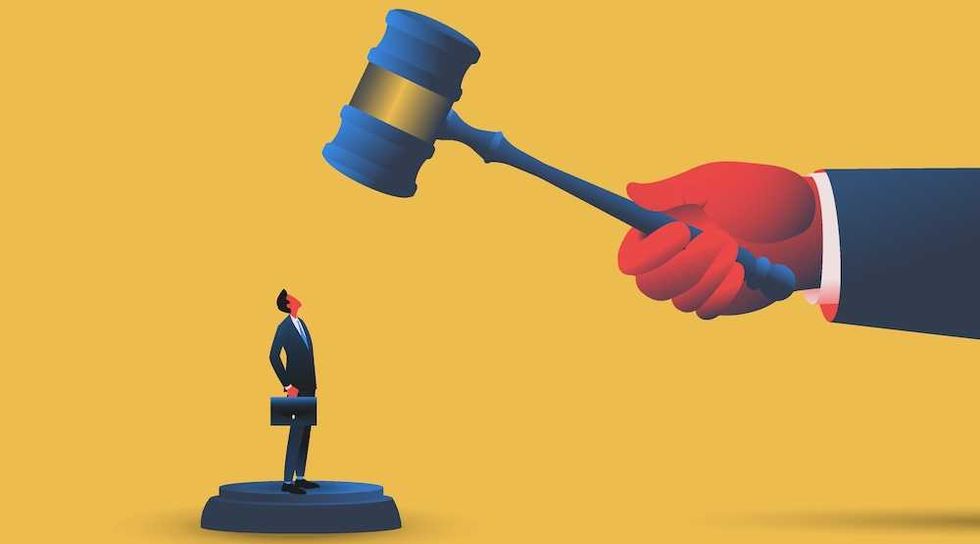
What we are witnessing is adverse possession — squatter’s rights — of constitutional power. As Congress passes fewer laws and the executive hesitates to assert its authority, courts eagerly fill the vacuum. In 2025, Congress enacted fewer laws than in any year since at least 1989. Meanwhile, judges effectively “passed” nationwide policies affecting millions of Americans.
This did not happen overnight. Judicial supremacy thrives on abdication. It advances because presidents comply, lawmakers defer, and voters are told this arrangement is normal.
It is not.
Trump cannot comply his way out of this crisis. No president can. A system in which courts claim final authority over every function of government is incompatible with republican self-rule.
The Constitution does not enforce itself. Separation of powers exists only if each branch is willing to defend its role.
Right now, the presidency is failing that test.
NBA legend calls on Trump to implement mandatory military service

A Hall of Fame basketball player says that mandatory service would help Americans with discipline and structure.
Compulsory service is required in many first-world countries, like South Korea, Finland, and Sweden. While duties and service time vary, many believe the requirement can foster a more responsible citizenry.
‘Learn how to defend yourself. Shoot and handle guns properly.’
A former NBA player and champion, 6’10” Dwight Howard recently called upon President Trump to consider implementing a mandatory term of service for Americans.
“I honestly feel like the president should make one year of service mandatory for everyone born in America,” Howard wrote on X. “A lot of other countries do it. And I think it would help with discipline and structure.”
Howard then asked, “I’m curious what yall think[:] would this help America or nah[?]”
RELATED: NBA players finally drop brutal truth bombs on WNBA stars: ‘It should be common sense’
Howard responded to a few reader remarks, including one who suggested such service could be performed during summers while a student is in high school.
In response, Howard revealed his stance on the duration for service.
“Everyone should do a year,” he wrote.
Another reader suggested mandatory customer service work for Americans, such as working in “retail, serving, bartending,” or answering phones. That notion saw Howard remain steadfast in his opinion that Americans should perform military service.
“I think military service would be better,” he replied. “Learn how to defend yourself. Shoot and handle guns properly. The bond and respect for each other would go up.”
RELATED: Rookie NFL QB declared the new Obama — and the ‘most powerful black man since 2009’
 Photo by Mike Coppola/Getty Images
Following his NBA career, Howard played basketball overseas in the T1 League in Taiwan, where he again became a star. Perhaps this is where his inspiration came from, as Taiwan has a mandatory 12 months of military training for males ages 18-36, according to World Population Review.
Howard has discipline and law enforcement in his family’s background; an archived USA Basketball profile notes that his father, Dwight Sr., was a Georgia state trooper as of 2007.
According to Sky News, approximately 80 countries have some form of mandatory service or conscription. Some countries reportedly have mandatory service for women, as well, such as Sudan, Morocco, Mozambique, North Korea, and Sweden.
Like Blaze News? Bypass the censors, sign up for our newsletters, and get stories like this direct to your inbox. Sign up here!
Pope Leo calls out gambling addiction and ‘demographic crisis’ in Vatican meeting
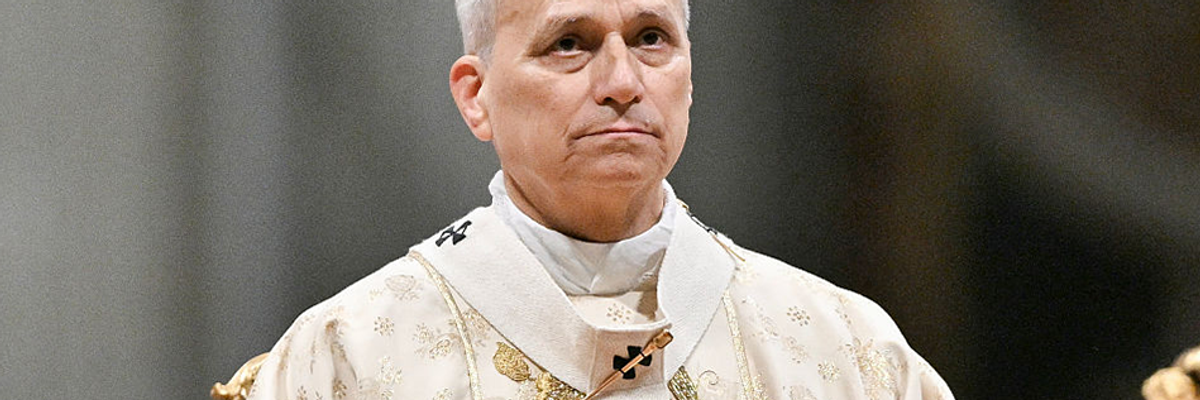
Pope Leo XIV says people need more face-to-face interaction in their lives.
Speaking with Italian mayors from the association of local Italian authorities, the Assocazione Nazionale dei Comuni Italiani, the pope touched on some of the biggest issues faces the world today.
‘Democracy atrophies, becomes just a name, a formality.’
During the Vatican meeting, Pope Leo noted that a “demographic crisis” and “struggles” among families and young people remain top issues. According to Vatican News, the Catholic leader also stated that social isolation and “social conflicts” are pervasive issues in Italy.
At the same time, the pope — Robert Francis Prevost — said he wanted to focus on one of the biggest topics in today’s world: gambling. The Chicago native explained that he wanted to “draw attention in particular to the scourge of gambling,” which has “ruined many families.”
Citing a “major increase” in gambling in Italy in recent years, Prevost cited a recent report that described gambling as a “serious problem” in terms of education, mental health, and societal trust for Italians.
RELATED: New York Archbishop Timothy Dolan resigns; pope appoints his replacement
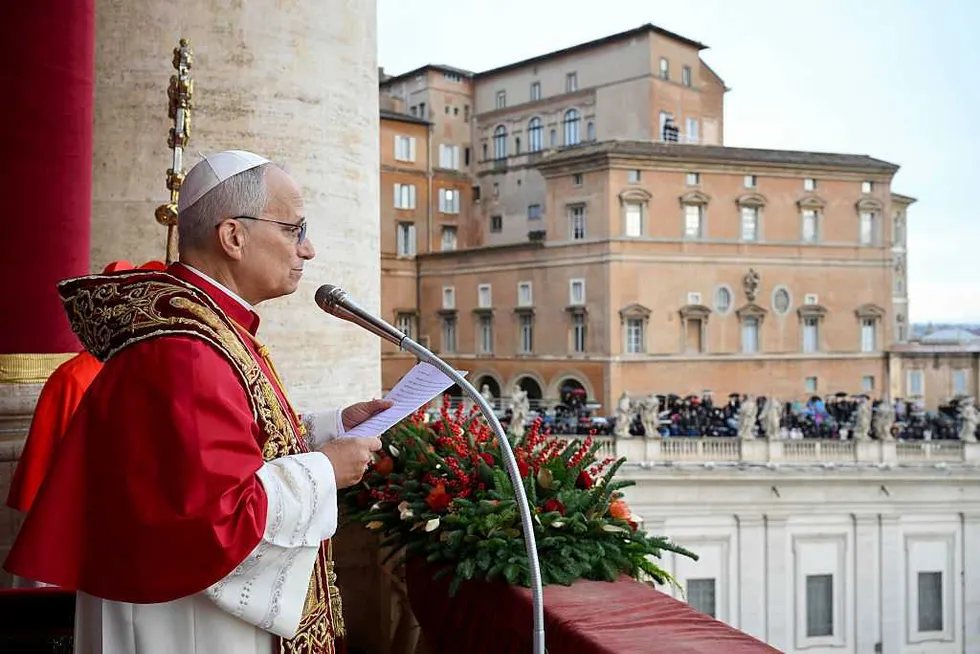 Photo by Simone Risoluti – Vatican Media via Vatican Pool/Getty Images
The pope stressed that gambling addiction is a form of “loneliness” and called on the local mayors to promote “authentically human relationships between citizens” as a way to tackle the issue.
Pope Leo reportedly drew from 20th-century Italian priest and activist Don Primo Mazzolari in order to illustrate the need for social interactions between Italians.
“[Italy] does not only need sewers, houses, roads, aqueducts, and pavements,” but also “a way of feeling, of living, a way of looking at one another, and a way of coming together as brothers and sisters.”
 Photo by Jacopo Raule/Getty Images for Philipp Plein
To solve many of these modern issues, authorities must listen to the weak and the poor, the pope said. If not, he said, “democracy atrophies, becomes just a name, a formality.”
Like Blaze News? Bypass the censors, sign up for our newsletters, and get stories like this direct to your inbox. Sign up here!
‘Who put them there?’ Scientists struggle to explain UFO-like objects captured in 1950s astronomy photos.

The National Geographic Society undertook a massive astronomical survey between 1949 and 1958 at the Palomar Observatory in California, snapping thousands of photographs of the sky from the north celestial pole to 33 degrees south of the celestial equator.
According to a 1959 leaflet issued by the Astronomical Society of the Pacific, the result was a “map of the sky, one that can be used like any road map, to help the astronomer find his way to objects too faint to see directly at the eye-piece of a telescope.”
The Palomar Observatory Sky Survey images captured a multitude of inexplicable star-like objects that astronomers had reportedly seen appear then quickly vanish. The objects, which flashed in the sky several years before the October 1957 launch of Sputnik, supposedly cannot be chalked up to gravitational lensing, gamma ray bursts, fragmenting asteroids, and/or various non-astronomical effects.
“We’ve ruled out some of the prosaic explanations, and it means we have to at least consider the possibility that these might be artificial objects from somewhere,” Stephen Bruehl, a professor at the Vanderbilt University School of Medicine, told Live Science.
In a peer-reviewed study published in October in the journal Scientific Reports, Bruehl and co-author Beatriz Villarroel, a Swedish astronomer, found that there are “associations beyond chance between occurrence of transients and both nuclear testing and [unidentified anomalous phenomenon] sightings.”
The duo analyzed the transient data available for the time period Nov. 19, 1949, to April 28, 1957, and tested for possible associations between the occurrence of 107,875 transients, which were observed on 310 of the 2,718 days in this period, and above-ground nuclear weapons tests, which were conducted by the U.S., the U.K., and the former USSR on 123 days during the study period.
RELATED: Pentagon psyop exposed: Military reportedly cooked up tales of alien technology in weapons cover-up
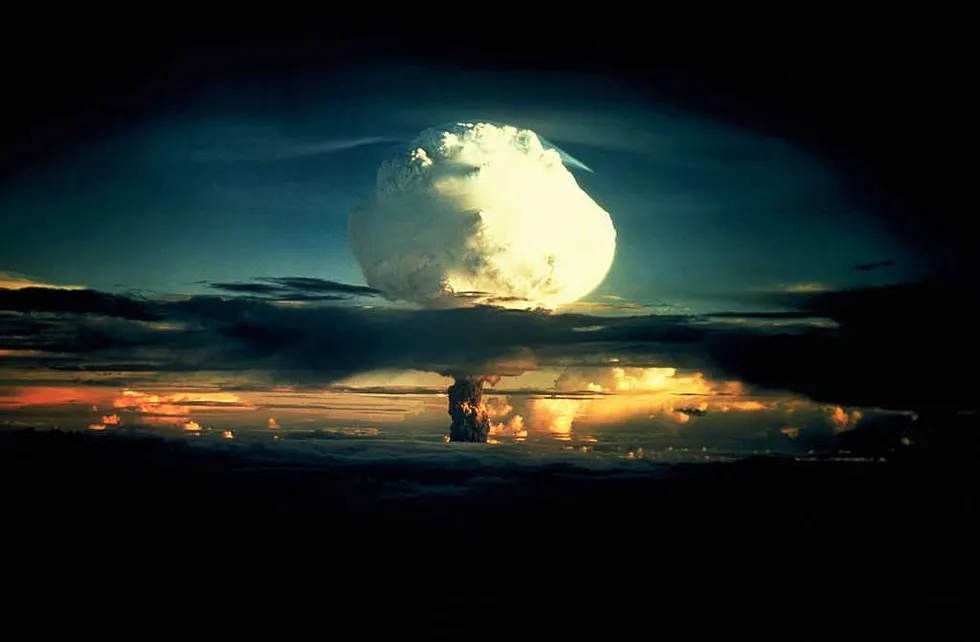 Photo by © CORBIS/Corbis via Getty Images
The researchers found that a “transient was 45% more likely to be observed on dates within a nuclear test window compared to dates outside of a nuclear test window.”
The duo also linked the transients to unidentified flying object/unidentified anomalous phenomenon reports, noting that “for days on which at least one transient was identified, significant associations were noted between total number of transients and total number of independent UAP reports per date.”
‘Why do they seem to show interest in nuclear testing?’
“For every additional UAP reported on a given date, there was an 8.5% increase in number of transients identified,” Bruehl and Villarroel wrote.
When it came down to hypothesizing what the transients might be, the duo came up with two possibilities that could account for associations of transients with both nuclear testing and UAP reports.
“The first involves an unexpected and previously undocumented atmospheric phenomenon triggered by nuclear detonations or related to nuclear fallout that may serve as a stimulus for some UAP reports and appear as transients on astronomical images,” they wrote.
The duo noted, however, that this first hypothesis is problematic, as effects in the atmosphere “would be likely to result in a streak on the image over the 50 min exposure, yet all transients appear as distinct point sources rather than streaks.”
Additionally, the researchers noted that transients were “most often observed one day after a nuclear test; such atmospheric phenomena would have to be sustained and remain localized in one location for approximately 24 h to account for the visual appearance of transients.”
After poking holes in their first hypothesis, the duo propped up their second hypothesis on the “well-known strand of UAP lore suggesting that nuclear weapons may attract UAP.”
“Within this latter hypothesis, our results could be viewed as indicating that transients are artificial, reflective objects either in high-altitude orbits around Earth or at high altitudes within the atmosphere,” they added.
Bruehl said to Live Science, “If it turns out that transients are reflective artificial objects in orbit — prior to Sputnik — who put them there, and why do they seem to show interest in nuclear testing?”
Michael Wiescher, a nuclear astrophysicist at the University of Notre Dame in France, suggested to Scientific American that nuclear tests alone might be the simpler explanation for the transients as they “obviously have an impact on the atmosphere” and can leave “a lot of junk in the outer atmosphere.”
Sean Kirkpatrick, former head of the Department of War’s UAP-investigating All-Domain Anomaly Resolution Office, similarly suggested that the explanation likely has to do with nuclear tests and the sun, noting that the “first thing that comes to mind is solar flare radiation or ionized particle radiation from nuclear testing.”
Kirkpatrick also suggested that high-altitude balloons, which were used for nuclear monitoring, could account for some of the UAP reports.
Like Blaze News? Bypass the censors, sign up for our newsletters, and get stories like this direct to your inbox. Sign up here!
AI demand for computer memory will HIKE your phone and laptop prices up to 30%
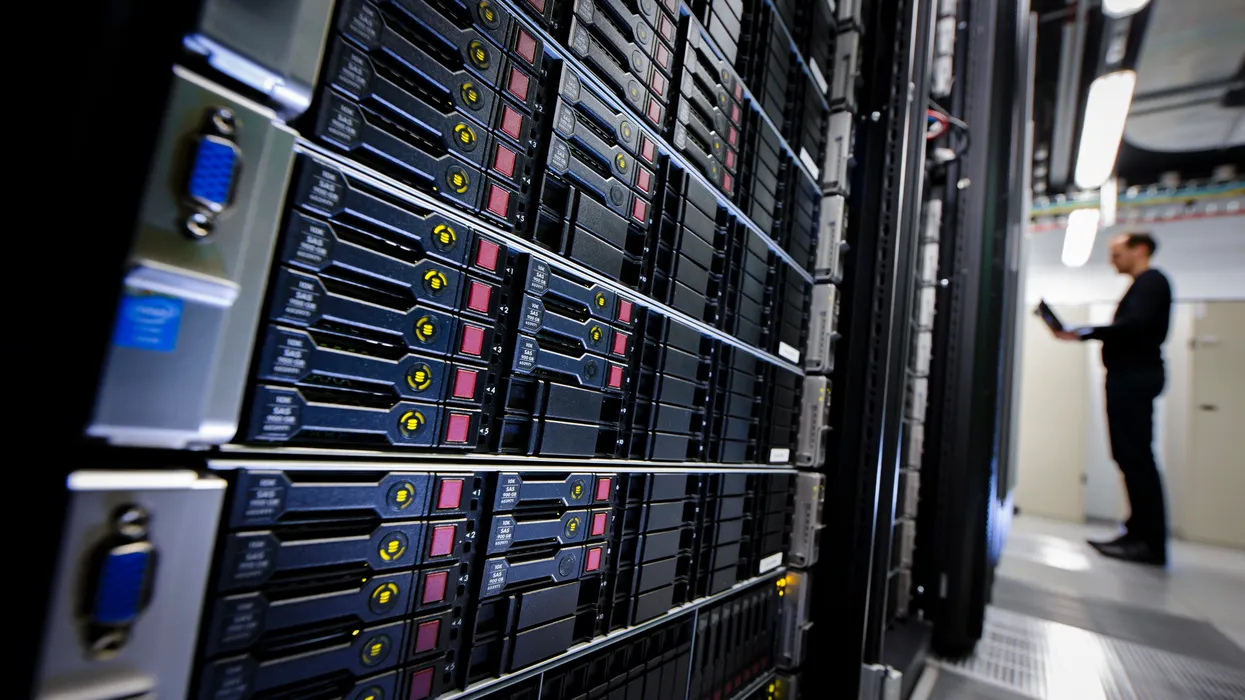
One of the most vital components in consumer electronics just reached a critical low. Big AI data centers are taking up RAM faster than manufacturers can make it, and the cost is getting passed on to consumers. As the shortage takes hold, prices on many popular electronic devices are expected to jump in 2026 by up to 30%, further straining wallets and the U.S. economy.
What is RAM?
Every electronic device you own — your smartphone, tablet, laptop, smartwatch, and even your game console — comes with a tiny brain packed inside. The CPU is the control center that runs processes and commands, launching apps and keeping them awake as you click, type, and interact. The GPU handles heavier tasks, from rendering graphics to managing larger processes and more. Local storage, usually in the form of an SSD or HDD, is akin to long-term memory, holding a complete archive of your files, photos, and everything else you saved on your device over the course of weeks, months, and years. Then there’s RAM.
Big Tech and AI companies are prioritized over regular citizens like you and me.
RAM, or Random Access Memory (sometimes shortened to “memory”), is your computer’s short-term memory. It holds temporary bits of data to keep your open apps running smoothly. RAM is the reason you can switch between several tabs in your web browser without the page reloading, or open a couple Word documents side by side to copy and paste information, or type an email while you also stream your favorite show on BlazeTV.
Some devices come with more RAM installed than others. The more RAM you have, the more apps you can run at the same time (i.e., multitask) without crashes or data loss. As consumer electronics advance, the need for more RAM grows at a steady pace. For example, the very first iPhone from 2007 launched with a measly 128MB of RAM, while the latest iPhone 17 Pro Max packs 12GB of RAM. That’s a huge jump!
A RAM shortage is coming
Consumer electronics aren’t the only devices that need a lot of RAM. Data centers demand tons of it — especially the ones built to train and maintain large language models like ChatGPT by OpenAI, Gemini by Google, and Grok by xAI.
Remember how much RAM comes with the latest iPhone Pro Max? A basic AI model — the type that can run directly on a phone — requires 8-16GB of RAM. That means, depending on the model, even the best iPhone in the world will hit a RAM bottleneck due to its own hardware limitations.
Moving a step up, medium-level AI models require 32GB to 64GB of RAM. In terms of consumer devices, only the most expensive laptops on the market that are worth thousands of dollars can run these models natively. This is why most models at this level run in data centers where information is processed on a server and beamed back to users via the cloud.
At the highest end, advanced AI data centers like the ones being built by Big Tech demand 128GB to 256GB of RAM or more. This kind of RAM is necessary for training large language models, processing data, and creating content for users on the other end. You use about this much RAM every time you send a query to your favorite AI platform, whether it’s a simple question to an answer you could find on the web, a request to create an image for your Christmas card, or a command to write your annual review for work. This is also why AI data centers require so much energy to keep the lights on.
Prices on electronics are going up
Earlier this year, President Trump unveiled an AI Action Plan to build America’s first AI infrastructure. The deal streamlines the permit process to create new AI data centers across the United States. More data centers mean a higher demand for vital computer components. As the plan moves forward, RAM manufacturers are already feeling the pressure.
RELATED: Will this tech company’s huge losses sink our economy next?
 Photo by Samuel Boivin/NurPhoto via Getty Images
In early December, Micron, one of the largest makers of RAM products on the planet, announced it was closing its consumer business, Crucial, after 29 years. Its new mission is to create RAM directly for Big Tech AI brands and data centers. The news is a double-edged sword, as the shutdown will both help alleviate some of the demand created by Big Tech while it also eliminates a vital option for consumers who rely on Crucial for their upgradable RAM sticks. Crucial will end all consumer shipments in February 2026.
Days later, popular PC maker Dell sounded the alarm on the upcoming RAM shortage. Due to low availability, the prices of their PCs are expected to jump anywhere between 10% and 30%, effective immediately. The report from Business Insider notes that this is an industry-wide shortage, so you should expect higher prices from brands like Lenovo and HP as well. In an attempt to make up for the shortage, Dell and Lenovo will also reportedly launch cheaper mid-range laptops with lower RAM specs topping out at 8GB, which as we already covered, is quite low for handling the demands of modern smart devices.
Not to be left out, the shortage also extends to mobile devices. In the latest projections by Counterpoint Research, the price of smartphones will inflate by 6.9% in 2026. Although Apple and Samsung are best positioned to endure the RAM shortage, no brand is immune to the price spikes. That said, Chinese OEMs are expected to take the hardest hit.
RAM-ifications of the great memory shortage
All of this is part of a bigger problem facing the American people as Big Tech and AI companies are prioritized over regular citizens like you and me.
For starters, times are still tough for most Americans just trying to get by. Latest reports indicate that job growth is slowing, the unemployment rate is going up, and AI has even led to more lost jobs than it has created. When asked about this phenomenon, Big Tech CEOs like Sundar Pichai of Google claim that “people need to adapt” to get along in the new age of AI. Until that happens, the coming price increase in consumer electronics will force many to skip out on upgrading their devices this year, negatively impacting businesses and the economy as more people hold on to the money they have left.
Another notable strain on the American people directly targets our power grid. AI requires a lot of energy to run and maintain, and without it, Glenn Beck warns that rolling brownouts are on the way. To alleviate the problem, President Trump recently approved the use of nuclear power — something that would’ve been nice to have for us normal people ages ago, but at least it’s a start. Until those nuclear plants are operational, however, our current power grid will continue to buckle under the weight of all the new data centers being built right now, the same ones responsible for the RAM shortage. Simply put, if the nuclear plants are postponed for any reason, or if they’re deactivated if/when Democrats retake power, the American people will be the first to go without in favor of the AI giants and their resource-guzzling LLM machines.
Unfortunately it doesn’t look like this mess is going to end anytime soon. President Trump recently put in a fast-lane for AI development, limiting state laws and reducing federal regulations to make it easier for Big Tech to compete against China in the race for artificial general intelligence. With fewer restrictions, AI companies can continue to strain our power grid, gobble up vital computer components, and push AI onto every facet of our daily lives, whether we want it there or not.
Forget ‘Die Hard’ — ‘Brazil’ is the ultimate Christmas movie

The cultural powers that be determined long ago that a film needn’t deal directly with the Nativity of our Lord and Savior to qualify as a “Christmas movie.”
Many films apparently qualify simply by virtue of their plot events’ proximity to December 25, their festive backdrops, and their occasional visual reference to Coca-Cola Claus, starred pines, and/or the birth of God.
In a way, the Christmas imagery does visually what the movie’s eponymous theme song does sonically: tease at something lovely and wonderful beyond the nightmare.
Rest assured as the bare-footed cop wastes German terrorists at his estranged wife’s office party; as the two burglars repeatedly fall prey to an abandoned adolescent’s mutilatory traps; and as the inventor’s son unwittingly turns his Chinatown-sourced present into a demon infestation — these are indeed Christmas movies.
Given the genre’s flexible criteria, Terry Gilliam’s 1985 masterpiece “Brazil” also qualifies.
State Santa
In truth, the Python alumnus’ film about a bureaucrat’s maddening investigation of his totalitarian government’s execution of the wrong man is a far stronger entry than “Die Hard,” “Home Alone,” “Gremlins,” and other such flicks.
Not only is there Christmastime imagery throughout, but such visuals are also of great importance, providing insights both into the treachery of the film’s principal antagonist — the state — as well as into what appears missing in Gilliam’s dystopian world.
In the opening scene, a man pushes a cart full of wrapped presents past a storefront window framed by tinsel and crowded with “Merry Christmas” signage, television sets, and baubles.
Next we enter an apartment where a mother reads “A Christmas Carol” to her daughter, a father wraps a present, and a boy plays at the foot of a well-dressed evergreen.
After numerous scenes featuring gift exchanges, mutterings of “Happy Christmas,” and Christmas trees, we meet a kindly faced man dressed as Santa.
Jingle hells
This is, however, no feel-good Christmas movie.
The storefront window is firebombed.
Armored police storm into the family’s apartment, jab a rifle in the father’s gut, and take him away in a bag while his wife screams in horror.
The gifts exchanged and piling up throughout the film — besides the offers of job promotions and plastic surgery — appear to all be versions of the same novelty device, a meaningless “executive decision-maker.”
The kindly faced man dressed as Santa is a propaganda-spewing government official who rolls into the protagonist Sam Lowry’s padded cell on a wheelchair to inform Lowry — played by Jonathan Pryce — that his fugitive lover is dead.
With exception to the heart-warming domestic scene interrupted by the totalitarian bureaucracy’s jackboots at the beginning of the film, the Christmas imagery rings hollow and for good reason.
Extra to dehumanizing workplaces, purposefully meaningless work, bureaucratic red tape, and paperwork that’s so bad it ends up killing Robert DeNiro’s character — at least by the tortured protagonist’s account — the regime’s population-control scheme relies on consumerism.
The regime has, accordingly, done its apparent best to empty Christmas of the holy day’s real significance and meaning, donning it as a costume to sell and control.
RELATED: Santa Claus: Innocent Christmas fun or counterfeit Jesus?

Beyond the nightmare
“Brazil” is not, however, an anti-Christmas film.
The emptiness of the costume prompts reflection about its proper filling — a reflection that should invariably lead one to Christ.
In a way, the Christmas imagery does visually what the movie’s eponymous theme song does sonically: tease at something lovely and wonderful beyond the nightmare Gilliam once dubbed “Nineteen Eighty-Four-and-a-Half.”
“I had this vision of a radio playing exotic music on a beach covered in coal dust, inspired by a visit to the steel town of Port Talbot. Originally the song I had in mind was Ry Cooder’s ‘Maria Elena,’ but later I changed it to ‘Aquarela do Brasil’ by Ary Barroso,” Gilliam told the Guardian.
“The idea of someone in an ugly, despairing place dreaming of something hopeful led to Sam Lowry, trapped in his bureaucratic world, escaping into fantasy.”
Whereas the recurrent theme from the samba references a fantasy the regime can crush, the various indirect reminders that Christmas is about more than presents and half-hearted niceties reference a hidden truth and source of eternal hope: that God was born in Bethlehem.
How data centers could spark the next populist revolt

Everyone keeps promising that artificial intelligence will deliver wonders beyond imagination — medical breakthroughs, massive productivity gains, boundless prosperity. Maybe it will. Maybe it won’t. But one outcome is already clear: If data centers keep driving up Americans’ electricity bills, AI will quickly become a political liability.
Across the country, data center expansion has already helped push electricity prices up 13% over the past year, and voters are starting to push back.
Handled correctly, AI can strengthen America. Handled poorly — by letting data centers overwhelm the grid and drive families toward energy poverty — it will accelerate decline.
In recent months, plans for massive new data centers in Virginia, Maryland, Texas, and Arizona have stalled or collapsed under local backlash. Ordinary Americans have packed town halls and flooded city councils, demanding protection from corporate projects that devour land, drain water supplies, and strain already fragile power grids.
These communities are not rejecting technology. They are rejecting exploitation. As one local official in Chandler, Arizona, told a developer bluntly, “If you can’t show me what’s in it for Chandler, then we’re not having a conversation.”
The problem runs deeper than zoning fights or aesthetics. America’s monopoly utility model shields data centers from the true cost of the strain they impose on the grid. When a facility requires new substations, transmission lines, or transformers — or when its relentless demand drives up electricity prices — utilities spread those costs across every household and small business in the service area.
That arrangement socializes the costs of Big Tech’s growth while privatizing the gains. It also breeds populist anger.
A better approach sits within reach: neighborhood battery programs that put communities first.
Whole-home battery systems continue to gain traction. Rooftop solar panels, small generators, or off-peak grid power can recharge them. Batteries store electricity when it’s cheap and abundant, then release it when demand spikes or outages hit. They protect families from blackouts, lower monthly utility bills, and sometimes allow homeowners to sell power back to the grid.
One policy shift should become non-negotiable: Approval for new data centers should hinge on funding neighborhood battery programs in the communities they impact.
In practice, that requirement would push tech companies to help install home battery systems in nearby neighborhoods, delivering backup power, grid stability, and real relief on electric bills. These distributed batteries would form a flexible, local energy reserve — absorbing peak demand instead of worsening it.
RELATED: Your laptop is about to become a casualty of the AI grift
 Photo by: Jim West/UCG/Universal Images Group via Getty Images
Most importantly, this model reverses the flow of benefits. Working families would no longer subsidize Big Tech’s expansion while receiving nothing in return. Communities would share directly in the upside.
Access to local land, water, and electricity should come with obligations. Companies that consume enormous public resources should invest in the people who live alongside them — not leave residents stranded when the grid buckles.
Politicians who ignore this gathering backlash risk sleepwalking into a revolt. The choice is straightforward: Build an energy system that serves citizens who keep the country running, or face their fury when they realize they have been sacrificed for someone else’s high-tech gold rush.
Handled correctly, AI can strengthen America. Handled poorly — by letting data centers overwhelm the grid and drive families toward energy poverty — it will accelerate decline.
We still have time to choose. Let’s choose wisely.
Wokeness didn’t win — it just filled the void
Nature won’t tolerate a vacuum, as space will inevitably be filled by something. In physics, it’s air, particles, or water. In culture, it’s ideologies. When one set of voices goes silent, the void will demand others rise up.
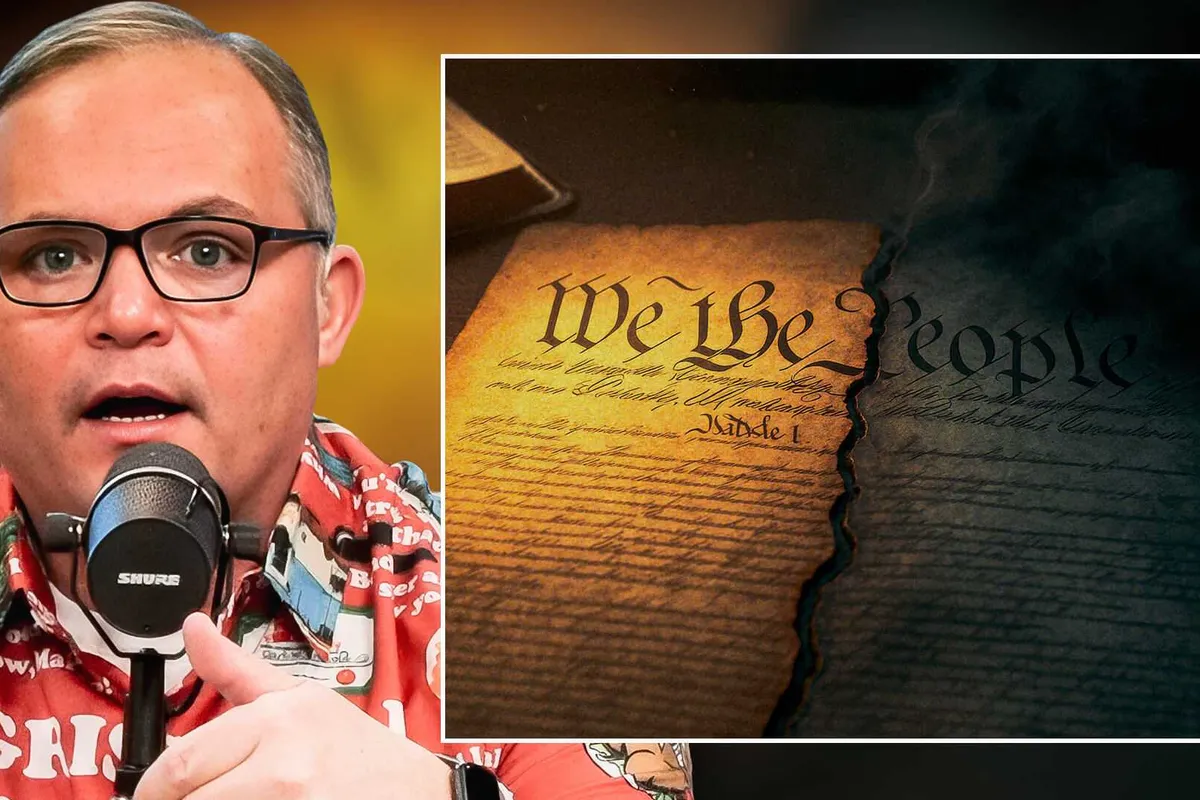
The woke mind virus — which successfully convinced millions of people across the world that cutting off healthy body parts is “affirming care” and drag queens reading to toddlers is progress — is the result of evangelical Christians bowing out of cultural conversations for fear of ruffling feathers, says BlazeTV host Steve Deace.
He condemns “Hawaiian shirt-wearing, sweater vest-owning, skinny jean-having, furrowed brow perpetually-possessing evangelicalism” that sat back quietly while progressives ransacked traditional marriage, biological sex, and history. This cowardice, Deace argues, is why we have “an entire generation of believers” who don’t understand that we can genuinely love our neighbors and fight for cultural victories simultaneously.
On this episode of the “Steve Deace Show,” Steve speaks with managing editor of the Babylon Bee, Joel Berry, about the disastrous decline of evangelical influence and what Christians need to do to reclaim their position as a driver of culture.
Evangelicals as a whole, says Berry, have foolishly adopted Tim Keller’s “third way” theory, which argues that Christians should avoid aligning fully with either the political left or right and instead seek a “third way” that allows them to appeal to secular people.
The falsity of Keller’s theory that nonpartisanship leads to “reformed culture and regenerated hearts,” however, is evidenced by the fact that “black babies are still more likely to be aborted than born” in the city where Keller’s church resides, says Berry.
“He rarely spoke about abortion from the pulpit; he was quiet about cultural issues like gay marriage; and this was kind of the state of the entire church for many decades,” he tells Steve.
While Keller pitches his avoidance of politically charged subjects as a more effective method for drawing people to Christ, Berry says it’s just cowardice. “Once you take the truths of scripture and try to live them out in the real world, live them out in the culture and in politics, it gets really messy. It gets scary,” he says.
But just like the famous Nazi-dissident Dietrich Bonhoeffer, who bravely helped form the Confessing Church in opposition to Nazi-controlled Christianity (and died for it), “We need to be bold,” Berry argues. “Pastors need to start being more outspoken from the pulpit about the issues that their congregation is facing, day in and day out.”
The idea that shying away from or softening biblical truths in hopes that people will be attracted to the faith and ultimately change their hearts is counterintuitive. “The word of God” — no-holds-barred, no sugarcoating — “is powerful to affect change,” says Berry.
“The Bible talks about how we don’t use the weapons of the world. We wage war with spiritual weapons that have the power to tear down strongholds. That’s the message that needs to be preached. People need to see that there actually is a hope for change to turn around this culture through the power of God’s word and Spirit-filled believers.”
To hear Deace’s response, watch the video above.
Want more from Steve Deace?
To enjoy more of Steve’s take on national politics, Christian worldview, and principled conservatism with a snarky twist, subscribe to BlazeTV — the largest multi-platform network of voices who love America, defend the Constitution, and live the American dream.
WILD RIDE: Here are the top 10 stories of 2025

2025 was a year for the history books, and BlazeTV host Steve Deace and executive producer Aaron McIntire have the top 10 stories that made this year so unforgettable.
Story number 10, McIntire announces, was the Democrats’ 43-day government shutdown that lasted over a month and kept Americans across the country terrified of losing their SNAP benefits.
“The media was happy to act as if a shutdown wasn’t actually happening for well over a month from October 1 till its conclusion in the middle of November, with a deal Democrats had previously turned down on numerous occasions in the process,” McIntire says. “Which begs the question: If a government shuts down and nobody noticed it, is it really a shutdown at all?”
Next on the list at Number 9 is the “Department of Crashout Efficiency.”
“Much had been made, probably rightfully so, about the role tech magnate Elon Musk played in the election of President Trump back in 2024. With the inauguration of Trump came the ceremonial creation of the Department of Government Efficiency,” McIntire explains, pointing out that this new entity discovered “reams upon reams of nearly unfathomable graft, corruption, and abuse.”
“But the Department of Government Efficiency, DOGE, went from being a fixture in the news for much of the spring to now being relegated to ghost or legend status depending on whom you ask,” he continues.
Number 8, McIntire says, is the “election of Zohran Mamdani as mayor of the nation’s largest city.”
“New York City, in less than a generation after the largest Islamic terror attack of the 21st century struck it to its core … turned around and elected an Islamist to lead it,” McIntire says.
Number 7 is Trump’s hard stance on immigration, with deportations not appearing to be slowing down any time soon.
“The official numbers of how many foreigners have left the country is generally up for debate. But one thing that’s not is that the deportations must continue until morale improves,” McIntire says.
Number 6 is “Operation Midnight Hammer.”
“On June 22, and in conjunction with Israel’s Operation Rising Lion against Iran, the United States carried out what is likely the most technologically and logistically sophisticated air operation in the history of warfare,” McIntire says.
“The stunning operation not only sent a message to Iran, but every would-be enemy of the United States,” he adds.
Number 5 centers around the passing of Pope Francis, which led to the selection of a new pope on May 8.
“They shocked the world by selecting the first pope born in the United States,” McIntire says. Deace chimes in that the new Pope, Pope Leo, is “already worse than Francis.”
Number 4 is Liberation Day.
“On April 2, the Trump administration declared Liberation Day and enacted a series of tariffs on basically every continent, every land mass, every tiny little island in the middle of nowhere under the sun,” McIntire explains.
“The administration sold those sweeping tariffs as a way to grow government revenue and/or leverage for better trade deals,” he adds.
Number 3 is what McIntire calls “Trump 2.0,” which is the beginning of Trump’s second term, and Number 2 is the “future of the right” — which McIntire and Deace believe has fractured after major conservatives like Tucker Carlson have platformed, and essentially celebrated, voices they see as destructive to the right.
“What’s left to be determined is whether this is a movement going through growing pains, or a stillbirth,” McIntire says, before reading Number 1.
“Number one story of the year is Charlie Kirk, the American martyr,” McIntire says. “His murder that everyone saw prompted a number of moving tributes, including one of the best, I thought, from the White House.”
Want more from Steve Deace?
To enjoy more of Steve’s take on national politics, Christian worldview, and principled conservatism with a snarky twist, subscribe to BlazeTV — the largest multi-platform network of voices who love America, defend the Constitution, and live the American dream.
Outrage after Oregon city appoints convicted killer to police oversight panel

Officials in Salem, Oregon, are facing a public backlash after appointing a man convicted of murdering a teenage girl to a city public safety and police oversight board.
Kyle Hedquist was convicted in 1994 of killing 19-year-old Nikki Thrasher and served 28 years of a life sentence without the possibility of parole before then-Gov. Kate Brown (D) granted him clemency in 2022.
‘Oregonians… are you tired of this kind of leadership yet? Are you ready to show up and vote these criminals out?’
Hedquist was 17 at the time of the crime. Prosecutors said he drove Thrasher to a wooded area, shot her in the back of the head, and left her body on a remote logging road. They described the killing as an “execution-style” murder.
According to prosecutors, Hedquist believed Thrasher had discovered he had stolen items from his aunt and killed her to prevent her from reporting him. Thrasher had asked him about the stolen items, which prosecutors said he interpreted as a threat.
Two years after his release, the Salem City Council appointed Hedquist to the city’s Community Police Review Board, which oversees police conduct and public safety matters. The council recently reappointed him to the position, prompting renewed backlash.
Some city officials have defended the decision, citing Hedquist’s rehabilitation and community involvement since his release.
Others strongly disagree. Marion County District Attorney Paige Clarkson criticized the appointment, calling it inappropriate for a public safety role.
“While I acknowledge there are appropriate ways for those who have completed their sentences and demonstrated rehabilitation to give back to our community, this is not one of them,” Clarkson said. “Our police and fire professionals have a right to expect better from city leadership.”
The Oregon Republican Party also condemned the decision in a statement, calling it “absurd” to place a convicted murderer on a board overseeing public safety and policing.
“Oregonians… are you tired of this kind of leadership yet? Are you ready to show up and vote these criminals out?” said a commenter on social media.
At the time of Hedquist’s release, Thrasher’s mother said the governor’s office did not notify her that clemency was being considered.
“He took the life of my daughter — in cold blood!” she told KOIN-TV. “He planned it!”
RELATED: Democrat mayor hit with brutal backlash after 8-year-old girl is killed by illegal alien
The Oregon Justice Resource Center, an organization that opposes mass incarceration, defended Hedquist’s appointment. In a statement on social media, the group said Hedquist has spent years contributing to his community and advocating for systemic reform.
“That kind of experience brings value to public institutions,” the group said in a statement, adding that criticism of Hedquist was “misdirected.”
Like Blaze News? Bypass the censors, sign up for our newsletters, and get stories like this direct to your inbox. Sign up here!





