

Category: Blaze Media
DOGE didn’t die — it moved to the states
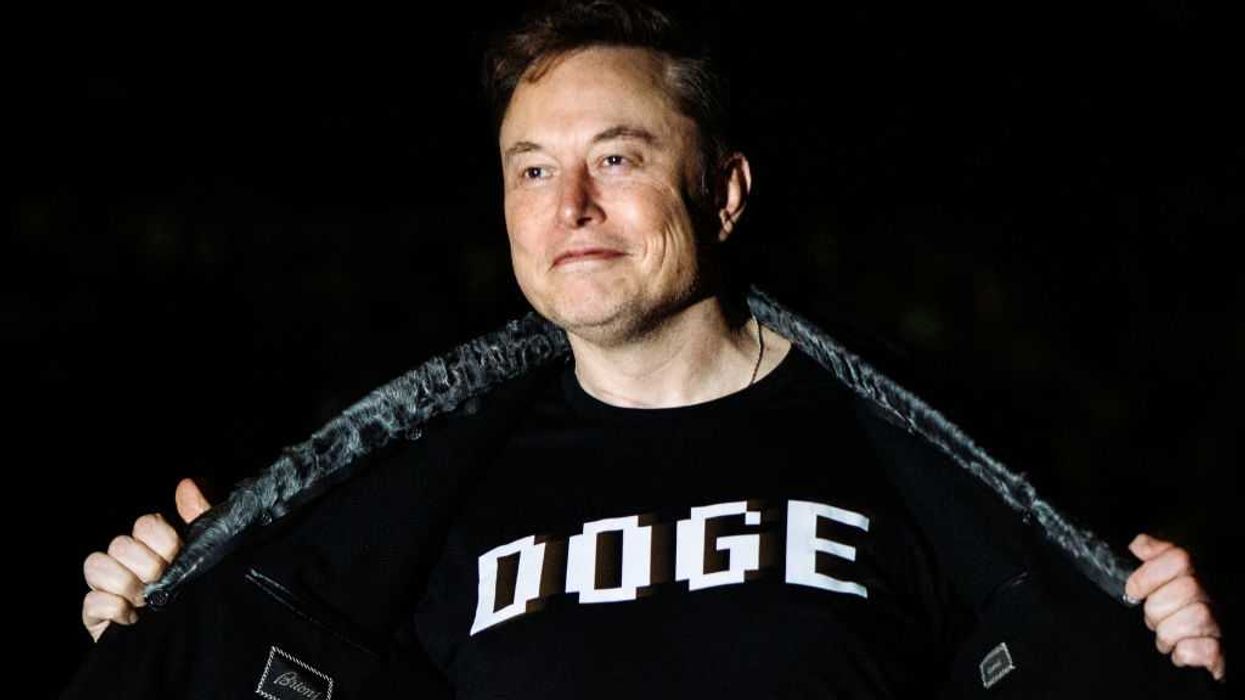
The media and conservative pundits may have buried the Department of Government Efficiency, but they have yet to carve a date of death on its tombstone. While DOGE in Washington may have appeared to insiders as a vanity project, voters saw it as a mandate — one that Republicans at the federal level have largely set aside in favor of politics as usual.
But activists have not forgotten. In red states across the country, they are still demanding accountability. And in Idaho, that pressure is finally producing results.
If Idaho can succeed and follow Florida’s lead, there is no serious reason other red states cannot do the same — unless they are prepared to admit they never intended to keep their promises.
For what appears to be the first time, state legislators serving on Idaho’s DOGE Task Force concluded their 2025 work with a meeting that departed from months of cautious, procedural discussion. Members asked harder questions, voiced long-simmering frustrations, and issued a recommendation that could reshape the state’s fiscal future: urging the full legislature to consider repealing Medicaid expansion, a costly policy that has drained taxpayers of millions.
Red states can’t stall forever
Idaho may not be Florida, where Republican Gov. Ron DeSantis’ DOGE-style reforms have produced consistent wins for fiscal sanity and limited government. But it is doing more than other red states, such as North Dakota, where a DOGE committee stacked with Democrats predictably ignored the voters’ mandate.
The Idaho meeting exposed growing dissatisfaction with the task force’s approach. Over the summer and fall, the committee — charged with identifying inefficiencies — repeatedly deferred to state agencies for suggestions on cuts. Unsurprisingly those agencies offered little beyond cosmetic changes.
Idaho state Rep. Heather Scott (R-LD2, Blanchard) gave voice to that frustration. “What is the goal of this committee?” she asked, pressing colleagues to offer recommendations that actually matter. “Twenty thousand here, 50,000 there, or removing old code is not meaningful efficiency,” Scott said. Repealing Medicaid expansion, she argued, would be one of the “best decisions” the state could make.
Nibbling at the edges
Scott’s experience on the Idaho task force stands in stark contrast to the early federal DOGE efforts, which moved aggressively to slash U.S. Agency for International Development’s workforce, freeze fraudulent payments, and cancel billions in corrupt contracts. By comparison, Idaho’s task force had mostly nibbled at the edges. This recommendation marked its first serious step toward substantive reform.
Another revealing moment came from co-chairman state Sen. Todd Lakey (R-Nampa), who read a letter from a small-business owner offering health insurance to employees. Workers routinely request schedules capped at 20 to 28 hours per week to preserve Medicaid expansion benefits — even though full-time work would require only a modest contribution toward employer-provided coverage.
The result is a perverse incentive structure: businesses struggle to find full-time workers while taxpayers subsidize underemployment. The government fuels workforce shortages through welfare, then spends more taxpayer dollars trying to fix the shortages it created. This welfare-workforce vortex is the opposite of efficiency, and it is spreading nationwide.
The meeting’s most explosive moment came from state Rep. Josh Tanner (R-Eagle), who described Idaho’s Medicaid reimbursement structure as resembling “money laundering.”
Citing analysis from the Paragon Health Institute, Tanner explained how provider assessment fees allow states to inflate Medicaid spending to draw down larger federal matching funds, cycling the money back through enhanced payments. Paragon has described these arrangements as “legalized money laundering” — schemes that shift costs to federal taxpayers while enriching connected providers or funding unrelated priorities.
Nationally supplemental payments now exceed $110 billion annually, siphoning hundreds of billions from taxpayers over a decade.
RELATED: Turn off the money; they’ll leave: Elon Musk nails the border truth
 Photo by Kevin Dietsch/Getty Images
DOGE’s second life
My sources tell me that hospital lobbyists went into panic mode after the meeting, urgently contacting Capitol officials to contain the fallout from Tanner’s remarks.
For the first time, the task force aired real frustrations, documented real harms, and named real abuses. That alone offers reason for cautious optimism.
Idaho now has committed conservatives in positions of influence. With the task force’s recommendation to revisit Medicaid expansion heading to the legislature, the state has an opportunity to govern as it campaigns — preserving liberty, restoring accountability, and expanding opportunity.
If Idaho can succeed and follow Florida’s lead, there is no serious reason other red states cannot do the same — unless they are prepared to admit they never intended to keep their promises in the first place.
National Guard members killed in Syria attack returned to families in Iowa
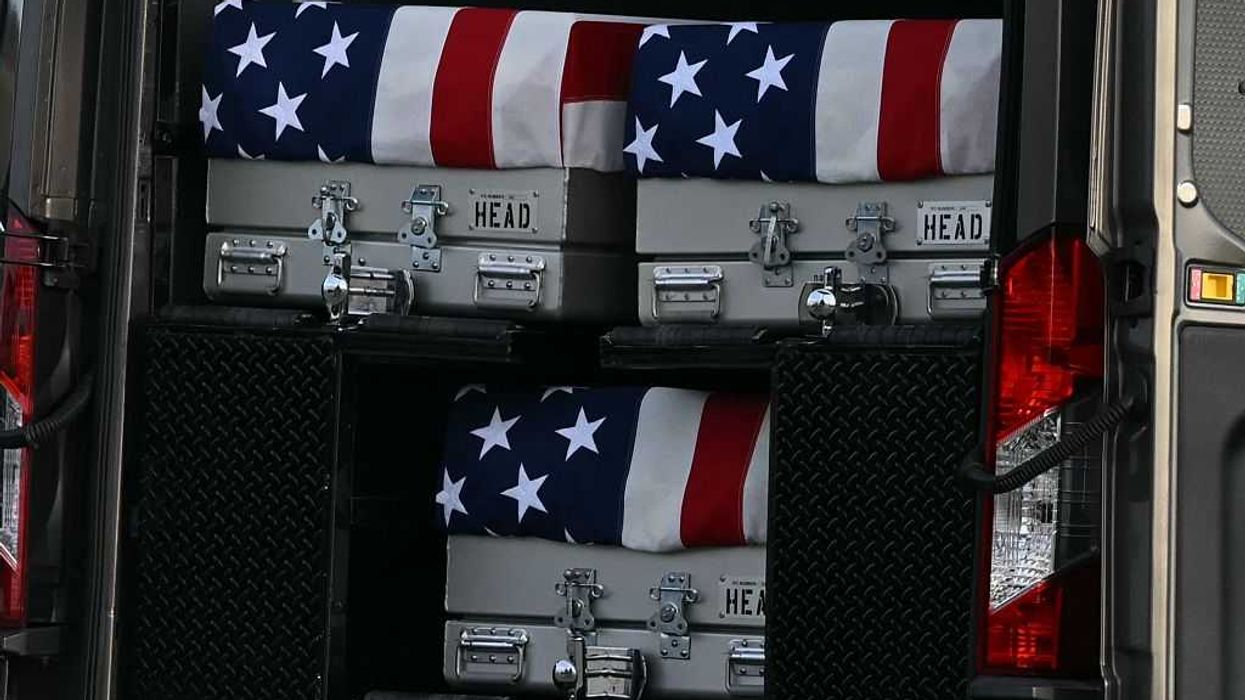
Earlier this month, two National Guardsmen and an interpreter were killed after they were ambushed in Syria.
On Wednesday, the remains of the two members of the 1st Squadron, 113th Cavalry Regiment, were returned home to Iowa in a solemn Christmas Eve for their grieving families.
Both soldiers were posthumously promoted to the rank of staff sergeant.
The caskets of Edgar Brian Torres-Tovar, 25, and William Nathanial Howard, 29, were returned to Des Moines, Iowa, and greeted by their families on the tarmac.
Iowa Gov. Kim Reynolds (R), U.S. Sen. Joni Ernst (R), and U.S. Rep. Zach Nunn (R) joined senior leaders of the Iowa National Guard at the transfer ceremony, according to the Associated Press.
RELATED: Trump promises ‘big damage’ after 2 National Guard soldiers killed in Syrian ambush
 Photo by ANDREW CABALLERO-REYNOLDS/AFP via Getty Images
The soldiers’ remains were first flown to Dover Air Force Base in Delaware, where President Donald Trump paid his respects and met with family members of the deceased.
The Independent reported that both soldiers were posthumously promoted to the rank of staff sergeant.
Following the attack, President Donald Trump promised “a lot of damage done to the people that did it.”
Ayad Mansoor Sakat, of Macomb, Michigan, a U.S. civilian working as an interpreter, was also killed in the attack. He was buried in Michigan over the weekend, the AP reported.
Citing the Iowa National Guard, the AP said that soldiers’ funerals will take place in the coming days.
Like Blaze News? Bypass the censors, sign up for our newsletters, and get stories like this direct to your inbox. Sign up here!
‘Terrorist scum’: Trump announces Christmas Day strikes in Nigeria in response to persecution of Christians
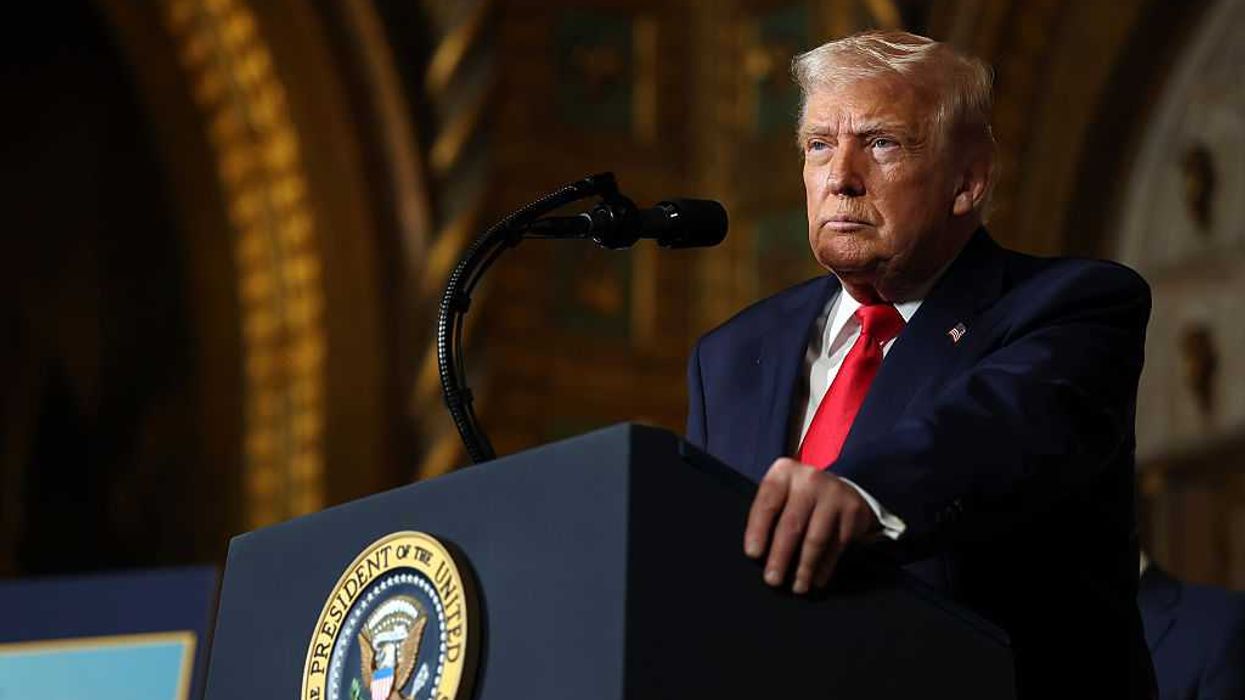
Christians in Nigeria have faced increased persecution recently. President Trump has landed a major surprise blow against those responsible.
On Christmas Day, President Donald Trump announced a “powerful and deadly strike against ISIS Terrorist Scum in Northwest Nigeria, who have been targeting and viciously killing, primarily, innocent Christians, at levels not seen for many years, and even Centuries!”
‘The symbolism of doing this on Christmas should not be ignored.’
“I have previously warned these Terrorists that if they did not stop the slaughtering of Christians, there would be hell to pay, and tonight, there was,” Trump wrote on Truth Social. “The Department of War executed numerous perfect strikes, as only the United States is capable of doing. Under my leadership, our Country will not allow Radical Islamic Terrorism to prosper.”
Trump’s post concluded, “May God Bless our Military, and MERRY CHRISTMAS to all, including the dead Terrorists, of which there will be many more if their slaughter of Christians continues.”
On X, War Secretary Pete Hegseth confirmed the attack and the Nigerian government’s cooperation with the United States in facilitating the strike.
“The President was clear last month: the killing of innocent Christians in Nigeria (and elsewhere) must end. The [Department of War] is always ready, so ISIS found out tonight — on Christmas. More to come… Grateful for Nigerian government support & cooperation. Merry Christmas!” Hegseth wrote.
Trump previously threatened to “do things in Nigeria that Nigeria is not going to be happy about” and “go into that now disgraced country guns-a-blazing.”
Responding to the announcement, Fox News’ Peter Doocy said, “The symbolism of doing this on Christmas should not be ignored.”
Like Blaze News? Bypass the censors, sign up for our newsletters, and get stories like this direct to your inbox. Sign up here!
Does your city feel like Disney? Blame Robert Moses
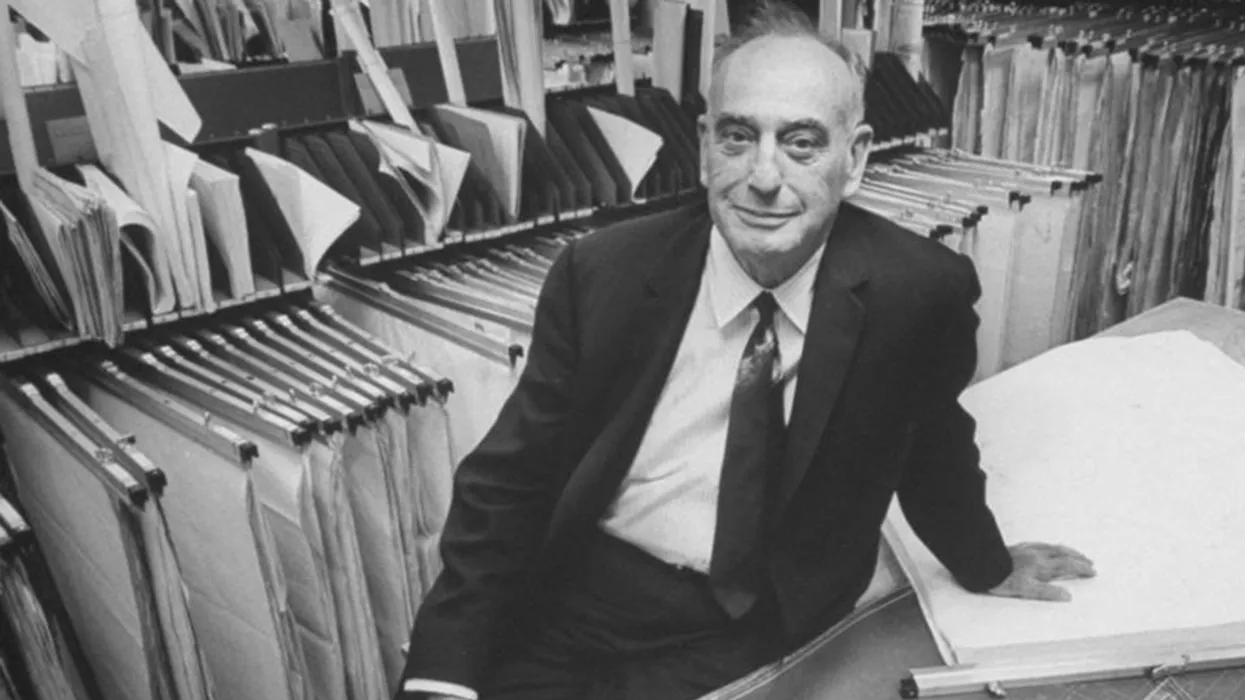
A single man had near-unending influence over the infrastructure of the largest North American cities.
Robert Moses, born in 1888 in New Haven, Connecticut, helped pioneer large-scale urban infrastructure built around cars and commerce. His top-down planning approach later influenced other controlled, master-planned environments, including those created by Walt Disney.
‘An extraordinary man who, denied power within the normal framework of the democratic process, stepped outside that framework.’
Moses held many titles during his time in politics and city/park planning, including secretary of state of New York (1927-1929), the first chairman of New York State Council of Parks (1924-1963), and the first commissioner of the New York City Department of Parks and Recreation (1934-1960).
Mr. Moses’ neighborhood
Moses’ influence can be seen all over New York City, and he is predominantly responsible for turning a collection of neighborhoods into the common metropolis that most cities appear as today.
It was Moses’ idea to run expressways right through the middle of cities to maximize access to commercial zones. He was responsible for infrastructure projects like the Brooklyn-Queens Expressway, the Staten Island Expressway, and the Cross Bronx Expressway. Many bridges that lead into New York City and Manhattan were his doing as well.
FDR Drive, where the United Nations headquarters is located, is also a creation of Moses.
All’s fair
Aside from numerous bridges and expressways, Moses also built nearly 30,000 apartment units by 1939, which is discussed in his biography, “The Power Broker,” by Robert Caro.
The book describes Moses as “an extraordinary man who, denied power within the normal framework of the democratic process, stepped outside that framework to grasp power sufficient to shape a great city and to hold sway over the very texture of millions of lives.”
It was that influence and power in New York that led him to becoming the president of the World’s Fair in 1964. Which, according to a documentary by Defunctland, led to Moses implementing mass evictions in low-income neighborhoods to make way for road systems.
RELATED: Comedian Shane Gillis shocks ESPN crowd with Epstein and illegal alien jokes: ‘This is Disney’
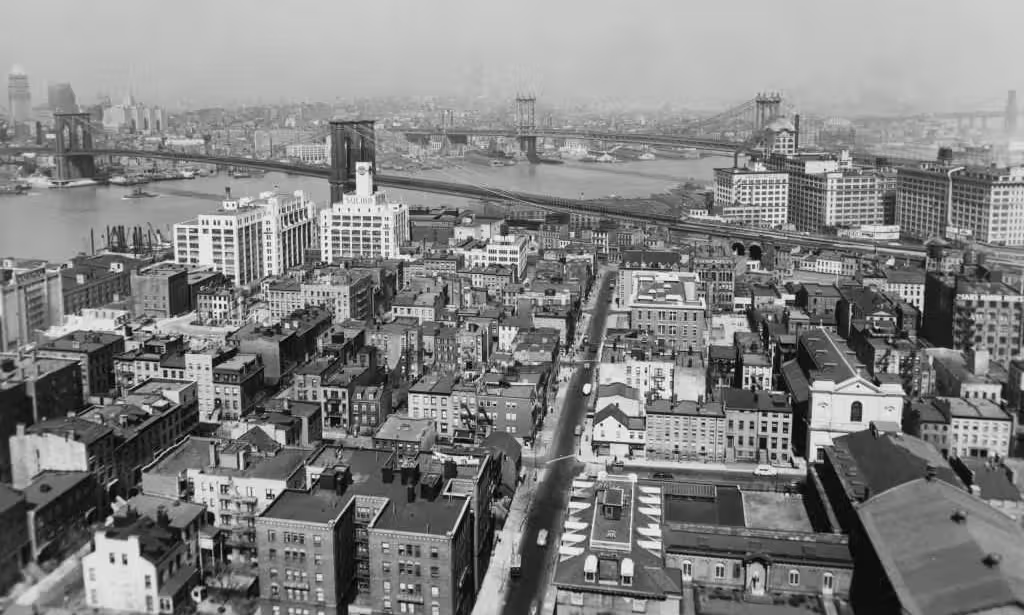 Photo by Bettmann Archive/Getty Images
Moses planned to make at least half of the fairgrounds permanent and openly said that much of the infrastructure was meant to stay as part of his vision of a futuristic park. This plan mirrored Moses’ suggestions for many of the city projects he worked on.
Shopping block
At the same time, the fair was more heavily commercialized than any before it. Moses abandoned the visual and thematic consistency of earlier fairs to maximize profit, allowing companies to design their own exhibits in exchange for high rental and repair fees — services that were allegedly monopolized by a small number of favored contractors.
Moses’ success in commercialization was noted by Disney, who wished to replicate his overall design thesis when plotting out Disney World in Florida. The two had worked together on the 1939 World’s Fair, for which Disney created a special promo cartoon and even licensed a Donald Duck Day.
The first animatronics were created for the 1964 iteration of the fair as well.
Moses’ influence goes far beyond Disney, though. He either directly consulted on, or influenced, the planning of at least a dozen North American cities. He is responsible for the infrastructural theory that cities should be focused on commercial centers, not residential housing.
Room for vroom
The idea that cars should move swiftly through cities on expressways took hold in places like Portland, where Moses was hired to help design the freeway network.
In Pittsburgh, Moses put his skills in planning both parkways and parks into practice when he was hired by the Pittsburgh Regional Planning Association to solve congestion issues. He ended up building the Penn-Lincoln Parkway, the Crosstown Boulevard, and the Point State Park.
RELATED: Tragic Kingdom: String of mysterious deaths shakes Disney World
 Photo by Paul Hiffmeyer/D23 EXPO via Getty Images
Moses acted as a consultant for a “high-speed freeway” in New Orleans in the 1940s and “stressed the benefits of removing vehicle traffic from the crowded streets,” according to an article by urban planning expert Jeff Brown.
While most of his suggestions were not taken in New Orleans, they were in Hartford, Connecticut, where he planned another freeway. The city declined his suggestion to build a parking garage in tandem with the expressway, though.
Interestingly, Moses’ road was reportedly placed through a slum in order to capitalize on “urban renewal funds” to help pay for the project.
Goin’ south
Other cities like Boston, San Francisco, Baltimore, Memphis, Phoenix, and Toronto, Canada, have seen indirect influence from Moses. In the 1940s and 1950s, Moses eventually faced resistance, and many of his highway projects were scaled back or canceled, according to the New World Encyclopedia.
As the desire for Moses’ planning skills eventually soured, he and others looked to opportunities in Latin America.
The article “Transforming the modern Latin American city: Robert Moses and the International Basic Economic Corporation” discusses how in 1950, the mayor of Sao Paulo, Brazil, hired a commercial corporation headed by Nelson Rockefeller to design the public works for the city.
Moses was appointed director of studies to work in the “Program of Public Improvements” for Sao Paulo and allegedly caused great controversy in Brazil due to his intentions to import American companies to operate in the country.
Moses’ influence is still visible in major cities where congestion is chronic and housing is scarce. Disney World succeeded for a simpler reason: It was designed entirely around consumerism, without the complications of cars, housing, or civic life.
In that sense, Disney World represents a kind of Robert Moses ideal — an urban space devoted purely to consumption, perfectly controlled, and freed from the democratic friction and human needs that constrained Moses in the real world.
If voters don’t feel relief, the economy isn’t fixed

The concerns of many Americans about their economic well-being may be at the highest level since the Great Depression. Politico recently reported that 46% of Americans say their cost of living is the worst that they can remember, including over one-third of Trump voters. Nothing better exemplifies this than the many “30-somethings” who are unable to purchase a home.
Financial anxieties center around affordability, which is the proxy for evaluating whether the economy is meeting the public’s needs. Affordability is the degree to which households can responsibly pay for essential goods and services.
In the end, the nation’s affordability dilemma is about the confidence people have in the country’s economic future.
Gregg Ip, an economic commentator for the Wall Street Journal, says that affordability cannot be measured solely by economic data, but must also account for perceptions of financial security.
President Trump opined that concerns about affordability are a “hoax” created by Democrats for political purposes. Most Americans would disagree. While the runaway inflation of the Biden presidency has moderated, widespread concerns about affordability persist. According to a recent Politico poll, nearly half of the nation found the cost of their groceries, health care, utilities, and housing to be unaffordable. About half of the respondents said food costs are difficult to manage, and more than a quarter skipped medical appointments because of the cost.
In the 2026 midterm elections, it will be incumbent upon Republicans and Democrats to make an affordability agenda “job one.” These agendas should be the yardstick voters use to cast their vote for members of Congress and state officials.
The U.S. affordability crisis is multidimensional, requiring a dual-track strategy that combines structural reforms with immediate and affordable relief for the most vulnerable citizens. Each party’s affordability agenda should demonstrate when households will realize cost-of-living relief, avoid another round of inflation, provide market incentives for innovation, supply expansion and productivity gains, demonstrate distributional fairness, and stress choice over federal mandates.
Restoring an affordable economy will require that failed federal policies be reversed and the president and Congress focus on fixing long-term root causes.
To make goods and services more affordable, public policies should aim at increasing private-sector housing construction, modernizing domestic energy regulations, expanding production, encouraging competition in the health care insurance market, avoiding deficit spending that can rekindle inflation, rolling back regulations that increase consumer and business expenses, and devolving social and educational programs to the states to tailor taxpayer-friendly solutions to local challenges.
The nation’s affordability dilemma is not only about the price of goods and services. It concerns the relationship between costs, income, and the perception of financial security. In the end, it is about the confidence people have in the country’s economic future.
RELATED: All I want for Christmas is for Vivek Ramaswamy to stop embarrassing the GOP
 Photo by Jon Cherry/Getty Images
When households and businesses feel “squeezed,” they lose faith that public or private institutions are protecting their interests. A September 2025 poll conducted by the Pew Research Center found that just 17% of Americans trusted the federal government to do the “right thing” most of the time. Similarly, the July 2025 Gallup survey reported that less than 30% of Americans had confidence in U.S. institutions.
The major impediments to addressing the high cost of living are deep ideological divides over causes and solutions. Progressives emphasize government mandates and regulations, subsidies, and deficit spending. Conservatives stress fiscal restraint and market-driven solutions. Adopting common-sense economic reforms requires compromise and the rejection of left and right extremism driven by grievances and rage.
There is no more important issue for voters than which candidates and parties will boldly tackle the affordability challenge. Success will be influenced by policies that encourage business investment and innovation and workers keeping more of their income.
Editor’s note: This article was originally published by RealClearPolitics and made available via RealClearWire.
It’s personal: Michael Jordan is more charitable than the media tells you
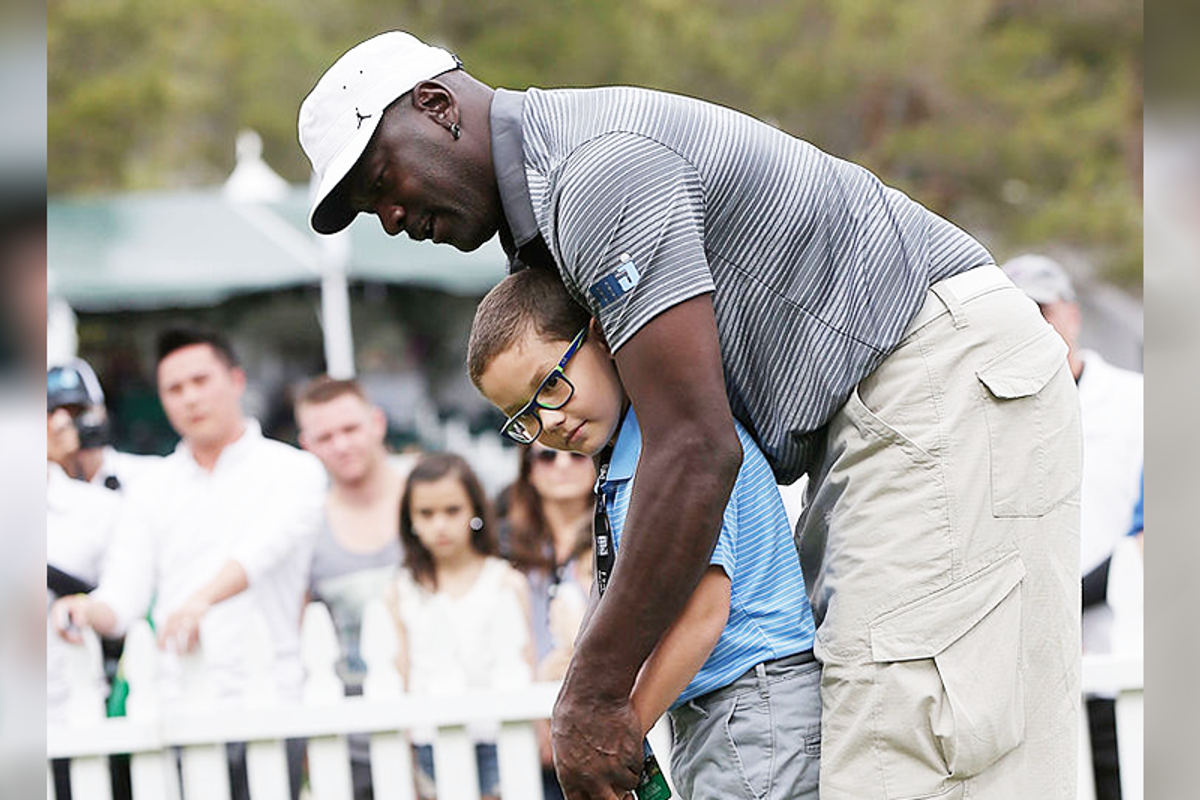
Michael Jordan gives back far more than he gets credit for.
After six NBA championships and a Hall of Fame career, Jordan is now known most for his Air Jordan brand, memes of him crying, and compilations of him expressing personal grievances that fueled his athletic prowess.
‘Did you get all the stuff?!’
What does not get as much media play is Jordan’s long history of charity toward low-income communities, disaster relief, and sick children.
In fact, even when Jordan was being mocked with the “it became personal” meme following the airing of his 2020 Netflix documentary, “The Last Dance,” he was giving millions to feed the hungry during the Christmas season.
In late November 2020, months after the documentary released, Jordan donated $2 million of profit from the movie to Feeding America, the nation’s largest hunger-relief program. He focused on the Carolinas, where he played college basketball, and Chicago, where he won his NBA championships.
This came at a time when the organization had announced that more than 50 million Americans were struggling with food bills due to COVID-19.
What may be even more notable, though, is Jordan’s history with the Make-A-Wish organization.
As the NBA reported in 2019, Jordan has been chief ambassador for Make-A-Wish since 2008, donating more than $5 million to the charity while granting hundreds of wishes over a 30-year span.
His donation totals catapulted in early 2023, when Jordan celebrated his 60th birthday by giving a whopping $10 million donation to Make-A-Wish, the biggest contribution the company had ever received.
But what is seemingly more impactful than his donations is Jordan’s willingness to reach out to young fans of his who are struggling, sick, or even similarly to him, a meme.
The latter is exactly what happened to Jeffrey from Spokane, Washington, in 2016. Jeffrey was spotted wearing Jordan’s Chicago Bulls gear at a local basketball park. Viewers were shocked at how similar he looked to the NBA legend, and the video quickly became a laughing stock online as it appeared an adult man was mimicking a professional athlete.
However, Jordan became aware of the nuanced details of the story, including that Jeffrey was developmentally disabled. He has a seizure disorder, mild retardation, and autism. His mother told reporters that Jeffrey was diagnosed at the age of 4 when he complained of painful headaches.
Just months after the meme took off, Jordan sent Jeffrey a massive haul of Air Jordan goods — and even gave him a phone call.
“Did you get all the stuff?!” Jordan is heard asking Jeffrey. After Jeffrey confirmed, Jordan followed up, “Is it enough?!”
The two laughed. “Enjoy yourself, and I’m going to be watching for you,” Jordan added.
“All right … I love you,” Jeffrey threw out to his hero.
“Love you, man,” Jordan replied.
The greatest basketball player of all time, who famously said, “Republicans buy sneakers too,” has made so many charitable donations that the NBA has an entire page dedicated to his philanthropy.
It notes $2 million of relief funds to victims of Hurricane Florence in 2018, $500,000 to stock libraries and preschools in Charlotte in 2016, and $250,000 to food banks in 2012, among many other donations.
In November 2025, Jordan continued his tradition of helping others during the holiday season, with a $10 million donation to a North Carolina medical center in honor of his mother.
The Novant Health New Hanover Regional Medical Center in Wilmington, North Carolina, will name its neuroscience institute after Deloris Jordan, according to ESPN.
Like Blaze News? Bypass the censors, sign up for our newsletters, and get stories like this direct to your inbox. Sign up here!
Glenn Beck reveals the one thing he should have NEVER said about Donald Trump
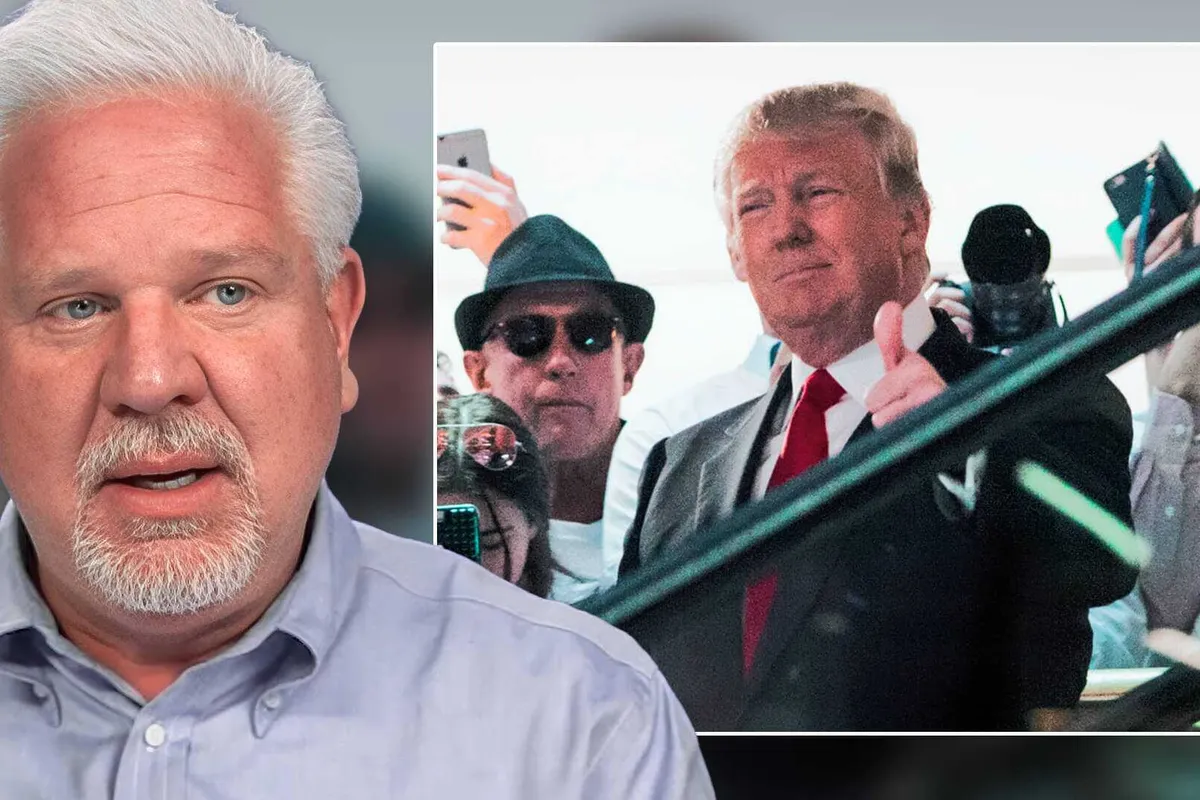
What many don’t know is that there are two sides to Donald Trump: the public persona known for scathing Truth Social posts and humiliating contentious reporters and the incredibly gracious family man behind the bombast.
Before Glenn Beck knew the difference, he believed Trump to be an insincere grifter, spurring him to make some public statements he deeply regrets today.
On a recent episode of “The Glenn Beck Program,” Glenn shared a story about Donald Trump that nearly drove him to tears.
Before Trump announced his presidential run in 2015, he and Glenn were friendly after hitting it off at one of Larry King’s birthday parties. During one conversation, Trump urged Glenn, who traveled often for work, to stay at one of the Trump hotels.
Glenn agreed to try it out and booked a room at the Trump International Hotel in New City during a business trip. However, at the time, he was on a strict diet for health reasons that only allowed him to eat 70 specific foods. As a result, a personal chef had to accompany him everywhere he went.
“And so I called [Trump] up, and I said, ‘Hey, I’m coming to New York. I have a chef that has to travel with me because I can only eat these 70 things, and it has to be exact. … Could you accommodate?’ … And he’s like, ‘Absolutely, not a problem,”’ Glenn recounts.
However, during Glenn’s stay in NYC, he got a phone call informing him that his father was about to pass away, requiring him to cut his trip short.
“Somehow or another, [Trump] found out that I left. I go to Seattle; my father dies; I come back home, and he calls me up, and he said, ‘Is there a reason you left early from the hotel? Did something go wrong?’ And I said, ‘Yes, sir. My father passed away.’ And he said, ‘Oh my gosh, Glenn, I’m so sorry to hear that,”’ Glenn says, calling Trump “so relatable and so kind.”
However, Glenn’s kindly opinion of the future president immediately soured when Trump announced just a week after their phone conversation that he was running for president.
“I can’t believe I’m confessing this. This is so horrible for me to say. This is one of the worst things I’ve done in a long time,” he says, fighting back tears.
“I remember getting on the air as soon as he announces [his candidacy] … and I said, ‘That son of b***h has been courting me this whole time. He has been setting me up for an endorsement. That’s what this whole thing has been about.’ And I assume the worst of him,” Glenn confesses.
Today Glenn knows the real Donald Trump — the one whose children and grandchildren worship the ground he walks on. He knows that the attentiveness and kindness Trump showed him after his father passed away wasn’t performance or grift. It was genuine.
“He was just such a gracious guy, and I spat in his face for it, and I regret it. Anything that you think he is, anything the press says he is, he’s not that guy,” says Glenn.
To hear Glenn retell the story in detail, watch the video above.
Want more from Glenn Beck?
To enjoy more of Glenn’s masterful storytelling, thought-provoking analysis, and uncanny ability to make sense of the chaos, subscribe to BlazeTV — the largest multi-platform network of voices who love America, defend the Constitution, and live the American dream.
Herod promised moderation — and then he slaughtered the innocent

Everyone loves the three wise men at Christmas. Gold, frankincense, myrrh, the star, the long journey — these are the images we place on mantles and church bulletins. But almost no one pauses to consider the politics happening behind the scenes. Matthew’s Gospel is not merely a nativity story; it is a collision of kingdoms. At the center of that collision is a tyrant who sounds far more familiar to modern ears than we might like to admit.
Herod is remembered for one thing: He murdered infants. That is the brutal fact we cannot ignore. But before he unsheathed the sword, Herod did something else — something more subtle, more political, and more recognizable.
Just as Herod spoke the language of worship to mask his intentions, the Democrats speak the language of ‘common sense’ to mask theirs.
He promised moderation. He promised cooperation. He promised unity.
And he lied.
“Go and search carefully for the Child,” Herod told the wise men, “and when you have found Him, bring back word to me, that I may come and worship Him also.” It was a trap. A manipulative plea for compromise. A tyrant asking the righteous to meet him halfway.
Herod never intended to worship Christ. He planned to kill Him. And that is where the story begins to sound painfully modern.
False moderation
Herod’s modern-day heirs still use the same script. Every election season brings a fresh wave of polished slogans: “Commonsense reproductive health care.” “Protecting basic rights.” “Defending freedom.” “Stopping extremism.”
The tone is moderate. The goal is not.
These same Democratic voices champion abortion through all nine months, fund the industry, defend it in court, and celebrate each victory that preserves the so-called right to end a child’s life. Behind the rhetoric of calm reason lies a fixed reality: Every restriction — no matter how small — is treated as an existential threat.
President Donald Trump proved this. He rejected national restrictions, announced he would not sign a bill banning abortion, and embraced the state-by-state approach, even calling a heartbeat bill too restrictive. And the left still branded him a radical intent on a national ban and criminalizing abortion.
The charge did not depend on his position. It depended on leftists’ strategy. If the destruction of the innocent is nonnegotiable for them, then every effort to restrain it is labeled “extremism.” Herod does not distinguish between cautious men and bold ones.
The illusion of safety
Many have assumed that careful posture protects influence. The evidence says otherwise. No matter how tempered the proposal, no matter how limited the step, no matter how deliberately “reasonable” the tone, the same accusations appear: “Outlawing women.” “Criminalizing health care.” “Taking away rights.” “Extreme.”
The strategy is simple: Anything that restricts the regime’s power is given the same label. If the political cost is identical regardless of the position taken, then the logic of compromise collapses. Because what, precisely, is being purchased?
If moderation brings no peace, if restraint brings no goodwill, if cautious measures earn the same condemnation as courageous ones, then moderation is not a shield. It is simply paying the price for a position you do not hold.
Herod offered cooperation. The wise men showed respect. On the surface, it looked like stability, but when God revealed the truth, the wise men acted decisively: “Being warned in a dream … they departed for their own country another way.”
They did not return to negotiate. They did not report back with updated information. They simply refused to play the tyrant’s game. And that refusal protected the Christ-child. Their greatness was not in their gifts but in their clarity. When a ruler is committed to killing the innocent, cooperation is complicity.
New actors, same script
The modern Democratic regime does not offer moderation. It claims moderation while rejecting every limit placed before it.
RELATED: The hidden hope of Christmas the world needs right now
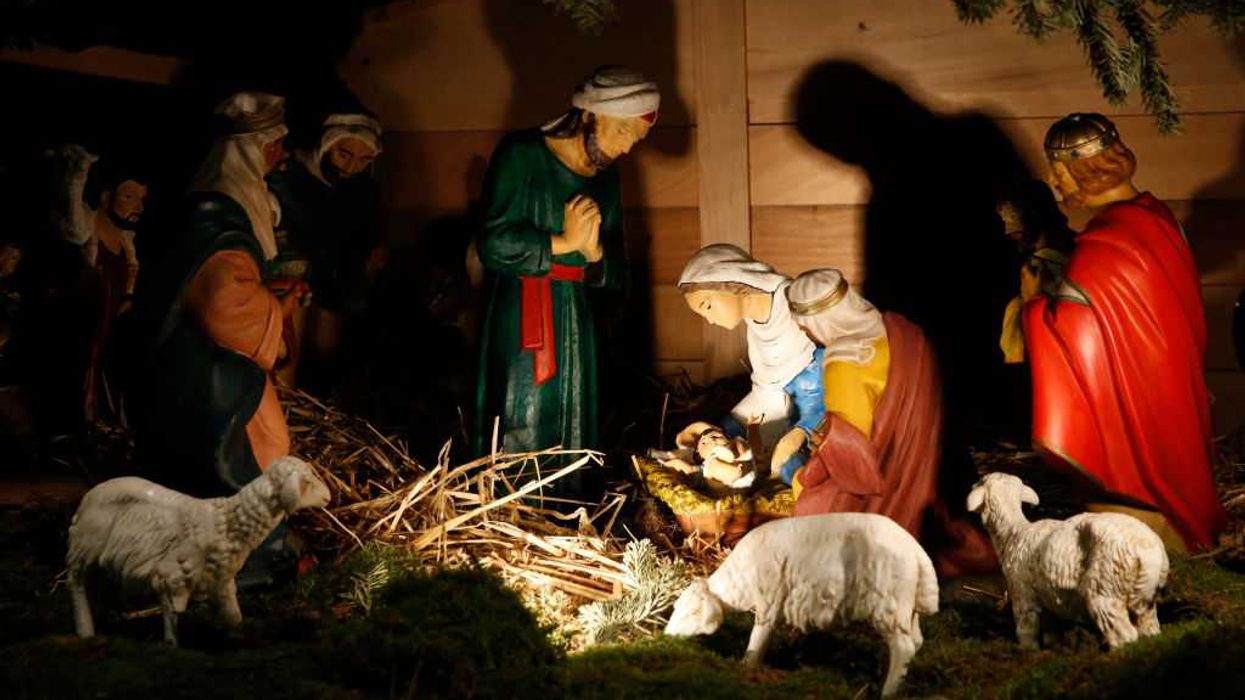 Photo by: Godong/Universal Images Group via Getty Images
A heartbeat bill? Extreme. An ultrasound requirement? Extreme. Parental notification? Extreme. A 20-week ban? Extreme. Nothing is ever reasonable unless it preserves abortion without limits.
Just as Herod spoke the language of worship to mask his intentions, the Democrats speak the language of “common sense” to mask theirs. The tone is polished, but the aim is unchanged: keep the machinery of death running while demanding that others surrender the moral clarity that might restrain it. Herod promised a partnership he never meant to honor. The Democrats promise moderation they never intend to practice.
The question that returns every year
We have no shortage of latter-day Herods. They still promise moderation, still demand cooperation. They still insist that if only convictions are tempered, peace will come.
But Christmas testifies otherwise. Herod was never going to worship Christ.
The Democrats who champion abortion are never going to tolerate restrictions. The accusations will fall on anyone who lifts a finger for the unborn, no matter how small the effort may be. If the cost is the same either way, then only one path honors God, protects life, and is politically wise: Let us refuse the tyrants by avoiding the negotiation altogether.
If the weight of truly treating abortion as murder is inevitable, then let us play the wise man and embrace our convictions.
Gavin’s Angels: From Masks to Mandates to Millions
To fill “the vacuum left by the Trump administration’s systematic retreat from science and evidence-based public health,” California Gov. Gavin…
The Weekend Spectator Ep. 53: Ranking the Best Christmas Movies of All Time
With Christmas quickly approaching and endless movie choices, it can be difficult to decide which of the greats to watch….





