

Category: Blaze Media
‘This is First Amendment activity’: Democrats give church-storming mobs their stamp of approval
Radicals participating in a so-called “ICE Out Action” stormed a Christian church on Sunday in Saint Paul, Minnesota.
The interlopers — ex-CNN talking head Don Lemon and a motley crew of leftists hailing largely from Nekima Levy Armstrong’s Racial Justice Network, Black Lives Matter Minnesota, and BLM Twin Cities — not only lashed out at a pastor over his apparent role at U.S. Immigration and Customs Enforcement but intimidated parishioners, drowned out sound of worship with their propaganda, and pressured the prayerful to condemn ICE.
The Justice Department has indicated that criminal charges for possible Freedom of Access to Clinics Entrances Act and KKK Act violations are imminent. Despite the clear language of the relevant statutes, some Democrats have defended the mob action, indicating that churches are viable targets for further desecration.
‘When they find out that someone that’s supposed to be speaking for the community in church is found out to be in ICE … they have the right to go in there.’
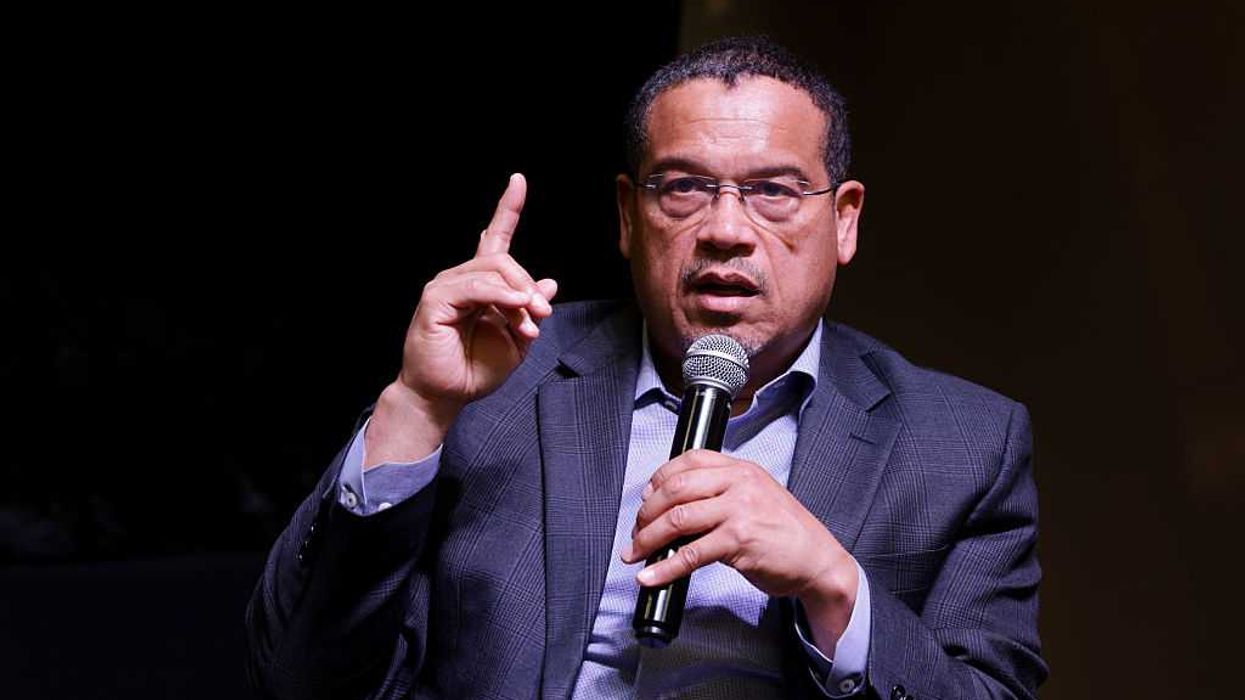
When asked whether the DOJ has a case against the anti-ICE radicals who disrupted Minnesota Christians’ lawful exercise of religious freedom in a place of worship, Minnesota Attorney General Keith Ellison (D) told CNN’s Erin Burnett on Monday, “Under this DOJ, wrongdoing has nothing to do with whether they’re going to focus or investigate you. So I wish in a normal time I would say no; I’d say this is First Amendment activity.”
After she suggested that “the optics of going into a place of worship are not necessarily great,” Burnett asked the Muslim Minnesota AG whether he was frustrated “that it happened this way.”
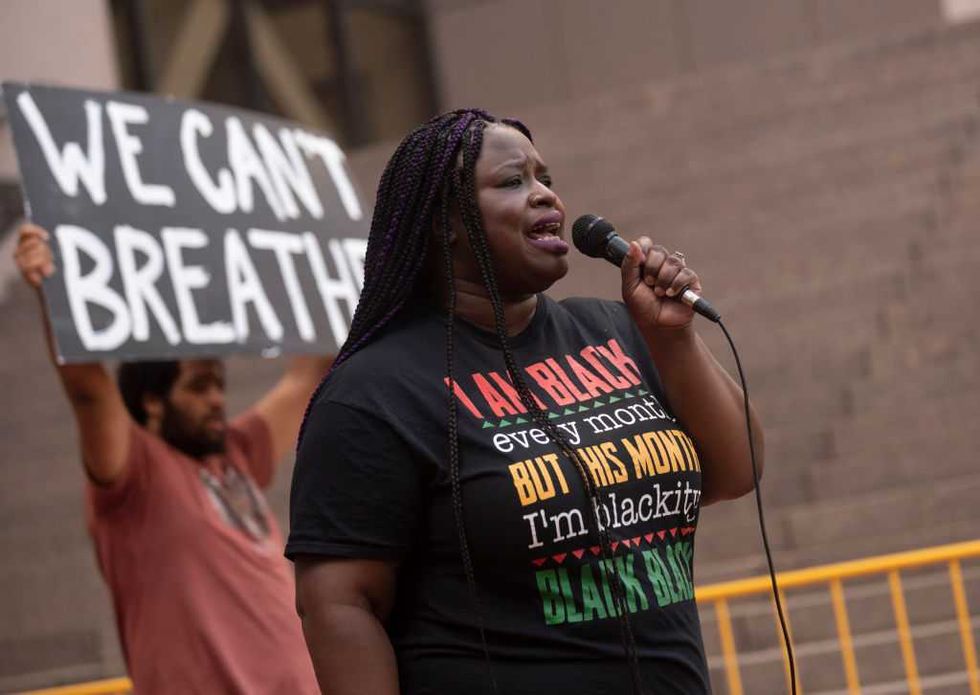 Nekima Levy Armstrong, the radical who led the intrusion into the church. Photo by Stephen Maturen/Getty Images.
Ellison avoided answering the question, suggesting he was instead frustrated by the number of ICE agents operating in his crime-ridden jurisdiction and the possibility that troops might be deployed to Minnesota.
Rep. Adelita Grijalva (Ariz.), a co-sponsor of a resolution to impeach Homeland Security Secretary Kristi Noem and a recent participant in an anti-ICE operation, is another Democrat who evidently figures churches are fair game for intimidation campaigns.
On a CNN appearance Monday, Grijalva justified the mob action, suggesting that the supposedly ICE-affiliated pastor “now knows what it’s like to have his daily life and privacy interrupted. This is a daily occurrence in our immigrant communities — being followed, being kidnapped, us out of our schools, churches, and hospitals.”
The Democrat congresswoman underscored that she did not think it was a step too far for “protesters” to go into churches, noting, “I think that when they find out that someone that’s supposed to be speaking for the community in church is found out to be in ICE, like a federal agent that is running ICE in their communities, they have the right to go in there.”
“Churches have always been an open door,” continued Grijalva. “And from my understanding in the videos that I saw, those protesters were not violent in any way.”
‘No cause — political or otherwise — justifies the desecration of a sacred space.’
Numerous Christian leaders and organizations evidently see things differently and have advocated for legal consequences in response to the intrusion.
Pastor Paul Chappell, president of the West Coast Baptist College, stated, “We condemn the actions of Don Lemon and the group of activists who stormed Cities Church today in St. Paul, Minnesota, in clear violation of the FACE Act. Christians everywhere should demand that the Department of Justice arrest those who participated. We must protect religious liberty in this country.”
“This group trespassed on private property and willfully obstructed Christian worship,” said Kevin Ezell, president of the North American Mission Board. “No cause — political or otherwise — justifies the desecration of a sacred space or the intimidation and trauma inflicted on families gathered peacefully in the house of God.”
Ezell added, “What occurred was not protest; it was lawless harassment.”
Albert Mohler, the president of the Southern Baptist Theological Seminary, called the mob action not only a “desecration” but an “unspeakably evil intrusion.”
Assistant Attorney General for Civil Rights Harmeet Dhillon stressed on Sunday that houses of worship are not public forums for the protests of radicals but spaces “protected from exactly such acts by federal criminal and civil laws.”
“We don’t want to prejudge, but I think it is fair to say that I saw multiple federal criminal incidents yesterday, and there will be charges,” Dhillon told Blaze Media co-founder Glenn Beck. “It’s only a question of when we can get a judge to sign off on arrest warrants and exactly what the charges would be.”
“We will not let this happen to another church in the United States. It is un-American, unacceptable, and there is a zero-tolerance policy for it at this DOJ,” added Dhillon.
Like Blaze News? Bypass the censors, sign up for our newsletters, and get stories like this direct to your inbox. Sign up here!
Employee at Houston Texans stadium sexually assaulted 8-year-old in bathroom stall, police say
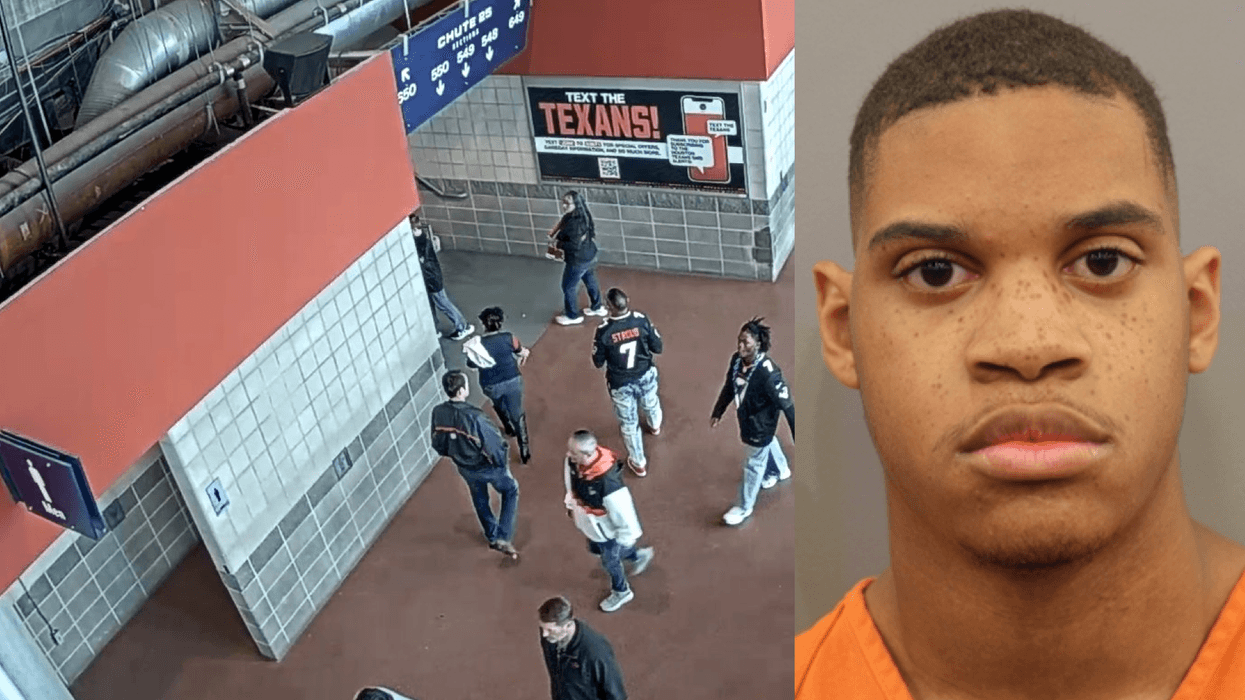
A witness to a sexual assault of an 8-year-old boy at the Houston Texans stadium led to the arrest of a 21-year-old employee, according to Houston police.
The boy’s mother said that her son was washing his hands when he was directed into the bathroom stall by the worker, who then followed him into the stall.
‘I keep thinking about that Good Samaritan. I’m almost begging for the chance to shake that man’s hand and thank him.’
The suspect was identified by police as Ushay Marquise Nixon, who worked for Aramark as a restroom attendant at the time. The family said that Nixon acted inappropriately toward the child, who realized something was wrong and ran out of the stall.
A bystander saw some of the interaction and sought out the boy’s parents to let them know something happened to him.
“He had such concern in his voice. You could tell,” said the mother of the boy. “He kept saying, ‘I don’t know, it didn’t look right. I don’t know if you’re OK with that type of thing, I’m not.’ He just kept repeating himself. So you could sense the concern in his voice.”
When the boy said that a worker pulled his pants down in the bathroom, his father jumped into action and took the boy back to the restroom area, where he pointed out Nixon.
Nixon tried to hide in a supply closet, but police were able to detain the man after being called by the father.
Police said Nixon was charged with indecency with a child and posted surveillance video from the incident on their social media account. Prosecutors said in court that he had been accused in two similar cases but that those were dismissed after family members refused to press forward.
The boy’s father wants to thank the witness who stepped in.
“I wasn’t able to protect him that day, but he protected himself,” the father said. “And I keep thinking about that Good Samaritan. I’m almost begging for the chance to shake that man’s hand and thank him.”
“We would love to thank him,” the boy’s mother said.
Aramark said in a statement that Nixon was no longer with the company and that the company was cooperating fully with police.
The family has also sued Aramark for hiring an accused pedophile as a restroom attendant.
Police are looking for witnesses to the incident, including the Good Samaritan, to step forward to aid their investigation.
Like Blaze News? Bypass the censors, sign up for our newsletters, and get stories like this direct to your inbox. Sign up here!
America now looks like a marriage headed for divorce — with no exit
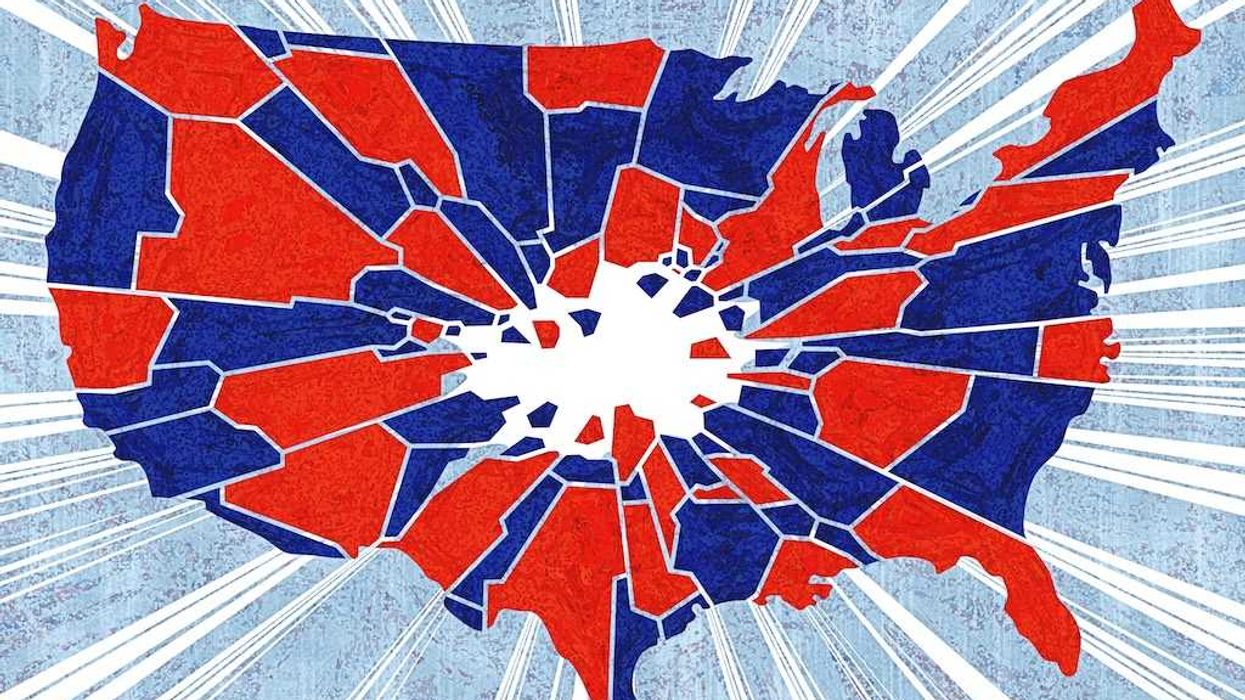
Marriages rarely end over one argument. They fall apart through a long breakdown in communication, a growing inability to resolve disagreements, and the slow realization that two people no longer walk toward the same future.
Healthy marriages don’t require full agreement on every subject. They require compromise on the decisions that shape daily life: money, children, priorities, responsibilities. They also require shared goals.
No tidy divorce court exists for a nation-state. We share one flag, one legal framework, and one public square.
When those goals diverge — and neither side will realign — the relationship becomes unsustainable. The law calls the condition “irreconcilable differences.”
America now lives in that condition.
We remain bound under one nation, one Constitution, and one civic home. But we no longer share a common purpose. We no longer share a common story about what the country is, why it exists, or whether it deserves to endure.
This conflict no longer turns on tax rates or regulatory policy. It turns on the legitimacy and direction of the American experiment itself.
The modern left no longer argues about how to preserve the American system. It treats the system as the problem. Democratic leaders and activists call for “fundamental transformation,” flirt with socialism, and talk about the founding less as a flawed but noble legacy than as a moral failure that demands replacement. In that worldview, America doesn’t need reform. America needs erasure.
The right still believes the country can be repaired and preserved. The left increasingly treats the country as something to dismantle.
This rupture shows up in concrete ways. In 2021, the National Archives placed a “harmful language” warning on the Constitution and the Declaration of Independence — the documents that define the nation. That doesn’t signal ordinary partisan dispute. It signals contempt for the country’s moral foundation.
Socialism sits at the center of this divide. It contradicts the American system at its roots. America rests on the premise that rights come from God, not government. Socialism elevates the state over the individual and makes rights conditional on political approval. It centralizes power in the name of enforced equality — “equity.”
RELATED: Americans aren’t arguing any more — we’re speaking different languages
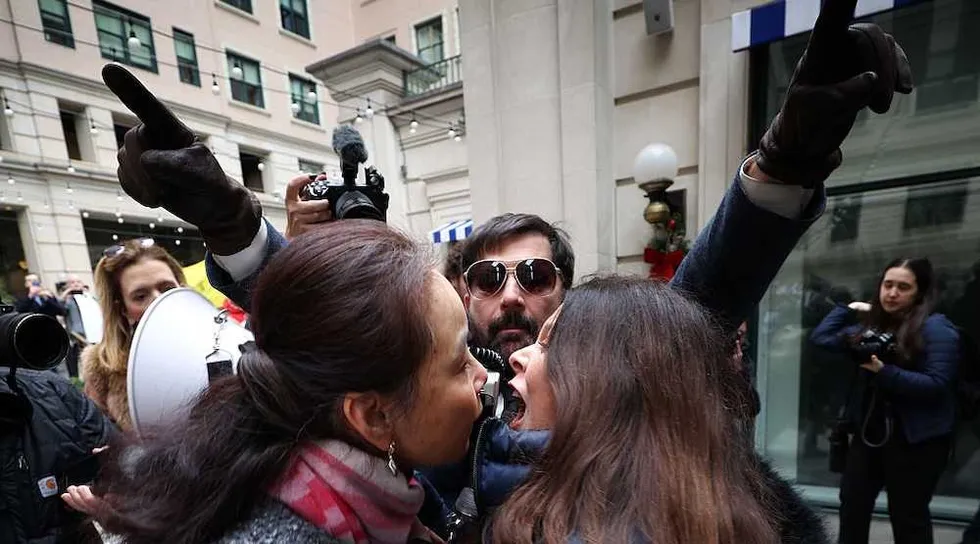 Photo by Win McNamee/Getty Images
America protects private property as an extension of liberty. It channels ambition into innovation and prosperity. Socialism treats success as a social offense and demands equality of outcome. When people refuse to surrender the fruits of their labor, socialism turns to coercion. Coercion requires centralized authority. Centralized authority punishes dissent.
The pattern repeats: less freedom, greater dependency, and a governing model incompatible with constitutional self-rule.
The irony remains hard to miss. The left calls Donald Trump “Hitler” while cheering figures like New York City Mayor Zohran Mamdani, an avowed socialist. Yet the Nazi Party sold itself as the National Socialist German Workers’ Party — a collectivist project built on centralized power and state control.
The same left often excuses Antifa, a movement built on intimidation, street violence, and political enforcement designed to silence opposition. Those tactics don’t belong to liberal democracy. They belong to regimes that fear debate.
Even basic reality has become contested. The left and right can’t agree on something as elemental as what a man or a woman is. The Supreme Court recently showcased the collapse when ACLU attorneys arguing sex-based discrimination refused to define “woman.” When a society refuses to name biological facts that every civilization once treated as obvious, compromise collapses with it.
This crisis goes deeper than polarization. It reaches the level of knowledge itself. The left increasingly treats biology, history, and moral limits as malleable social constructs. The right still believes objective reality binds us all.
These aren’t normal disagreements. They describe incompatible worldviews. And incompatibility carries consequences.
During the COVID era, polls found majorities of Democrats willing to endorse coercive measures against the unvaccinated, including house arrest. Nearly half supported imprisoning people who questioned vaccine efficacy. Those numbers didn’t represent a fringe. They revealed a growing comfort with state force in service of ideological conformity.
After Trump’s 2016 election, many friendships survived political conflict. By 2020, after years of dehumanization — after constant accusations of “Nazism” aimed at ordinary voters — many of those relationships broke. The political battle stopped sounding like disagreement and started sounding like moral extermination.
RELATED: Washington, DC, has become a hostile city-state
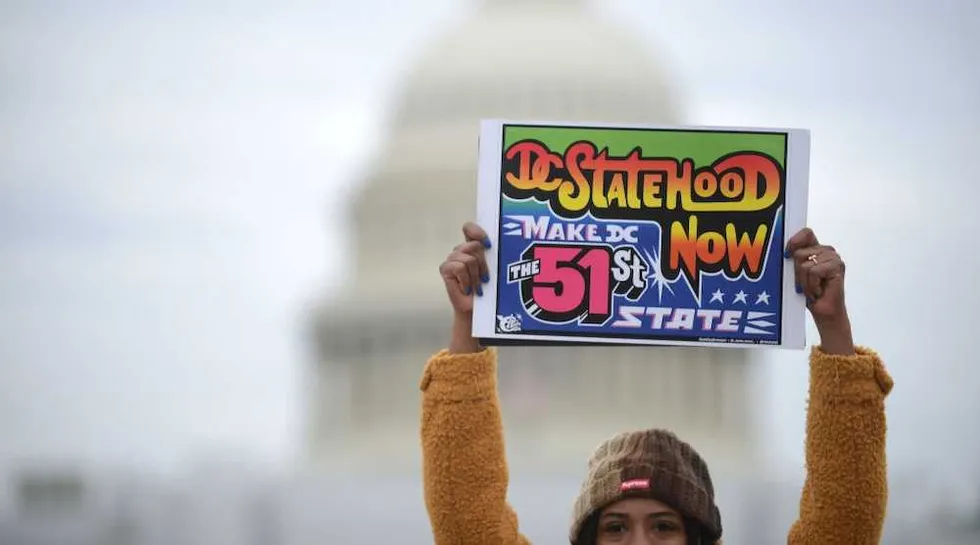 Photo by Astrid Riecken For The Washington Post via Getty Images
In September 2025, someone assassinated Charlie Kirk. Large segments of the left didn’t just rationalize the killing. Many celebrated it.
After Scott Adams died following a long fight with cancer, prominent voices responded with mockery instead of decency. People magazine ran a headline labeling him “disgraced.” Even death became a political verdict.
This is what irreconcilable differences look like at a national scale.
A country cannot endure when one side believes the nation stands as fundamentally good — worthy of preservation and reform — while the other believes it stands as irredeemably evil and must be dismantled. Marriages end when partners stop seeing each other as allies and start treating each other as enemies.
Nations fracture for the same reason.
America cannot solve this the way a couple dissolves a marriage. The Constitution binds us to one civic order. No clean separation awaits. No tidy divorce court exists for a nation-state. We share one flag, one legal framework, and one public square.
When irreconcilable differences exist but separation remains impossible, the danger grows.
Only three paths remain: recommitment to constitutional principles, enforced coexistence through expanding coercion, or escalation into open conflict as dehumanization becomes normal.
Pretending this amounts to another election cycle, another policy dispute, or another cable-news food fight invites catastrophe. A nation cannot survive when its people no longer agree on what it is, why it exists, or whether it deserves to continue.
Unlike a failed marriage, America can’t walk away.
Glenn Beck: Iran’s regime is crumbling — and the REAL villain isn’t China
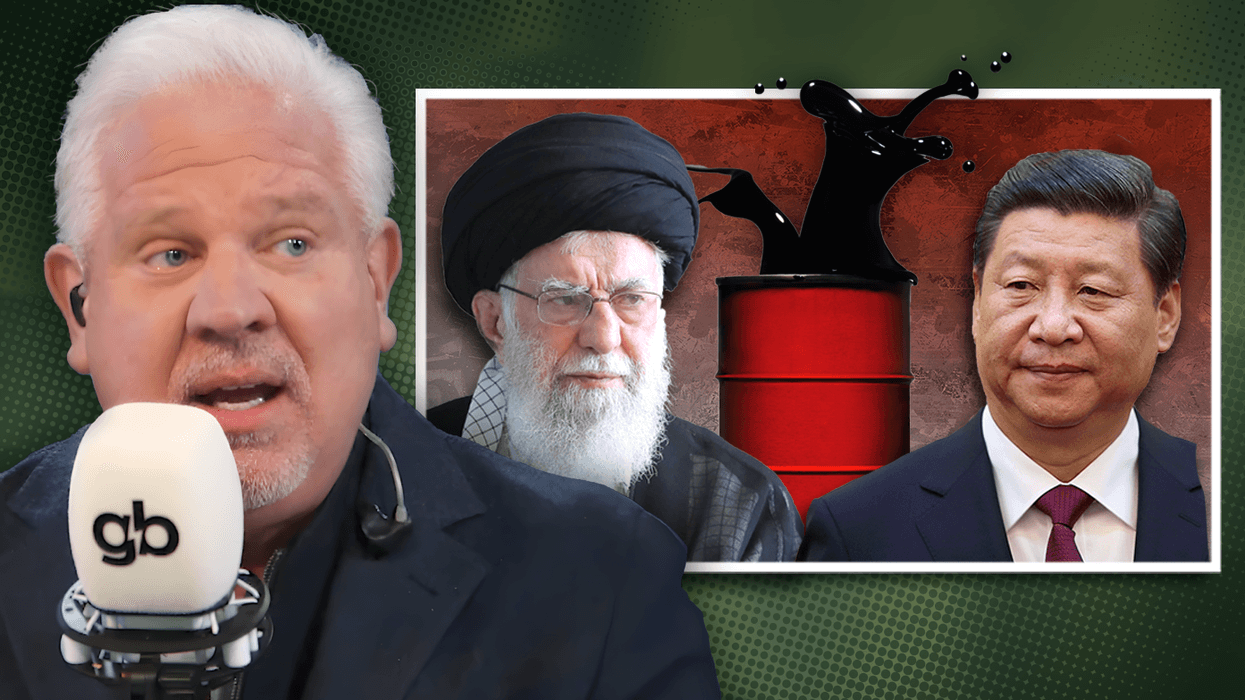
Iran’s streets continue to erupt in one of the most intense nationwide uprisings since the 1979 revolution. Thousands have been killed, tens of thousands arrested, and a brutal regime crackdown with live fire, mass detentions, and a near-total internet blackout has largely smothered visible protests for now. And yet whispers of regime fragility grow louder.
But there’s more to this story than meets the eye. Iran’s real vulnerability, says Glenn Beck, lies not in its inability to squash a protest movement but in its oil-dependent economy, propped up by shadowy deals that could unravel overnight.
Glenn breaks it down brilliantly with a simple, chilling apple farmer analogy that exposes how global banks and China’s “teapot” refineries have kept the regime afloat through sanction-skirting barter schemes … until the buyer suddenly says “no more.”
Glenn’s story begins with an apple farmer named Mo and an apple buyer named Ming.
“[Mo] starts out small. He has a few trees, a few crates. He works hard and everything, and he reinvests all the time. He plants more trees. He buys more land. He takes out loans for trucks and storage and refrigeration,” Glenn begins.
His business keeps growing and then “one day something incredible happens. A massive single grocery chain [run by Ming] picks up Mo’s apples — not a few apples, all of the apples. Which is good because what I didn’t tell you about Mo is he thinks he’s a good guy, but he’s pissed every other apple store off in the world,” he continues.
Ming tells Mo his plans to “refine” the apples into “apple cider and apple juice.” Mo, thrilled that now “demand is guaranteed,” expands even more.
“The trucks are financed. The warehouses are leased. The future looks locked in,” says Glenn.
But then one day, everything comes to a screeching halt. Suddenly “Ming says, ‘Yeah, we can’t take any more apples. We’re at capacity.”’
This news wrecks Mo’s world – without Ming, there’s nothing to keep his business empire afloat.
Almost immediately, apples begin to pile up, and the trucks loaded with supplies are parked. Then “the police are like, ‘Why are all these trucks on the sides of the roads?’ … Then they realize, ‘Wait a minute, you don’t have a license to ship apples. In fact, you don’t have a license on this truck,”’ Glenn continues.
It turns out Mo hasn’t been making any money from his apple farm because Ming has been paying him in equipment and infrastructure the entire time. Mo’s business collapses immediately because he never actually owned anything.
“The banks did,” says Glenn — not because they trusted Mo but because they trusted Ming, who took out the insurance policies.
“Ming is actually the refinery in China, and Mo is the oil in Iran,” he finally reveals.
The banks and insurance companies knew that China couldn’t legally purchase Iranian oil because there’s an embargo on it. But they were perfectly fine with a barter system — where China provided goods, services, and infrastructure in exchange for oil. As long as there was “no money changing hands,” the banks would sign.
This prospect is already enough to give Glenn “a brain aneurysm,” but sadly the story takes an even darker turn.
“The farmer Mo — he has sons, and each one ran a different part of his farm,” he says, returning to his analogy.
Ming’s sudden decision to bail stirs up tension in Mo’s family.
“One son says, ‘Sell the land while it’s worth something.’ Another says, ‘No, hold on — the store might come back.’ Another one says, ‘No, you know what? I’m not with either of you’ and starts moving equipment out of the barn in the middle of the night, and he’s just going to get onto a plane and disappear at some point,” says Glenn.
“This is when countries go down because each son stops asking how do we save the farm, and they start asking how do I get out before it collapses. The farm doesn’t change hands in a ceremony. It just empties out.”
It starts with Mo’s sons, then the farm workers, and then the security team. Protests erupt outside Mo’s gates, and he is forced to cope with the fact that his apple farm has rotted from the inside out.
“This is what’s happening in Iran,” says Glenn.
To hear more of his analysis, watch the video above.
Want more from Glenn Beck?
To enjoy more of Glenn’s masterful storytelling, thought-provoking analysis, and uncanny ability to make sense of the chaos, subscribe to BlazeTV — the largest multi-platform network of voices who love America, defend the Constitution, and live the American dream.
A protest doesn’t become lawful because Don Lemon livestreams it
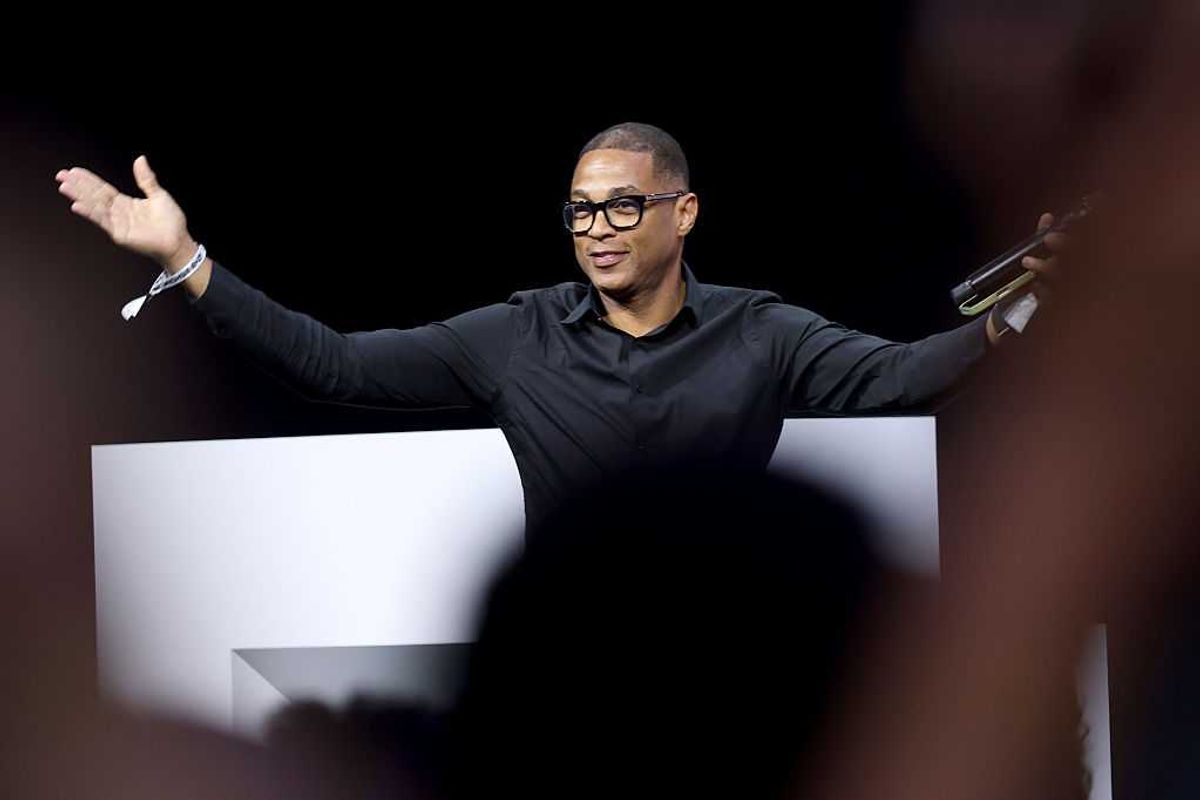
What should have been a peaceful Sunday service at Cities Church in St. Paul, Minnesota, turned into a political ambush. Roughly 30 anti-ICE protesters pushed into the sanctuary mid-worship, chanting slogans and confronting church leaders as families tried to pray.
Disgraced former CNN anchor Don Lemon was there, too, livestreaming the chaos.
If activists can storm a church mid-service, scream at families, and then hide behind the First Amendment, the standard becomes simple: The loudest mob sets the rules.
The Department of Justice has opened a formal investigation and signaled that federal protections for houses of worship may apply. Assistant Attorney General Harmeet Dhillon noted on the “Glenn Beck Program” that the activists’ conduct could implicate the Freedom of Access to Clinic Entrances Act, which bars intimidation, obstruction, and interference with the free exercise of religion in places of worship. The protesters may have also violated the Ku Klux Klan Act, a post-Civil War law that makes it illegal to terrorize and violate the civil rights of citizens.
According to multiple reports, the demonstrators were tied to the Racial Justice Network and aimed their protest at a church leader they accused of working with Immigration and Customs Enforcement. The protest followed rising tensions in Minnesota after the fatal shooting of anti-ICE activist Renee Nicole Good during a confrontation with federal agents.
Lemon framed the entire spectacle as civic virtue. He insisted he was “not an activist, but a journalist” and argued that protest inside a church remains constitutionally protected speech.
The footage tells a messier story.
Video released after the incident shows Lemon interacting with the group beforehand, appearing familiar with organizers and the plan. One outlet described the operation as “Operation Pull-Up.” That undercuts the narrative Lemon later pushed — that he simply arrived to document an event that unexpectedly “spilled” into a worship service.
Intent matters. So does outcome. The outcome looked like this: a sanctuary overrun, a service derailed, congregants shaken, and children crying while activists shouted and gestured at the pews.
That is far from “peaceful assembly.” It is targeted disruption.
The First Amendment protects speech. It does not grant a roaming license to invade private spaces and commandeer them for political theater. Rights have edges because other people have rights too. Worshippers do not lose their liberty because activists feel righteous.
That basic distinction keeps a free society from collapsing into a contest of intimidation.
RELATED: Americans aren’t arguing any more — we’re speaking different languages
 Photo by Heather Diehl/Getty Images
This case matters because it tests whether the country still draws that line. If activists can storm a church mid-service, scream at families, and then hide behind the First Amendment, the standard becomes simple: The loudest mob sets the rules. Next week it will be another church. Then a synagogue. Then any gathering that activists decide deserves punishment.
The Justice Department is right to examine the FACE Act here. Congress passed it to stop coercion dressed up as protest — the use of obstruction and intimidation to prevent Americans from exercising basic freedoms. That principle doesn’t change because the target shifts from an abortion clinic to a church sanctuary.
The press corps’ selective outrage makes the problem worse. Cultural elites demand “safety” and “inclusion” in every other arena, but many of them treat Christian worship as an acceptable target. They police speech in classrooms and boardrooms, then shrug when activists shout down prayer.
That double standard signals something deeper than hypocrisy. It signals permission.
Lemon’s defense captured the rot in one sentence: Making people uncomfortable, he said, is “what protests are about.” Fine. Protest often makes people uncomfortable. But discomfort does not justify trespass. It does not excuse intimidation. It does not cancel someone else’s right to worship in peace.
A society that cannot protect sacred spaces will not protect much else for long. If the law refuses to punish conduct like this, the lesson will spread fast: Invade, disrupt, harass — then claim virtue and dare anyone to stop you.
America does not need a new normal where mobs treat churches like political stages. It needs consequences.
‘NOW IT IS TIME!’: Trump Blasts Denmark for Failing to Contain Russian Threat — Says ‘It Will Be Done!!!’

In a Sunday night TRUTH Social post, President Donald Trump claimed Denmark has failed to deal with what he called the “Russian threat” near Greenland — and declared the time for action has arrived.
LAND OF 10,000 FAKES: Noem Announces 10K Arrests of Illegal Criminal Migrants in Minnesota

Minneapolis is getting the full federal treatment.
SOUR LEMON: Disgraced Don Says People Upset With Church Stunt are ‘Entitled’ and ‘White Supremacists’ [WATCH]
![SOUR LEMON: Disgraced Don Says People Upset With Church Stunt are ‘Entitled’ and ‘White Supremacists’ [WATCH]](https://hannity.com/wp-content/uploads/2026/01/Lemon-1-300x170.png "Lemon")
Well, let’s see how this goes for him.

‘Racial Equity’ Group Funded by Minnesota Taxpayers Asks for Donations To Bail Fund Freeing Anti-ICE Agitators
A “racial equity” and “restorative justice” nonprofit funded by Minnesota taxpayers is calling for donations to a new bail fund that’s helping free anti-ICE agitators and illegal immigrants detained in Minneapolis.
The post ‘Racial Equity’ Group Funded by Minnesota Taxpayers Asks for Donations To Bail Fund Freeing Anti-ICE Agitators appeared first on .
State Senator Omar Fateh calls for eviction moratorium to help residents ‘terrified’ to go to work in Minnesota

Minnesota state Senator Omar Fateh called for the governor to issue an eviction moratorium to help his “neighbors” who are having a tough time making ends meet under the threat of deportation.
The Trump administration has increased immigration enforcement efforts in Minnesota after more and more evidence of government welfare and relief fraud in the Somali community.
‘Our neighbors are terrified to leave their homes, go to work and many are now struggling to make ends meet.’
Fateh said in a statement on social media Monday that Democratic Gov. Tim Walz should place restrictions on evictions to help those affected by the crackdown.
“Minnesota is in an emergency. Our neighbors are terrified to leave their homes, go to work and many are now struggling to make ends meet,” he posted.
“Minnesotans are already stepping up to help their neighbors in need — it is time for the governor to enact an eviction moratorium,” he added.
Many on social media reacted with scorn to the suggestion.
“Go to work? You mean scam and fraud? That is not real work,” one critic responded.
“If they are terrified, they are illegal or commiting fraud[.] Sane law abiding citizens aren’t terrified,” another replied.
“Another scam in the works!” another detractor said.
A similar moratorium was demanded by unions in Los Angeles to protect illegal immigrants from evictions over their inability to continue to work while being hunted by federal immigration enforcement agents.
Fateh, a son of Somali immigrants to Minnesota, is best known for his failed campaign for Minneapolis mayor. Democratic-Farmer-Labor Mayor Jacob Frey took the office with nearly a 6% margin over Fateh in November.
RELATED: Minnesota news outlet is getting wrecked over story on Somali migrants’ economic impact on Minnesota
Walz has also been accused of obstructing investigations into the Somali fraud in Minnesota, though he has denied the allegations and claimed to have ordered criminal probes into the schemes.
Republicans in Minnesota have already drawn up articles of impeachment against Walz.
Like Blaze News? Bypass the censors, sign up for our newsletters, and get stories like this direct to your inbox. Sign up here!





