Category: Blaze Media
Test drive: 2026 Dodge Charger Sixpack Plus

The first performance car I ever drove was my mother’s daily driver — a 1970 Plymouth Barracuda 383 convertible, yellow with a black top and black interior.
I was 16, and that car left an impression that has never really gone away. So reviewing the all-new 2026 Dodge Charger Sixpack Plus feels especially timely.
It doesn’t pretend to be the cars I grew up with, but it proves there’s still room for performance, personality, and attitude.
This isn’t a throwback, and it isn’t powered by a V-8 — though I’ll admit I wish it were. Instead, Dodge has reinvented its most recognizable nameplate as a modern, gas-powered performance sedan, blending contemporary technology, standard all-wheel drive, and serious straight-line speed. The question isn’t whether this Charger is fast enough. It’s whether a muscle-car icon can evolve without losing its soul.
Room for V8
Power comes from a 3.0-liter twin-turbo inline-six offered in two configurations: a 420-horsepower version producing 469 lb-ft of torque and a more aggressive 550-horsepower delivering 531 lb-ft. Both pair with an eight-speed automatic transmission and standard all-wheel drive — a major departure for the Charger. Dodge has clearly left physical room under the hood for a possible V-8 revival someday, but for now, this turbo six carries the performance torch convincingly.
On the road, the Charger Sixpack Plus delivers numbers that still feel worthy of the name. Zero to 60 mph takes just 3.9 seconds, the quarter-mile passes in 12.2 seconds, and top speed reaches 177 mph.
Fuel economy is rated at a respectable 20 mpg combined. An active transfer case with front axle disconnect allows the car to change personalities, while a 3.45 rear axle ratio, mechanical limited-slip differential, performance suspension, and Brembo brakes keep this nearly 4,850-pound sedan composed.
Launch Control, Line Lock, and an active exhaust make it clear that Dodge still expects owners to visit the drag strip — an idea reinforced by the complimentary one-day session at the Dodge/SRT High Performance Driving School.
Modern muscle
Inside, the Charger blends muscle-era cues with modern tech in a way that feels deliberate. The leather-wrapped pistol-grip shifter, flat-top and flat-bottom steering wheel, paddle shifters, and 180-mph speedometer nod to the brand’s roots. Uconnect 5 with a 12.3-inch touchscreen, a 10.25-inch digital driver display, wireless Apple CarPlay and Android Auto, and available navigation bring it firmly into the present. The standard nine-speaker Alpine audio system sounds good, while the optional 18-speaker upgrade delivers serious volume and clarity.
Optional packages push the Charger noticeably upmarket. Leather performance seats, heated and ventilated fronts, heated rear seats, a head-up display, surround-view camera system, wireless charging, ambient lighting, Alexa built-in, and a power tilt-and-telescoping steering column all add comfort and convenience.
Despite its performance focus, the Charger remains practical, with seating for five and up to 37 cubic feet of cargo space when the rear seats are folded.
From Bludicrous to Black Top
From the outside, the Charger Sixpack Plus still looks like a modern muscle car. Trims range from R/T Sixpack to Scat Pack and Scat Pack Plus models in both two- and four-door configurations, all with standard all-wheel drive, rear-drive mode, Launch Control, Line Lock, and dual-mode active exhaust.
Options like Bludicrous blue paint, the Black Top Package, available 20-inch wheels wrapped in massive 305-section tires, and a full glass roof let buyers dial in the look. Details such as bi-function LED headlights and key-fob-activated window drop add a layer of polish.
Safety tech is well covered, with standard automated emergency braking, lane-keeping assist, blind-spot monitoring, and adaptive cruise control. Optional front and rear parking sensors and side-distance warning make daily driving easier.
RELATED: Why speed limits don’t make our highways safer
 John Chapple/Getty Images
Plenty to like
Pricing for the 2026 Dodge Charger Sixpack Plus ranges from $51,990 to $64,480, with my test vehicle climbing to $68,355 when fully equipped. Warranty coverage includes three years or 36,000 miles bumper-to-bumper and five years or 60,000 miles on the powertrain, though complimentary maintenance isn’t included.
There’s plenty to like here. The 550-horsepower turbo six is genuinely quick, the rear-drive mode adds real fun, and straight-line performance remains a core strength. The downside is weight — the Charger doesn’t feel like a true sports car in corners — and traditionalists will miss the sound and character of a V-8.
Still, in a segment increasingly defined by electrification and downsizing, the 2026 Dodge Charger Sixpack Plus stands as a modern interpretation of American muscle. It doesn’t pretend to be the cars I grew up with, but it proves there’s still room for performance, personality, and attitude in a changing automotive landscape.
How Islam is conquering America through FOOD

Muslim immigrants don’t shy away from letting Americans know what their intentions are with our country — and BlazeTV host Sara Gonzales has the video evidence to prove it.
In a man-on-the-street-style clip Gonzales shares from the account Muckracker on X, a young man stops to talk to a group of Muslims in Ohio who happen to be Somali.
“America will become a Muslim state,” one man yells.
“Our goal is to make America Islam,” he yells again.
“That’s not a conspiracy theory. … No, they’re actually saying it very loudly and proudly,” Gonzales says on “Sara Gonzales Unfiltered.”
“They’re, like, right there, right in front of your face, saying all of the quiet parts out loud. But there are a lot more seemingly benign ways that they are infiltrating America to just sort of create this society that’s perfect for them, like, something you wouldn’t expect: our food,” she continues.
And host of the “Hearts of Oak” podcast and former campaign manager for the U.K. Independence Party Peter McIlvenna has been sounding the alarm about this seemingly innocent Trojan horse.
“The Halal food market is a huge thing, I think it’s something like $2.2 trillion globally and going to hit $4.5 trillion within about eight years, 2033, growing at nearly 10% a year. And here in Texas, the big hot spots for halal food are Houston and Dallas, growing around 22% a year,” McIlvenna tells Gonzales.
“And it kind of goes unnoticed, and I call it economic jihad, because it is using the levers of power to [insert] Islam in all areas of society,” he says. “And Islam is very smart as an ideology.”
Want more from Sara Gonzales?
To enjoy more of Sara’s no-holds-barred takes on news and culture, subscribe to BlazeTV — the largest multi-platform network of voices who love America, defend the Constitution, and live the American dream.
The left’s ‘fascism’ routine is a permission slip for violence

The alternate reality Democrats have constructed is falling apart in real time. Rep. Alexandria Ocasio-Cortez (D-N.Y.) said the following when asked to comment on an Immigration and Customs Enforcement agent shooting a woman in Minneapolis who was attempting to run over the agent with her car: “What we saw today was a criminal, a criminal, murder a woman and shoot her in the head while she was trying to escape and flee for her life.”
She then called “disgusting” the “editorializing” of those who argue that the ICE agent was in front of the car as it was accelerating, just before he fired. “Watch it for yourself, watch it for yourself,” she concluded, with supreme confidence that any viewer would see with the same skew of her own lens.
A significant portion of the American media and popular culture has normalized the idea that totalitarians have taken over the government.
Minneapolis Mayor Jacob Frey (D) went even harder over the rhetorical cliff in responding to the shooting. He classified interpretations of the ICE officer’s action as self-defense as “bull***t” and demanded that ICE “get the f**k out of Minneapolis.” Mayor Zohran Mamdani (D) in New York followed suit, calling the event a “murder” and a “horror.”
It is a stark bit of evidence of how American society has been warped by the twisted rhetoric of the radical left regarding political conflict in our country.
The video from the officer who fired at the vehicle indicates clearly, however, that it was accelerating in his direction, with him close enough to touch the hood. How is it possible to watch video footage and see it as the “murder” of someone “flee[ing] for her life”? The vehicle was illegally blocking a law enforcement vehicle. Instead of complying with the demand to exit the vehicle as any sane person would do, the driver hit the gas, making contact with the law enforcement officer before being shot.
Are we to believe that ICE agents came there precisely to kill her?
The New York Times published a video analysis that supposedly debunks the claim that the agent fired in self-defense. How? Well, the wheels of the SUV turned to the right just in time to avoid hitting the agent. Never mind that the agent was standing just in front of the vehicle when it started to move forward quickly, and he moved to avoid it. By the Times’ logic, the agent would apparently have been justified to use force only after the SUV had hit him.
Minnesota Gov. Tim Walz (D) said he doubts an FBI investigation of the shooting could reach a “fair outcome.” He’s given no reason why he believes this. But of course, if your view is that all sides not directly aligned with you ideologically are Nazis, this is a logical conclusion.
One might first hypothesize that Ocasio-Cortez, Frey, Walz, Mamdani, and others who share their bizarre interpretation of the evidence are cognitively challenged in some way. We do not wholly discount this possibility.
But the more likely answer is that such things become possible when a significant portion of the American media and popular culture has normalized the idea that totalitarians have taken over the government and are actively looking to kill their opponents. In such a scenario, attempting to run over the totalitarians with your car might not only be an acceptable choice — it might be the most moral one.
The Department of Homeland Security Assistant Secretary Tricia McLaughlin connected the event to the language the far left has been using to describe ICE: “This is the direct consequence of constant attacks and demonization of our officers by sanctuary politicians who fuel and encourage rampant assaults on our law enforcement who are facing [a] 1,300% increase in assaults against them and an 8,000% increase in death threats.”
There is no doubt that political radicals have been foaming at the mouth about ICE and other aspects of the Trump administration’s policies in the most extremist language. They’ve justified using violence against them even since before the first Trump administration took office.
RELATED: Fraud thrived under Democrats’ no-questions-asked rule
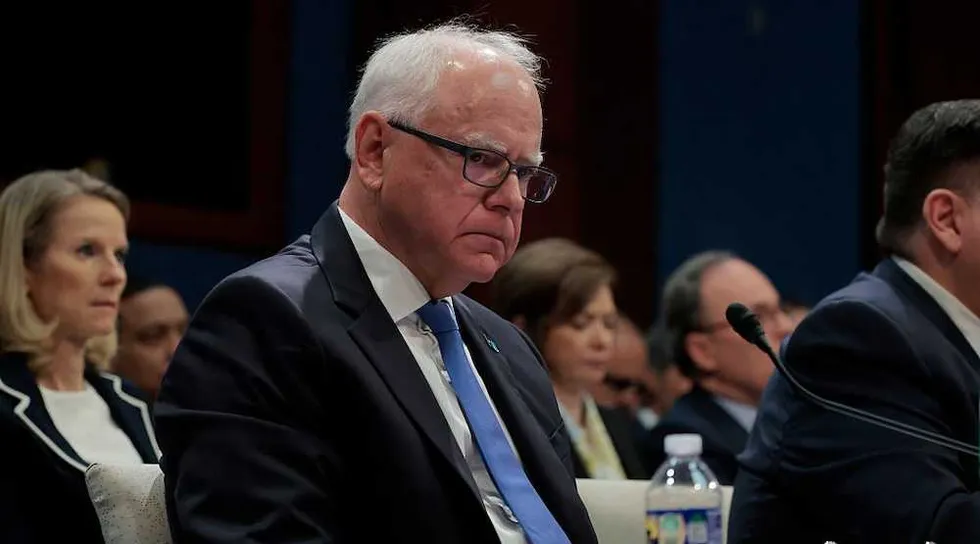 Photo by Anna Moneymaker/Getty Images
The alleged assassin who murdered Charlie Kirk in September, who was involved in a relationship with a transsexual, had come to believe that Kirk and other conservatives who criticized the overreach of trans radical activism were such a deadly threat that only lethal force was appropriate. He wrote anti-fascist messages on the casings of the bullets he used.
None of this is a surprise in a culture in which American nationalism is seen as the equivalent of Nazism and violent attacks against the Trump administration and its supporters are cheered on and encouraged. And it is not just the explicitly political media that embraces this insanity.
Witness the response to “One Battle After Another,” the recent film by Paul Thomas Anderson, loosely based on Thomas Pynchon’s novel “Vineland.” Starring Leonardo DiCaprio and Sean Penn, the film cheerleads for a radical anti-fascist terrorist organization as they wage war on American police and immigration forces. Penn is cast in a stupendously comical role as a caricature of which the left never tires: He is a military figure and a white supremacist who nonetheless is sexually attracted to nonwhites. All of the admirable figures in the film are revolutionary terrorists. The response by critics in the mainstream media has been a virtually unanimous cheer.
We are in a dangerous place. Leftist radicals are giving no indication of cooling their rhetoric — or their actions.
Buckle up. It is going to get rougher before it gets better.
Editor’s note: This article appeared originally at the American Mind.
Divine encounters: How Muslims seeing Jesus in their dreams is changing everything

From Iran to Jordan to Gaza, former Muslims have been having incredible encounters with Jesus — and it’s happening in their dreams.
“We estimate that about one 1 out of every 3 Muslims that comes to faith in Christ has had a dream or a vision of Jesus. We have maybe half now. There was a team that was in Jordan getting trained from Saudi Arabia on how to do secret church,” Tom Doyle of Uncharted Ministries tells BlazeTV host Allie Beth Stuckey on “Relatable.”
“Thirty-nine people. They didn’t know each other. They were all from different areas. They found out through the internet. They came to this conference, and the leader asked at the end, ‘How many of you had a dream about Jesus or a vision before you came to faith in Christ?’ All 39,” he explains.
“Over 200 times in the Bible, there were dreams. Maybe he’s using that today,” he adds.
“Why do you think that Jesus seems to be using dreams as a way to communicate with these people?” Stuckey asks.
“Jesus always met people where they were. I mean, you look at the woman with the issue of blood, and she was despised, and he said, ‘Daughter, your faith has healed you.’ He just met her there,” Doyle says.
“How would he be meeting Muslims through dreams? That’s how Islam started. Muhammad went into a cave and had a dream. And he says Jibreel, who is supposed to be Gabriel, downloaded the Quran, which, we don’t believe that’s what happened. We believe it was demonic,” he continues.
Doyle points out that dreaming is seen by Muslims as a “viable way that God can communicate truth to them.”
“And also, the last week in Ramadan, they have a night. … It’s called the night of power or the night of destiny, and Muslims will cry out, ‘God, if you’re there, show me yourself. Come to me in a dream, in a vision,’” Doyle says. “That’s the number one day of the year that Muslims have dreams about Jesus.”
Want more from Allie Beth Stuckey?
To enjoy more of Allie’s upbeat and in-depth coverage of culture, news, and theology from a Christian, conservative perspective, subscribe to BlazeTV — the largest multi-platform network of voices who love America, defend the Constitution, and live the American dream.
WARNING: Nicotine may cause focus, motivation, and joie de vivre (which is why they hate it)
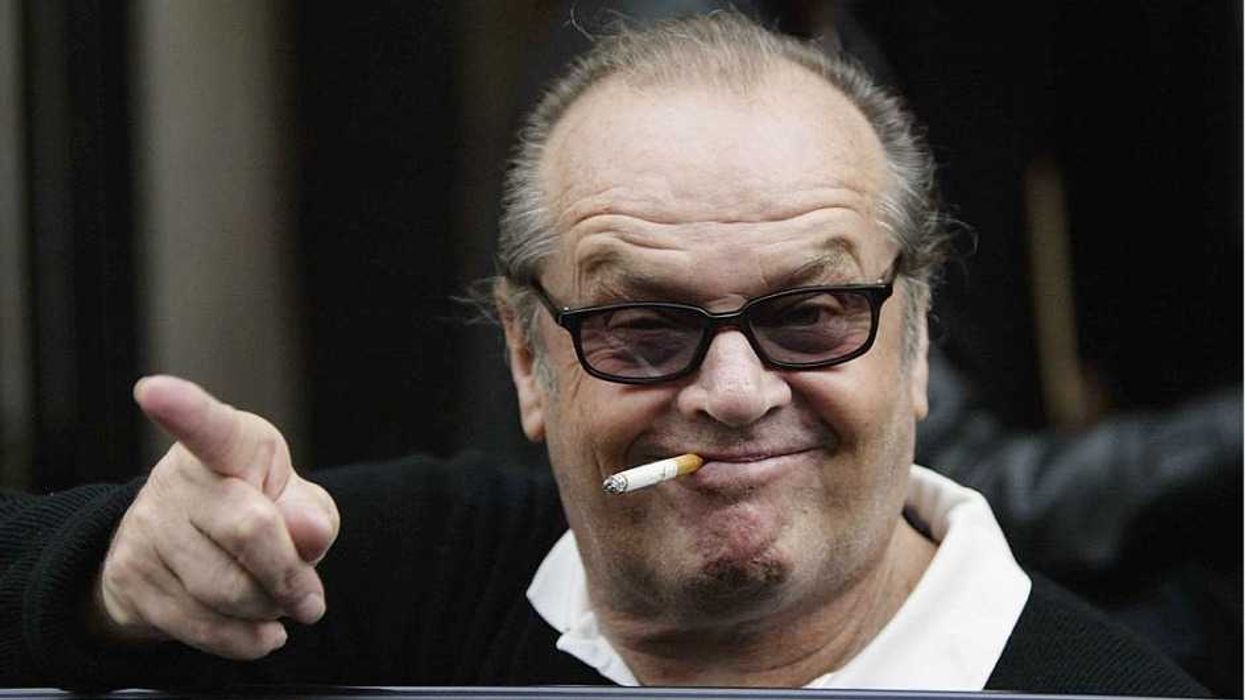
According to Salon, nicotine use is apparently the preserve of stupid men, right up there with weight lifting and a fondness for firearms.
This is how you know a substance is having a moment. When something offers even a modest benefit — focus, alertness, a slight edge — it attracts not curiosity but alarm. The kind usually reserved for the stuff that will actually kill you: heroin, fentanyl, toxic masculinity.
Nicotine is not cigarettes. This distinction matters, though it is treated as apostasy in contemporary wellness discourse. Nicotine, isolated and controlled, has been studied for decades. In small doses, it produces a measurable cognitive lift: sharper attention, faster reaction time, improved working memory.
That isn’t influencer folklore. Far from it. It’s why exhausted academics used it to push through marking and deadlines, why surgeons relied on it during long overnight shifts, and why soldiers carried it in environments where fatigue killed faster than bullets — long before Salon’s feeble attempt to dismiss it as a “scam.”
I use Zyn regularly. It helps me concentrate. That’s the entire story. I don’t feel enlightened. I don’t feel transformed. I don’t feel the urge to start a movement. And, crucially, I don’t feel compelled to use the product in any anatomically creative fashion.
Tucker Carlson, a former Zyn user turned rival nicotine entrepreneur, recently aimed a jab at his old brand, joking that its devotees have abandoned the instructions altogether in favor of a more southern route of administration.
I can’t speak for others. I can only report that I place the pouch exactly where the instructions suggest, write my sentences, and get on with my day. If a shadow subculture of rogue pouch experimentation exists, it has somehow escaped my notice.
Backside-bracing humor aside, the Salon piece really zeroes in on Carlson, quoting him at length and treating his remarks with a gravity usually reserved for Senate hearings.
Carlson has described nicotine as “super important,” arguing that the country has grown sadder and less healthy since it was discouraged and that its return coincides with people seeming, on balance, happier — though it is not entirely clear which people he has been interacting with, given that most Americans currently look one minor inconvenience away from spontaneous combustion.
He has also referred to it — again, with comic exaggeration — as a “life-enhancing, God-given chemical” that can make you “feel better than you’ve ever felt.”
The language is clearly playful, designed to provoke rather than persuade. But exaggeration doesn’t automatically mean error. Mild stimulation can brighten mood and restore alertness, particularly in a culture permanently exhausted by poor sleep and low-grade stress.
In a culture serious about public health, nicotine would barely rate a mention. We’d be too busy going after the sugar cartels poisoning the body politic with obesity and diabetes or the doctors throwing drugs at problems better addressed in the confession booth.
Instead, nicotine is singled out not because it is uniquely hazardous, but because it violates the aesthetic rules of modern wellness as defined by smug, affluent, urban commentators who have never missed a meal or a night’s sleep. To them, nicotine belongs to the wrong people — MAGA rubes, rednecks, bumpkins — rather than credentialed strivers in co-working spaces.
Nicotine stimulates rather than soothes. It activates rather than dulls. It may even nudge testosterone upward, however modestly. And for that social transgression alone, it is treated not as imperfect, but as suspect.
Well, it’s time to push back. Think of nicotine as coffee’s scruffier cousin. Coffee is embraced because it has been ritualized, monetized, and moralized into submission — latte art, loyalty cards, sanctioned dependence. Nicotine, by contrast, still carries the faint scent of agency. It has not been fully tamed, branded, or absolved by consensus. You use it because you want to function better, not because it comes with a yoga mat and a manifesto.
The real scandal is not that influencers exaggerate nicotine’s benefits. Influencers exaggerate everything. They once convinced millions that celery juice could heal trauma. The scandal is that nicotine provokes panic precisely because it works, within limits, for some people.
It requires no subscription or expert guidance. It is relatively cheap, widely available, and stubbornly unimpressed by credentialed gatekeepers. That alone makes it dangerous in a wellness economy built on scarcity, jargon, and endless scams. A substance that delivers a small, practical benefit without demanding anything in return beyond a few dollars isn’t easily controlled — and so it must be pathologized rather than tolerated.
None of this requires indulging the more unhinged claims now circulating online. Nicotine doesn’t cure herpes. It doesn’t raise IQ. It can’t turn a fat, lazy slob into a Navy SEAL. Anyone selling it as a miracle deserves mockery.
But pretending nicotine is uniquely dangerous while applauding sugar binges, SSRIs handed out like breath mints, and total screen immersion is selective hysteria. It’s moral panic dressed up as concern, aimed squarely at the wrong target.
Nicotine is not a lifestyle. It is not an identity, but a tool. Used deliberately, occasionally, it can help certain people think more clearly for a short stretch of time. That is all. The insistence on treating it as either a demonic poison or a sacred molecule is the same mistake from opposite ends of the spectrum.
Let the haters hate. I, like Carlson, will continue to use nicotine. I’ll stick with Zyn, use it occasionally, and — this seems important to clarify — continue to administer it exactly as instructed.
Brazilian au pair turns on former lover during murder trial, says he plotted wife’s death by luring stranger from fetish site

The trial of a Virginia man accused of orchestrating a scheme to have his wife killed began Tuesday. The man’s former au pair, who prosecutors say was having an affair with him, testified that another man was lured to the crime scene through a fetish website.
As Blaze News previously reported, 40-year-old Brendan Banfield was arrested in September 2024 and indicted in connection with the February 2023 double murder that occurred in his home in Herndon — which is approximately 20 miles west of Washington, D.C.
‘He mentioned his plan to get rid of [Christine].’
Fairfax County Police Chief Kevin Davis and Fairfax County Commonwealth’s Attorney Steve Descano announced in a statement that officers “descended upon an appalling scene” on Feb. 24, 2023.
Officers discovered Christine Banfield — Brendan Banfield’s 37-year-old wife — in an upstairs bedroom suffering from stab wounds to her upper body. She was transported to a local hospital, where she was pronounced dead.
Police said 39-year-old Joseph Ryan was found dead in the home from apparent gunshot wounds to his upper body.
Investigators soon set their sights on Brendan Banfield and Juliana Peres Magalhaes — the family’s Brazilian au pair, who was 21 when she began working for the family in October 2021.
Chief Davis stated, “We know Brendan Banfield and Juliana Magalhaes, the family au pair, were involved in a romantic relationship at the time of the murders.”
According to WJLA-TV, Magalhaes claimed she began an affair with Banfield in August 2022.
When Magalhaes asked Banfield about the possibility of him divorcing Christine, WJLA reported that he allegedly told the au pair that a divorce would cost too much money and that he didn’t want to split child custody.
“He mentioned his plan to get rid of [Christine],” Magalhaes told prosecutors, according to the New York Post. “Initially, he didn’t know what he would do. He just mentioned that he would think about it [and] let me know when he thought about it.”
Citing prosecutors, WTOP-TV reported that two months before the murders, Magalhaes and Banfield went to a shooting range; Banfield then returned to the range on Jan. 28, 2023, and bought a Glock from the range.
WJLA added that Magalhaes claimed Banfield instructed her to get a new phone and Apple ID and ordered her to park in a different location on the day of the murders.
Citing prosecutors, Fox News noted that Banfield — a former IRS special agent — was impersonating his wife on a fetish website for a month. Ryan was then “summoned to the couple’s million-dollar Herndon home” through the site, according to the New York Post.
Court documents also show Magalhaes told investigators that Ryan was framed as a home intruder.
‘There’s somebody here; I shot him. But he stabbed her. She’s bleeding. She’s got several marks on her neck. What do I do?’
Court TV reported that Ryan went by the username “TacoSupreme7000” on the site and responded to the messages, believing he was talking to Christine Banfield. Court TV added that Magalhaes read messages aloud to the jury, saying that she and Brendan asked Ryan to bring restraints and a knife to the Banfield home.
Magalhaes on Tuesday testified that “Christine … yelled back at Brendan, saying, ‘Brendan, he has a knife.’ That’s when Brendan first shot Joe.”
According to NBC News, lead prosecutor Jenna Sands told the courtroom this week, “Brendan enters the bedroom, first shooting Joe in the head, picks up the knife that Joe had brought and stabs Christine repeatedly in the neck. He directs Juliana to shoot Joe a second time with her gun. This time the bullet enters Joe’s chest with Christine dead or dying.”
Magalhaes was arrested in October 2023 in connection with Ryan’s alleged murder.
Magalhaes was originally charged with second-degree murder but pleaded guilty to the lesser charge of manslaughter in October 2024. She will be sentenced after Banfield’s trial.
According to CNN, Banfield was heard identifying himself as a federal agent in the 911 call to report the stabbing and shooting.
Banfield reportedly told the emergency dispatcher, “There’s somebody here; I shot him. But he stabbed her. She’s bleeding. She’s got several marks on her neck. What do I do?”
Banfield’s attorney, John Carroll, questioned Magalhaes’ motivation for taking a plea deal after nearly a year of protesting her innocence.
“The whole reason she was arrested was to flip her against my client,” Carroll claimed.
WDCW-TV reported that Brendan Banfield was charged with aggravated murder in connection with his wife’s death, plus child abuse and endangerment charges, since the Banfields’ 4-year-old daughter was at home at the time of the deadly shooting and stabbing.
If convicted on all of the charges, Banfield faces a maximum punishment of life in prison without the possibility of parole, plus 13 additional years of incarceration, a judge said on Monday, WDCW reported.
Banfield pleaded not guilty to the charges.
The Fairfax County Police Department and Fairfax County Commonwealth’s Attorney did not immediately respond to a request for comment by Blaze News.
Like Blaze News? Bypass the censors, sign up for our newsletters, and get stories like this direct to your inbox. Sign up here!
When human worth becomes conditional, caregiving becomes impossible

Most people can care for an ill or disabled loved one for a week on compassion alone. Some can do it for a month. A few can make it a year or two.
But when care stretches into decades, compassion stops carrying the load. Emotion fades. Circumstances grind. What remains isn’t how someone feels about a life. What remains is whether they believe that life still matters.
When a culture treats reality as optional, action becomes dangerous and courage looks reckless. Without shared moral ground, bravery itself becomes suspect.
Caregiving strips life down to essentials. It forces a question our culture prefers to keep abstract: Why does this life still have value when it costs so much to sustain it?
C.S. Lewis warned that a society cannot survive if it mocks virtue while demanding its fruits. In “The Abolition of Man,” he described “men without chests” — people trained to think and desire but not to stand. Without a formed moral center, courage collapses. Duty feels suspect. Endurance looks irrational.
Caregivers learn this in a harsh classroom.
You cannot sustain decades of care if human worth is negotiable. You cannot rise day after day to guard the vulnerable if life’s value depends on productivity, independence, improvement, or the absence of suffering. Long care requires stewardship — the conviction that a life has been entrusted to us, not evaluated by us.
I once met a man who told me he was dating a woman in a wheelchair. He spoke with genuine enthusiasm about how good it made him feel to do everything for her. He sounded animated, even proud. He talked at length about his experience, his emotions, the satisfaction he drew from being needed.
He said very little about her.
I asked how long they’d been dating.
“Two weeks,” he said, beaming.
I smiled wearily and told him, “Get back to me in two decades.”
Care that depends on how it makes us feel rarely survives once feeling fades. What endures over decades isn’t the satisfaction of being needed. It’s settled clarity about the worth of the person being cared for, independent of what the caregiver receives in return.
RELATED: Christian, what do you believe when faith stops being theoretical?
 ImagineGolf via iStock/Getty Images
In that man’s excitement, everything centered on his emotions. What was missing was any recognition of her value apart from her condition — or apart from what caring for her did for him.
I didn’t hear, “I’m dating a woman,” or “I’ve met someone extraordinary.” I heard, again and again, “I’m dating a woman in a wheelchair.” The chair became the headline, not the person. He might as well have celebrated the better parking.
She had become useful to him. That’s not the same thing as being valued.
This way of thinking doesn’t stay confined to personal relationships. It scales.
The public reckoning surrounding Daniel Penny exposed it. He acted to protect others he believed were in danger — not because it felt good but because action was required. That kind of clarity now unsettles a society more comfortable with sentiment than obligation.
We claim we want people to intervene, to protect others, to act decisively when danger appears. Then someone does, and we hesitate. We second-guess. We prosecute. We distance ourselves.
We want courage but not conviction.
Lewis wouldn’t be surprised. When a culture treats reality as optional, action becomes dangerous and courage looks reckless. Responsibility suddenly feels threatening. Without shared moral ground, bravery itself becomes suspect.
Francis Schaeffer traced the path forward from that confusion. Once a culture detaches human worth from anything objective, it stops honoring life and starts managing it. Value becomes conditional. And conditions always change.
That logic now shows itself in plain view. When Gov. Kathy Hochul (D-N.Y.) pushes to legalize medical aid in dying in New York, the same fracture appears. We punish those who act as though life must be defended, while elevating leaders who treat life as something to administer and conclude.
Those aren’t separate debates. They’re the same belief, applied differently.
If life holds value only when it functions well, caregiving becomes irrational. If worth depends on autonomy, dependence becomes disposable. If suffering disqualifies, endurance becomes foolish.
And yet caregivers endure.
RELATED: Caregiving decisions begin in the bathroom
 MTStock Studio via iStock/Getty Images
That clarity came back to me during a conversation on my radio show. A man described a brief illness his wife had suffered. The house fell apart. Meals became takeout. Work got missed. Romance disappeared. He sounded exhausted just recalling it.
“What carried you through?” I asked.
He paused. “I guess … love.”
“How long did this last?” I said.
“Five days.”
“I guess … love” carried him through five days.
Uncertainty can survive a week. It cannot sustain 14,000 days.
He wasn’t wrong though. Love matters. But love that sustains five days must anchor itself in something deeper to sustain 40 years.
Caregivers may begin with compassion. They endure with conviction.
A life doesn’t become less valuable because it becomes harder to carry.
Caregiving isn’t a special category of moral life. It is a concentrated version of the human condition. What sustains caregivers over time is what sustains courage, faithfulness, and duty anywhere else.
Lewis reminded us that our feelings don’t create value. They respond to it. When we reverse that order, we don’t become more compassionate. We lose our bearings.
Treating human worth as conditional may flatter our emotions. It may even make us feel noble. But it trains us to prize how we feel over the people entrusted to our care.
Over time, that trade leaves us prosecuting men like Daniel Penny while electing leaders like Kathy Hochul.
It might soothe the heart for a moment.
It cannot sustain a society.